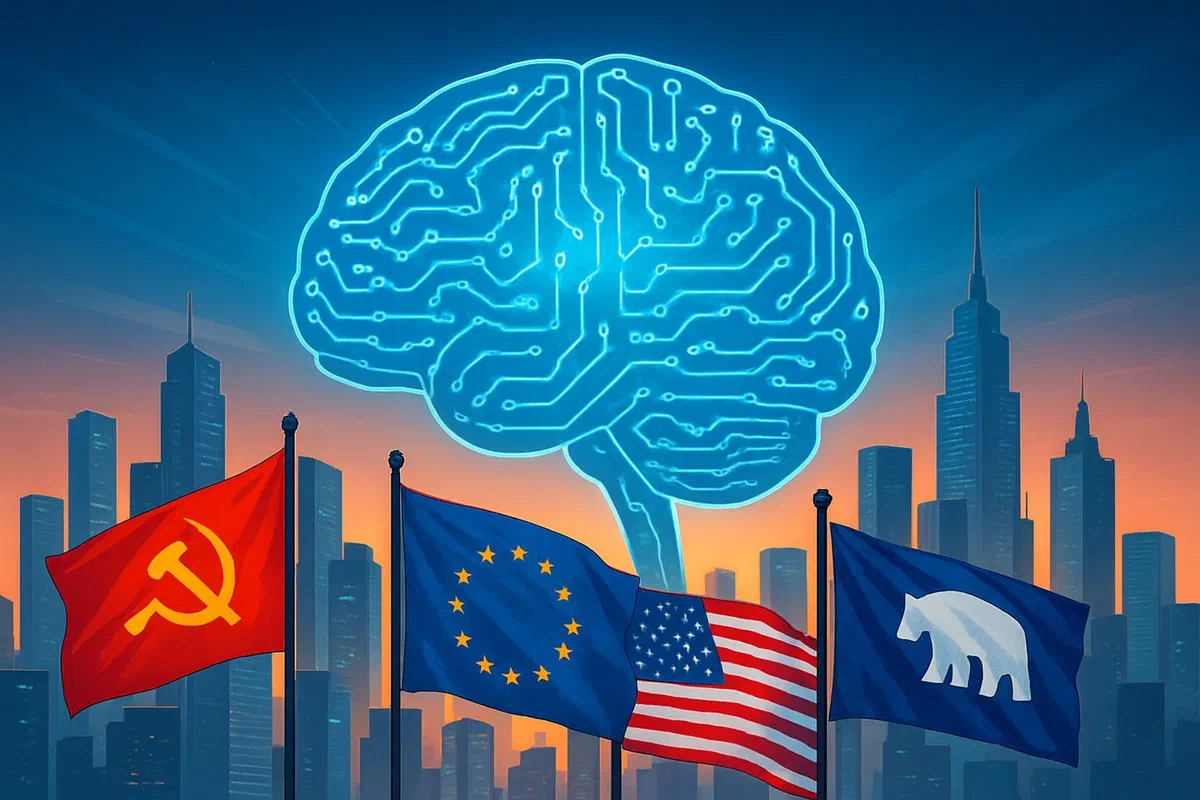
The incessant advancement of technology, especially in the field of artificial intelligence (ai)**, is redefining not only our way of interacting with the digital world, but also the ethical, political and social foundations of our lives. every day, new innovations emerge, promising unprecedented efficiency, connectivity and capabilities, but also bring a wave of complex and often unexpected challenges. from personal data management to global semiconductor governance, from the impact of ai on mental health to the protection of children online, the rapid technological evolution leads us to confront us with fundamental questions about power, responsibility and future. this article aims to explore these critical intersections in depth, analyzing how politics and ethics are trying to keep pace with an innovation that seems to constantly exceed our ability to understand and manage its ramifications. through a lens that embraces the dynamics between large technological companies, governments and civil society, we will try to outline a complete picture of the challenges and opportunities that characterize this new digital age, highlighting the urgent need for a more conscious and collaborative approach. the panorama of recent news shows us an impressive range of issues ranging from misuse of algorithms to geopolitical competition, from privacy violations to race for technological supremacy, making it clear that we are at a crucial crossroads. the stake is high: the way we face these challenges today will determine the shape of our digital future and the quality of our lives in an increasingly interconnected world and mediated by technology.
The age of artificial intelligence: unexpected ethical and social dilemmas #
Artificial intelligence*, with its natural language processing capabilities, predictive analysis and content generation, has opened an era of extraordinary possibilities, but also deep ethical and social dilemmas. the concerns range from decision-making autonomy to the manipulation of human perceptions, touching fundamental aspects of our existence. a flashing example is the emergence of apps like those of ‘nudify’, capable of creating false intimate images with incredible realism. these tools not only violate the privacy and dignity of the victims, often minor, but also raise questions about the responsibility of the platforms and developers, as well as the effectiveness of existing laws in countering this abuse. the legal battle of a teenager against these apps is not only an isolated case, but an alarm bell on the need for stricter regulations and robust protection mechanisms, as demonstrated by the increase of fines in california for the creation of such content. but ai does not stop at just visual manipulation; it insinuates itself into life or death decisions, as suggested by the idea of ‘aid surrogates’ that assist in critical medical choices. this futuristic scenario, already discussed among doctors, poses complex ethical questions on the delegation of decision-making authority to artificial systems and on the definition of responsibility in case of error. in addition, ai is redefining mental health support. while openai announced a ‘council for wellbeing’ and ‘mental health updates’ for chatgpt, criticisms were not lacking, especially for the exclusion of experts in suicide prevention from the initial discussion. the management of sensitive content, the prevention of malicious responses and the protection of user data, especially teenagers, require rigorous ethical supervision and the inclusion of expert voices. the controversy regarding openai’s ‘kin control’, perceived by many users as insufficient or paternalistic, highlights the tension between the protection of vulnerable users and the desire for adult autonomy. the question also extends to the world of work, where ai was used as a justification for dismissals, as in the case of amazon, which then assumed h1-b workers, raising doubts about transparency and fairness of business decisions. these examples illustrate the urgent need for an ethical and normative framework that not only limits abuses, but also guides the development of ai so that it serves human well-being, rather than compromising it, always focusing on the dignity and safety of people.
The battle for privacy and digital rights in the surveillance age #
The pervasive expansion of digital technology has radically transformed the concept of privacy, making it a constant battlefield among individuals, technological corporations and states. in an era where every click, every search and every online interaction can be tracked and analyzed, the protection of digital rights* has become a pressing priority. the recent chronicle is filled with examples illustrating this struggle. the events of openai, which had to stop saving the chats of deleted users following a judicial order, or the charges to meta to prevent us users from opting for non-profiling through ai** for targeted ads, while europeans enjoy greater control, highlight global divergence in privacy regulations and increasing pressure from legislators and citizens. even more disturbing is the introduction of devices such as the ‘ai necklace’ that constantly listen to conversations, raising fundamental questions about the nature of ubiquitous surveillance and its impact on personal freedom and human relations, as evidenced by vandalism acts against their advertising. the censorship and restriction of free expression online represent another crucial front. in countries such as iran, authoritarian efforts to criminalize vpn (virtual private network) and limit freedom of speech online demonstrate how technology can be used as a control and repression tool. at the same time, the uk online safety act, with its platform fines such as 4chan for failure to assess risks, attempts to establish a new standard for online security, but raises issues about jurisdiction and balance between security and freedom of expression, especially when it comes to us-based platforms. the question of ownership of data used to train ai models is another area of dispute. the demand for a ‘pay-per-output’ mechanism for creators whose works are ‘crazed’ by ai models and the idea of a ‘really simple licensing’ aim to ensure that artists and authors are equally paid. the dispute between anthropic and the authors, with a judge who initially refused to validate a billionaire agreement considered insufficient, underlines the complexity and importance of establishing just compensation for the use of creative works. the internet archive*, a pillar of digital preservation, was also involved in legal battles with music publishers, highlighting the costs and challenges of keeping alive a digital library accessible to all. all these episodes emphasize the urgent need to define who owns data, who controls them and who benefits from their use, while ensuring that technology does not erode, but strengthens, our fundamental rights to privacy and freedom of expression in the digital environment.
Geopolitical and technology: the new battlefields for supremacy #
In an increasingly interconnected world, technology has become a fundamental pillar of geopolitical power, transforming key sectors into real battlefields for global supremacy. the semiconductor** industry is central to this dispute, essential for every modern device, from phones to advanced weapon systems. the case of taiwan, the chip production giant, is emblematic. under pressure from the united states, particularly during the trump administration, taiwan has tried to move a significant share of its chip production (up to 50%) on american soil. this move, considered ‘impossible’ by some experts, highlights the deep dependence of the united states and many other global economies from a single geopolitical vulnerability point. taiwan’s decision to ‘arm’ its access to chips, for example in relations with south africa, shows how this strategic resource is now a powerful foreign policy tool. the voltage is palpable: intel, an american giant, warned investors about the risks and uncertainties related to government involvement, such as a 10% stake by the us, underlining the complexity and potential losses of such interventions. not only the chips, but also digital platforms are at the center of intense geopolitical disputes. the fate of tiktok in the united states is a flashing example. trump’s statements on the possibility of making the app ‘100% maga’ or the insistence on creating an american version of the chinese algorithm reflect a deep distrust and the desire to control platforms that influence public opinion and national security. the perspective of a blockade of tiktok or a controversial agreement with china has created uncertainty and lit a debate on digital sovereignty and the ability of states to impose their will on global technological companies. the commercialtariffs* are another instrument of this geopolitical competition. the trump administration threatened ‘massivetariffs’ on all chinese exports and pushed for radical shifts in supply chains, causing concerns of a ‘triple batosta’ for technological companies. these movements, although presented as economic measures, have profound strategic implications, aiming to reshape the global economy and reduce dependence on rival powers. the comparison between musk’s xai and openai, with accusations of monopolies and legal countermosses, also fits into this context of struggle for technological supremacy, showing how even disputes between private giants can have significant geopolitical resonances. in summary, technology is no longer a neutral domain; it is an arena where the great powers contend with the control of critical resources, communication platforms and innovations that will define the next century, making it essential to an understanding of its geopolitical implications.
The role of regulation: attempts to tame the wild technological west #
The unstoppable technological advance has created a digital ‘wild west’, a rapidly expanding territory where existing regulations often fail to keep pace. ** regulatory role*** has become crucial to balance innovation and protection, trying to tame forces that could otherwise generate chaos or iniquity. a significant example is the uk online safety act, which requires platforms to assume greater responsibility for published content, with salt fines for non-evaluation of risks. this act represents an ambitious attempt to protect users, especially minors, but raises complex issues about censorship, freedom of speech and its applicability internationally, especially for companies based in different countries. in the united states, the debate on ai regulation is just as bright. the ai bill proposed by ted cruz, which according to critics could allow companies to evade state security laws, is an emblematic case of tension between unobstructed innovation and the need for protection for citizens. the lack of a unified approach and regulatory fragmentation can create an uncertain and potentially harmful environment. large technological companies are often at the centre of these discussions. ftc (federal trade commission)* has taken significant action against colossi as amazon and ticketmaster. in the case of amazon, the agreement to simplify prime’s cancellation and $1.5 billion refund to customers shows that regulatory pressure can lead to concrete changes to the benefit of consumers. the ftc charges at ticketmaster and live nation to encourage bagarini to inflate ticket prices reveal unfair practices requiring energetic intervention to protect buyers. these interventions do not only concern the protection of consumers, but also the management of competition and the prevention of monopolistic practices. the same openai has been involved in complex legal disputes, such as the cause against elon musk for alleged intimidation and attempts to silence critics, or criticism of its integration with the iphone, defined by xai as a monopoly attempt. these disputes highlight the need for constant vigilance and a regulatory framework that can address the speed and complexity of technological innovations. discussions on the h1-b visa program*, accused of allowing technology companies to hire lower wages than us employees, touch the delicate balance between business needs and workers protection. all these examples converge on the same conclusion: regulation is indispensable not only to correct abuse and protect rights, but also to shape a digital future that is fair, safe and at the service of society, rather than just corporate interests. however, the way this regulation is conceived and implemented is equally critical, requiring a constant and constructive dialogue between legislators, experts, enterprises and citizens.
Human impact: from child protection to the protection of creators #
Behind every technological innovation, every political debate and every lawsuit, there is the human impact**—the individual lives and communities that are transformed, both positively and negatively. in this digital age, vulnerabilities are amplified and protection issues become increasingly urgent. the security of minors* online is undoubtedly one of the most pressing concerns. using ‘nudify’ apps that exploit images of adolescents for ai training is a terrifying example of how technology can be distorted to cause deep and lasting damage. parents’ requests to legislators to act to close chatbots that cause trauma or contribute to suicidal thoughts among children, as in the case of a child traumatized by a chatbot that led the mother to an arbitration agreement, reveal a systemic failure in the protection of the younger. these episodes emphasize that it is not enough to block an app; a deep understanding of the algorithms and interactions that can lead to devastating consequences, with a focus on adequate prevention and psychological support. mental well-being, especially for young people, is a critical aspect, and criticism of the efforts of openai for ‘mental health’ and insufficient parental controls by suicide prevention experts demonstrate that technology alone cannot be the solution without careful consideration of human and psychological dynamics. in addition to minors, the protection of ** content creators** is another warm front. the advent of generative ai models has raised fundamental questions about intellectual property and the right compensation. the case of warner bros. that causes midjourney for the ‘copie knockoff’ of iconic characters such as batman and scooby-doo, or the multi-millionaire agreement of anthropic with the authors for the use of their works, highlight the battle to define copyrights in the ai era. these precedents are crucial because they establish the basis for how ai will interact with the existing creative corpus and how artists can continue to support themselves. the question is not only economic, but also ethical: how can we ensure that technology, which has the potential to democratize creation, does not end up impoverishing the same creators? moreover, the impact on work is a growing concern. the charges to amazon to use ai as a pretext for dismissals and then hire h1-b workers at lower costs raise issues of equity and corporate social responsibility. these scenarios remind us that technology is not neutral; its applications reflect human choices and can exacerbate existing inequalities if not managed with far-sightedness and compassion. ultimately, understanding and attenuation of the negative human impact of technology, from the protection of the most vulnerable to the safeguarding of the means of subsistence and creativity, must be at the center of any strategy of development and technological regulation, requiring a holistic approach that enhances the dignity and well-being of each individual.
Towards a sustainable digital future: collaboration, awareness and responsibility #
Navigating the complexity of the current technological landscape requires more than just punctual solutions; it requires a holistic approach that integrates collaboration*********** and responsibility* at all levels. the idea of a sustainable digital future*** is not only utopia, but an impelling need to address the challenges we have explored: from ai ethical dilemmas to privacy battles, from geopolitical disputes to regulatory attempts. the first and most fundamental cornerstone is international collaboration. as technology knows no boundaries, national solutions, however well-intentioned, are likely to be ineffective or create fragmentation. divergence in the privacy laws between the united states and europe, or difficulties in enforcing laws such as the uk online safety act on global platforms, demonstrate the need for international dialogue and agreements on minimum standards of protection and responsibility. supranational bodies, technology experts, governments and civil society must unite to create global regulatory and ethical frameworks that can lead the development and use of ai and other emerging technologies. at the same time, it is crucial to increase digital awareness among all citizens. education on the risks and opportunities of technology, understanding how algorithms work, the ability to discern between true and false information, are essential skills in the 21st century. only an informed and critical public can exert effective pressure on companies and governments for more transparent and fair policies. this also includes awareness of its**digital rights**** and tools available to protect your privacy and online security. finally, the responsibility must become a guiding principle for all actors involved. for technological companies, this means going beyond the mere respect of the law, adopting a proactive approach to design ethics, algorithm transparency and user protection, especially the most vulnerable. the creation of diverse ethical advice, investment in robust safety measures and the commitment to fair compensation of creators are just a few steps in this direction. for governments, responsibility involves developing agile and far-sighted legislation, which does not suffocate innovation but leads to socially beneficial objectives, while avoiding policies that can exacerbate inequalities or limit fundamental freedoms. for individuals, it means acting responsibly online, respecting the dignity of others and contributing to a positive digital environment. the journey towards a sustainable digital future is long and complex, but it is a journey that we must take together. it requires a continuous commitment to learning, adapting and willingness to prioritize collective well-being to particular interests. the stories of legal battles, political debates and revolutionary innovations that emerge every day are a constant reminder that our ability to shape the digital future depends on our collective action and our shared vision for a more just, safe and inclusive world.