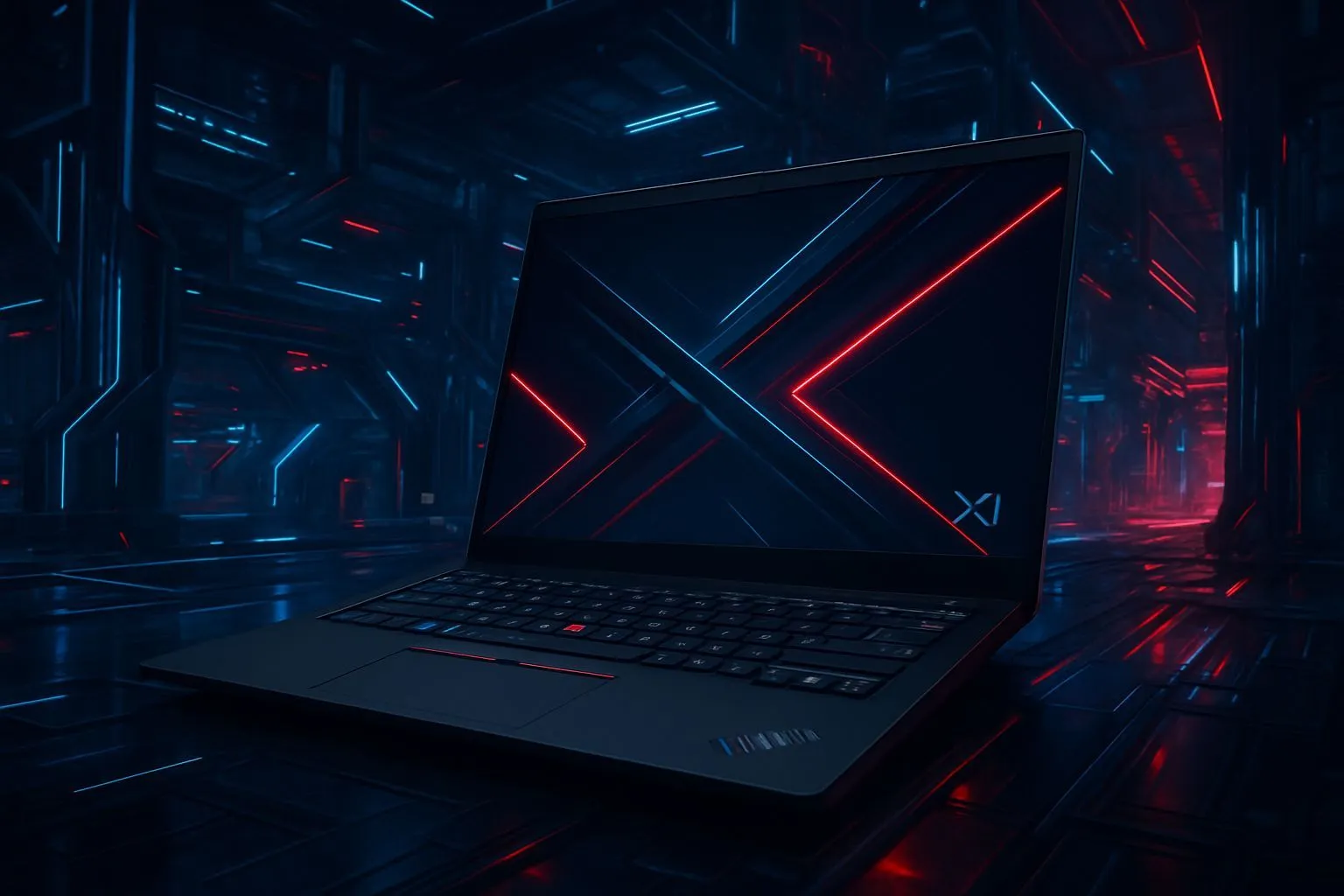
In the dynamic and constantly evolving technology landscape, few products manage to leave such a lasting impression and maintain a reputation of stainless excellence like the ThinkPad X1 series of Lenovo. Born from the legacy of innovation and reliability of IBM, ThinkPad have always represented a point of reference for professionals, and X1 Carbon and X1 Yoga models are the modern quintessence, embodying the perfect balance between cutting-edge performance, extreme portability and legendary robustness. The 7th generation ThinkPad X1 Carbon announcement with its 18-hour promise of autonomy and the upgrade of the X1 Yoga with the 10th generation Intel processors (Comet Lake), rekindled the spotlight on what makes these devices so special. But beyond the technical specifications of a single model or yet another iteration of a CPU, there is a deeper story to tell: that of a design that challenges time, a maniacal attention to ergonomics and safety, and a constant commitment to innovation that continues to define the standard for premium laptops. This article aims to go beyond the simple review, offering a thorough analysis of how the ThinkPad X1 series has evolved its fundamental concepts, integrating the latest Intel technologies and while maintaining its distinctive identity. We will explore the path of these iconic devices, from their conception to their future prospects, trying to fully understand their impact on the world of modern work and because they continue to be the preferred choice of millions of professionals around the world, just like the mission of authoritative publications such as Ars Technica suggests, that of discerning the signal from noise, focusing on what is really important to the public interested in technology.
The Evolution of an Icon: The ThinkPad X1 Series and its Impact on the Market
The story of the ThinkPad X1 series is inherently linked to the evolution of portable computing and transition from the IBM brand to Lenovo, which has known not only to preserve but also to expand the prestige of one of the most respected laptop lines in the world. Originally born under IBM's aegis in 1992, ThinkPad immediately distinguished themselves for their matte black design, ergonomic keyboard and uncompromising robustness, becoming synonymous with reliability for the professional world. When Lenovo acquired the PC division of IBM in 2005, the challenge was immense: keeping the legacy innovative without distorting the identity of ThinkPad. The X1 series, introduced several years later, represents the Lenovo response to this challenge, projecting the ThinkPad into the premium ultra-portal laptop era. The X1 Carbon, in particular, was conceived with a clear philosophy: to create a thin and light business laptop like an ultrabook, but with the durability, safety and unmistakable user experience of a traditional ThinkPad. The use of advanced materials such as carbon fiber (from which the name ‘Carbon’) has allowed to reach levels of lightness and resistance unthinkable for the time, distinguishing itself clearly from the competition that often sacrificed robustness in favor of aesthetics. At the same time, the X1 Yoga extended the concept of premium business, introducing the versatility of a 2-in-1 convertible, maintaining the integrity of ThinkPad design. This dual strategy has allowed Lenovo to cover a wide range of professional needs, from travel manager to creative who needs flexibility, consolidating the X1 series as a reference point in an increasingly crowded and competitive market. The constant search for improvement, listening to user feedback and integrating the latest technological innovations, allowed these models to maintain their position Leadership, demonstrating that excellence is not only a question of specification, but of an overall user experience that balances innovation, reliability and business-oriented functionality flawlessly, defining the meaning of a premium, robust and functional laptop for the modern professional.
Performance and efficiency: The Crucial Role of Intel CPUs (from Comet Lake on)
At the heart of every modern laptop beats the processor, and for the ThinkPad X1 series, Intel has long represented the technological partner, especially with the introduction of tenth generation processors, known by the code name Comet Lake, mentioned in the article by Ars Technica. Comet Lake’s arrival marked a significant step in optimizing performance for thin and light laptops, bringing with it improvements in energy efficiency and, for some SKUs, an increase in the number of cores that allowed to manage more intensive workloads without compromising portability. These chips were fundamental to the ThinkPad X1, allowing you to maintain the balance between computing power needed for professional applications and the long desired autonomy. However, the innovation race did not stop here. Intel continued to evolve its architecture with subsequent generations, each of which brought substantial innovations that found space in the later ThinkPad X1 models. With Tiger Lake (11th generation), we have witnessed the introduction of Xe integrated graphics, which has greatly improved graphics capabilities without the need for a discreet GPU, an advantage not recently for professionals who occasionally work with light editing software or presentations rich in visual elements. Alder Lake (12th generation) revolutionized Intel's approach with hybrid architecture, combining Performance-cores (P-cores) for intensive loads and Efficient-cores (E-cores) for energy consumption optimization, managed by a thread director smart. This innovation has enabled ThinkPad X1 to offer quality jump in multi-thread performance and efficiency, essential for modern multitasking. Raptor Lake (13th generation) further refined this architecture, pushing even higher frequency limits and counting cores, consolidating performance. The most recent generations, such as Meteor Lake (14th generation, with the introduction of the first NPUs for AI acceleration) and Lunar Lake, continue to integrate neural processing units (NPUs) dedicated to artificial intelligence, bringing AI processing directly to the device. This not only opens up new possibilities for AI-based productivity and security software, but also contributes to improving overall system efficiency, lightening CPU and GPU load for specific AI operations. For the ThinkPad X1, these evolutions translate into laptops that are not only faster, but also smarter, more efficient and better equipped to face the challenges of future computing, ensuring that investment in an X1 remains valid for years, thanks to a platform always cutting edge.
The Autonomy Battery from Record: Analysis of Promises and Daily Reality
The 18-hour promise of autonomy for the seventh generation ThinkPad X1 Carbon, as reported by Ars Technica, captured the attention of many, highlighting one of the most critical metrics for any business laptop: battery life. For moving professionals, exceptional autonomy is not a luxury, but an absolute necessity, which allows to work continuously during long flights, in meeting rooms without sockets available or in remote places. However, it is essential to understand how these figures are generated and how they translate into everyday use. Manufacturers, including Lenovo, are often based on standardized tests such as MobileMark, which simulate a mix of work activities with specific settings (e.g. reduced screen brightness, active Wi-Fi but light loads). Although these benchmarks are useful for objective comparisons between different models, the reality of the end user may vary considerably. Factors such as the actual brightness of the screen (an OLED or high resolution display consumes more), the type of application in use (a light spreadsheet vs. an intense video conferencing or video editing session), connectivity (Wi-Fi, Bluetooth, 5G), the number of connected peripherals and even operating system settings, dramatically affect the actual battery life. Lenovo, with the ThinkPad X1 series, has always aimed to optimize each component to maximize energy efficiency. This includes not only the selection of low consumption Intel processors (ULV – Ultra-Low Voltage), but also the integration of optimized displays, intelligent thermal management that reduces consumption peaks and proprietary software that further refines energy performance. Battery longevity research is not only a matter of cell capacity (measured in Wh), but a complex engineering that involves the entire device’s hardware and software ecosystem. The X1 models, generation after generation, managed to maintain or even improve their autonomy, adapting to the new Intel CPU architectures that, with each iteration, promised (and often maintained) greater efficiency per watt. Although the 18 hours could be a result obtained in ideal conditions, the ability of a ThinkPad X1 to offer a full day of work without need for recharge is a constant that continues to make them a privileged choice for those who cannot afford interruptions, demonstrating how careful engineering can transform a bold promise into a solid operational reality for most professional scenarios.
Design and ergonomics: The Excellence of the ThinkPad Keyboard and Structural Robustness
The design and ergonomics are fundamental pillars of the ThinkPad X1 experience, with the keyboard that stands at true reference point in the industry, and the structural robustness that guarantees its longevity. Since its origins, the ThinkPad keyboard has been praised for its exceptional typing quality, and the X1 series is a worthy heir. With a deep key stroke, precise tactile feedback and an unmistakable concave shape of the keys that comfortably welcomes the tip of the fingers, offers a writing experience that few other laptops, even among the premiums, manage to match. This is not a secondary detail for professionals who spend hours typing, for which a comfortable keyboard can make the difference between a productive day and a frustrating. Next to the keyboard, the Red TrackPoint, the iconic pointer controller placed in the center, continues to offer an intuitive and precise alternative to the touchpad for navigation, allowing users to keep their hands on the dial without having to move them. Although many use the touchpad, the TrackPoint is a distinctive sign that many loyal users would not exchange with anything in the world, embodying a design philosophy that favours functionality and efficiency. In addition to ergonomics, structural robustness is a trademark of ThinkPad X1. Despite their slim profile and low weight, these laptops are designed to withstand shocks and stresses of everyday life in the office and on the road. The use of advanced materials such as carbon fiber for chassis and magnesium alloys, combined with military-grade MIL-STD-810H durability tests, ensures that a ThinkPad X1 can withstand accidental falls, vibrations, extreme temperature and dust variations, making it a reliable companion in almost every environment. This attention to detail also extends to the hinge, which in X1 Yoga models allows a 360° rotation without sacrificing stability. The selection of doors, while maintaining a thin profile, is designed to ensure essential connectivity for professionals, often including Thunderbolt, USB-A and HDMI ports, balancing the need for subtlety with practicality of use, often avoiding the need for external adaptors for the most common functions, an aspect often underrated but of great impact for daily productivity.
Company Security and Management: A Pillar of ThinkPad X1
In an era where cybersecurity has become an absolute priority for companies of all sizes, ThinkPad X1 stands out for their holistic approach to data protection and corporate manageability, elements that go beyond simple hardware specifications. Lenovo has integrated a full suite of security features, both hardware and software, which make these laptops particularly suitable for professional environments and IT needs. One of the most visible features is ThinkShutter, a physical camera shutter for the webcam that guarantees user privacy when the camera is not in use, eliminating any unauthorized access concerns. This simple but effective mechanism is flanked by type fingerprint sensors match-on-chip, offering fast and secure biometric authentication, and facial recognition technology with infrared camera, compatible with Windows Hello, for effortless access. Beyond user features, the ThinkPad X1 comes with a Trusted Platform Module chip (T) dedicated, which provides a hardware base for data encryption and system integrity, protecting sensitive information and credentials. Intel vPro technology, available on some models, further elevates the level of security and manageability, allowing IT administrators to manage, repair and protect laptops remotely, even when the operating system is offline or non-responsive. This is essential for large business fleets, reducing downtime and support costs. Lenovo ThinkShield security features also include BIOS protection and firmware, prevention of attacks based on side-channel and password management tools and advanced threats protection. In a hybrid working environment, where employees operate from different locations and potentially less secure networks, the robustness of the safety features of ThinkPad X1 is an invaluable competitive advantage. They ensure that business data remains protected, that devices comply with security policies and that accidents can be mitigated quickly, allowing companies to focus on their core business with the tranquility that their IT infrastructure is in safe, manageable and always protected against the constantly evolving threats of the modern digital panorama.
ThinkPad X1 Yoga: Versatility of 2-in-1 and Professional Creativity
While the ThinkPad X1 Carbon has established itself as the king of ultra-portable laptops, the ThinkPad X1 Yoga has cut out its own unique space, combining the elegance and robustness of the X1 line with the extraordinary versatility of a 2-in-1 device. This convertible variant has been designed for professionals who need greater flexibility in their workflow, seamlessly transforming from a traditional laptop to a tablet, or positioning itself in tent mode or stand for presentations and collaborations. The heart of its versatility is the 360 degree hinge, engineered with precision to be both robust and fluid, allowing fast and reliable transitions between the different modes of use. But what really distinguishes X1 Yoga is the integration of a stylus pen, often integrated into one slot garaged, which automatically recharges when placed. This seemingly minor feature has a huge impact on productivity and creativity. The pen allows you to take hand notes during meetings or conferences, write PDF documents, draw quick sketches to express ideas or navigate the user interface with a higher precision than your fingers. For designers, architects, engineers or anyone working with visual concepts, the X1 Yoga is transformed into a portable digital canvas. The writing and drawing experience on its surface is further enhanced by the quality of the display, which often offer high-resolution touch options with support for a wide range of colors, making interaction extremely natural and responsive. The tablet mode, although less common for intensive typing, is ideal for reading documents, viewing multimedia content or web navigation in situations where the physical keyboard would be in the way. The stand and curtain modes are perfect for small groups presentations, to watch videos or to interact with touch applications without the keyboard footprint. The ThinkPad X1 Yoga, therefore, is not just a laptop with a swivel display; it is a complete ecosystem that enables new ways of working, thinking and creating, while maintaining all the key attributes that make a ThinkPad X1 a premium choice: performance, safety and legendary reliability, offering a truly adaptable platform to the dynamic needs of the modern professional who seeks a multifunctional and highly responsive device.
The Competitive Panorama: ThinkPad X1 Against Sector Giants
In the premium laptop business segment, the ThinkPad X1 series competes in an extremely crowded and fierce panorama, where innovation is the key to maintaining its relevance. Its main rivals are not only other players in the PC world, but real giants who offer equally sophisticated solutions and often with different aesthetics. Among the most fierce contenders are the Dell XPS, which have distinguished themselves for their elegant design, the displays Infinity quasi senza bordi e prestazioni di alto livello, spesso con un’enfasi sul consumatore pro-sumer ma con versioni anche enterprise-friendly. Gli HP Spectre e EliteBook, dal canto loro, offrono una combinazione di design raffinato, funzionalità di sicurezza avanzate e opzioni hardware potenti, rivolgendosi sia al segmento consumer di lusso che a quello aziendale con una forte enfasi sulle soluzioni IT. Poi c’è Apple, con i suoi MacBook Air e Pro, che dominano un segmento specifico del mercato grazie al loro sistema operativo macOS, all’ecosistema integrato e, più recentemente, ai rivoluzionari chip M-series che hanno ridefinito gli standard di efficienza e prestazioni per molti carichi di lavoro creativi. Infine, anche Microsoft, con i suoi Surface Laptop e Surface Pro, ha proposto dispositivi che combinano hardware e software in modo sinergico, spingendo sul concetto di tablet-laptop convertibile e sulla versatilità del touch e della penna. Ciascuno di questi concorrenti ha i propri punti di forza e le proprie debolezze. Dove il ThinkPad X1 eccelle è in tre aree fondamentali: la leggendaria tastiera, la robustezza e la durabilità testate secondo standard militari, e una suite di funzionalità di sicurezza e gestibilità pensate specificamente per le aziende e gli IT manager. Mentre altri brand potrebbero offrire un design più appariscente o, nel caso di Apple, un ecosistema software differente e prestazioni specifiche per carichi di lavoro creativi (anche se Intel sta rapidamente colmando il divario), il ThinkPad X1 mantiene un appeal unico per chi cerca uno strumento di lavoro affidabile, efficiente e costruito per durare. La sua capacità di integrare le più recenti tecnologie (come i processori Intel di ultima generazione) mantenendo al contempo la sua identità e i suoi valori fondamentali, lo rende una scelta irrinunciabile per molti professionisti che privilegiano la funzionalità, la sicurezza e la resistenza al tempo, pur non rinunciando a un design minimalista ed elegante che si è imposto come un classico senza tempo nel settore del computing professionale, spesso superando i rivali in aspetti fondamentali che contano di più nell’utilizzo quotidiano e nella gestione a lungo termine in contesti aziendali complessi.
Technological Reviews and Head Role as Ars Technica
In a world flooded with information and infinite technological options, the role of professional technological reviews, such as those published by Ars Technica, becomes not only useful but absolutely crucial. The declared mission of Ars Technica, to “separate the signal from noise”, perfectly sums up the essence of what a reliable technical reviewer should do. It is not simply about listing the specifications or repeating the marketing statements of the manufacturer; rather, it is about submitting rigorous testing devices in the real world, analyzing the data with technical expertise and providing an honest and impartial assessment that helps consumers and companies make informed decisions. In the case of laptops such as the ThinkPad X1 Carbon and Yoga, a thorough review goes beyond the declared battery life or the processor speed on paper. It examines the overall user experience: the construction quality, the consistency of the performance under load, the effectiveness of the cooling system, the quality of the display and audio, the tactile sensation of the keyboard and the touchpad, the energy efficiency in everyday use and long-term reliability. Ars Technica, with its 25 years of experience and its unique combination of technical savvy is an example of how a detailed analysis can make a difference. A good review compares the product with its direct competitors, highlights pros and cons in a balanced way and offers a broader context, explaining how technological innovations (such as new Intel processors or security solutions) translate into tangible benefits for the end user. For professionals and IT managers who need to justify significant investments in hardware, these reviews are indispensable tools to validate choices and mitigate risks. They help to understand whether a high-end laptop like the ThinkPad X1 is really up to its price, whether its promises of battery life or performance are maintained in real usage scenarios, and whether its security and manageability characteristics are up to business needs. In a market where each company proclaims the superiority of its products, the independent and authoritative voice of tested as Ars Technica is a lighthouse that guides users through the mist of marketing, offering the clarity and depth necessary to truly understand the value and performance of complex and crucial devices for modern productivity, raising the level of information available and allowing more aware and strategic decisions in technological purchase.
The Future of Laptop Business: Innovation, Sustainability and Artificial Intelligence
Looking at the future, laptop business is destined to undergo significant transformations, driven by megatrends such as pervasive integration of artificial intelligence, an increasing emphasis on sustainability and the evolution of hybrid working modes. The ThinkPad X1 series, with its history of adaptation and innovation, is well positioned to ride these waves of change. The advent of AI PCs is already in progress, with the integration of neural processing units (NPU) dedicated to Intel processors (as in Meteor Lake and Lunar Lake). These NPUs are designed to efficiently manage artificial intelligence workloads directly on the device, rather than rely exclusively on the device cloud cloud. Ciò significa che funzionalità avanzate come la cancellazione del rumore in tempo reale nelle videoconferenze, l’ottimizzazione dell’efficienza energetica basata sull’apprendimento automatico, il miglioramento delle immagini e del video in locale, e persino l’assistenza predittiva per la produttività, diventeranno standard. Per i ThinkPad X1, questo si tradurrà in esperienze utente più fluide, personalizzate e sicure, con un impatto positivo sull’autonomia della batteria, poiché i compiti AI saranno gestiti in modo più efficiente. Parallelamente, la sostenibilità sta diventando un fattore decisionale cruciale. I consumatori e le aziende sono sempre più attenti all’impatto ambientale dei loro acquisti. Ci si aspetta che i ThinkPad X1 future incorporino una percentuale maggiore di materiali riciclati nel loro design, migliorino l’efficienza energetica complessiva e offrano una maggiore riparabilità e modularità per prolungare la vita utile del prodotto. Lenovo ha già fatto passi in questa direzione, ma la pressione per produrre dispositivi più ecologici è destinata a crescere, e i ThinkPad dovranno mantenere la loro leadership anche in questo campo. La connettività è un altro aspetto in rapida evoluzione. Con l’adozione diffusa del 5G e del Wi-Fi 7, i laptop business del futuro offriranno una connettività più veloce e affidabile, consentendo ai professionisti di lavorare da qualsiasi luogo con una larghezza di banda sufficiente per applicazioni esigenti. I display continueranno a migliorare, con tecnologie OLED e mini-LED che offriranno colori più vividi e contrasti più elevati, e forse anche form factor più innovativi o flessibili. In sintesi, il futuro dei ThinkPad X1 sarà caratterizzato da un’intelligenza computazionale avanzata, un forte impegno per la sostenibilità e una connettività onnipresente. Saranno macchine non solo potenti e affidabili, ma anche più intelligenti, più consapevoli dell’ambiente e perfettamente integrate nel panorama lavorativo ibrido e in continua evoluzione, continuando a rappresentare un punto di riferimento per l’innovazione nel settore dei laptop professionali e anticipando le esigenze di un mercato che è sempre più interconnesso e attento alle proprie responsabilità.
In conclusione, la serie ThinkPad X1 di Lenovo, con i suoi iconici modelli Carbon e Yoga, non è semplicemente una linea di laptop; è un’affermazione di design, ingegneria e filosofia orientata al business che ha saputo evolversi mantenendo salde le sue radici. Dall’eredità IBM ai processori Intel di ultima generazione, dalla promessa di un’autonomia rivoluzionaria alla leggendaria qualità della tastiera, ogni aspetto di questi dispositivi è stato attentamente calibrato per soddisfare le esigenze dei professionisti più esigenti. Il ThinkPad X1 Carbon continua a essere il benchmark per i laptop business ultraportatili, unendo leggerezza e robustezza in un pacchetto elegante e potente. Il ThinkPad X1 Yoga, d’altra parte, offre una versatilità impareggiabile per chi necessita di passare senza sforzo tra diverse modalità di lavoro, abbracciando la creatività e la flessibilità senza compromessi sulla produttività. Le continue innovazioni nelle CPU Intel, che passano dal Comet Lake originale alle recenti architetture ibride con NPU dedicate all’AI, assicurano che i ThinkPad X1 rimangano all’avanguardia delle prestazioni e dell’efficienza energetica. Allo stesso tempo, l’attenzione maniacale alla sicurezza e alla gestibilità aziendale, insieme alla durabilità testata secondo standard militari, confermano la loro affidabilità come strumenti di lavoro insostituibili. In un mercato competitivo, dove i giganti tecnologici si contendono l’attenzione dei consumatori con promesse audaci, la serie ThinkPad X1 ha dimostrato una resilienza notevole, affidandosi non solo all’innovazione hardware, ma anche a una profonda comprensione delle esigenze reali degli utenti professionali. La capacità di testate autorevoli come Ars Technica di discernere il valore reale di questi dispositivi, andando oltre il mero dato tecnico, è fondamentale per orientare un pubblico sempre più informato. Guardando al futuro, con l’integrazione sempre più profonda dell’intelligenza artificiale, l’impegno per la sostenibilità e la necessità di supportare modalità di lavoro sempre più flessibili, il ThinkPad X1 è destinato a rimanere un protagonista indiscusso, continuando a definire l’eccellenza nel mondo dei laptop business e a ispirare fiducia e produttività per le generazioni future di professionisti, consolidando la sua reputazione come un vero e proprio working partner indispensable.


