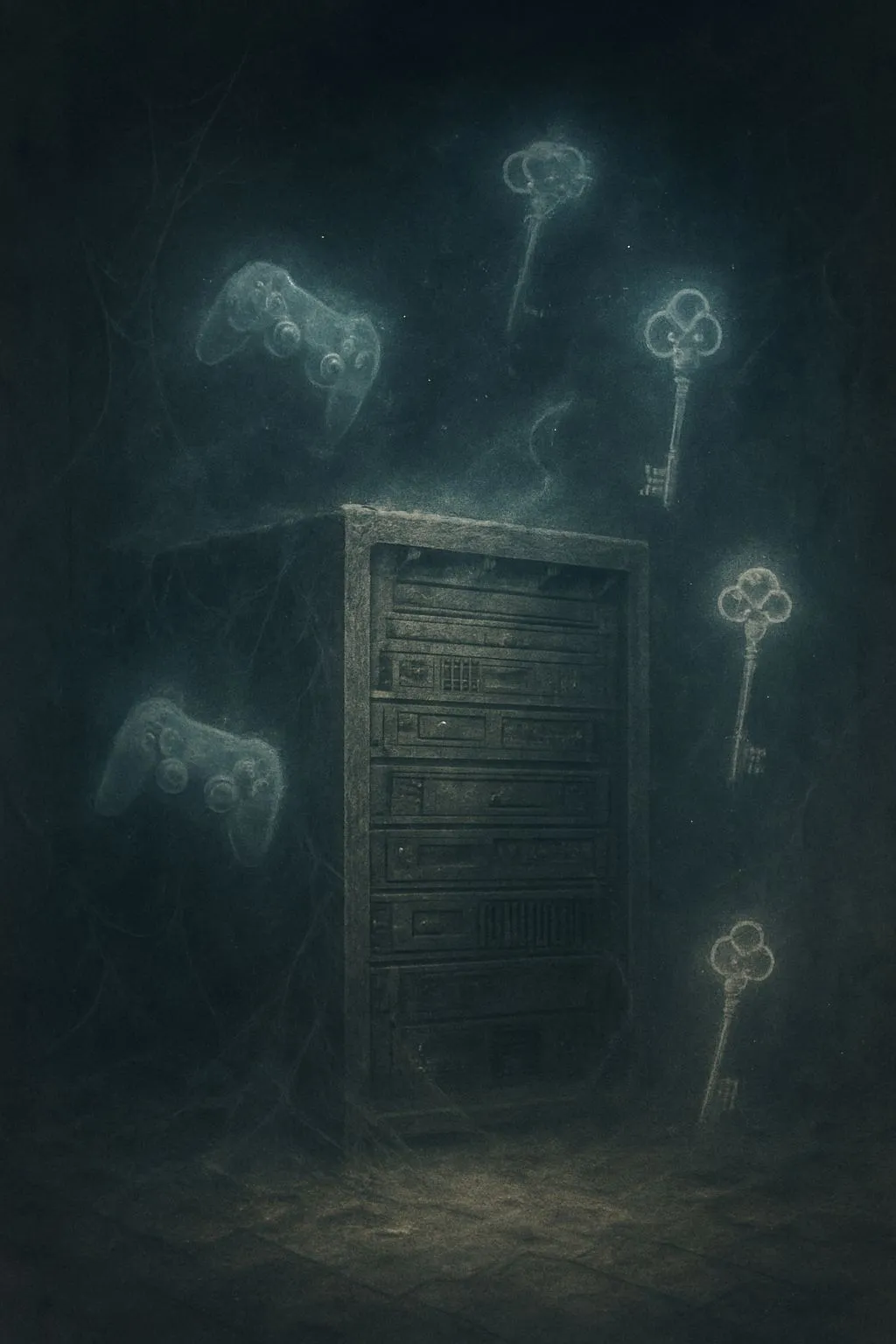
The world of video games is a constantly expanding universe and contraction, a perpetual cycle of breathtaking novelties and painful addii. While the industry celebrates the arrival of new portable consoles such as the ASUS ROG Ally X, promising amazing performance, or exalted by adding unmissable titles to subscription services such as Xbox Game Pass, a seemingly minor news can raise deep questions about the very nature of our relationship with the medium. Ubisoft's recent statement of wanting to shut down servers of numerous titles of his past, including pillars as Assassin’s Creed 2, Far Cry 2 and chapters of the series Rainbow Six, it is not just a footnote in the videoludic chronicle. It is an alarm bell, an echo of the challenges inherent in digitalization and preservation, which forces us to reflect on what it really means “to possess” a video game in the modern era and what destiny awaits our collective ludic memory. This decision, although it concerns only the online features and does not affect the single-player campaigns of many of the games mentioned, highlights a much wider issue: the ephemeral existence of the software as a whole and, in particular, that of the components that depend on an external infrastructure managed by third parties. The industry evolves rapidly, but with it the problems related to the continuing accessibility of works that, for many, represent not only entertainment, but real memories, milestones of a personal and collective videoludic path.
The Shadow of Digitalization: When the Games fade in Nothing
The announcement of Ubisoft, far from being an isolated incident, fits into a consolidated trend that regularly sees video companies releasing support for less recent titles. The motivations are often of an economic or technological nature, but the impact on the player is much deeper and more complex than a simple interruption of service. When a server is turned off, it is not only an online feature to perish; it is an entire ecosystem that collapses, bringing with it the possibility of accessing in-game prizes, unlocked objects or purchased with proprietary currency, statistical results and, in some cases, entire sections of play that depended on the connection. Imagine having dedicated hundreds of hours to climbing the rankings of a multiplayer game Rainbow Six Vegas, or having collected every single object in a title that provided rewards related to online events, as it was common in many games of the time. With server shutdown, all that progress, all that time and passion investment, becomes irreparably inaccessible, almost as if it had never existed. This phenomenon is particularly acute for titles that, while having a playable single-player component offline, integrated the online significantly, perhaps with unique cooperative modes or asynchronous challenges that enriched the overall experience. For fans of Assassin’s Creed 2While still able to explore Venice and Florence as Ezio Auditore, the loss of any online features, however marginal they might seem at the time, represents the mutilation of a work that many consider a masterpiece. This scenario does not only concern the most animated “gamers”; it touches anyone who has an emotional connection with a video game, who sees it as part of their personal and cultural history. Digitization has brought undoubted advantages in terms of distribution and accessibility, but it has also introduced this intrinsic vulnerability: what is intangible can fade in a click, deleted from registers without significant notice. The sense of impotence that comes from it is palpable, a warning that our digital age, however advanced, does not guarantee eternity, but rather an intrinsic fragility in the shadow of a general switch.
You don't own it, but Licenzi: The Scomod Truth of Digital Game
The heart of the debate on server closures beats around a fundamental question, often ignored or misunderstood by most consumers: the difference between physical property and license of use in the context of digital software. When you bought a physical copy of a video game, such as a cartridge for NES or a disc for PlayStation 2, you came into possession of a tangible object. That object was yours, you could lend it, resell it or store it at will, and its functionality did not depend, unless rare cases, on an external infrastructure. The advent of digital distribution, while offering undeniable advantages in terms of comfort and cost reduction, radically altered this paradigm. Today, when we “buy” a video game on platforms like Steam, PlayStation Store, Xbox Marketplace or Ubisoft Connect, we’re actually not buying the software itself, but a license of use. This license is a contract, often buried in the intricate clauses of an End User License Agreement (EULA), which allows us to access and use the software under certain conditions established by the rights holder. Among these conditions, almost universally, it is specified that the company reserves the right to change, update or even disable the services associated with the game at any time and without notice. It is a concept that distorts the traditional idea of ownership: the digital video game is not a good that you own, but a service that you subscribed to indefinitely, whose availability is at the discretion of the licensor. This model is particularly evident in the “always-online” games or with a strong multiplayer component, where access to the server is inherently linked to the title functionality. Also for games with a robust single-player campaign, elements such as patches, DLC and updates can be used exclusively by server, making the “property” of the incomplete game if not connected. The proprietary currency of Ubisoft and the redeemed objects, mentioned in the article of origin, become a further layer of this non-propriety: they are virtual assets that do not exist outside the ecosystem controlled by the publisher, and their disappearance with the shutdown of the servers highlights the fragility of our digital investments. This reality, although uncomfortable, is the foundation on which much of the modern video industry stands, and understanding the distinction between possession and license is the first step to navigate with awareness in this constantly evolving digital landscape.
The Great Bet: Why do Companies turn off Servers?
The decision to turn off the servers of old games is never taken lightly, or at least so we are told, and hide behind it a complex network of economic, technological and strategic reasons that companies must balance. The most obvious is the maintenance cost. Managing dedicated servers for titles with a reduced player base is an honest operation. Requires hardware resources, energy consumption, IT personnel for maintenance and security, and software licenses. When the number of players active on a given title decreases to become marginal, the cost-benefit ratio tilts drastically towards economic inconvenience. It is difficult to justify a continuous investment for a few users, especially in a profit- maximizing industry. Another crucial factor is thetechnological obsolescence. Network servers and infrastructure age, and the most dated games may have been developed on technologies or frameworks that are no longer supported, are vulnerable to modern security threats or simply are not compatible with new hosting platforms. Updating the infrastructure to support an old game can be more expensive and complex than developing a whole new feature for a current title. In addition, Business strategy plays a preponderant role. Publishers like Ubisoft focus on the launch and support of their most recent and profitable titles, such as Assassin’s Creed Valhalla, Watch Dogs Legion or Immortals Fenyx Rising, which continue to generate revenue through DLC, seasons and microtransactions. Keep old stocks alive away from resources that could be allocated to the development of new products or to the improvement of existing ones, in line with market priorities. There are also issues related to Expired licenses. Many games use third-party music, 3D models or middleware for which licenses of use are set in time. When these licenses expire and are not renewed, the company may be forced to disable the parts of the game that make use of it, or even the entire title if the component is too integrated. This is a problem often underestimated but very real, especially for games using soundtracks with famous songs. Finally, the consolidation and restructuring Business, like the one that Ubisoft itself is going through, can lead to drastic decisions to optimize operations. Server closure is often an inevitable step in a reorganization process aimed at making the company leaner and more competitive, focusing on the future rather than maintaining a non-profit past. All these reasons converge in making the “big disappearance” of online games a sad but logical consequence of the current business model.
Il Dilemma della Conservazione Ludica: Save the History of Video Games
Closing games servers as Assassin’s Creed 2 and Far Cry 2 project us directly into the heart of one of the most pressing dilemmas of the digital age: preservation of video game as a form of art and cultural heritage. Unlike books, movies or music, which have more stable formats and established conservation mechanisms, video games have unique and multifaceted challenges. Their interactive nature, dependence on specific hardware, proprietary operating systems and, more and more often, on online servers, makes them intrinsically fragile. Every server turned off, every license expired, every obsolete hardware is a piece of history that is likely to be lost forever. Losing access to a video game does not only mean denying experience to future generations; it means erasing a part of our cultural and technological evolution. Video games are art, but also engineering, design, narrative, and social phenomena that reflect and influence society. Their preservation is crucial for academic research, for developers who can learn from the past, and for players who want to relive or discover the roots of the medium. Numerous institutions, archives and museums, such as the Strong National Museum of Play or the Library of Congress, are actively engaged in the preservation of the video game. However, the challenges are immanent. It is not enough to preserve the source code; it is necessary to preserve the running environment (console, PC with hardware and software specifications of the time), game data, patches, DLC and, in the case of online games, the entire server infrastructure that allowed its existence. For multiplayer games, the challenge is even more complex: how can you preserve the social and interactive experience of a game like Rainbow Six Vegas without its community and its active servers? Often, the answer lies inemulation and in the infatiable work of fan community. These groups devote time and resources to creating hardware emulators, restoring online functionality via unofficial private servers, patching games to make them compatible with modern systems or to eliminate online dependencies. However, these solutions, while being heroic, are often subject to interruptions, legal problems related to copyright and cannot guarantee the same authenticity or stability of the original experience. Conservation is a collective enterprise that requires collaboration between developers, publishers, institutions and community players, so that the works of the past are not condemned to digital oblivion.
Beyond Nostalgia: The Impact on Players and the Future of Online Communities
Server locks go far beyond the mere loss of technical functionality; they affect deeply on the emotional and social fabric of players' communities. For many, an online video game is not only a pastime, but a meeting place, a virtual square where friendships, rivalry and shared memories arise. Think of the players Tom Clancy’s Rainbow Six Vegas or Ghost Recon Future Soldier who spent countless hours coordinating with friends, developing team strategies and celebrating victories. The closure of servers not only makes the game inaccessible, but also destroys these digital “social spaces”, leaving a void that simple nostalgia cannot fill. It is the loss of a reference point, of an arena where identity and relationships were built. The impact also extends to the competitive and achievement aspect. Players who have committed themselves to unlocking each “trophy” or “objective” linked to online functionality, or to reach the top of the rankings, see the value of these efforts diminished or even canceled. The proprietary currency of Ubisoft and the redeemed objects, often fruit of hours of grinding or real purchases, become simply evaporated, a bitter memory of an investment now without any residual value. This generates a sense of distrust and frustration towards publishers, feeding the debate on the fragility of player investment in the digital world. In response to these closures, communities often seek alternative ways. Private servers, managed by enthusiasts and modders, represent a beacon of hope, allowing games to “live” beyond the publisher’s will. However, their legality is often ambiguous, their unsecured stability and their limited scope compared to the original infrastructure. Looking at the future, the experience of server locks should shape player expectations and developers’ responsibilities. If a game is sold with a strong emphasis on its online components, consumers should be put in a position to understand the temporaryity of such services. The developers, on the other hand, should consider from the design stage the implementation of robust offline modes or, at least, of tools that allow the community to take the reins of the game once the official support ceases. Only in this way can we mitigate the bitterness of loss and allow communities to continue to exist, albeit in different forms, even after the light of official servers will be turned off.
The Service Model and the Eternity Illusion: Game Pass and Modern Ecosystem
Le chiusure di server, come quelle annunciate da Ubisoft, ci spingono a esaminare più a fondo l’evoluzione dell’industria videoludica verso un modello sempre più orientato ai “servizi” piuttosto che ai “prodotti” tradizionali. In questo contesto, piattaforme come Xbox Game Pass emergono come esempi lampanti di questa trasformazione. Game Pass, pur essendo un servizio straordinario che offre accesso a centinaia di giochi con un canone mensile, incarna il concetto di “noleggio” digitale nella sua forma più compiuta. Non si possiede nulla; si paga per l’accesso. E se un gioco lascia il catalogo Game Pass (come accade regolarmente), o se si interrompe l’abbonamento, l’accesso a quei titoli viene revocato. Questo modello ha il vantaggio di democratizzare l’accesso a un’enorme libreria di giochi, permettendo ai giocatori di sperimentare titoli che altrimenti non avrebbero mai acquistato, come dimostrato dai “cinque nuovi giochi gratis su Game Pass, uno è imperdibile” menzionati nell’articolo originale. Tuttavia, amplifica anche la fragilità del nostro rapporto con il software. La promessa di un accesso illimitato è intrinsecamente legata alla continuità del servizio e alla permanenza dei giochi nel catalogo. Se da un lato Game Pass può essere un veicolo di preservazione per giochi che altrimenti faticherebbero a trovare un pubblico, dall’altro accentua l’idea che la disponibilità dei giochi sia un privilegio temporaneo, una “finestra” di accesso che può chiudersi in qualsiasi momento. Questa realtà si intreccia con l’evoluzione dell’hardware portatile come l’ASUS ROG Ally X, che “stupisce” con le sue prestazioni e “buone prestazioni anche nei giochi più pesanti”, spingendo il concetto di gioco “ovunque e comunque”. Questi dispositivi sono la punta di diamante di un’esperienza gaming altamente digitalizzata e connessa, dove il software è prevalentemente scaricato da store online e la sua funzionalità può essere legata a servizi di autenticazione o aggiornamenti via server. Se un gioco smette di essere supportato o rimosso da uno store digitale, la sua accessibilità sull’hardware portatile diventa problematica, anche se si tratta di un titolo single-player. L’ecosistema moderno, con i suoi servizi in abbonamento e la sua dipendenza dalla connettività, offre un’illusione di abbondanza e immediatezza. Ma sotto la superficie, si cela una precarietà intrinseca: ciò che è dato oggi, può essere tolto domani, e la longevità dei nostri divertimenti digitali è sempre più a discrezione di terzi. L’illusione dell’eternità si scontra con la realtà della gestione economica e strategica dei servizi, un monito costante sulla natura effimera del nostro divertimento digitale.
Responsibility and Solutions: What Can Developers, Publishers and Players Do?
Faced with the growing threat of server closures and the precariousness of digital property, it is essential that all actors involved in the video world reflect on their responsibilities and possible solutions. Developers and publishers They have a crucial role. First of all, a greater transparency. When buying a game with strong online components, consumers should be clearly informed about the potential temporaryity of services, future support plans and the consequences of server shutdown. A clause hidden in a EULA is not enough; a proactive and understandable communication is needed. Secondly, it should be considered the implementation of robust offline mode also for components originally online, or the ability to distribute patches that remove server dependencies for single-player games once the official support ceases. Theopen-sourcing server code or the provision of tools for “private servers” could be a gesture of good will that would allow communities to continue to make the games live, transforming a forced closing into a transition managed by the community itself, an option that several independent studios and also some great publishers have successfully explored. Finally, collaboration with the archives and conservation institutions should become a standard practice, providing them with the source code, hardware and documentation necessary to preserve the titles in the future. On the other hand, even the players they have an active role. Be aware of the nature of digital licenses and EULA clauses is the first step to make informed purchasing decisions. Actively support conservation efforts, open-sourcing petitions or private server projects by fans, can make a difference. The public opinion of players has the power to influence corporate decisions, as demonstrated in the past by several pressure campaigns. Even the distribution platforms could contribute. We imagine digital stores that offer a “conservation certificate” for games, or that are committed to maintaining offline versions of all distributed titles, even after the termination of support by the developer. The construction of an independent “digital heritage trust”, funded by a consortium of companies and donations, could guarantee the custody and accessibility of historical games in a neutral environment. These are not easy or immediate solutions, but they represent a path towards a future where our videoludic heritage is treated with the dignity and permanence it deserves, surpassing the use-and-geta model imposed by the ephemeral nature of digital.
A Uncertain Future, a Memory to Save: Long term perspective
The videoludic landscape, as we have seen, is a fertile ground for innovation but also a digital cemetery in becoming for many of its past masterpieces. The announcement of Ubisoft, which catalyzed this discussion, is a bitter reminder of the volatility of a medium that, although young, has already generated a huge cultural and historical wealth. The question is no longer whether servers will be turned off, but when, and what can we do to mitigate its impact. The long-term perspective requires us to look beyond the mere consumption and embrace the idea that video games are more than just an entertainment product; they are cultural artifacts that deserve to be studied, revisited and preserved. In a time when streaming services such as Netflix have demonstrated the strength and vulnerability of subscription models also for cinema and television, the world of video games is confronted with similar challenges, but amplified by their interactive and often intrinsically online nature. The “digital property” remains an ambiguous concept and the dream of owning a game forever is increasingly an illusion. However, this does not mean that we must passively accept the fate of disappearance. Awareness, collective action and pressure on companies can lead to significant changes, leading to more responsible and conservation-oriented practices. It is a continuous dialogue between consumers and producers, between the need to innovate and the responsibility to honour the past. Ludic memory is not only an individual nostalgia affair; it is a crucial component of our shared cultural history. Saving it means safeguarding a fundamental part of what we have become through interaction with these virtual worlds. The future of video games will depend not only on their ability to evolve technologically and artistically, but also on our collective will to ensure that their past is never completely erased.


