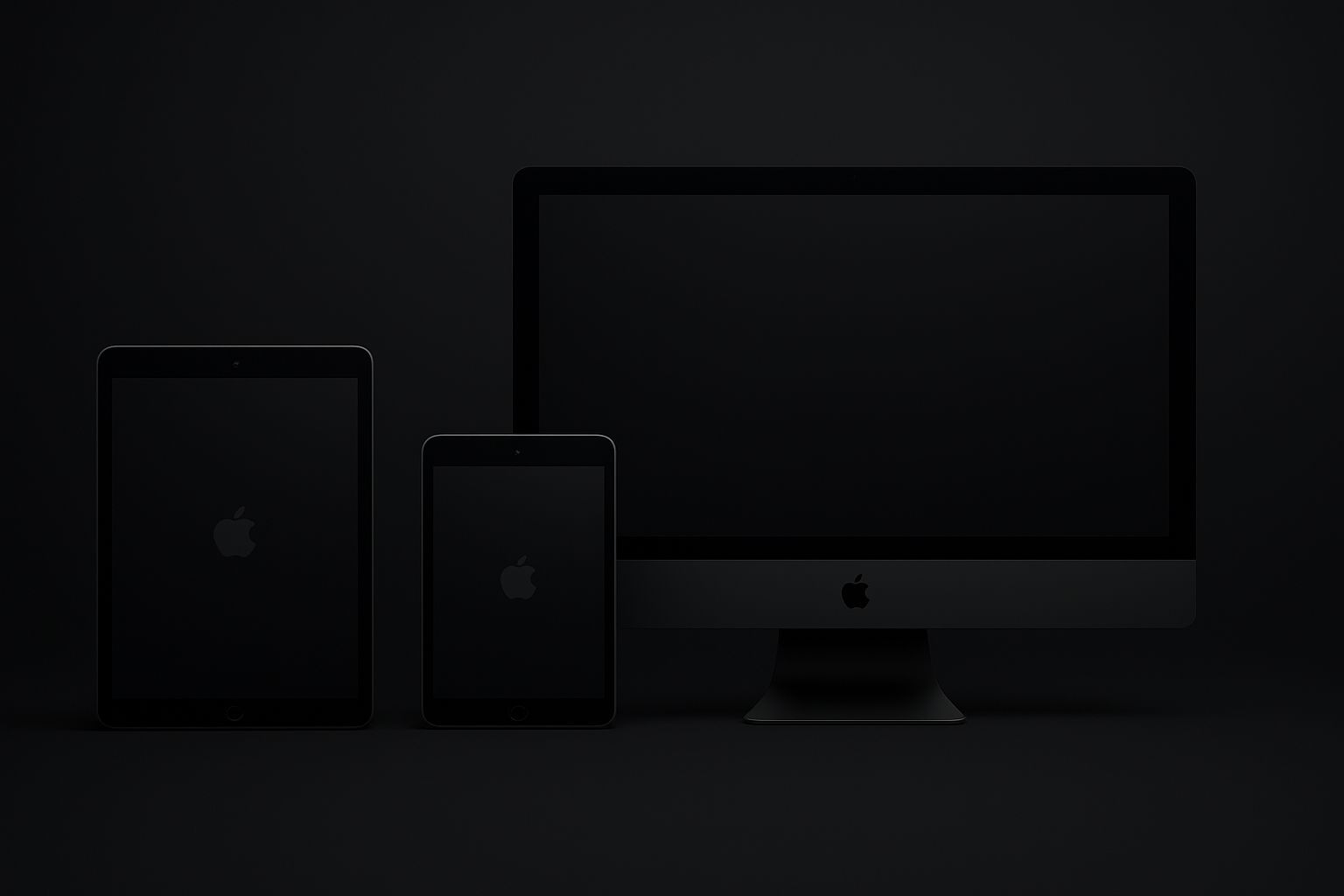
2012 was a year of considerable excitement for Apple, a period that saw Cupertino’s company consolidate and redefine its product offering in a rapidly changing technological market. While the world was questioning the post-Steve Jobs direction, Apple responded with a wave of launches ranging from mobile to desktop, introducing significant innovations and, in some cases, unexpected surprises. The highlight event of that autumn saw the presentation not only of the expected iPad mini, a bold bet in the segment of compact tablets, but also of the biggest and controversial fourth-generation iPad, a ‘couple’ that left many third-generation iPad owners perplexed for its rapid succession. Next to these, the new and fascinating iMacs were unveiled, with a design that redefines the aesthetics of the all-in-one desktop, and the renewed Mac mini and MacBook Pro 13.3 inch with Retina screen, extending high-resolution technology to a wider audience. These launches were not simple hardware updates; they represented a manifesto of Apple’s vision for the future of personal computing, between extreme portability and desktop power, trying to anticipate the needs of users and professionals in an era that saw the beginning of the debate on the ‘post-PC’. Each product, with its peculiarities, helped to paint a complex picture of Apple’s strategy, between bold innovation and refined optimization, in a context of increasing competition and increasingly higher expectations. The analysis of these launches offers a profound perspective on the challenges and opportunities that the company faced, laying the foundations for many of the directions it would take in the coming years, and revealing how engineering and design could still surprise and fascinate the global audience.
no
IPad 4 and Accelerated Upgrade Strategy
no
The presentation of the fourth generation iPad, just eight months after the launch of its predecessor, the iPad 3, was undoubtedly one of the most discussed moments and, for many users, disconcers of the 2012 Apple event. What for some was perceived as a real ‘couple’, raised questions about Apple’s strategy and the cyclical nature of its products. The iPad 3, launched in March of the same year, introduced the revolutionary Retina display, but had been criticized for a slightly lower autonomy and a slight overheating due to the integration of more powerful components. Apple’s response was iPad 4, a quick update aimed at correcting these imperfections and further pushing performance. The heart of this new iteration was the A6X chip, a processor that promised double performance both in terms of CPU and graphics compared to the A5X of the iPad 3. Although precise technical details were not immediately available, the expected impact was clear: an even smoother user experience, reduced loading times for demanding applications and superior gaming and multitasking management. This choice of speeding up the obsolescence of the previous model suggested an aggressive Apple strategy in maintaining a competitive advantage, especially at a time when the tablet market was becoming increasingly crowded and technology advanced to giant steps. The integration of a FaceTime HD camera, dual-band Wi-Fi and extended compatibility with global LTE networks, including Italian networks, reflected Apple’s commitment to making the iPad an increasingly versatile and connected device, suitable for an international audience. Not less significant was the adoption of the Lightning connector, which replaced the previous 30 pin connector, bringing with it the promise of a thinner and reversible design, but also the need for new adapters for the myriad of existing accessories. This passage, although initially uncomfortable for users, was a strategic move towards standardization on a more modern and compact format, which would define the Apple ecosystem for years to come. The decision to maintain iPad 2 in production, placing it as an entry-level option at a more affordable price, revealed another facet of Apple’s strategy: offering a range of prices that could attract a wider audience, without sacrificing innovation in peak models. The price of the iPad 4 was 499 euros for the 16GB Wi-Fi model, up to 829 euros for the 64GB version with Wi-Fi + cellular network, maintaining a clear differentiation in the premium segment of the tablet market.
no
The Assumption of the Compact Tablet: The Fenomeno iPad mini
no
Parallel to the launch of iPad 4, Apple introduced a novelty that captured the attention of the whole world: the iPad mini. This 7.9-inch screen tablet, with a starting price of 329 euros, represented a significant deviation from the philosophy of ‘big tablet’ that had characterized the Apple offer until then. The move was clearly a response to the growing popularity of smaller and cheap Android tablets, such as Google Nexus 7 and the Amazon Kindle Fire, which were eroding the market share in the entry-level segment. The iPad mini was not only a matter of size; it was a declaration of intent. Apple demonstrated that it was willing to explore new market segments and respond to the portability needs that consumers began to manifest. The iPad mini design was a masterpiece of engineering: thin, light and with small side frames, it resumed the aesthetics of the iPhone 5 and the fifth-generation iPod touch. Although the screen was not Retina, it offered a resolution of 1024×768 pixels, the same as the first two iPads, ensuring compatibility with the entire library of existing apps without needing to scale. This choice of resolution was an astute compromise, allowing Apple to maintain a more competitive price and excellent battery life while offering a consistent user experience. The A5 chip, although not the most recent, was still sufficiently performing for most applications and daily browsing. The iPad mini opened the doors of a new market segment for Apple, attracting users who wanted a device easier to hold with a hand, to stick in a smaller bag or to use as an advanced e-book reader. Its introduction has created an intense debate on the cannibalization of traditional iPad sales, but it has actually helped expand the Apple user base, serving as a bridge between iPhones and larger iPads. The success of the iPad mini has shown that there was a strong demand for a compact and premium tablet, and that Apple was able to satisfy it with a product that combined construction quality and brand distinctive software experience to a more handy form factor. The iPad mini was not just a tablet, it was a demonstration of Apple’s strategic flexibility in a constantly evolving market, a product that has been able to find its place and create a niche of loyal supporters.
no
iMac 2012: The Aesthetic and Technological Reinvention of Desktop
no
Among the launches of 2012, the refurbished iMacs have undoubtedly represented a ‘show for eyes’, as rightly described, and a manifesto of Apple’s ability to reinvent the design of a consolidated product. The new generation of iMacs has stunned for its incredibly thin profile, which was thinned up to only 5mm at the edges, an engineering firm that redefines expectations for all-in-one computers. This result was achieved through advanced production techniques, such as friction welding (friction iron welding) which allowed to combine aluminum components with a micrometric accuracy, and a lamination process of the display that eliminated the space between the LCD panel and the cover glass. The display, although not yet Retina on the 2012 models, offered an exceptional visual quality with vibrant colors and wide viewing angles. Beyond aesthetics, iMac 2012 introduced significant technical innovations. One of the most important was the introduction of technology Fusion Drive, a hybrid storage solution that combined a traditional hard drive with a small amount of NAND flash memory. This system, intelligently managed by OS X, learned user usage patterns and automatically moved the most used files and applications on the SSD portion, ensuring boot speed and loading applications similar to that of a pure SSD, while maintaining the storage capacity of an HDD at a lower cost. It was an elegant answer to the need for speed and space, without the price compromises of large capacity SSDs at the time. Under the hood, iMacs were equipped with third-generation Intel Core processors (Ivy Bridge) and NVIDIA graphics cards, offering solid performance for productivity, multimedia editing and even light gaming. Redesign also posed a number of challenges, such as increased access to internal components for upgrade, reflecting Apple’s trend towards increasingly integrated and ‘sealed’ devices. The iMac 2012 were available in 21.5 and 27 inch versions, with prices varying depending on the configuration. Their launch strengthened Apple’s position in the premium desktop market, demonstrating that, despite growing interest in mobile devices, the fixed computer still played a central role, especially when proposed with attractive design and cutting-edge technology. These iMacs were not just computers; they were pieces of furniture, design objects that fit perfectly into any environment, becoming a reference point for the aesthetics and functionality in the segment of all-in-one PCs.
no
The Retina Power on the Laptop: MacBook Pro 13 inch Retina
no
The year 2012 marked a transition era for Apple device displays, with the introduction of Retina technology on most of its lineup. After the clamorous debut on the MacBook Pro from 15 in June, the presentation of MacBook Pro 13.3 inch with Retina screen in October extended this visual revolution to a more compact format and, for many professionals and students, more practical. This move was not at all discounted; the technical challenge of integrating a display with such a high pixel density (2560×1600 pixels) into a 13-inch chassis, keeping the thickness, weight and battery life acceptable, was considerable. But Apple once again demonstrated its engineering mastery. The Retina display on the 13 inch has transformed the visual experience, making the text incredibly sharp, almost as printed on paper, and the images so detailed to make the traditional displays appear in comparison. For graphics, photographers, developers and anyone working with visual content, it was a step forward epochal, which improved productivity and reduced visual fatigue. But the advantages were not limited to professionals: the common user also benefited from a web browsing experience, reading and viewing of videos significantly higher. In addition to the display, the MacBook Pro 13′′′ Retina has brought a completely redesigned interior architecture. Unlike non-Retina models, it maintained a subtler and lighter design, eliminating the optical drive and relying exclusively on flash storage (SSD), which contributed significantly to the overall speed of the system. It was powered by third-generation Intel Core i5 or i7 processors (Ivy Bridge) and integrated Intel HD Graphics 4000 graphics, enough to manage Retina display rendering and most workloads. Connectivity included Thunderbolt ports, USB 3.0, HDMI and an SD card slot, offering excellent versatility despite the compact format. The price, of course, reflected the cutting-edge technology: starting from 1779 euros, it was a significant investment, but it aimed at an audience that favoured performance, building quality and, above all, the visual experience without compromise. The introduction of the MacBook Pro 13′′′′ Retina cemented the vision of Apple for the future of laptops: thin, fast, without unnecessary mobile parts and with high resolution display. It has established a new standard in the industry, also pushing competitors to invest in high-density pixel displays, and has shown that a compact laptop could offer a comparable visual experience, if not superior, to that of high-end desktops.
no
Mac mini and the Evolution of the Mac Platform in 2012
no
In the 2012 launch wave Mac mini renovated represented a key pillar of Apple’s desktop offering, consolidating its role as the most accessible gateway to the macOS ecosystem and as a versatile solution for a myriad of applications. Although it did not have the same media resonance of the redesigned iPads or iMacs, the Mac mini has always been a niche but crucial product, appreciated for its compact shape factor, its quietness and its flexibility. 2012 updates boosted the Mac mini with third-generation Intel Core i5 and i7 processors (Ivy Bridge), offering a significant increase in performance compared to previous models. This made the small computer even more capable of dealing with challenging workloads, from photo editing and light video to home server management, from advanced multimedia playback (using powerful media center) to software development. Intel HD Graphics 4000 integrated graphics ensured a smooth experience for everyday use and for the reproduction of high-definition multimedia content. Connectivity has also been improved, with the introduction of four USB 3.0, Thunderbolt and HDMI ports, making it extremely versatile to connect a wide range of peripherals, external displays and high-speed storage devices. The option of configuring the Mac mini with a Fusion Drive, mirroring the technology introduced in iMac, further improved storage performance, offering SSD speed with traditional hard disk capacity at a lower price. This made it an excellent choice for those who needed a responsive system without spending high figures for a large capacity SSD. A distinctive aspect of the Mac mini has always been its nature ‘bring your own display, keyboard, and mouse’, which made it ideal for those who wanted to switch to macOS by reusing their existing peripherals, or for those looking for an economical and un bulky desktop solution. Moreover, its server configuration, although no longer specifically branded as in the past, was still a popular choice for small businesses and developers thanks to its reliability and support for Apple's server software. The Mac mini 2012 has shown that Apple did not neglect its less striking products, ensuring that even its smallest and discreet offer received significant updates, maintaining its relevance and value for a specific and faithful slice of users in the Mac ecosystem.
no
The Lightning Connector: A Competitive Choice and Your Consequences
no
One of the most significant technical elements and, in some ways, controversial introduced with the new Apple products of 2012, in particular the iPad 4 and the iPad mini (besides the iPhone 5 launched earlier), was the transition from the 30 pin connector to the new lightning connector. This move, although apparently only a hardware detail, has had deep repercussions on the entire Apple ecosystem and the user experience. The 30 pin connector, introduced with the third generation iPod in 2003, had become a standard de facto for ten years, supporting a myriad of accessories, dock bases, audio systems and chargers. The decision to abandon it for a new proprietary standard has generated a wave of frustration and debate among users, which were now obsolete accessories. However, the reasons behind this choice were strategically valid and technologically necessary for Apple. The Lightning connector was significantly smaller, reversible (it could be inserted in both verses, eliminating the frustration of having to guide it correctly), more robust and entirely digital. These characteristics not only allowed to make thinner and lighter devices, freeing valuable space inside for larger batteries or other components, but also improved the reliability and versatility of the connection. Apple has tried to mitigate the impact by providing and extending the ‘adapter park’, with solutions for connecting cameras, SD cards and VGA or HDMI video devices. These adapters, though expensive and not always elegant, were a temporary solution to allow users to continue using part of their old accessories. The transition to Lightning marked a break with the past and demonstrated Apple’s willingness to make courageous decisions to push innovation, even at the cost of generating an initial discontent. In the long term, Lightning became a reliable standard and allowed Apple to design devices with greater freedom. This episode is emblematic of Apple’s philosophy: priority to innovation and design, although this involves the abandonment of established standards and the demand for adaptation by its user base. It was a key moment in modernising Apple’s mobile connectivity, preparing the ground for future developments and consolidating company control over end-to-end user experience.
no
Apple in 2012: Transition, Innovation and Competitive Pressure
no
2012 was a crucial year for Apple, not only for the quantity and quality of products launched, but also because it represented a period of significant transition for the company. It was the first full year of Tim Cook as CEO after Steve Jobs disappeared, and the whole world looked carefully to see if Apple would keep its innovative vein. The launches of iPad 4, iPad mini, iMac, MacBook Pro Retina and Mac mini have shown that Apple was far from stagnant. On the contrary, he was sailing in an increasingly fierce competitive landscape. In the tablet segment, Android’s rise with products such as Google Nexus 7 and Kindle Fire, at much more aggressive prices, was putting pressure on the iPad domain. The introduction of the iPad mini was a direct response to this challenge, demonstrating Apple’s flexibility in looking for new market segments. The speed with which iPad 3 was upgraded with iPad 4, just eight months away, can be interpreted as an attempt by Apple to reiterate its technological leadership and promptly correct the imperfections of the previous model, maintaining a net advantage in terms of performance. In the computer field, the introduction of Retina displays on MacBook Pro marked a new standard for visual quality on laptops, while new iMacs showed that iconic design could still be reinvented in surprising ways. These launches strengthened the idea that even in the absence of its visionary founder, Apple continued to push the boundaries of design and engineering. However, 2012 was also a year when the debate on the ‘post-PC’ was getting more on. Mobile devices were gaining ground, and Apple’s approach was to offer a cohesive ecosystem ranging from ultra-portable to ultra-powerful, integrating hardware, software and services harmoniously. The standardization on the Lightning connector, though controversial, was a further move to consolidate this ecosystem. In summary, 2012 for Apple was a year of calibrated innovation and strategic responses. Despite competitive pressure and high expectations, the company has demonstrated a remarkable ability to adapt and technological leadership, laying the foundations for future successes and confirming its dominant position in the global technology sector, although the road to travel was still long and full of new challenges to face in the rapid evolution of the digital market.
no
The legacy of 2012: Long-term impact on Products and Market
no
The wave of products launched by Apple in 2012 was not only a series of hardware updates, but it was a fundamental moment that left alasting inheritance both on the company itself and on the entire technological landscape. Many of the innovations introduced in that year have laid the foundations for future generations of devices and have influenced the direction of the market for years to come. The rapid succession of iPad 4 showed a trend that would become more common in the tech sector: shorter refresh cycles, driven by the need to integrate new technologies (such as more powerful processors and advanced connectivity) and strong competition. However, he also stressed the importance of forward-looking design, as demonstrated by the longevity of iPad 2, which continued to be sold for several years as a more economical option, testifying to the solidity of its original design and its ability to meet basic needs. The iPad mini, in particular, has had a huge impact, validating the segment of compact tablets and forcing competitors to reconsider their offers. It has shown that portability and maneuverability were increasing priorities for consumers, opening the way to a wide variety of similar sized tablets and affecting the design of smartphones that have become progressively larger. Redesigned iMacs, with their incredibly thin profile and the introduction of Fusion Drive, have established new aesthetic and functional standards for all-in-one computers. Their design has remained substantially unchanged for many years, demonstrating its timeless elegance and effectiveness of engineering solutions adopted. The Fusion Drive, in particular, anticipated storage hybridization as a practical solution to balance speed and capacity. MacBook Pros with Retina display accelerated the adoption of high-resolution screens across the laptop industry, making text and images more sharper a expected standard. They pushed developers to optimize their applications for these displays and they have high user expectations on visual quality in each area, from work to use multimedia content. Finally, the Lightning connector, although initially contested, proved to be an investment in the future. Its reversibility, compactness and robustness have simplified user experience and allowed Apple to maintain a proprietary and efficient hardware design for many years, until the recent transition to the USB-C also set by European regulations. 2012 was not just a year of launch; it was a year when Apple redefined its product strategies, consolidated its position as a technological leader and shaped consumer expectations for the devices we still use today, demonstrating its ability to innovate and dictate trends, even in a period of deep transition and intense competition. The echo of those choices and products still resonates today, affecting the design and functionality of the devices that accompany us daily, witnessing a long-term vision that continues to lead the tech industry.


