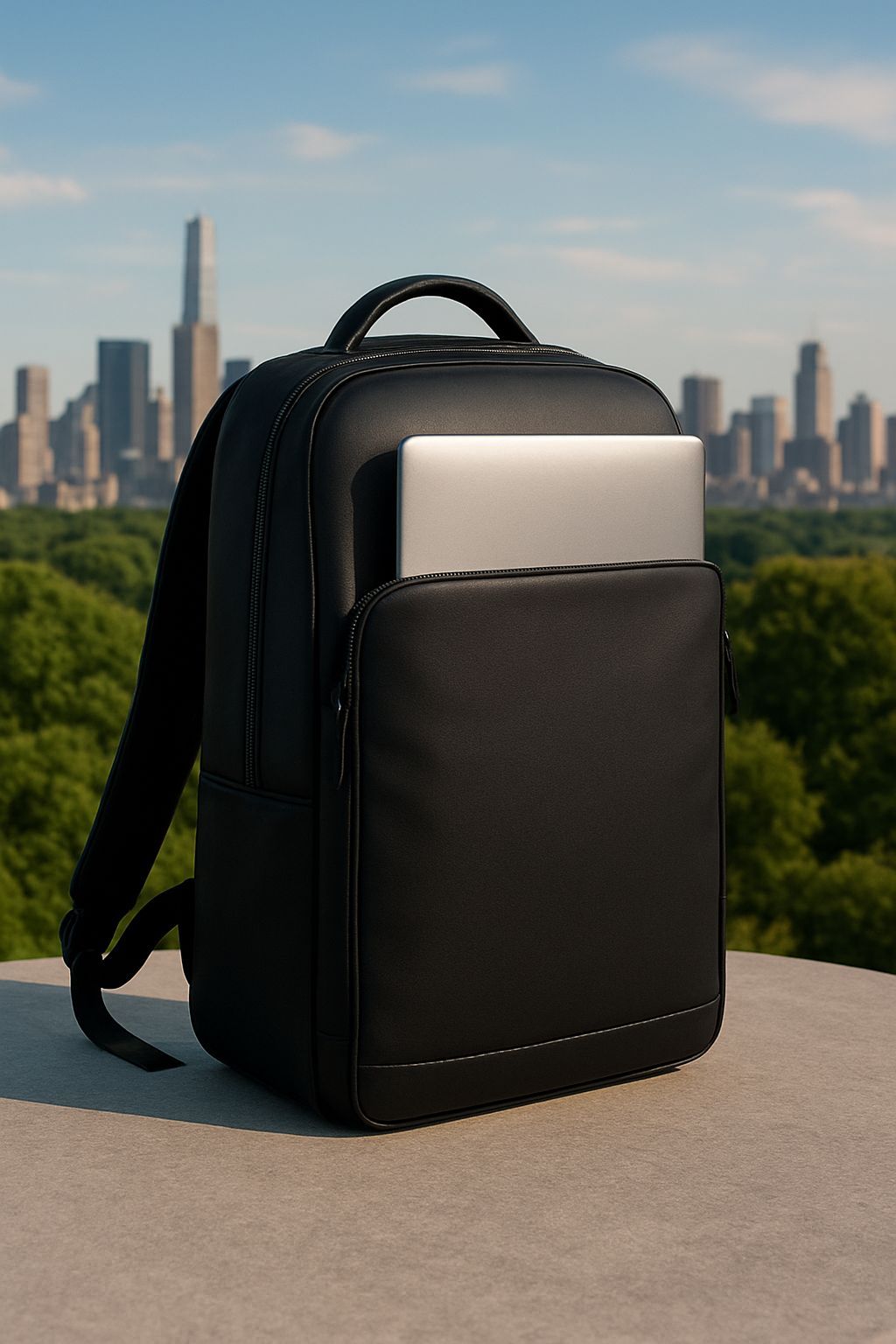
In the digital age in which we live, the boundary between working and personal life becomes increasingly labile, and mobility has become an essential condition. For millions of students, professionals and travelers, the laptop is no longer a simple tool, but the heart of their daily activities, a real portable office that requires optimal protection and transportability. In this scenario, the PC backpack emerged as an indispensable accessory, evolving from simple container to sophisticated travel companion, designed to safeguard our technology and facilitate our dynamic lifestyle. The offer for the HP Travel 18 backpack, for example, is not only a promotion on a product, but a reminder to consider the importance of a weighted choice when it comes to an object that will accompany our most precious devices, day after day. It is no longer just about finding a place for laptop, but investing in a solution that combines safety, comfort, organization and, more and more often, sustainability. A good PC backpack is a statement of intent: a will to keep your digital world accessible, protected and always at hand, without compromising physical well-being or style. This article aims to go far beyond the single offer, exploring all aspects that define a PC backpack of excellence, offering a complete guide to orientate in the vast market and making an informed choice that meets the most specific and advanced needs of the modern technology user, transforming a purchase into a real investment in their digital future.
The Evolution of the PC Backpack: From Simple Case to Portable Technology Hub
The history of the PC backpack is a fascinating testimony to the technological evolution and changing needs of users. Initially, the first laptops, robust and heavy machines, were accompanied by rigid bags and briefcases, often bulky and little ergonomic, whose main function was pure physical protection. They were objects designed more for occasional transport than for everyday use in mobility. With the advent of the most subtle, light and accessible laptops, and the progressive diffusion of personal and professional information, the need for more practical and comfortable transport solutions emerged. This is where the backpack started its transformation. From the first rudimentary versions with a simple padded compartment, we went to increasingly sophisticated design, able to integrate not only the laptop, but also tablets, smartphones, power banks, cables, adaptors and a myriad of other accessories that became an integral part of our digital ecosystem. This evolution has been guided by several factors: the explosion of remote work and the so-called “digital nomadism”, which made the laptop a ubiquitous work tool; the increase in the size and power of the devices, which required more robust and protective transport solutions; and the increasing awareness of the importance of ergonomics for the health of the user. Manufacturers responded by introducing dedicated compartments with advanced padding and suspension systems to protect the device from impacts, waterproof hinges to safeguard from rain, and even built-in USB cables and ports to facilitate moving charging. It has gone from a mere container to a real portable technology hub, an accessory that not only carries, but also supports and optimizes the use of devices, becoming an extension of our office or classroom, always ready and organized to face any challenge of the modern day. The continuous research of innovation in this sector reflects the critical importance that the PC backpack has in the current panorama of personal and professional technology.
Innovative Materials and Sustainable Design: The Conscious Choice in Digital Era
In the current global landscape, increasing environmental awareness has permeated every productive sector, and that of technological accessories is no exception. The choice of materials for a PC backpack today is much more than a question of durability or aesthetics; it is a conscious act that reflects a commitment to sustainability and reduction of environmental impact. The HP Travel 18, for example, boasts its realization in 100% waterproof polyester derived from post-consumer recycled plastic, a detail that is not marginal at all. This approach is the tip of the iceberg of a broader trend: the adoption of innovative materials that combine high performance with a reduced ecological footprint. In addition to recycled polyester, we find fabrics such as recycled nylon (often coming from abandoned fishing nets or industrial waste), recycled PET, and biodegradable or biological materials such as organic cotton, hemp or even vegan skin made from fruit waste or mushrooms. These materials not only reduce dependence on virgin resources and accumulation of waste in landfill, but are often also produced with processes that require less water and energy. The research also leads to innovative treatments that make fabrics resistant to water, stains and wear, prolonging the useful life of the product and reducing the need for frequent replacements. It is essential that these materials, in addition to being environmentally friendly, guarantee maximum protection for electronic devices: they must be robust, tear-resistant, lightweight and offer excellent cushioning. Sustainable design, moreover, is not limited to the choice of materials, but embraces the entire life cycle of the product, from the modular design that facilitates repairs and replacements, to the transparency of the supply chain, to the recyclability at the end of life. Choosing a backpack made with these principles means not only protecting your laptop, but also making a statement of value and actively contributing to a greener future, transforming a simple purchase into an ethical and environmentally responsible choice.
Ergonomics and Comfort: The Art of Transporting Technology Without Stress
The daily transport of a laptop and all its accessories can result in a considerable weight, and without a proper ergonomic design, this can easily lead to discomfort, muscle fatigue and, in the long term, to postural and chronic problems in the back and back. The mention of padded shoulder straps and one ergonomic backrest hP Travel 18 emphasizes the crucial importance of these elements. But what does it really mean “ergonomic” in a context of PC door backpacks? It means that the design has been designed to distribute weight evenly and naturally on the body, minimizing pressure points and maximizing comfort even during prolonged use. Shoulders should not only be padded, but also adjustable in length and, ideally, present an anatomical shape that fits the curve of the shoulders, avoiding the backpack slides or create friction. Many high-quality backpacks also integrate chest straps and, for heavier loads or for prolonged use, padded waist belts. These additional straps are essential because they transfer part of the weight from the shoulders to the sides, relieving the load on the spine and improving the stability of the backpack, which is particularly useful for walking or pedaling. The backrest, then, is a critical element: it should be well padded with breathable materials (such as the 3D mesh) and present ventilation channels to promote air flow, reducing sweating and keeping the back dry. Some backpacks use back suspension systems that create a small space between the backpack and the back, further improving ventilation. Ergonomics also extends to load balancing: a good backpack should keep the laptop close to the back to concentrate weight in the center of body gravity, reducing stress. Investing in a backpack that excels in these aspects is not a luxury, but a need for long-term health, a pain and discomfort insurance that can undermine the productivity and well-being of students and professionals who depend on the mobility of their technology.
Intelligent Security and Avant-garde Protection: Save Your Data and Devices
In an increasingly interconnected world, the security of our electronic devices and the data they contain has become an absolute priority. A PC backpack should not be limited to being a simple container, but a real mobile fortress. The protection, therefore, goes well beyond the simple anti-shock padding. It is divided into a series of intelligent and avant-garde features designed to safeguard laptop from physical damage, theft and even indirect cyber attacks. From the point of view of physical protection, it is essential that the backpack has a laptop compartment suspended, which maintains the device raised from the bottom of the backpack to better absorb the impacts resulting from falls or shocks. The padding must be dense and well distributed, and some models also offer additional protective screens or reinforced frames. Atmospheric resistance is another crucial factor: waterproof materials (such as recycled HP Travel 18 polyester, or DWR coating fabrics – Durable Water Repellent), sealed or superimposed hinges, and integrated rain covers are details that make the difference between a laptop save and a damaged by an unexpected shower. With regard to the prevention of thefts, the market offers increasingly ingenious solutions: anti-theft hinges (which can be blocked with locks or hidden), secret pockets positioned in contact with the back for valuable objects (doors, passports, smartphones), and cutting-resistant materials to discourage attempts at effraction. Some backpacks even integrate pockets with RFID block (Radio-Frequency Identification) to protect credit cards and electronic passports from unauthorized cloning. Smart technology pushes further, with the integration of GPS trackers (often via app) or alarm systems that activate if the backpack is removed from the user. These features not only protect your hardware investment, but also offer you an invaluable tranquility, knowing that your data and your assets are safe, whether you are traveling for business, attending classes or simply sailing in busy urban environments.
Functional Organization: Every Things At Your Place in Your Portable Office
Modern life, characterized by frenetic rhythms and a constant dependence on technology, requires an impeccable level of organization, especially when moving. An excellent PC backpack transcends the simple transport function to become a real portable office meticulously organized. The phrase “many pockets and useful compartments to better organize accessories, documents and devices”, referring to the HP Travel 18, highlights a fundamental aspect: the ability to keep each object in place, facilitating quick access and reducing the stress of research. The functional organization of a backpack is an art. It's not just about having so many pockets, but having the right pockets, in the right place, and designed for specific purposes. A well-padded laptop compartment is a fact, but it is often accompanied by a dedicated compartment for the tablet or e-reader, also padded and easily accessible. The accessories pockets are vital: zip compartments for cables and adapters, elastic or passers-by to keep chargers, mesh pockets for earphones or small electronic devices. Pens, block-notes, keys and wallets deserve their dedicated spaces, often in quick access pockets on the front or side panel. A good backpack will also include an external pocket for water bottle or umbrella, and an internal or external security pocket for important documents or passport. Some models even offer specific compartments for power banks, with internal cable glands to easily connect them to the smartphone without having to extract the battery. The ability of a backpack to provide an intuitive and detailed organization not only protects your devices from accidental scratches and damages (avoiding that hard objects rub against screens or chassis), but also improves your efficiency and mental well-being. Knowing exactly where everything is, without having to empty the whole backpack in search of a small adapter, is an invaluable advantage that transforms the daily experience of commuting, study or mobility work, allowing you to focus on your task instead of research.
Versatility of Use: From Student to Professional, Adaptable Backpack
Versatility is one of the most appreciated qualities in any modern accessory, and for a PC backpack, this feature has become a distinctive element that determines its attractiveness and effectiveness. When talking about a backpack suitable for “students, professionals or anyone who wants a practical solution”, like the HP Travel 18, we mean a product capable of adapting to a wide range of contexts and responding to diversified needs, transcending its primary function as a simple laptop port. For university or high school students, a versatile backpack means being able to carry not only the laptop, but also heavy books, notebooks, astucci, lunch and maybe a change for sports. It requires robustness, capacity and a good organization to separate the teaching material from the personal effects, without sacrificing comfort. For the professional, versatility results in the ability to seamlessly switch from office to an external meeting, to a business trip. The backpack must have a sufficiently elegant and sober look not to disfigure in formal environments, but at the same time offer the necessary functionality to organize documents, business cards, tablets and all electronic devices. Often, these bags also include a belt for the attachment to the trolley handle, a precious feature for those who often travel. For the digital nomad or the remote worker, versatility takes on an even wider meaning: the backpack becomes their full office, containing everything they need to work from anywhere, from the cafeteria to co-working, from the library to an airport. In this case, durability, weather resistance and advanced security features become even more critical. Finally, for those who simply seek a practical solution for everyday life or for short trips, versatility is manifested in lightness, ease of cleaning and the ability to adapt to contain even non- strictly technological objects, turning into a reliable companion for leisure. A truly versatile backpack is, in essence, an investment that repays in terms of comfort, efficiency and adaptability to an increasingly dynamic and unpredictable lifestyle.
Ethics Meet Functionality: Design As a Declaration of Style and Professionality
In a world where the image plays an increasingly prominent role, functional accessories such as PC backpacks have become true elements of style and personality statements. The “ minimalist and professional design, with a grey, solid color finish suitable for both the working environment and everyday use”, as described for HP Travel 18, is a flashing example of how aesthetics melted with functionality, raising the backpack from simple tool to real clothing complement. It is no longer enough that a backpack protects the laptop; it must also reflect the taste, professionalism and, in many cases, the brand new personal of the wearer. This has led designers to explore a wide range of styles: from Scandinavian minimalism, characterized by clean lines, neutral colors and lack of frills, ideal for corporate environment and technological startups, to the more robust and tactical look, loved by those seeking durability and a more adventurous aesthetic. We find backpacks with leather or eco-leather finishes for a touch of luxury, or in technical fabrics with interesting textures for a more contemporary appeal. The choice of color, the discretion of the logo and the quality of the hinges and other hardware details help to define the visual identity of the backpack. A well-designed design is not only pleasant to the view, but also contributes to the functionality: clean lines can mean less protrusions that are lacking, well-integrated pockets can maintain a slender profile, and superior materials give aura of durability and reliability. For professionals, a backpack that adapts to a formal dress or a casual-chic outfit is a significant advantage, eliminating the need to have different bags for different occasions. For students, style can be a way to express their individuality, while maintaining the practicality necessary for university life. The balance between aesthetics and functionality is the key: a nice backpack that is not practical or protective does not serve anything, as well as an extremely functional but aesthetically unpleasant could not be chosen. The best PC backpacks are those that can combine both aspects, becoming an accessory that you wear proudly, an extension of your personal and professional style, which elevates the perception of value and attention to detail of those who own it.
Advanced Technology Integration: The Future of Smart Transport
The evolution of the PC backpack is all but completed; on the contrary, we are only at the beginning of an era in which these accessories will turn into real knots of connectivity and intelligence. Advanced technological integration is the next frontier, projecting the backpack in a future where it will be an even more dynamic and interactive extension of our devices. Already today, many backpacks offer built-in USB ports to recharge smartphones and tablets through an internal power bank, eliminating the need to extract the portable battery. But the future promises a lot more. We imagine backpacks with integrated flexible solar panels, able to independently recharge devices while moving, or backpacks with wireless batteries that allow induction charging for compatible smartphones simply by leaning them in a dedicated pocket. Connectivity will go beyond the mere transfer of energy: backpacks equipped with Bluetooth or Wi-Fi modules could connect to our smartphones to offer GPS tracking functions in real time (useful in case of loss or theft), alarm systems activated by motion sensors, or even smart LED lights that improve night visibility for cyclists and pedestrians, perhaps controllable via an app. Advanced sensors could monitor the weight of the backpack and suggest the optimal distribution of the load to improve ergonomics, or detect internal humidity to alert you to possible water infiltration. Some prototypes explore the use of fabrics smart, capable of adjusting the inner temperature of the backpack to protect the devices from excessive or intense cold heat. Modular and interchangeable systems could allow users to customize the internal compartments according to the needs of the day, transforming a work backpack into a travel or gym with few and simple gestures. Integration with augmented reality, although still futuristic, could allow you to view the backpack inventory on your smartphone, or easily find a specific object through a visual interface. These developments are not science fiction, but the result of continuous research and innovation that aims to make the PC backpack not only an accessory, but a smart and proactive partner in our digital lifestyle, improving our productivity, our safety and our comfort in ways that we can only start to imagine today.
Guide to Conscious Purchase and Maintenance: Maximizing Your Investment Value
Buying a PC backpack should not be an impulsive action, but a weighted investment that takes into account multiple factors to ensure the most suitable choice for your needs and to maximize its duration over time. First, it is essential to consider laptop size: Always check compatibility with the dedicated compartment (e.g. up to 15.6 inches as in HP Travel 18). Subsequently, assess themain use: is it for everyday commuting, for frequent work trips, for university or for mixed use? This will affect the choice between a more compact and minimal design or a more capacious and robust one. The overall capacity, expressed in litres, should be commensurate to what is meant to transport besides laptop: books, clothes, accessories, photographic equipment. The ergonomic characteristics are crucial: adjustable and padded shoulder straps, ventilated backrest and, if necessary, breast and ventral strap for optimal weight distribution. The quality of materials is directly related to durability and protection: water and tear resistant fabrics (such as recycled polyester), robust hinges and reinforced seams are indicators of a durable product. Do not underestimate the safety functions: Hidden pockets, lockable hinges or with RFID protection can make a difference. Finally budget: the market offers solutions for each price range, but remembers that a higher initial investment in a higher quality product often results in greater comfort, protection and a longer useful life, reducing the need for frequent replacements. Once the purchase is made maintenance is essential to extend the life of the backpack. Clean it regularly according to the manufacturer's instructions (often with a wet cloth and neutral soap), avoid overloading it and distribute weight in a balanced way are fundamental practices. Repair small lacerations or defective hinges promptly prevents greater damage. An adequate care ensures that your PC backpack remains a faithful and functional companion for many years, protecting your precious hardware and supporting your dynamic and efficient lifestyle. The choice of a backpack is therefore not an expense, but a real investment in your well-being, in the protection of your work tools and in your daily productivity.


