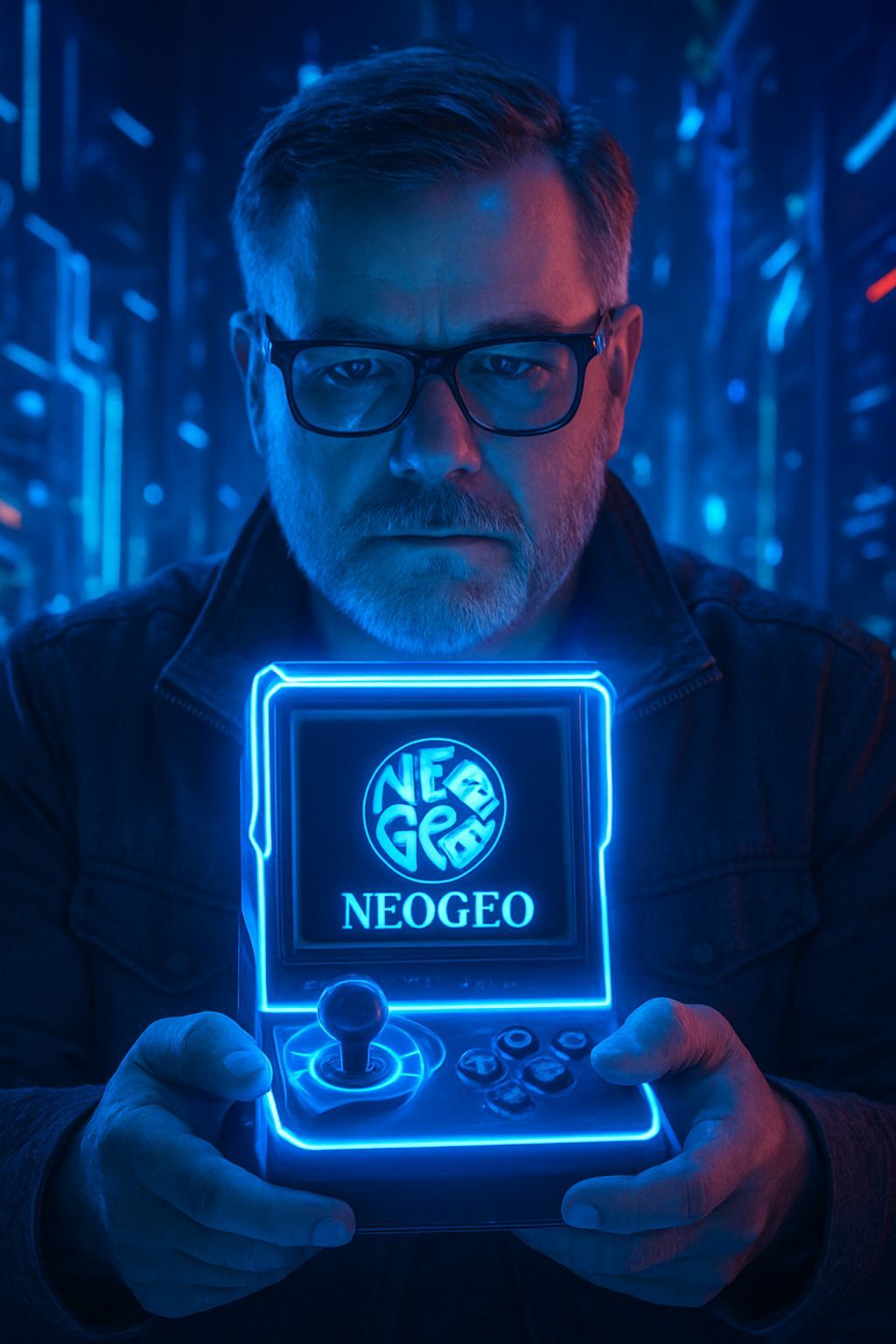
In the vibrant universe of retro gaming, where nostalgia merges with modern technology, few figures shine with the same intensity of Benjamin Heckendorn, universally known as Ben Heck. Its fame is built on a career dedicated to disassembling, rebuilding and ultimately improving videoludic hardware, often transforming home consoles into portable versions or correcting design defects that frustrate enthusiasts. The echo of his creations has gone through decades, culminating in recent companies ranging from reanimating a unique prototype of Nintendo PlayStation to its latest, and perhaps more resonant, intervention: the complete revision of the Neo-Geo Mini. This mini-console, although celebrated for its selection of games and the quality of the screen, has disappointed many purists because of a seemingly minor detail but of fundamental importance: the implementation of an analog joystick, in sharp contrast to the famous eight-way digital controls that made the original Neo-Geo arcade iconic. Heck's decision to address this defect was not only a demonstration of his outstanding modding skills, but also rekindled a broader debate on design philosophy in retro gaming, preservation of authenticity and the growing role of the DIY community in shaping the gaming experience. His return to the production of ‘low production’ videos on his personal YouTube channel also marks an evolution in the panorama of technical content online, demonstrating how passion and expertise can exceed traditional budgets and formats. This article aims to go far beyond the news of the hack, exploring the deep roots of the retro gaming phenomenon, the technical complexity behind the hardware modding, the critical importance of controls in the immersion of game and the lasting cultural impact of figures like Ben Heck.
The Golden Age of Retro Gaming and the Fever of Mini-Console
The video game industry, constantly evolving, has seen in recent years a wave of nostalgia that has reported in past glories, manifesting itself overwhelmingly through the phenomenon of mini-console. These replicas in reduced scale of iconic systems, such as the NES Classic Mini, the SNES Classic Mini, the PlayStation Classic and, of course, the Neo-Geo Mini, have received a remarkable commercial success, exploiting the desire to relive childhood memories and present to younger people the milestones that shaped the medium. Their attractiveness lies not only in portability and attractive design, but also in the practicality of having hundreds of pre-installed titles, eliminating the need to get hardware and original software often expensive and difficult to find. However, the success of these mini-consoles has not been uniform; while some have been able to capture the essence of the original experience with remarkable fidelity, others, such as the Neo-Geo Mini, have stumbled on details that, although small, have proved crucial to purists. The choice of internal components, the accuracy of emulation, and above all the quality and authenticity of controls, have become the main points of discrimination. Producers faced a dilemma: balancing production costs and fidelity to the original, often sacrificing fundamental elements to contain expenses or to adapt to modern standards not always compatible with the vintage game mechanics. This has opened a gap for the community of enthusiasts and modders, which, driven by a deep love for retro gaming, has been charged with correcting imperfections, demonstrating that the authenticity of experience is not only a nostalgic hub, but an intrinsic element of the cultural and ludic value of these digital gems. The fever of mini-consoles, therefore, is not only a market trend, but a real battlefield between commercial optimization and historical and functional integrity, a field where the intervention of figures like Ben Heck becomes not only appreciated, but almost indispensable.
The Heart of the Arcade: Neo-Geo Control Philosophy
To fully understand the importance of Ben Heck's intervention on Neo-Geo Mini, it is essential to immerse yourself in history and in philosophy of control that made the original Neo-Geo system an immortal icon in the world of arcade games. Born in the late 1980s by SNK, the Neo-Geo MVS (Multi Video System) was a giant of the gaming room cabinets, known for its cutting-edge graphics, smooth animations and unprecedented audio quality, but above all for the precision and responsiveness of its controls. The distinctive feature was its joystick, not a common analog stick that reads the intensity and direction of the movement, but a robust eight-way digital joystick. This meant that each movement was perceived as one of eight cardinal or intercardinal directions (up, down, left, right, up-left, up-right, down-left, down-right), with a clear tactile and auditory feedback (the famous “click”) confirming the input. This digital precision was fundamental to the vast library of games of Neo-Geo, which ranged from the beaten frenetics as Fatal Fury and The King of Fighters, to slide shooters as Aero Fighters, up to platformers as Metal Slug. In these genres, the difference between winning and losing depended on the ability to perform complex movements with absolute precision and timing. A quarter lap, a double tap or a rapid sequence of directions had to be recorded instantly and unambiguously. The introduction of an analog joystick on the Neo-Geo Mini retail, with its continuous range of inputs and a feeling of “softness” often without a distinctive feedback, represented a real heresy for purists. It altered the intrinsic feeling of control, making it difficult to perform those maneuvers that had become the second nature for Neo-Geo veterans. The games were designed around a binary input interface, and forcing an analog input on them was not simply a matter of preference, but a betrayal of fundamental mechanics. Neo-Geo control philosophy was not just a matter of hardware, but an intrinsic element of gameplay, and its dilution in the Neo-Geo Mini highlighted a deep understanding of the expectations of its most faithful audience.
Dissemination of the Difetto: Why do Mini-Consoles take control?
The case of the Neo-Geo Mini and its analog joystick, although emblematic, is not an isolated incident, but it fits into a larger model of design compromises that often afflict mini-consoles and retro-inspired products. The question arises spontaneously: why do producers, aware of the nostalgia and expectations of fans, continue to make such seemingly basic mistakes in controls? The answers are multiple and complex, interweaving economic reasons, production logistics, availability of components and sometimes a underestimate of the importance of details by the modern development teams. First, the production cost is a primary factor. High quality digital joysticks, with their robust microswitch mechanism and tactile feedback, can be significantly more expensive to produce and integrate than a standard analog joystick based on potentiometers. The latter are often ‘off-the-shelf’ components, easily available and less expensive, used in a wide variety of devices, making them an attractive choice to reduce the overall cost of a console that aims at an affordable retail price. Secondly, the availability of components and the supply chain play a crucial role. The specific microswitches and implementation mechanisms that faithfully emulate the feeling of the original arcade joysticks may not be mass-produced as once, or require a tailor-made production that elevates costs and times. Adapting a modern design to more common components, although less ideal, can accelerate production. In addition lack of understanding of the nuances of original design by modern teams can be a factor. Today’s designers have grown up with analog controllers and may not grasp the critical importance of digital feedback for specific games, considering a joystick as ‘a joystick’ without differentiating its inherent nature. This leads to a standardization that, if on the one hand simplifies production, on the other side flattens experience. Finally, the pressure for miniaturization itself can lead to compromises. The incorporation of robust mechanisms into a small shell can be an engineering challenge, leading to more compact but less performing solutions. Ben Heck’s correction is not only a demonstration of skill, but an eloquent criticism of these design decisions, and a reminder of the importance of respecting functional heritage as well as the aesthetics of a back console.
The Art of Hacking: Ben Heck and the Modding Hardware Majestic
The figure of Ben Heckendorn is, in many ways, the modern incarnation of the inventor and hacker in the purest sense of the term: he who sets, understands and improves. Its approach to hardware modding is a fusion of technical ingenuity, creativity and deep knowledge of electronics, which made it a legend among fans. In the case of Neo-Geo Mini, its methodology was a perfect example of structured problem-solving, transforming a perceived defect into an opportunity to demonstrate the superiority of user-oriented design. The process began with a detailed analysis: the ♪ neo-Geo Mini. This is not only an act of curiosity, but a crucial stage to understand internal architecture, identify key components, and identify weak points or areas likely to change. Heck quickly acknowledged that Mini's internal electronics was flexible enough to be reengineered in a handheld form and that the joystick problem could be solved with a targeted approach. Its analog joystick solution was a stroke of genius in its simplicity: replacing the analog sensor with four digital microswitches, arranged to replicate the eight-way input. This move, which described as a ‘0.7 seconds’ process in terms of conception, then required careful implementation. He designed the patterns (often using software like Adobe Illustrator), designing a Custom PCB that could accommodate the new switches and integrate with the existing motherboard. The next step involved 3D printing of a new shell, more often than the original one but necessary to accommodate a battery of greater capacity and additional components safely and ergonomically. This involved not only knowledge of 3D modeling software, but also a deep understanding of mechanics and material resistance. Finally, the precision welding and the final assembly gave life to the device. Watch Ben Heck test a game as Metal Slug on his modified Neo-Geo Mini, hearing the satisfying ‘click’ of the new joystick, was a clear demonstration not only of his technical mastery, but also of the validity of his vision: a hack that was not only a correction, but an elevation of the gaming experience at a level that the original manufacturer had inexplicably neglected. His work on Neo-Geo Mini is not only a modding project, but a work of engineering art.
Beyond Saving: The Cultural Impact of Modding and Video Conservation
Ben Heck’s work echo on the Neo-Geo Mini extends well beyond the single act of welding and printing in 3D, touching the pulsating heart of thecultural impact of modding and its irreplaceable role in videolude storage. Modding is not simply a technical hobby; it is a philosophy, a movement that embodies user empowerment, unlimited creativity and determination to shape technology according to their needs and wishes. In the context of retro gaming, the modding becomes even more relevant, acting as a vital force that fills the gaps left by the producers and ensures that the classic gaming experiences not only survive, but thrive. When a company reissues an iconic console with design defects, such as the Neo-Geo Mini analog joystick, it creates a frustration in the community of enthusiasts who feel betrayed the authenticity of the original. This is where modders like Ben Heck intervene, acting as custodians of historical and functional fidelity. Their work becomes a form of active preservation, not only by saving consoles from premature obsolescence due to defects, but also by ensuring that future generations can experience the games as they were originally conceived. This process generates a culture of DIY (Do It Yourself) which is contagious. Seeing an expert like Heck solving a complex problem inspires others to learn, experiment and contribute with their own solutions. They form online communities where they share patterns, guides, and advice, transforming modding from a solitary activity to a collaborative movement. Ben Heck’s ability to turn a defect into a superior product not only improved a single device, but also strengthened the idea that hardware is not an untouchable black box. It is something that can be opened, understood and improved, putting power in the hands of end users. In an era of sealed and unrepairable electronics, modding is an act of rebellion, a call to transparency and freedom to change what you own. It is the demonstration that love for the medium can transcend the limits imposed by consumerism and that the community has an essential role in defining the ludicrous experience.
The New Era of the DIY Content: Ben Heck and the Evolution of YouTube
Ben Heck's return on YouTube, after leaving his popular and highly produced ‘Ben Heck Show’, marks a turning point not only for his career, but also for the entire dynamic of the creating DIY content (Do It Yourself) and for the evolution of the YouTube platform itself. Its decision to focus on ‘easy videos, low production value’ reflects a growing trend in the digital landscape: a shift away from the lustrum and the patinated perfection of the funded channels and a return to a more raw and direct authenticity. For years, ‘The Ben Heck Show’ on Revision3 (and later Element14) represented the culmination of professional technical content on YouTube, with well-fitted episodes, curated screenplays and a budget that allowed high-quality animation and filming. However, this formula, although successful, required a commitment of time and resources that, for Heck, collided with his personal and professional priorities, including ‘prototyping work on contract’. His transition to simpler videos, shot with fewer equipment and a primary focus on the technical process itself, rather than on the presentation, revealed a fundamental truth of online success: for niche and technically focused channels, the content quality and author’s competence far exceed the brilliance of production. Ben Heck viewers do not seek special effects; they seek his ingenuity, his ability to explain complex concepts in an accessible way and his practical solutions to hardware problems. Its style, which mixes technical meticulousness with funny puns and autoironic jokes, has returned to be the polar star of its appeal. This ‘new era’ of the DIY content celebrates genuineness and direct interaction with the community. Similar channels, often managed by individuals with limited resources, show that technical depth and passion can build a faithful audience without the need for stellar budgets. Ben Heck’s experience is a lighthouse for anyone who wants to share technical knowledge, demonstrating that the real resource is the ability to innovate and communicate clearly and engagingly, even if the videos are shot in his garage with a single camera. It is a return to YouTube roots as a platform for independent creators, where authenticity reigns supreme and the community is formed around expertise and personality.
Retro-Modding Future: Fai-da-Te Kit and Solutions Standardization
The echo of Ben Heck’s prowess, in particular the Neo-Geo Mini’s hack, raises an intriguing question about retro-modding future: Are we witnessing a potential standardization and democratization of hardware editing solutions? The idea of Heck of a ' PCB kit that could be made to easily convert the Neo-Geo Mini’ card it is not just a random statement, but a vision that could redefine the way enthusiasts interact with their back consoles. Until now, high-level modding has often been recruiting individuals with advanced electronic skills and access to specific tools. However, the emergence of pre-engineered DIY kits, such as a plug-and-play PCB for the Neo-Geo Mini joystick, would drastically lower the entry barrier. This would mean that a much greater number of users, even with basic welding skills, could replicate changes without having to design from scratch or get complex components individually. The potential of this development is vast. First, it would allow a wider dissemination of quality changes, ensuring that more consoles can be ‘saved’ by their factory defects and reported to authenticity. This would greatly contribute to the preservation of video games, making the mini-console versions defective products lasting and more faithful to the originals. Secondly, it could stimulate a micro-market modding solutions, where small producers or even prominent modders could offer complete kits, detailed guides and community support. This would create a more robust ecosystem around the retro-modding, transforming it from niche activity to a more mainstream practice. Moreover, the standardization and open documentation of these solutions (often with open-source licenses) could lead to further innovations. A common design base facilitates the development of variants, improvements and adaptations for other consoles with similar problems. Heck’s approach, in which he condenses his knowledge in a reproducible solution, is a catalyst for this transformation. It is no longer just to admire the ability of a single genius, but to make that genius accessible to all. The future of retro-modding could be less lonely and more collaborative, with the community taking over the reins of hardware improvement, transforming mini-consoles from simple nostalgia objects to living platforms, constantly evolving, thanks to the power of DIY and shared innovation.
Conclusion: The Duration Meaning of a Perfect Hack
Ben Heck’s epic adventure with the Neo-Geo Mini, although it may seem at first glance a simple technical intervention on a mini-console, actually includes a lasting and deep meaning that resonates through different spheres: the preservation of video games, the evolution of technology, the strength of the community of enthusiasts and the very nature of creative engineering. Your hack was not just a fix; has been a restoration of integrity, an act of respect for the original design philosophy of Neo-Geo and an affirmation of the priceless value of authentic experience in retro gaming. Heck's brilliance lies not only in his manual skill, but in his ability to identify the root of a design problem and solve it with solutions that are both elegant and effective, often overcoming the decisions of the original manufacturers. His work on the analog joystick of the Neo-Geo Mini is not only the demonstration that ‘you can do’, but that ‘you are must have to preserve the soul of these digital masterpieces. This episode highlights the critical importance of detail in video games, especially the control interface. For purists, a joystick is not just an input device, but an extension of the player, a means through which the intent is translated into action on the screen. When this connection is faulty, the whole experience collapses. Heck’s hack restores that visceral bond, allowing players to reconnect with games authentically. In addition, Ben Heck's story is a reminder of the power of the community and the DIY movement. In an era of sealed products and ‘use and throw’, modding is a bastion against planned obsolescence, a battle cry for freedom to repair, improve and customize what you own. It is the demonstration that fans are not simple passive consumers, but active participants in the history and evolution of their favorite medium. Finally, his return to a more crude and authentic YouTube format reflects a wider change in the landscape of content creation, celebrating expertise and passion above mass production. Ben Heck's legacy is that of an innovator, a conservative and an inspirational, whose work continues to define what it means to be a true lover of video games, constantly pushing the boundaries of what is possible to do with technology and creativity. Its perfect hack of the Neo-Geo Mini is, and will remain, a monument to dedication and mastery in the world of retro gaming.


