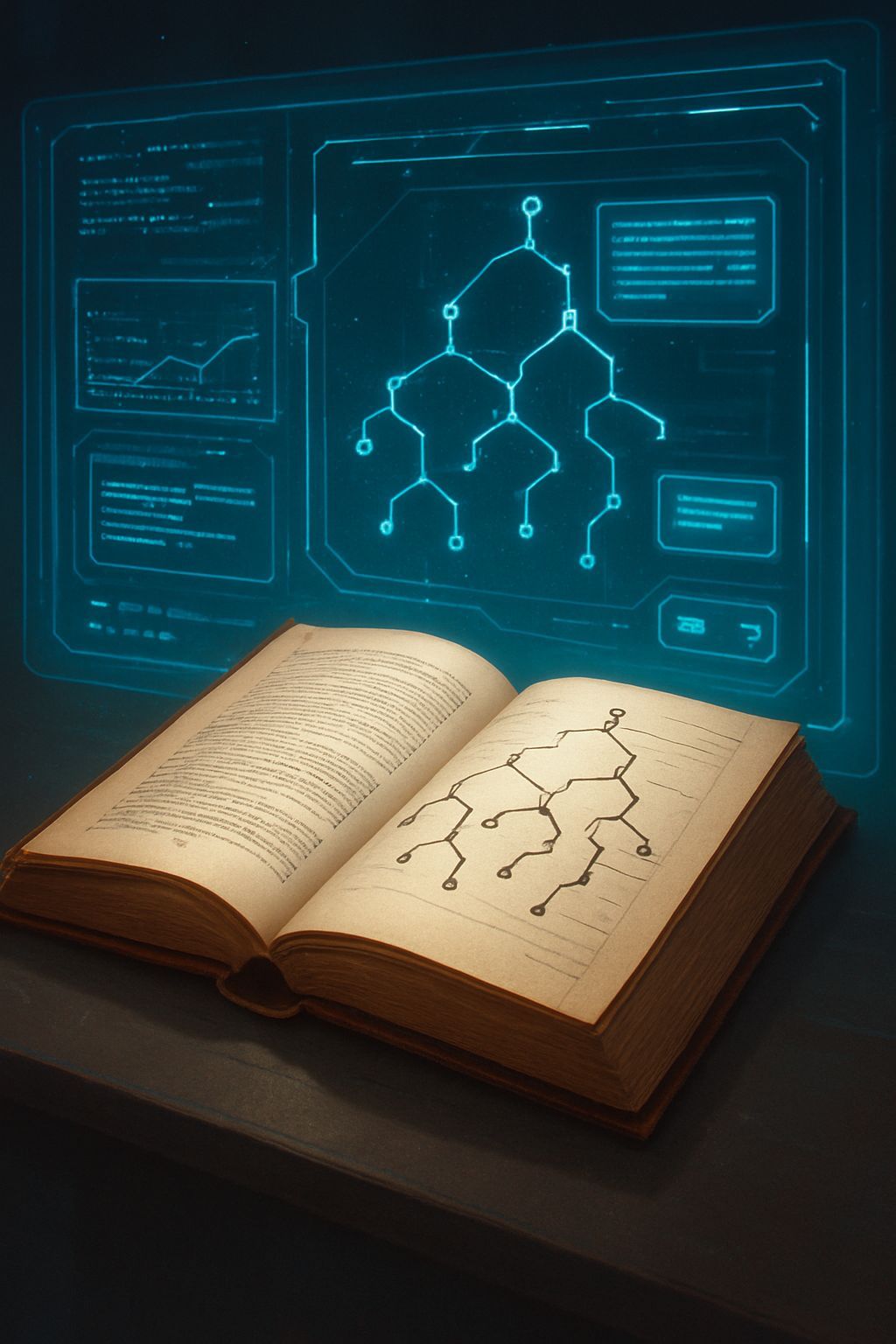
In the digital age, where glossy screens and virtual worlds dominate the collective imagination, an apparently anachronistic entertainment format is experiencing an extraordinary rebirth: the book. Far from being a simple relic of the past, the scroll has evolved, turning into a dynamic and versatile form of art that continues to capture the attention of new generations of readers and players. The wave of recent interest, highlighted by the numerous reviews and announcements of new outputs in the sector, bears witness not only a flame return for nostalgia, but also a deep innovation in narrative mechanics and in the mix with other genres and mediums. No longer confined to simple narrative bivi, modern bookgames offer complex and layered experiences, where reader choices actively shape the fate of characters and the development of the plot. From epic fantasy adventures to noir investigations, from space trips to historical revisitations, the current panorama is rich and diverse, reflecting the creativity of authors and publishing houses that dare to experiment. This article aims to explore in depth this fascinating universe, analyzing its historical evolution, the complex mechanics that distinguish it, the emergence of hybrid formats that merge the book with table games, comics and cards, the vibrant Italian editorial scene and the future prospects of a medium that demonstrates an amazing ability to reinvent itself while remaining faithful to its essence of interactive narrative.
The Return of the Book: A Contemporary Cultural Phenomenon
The phenomenon of bookgames, while having deep roots in the 1980s with iconic series as well as Lonely Wolf, Fighting Fantasy and the famous Choose Your Own Adventure, has known a phase of decline towards the end of the 1990s, and then emerge with strength and renewed splendor in the new millennium. This rebirth is not attributable only to a wave of nostalgia for past times, but is nourished by a profound evolution of the medium itself. Modern scrolls surpass the simplicity of the old narrative bivi, proposing more sophisticated gaming systems, more articulated plots and a deeper writing, capable of engaging the reader at an emotional and intellectual level. They offer a unique experience, which stands in a distinctive way between the passive reading of a traditional novel and the interactivity but often the default of a video game. In the book, the freedom of imagination of the reader is stimulated to the maximum, since the textual descriptions leave room for their own mental visualization, but at the same time its agency is central, with every decision reverberating on the course of history. This ability to actively shape its narrative path creates a sense of involvement and appropriation of history that few other media can match. Many of the recent titles, such as 49 Keys by Aristea, cited in the original article, or the complex The Heart of Fire the series Destiny Quest, demonstrate how new productions have raised the asticella in terms of complexity and narrative quality. A crucial factor in this revival was also the role of independent authors and small publishing houses, often supported by crowdfunding campaigns, which were able to experiment with innovative genres, settings and mechanics, creating an extremely diverse and challenging market. The charm of the game lies in the promise of a personal and unique history, an adventure to live and live again, discovering every time new secrets and unexplored bives, ensuring a replay that few traditional books can offer.
Beyond the Single Choice: Mechanics and Complex Narrations
The evolution of the scrolls has led to a significant distancing from the mere binary choice “go to paragraph X or to paragraph Y”, introducing a wide range of mechanics that enrich the playful and narrative experience. It is no longer enough to make a decision; the reader is now often called to manage a real alter ego, equipped with statistics, skills and an inventory of objects that can dramatically influence the outcome of situations. Concepts such as inventory management, accumulation of experience, fighting through dice systems (as often happens in fantasy or adventurous mold titles, similar to the cited Destiny Quest) or the resolution of real puzzles, have become common elements. These game systems add a layer of strategy and depth, transforming reading into an experience closer to that of a role-play on paper. Player decisions can have long-term consequences, not only immediate, affecting character development, relationships with other characters and access to certain areas or information. This leads to a non-linear narrative, with multiple paths that can lead to different endings, some known, other more secret or hidden, encouraging replayability to explore all possible branches. The focus on building the world is another crucial aspect, as demonstrated by the use of dystopian ambientation Sine Requie for the book The Randagi delle Terre Lost, where the historical horror merges with interactive mechanics to create an immersive and cohesive experience. The authors are masters in balancing the freedom of the player with the need to maintain a coherent and compelling plot, orchestrating a complex network of bivi and returns that, while guaranteeing the reader's agency, still leads to meaningful narratives. The balance between moral choices, logical challenges and tactical fights makes every playthrough a unique adventure, personalized by the decisions and abilities of the player.
The Era of Hybrids: When the Book Meets the Table Game and the Comics
One of the most fascinating and innovative trends in the current panorama of the bookgame is their growing hybridization with other mediums, creating products that challenge traditional categorizations. This fusion is not a simple expedient, but a way to broaden the audience, enrich the gaming experience and exploit the strengths of different forms of art. A shoe example is represented by the series Paper, cited in the original article, that hybridizes the concept of bookgame with that of card game. In Paper, the pages of a book are replaced by a double-sided deck of cards: some present narrative text, other evocative illustrations, other sections of map. This format offers a completely new tactile and visual interactivity; each card caught or turned reveals a new piece of history or a decision to make, transforming narrative progression into an almost tangible and spatial experience. The reader not only reads, but physically manipulates the narrative, creating a bridge between the pleasure of textual discovery and that of the exploration. Another excellent example of this merger is Bacci Pay: The Game, a hybrid between book and table game inspired by the Genoese Investor of Bruno Morchio. Here, typical elements of table games, such as the movement on a board, the launch of dice and the management of resources or clues, intertwine with the narrative bivi of the scroll. The result is a deep investigative experience, where the choices of the player in the text influence his chances on the board and vice versa, making every case a multifactor puzzle to solve. Not the least comic book, as Hocus & Pocus: the Examination of Favolini Masters and Captive, published in Italy by Raven. These products combine the visual and sequential language of the comic book with the bivi structure of the scroll. The reader progresses among the cartoons, but at certain points it is called to make a choice that directs it to a vineyard or to a different page. Hocus & Pocus, with its younger target and fantastic themes, it shows the versatility of the format also for a different audience, while Captive is aimed at an adult audience with more mature themes. These hybrids not only refresh the genre, but also attract players and readers from different worlds, demonstrating the ability of the bookgame to adapt and innovate, turning into a platform for increasingly rich and engaging narrative experiences.
Il Panorama Editoriale Italiano: Innovation and Tradition
The Italian publishing scene of the book has demonstrated a surprising vitality in recent years, emerging as a pole of innovation and creativity that not only proposes the classics in new garments, but also produces original works of the highest level, strongly rooted in Italian culture and genius. The numerous reviews and announcements of new releases quoted in the original article, from 49 Keys a Persephone X, passing by Between Chains and Ashes and The Randagi delle Terre Lost, I am the tangible proof of this ferment. Publishers as Aristea, with his necklaces For Speculum and New Worlds, they have distinguished themselves for the quality of their publications, ranging from fantasy to horror to more exciting science fiction, offering readers always new and well-designed adventures. Persephone X, for example, catapult us into space adventures, demonstrating the thematic versatility of the publisher. Serpentarium, on the other hand, he was able to capitalize on the success of his fantasy role-play The Last Flash and the acclaimed historical horror setting of Sine Requie, creating a book that further expands these narrative universes. The example of The Randagi delle Terre Lost, set in the dystopia of Sine Requie, is emblematic of how a scroll can act as a bridge to other media, deepening the lore and engaging fans more intimately with the settings they already love. You cannot ignore the contribution of Games United States, which brought the famous series to Italy Destiny Quest, enriching the panorama with epic fantasy titles and complex combat systems. The attention to the localization of international works is accompanied by the promotion of national talents, as demonstrated by the work Bacci Pay: The Game, which pays homage to an icon of Italian yellow literature, the Genoese investigator created by Bruno Morchio, through an original work signed by Italian authors like Marco Zamanni and Enrico Corso, already known for their work with Watson Editions. Italy has also been able to reinterpret iconic figures of its history and culture, as in the case of Inferno: the book review, which celebrated the Dantesque anniversary offering an interactive experience in the ultra-terrestrial kingdom of the Supreme Poet. This diversity of themes and the commitment of large and small publishing houses, together with the passion of a lively community of authors and readers, emphasize the richness and dynamism of the bookgame "Made in Italy", a growing cultural phenomenon that does not stop surprising and innovating.
The Art of Interactive Scripture: Challenges and Opportunities for Authors
Writing a book is an art that transcends the challenges of traditional narrative, introducing a geometric and logistical complexity that few other genres require. Book authors are faced with a unique narrative puzzle: how to maintain a narrative coherence and deep emotional involvement through hundreds of bivi and branched paths, while ensuring that every choice of the reader is meaningful and that its agency is never a mere illusion? This is the central challenge of interactive writing. Unlike a linear novel, where the author has absolute control over the progression of the plot and the development of the characters, in the book the reader is co-author. The author must anticipate the decisions of the reader, predict the consequences of each choice and build a robust narrative architecture that can support multiple outcomes without collapsing or losing sense. Instruments such as complex flow diagrams, mind maps and software specific to interactive narrative become indispensable to trace each path, each object acquired or lost, every modified statistics. It is an operation that requires not only narrative talent but also a strong mindset as a game designer. The balance between the amount of text, which must be sufficiently descriptive to stimulate the imagination but not so prolix to slow the pace of play, and the frequency of choices, which must be strategically positioned to maintain high attention and the sense of control, is fundamental. Authors must also learn to sacrifice a part of their control over narrative, accepting that not all readers will see each piece of history or reach the “real” final thought. The reward, however, is immense: creating a deeply personal and rejuvenating experience, where each reader builds his unique adventure. The adaptation of existing works, such as Kisses Pay by Bruno Morchio or the Dante’s masterpiece inHell bookgame presents additional challenges, since the author must remain faithful to the spirit and the canon of the original work while injecting an element of interactivity that reinterprets it in a playful key. The process of writing a book is often iterative and requires careful playtesting to identify blind alleys, insignificant choices or imbalances in the game system. It is an art that rewards meticulousness, imagination and ability to put itself in the role of the player-player, offering an adventure that not only reads, but you live actively.
The Future of Interactive Entertainment: From Paper to Digital and Beyond
The future of the book and interactive narrative is a fertile ground for experimentation, where the tradition of paper will merge more and more with the infinite possibilities offered by digital and new technologies. If on the one hand the tactile charm and the disconnected experience of paper will continue to be a strength for many fans, the digital world offers unexplored horizons for narrative complexity and immersiveness. Book apps, interactive narrative websites and platforms visual novel and text adventure they already represent a natural evolution. These digital versions can incorporate elements that paper cannot offer: evocative soundtracks, subtle animations, automatic calculations for statistics and fighting, dynamic access to maps and inventories, and even narrative voices. This allows to create even more complex and stratified experiences, with narrative ramifications that would be prohibitive to manage on paper due to their vastness. Let us imagine the integration of technologies such as Increased Reality (AR) and the Virtual Reality (VR), capable of transforming reading into a total sensory immersion, where the described environments come to life around the reader and the choices are made through gestures or vocal interactions. Educational potential is another promising field of development: booklets can transform the learning of history, literature or science into a playful and engaging experience, where active learning exceeds passive storage. Hybridation, already so present with table games and comics, will continue to evolve, with increasingly blurred boundaries between video game, narrative experience and role play. The community will play a crucial role with online forums, collaborative creation platforms and fan-made projects that will fuel a vibrant and growing ecosystem. Although new technologies will open the way to increasingly sophisticated formats, it is likely that the paper game will never disappear, maintaining its appeal for those looking for a more intimate reading experience and disconnected from the dependence on screens. The future of interactive narrative will therefore be an exciting journey, a bridge between the timeless pleasure of the written word and the unexplored frontiers of technological innovation, where the human ability to tell stories will join the freedom to live them firsthand, in infinite variations.
In summary, the book has surpassed its label of niche or nostalgic trend, asserting itself as a vibrant, innovative and incredibly versatile medium in the panorama of contemporary entertainment. From its humble origins as a simple bivi path, it evolved into a complex interweaving of game mechanics, deep narratives and hybrid experiments that make it unique. The Italian publishing scene, with its courageous publishing houses and talented authors, is contributing significantly to this revival, offering original and quality works that range between genres and settings, often rooting in the rich cultural heritage of our country. The ability to offer an active reading experience, where the reader is at the same time the protagonist, decisive and co-creator of history, is the heart of its lasting charm. While the paper continues to offer an irreplaceable tactile and personal experience, the future promises further expansion in the digital realm and beyond, with the integration of new technologies that will further expand the possibilities of immersion and interactivity. Whether it’s an epic fantasy adventure, an intricate noir investigation or a journey through dystopian worlds, the game remains an irresistible invitation to explore, choose and forge your own destiny, demonstrating that the magic of interactive narrative is destined to persist and evolve, continuing to enchante generations of readers and players.


