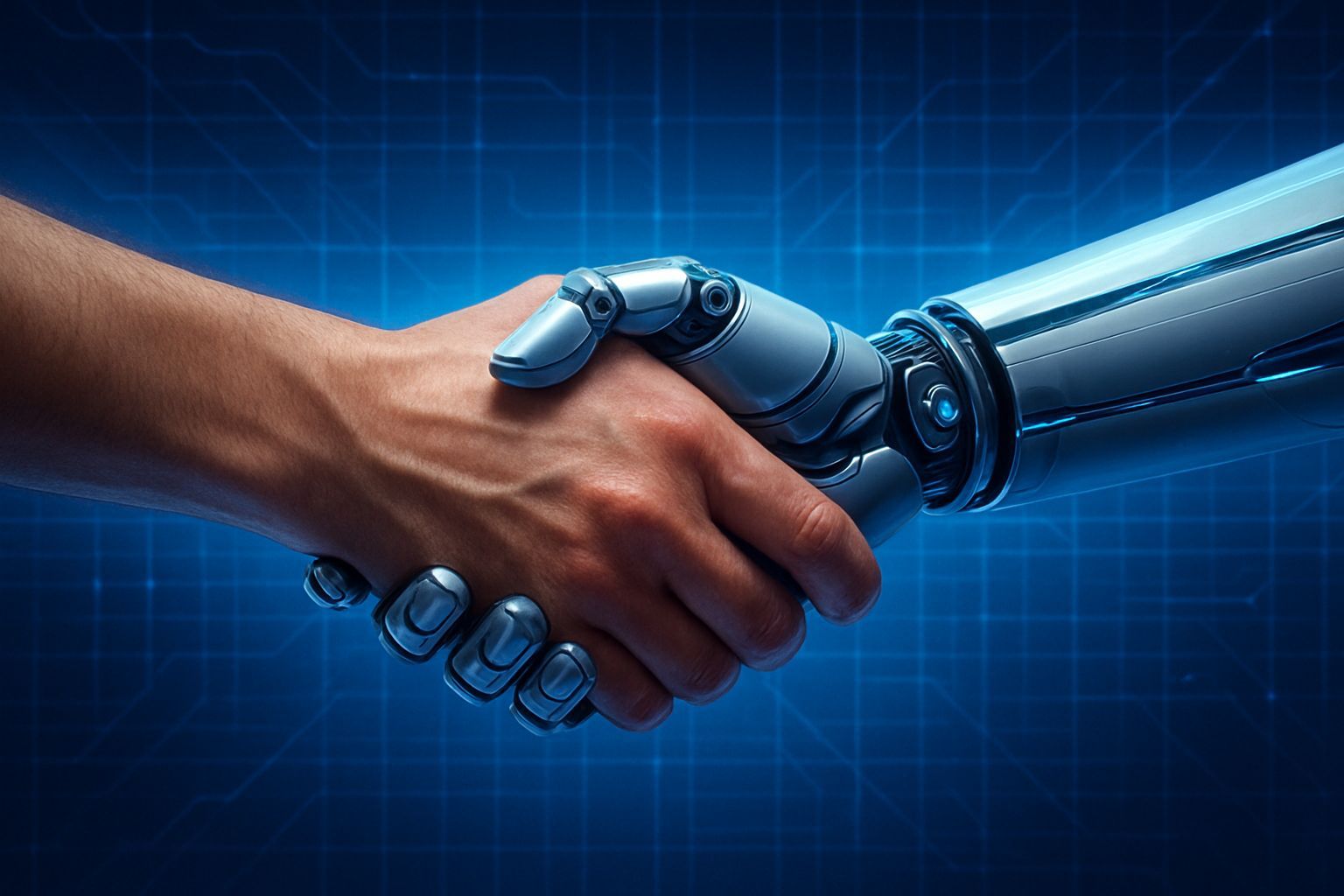
In the digital age in which technological innovation proceeds at dizzying pace, few areas capture imagination and offer a transformative potential as the robotics enabled by artificial intelligence. Yet, despite the promises of an automated future, the question persists: where are all the robots? This is one of the central reflections that animate the work of figures as Rajat Bhageria, founder and CEO of Chef Robotics, a state-of-the-art company that is redefining the automation landscape, particularly in the critical food sector. Through his vision and strategic use of AI, Bhageria is not limited to imagining a future in which robots are an integral part of our productive everyday life, but is actively building it, piece by piece, algorithm after algorithm.
This article aims to explore in depth the path of Rajat Bhageria, the innovative model of Chef Robotics and the challenges and opportunities that intelligent robotics presents for the modern industry. We will analyze how AI is acting as a catalyst to overcome traditional barriers to robotic adoption, providing unprecedented flexibility and adaptability. From labor shortages to increased production volumes, to strategic decision to maintain production on-shore, we will find out how Bhageria solutions are not only solving current problems, but they are also laying the foundations for a more resilient and innovative economy.
The Pioniere behind Chef Robotics: Rajat Bhageria and His Vision
Rajat Bhageria is not a novice in the world of technological entrepreneurship and venture capital. With a robust training and a strong propensity to innovation, it has become a key figure in the startup scene. His career is marked by a keen understanding of industrial dynamics and the ability to identify significant market gaps, transforming them into opportunities for technological development. Before founding Chef Robotics, Bhageria has already demonstrated its entrepreneurial spirit and competence as the founder and managing partner of Prototype Capital, a venture capital fund investing in startups with a disruptive potential. This dual experience, both as a technology manufacturer and as an investor, gives it a unique and holistic perspective on the challenges and future directions of innovation.
Chef Robotics' genesis stems from this deep awareness. Bhageria recognised that, despite technological advances, the food industry – a fundamental sector for society – faced chronic and growing problems, particularly the shortage of labour qualified and not, and the need for increase production volumes maintaining high standards of quality and hygiene. The idea was clear: to apply the most advanced robotic and artificial intelligence technologies to create flexible and scalable solutions, capable of operating in complex environments such as industrial kitchens and food production lines. His vision is not simply to replace man with the machine, but to enhance the production capacity, free the staff from repetitive and burdensome tasks, and make the entire supply chain more robust and resilient.
Chef Robotics: Revoluting Food Industry with AI and Robotics
Chef Robotics is positioned at the intersection of robotic innovation and artificial intelligence, with a focus on the food industry. The solutions developed by the San Francisco company are not simple mechanical arms planned to perform a single task. They are complex systems, equipped with a sophisticated artificial intelligence that allows them to learn, adapt and operate with considerable flexibility. This is crucial in a sector such as food, where the variability of ingredients (forms, sizes, consistencies), the need for gentle manipulation and stringent hygiene standards represent artwo challenges for traditional robotics.
One of Chef Robotics' primary objectives is to address the shortage of labour, an acute problem in recent years, which has proven the capacity of food companies to meet demand. Chef Robotics robots are designed to take repetitive, laborious tasks or require constant accuracy for hours and hours, such as preparing meals, portioning ingredients, assembling dishes or packaging. This not only ensures constant availability of work force, but also allows human operators to devote themselves to higher added value tasks, improving overall efficiency and job satisfaction.
In addition, the adoption of these robotic systems allows companies to significantly increase production volumes without having to proportionally expand the human labor force. In a market where demand can fluctuate rapidly, the ability to scale production efficiently is an invaluable competitive advantage. Chef Robotics' robotics offers this scalability while guaranteeing superior product quality and consistency, reducing waste and optimizing resource use.
An innovative and strategic aspect of the Chef Robotics model is production support on-shore. In a time when global supply chains showed their vulnerability, the ability to automate local production, reducing dependence on foreign labor or delocalized production processes, has become a priority. Bhageria robots allow food companies to maintain production within national borders, strengthening the local economy, ensuring greater control over food quality and safety, and reducing the risks associated with global supply interruptions.
“Where Are All Robots?”: The Paradox of Automation
The question that Rajat Bhageria himself placed in his article – “Where are all the robots? ” – resonates strongly in the debate on automation. Despite decades of progress and the proliferation of prototypes and advanced solutions, the capillary diffusion of robots in every aspect of production and daily life has not been achieved with the speed and pervasiveness that many had predicted. This apparent paradox is the core of a complex discussion that touches technological, economic and cultural aspects.
Traditionally, industrial robots were machines designed to perform specific, repetitive tasks and in highly structured and controlled environments, such as automotive assembly lines. They were effective, but lacked flexibility. Integrating a robot into a new process or adapting it to small variations required a costly and complex reprogramming, often accessible only to specialized engineers. This rigidity has represented a significant barrier for small and medium-sized enterprises, or for sectors with greater production variability, such as the food industry.
Another factor is the high initial cost. The investment in robotics can be heavy, and the return on investment is not always immediate or easily quantifiable, especially for applications that do not replicate an exact assembly line. To this is added complexity of integration. A robot does not work in isolation; it must interface with other machinery, software systems, and especially with human operators. It requires infrastructure changes, staff training and rethinking workflows, all elements that can discourage adoption.
Finally, there are fears of labour. The perception that robots will steal jobs is widespread and, although reality is more nurtured (often new roles are created and humans are freed from boring or dangerous tasks), this concern can slow social acceptance and implementation of robotic technologies. Overcoming these barriers requires not only technological evolution, but also a cultural change and intelligent implementation strategies that take into account the human element.
Artificial Intelligence as a Robotic Diffusion Cataler
It is here that theartificial intelligence (AI) it turns out to be the real game-changer, the catalyst that is allowing robots to overcome their historical limitations and spread into increasingly varied and complex contexts. The AI gives the robots the ability to “think”, to “learn” and to “fit”, transforming them from simple executors of pre-programmed tasks to intelligent and flexible collaborators.
Flexibility is perhaps the most significant advantage. Thanks to AI, robots no longer need to be manually reprogrammed for any small variation. Algorithms machine learning and learning for reinforcement allow them to learn from experience, to recognize different objects (even with small imperfections or variations of form), to adapt their actions to changing environmental conditions and to make decisions in real time. This is essential for sectors such as food, where no tomato is exactly the same, or where the consistency of a dough can vary slightly between one batch and the other.
The artificial vision (computer vision), an AI branch, equips robots with the ability to “see” and interpret the surrounding world. Advanced sensors, combined with image and object recognition algorithms, allow robots to identify ingredients, detect defects, guide precise manipulation and operate in unstructured environments. This visual capacity is essential for tasks such as fruit and vegetable collection, product placement on a plate or quality inspection, tasks that previously required only the human eye.
In addition, AI is drastically reducing the complexity of programming. Intuitive user interfaces and self-learning systems make robot integration and management much more accessible to non-specialized personnel in robotics. This lowers the access threshold to automation, allowing more companies to benefit from robotic technology.
Rajat Bhageria, with Chef Robotics, embodies this transition. His robots are not just machines, but cognitive systems capable of facing the intrinsic complexity of food production with intelligence and precision, making automation a concrete and advantageous reality also for the most dynamic contexts.
Beyond the Food Sector: The Transformative Impact of Intelligent Robotics
Although Chef Robotics is an emblematic example of how AI robotics is transforming a specific sector, the principles and technologies that guide it have a universal application and a disruptive potential in a myriad of other industries. The wave of innovation generated by the fusion of robotics and artificial intelligence is already redefining operations in sectors ranging from advanced manufacturing to logistics, health to agriculture, to services.
- Advanced manufacturing: Beyond traditional assembly lines, collaborative robots (cobots) equipped with AI are working side by side with human workers, taking precise or ergonomically challenging tasks. AI allows robots to adapt to smaller and customized production batches, a growing trend in so-called Industry. Flexibility is essential for tailor-made production, and AI makes it possible for robots to quickly reconfigure for different geometries or materials.
- Logistics and Warehouse Management: E-commerce pushed the demand for automation in warehouses at unprecedented levels. Automated mobile robots (AMR) and intelligent drones, led by AI, are able to navigate in complex environments, take specific items (picking), transport them and sort them with a speed and precision that far exceed human capacities. They optimize routes, manage inventory in real time and significantly reduce delivery times.
- Health: AI robotics is revolutionizing surgery (with robots that assist surgeons with extreme precision), drug administration, rehabilitation and care for elderly or disabled patients. Robots equipped with sensors and AI can monitor vital parameters, distribute medicines, help in mobility and even offer company, alleviating the workload of medical personnel and improving the quality of patient life.
- Agriculture (Agri-tech): The “farm robots” or agri-bots, equipped with AI and artificial vision, can perform a series of tasks such as precision sowing, targeted irrigation, selective harvest of ripe fruits and automatic Serbian. These systems reduce the use of pesticides and fertilizers, optimize the use of water and increase yield of crops, contributing to a more sustainable and efficient agriculture.
- Services and Restaurant: Chef Robotics’ experience in the food sector naturally extends to catering and hospitality services, where bartender robots, waiters or cleaning agents can improve the efficiency and experience of the customer. Beyond food, service robots are used in hotels, airports and shopping centers to provide information, assistance and maintenance.
These examples show that intelligent robotics is no longer confined to specific niches, but is destined to become a critical infrastructure component for the global economy, providing innovative solutions to complex challenges in each sector.
Economic and Social implications of the Robotic Era
The advancement of AI-enabled robotics, like that promoted by Rajat Bhageria, brings with it profound economic and social implications that deserve careful consideration. The massive introduction of these technologies is not only a question of productive efficiency, but a real engine of structural change for the labour market, industrial competitiveness and economic resilience.
Labour Market: The main concern is often linked to the replacement of human labour. It is undeniable that robots will take on many repetitive and physically heavy tasks. However, the history of technological innovation teaches us that while some professions decline, others emerge. Robotics creates a demand for new roles, such as robotic maintenance technicians, AI specialists, automation engineers, data analysts and trainers for man-robot integration. The real challenge is requalification of the existing workforce, investing in training programs that provide the necessary skills for the economy of the future. The collaboration man-robot (cobotics) is a growing trend, where humans and machines work in synergy, exploiting their respective forces.
Productivity and competitiveness: For companies, the adoption of AI robotics results in a significant increase in productivity. Robots can work 24/7, effortlessly, surgically, and drastically reduce errors. This leads to a reduction in long-term operating costs, increased production speed and improved product quality. Companies investing in these technologies become more competitive globally, offering high-quality products at better prices and faster delivery times. This is especially true for nations seeking to revitalize their internal manufacturing base (the concept of reshoring or onshoring dear to Chef Robotics).
Supply Chain Resilience: COVID-19 pandemic highlighted the fragility of global supply chains. Depending on foreign workers or production plants in distant countries may expose companies to high risks of interruption. AI-enabled robotics provides a tangible solution to this problem, allowing companies to locate production. Maintaining production operations within national or regional borders reduces dependence on global political, economic or health fluctuations, ensuring greater stability and security of supplies.
Ethics and Social Questions: Robot advances also pose important ethical questions. Who is responsible for a robot's error? How to ensure the privacy of data collected by AI systems? How to manage equity in the distribution of the benefits of automation? Addressing these questions will require a continuous dialogue between technologists, politicians, economists and civil society, to ensure that the robotic age is inclusive and beneficial for all.
Conclusion: The Future is Already Here, Requires Vision and Adaptability
The vision of Rajat Bhageria and the success of Chef Robotics are not only a history of corporate innovation, but a clear indicator of the direction in which the entire global economy is moving. The question “Where are all the robots? ”, which was once an expression of perplexity, is finding an increasingly concrete and articulated response thanks to the pervasive integration of Artificial Intelligence in machines.
Robotic automation is no longer a futuristic luxury, but a strategic need for companies that aspire to remain competitive in a rapidly evolving world. Whether to overcome the shortage of labour in the food industry, to increase productivity in manufacturing or to make supply chains more resilient, AI-enabled robotics offers scalable, efficient and increasingly accessible solutions. The ability of these machines to learn, adapt and operate in unstructured environments makes them incredibly powerful tools to face the challenges of the 21st century.
However, the path to a fully automated future is not without obstacles. It requires significant investments not only in technology, but also in human capital, through redevelopment and education. It requires a deep reflection on social and ethical implications, and the creation of regulatory frameworks that promote innovation while safeguarding collective well-being.
Rajat Bhageria and his pioneer colleagues are demonstrating that the key to unlocking the full potential of robotics lies in his intersection with artificial intelligence. The future is not a dystopian utopia populated by robots, but a collaborative ecosystem where human ingenuity and machine capacity merge to create a more productive, efficient and ultimately better world. Success in this new era will depend on our ability to embrace change, invest in the right technologies and cultivate a vision that focuses both technological progress and human well-being.


