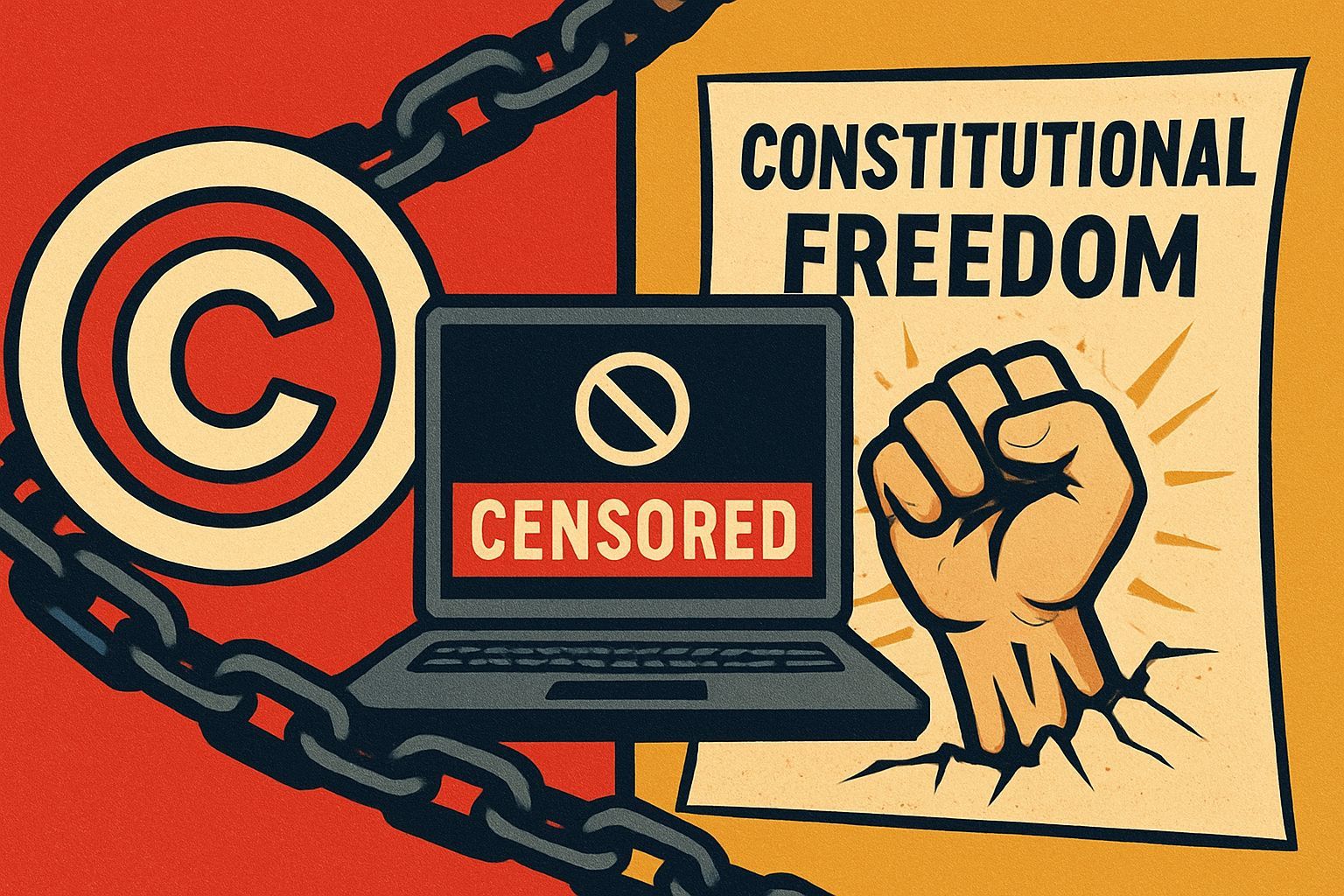
In December 2011, the digital world witnessed an event that, while not reaching the media resonance of other disputes related to censorship or piracy, posed deep issues on fundamental rights in the internet age. The case of Dajaz1.com, a popular hip-hop music blog, whose ownership of the domain had been seized by the United States federal government for a whole year, became a symbol of increasing tensions between copyright law enforcement prerogatives and constitutional guarantees of two process and freedom of speech. This story, described by the site lawyer as a process kafkian, highlighted the complexities and dangers inherent in the application of traditional laws – such as the 2008 Pro IP Act – to a rapidly evolving digital ecosystem. The return of the domain, accompanied by a tacit admission of error by the Immigration and Customs Enforcement (ICE), did not cancel the scars of a forced year of blockade, nor the deep concerns that the case raised regarding government power in blocking online platforms. This episode was not only a question of copyright, but a real test bench for the limits of the state authority in the context of the internet, a warning about the risks of lack of transparency and the crucial importance of respect for the principles of justice and freedom in an increasingly digitized era. The following article aims to thoroughly explore the implications of the Dajaz1 case, analyzing the legislative context, the ramifications for civil rights and lessons that we can draw for the future of digital law and the protection of online freedoms.
L'Affaire Dajaz1: A Alarm Bell for Digital Freedom
The story of Dajaz1.com, a portal that had earned a faithful follow-up among hip-hop music enthusiasts, is emblematic of a wider issue related to the application of copyright laws in the digital age. When, in 2010, the domain of the site was suddenly seized as part of the “Operation In Our Sites”, an ICE initiative aimed at hitting websites allegedly dedicated to copyright infringement, the owner of the blog found himself in a situation of absolute disbelief. He told the New York Times that he had received e-mails from artists and record labels that sent him directly some of the songs then contested, suggesting a complexity in the content distribution chain that the accusation of “pirota site” could not grasp. The action of the government, which lasted for a year without a formal judicial charge or a significant opportunity of defence, culminated with the return of the domain and the statement of the ICE that “concluded that the appropriate and just result was not to pursue the judicial confiscation. ” This admission, though veiled, of having made a mistake, highlighted not only the excessive zeal, but also the lack of an adequate preliminary verification process. The cost of this error for Dajaz1 was immense: a year of interrupted activity, loss of advertising revenue, irreparable damage to reputation and, last but not least, huge legal expenses to regain what had been unjustly subtracted. Dajaz1’s lawyer Andrew Bridges described the path to recover the domain as an odyssey kafkiana, characterized by a total lack of transparency. The demands for the extension of the terms for the confiscation, advanced by the government, were sealed and made inaccessible both to the defense and to the public, effectively preventing any form of judicial control and making it impossible to understand the reasons behind such prolonged and unjustified detention. This opacity not only violated the basic principles of a fair process, but instilled doubt about the legitimacy of the operation itself, transforming the Dajaz1 case into a disturbing precedent for digital freedom and the right to the two process on the net.
Pro IP Act: Birth, Purpose and Counterversies
The Prioritizing Resources and Organization for Intellectual Property Act (Pro IP Act) of 2008 represents a milestone in US legislation to strengthen intellectual property protection, providing new and significant prerogatives to federal agencies to counter piracy and counterfeiting. Born from the pressure of the content industry and a growing awareness of the economic damage caused by online copyright infringements, the Pro IP Act aimed at consolidating and enhancing the efforts of law enforcement forces, authorizing more aggressive actions against “rogue sites” (rogue sites) which was considered entirely dedicated to the infringement. Among the new capacities given to agencies there was the possibility to seize the registered domain names in the United States, a measure that went well beyond the traditional “takedown” mechanisms provided by the DMCA. The legislative intention was to provide more effective tools to dismantle large-scale piracy operations, cutting the financial roots of such enterprises through blocking their web addresses. However, the breadth of new attributes and the vagueness of some definitions prompted immediate concern among civil rights advocates and speech freedom organizations. The fear was that the Pro IP Act could be used indiscriminately, striking not only the real criminals of piracy but also legitimate platforms or independent blogs that, while occasionally hosting content disputed, did not fall in the category of “rogue sites”. The Dajaz1 case became the flashing proof of these apprehensions: a blog that defended itself by promptly removing content on request and receiving material from the same artists or labels, was treated as a criminal operation. This excessively zealous application of the Pro IP Act not only questioned its interpretation, but expressed its serious shortcomings in terms of safeguarding constitutional rights, revealing a potential abuse that the law, in its original intent, perhaps had not fully considered, but which in practice manifested itself with direct and dramatic consequences for digital freedoms.
Operation “In Our Sites”: A Large Front against the Presunta Pirateria
The “Operation In Our Sites” represented the large-scale implementation of the new powers conferred by the Pro IP Act, constituting itself as an ambitious effort and, in many ways, controversial, by the Immigration and Customs Enforcement (ICE) to eradicate online piracy and the sale of counterfeit goods. Launched with the stated goal of protecting consumers and supporting US creative industries, the operation manifested itself through the seizure of dozens of domains of websites that, according to the authorities, were involved in illegal activities. The strategy was clear: interrupt the flow of revenue of these sites making them inaccessible, often replacing the original homepage with a government seizure notice. Although the intent of striking organized crime behind large-scale counterfeiting and piracy was legitimate, the application of this strategy prompted immediate perplexity. The main problem lies in the preventive and often arbitrary nature of these actions, which bypassed the need for a definitive judgment of guilt before imposing such a drastic sanction as the closure of a website. While some kidnappings actually covered well-established fraud and piracy networks, the Dajaz1 case highlighted the concrete risk of “ collateral damages”, hitting operators who did not fit the profile of the large-scale “rogue site”. It has long been discussed whether the operation, although motivated by good intentions, had become an instrument too powerful and undiscriminatory, unable to distinguish between an amateur blog with occasional infractions and a transnational criminal organization. The perception was that the ICE, an agency whose main mission is not the protection of intellectual property, had assumed an overly expanded and sometimes disproportionate role, operating in an area – that of the regulation of online content – for which its skills and decision-making appeared inadequate. In a global and dynamic digital ecosystem, the long-term efficacy of such domain seizures has often been questioned, as closed sites tend to reappear under new domains or foreign servers, transforming the operation into a costly and inefficient “tope” that, in the process, undermined trust in institutions and raised serious questions about the fundamental guarantees for digital citizens.
Two Process and First Amendment in Digital Era: A Precarious Balance
In the center of the controversy generated by the Dajaz1 case and the entire “Operation In Our Sites” there is the fundamental question of two trials and the safeguard of First Amendment in the digital environment. The principle of the two process, pillar of every democratic legal system, guarantees that no individual can be deprived of life, freedom or property without a proper legal procedure. In the case of Dajaz1, the absence of a transparent judicial process, the detention of a domain for a year without a formal accusation and the opacity of requests for government extension, made evident a serious violation of this right. The seizure of a domain, as a point of access to a website, is in fact the closure of an expression platform, raising immediate and deep concerns about freedom of speech guaranteed by the First Amendment of the Constitution of the United States. A website, in fact, is not simply a “property” in a material sense, but a vehicle for spreading ideas, information and creative works. The arbitrary or unjustified closure of this vehicle may constitute a form of prior restraint, i.e. a preventive restriction of freedom of expression, a practice which the U.S. jurisprudence has always treated with extreme caution and admitted only in exceptional and well-defined circumstances, requiring an extremely high burden of evidence by the government. The possibility that a federal agency can disable a site for months without facing a public process, without the evidence being made known and without the owner having the opportunity to fully defend himself, creates a dangerous precedent. Not only does it prevent the spread of legitimate information and opinions, but it also generates a effect “chilling”, i.e. a climate of fear that can induce website managers and bloggers to self-censorship, limiting their expression for fear of incurring government punitive actions. The balance between the protection of intellectual property and the protection of fundamental rights of freedom of expression and two processes is, in the digital age, more precarious than ever. The Dajaz1 case has shown that without robust control and transparency mechanisms, state power can easily transgress the constitutional limits, with devastating consequences for innovation, public debate and democracy itself.
Copyright Violation Completion and Online Content Distribution
The dispute between the RIAA (Recording Industry Association of America) and Dajaz1.com perfectly embodied the complexity and nuances of copyright infringement in the digital ecosystem, a context in which the categories of “legitimate” and “illegal” fade easily. The RIAA insisted that Dajaz1 “was specialized in the unauthorized massive distribution of pre-release music” and that “it profited from its reputation of providing links to pre-release copies”. Their statistics indicated that nearly 2,300 records linked to the site had been removed from various file-sharing services. On the other hand, Dajaz1’s lawyer refuted these accusations, stating that “every time the owner received a request for removal of something, he carried out it within five minutes” and that many of the alleged infringement traces came directly from “representatives of the music industry, i.e. labels or artists”. This point is crucial: the music industry itself, sometimes, uses unofficial channels for promotion or to test the market, and the “flags” of pre-release material can have internal or promotional origins not always traceable. For a blog manager, in particular one that aggregates content from multiple sources, distinguish between an authorised “leak” and a clearly pirate becomes extremely arduous. The current legislation, in particular the “safe harbor provisions” of the Digital Millennium Copyright Act (DMCA), attempts to address this complexity, protecting online service providers (OSP) from direct liability for copyright infringements committed by users, provided they promptly remove the incriminated content once they have received a valid notification. However, the aggressive approach of the ICE, which opted for the seizure of the domain rather than for DMCA notifications or for a more thorough investigation of individual violations, effectively bypassed these safeguards, questioning the applicability and adequacy of existing laws. The request of the RIAA, according to which Dajaz1 had to verify the authorization of “migliaia of other pre-release traces” in addition to those that supposedly came from authorized sources, evidences a disconnection between the expectations of the industry and the operational reality of the websites that act as aggregators or discovery platforms. This confrontation is not only a legal question, but also cultural and economic, reflecting the difficulty of reconciling a traditional business model based on the exclusive control of content with the intrinsically open nature and sharing of the internet network, where the boundaries between promotion, information and piracy are becoming increasingly labile and accountable.
When the Power Excess Meets the Network: The Role of the Federal Agencies
The involvement of the Immigration and Customs Enforcement (ICE) in the seizure of domains for copyright infringement, as in the case of Dajaz1, raised considerable concerns about its jurisdiction and mandate. Traditionally associated with the application of immigration and border security laws, ICE was one of the agencies created under the umbrella of the U.S. Department of Internal Security after September 11. His mission was progressively expanded to include a wide range of investigative activities, including the fight against transnational crime, which often includes counterfeiting and piracy. However, the extension of its power to online copyright issues, with the possibility of acting with a clear autonomy and lack of transparency in the Dajaz1 case, highlighted the dangers of an expansion of the mission without adequate control and balancing mechanisms. The problem is not only the agency itself, but the general tendency of federal agencies to interpret their powers widely, especially in technologically complex and rapidly evolving sectors such as the internet. When an agency that has no specific competence in content regulation or in the protection of speech freedom exercises such an invasive power, the risk of errors, abuses and excessively extensive interpretations of the law increases exponentially. The question of responsibility is equally critical: who pays a company or an individual for a year of interruption of activity, for damage to reputation and for the huge legal expenses, when does the government silently admit to making a mistake? In the American system, the doctrine of “immune sovereignty” often protects the government from legal actions for damages, leaving victims of errors like Dajaz1 without an effective compensation mechanism. This situation not only erodes the public's confidence in the institutions, but also creates a climate in which deeds can operate with a sense of impunity, knowing that the consequences of their mistakes will fall mainly on citizens. To ensure a fair and free digital future, it is imperative that the mandate and enforcement of federal agencies’ powers are clearly defined and limited, and that there are robust mechanisms of judicial and parliamentary oversight, to prevent excess of zeal or misinterpretation of the law can suffocate innovation and freedom of expression online.
Beyond the Case Dajaz1: Reflections on the Evolution of Piracy and Law
The Dajaz1 case, although it took place over a decade ago, offers insights about the evolution of online piracy and the adequacy of legislative responses. Since 2011, the digital panorama has radically changed. The rise of legal streaming services – from Spotify and Apple Music for music, Netflix, Disney+ and Amazon Prime Video for video content – radically transformed consumer habits, offering comfortable, affordable and cost-effective alternatives to piracy. Many analysts agree that the offer of a legal and quality alternative was a much more effective deterrent against piracy than the aggressive enforcement actions. People are often willing to pay for content if the process is easy and the price is reasonable. This shift suggests that punitive tactics, such as the seizure of domains, could be anachronistic instruments or, at best, complementary, in an era in which the business model of entertainment evolved towards "distribution without friction". The problem of the “whack-a-mole” (hit the mole) that afflicts the seizure operations of domains is another reason to reconsider the effectiveness of such measures. When a domain is seized, pirates often simply move their content to a new domain, perhaps housed in a country with less stringent laws, making enforcement action a lost battle against an always changing and decentralized enemy. Moreover, the intrinsically global nature of the internet makes national laws, such as the U.S. Pro IP Act, insufficient to address a problem that transcends legal boundaries. Future solutions must be coordinated internationally and based on a deeper understanding of the technological and social dynamics that guide online content consumption. The most important lesson of Dajaz1 is perhaps that the law cannot and should not be a blind stick. Technological innovation requires an equally innovative legislative approach, which is not limited to extending old legal categories to new digital realities, but which considers the overall impact on freedom of speech, innovation and citizens’ rights. The debate on piracy is not only a matter of protecting economic interests, but also of shaping the type of internet we want to build: a place of freedom and exchange, or a rigidly controlled ecosystem and subject to arbitrary interventions.
Towards a Digital Equilibrated Future: Reformation, Transparency and Protection of Rights
The Dajaz1.com case, with its legal and constitutional ramifications, is not only a page of history of digital law, but a powerful warning and an opportunity to reflect on the path to be taken to ensure a balanced digital future. The story clearly highlighted the urgent need for a legislative reform that overcome the reactive and often punitive approach, promoting a normative framework that is technologically agnostic, proportionate and respectful of fundamental rights. Copyright laws must be modernized to address the complexity of the distribution of content in the internet age, distinguishing more clearly between large-scale commercial piracy and less serious or even promotional phenomena. An essential pillar for any future legislation or enforcement practice must be transparency. The secret and opacity that marked the Dajaz1 kidnapping process are unacceptable in a democracy. Government decisions affecting freedom of expression and digital property must be subject to strict public and judicial control, with all evidence and procedures made accessible, except in exceptional and clearly justified cases. Similarly, it is essential to strengthen guarantees of two trials. This means that any action of seizure of a domain or closure of a website should be preceded by a judicial order based on solid evidence and obtained through a contradictory process, where the owner of the site has a real opportunity to defend himself. The burden of proof should fall on the government, not on the individual. A more targeted approach, which focuses on the primary sources of large-scale piracy and the blocking of illicit financial flows, rather than the indiscriminate seizure of domains, could be much more effective and less harmful for individual freedoms. The collaboration between the content industry, internet service providers and legislators is crucial. Innovative solutions, such as more flexible licenses, micro-payment systems and accessibility-based business models, have proven to be more effective in diverting users from piracy than mera enforcement. Finally, the Dajaz1 case teaches us that the power of government agencies, however well-intentioned, must be exercised with extreme caution and responsibility in the digital realm. The protection of digital rights is not an obstacle to justice, but its unreliable condition. Building an internet in which creativity, innovation and freedom coexist requires a continuous commitment to effectively balance the protection of intellectual property with the safeguard of the fundamental democratic principles that define our societies.


