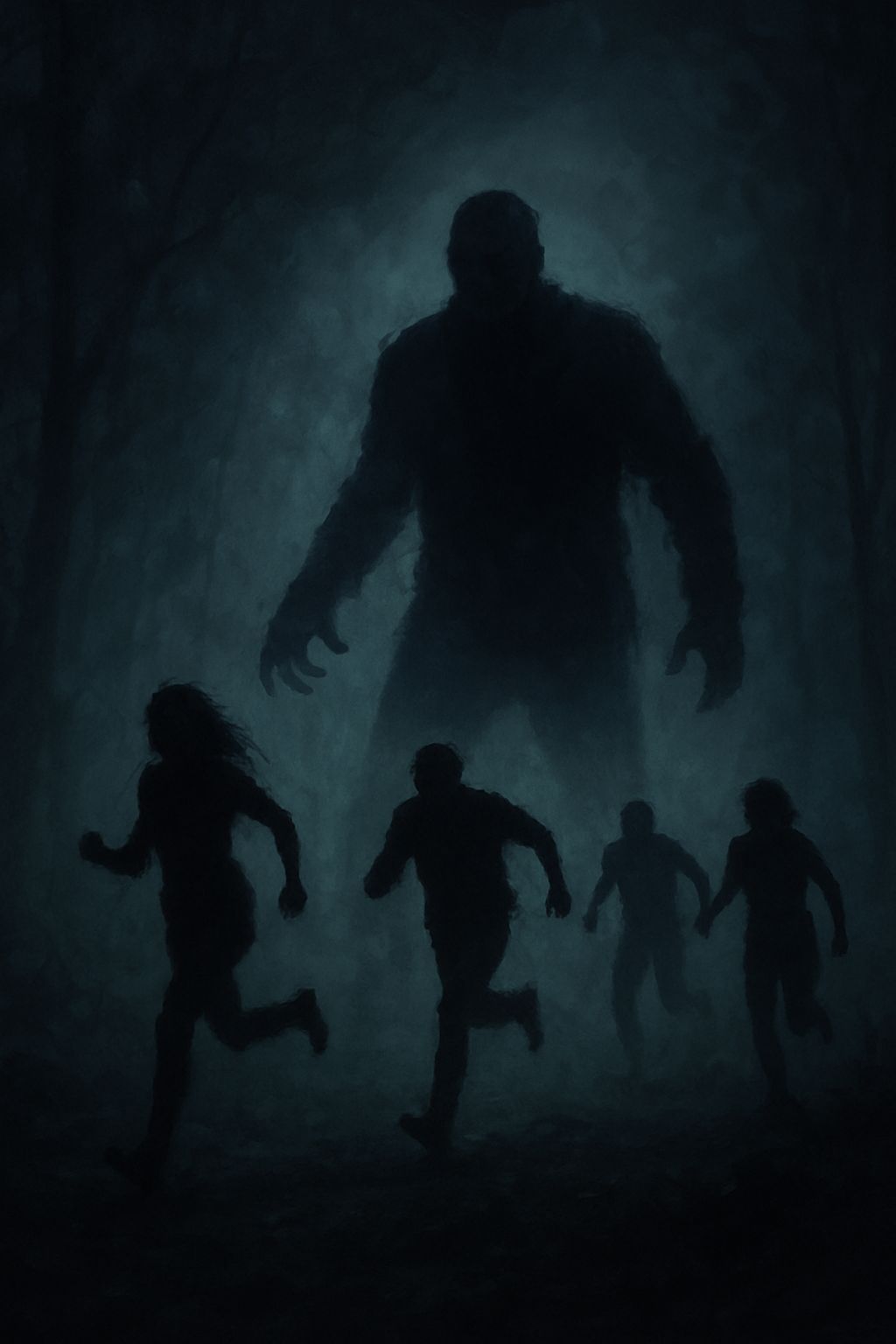
Dead by Daylight, a name that resonates strongly in the olympus of modern multiplayer games, has been able to sculpt an indelible niche in the videoludic landscape since its launch. Born from the ingenuity of Behaviour Digital, this asymmetrical survival horror has introduced such a simple and brilliant concept: a ruthless killer against four survivors, in a last breath hunt where strategy, cooperation and instinct of self-preservation merge into a unique and adrenaline gaming experience. It is not only a game, but a real cultural phenomenon that has attracted millions of players worldwide, thanks to its constant evolution and ability to reinvent itself. Its success is not only based on solid game mechanics and a palpable tension, but also on an astute business model and an extraordinary propensity to collaborations, which allowed the game to transcend its original borders and to embrace some of the most iconic horror sagas of all time. From the depths of the psychological terror of Silent Hill to the sci-fi-horror atmospheres of Stranger Things, passing through the classic slashers such as Halloween and Nightmare, Dead by Daylight became a real “virtual museum of horror”, offering fans the opportunity to impersonate or face their favorite monsters. This approach has not only enriched the gameplay with an unparalleled variety of characters, powers and maps, but also guaranteed the title an impressive longevity, keeping it relevant and lively years after its initial release. In this article, we will immerse ourselves in the heart of Dead by Daylight, analyzing its foundations, the revolutionary impact of its licenses, the evolution of its gameplay and what makes it an indisputable pillar in the horror genre multiplayer.
Dead by Daylight: The Ascese of an Asymmetrical Phenomena
The success of Dead by Daylight was not a mere blow of luck, but the result of a clear vision and impeccable execution in a genre, that of asymmetric horror, which before its arrival was to find a winning and lasting formula. Behaviour Digital has been able to grasp the essence of terror, the vulnerability of survivors and the impending power of evil, translating them into a compelling and infinitely replayable game cycle. At the centre of everything is the concept of the Hunt: a Killer, strong of unique abilities and powers, must hunt and sacrifice four Survivors to an ultra-terrestrial entity, while the latter desperately seek to repair five generators to open the exit gates and escape. This dynamic creates a constant tension: the survivors are perpetually in numerical and physical inferiority, forced to hide, cooperate in silence or escape with cunning; the killer, on the other hand, has to manage the pressure of time, locate his preys and learn how to make the most of the environment to his advantage. The map, generated procedurally for each match, ensures that each “proof” is unique, preventing storage and favoring adaptation. In addition, the perk, skill and object system adds a layer of complexity and customization that allows players to develop diverse game styles for both roles. This mix of unpredictability, psychological tension and deep strategy quickly captured the imagination of players, transforming Dead by Daylight from a simple video game to a real fixed appointment for millions of people, who continue to return to its dark and disturbing world, attracted by the promise of thrills and ever new challenges. The ability to offer such a rich and layered experience, while maintaining a basic accessibility, is the key to its extraordinary success and its dominant position in the horror gaming scene.
The Gameplay Button Heart: Strategies and Roles in the Kingdom of Entity
Diving in a game of Dead by Daylight means accepting to enter a kingdom where every decision, every step and every moment of hesitation can make the difference between salvation and an atrocious destiny. The gameplay is deeply asymmetrical and requires diametrically opposite approaches to the two main roles: the Survivors and the Killer. For Survivors, the primary objective is cooperation and stealth. Working together to repair the five generators needed to feed the exit gates is fundamental, but doing so requires constant attention to the surrounding environment to avoid being detected by the Killer. Resource management is crucial: Medikit to care, tool boxes to speed up repairs or sabotage the hooks, and torches to blind the Killer or destroy its traps. Each survivor can equip up to four perk, which offer passive bonuses or active skills that can dramatically change the style of play, from the ability to see the Killer aura to the possibility of getting rid of a combined. The “looppata”, that is the ability to evade the Killer by exploiting obstacles and windows, is an essential skill to gain valuable time for others. The game becomes a macabre dance of hide and chase, where the astute of the Survivors collides with the inexorable brutality of the Killer. On the other hand, the role of the Killer is to dominate the arena. Its goal is to identify, pursue and break down the Survivors and then hang them on the hooks, offering them to the Entity. Each Killer has its own unique power, which distinguishes it from others and requires specific strategies to be mastered. Whether it's the transport of the Spirit, the traps of the Hunter, or the leatherface saw, learning how to make the most of these skills is the key to an effective hunt. The Killers also equip perk, which can enhance their tracking, blocking of generators or oppression of Survivors. The real challenge for the Killer is pressure management: it must patrol the generators, prevent care and rescues, and know when to abandon an unsuccessful pursuit to focus on more profitable goals. The skill in both roles is not only derived from the knowledge of mechanics, but also from the ability to predict the moves of the opponent, read the battlefield and quickly adapt to changing circumstances, making each game a fresh and adrenaline-rich experience.
The Impact of Licences: Icons of the Horror Life in the Kingdom of Entity
One of the elements that has raised Dead by Daylight from a good game to a global phenomenon is undoubtedly its extraordinary ability to engage in collaboration with some of the most legendary sagas of horror. These licenses are not merely cosmetic additions, but they represent real chapters that introduce new Killer, Survivors and maps, enriching exponentially the universe of play and attracting a vast audience of fans of every specific series. The idea of impersonating icons like Michael Myers from HalloweenFreddy Krueger from A Nightmare on Elm Street, Leatherface da Don't open that door, or Jigsaw from Saw, represented an irresistible call. Each licensed Killer is recreated with incredible fidelity, not only in appearance but also in its unique power, which often takes a distinctive trait of the original character. We think of Michael Myers stalking his victims by earning “Evil Within”, a skill that makes him away more lethal, or the Demogorgone of Stranger Things that opens portals to teleport, making the experience authentic and immersive for fans. They are not only the Killers to benefit from these partnerships: Survivors famous as Laurie Strode, Nancy Wheeler and Steve Harrington, or Ash Williams, carry not only their aesthetics but also unique perks that are inspired by their events and personalities, adding additional layers of strategy and identification. These chapters also expand the lore of the game itself, integrating new entities and characters into the cyclic torment of Entity, which feeds on their emotions and fears. The introduction of maps inspired by the iconic places of the sagas (such as the Haddonfield psychiatry institute or the Starcourt Mall) completes the experience, transporting players directly into their favorite nightmares. The success of these collaborations has created a virtuous circle: every new chapter fired generates a wave of enthusiasm, pushes new players to discover the title and reinvigorates the base of existing fans, demonstrating how Dead by Daylight has become not only a game, but a celebratory platform for the entire horror genre, unifying several generations of terror under the shadow of Entity.
A Universe in Expansion: Lore, Architecture and Environmental Narration
Beyond the intense hunts and brilliant licenses, Dead by Daylight has been able to build a surprisingly deep and disturbing narrative universe, which acts as a background canvas for the endless “proves” to which its characters are subjected. At the heart of this universe there isEntity, a cosmic evil force coming from another dimension, which feeds on strong emotions, especially hope and despair. It is the Entity to abducte Killer and Survivors from their realities, trapped them in an eternal cycle of death and resurrection in his personal realms, permanently wrapped in a thick fog. Each map of Dead by Daylight is not a simple background, but a fragment of one of these realms, steeped in the history and psyche of the Killers that are linked to it. From the desolation of Red Forest, which reflects the primitive brutality of the Hunter, to the mechanical chaos of Macelleria, which narrates the madness of Cannibale (Leatherface), each environment is a masterpiece of environmental narrative. Elements such as scattered objects, written on the walls, ruins and specific structures tell without words the tragedies and origins of the residents of those places, allowing players more careful to rebuild pieces of the vast lore. This approach to narrative not only enriches the gaming experience, but also gives a sense of cohesion to the heterogeneous collection of characters from different worlds. Entity is not only one deus ex machina to justify the setting, but an active entity that influences the mechanics themselves of the game, for example through the hooks or environmental changes that may occur during the matches. The expansion of the lore also takes place through the “Tombs” and “Rifts” (Archives), which offer challenges and objectives to players, while revealing detailed and retroscene stories about the characters, both original and licensed, deepening their motivations and their journey into the Kingdom of Entity. This commitment to building a persistent and constantly evolving world demonstrates the dedication of Behaviour Interactive to create not only a fun game, but a work with its own fascinating and expanding mythology, which continues to capture the imagination of players well beyond the adrenaline of the individual game.
The Longevity of the Game: Updates, Meta and Balance Challenge
Dead by Daylight's ability to maintain a community of loyal and growing players for almost a decade is a testament to its outstanding longevity, resulting in a constant commitment by Behaviour Interactive to release updates, new content and balances. The game is a live and changing ecosystem, where the goal (the most effective strategies and perk combinations) evolves continuously. Each patch brings with it changes to statistics, reworks of powers or perk, and sometimes even complete revisions of characters or mechanics, forcing players to adapt and experiment new combinations. The biggest challenge for developers is undoubtedly the balance between Killer and Survivors. Being an asymmetrical game, the risk of unbalance is always present. Too powerful Killer can make the game frustrating for Survivors, while overly strong Survivors can deprive the Killer of any satisfaction. Behaviour Interactive constantly navigates this delicate line, based on community feedback, game data analysis and internal testing to make the necessary changes. This process is not exempt from criticism, with heated discussions within the community about “tunnelling” (focaling on a single survivor), “camping” (remaining close to a combined) or the force of certain perk considered “rotti”. However, it is precisely this continuous dialogue between developers and players that allows the game to improve and avoid stagnation. In addition to balances, longevity is also nourished by the regular introduction of new original characters – both Killer and Survivors – that bring new mechanics, perk and challenges. Seasonal events, battle passes (Archives and Frattures) and cosmetics add additional levels of engagement, offering players long-term goals and ways to customize their favorite characters. The competitive scene, although not formally eSports with big tournaments like other titles, exists in more organic forms, with high-level streamers and players constantly pushing the limits of mechanics, creating new goals and affecting community gaming choices. This constantly evolving game dynamic, combined with robust post-launch support, ensures that Dead by Daylight remains a fresh and engaging experience, able to surprise and challenge its veterans as much as newcomers, consolidating its position as a modern horror classic.
Beyond the Proves: Community, Culture and the Future of Dead by Daylight
Dead by Daylight has transcended the simple definition of video game, asserting itself as a real cultural phenomenon with a vibrant community and a significant impact on the pop culture of horror. Its community is vast and diverse, consisting of streamers that entertain millions of viewers, artists who create fan art breathtaking, theorists who analyze every fragment of lore, and players who gather in forums and social media to share experiences, strategies and love for the game. This constant interaction is a fundamental pillar of its longevity, creating a sense of belonging that goes well beyond the single game. The culture of the game is rich in memes, of gergali expressions (“teabagging”, “pallet stun”, “loop”) and of a specific language that only “veterans of the fog” can fully understand. In-game events and annual celebrations, such as the anniversary of the game or Halloween, become moments of collective celebration, with special content, unique rewards and the opportunity for players to return to the kingdom of Entity. Behaviour Interactive has demonstrated a remarkable commitment to dialogue with its player base, through livestream developers, Q& sessions and surveys, trying to collect feedback and direct future direction of the game in tune with community desires. Looking forward, Dead by Daylight seems destined to continue its expansion. The speculations on new licenses are a constant source of excitement, with fans dreaming of the arrival of other iconic monsters or the inclusion of new kinds of terror. The introduction of new mechanics, alternative play modes or even narrative spin-offs could represent the next steps to further diversify the offer. Its ability to adapt, integrate new ideas and maintain a strong identity, while accepting the influence of countless horror worlds, places it as a title with a growth potential still unexplored. Dead by Daylight is not only a game you play; it is a universe where you live, a crossroads for all lovers of horror, and its history is far from over, promising still countless nights of terror and fun in the Kingdom of Entity.


