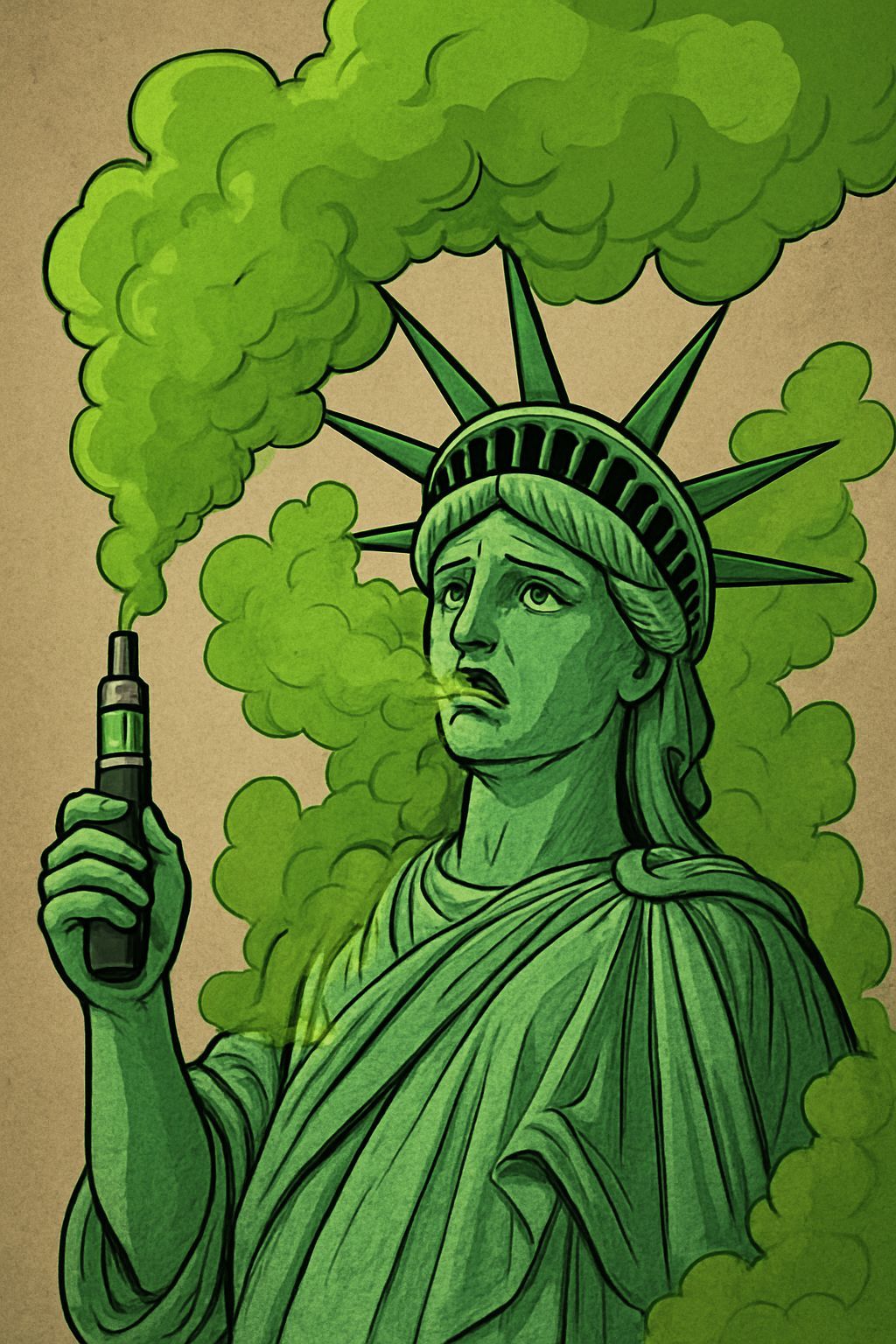
In a time when environmental awareness is more than ever crucial, the shadow of a new, insidious waste epidemic is elongating on our planet: the one generated by disposable electronic cigarettes. These devices, designed for maximum comfort and fleeting use, hide a technological and environmental secret that is rapidly turning into a global emergency. Every year, hundreds of millions of these small devices are thrown away, dragging with them a disconcerting amount of valuable resources and dangerous materials. At the heart of this problem are the lithium-ion batteries, often fully functional and rechargeable, which instead of feeding longer life cycles end prematurely in landfills or, worse, in nature. The story of Chris Doel, who assembled an e-bike battery by recovering 130 abandoned vape cells, is not only a brilliant example of ingenuity and a bold technical demonstration – although with its obvious risks, not recommended for domestic emulation – but above all a powerful poster. That “do-it-yourself project” has highlighted an uncomfortable truth: we are literally throwing away tons of potential energy and critical raw materials, such as lithium, enough to power thousands of electric vehicles every year. This article aims to explore the different facets of this emerging crisis. We will analyse the vastness of the problem electronic waste generated by disposable trays, the paradox ofprogrammed obsolescence the complex regulatory challenges and legislative gaps that fuel this market, and the urgent environmental impact resulting from an almost impossible recycling. Finally, we will look beyond the mere finding of the problem, trying to outline a path towards innovative and sustainable solutions, embracing the principles ofcircular economy to transform what is a threat today into an opportunity for change. It is time to face this reality, before the cost for future generations becomes unsustainable.
The Hidden Epidemic: The Global Crisis of Electron Waste from Vape
The image of mountains of obsolete electronic devices is now familiar in the collective imagination, but the massive advent of disposable electronic cigarettes has introduced a new, insidious dimension to this growing electronic waste crisis. These small objects, apparently harmless, accumulate at an alarming pace, contributing to a volume of waste that far exceeds their modest individual dimension. In the United Kingdom alone, it is estimated that more than 260 million vape batteries are thrown away every year, a figure that results in a colossal weight of materials that end in the waste flow. Extending this global estimate, the number becomes dizzying, with millions of tons of plastics, metals and above all lithium that are added to the load that our waste management systems are already struggling to support. The very nature of these devices, conceived to be “use and throw”, makes them intrinsically problematic. They are a mixture of difficult materials to separate: plastic and aluminum casings, circuits printed with small amounts of rare metals, metallic resistances, cotton studs and, more critical element, lithium ion batteries. These batteries, if not properly disposed of, represent a dual danger: they can burn or explode in collection and disposal centers, creating significant risks for safety, and release toxic chemicals and heavy metals in soil and water, with devastating consequences for ecosystems. The fact that many of these devices contain liquid nicotine residues, classified as dangerous waste from the EPA, it further complicates the recycling process, making it almost impossible through traditional channels. This combination of high volume, complexity of materials and presence of dangerous substances elevates the use and throws waste to a particularly pernicious electronic waste category, much more difficult to handle than a mobile phone or laptop, which, although complex, have more consolidated recycling chains. Their ubiquity and ease with which they are thrown away, often ignoring the correct disposal procedures, feed this silent epidemic, transforming a simple consumer object into a symbol of an unsustainable economic model that our planet can no longer afford.
The Reload Paradox: Obsoletion Programmed and Hidden Batteries
A paradox deeply rooted in industrial design and marketing strategies lies at the heart of the electronic waste crisis generated by disposable trays: the presence of rechargeable lithium-ion batteries inside devices labeled as “monouse”. This is not a mere technical detail, but the obvious manifestation of a far wider and controversial phenomenon: theprogrammed obsolescence. In an insatiable race for sale, the trader industry deliberately opted for a business model that ignores the inherent potential of its components. The batteries contained in many of the “3,500 puffs” (or more) disposable vape are often standardized cells, such as the 20400 or variants, technologically identical to those that feed e-bikes, scooters, power banks and even some electric vehicles. These cells are designed for hundreds of load and discharge cycles, with a potential useful life that extends well beyond the single usage for which they are employed. Chris Doel’s project is a flashing test: 130 of these discarded batteries, once recovered and reassembled with care, were able to feed an e-bike for over 30 kilometers at considerable speeds, demonstrating a capacity and resilience that contradict the very idea of “use and jet”. This approach, in which components of value and durability are incorporated into a product intended for very short life, is a flashing example of resource inefficiency and environmental irresponsibility. For manufacturers, the choice to make the product disposable is dictated by market logic: low initial production costs, ease of use for the consumer who does not have to worry about refills or maintenance, and a constant flow of sales of new devices. However, this model transfers a huge environmental and social cost to the planet and future generations. Thedesign ethics is here clearly compromised: instead of designing for durability, repairability or recycling, it is designed for rapid consumption and waste. Consumers, often unaware of the technological content they are throwing away, become unintentional accomplices of this waste. The drive towards greater awareness and pressure on manufacturers to adopt a more responsible design – perhaps with easily removable and recyclable batteries, or rechargeable devices and with replaceable cartridges – is essential to dismantle this paradox and start enhancing the resources we consider wrongly “refused”.
Navigate the Labyrinth Regulation: Between Legislative and External Responsibility of the Producer
The uncontrolled proliferation of disposable vaccines has largely been favoured by a fragmented and slow regulatory landscape to react to the rapid innovation of industry. The regulatory authorities, both in the United States and in Europe and the United Kingdom, have struggled to keep pace with the evolution of the market, leaving wide legislative voids that companies have readily exploited. In the United States, for example, the Food and Drug Administration (FDA) tried to regulate vapour products, but its initial focus was mainly on pre-filled nicotine cartridges for reusable devices, such as Juul, leaving disposable models in an ambiguous “grey zone”. This ambiguity has opened the doors to hundreds of new brands and thousands of products, largely Chinese manufacture, which have succeeded in evading regulatory control. Reports indicate that over 9,000 new products have appeared on the US market since 2020, most of which are disposable. Tactics such as name changes – as in the case of Elf Bar – allow these products to escape warning letters and prohibitions. In the United Kingdom, the situation has reached such a point that the government has announced a total ban on disposable vaccines from June 2025, recognizing the extent of the environmental and health problem. The European Union, even though it has not yet imposed a general ban on disposable trays, is pushing more stringent regulations through directives such as the Electric and Electronic Equipment Refuses Directive (RAEE), which imposes the External Responsibility of the Manufacturer (EPR). EPR is a principle in which manufacturers are held responsible for the entire life cycle of their products, from design to end life, including collection and recycling. The effective application of EPR to the vaccine industry could force manufacturers to finance collection and recycling systems, encouraging them to design more sustainable and easily recyclable products. However, implementation is complex, especially for products containing dangerous substances such as liquid nicotine, which further complicate waste management. The challenge is to create a global harmonized legislation that not only limits the influx of non-compliant products, but also imposes a real responsibility on producers, pushing them towards sustainable innovation instead of allowing them to thrive in regulatory gaps at the expense of our environment.
Beyond the Box: The True Environmental Cost and the Challenges of Vape Recycling
When a disposable electronic cigarette is thrown away, it is not only a small object that disappears into the waste flow; it is an entire microcosm of environmental impacts that manifests, often in invisible but deeply harmful ways. The real environmental cost of these devices goes well beyond the simple estimate of the discarded lithium batteries. Each vape consists of a complex matrix of materials: the plastic of the casings, often not recyclable or hardly separable; the aluminum, which if recycled efficiently would save enormous amounts of energy; small amounts of rare metals in the printed circuits; and, of course, the residual liquid nicotine, classified as dangerous refusal. This combination of materials makes the recycling of waste a huge and expensive challenge. Conventional recycling systems are not equipped to manage such small and complex products, nor to efficiently separate the various components. When they end up in landfills, lithium-ion batteries can burn due to short circuits or mechanical damage, causing difficult fires to extinguish and releasing toxic fumes. In water and soil, nicotine residues and heavy metals released from corroded batteries can contaminate ecosystems, harming flora, fauna and, ultimately, human health. The US Public Interest Research Group (US PIRG) estimated that in the United States lithium contained in the wasted vaccines each year amounts to about 23.6 tons, enough for 2,600 electric vehicles. This figure is stunning and emphasizes the enormous waste of a critical resource in an age when lithium demand is constantly growing for the global energy transition. The lithium extraction process is in itself a high environmental impact activity, which consumes huge amounts of water and generates pollution. Throwing away lithium is therefore not only a waste of resources, but also contributes to perpetuating a cycle of unsustainable extraction and production. The lack of dedicated recycling infrastructure and the impossibility to include vaccines in the “buyback” (return) programs for drugs, due to batteries, create a dead end for proper disposal. To overcome these challenges, it is imperative to invest in research and development for new recycling technologies that can separate and recover materials efficiently, and simultaneously implement specific and accessible collection systems for these devices, ensuring that they do not end where they should not.
From the “Da-Te Dangerous Project” to Scalable Solutions: The Future of Reuse and Recycling of Batteries
Chris Doel's project, although it is a powerful and visually captivating demonstration of the potential of the batteries recovered from the vape, also serves as a severe warning. The construction of a battery for e-bike from recovered vape cells is a complex and highly dangerous that requires specialized expertise in electronics, welding, charge management and battery discharge, and a manic attention to safety, including the presence of fire extinguishers. The risks of short circuit, overheating, release of toxic fumes and even fire or explosion are extremely high for anyone who tries to replicate it without the necessary precautions and knowledge. You should not try this kind of experiment at home. However, the essence of Doel’s message remains essential: these batteries still have a useful value and life. The challenge is to transform this individual demonstration of ingenuity into scalable and secure solutions. One of the most promising ways is reuse of batteries in “second life” applications. Lithium ion batteries recovered from electronic consumption devices, including vape (although vape is more complex due to their disposable nature and residues), can be tested, classified and reassembled in battery packs for less demanding uses than the original ones, such as domestic energy storage systems, solar energy street lighting, or even low power supply for vehicles. This approach not only reduces the need to produce new batteries, but also extends the life cycle of resources already extracted and processed. Parallelly, it is crucial to develop and implement advanced technologies for recycling lithium-ion batteries on an industrial scale. There are several processes: pyrometallurgia, which recovers precious metals through high-temperature fusion; drometallurgia, which uses chemical solutions to extract metals; and direct recycling, which tries to preserve the catodic and anodic structure to reduce the energy needed to remanufacture new cells. For vape, given their complexity and residues, pre-treatment (disassembly, safe discharge of batteries, neutralization of nicotine residues) is a critical step. Investment in infrastructure dedicated to the recycling of small electronic devices containing lithium batteries is an impelling necessity. This includes accessible collection points, automated dismantling processes for cutting-edge components and recycling plants. Only through an approach that combines intelligent reuse and efficient recycling can we hope to recover the hidden value in millions of disposable vapes and mitigate its environmental impact.
An Appeal to Collective Action: Towards a Circular Economy for Svapo Devices
The electronic waste crisis generated by disposable vape is not a problem that can be solved by a single actor or through a single solution. Requires a call for collective action, a concerted commitment involving producers, legislators, consumers and the recycling industry. The final goal must be the transition to acircular economy complete for svapo devices, a model that exceeds the current linear logic of “extreme, produce, use and throw” and instead adopts the principles of reduction, reuse and recycling. For manufacturers, this means a radical rethink of product design. They must move from disposable and sealed devices to rechargeable and reusable models, with replaceable cartridges and easily removable batteries that can be safely recycled or reused. The rigorous implementation of the External Responsibility of the Producer (EPR) is fundamental: manufacturers must assume full responsibility for the end of their products, financing and managing efficient collection and recycling systems. I legislators and regulatory authorities have a crucial role in creating a clear and harmonised regulatory framework. This includes prohibitions on disposable products where appropriate (as in the UK), design requirements for recyclability and repairability, clear labelling that informs consumers about materials and disposal procedures, and a strict application of existing regulations to prevent elusion by manufacturers. The classification of products and their components must be transparent to facilitate recycling. I consumers, in turn, must become informed and responsible actors. Choose rechargeable and reusable devices, inquire about materials, and above all properly dispose of the exhausted devices in designated collection points is an essential step. The pressure of consumer demand for more sustainable products can lead the market towards change. Finally, thewaste recycling and management industry needs significant investments in research, development and infrastructure. They serve innovative technologies for the treatment of vaccines, capable of separating materials efficiently and safely, minimizing environmental risks and maximizing the recovery of critical resources such as lithium. Only through this synergy of actions and responsibilities, can we hope to transform the threat of electronic waste from vape into an opportunity to demonstrate our commitment to a more sustainable future, ensuring that the resources of our planet are valued and protected, not wasted. The story of Chris Doel, with his message both provocative and truthful, reminds us of the urgency of acting, converting the landfill into a resource, and obsolescence into opportunities.


