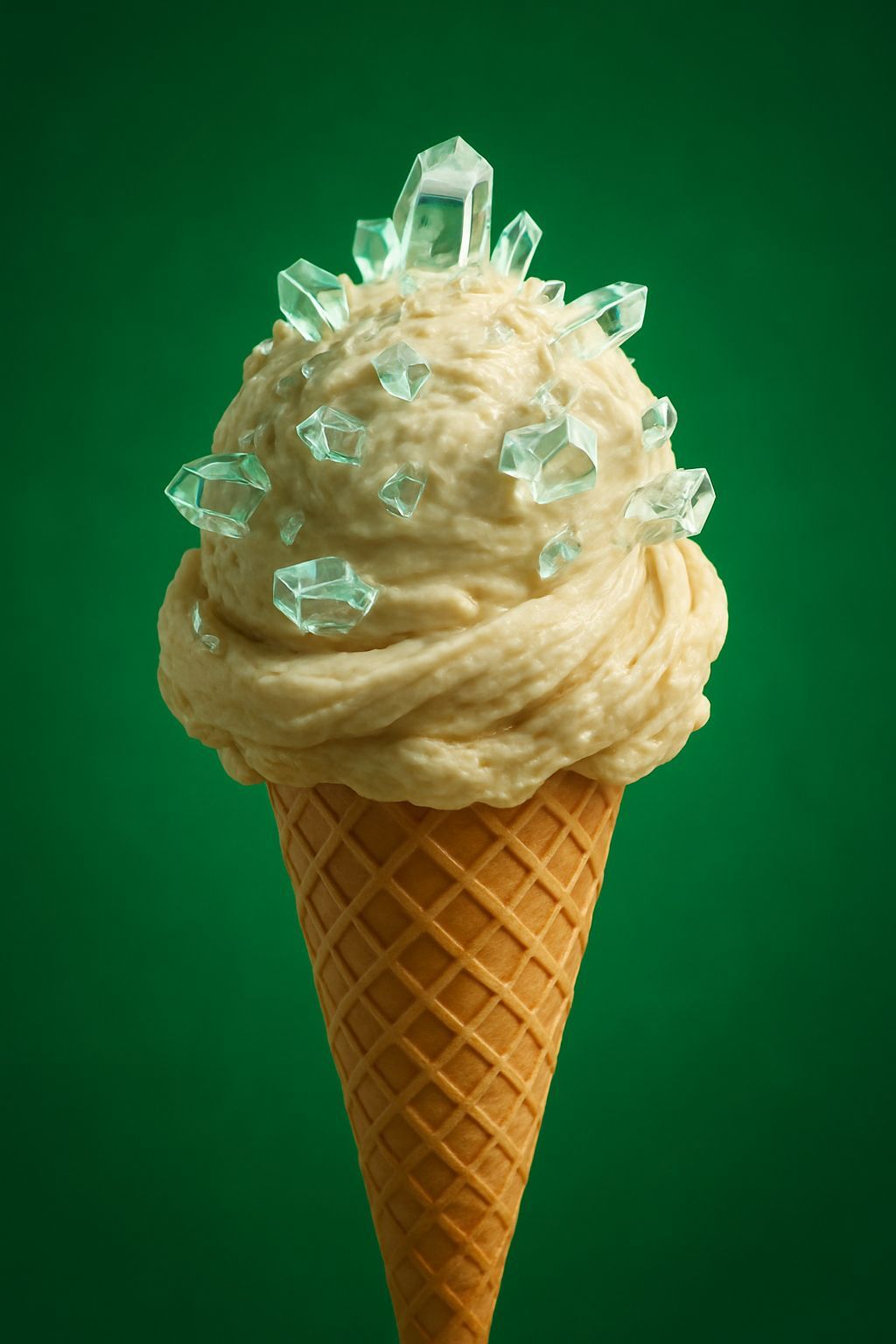
Imagine a spoon that sinks effortlessly into a mass of velvety ice cream, its smooth and indulgent texture that caresses the palate. Now, contrast this image with the far too common experience of an ice cream that, after being frozen and frozen, turns into a crunchy and crunchy cluster, ruined by annoying ice crystals. This is not a small problem for lovers of frozen sweets, but it is a complex challenge that the food industry has faced for decades. The battle against the formation and growth of ice crystals does not only concern the pleasure of taste; it has deep implications on the quality, shelf life and safety of a wide range of frozen food, from vegetables to meat, and even on the cryoconservation of tissues and vital organs. For years, manufacturers have relied on a number of additives, such as tires and lecitines, in an attempt to maintain the desired consistency. However, these traditional stabilizers and emulsifiers have intrinsic limits: their effectiveness is often variable, depending on many factors such as the preservation temperature, time and specific composition of the product, and their mechanism of action is not always fully understood. This uncertainty has led scientific research to new frontiers, exploring innovative solutions inspired by nature itself. This is where a revolutionary discovery emerged from the laboratories of the University of Tennessee: the use of cellulose nanocrystals of vegetable origin. These tiny but powerful components, abundant and renewable, seem to promise a more effective, economical and sustainable solution to say goodbye to unwanted ice crystals. Their amphipatic nature, that is the ability to possess hydrophilic properties (water-rent) and hydrophobics (which reject it), makes them ideal candidates to emulate the extraordinary capacities of natural antifreeze proteins, discovered in organisms that thrive in environments at extreme temperatures. This article aims to explore in depth this fascinating innovation, analyzing the science behind the formation of ice crystals, the limits of current solutions, the transformative potential of cellulose nanocrystals and their wide applications, well beyond the only ice cream, up to the cryoconservation of vital biological materials. It will be a journey through chemistry and food engineering, combining research ingenuity with the promise of a more creamy and reliable future for all frozen products.
The Chemistry of Dessert Perfect: Understanding Gelato Science
The creation of a high quality artisanal or industrial ice cream is a real art that sinks its roots into complex scientific principles, which go far beyond the simple mixing and freezing of ingredients. The magic of a perfectly creamy ice cream lies in a delicately balanced microstructure, a precarious balance between different states of matter that must be maintained to ensure the desired sensory experience. At its heart, ice cream is a complex and multi-phase colloidal system, a dispersion of air, ice, fat and sugar in a watery solution. Each component plays a crucial role. The fat, typically from cream or milk, contributes to the richness of taste and sensation velvety in the mouth; its globules are partially coalmining and form a network that stabilizes the structure and traps the air. The sugar, as sucrose, glucose and fructose, not only give sweetness but also play an anticongelating role, lowering the freezing point of water and affecting the size of ice crystals. More sugars mean a lower freezing point and a softer and easily spatulable ice cream. Thewater is the preponderant component, and its transition to ice phase is the core of the problem of crystallization. Milk proteins, such as casein and whey proteins, contribute to the emulsification and formation of foam, affecting consistency and stability. The production process begins with the heating of the ingredients to dissolve the sugars and paste the mixture, followed by a rapid cooling. Subsequently, the mixture is subject to a critical phase of maintenance, during which it is simultaneously agitated and frozen. This process has a dual purpose: to promote the formation of numerous and small ice crystals and incorporate air. The air, in the form of tiny bubbles, is essential for the light and foamy texture of ice cream; an excess of air, measured byoverrun (the volume added by air effect), can lead to a less dense product and that melts faster, typical of the cheapest commercial ice creams. Ideally, ice crystals should remain less than 50 micrometers in diameter to ensure a creamy sensation on the palate. Beyond this threshold, their presence becomes alert, giving that unpleasant sandy or crisp texture. The scientific challenge, therefore, is to control nucleation (the initial formation of crystals) and, above all, their subsequent growth during storage and temperature fluctuations, a phenomenon known as re-crystallization. Understanding these mechanisms is the first step to develop effective solutions that allow you to enjoy a perfect ice cream at all times.
The Crystal Threat: Mechanisms of Recreation and Their Consequences
The formation of excessively large ice crystals is the sworn enemy of creaminess, not only in ice cream, but in almost all frozen foods. The phenomenon at the base of this testural degeneration is the recycling, a thermodynamically guided process that leads to the growth of ice crystals at the expense of others, smaller and unstable. Despite the initial phase of freezing it can produce optimal crystals, time and temperature variations during storage are triggering factors for re-crystallization. There are mainly three mechanisms through which ice crystals are enlarged: migratory recrystallization accretive recrystallization and theOstwald repeating. The migration re-cristallization occurs when the ice crystals move and collide, melting together to form a single bigger crystal. This is particularly prevalent in systems with high water mobility, where ice can melt and refreeze quickly in response to temperature fluctuations. The re-cristallization for increase (or increase) occurs when existing ice crystals act as nucleation sites for deposition of water from adjacent crystals, smaller, or aqueous solution. The larger crystals have a smaller specific surface and are thermodynamically more stable, acting as “magnets” for free water molecules. But the mechanism perhaps more insidious and pervasive is theOstwald repeating, which describes the growth of larger crystals at the expense of smaller ones through a process of dissolution and re-cristallization. The smaller crystals, due to their greater surface energy, are less stable and tend to melt, freeing water molecules that go to add to the larger and thermodynamically more favorable crystals. This process is particularly accelerated by temperature fluctuations, even minimal, which cause melting and refreezing cycles. Every time ice cream melts partially and then regenerates, free water has the opportunity to migrate to existing crystals, by magnifying them. This is why a container of ice cream left on the kitchen counter and then put back in the freezer loses its creaminess irreparably. The consequences of re-crystallization are not limited to ice cream. Frozen fruits and vegetables can become soft or soaked once thawed due to the cellular damage caused by ice crystals. Frozen bakery products can lose their freshness and meat can undergo the so-called “freezer burn” (freezer burner), characterized by dehydration and alteration of texture and surface color. The ability to effectively inhibit re-crystallization is therefore fundamental not only for the pleasure of the palate, but also for the reduction of food waste and for the guarantee of stable and lasting quality products. The search for more effective and universal solutions is a strategic priority for the food industry, which aims to overcome the limits of current technologies and to offer consumers frozen products that maintain intact their organoleptic characteristics from the first to the last spoon or mouth.
Traditional Additives: A Balance between Necessities and Limits
For decades, the food industry has relied on a number of additives known as stabilizers and emulsifiers to mitigate the problem of re-crystallization and improve the consistency of frozen products. These ingredients, although effective to a certain extent, have significant limits that have driven research towards more performing alternatives. Between stabilizers more common we find different hydrocolloids, that is soluble polymers in water able to form viscose solutions or gels. The rubber seal, extracted from the seeds of the plant Cyamopsis tetragonoloba, is widely used for its ability to bind water and increase viscosity, reducing the mobility of water molecules and, theoretically, slowing the growth of crystals. Similarly, the carob seed flour (or locust bean rubber), obtained from carob seeds, is another polysaccharide that gives viscosity and stability. The carragenin, a red algae extract, is appreciated for its gelling and thickening properties, often used in combination with other stabilizers. The pectina, extracted mainly from citrus and apples, is a polysaccharide with excellent gelling and stabilizing capabilities, particularly effective in acid products. The mechanism of action generally accepted for these stabilizers is that they increase the viscosity of the unfrozen aqueous phase, slowing the diffusion of water molecules and therefore the growth of crystals. Some may also bind water, reducing the amount of free water available for ice formation. The emulsifiers, like the lecithin (often derived from soy or sunflower), they have the task of stabilizing the emulsion of fat and water, preventing the separation of the phases and contributing to a smoother and homogeneous texture. They act by reducing the surface tension between the immiscible stages, allowing the fat and water to mix more intimately. Although these additives have represented a pillar in the frozen industry, their effectiveness is often a compromise. As evidenced by Tao Wu's research, their performance is strongly influenced by a myriad of factors, including temperature and storage time, specific product composition and concentrations of other ingredients. This means that a stabilizer that works egregiously in a type of ice cream could be ineffective in another, making the process of formulation often an exercise of tests and errors rather than a precise science. Moreover, the exact mechanism through which these additives inhibit re-crystallization is not entirely clear. The predominant theory of increased viscosity has been questioned by recent discoveries, suggesting that there may be other factors at stake. This lack of complete understanding and variability of performance have opened the way for more robust, efficient and universal solutions, which can offer more reliable protection against the growth of ice crystals and ensure a constant quality of frozen products in every condition.
The inspiration from nature: Antifreeze Protein and Their Genius Approach
Nature, with its inexhaustible ability to adapt, has developed extraordinary solutions for survival in extreme conditions, offering valuable ideas for technological innovation. One of these biological wonders is antifreeze protein (AFP), discovered in a surprising variety of organisms that populate sub-zero environments, from animal fish to insects and even some plants and microorganisms. These proteins have the unique ability to allow organisms to survive at temperatures well below the freezing point of water, preventing the formation of lethal ice crystals or controlling its growth. The discovery of AFP dates back to the 1960s, when it was observed that the blood of some polar fish remained liquid at temperatures below 0°C, contrary to what was expected. Since then, several AFP families have been identified, with various structures and mechanisms of action, but all share a fundamental feature: the ability to interact specifically with the surface of ice crystals. The predominant mechanism through which AFPs act is known as adsorption-inhibition. Instead of drastically lowering the freezing point of the bulk of the water (as sugars or salts do), the AFP reversibly binds to the surface of the tiny rising ice crystals. This bond, highly specific and often dependent on structural complementarity between protein and ice crystalline network, prevents water molecules from adding easily to crystal, effectively blocking its growth. AFPs act as a molecular “catcher” that “wrapes” the crystals, segregating them and preventing them from founding or magnifying. One of the most remarkable properties of AFP is their ability to create a phenomenon called thermal hysteresis. This means that the freezing temperature of the solvent is significantly lower than its melting temperature. In other words, the solution containing AFP can be cooled below 0°C without freezing, but once freezing begins, the crystals dissolve only at a higher temperature than the one in which they were formed. This thermal “gap” provides a safety margin for organisms exposed to fluctuating temperatures. AFPs have been studied for applications in different fields, from food industry to biomedical cryopreservation. However, their large-scale use has so far been hampered by two main factors: their limited availability and thehigh production cost. The extraction from natural sources is complex and inefficient, and the biotechnological synthesis remains costly, making them impractical for commercial use in mass consumption products such as ice cream. Nevertheless, the principle of adsorption-inhibition offered by AFP has represented a beacon of hope, stimulating researchers to seek alternative, abundant and economic materials, which could replicate this brilliant natural strategy to combat unwanted formation of ice crystals.
Nanocristalli di Cellulosa: The Green Revolution in the Frozen World
The economic insustainability and scarcity of antifreeze proteins prompted the scientific community to seek alternatives that replicated their mechanism of action with more accessible materials. It is in this context that the cellulose nanocrystals (CNC) have emerged as a promising solution, triggering a real green revolution in the frozen sector and not only. Cellulose is the most abundant organic polymer on Earth, forming the main structural component of the cell walls of plants. Its ubiquity makes it an extremely abundant, renewable and economic resource. Cellulose nanocrystals are rigid crystalline particles, with dimensions in the order of nanometers (typically 50 to 500 nm long and 3 to 50 nm thick), extracted from native cellulose through mechanical and chemical processes, such as acid hydrolysis or mechanical fibrillation. Their ecological profile is unexceptionable: they are biodegradable, biocompatible and non-toxic, attributes that make them extremely attractive to the food and biomedical industry. The key to the potential of CNC as re-crystallization inhibitors lies in their peculiar structure anfipatic. Similarly to antifreeze proteins, cellulose nanocrystals have both hydrophilic surfaces (which interact with water) and hydrophobic surfaces (which reject it). This structural duality makes them able to interact in a complex and selective way with the water-sink interface. The researchers Tao Wu and Min Li of the University of Tennessee have realized that this feature could allow CNCs to emulate the AFP adsorption-inhibition mechanism. Their research, presented at the American Chemical Society, has shown that adding cellulose nanocrystals to an ice cream model has a significant effect on the size of ice crystals. Initially, the difference between the model with CNC and the control one was minimal. However, after several hours of conservation, and especially when ice cream was subjected to temperature fluctuations (which simulate the real conditions of domestic preservation or supermarkets, where the product can partially dissolve and refreeze), the CNC have demonstrated an extraordinary effectiveness. They completely blocked the growth of the ice crystals, keeping them in small and desirable dimensions, unlike the crypts in the control model that continued to enlarge, leading to the unpleasant crispy texture. The effectiveness of CNCs has also been higher than that of traditional commercial stabilizers in fluctuating temperature conditions, highlighting their potential as a revolutionary solution. This breakthrough not only provides a way to improve the quality of ice cream, but also opens the way to a more sustainable and natural approach to preserving a wide range of frozen products, with significant economic and environmental benefits. The promise of an always creamy ice cream, obtained with an additive derived from the plants, is now closer than ever to realization, preaching a paradigm change in the food industry.
CNC Action Mechanism: Rewriting the Rules of Inhibition of Recreation
The discovery that cellulose nanocrystals (CNC) can block the growth of ice crystals with a higher efficacy than traditional additives is not only a practical result, but it also has deep implications for our understanding of the ricrystallization inhibitory mechanisms. For a long time, the dominant belief was that the stabilizers acted mainly by increasing the viscosity of the unfrozen aqueous phase. It was believed that this greater viscosity slowed down the movement of water molecules, thus reducing their ability to migrate to ice crystals and contribute to their growth through processes such as the Ostwald repeatning. However, the research of Wu and Li team has shed new light on this theory, proposing a radically different and more efficient action mechanism for CNCs:surface adsorption. As mentioned above, CNCs, thanks to their amphipatic structure – with hydrophilic and hydrophobic regions – are able to bind directly to the surface of ice crystals. This interaction is not mediated by a general increase in the viscosity of the entire system, but rather by targeted action on the ice-water interface. Imagine the nanocrystals as tiny guardians that stick to the edges of freshly formed ice crystals. Once absorbed, CNCs create a physical barrier. This barrier prevents free water molecules present in the unfrozen solution from depositing on the crystal surface and incorporating into its crystalline structure. In other words, CNC blocks active crystal growth sites, preventing them from expanding. Moreover, the presence of CNCs on the surface of the ice crystal can also hinder the aggregation of smaller crystals in larger crystals, a key phenomenon in migratory re-cristallization and increase. The energy needed to overcome this barrier of nanocrystals and allow the growth of ice increases, making the process thermodynamically less favorable. This intuition, that the inhibition of re-cristallization can take place through surface adsorption rather than exclusively through the increase of viscosity, represents a change of paradigm. Not only does it explain the high effectiveness of CNC, it also opens new ways to design future re-crystallization inhibitors. The fact that cellulose nanocrystals, derived from a abundant vegetable resource, can replicate and even exceed the performance of complex antifreeze proteins, but at a significantly lower cost and with greater sustainability, is a testament to the power of the biomimetic approach in materials science. Understanding this specific action mechanism is essential not only to optimize the use of CNC, but also to develop new materials and strategies that can be applied in a wide range of contexts, from food conservation to biotechnology, where control of the formation of ice crystals is vital.
Multisector Advantages: Beyond Gelato, a Best Frozen Future
The potential impact of cellulose nanocrystals (CNC) as re-crystallization inhibitors extends well beyond the pleasure of an impeccably creamy ice cream. This innovation promises to revolutionize entire sectors, offering concrete solutions to long-term problems in food conservation and biomedicine. In thefood industry, the application of CNC could significantly improve the quality and durability of a wide range of frozen products. We think of fruits and plants: the formation of large ice crystals within their cells can cause severe structural damage, leading to a soft texture and loss of nutrients and once thawed flavor. CNCs could better preserve cell integrity, ensuring fresher and tasty products. Frozen meats and fish products could benefit from a reduction of the so-called “drip loss” (loss of exasperated during the defrosting) and of the weaving “freezer burn”, maintaining a better texture and succulence. Frozen bakery products, such as bread and pastries, could preserve a greater freshness and a softer structure. Frozen soups, sauces and ready-made dishes would also see their consistency and homogeneity improved. The ability of the CNC to function effectively even in the presence of temperature fluctuations is a huge advantage for the cold chain, where thermal variations are inevitable, from production to transport, to storage in stores and finally to the domestic freezer. This would translate into less food waste, greater consumer satisfaction and greater product quality reliability. But perhaps the deepest and potentially life-saving application of CNC is in the field of crioconservation. The preservation of cells, tissues and organs at extremely low temperatures (often in liquid nitrogen) is a crucial practice in medicine, from research to therapy. However, the success of cryoconservation is often compromised by the formation of ice crystals, both inside and outside the cells. These crystals can cause mechanical damage to cell membranes, organelle breakage and osmotic stress, leading to a significant loss of vitality or cell death at the time of thawing. Currently, chemical cryoprotectors such as DMSO (dimethylsolfoxide) or glycerol are used, but these can be toxic at high concentrations and do not always prevent ice formation. Adding cellulose nanocrystallization inhibitors could dramatically increase the vitality of cells, tissues and organs after thawing. This would have revolutionary implications for blood banks and bone marrow, preservation of gametes and embryos for assisted fertilization, storage of samples for biomedical research and, in particular, preservation of organs for transplants. An organ preserved with less damage from ice could have a better post-transplant function, expanding the time window for transport and intervention and saving more lives. In addition to these main sectors, renewable nature and low cost of CNC make them attractive for a wide range of other applications, from biomaterials and biodegradable films to use in cosmetics and pharmaceutical products. The promise of a future where conservation is more efficient, safe and sustainable, thanks to these small but powerful plant components, is concrete and transformative.
From Research to Market: Challenges, Regulation and Acceptance of Consumers
The path that brings a laboratory discovery to the commercial application is often long and full of challenges, and cellulose nanocrystals (CNC) are no exception, despite their enormous potential. Although preliminary results are extremely promising, their entry into the food and biomedical market requires the directing of various critical issues, ranging from production scalability to regulation and, no less important, to consumer acceptance. One of the first challenges is production scalability. Currently, CNC extraction and purification are processes that can be expensive and complex on a large scale. To make CNCs competitive in terms of cost with traditional additives, it is necessary to develop more efficient, economical and sustainable production methods. This includes the optimization of extraction processes (such as acid hydrolysis or mechanical grinding) and the search for new cellulose sources, possibly from agricultural or industrial waste, to minimize environmental impact and costs. Another technical consideration iscNC integration into complex food matrices. Their uniform dispersion in ice cream or other frozen foods is crucial to their effectiveness. The presence of fats, sugars and other proteins can affect their ability to interact with ice crystals. Further studies will be needed to optimize formulations and ensure that CNC maintain their full functionality in different recipes and production conditions. Theimpact on other sensory properties of the product is another area of research. Although the main objective is consistency, it is essential to ensure that CNC does not adversely alter the taste, aroma or color of ice cream or other foods. Consumers are very sensitive to these attributes, and even a slight perceived change could hinder acceptance. The regulatory framework plays a crucial role. In the United States, the approval of the Food and Drug Administration (FDA) is necessary for the use of new food additives. The process requires rigorous safety and toxicology tests to demonstrate that CNCs are safe for human consumption. Tao Wu said he was confident about CNC security, but regulatory authorities will require solid and long-term data. In Europe and in other international markets, similar processes (for example, the European Food Safety Authority, EFSA) must be followed. CNC classification as “Generally Recognized Sicuri” (GRAS) in the United States would accelerate the process, but it will require a solid scientific basis. Finally, theconsumer acceptance is a decisive factor. The term “nanocristalli” could provoke concerns in part of the public, although CNCs are derived from a natural resource and are well studied for their biocompatibility. Clear and transparent communication on the benefits, safety and natural origin of CNC will be essential. The “clean label” movement (clean label), which favors natural ingredients and easily recognizable, could play in favor of CNC, as they come from vegetable cellulose. However, it will be the task of the industry to educate consumers and dissipate any fears, emphasizing the advantages of a more natural, sustainable and superior product. With an estimated three-five years of market introduction, research and development will continue to push to overcome these challenges, bringing cellulose nanocrystals from a promising scientific discovery to an innovation that transforms the way we eat and preserve our foods.
The Frozen Future: Innovations and prospects of Nanomaterials
The advent of cellulose nanocrystals (CNC) as re crystallization inhibitors is not simply an incremental improvement; it represents a paradigm shift that could redefine the future of frozen products and cryoconservation. This innovation fits into a broader context of research on plant-born nanomaterials, emphasizing the growing importance of sustainable and environmentally friendly solutions. Future prospects are exciting and multifaceted. In the food sector, optimization of use of CNC could lead to the development of completely new products or to the extension of the shelf life of existing ones without compromising quality. Imagine ice creams and desserts that keep a perfect cream for months, or frozen vegetables that never lose their crispness. This would not only improve the consumer’s experience, but would also have a significant impact on reduction of food waste along the entire supply chain, a crucial goal for global sustainability. CNC integration could also allow manufacturers to reduce dependence on other additives, sometimes less natural or more expensive, aligning with increasing consumer demands for cleaner labels and transparent ingredients. Future research could explore the synergy between CNCs and other ingredients or technologies, such as combining them with fast freezing techniques or other cryoprotectors for even more marked effects. The ability to chemically change the surface of the CNC to improve its affinity with specific types of ice crystals or to control its dispersion in different food matrix is another promising study area. In the field of crioconservation biomedical, the impact could be even deeper. A greater vitality of cells and tissues at the time of thawing could revolutionize regenerative medicine, organ transplants, cancer research and biodiversity conservation. The ability to store complex biological samples with minimal ice damage could accelerate scientific discoveries and improve access to life-saving therapies. Veterinary applications may also be explored, for the conservation of animal embryos or reproductive cells. From the point of view of sustainability, the use of abundant and renewable plant resources such as cellulose offers an ecologically superior alternative to synthetic or petrochemical additives. CNC production, if optimized, can be low environmental impact, contributing to a circular economy and reducing the carbon footprint of the food industry. Moreover, mental openness to new methodologies, such as the biomimetic approach inspired by antifreeze proteins, stimulates a wave of innovation that goes beyond the mere development of products, but concerns the redesign of entire processes and value chains. The future of frozen, thanks to plant nanomaterials, promises not only good and safer products, but also a step forward towards a more resilient, efficient and sustainable food and biomedical system for generations to come. Science, once again, shows us how the most elegant and revolutionary solutions can be found by carefully observing the secrets of nature and applying human ingenuity to replicate and improve them.
In conclusion, pioneering research on the application of cellulose nanocrystals as re-crystallization inhibitors represents a significant turning point in food science and cryoconservation. The ability of these humble vegetable derivatives to emulate and overcome the effectiveness of complex antifreeze proteins, inhibiting the unwanted growth of ice crystals through a superficial adsorption mechanism, not only solves a long-time problem that afflicts ice cream and other frozen foods, but also offers an elegant, economic and sustainable solution. From the maintenance of the velvety consistency of a freshly made ice cream, even after cycles of defrosting and refreezing, to the potential safeguard of vital organs and tissues for medical applications, the implications of this discovery are vast and deep. Although there are challenges related to the scalability of production, regulation and consumer acceptance, CNC transformative potential is undeniable. This innovation emphasizes the power of the biomimetic approach and the importance of investing in fundamental research, which can lead to revolutionary discoveries with tangible benefits for the quality of life, food safety and environmental sustainability globally. The future of the frozen world, thanks to these tiny but powerful green allies, appears more promising and creamy than ever.


