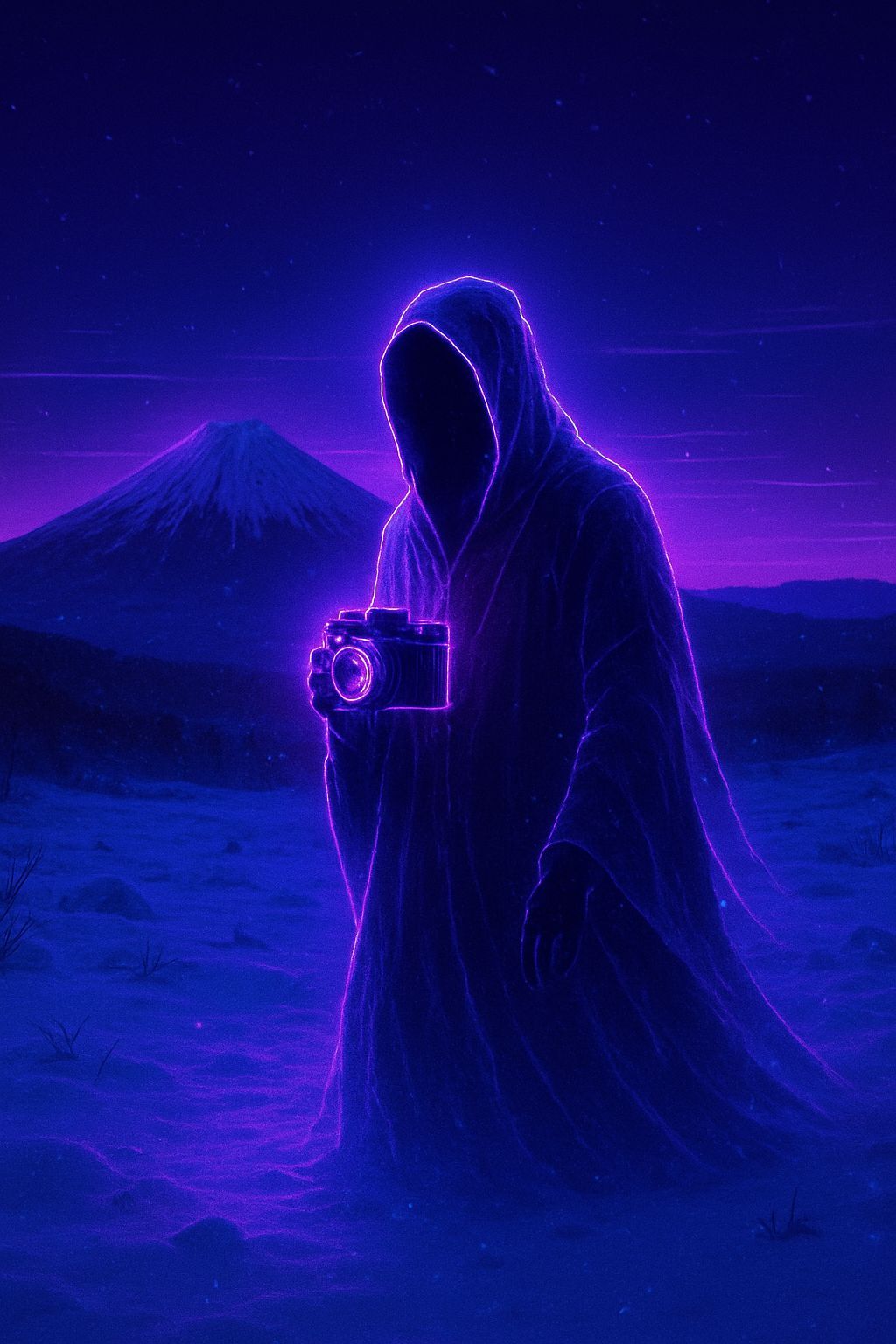
The videoludic universe is constantly evolving, not only in terms of breathtaking graphics and immersive narratives, but also in the tools available to players to interact with these digital worlds. In this context, Ghost of Yōtei, with its upcoming launch on PlayStation 5, it profiles as a real watershed, promising to elevate integrated photographic mode to a level of sophistication and professionalism so far unpublished. It is no longer a simple ‘screenshot’ frozen over time, but a creative arsenal that transforms the player into an authentic digital artist, able to shape every moment in a visual work of art or even in a short animated short film. This innovation is not only a demonstration of pure technical power by Sucker Punch, but represents a bold statement on the growing importance of virtual photography as an expression form. From the extended range of focal lengths that mimic those of professional optics, to the ability to manipulate the environment dynamically, to a post-production suite that rivals external software, Ghost of Yōtei is about to inaugurate a new era in which the act of capturing and recreating moments of play becomes an art itself. This article aims to explore in depth the revolutionary features of this photo mode, analyzing the impact on the video and the way players can express their creativity, raising the concept of ‘in-game photography’ well beyond the mere memory of a playful experience, transforming it into a means for visual narration and personal artistic expression. We will immerse ourselves in the details of how every single tool, from the management of atmospheric conditions to the customization of the subject, contributes to creating a complete photo ecosystem, ready to stimulate the imagination of aspiring virtual photographers.
The Evolution of Virtual Photography: From Simple Screenshot to Digital Art
The history of photography in video games is a fascinating journey, starting from humble origins and now reached peaks of unimaginable complexity and beauty. Initially, capturing a game image simply meant pressing a ‘Print Screen’ button on the keyboard, getting a static snapshot of the user interface included. With the advent of the most advanced consoles and operating systems, integrated functionality for the screenshot emerged, but the real revolution began with the introduction of the first dedicated ‘photo modes’. These early attempts, often rudimentary, allowed to remove the HUD, adjust the camera angle and apply basic filters. Games like Grand Theft Auto IV or Uncharted 2 they offered hints at these possibilities, though limited. The qualitative leap has been achieved with titles as Middle-earth: Shadow of Mordor, which introduced a more robust photo mode, and subsequently with visual masterpieces such as Horizon Zero Dawn, Marvel’s Spider-Man and Red Dead Redemption 2, who have elevated in-game photography to a true art. These games began to integrate more granular controls, such as depth of field, exposure, color filters and, in some cases, the possibility to change the time of day or weather conditions. The goal was clear: to give players the tools to immortalize their favorite moments not only as a memory, but as a creative expression. Photo mode has become an almost indispensable element for many AAA titles, acting not only as a marketing feature but also as a community engagement tool, with millions of images shared daily on social media. Ghost of Yōtei fits into this evolutionary path, but does so with an ambition that goes beyond the ‘improvement’. It is not content to offer ‘sufficient’ tools, but aims to provide a professional arsenal, turning the game itself into a complete virtual darkroom. Its implementation is so deep and detailed that it approaches the capabilities of professional photo editing software and videography, raising the expectation on what a photo mode can and must be. This is a clear signal of how the industry is recognizing intrinsic value and increasing demand for artistic expression tools within virtual worlds.
The Arsenal of Virtual Photographer: Goals, Paintings and Cinematographic Dynamics
The photo mode of Ghost of Yōtei stands out for its ability to faithfully emulate the professional photographic experience, offering unprecedented control over the lenses and dynamics of filming. The heart of this system lies in its focal length range, ranging from an ultra-grand angle of 12mm to a 300mm telephoto lens. This extension allows the virtual photographer to choose the most suitable goal for every scenario, just like a real-world professional would do. A 12mm or 24mm is ideal for capturing the vast and evocative landscapes of Ezo, emphasizing the grandeur and breadth of the environment. These broad focal points slightly distort the perspective, creating a sense of immersion and a panoramic view that swallows the viewer. For environmental portraits, where the subject is central but the surrounding environment plays a key role in narrative, a 35mm is perfect, offering a wide field of view but with minimal distortion. When attention is focused on the details of the face or expressive details of Atsu, the protagonist, the 50mm is the canonical choice for the first floors, replicating a perspective close to the human eye and producing an effect of naturalness and intimacy. For full picture portraits with a delicately blurred background, the 80mm is the ideal option, as it allows you to isolate the subject from the background, creating a pleasant bokeh effect that enhances Atsu. But the real gem in the arsenal of Ghost of Yōtei is the system of tracking. This revolutionary functionality goes well beyond static photography, allowing you to record up to 16 positions of the camera. The player can define a dynamic path, setting key points for the camera and, with the simple pressure of the Triangle key, the game will generate a smooth animated sequence. This transforms every potential screenshot into a real professional film shooting, creating captured moments. Imagine being able to choreograph a camera movement that follows Atsu while taking a decisive blow, or moving away to reveal the vastness of the battlefield after an action. This system not only elevates the quality of the ‘photos’ to ‘cortometraggi’, but also opens new avenues for visual narrative within the game, allowing players to create their own animated mini-stories with a quality that was previously only used by cutcene developers. It is a bridge between photography and videography, which democratizes access to complex film techniques, making them intuitive and fun to use for any player.
Masters of Climate and Light: Check the Environment for Perfect Compositions
Environmental manipulation is a crucial aspect in any form of visual art, and Ghost of Yōtei offers players an unprecedented level of control over this front. It is not just a matter of choosing a preset, but of actively shaping the atmosphere and lighting of each scene to adapt it to its artistic vision. The photo mode provides nine types of weather conditions different: from a serene and clear sky to a thick fog that envelops everything, from lightening after rain to impetuous storms and flying rains. Each option radically transforms the mood of the scene, affecting brightness, reflections and visibility. A serene day is perfect for bright and detailed compositions, while the fog can add a sense of mystery and isolation, emphasizing the solitude of Atsu. The rain or snow, instead, create dynamism and depth, with drops or bows that add texture to the image and blur the background in unique ways. The control oftime of day it's just as fundamental. It is not a simple cursor, but a real manipulation of sunlight, which allows to exploit its most iconic effect in photography: golden hour. That short time lasso right after sunrise or before sunset, when the sun is low on the horizon, floods the scene of a warm, golden and enveloping light. This light, more soft and directional than the zenithly midday light, is ideal for adding drama, creating long and evocative shadows, and giving a cinematic touch to any shot. The ability to adjust the time finely means that you can place the sun exactly where you want, to get the perfect lighting that enhances the details of the subject or landscape. In addition to climate and lighting dynamic particle effects add a further layer of life and authenticity. The game offers a wide range of elements to be inserted in the scenes: leaves of various colors falling, cherry blossom petals dancing in the air, golden pollen, floating ash, fiery braces, glittering libellules, colorful butterflies and even flying bird flocks. The intensity of these elements is adjustable, allowing the photographer to dose the desired effect. The finishing touch is the direction of the wind, editable on 358 degrees. This is not a mere aesthetic detail, but a functional element that determines the realistic movement of all particle effects and surrounding vegetation. Imagine the wind moving cherry petals exactly in the direction that creates the most harmonious composition, or that stirs the leaves of the trees to add dynamism. This level of environmental control not only elevates visual quality, but allows a deeper environmental narrative, where each element contributes to creating a unique and unforgettable atmosphere, transforming each shot into a window on a vivid and button world.
The Integrated Post-Production: The Power of Color Grading and Detail
Once the basic image is captured, the real artist knows that the work is not finished. Post-production is where a good photo can turn into an iconic image, and Ghost of Yōtei offers an integrated suite of tools that rivals external professional software, eliminating the need to export and edit images elsewhere. The heart of this phase is the color grading, a process that manipulates the colors and tones of the image to evoke specific emotions and atmospheres. In addition to the classics white and black and sepia (here called B/W Vintage), the game offers specific and highly evocative presets: Samurai Red, which probably emphasizes red and warm tones for an epic and battle atmosphere; Storm, which suggests cold tones and marked contrasts for a sense of drama; Autumn, with its warm and terrifying nuances; Smoke, which could introduce a veil of gray and mystery; Maple, Ginkgo, with specific colourations recalling the autumn tones of the leaves, and Tintype, which emulates the aesthetics of old photographs on the plate. The filter Maple, in particular, is a brilliant example of how a preset can be thought for a specific visual narrative: by drawing the image and leaving only the reds emerge, it becomes a powerful tool to highlight crucial details such as scratches on the hands, wounds or blood spots, adding a level of raw reality and emotional impact to the composition. In addition to presets, the game offers exposure and contrast granular controls, with values from -5.0 to +5.0. This allows the photographer to adjust the overall brightness of the image and the difference between the clear and dark areas, obtaining exactly the desired effect, whether you want a bright and airy image, or that you look for a darker and shaded atmosphere. The depth of variable field is another crucial tool for artistic control. With an aperture ranging from f/1.2 to f/63, the player can decide how much background and foreground should be on fire. An aperture of f/1.2 will create a bokeh extremely pronounced, blurring almost completely the background and isolating the subject with a cinematic drama, ideal for portraits. On the contrary, an aperture of f/63 will keep almost all the sharp scene, perfect for landscapes and photographs that require a great depth of field. The fire distance can be set by a minimum of 10 cm, for incredibly close macro details, up to 200 meters, guaranteeing focus on distant subjects. These controls are not simple cursors, but emulate the capabilities of a professional camera, offering total artistic control and allowing players to transform their visions into digital reality with surprising precision. The integrated post-production of Ghost of Yōtei elevates the act of in-game photography from a simple click to a complete creative process, where every detail can be refined to achieve the desired visual and emotional impact.
Customization and Narration: Give Life to the Subject and the Environment
The true mastery of an advanced photo mode is manifested not only in the manipulation of the environment or post-production, but also in the ability to customize and give life to the main subject. In Ghost of Yōtei, Atsu is not only a static figure to frame, but a dynamic character that can be shaped to express a wide range of emotions and conditions, greatly enriching the narrative potential of each shot. The atsu customization options include an extensive library of emotional expressions: anger, confusion, disbelief, disgust, fear, happiness, fury, intensity, sadness, surprise and many more. This expressive wealth allows the virtual photographer to capture the pathos of a specific moment, transmit the character's character or create a scene that emotionally resonates with the viewer. An expression of fury in a close portrait can communicate the determination of Atsu before a battle, while an expression of sadness may underline a moment of reflection or loss. These emotional details are crucial for visual narration, transforming a simple ‘scatto of a character’ into a psychological portrait. In addition to the expressions, you can alter the physical aspect of Atsu to reflect the circumstances of the game. The possibility of add mud or blood it is not only a touch of realism, but a powerful narrative instrument. A mud-covered Atsu suggests a long journey or an exhausting struggle, while blood stains tell a story of combat and resilience. These visual details add depth and context to the image, allowing the photographer to communicate more information with a single frame. The equipment elements are also customizable: you can choose to hide or show the helmet and mask by Atsu, directly affecting the identity you want to project. An uncovered face may suggest vulnerability or determination, while the mask may evoke mystery or unstoppable force. A particularly refined detail is the possibility of adjust the reflection of katana0 to 15.0. This fine control over the reflections of the weapon not only adds a touch of visual realism, but can be used for dramatic effects, such as capturing the sunlight on the polished metal to emphasize the sacredness or dangerousness of the blade. The game also offers a variety of photo formats, from the classic 16:9, standard for consoles and monitors, to panoramic formats like 21:9 and 32:9, ideal for ultrawide desktops or for those who want a more extensive film cut. These formats influence the composition and perception of space, offering additional tools for creative expression. Finally, the customizable soundtrack, which includes the theme of Atsu and other compositions, together with several types of stamps to overlay graphic elements, complete the package, allowing the player to create not only an image, but an entire multimedia experience. This wealth of customization of the subject and the environment only cements the position of Ghost of Yōtei as an unprecedented tool for interactive visual narrative.
Advanced Virtual Photography Techniques: Tips for Digital Artist
While the photo mode of Ghost of Yōtei offers professional tools, mastering them requires more than just knowledge of functions. It requires an understanding of photographic techniques and an artistic vision. Developers suggest a fundamental rule: always explore the surrounding environment before taking the definitive photo. Often, initially unnoticed details – such as interactions between secondary characters, wildlife or alternative landscape compositions – can radically transform the final result. This advice translates into a wider practice of patience and observation, key elements also in real photography. But to really elevate their creations, virtual photographers can draw on consolidated principles. The first is the rule of third parties: imagine a 3×3 grid on the image and place the points of interest along the lines or crossings. This creates more balanced and interesting compositions than a centred subject. The leading lines (guidelines) are another powerful technique: to use natural or artificial elements (trades, rivers, walls, branches) that guide the viewer's gaze towards the main subject or a focal point. The symmetry can create harmonious and powerful compositions, often used in architecture or scenes that reflect a sense of balance. The use of negative space, that is, the area around the main subject, can help isolate Atsu and highlight its figure, avoiding distractions and making the image more clean and impactful. With regard to the light, besides taking advantage of the golden hour, you can experiment with retro lighting to create dramatic silhouettes or effects ♪ that outline the subject. Side lighting can emphasize textures and volumes, while a front light can make colors more vivid. The depth of field is not only a technical question, but artistic: a reduced opening (as f/1.2) creates a strong bokeh, isolating Atsu and focusing attention on her, ideal for emotional portraits. A high aperture (f/63) keeps everything on fire, perfect for large landscapes or to tell a complex story with many visual elements. Even the composition of clouds, thanks to climate control, it can be a powerful tool. Dramatic clouds can add emotional weight to a scene, while a clear sky can transmit serenity. Finally, the use of color. The color grading presets as Maple are not just filters, but tools to communicate. The contrast between bright reds and desaturated shades can emphasize violence, passion or important details. Experimenting with color combinations can transform the atmosphere from melancholic to heroic. The mode of automatic saving of the last settings used is another blessing, allowing artists to refine their own style without having to start over each time, encouraging continuous experimentation. The quick activation of the photo mode via the right D-Pad means that every moment, even in the heart of the action, can be captured and transformed, pushing players to see the world of Ghost of Yōtei not only as a playing field, but as an endless canvas for their artistic expression.
Beyond the Game: Cultural Impact and the Community of Virtual Photography
The sophistication of photo modes in video games, culminated in what is expected in Ghost of Yōtei, has had a profound impact not only on the experience of the individual player, but also on the videoludic culture and on the widest digital artistic scene. The virtual photography has emerged as a legitimate form of art, with an increasing number of artists who dedicate hours, if not days, to capture and edit images within digital worlds. This phenomenon has given rise to online community vibrant and dedicated, where virtual photographers share their works, exchange advice and techniques, and inspire each other. Platforms like Instagram, Reddit and even online art galleries are full of breathtaking shots made in games like Cyberpunk 2077, Assassin’s Creed Valhalla, The Last of Us Part II and, soon, even from Ghost of Yōtei. These communities are not just places of sharing, but real creative workshops where unique styles and techniques develop. Many players, who might have never touched a camera in the real world, find in virtual photography an access door to artistic expression, composition, light and color, unconsciously learning principles that are at the base of traditional photography. The accessibility of these tools within the games democratizes art, making the creation of high quality images within everyone’s reach. The cultural impact also extends to the way games are perceived and appreciated. A well-made photo mode extends the life of a game, encouraging players to return to worlds that have already explored, but with a new perspective: that of the visual narrator. Instead of running for the main story, players stop to admire a landscape, capture the essence of a character or document an epic moment. This not only increases replay value, but also creates a form of organic marketing incredibly powerful. Every shared photo online is a free and authentic advertising for the game, showing its graphic beauty and depth of its worlds. In addition, virtual photography is challenging the traditional boundaries of art, pushing to reflect on what ‘originality’ and ‘creation’ means in a digital context. Although the artist has not built the world from scratch, the act of choosing the frame, manipulating light, climate, expressions and post-production is a creative process as much as that of a photographer who chooses his subject in the real world. Virtual photography exhibitions are becoming more and more common, with works that are printed and displayed as any other form of art. This recognition elevates the videoludic medium from simple platform entertainment for deep and meaningful artistic expression, and Ghost of Yōtei, with its advanced photo mode, is destined to be a fundamental catalyst for this continuous cultural evolution.
The Future of In-Game Photography: Innovations and Perspectives
Looking at the future, the photo mode of Ghost of Yōtei, while already revolutionary, allows us to imagine what could reserve the next decade for in-game photography. The ever greater integration ofartificial intelligence (AI) is one of the most exciting prospects. Imagine a photo mode that, based on the player’s aesthetic preferences or on the scene’s context analysis, automatically suggests frames, light adjustments, color grading filters or even positions for particle effects. An AI could identify moments of strong emotional impact in narration and propose angles that exalt them, or automatically optimize settings to better capture the golden hour without the player having to experiment. Another step forward could be greater real-time interaction with the environment beyond the simple weather and wind. We think of the possibility to generate custom particle effects, such as ice chips or magic sparks, or to physically interact with the elements of the scene to create unique compositions – for example, move an object to free a visual field or create a new point of interest. The virtual reality (VR) and augmented reality (AR) are still unexplored borders for photo modes. In VR, the photographer could physically move within the scene, perceiving depth and scale more intuitively, and capturing images that offer an even more immersive perspective for those looking at them in a VR viewer. The AR could allow you to project your virtual creations into the real world, or even capture moments of play by integrating elements of the physical world. Theevolution of graphics and game engines will continue to provide more detailed and realistic canvases. With the advance of ray tracing and global lighting techniques, scenes will become indistinguishable from reality, offering virtual photographers an even wider range of aesthetic possibilities. The ability to manipulate the physics of objects in a more granular way, for example fold branches, move small stones or alter the texture of a real-time surface, will open new ways for composition. We could also attend a major integration between photo mode and content creation tools, perhaps with the possibility to export not only images or short videos, but entire project files that other players or content creators can import, remix and rework, promoting an even deeper artistic collaboration. The boundary between ‘play’ and ‘create’ is destined to fade further, transforming video games into complete creative platforms where virtual photography is only one of the many forms of art that players can master. Ghost of Yōtei, with its pioneering approach, is not only a game but a precursor of this exciting fusion of technology, art and interactivity, indicating a clear direction for the expressive future of the medium.
A New Narrative and Artistic Paradigma: The Power of Immortal the Hero
The true essence of a photo mode lies not only in its technical complexity or the number of options it offers, but in its ability to enable a new narrative and artistic paradigm for the player. In Ghost of Yōtei, this translates into the power to immortalize Atsu, the protagonist, not only as a character to control, but as a heroine to tell, to celebrate and analyze through the virtual goal. Each shot becomes a window on its history, its struggles, its victories and its most reconditional emotions. The possibility of adjusting each individual parameter – from face expression to katana reflection, from wind direction to fog density – allows the player to be the director, photographer and even the screenwriter of visual micro-narrations. Imagine you want to create a series of shots that document the transformation of Atsu from an uncertain warrior to a legendary figure: you can use the expressions of fear and confusion in the first floors, the adverse weather conditions to symbolize its challenges, and then switch to expressions of intensity and fury, with golden light and a calm sky, to celebrate its conquests. Every aesthetic choice becomes a narrative choice, giving a deeper meaning to the image. This power of visual narrative also extends to the player's relationship with the game world. Ghost of Yōtei, with its evocative landscapes and deeply Japanese atmosphere, becomes a backdrop for endless stories. The player is no longer a mere spectator who crosses the world, but a documentaryist, an artist who captures his beauty, his brutality and his soul. The images created become a personal travel diary, an artistic portfolio that reflects its interpretation and connection with the world of Yōtei. Photo mode, in this sense, turns the game into a platform forunlimited creative expression. It's not just about showing your skill in capturing a moment, but about impressing your artistic vision on a preexisting digital universe. It is a dialogue between developers, who create the world, and players, who re-interpret it and tell it through their own lenses. This creative process not only enriches the gaming experience, but also generates a sense of belonging and identity within the community. Every shared photo is a piece of self, a testimony of its unique gaze. With Ghost of Yōtei, in-game photography ceases to be an optional mere to become an intrinsic and vital element of the ludic experience, a means to explore not only the virtual world, but also its creativity and narrative capacity. The power to immortalize the hero, and his world, in such a detailed and personal way, is a statement of the lasting value and the constant evolution of photography in video games, raising it to a form of art that continues to surprise and inspire.


