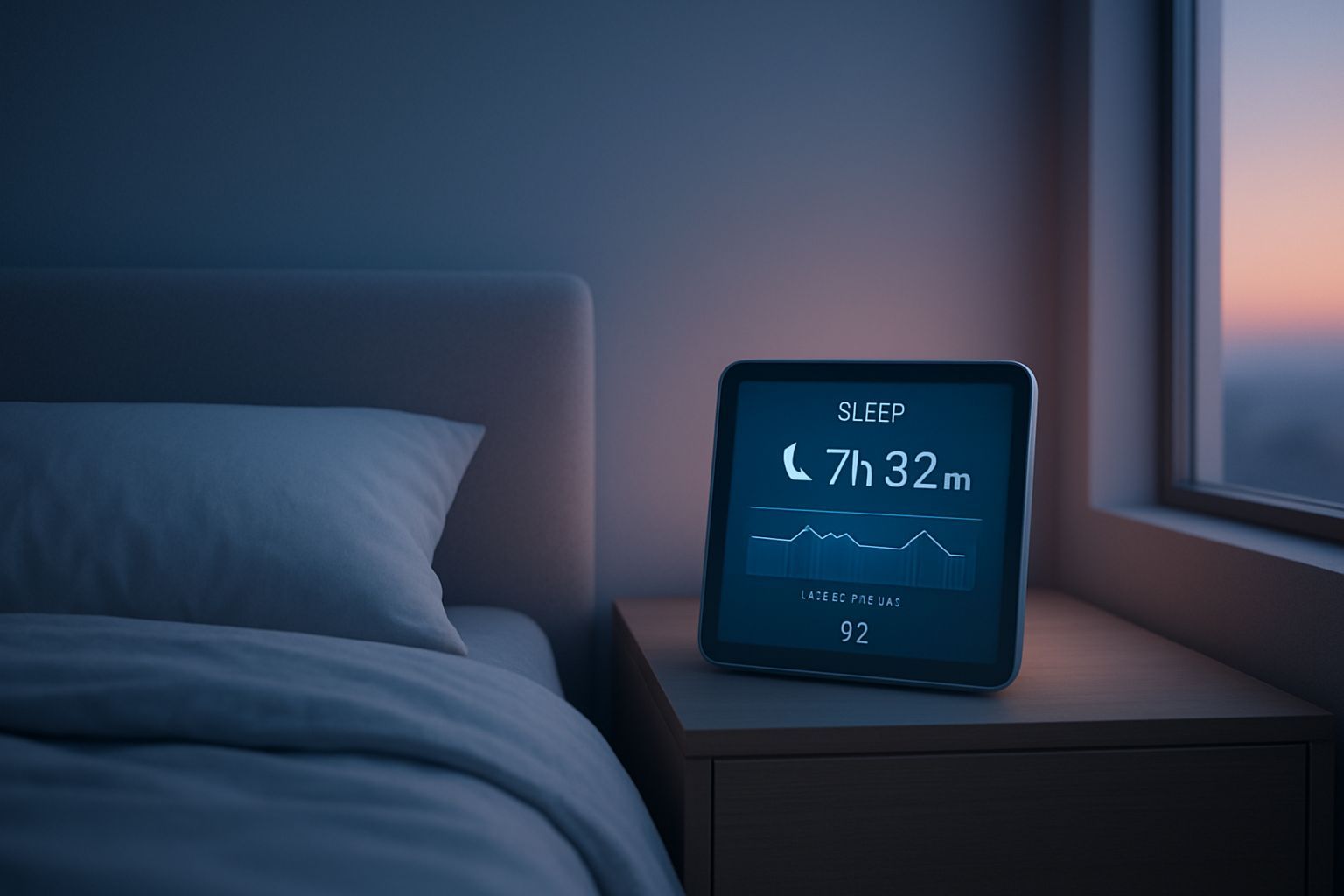
The panorama of intelligent domestic technology is constantly evolving, with devices that transcend the mere convenience to integrate more and more deeply into our everyday well-being. Among these, the second generation Google Nest Hub stands out not only as a refined and accessible smart display, but as a pioneer in contactless sleep monitoring, thanks to the integration of Project Soli technology. This device, which at first glance could seem a simple aesthetic evolution of its predecessor, hides under the surface significant innovations that redefine the role of a domestic assistant, especially in the intimate environment of the bedroom. Its ability to trace sleep with remarkable precision, combined with a strengthened commitment to user privacy and a more competitive price, places it as a key actor in digital health debate and environmental intelligence. But beyond its immediate functionality, the Nest Hub 2a Gen invites us to a broader reflection on the future of wearable and non wearable technology, the implications of biometric data monitoring and the balance between innovation, comfort and personal sphere protection. This article aims to explore these topics in depth, analyzing how the Nest Hub is not only a product, but an indicator of future trends in smart device design, human-machine interaction and health integration in the fabric of everyday life, pushing beyond the surface to understand the deeper meaning of its offer.
Smart Display Evolution: From Intelligent to Essential to Wellness
The introduction of the second generation Google Nest Hub is not only an incremental update of an existing product, but represents a turning point in the evolution of smart displays, transforming them from simple home control centers to proactive tools for personal well-being. From their origin, smart displays such as Amazon’s Echo Show or Google’s first Nest Hub have established themselves as a visual hub for the smart home, providing access to information, entertainment and device management connected via an intuitive user interface and a voice assistant. However, their utility was often confined to generic tasks such as showing recipes in the kitchen, displaying security camera feeds or playing videos. With the Nest Hub 2a Gen, Google redefined expectations, focusing on a specific scenario: the bedroom. This strategic decision has led to a cameraless design, a crucial element to reassure users about their privacy in such a personal environment. The real innovation, however, lies in the integration of Project Soli, a radar technology that enables contactless sleep monitoring, raising the device from a simple digital clock to a night health assistant. This paradigm shift highlights a broader trend in the technological industry, where giants like Google are trying to integrate health and wellness features directly into mass consumption products, making them more relevant and essential for everyday life. The challenge is to offer useful and actionable data without overcoming or generating anxiety. The Nest Hub attempts to address this challenge by providing basic sleep data – sleeping and awakening times, respiratory frequency, coughing and snoring – instead of complex sleep phase analysis, which are often less accurate in consumer devices. This choice reflects a philosophy that favours reliability and simplicity, aiming to encourage more regular sleep habits rather than provide a medical diagnosis. The success of this strategy will depend on Google’s ability to balance technological innovation, privacy protection and a user experience that is both informative and reassuring, marking a new chapter for smart displays as allies of our health.
Project Soli: The Radar Revolution and Contactless Interaction
Project Soli, a miniaturized radar technology that represents a significant leap in human-machine interaction and in contactless biometric monitoring, is at the heart of the second-generation Google Nest Hub innovation. Developed by Google ATAP (Advanced Technology and Projects), Soli is a millimeter wave radar chip that can detect extremely fine movements and gestures, with a surprising precision. Originally designed to revolutionize the interaction with devices through microscopic finger gestures – such as rubbing to simulate a virtual wreath or pinch to enlarge – Soli found in the Nest Hub one of its most practical and immediate applications: sleep monitoring. Its ability to ‘see’ through light materials such as the feather and to detect body movement and breathing with an exceptional resolution makes it ideal for this purpose. Unlike cameras, which raise obvious privacy concerns, or infrared sensors, which may be less accurate or influenced by light, Soli's radar operates in a non-invasive way, detecting changes in radio waves reflected by the body. This aspect is fundamental to position the Nest Hub in the bedroom, where the presence of a camera is universally considered unacceptable by most users. Google has also placed a particular emphasis on the privacy of audio data collected (for coughing and snoring), specifying that recordings are not saved either on the device or on the cloud, but only the information that an event occurred, processed on-device. This local processing architecture, supported by integrated machine learning chips, further mitigates privacy risks, distinguishing Soli from other cloud-based solutions or cameras. Beyond sleep, Soli Motion Sense features in the Nest Hub also allow practical gestures, such as switching off an alarm with a simple hand movement or pause of musical playback. Although these current applications are limited, the potential of Soli is vast: from control of complex interfaces to greater distances, to detection of falls in the elderly, to integration into domotic devices for a more fluid and contextual user experience. The future challenge for Google will be to fully explore and capitalise the capabilities of Soli, overcoming its current applications and demonstrating the intrinsic value of this radar technology as a foundation for a new era of discreet, ubiquitous and deeply integrated digital interaction in our environment, all maintaining the promise of robust and transparent privacy for users.
Decode the Sleep: Science Behind Monitoring and Importance for Health
Sleep monitoring, an increasingly widespread function in smart devices, has become a pillar of digital health, but its deep understanding requires an exploration of science that subdues it and why it is so crucial for our overall well-being. Sleep is not a passive process, but a complex set of stages, each with vital functions for physical repair, memory consolidation and hormonal adjustment. These stages include light sleep, deep sleep (or NREM 3), essential for physical recovery, and REM sleep (Rapid Eye Movement), essential for emotional processing and dream formation. The ability of a device to accurately distinguish and track these steps is what determines the quality and usefulness of the data collected. While sleep labs use polysonography, a comprehensive medical examination that measures brain waves, eye movements, muscle activity, heart rate and breathing, the consumption devices rely on less invasive methods, often inferring sleep stages from parameters such as movement, heart rate and breathing. This is where Nest Hub's Project Soli technology stands out. Instead of relying on accelerometers or pulse-frequencymeters, which can be influenced by the involuntary position or movement at night, Soli uses radar to directly detect the body's micro-movements and respiratory frequency, offering a more direct and less invasive measurement. The precision with which the Nest Hub detects sleep and awakening times, respiratory frequency and the presence of cough or snoring, is a significant step forward for non wearable devices. However, the absence of an analysis of sleep stages or a detailed sleep score in the Nest Hub reflects a pragmatic choice: it is notoriously difficult for consumption devices to get accurate data on sleep stages with the same reliability as a laboratory. Google opted for an approach that focuses on more objective and measurable parameters with high precision, providing contextual information useful to understand sleep habits and external factors (such as light and ambient sounds) that can affect it. The importance of this data is not only anecdotic; insufficient quality sleep is related to a number of health problems, including cardiovascular disease, diabetes, cognitive impairment and weakening of the immune system. Monitoring these basic parameters can help individuals identify patterns, connect their daytime behavior with night sleep and ultimately make more informed decisions to improve their sleep hygiene. Accessibility and non-invasive nature of sleep monitoring through Nest Hub make this technology a valuable resource for anyone wishing to take care of their sleep health, opening the way to a future where proactive management of well-being will be seamlessly integrated into our daily life, with a focus on prevention and maintenance of a healthy lifestyle.
Nest Hub 2a Gen Sleep Monitor: A Deep Analyse Between Strengths and Limits
The second-generation Google Nest Hub, with its Project Soli-based sleep monitoring feature, is uniquely positioned in the panorama of sleep trackers, offering a combination of basic accuracy and discretion. In-depth analysis of its strengths reveals how radar technology stands out for its ability to accurately determine the exact moments when the user falls asleep and awakens. This is a fundamental metric, often less reliable in wrist trackers that can confuse quiet with actual sleep. The non-invasive nature of Soli, which does not require any physical contact with the body, is a huge advantage, eliminating the need to wear a device on the wrist or under the mattress, which for many can be uncomfortable or distraction. The ability of the Nest Hub to monitor respiratory frequency, cough and snoring, while processing audio data locally to preserve privacy, adds a valuable contextual detail. These parameters, although they do not provide a medical diagnosis, may be indicators of potential health problems such as the obstructive sleep apnea or other respiratory diseases, prompting users to consult a doctor if patterns persist or worsen. The integration with the Google Assistant and the Google Fit app makes the data easily accessible and interpretable, offering a holistic view along with other health data, such as the heart rate from external devices. However, it is essential to recognize the limits of this technology, as highlighted by the original article. The lack of an analysis of the phases of sleep (light, deep, REM) and a total sleep score is a remarkable gap compared to many wearable trackers. Although the precision of sleep stages in consumer devices is often debated, their absence limits the depth of the intuitions that the Nest Hub can provide on the structural quality of sleep. Moreover, the ability to ignore a sleeping partner or a pet, although promised, can be difficult to implement perfectly in real home environments, being able to bring wrong data requiring manual interventions. The functionality of offering personalized tips and sleep patterns after a prolonged monitoring period proved uncertain at the time of launch, suggesting that Google still has the way to make this function fully effective and automated. Perhaps the most debated issue is the announcement that sleep monitoring will become paid in the future. In a market where many trackers offer similar features for free or as part of a subscription that includes a wider range of services, Google will have to justify the value of this subscription. To make the service suitable, a clear improvement in data depth would be necessary, offering predictive analysis, custom AI-based suggestions more advanced and, perhaps, greater integration with the Fitbit ecosystem, acquired by Google. In summary, Nest Hub 2a sleep monitoring Gen is a significant innovation for accessibility and privacy, but its long-term utility and its monetization potential will depend on Google’s ability to overcome current limits and provide a richer and deeper experience that goes beyond the simple detection of sleep and wake times.
The Smart Home Ecosystem: The Dominion of the Google Assistant and the Battle for the Comodin
In the competitive arena of the smart home, the second-generation Google Nest Hub does not compete only for a seat on the bedside table, but to affirm the domain of the Google Assistant within the entire ecosystem. The battle for leadership in the smart display industry is fierce, with Amazon deploying its Echo Show line and various third-party manufacturers offering alternatives based on Google Assistant or Alexa. However, as pointed out in the original article true gap is found in the quality of the voice assistant itself. Google Assistant has a significant advantage over Alexa and Siri, a primacy rooted in Google’s unbeatable research capacity and sophisticated voice recognition technology. Where Alexa excels mainly in smart home commands and Siri often limits itself to reminders and sports scores, the Google Assistant demonstrates an understanding of the superior natural language and a ability to respond to a much wider range of queries, even more complex or numb. This is not just a technical detail, but a factor that shapes the everyday user experience, making the Nest Hub a more versatile and reliable information resource. Google's choice not to include a camera in the Nest Hub 2a Gen, unlike many Echo Show models, is a strategic move that strengthens its suitability for the bedroom, aligning itself with the increasing privacy concerns of users. This targeted position highlights how Google is trying to differentiate not only through the power of its AI, but also through a design that respects user sensitivity. Although there are other smart display options for Google Assistant, such as Lenovo and JBL devices, they often have compromises. The JBL Link View, while offering superior audio quality, is bulky, more expensive and free of Nest Hub's privacy and sleep monitoring features. The Lenovo Smart Clock, more compact and cost-effective, sacrifices screen size, video playback and, above all, sleep monitoring and Soli management controls. The Nest Hub, therefore, stands out as the most balanced solution for the nightstand, combining a pleasant aesthetic, improved sound, the superiority of the Google Assistant and the innovative sleep monitoring features and Motion Sense, all at a competitive price. Google’s strategy is clear: consolidate its position as a leader in environmental intelligence, offering a hub that is not only a window on the smart home, but a discreet and intelligent companion for personal well-being. This nightstand battle is more than just a hardware competition; it is a struggle for controlling the main interface through which we interact with technology, and Google, with its Nest Hub 2a Gen, is demonstrating a clear vision of how that interface should evolve to best serve the complex and constantly evolving needs of modern domestic life.
The Future of Environmental Intelligence and Digital Health
The emergence of the second generation Google Nest Hub as a smart display focusing on night well-being is a significant indicator of future directions of environmental intelligence and digital health. It is no longer just to control lights or play music; the goal is to create responsive environments that understand and anticipate our needs, proactively improving our quality of life. Environmental intelligence, understood as a ubiquitous and invisible intelligence integrated into our environment, finds a concrete example in the Nest Hub. The ability to monitor contactless sleep, using Project Soli radar, is a crucial step towards devices that operate discreetly in the background, collecting vital data without requiring constant interaction or wearable use. This ‘zero-effort’ approach to health monitoring is a key element for widespread adoption, eliminating compliance barriers and ‘monitoring fatigue’ that often plague wearable devices. The future will see more and more integration of health data. Although the Nest Hub currently does not offer a granular analysis of sleep stages, it is plausible to imagine that future iterations, or partnerships with platforms such as Fitbit (now part of Google), could combine radar data with heart rate, heart rate variability (HRV) and body temperature to provide a more comprehensive and clinically relevant vision of sleep. This could lead to more precise personal suggestions, early identification of sleep disorders and even integration with the health system, with the user’s consent. The real power of environmental intelligence will emerge when the data collected from devices such as the Nest Hub will be analyzed by artificial intelligence algorithms capable of correlate sleep patterns with other environmental factors (temperature of the room, noise level, air quality) and daytime activity data, offering not only information, but also proactive interventions. Imagine a system that automatically regulates temperature, lighting and ambient sounds based on your sleep patterns to optimize rest, or alert you when your data suggests the need to consult a doctor. Of course, with this increased integration and collection of sensitive data, privacy and security issues will become even more pressing. Google will continue to demonstrate its commitment to data protection, offering transparency on how they are used, granular control options for users and complying with strict security standards. Monetization of advanced features, such as paid sleep monitoring, will be a test bench for public acceptance and Google’s ability to communicate the added value of such services. In summary, the Google Nest Hub 2a Gen is not only a device, but a precursor of a future where technology blends imperceptibly with our environment, working intelligently and proactively to support our well-being. Environmental intelligence, with digital health at its centre, promises to transform our homes into sanctuaries of well-being, where every technological element works in harmony to improve our quality of life, as long as we can find the right balance between innovation, ethics and human-centered design.
Currency and Value: Payment dilemma for Smart Features
The announcement that the second generation Google Nest Hub sleep monitoring feature will become paid is a significant friction point that raises crucial questions about monetization of smart features and consumer perception of value. In the era of freemium applications and services, where basic features are often free and advanced require a subscription, Google is testing waters to determine how much users are willing to pay for health data that previously were available at no additional cost or as part of the purchase price of the device. This business model is not new in the technological sector, but its application to such a basic wellness functionality and its integration into a hardware purchased separately present unique challenges. The competition in the sleep monitoring sector is fierce, with a myriad of wearable and non wearable trackers that offer a range of features, some of which are free or included in the price. To justify a subscription, Google will not only match, but exceed existing offers in terms of accuracy, depth of data and added value. As stated in the original article, the current features of the Nest Hub, while being precise in sleep/wake times, are limited in the depth of the analyses (they remain the stages of sleep and a quality score). If Google intends to convince users to pay, it will have to evolve the service, perhaps integrating a more granular analysis of sleep, personalized suggestions based on more sophisticated artificial intelligence algorithms that consider the broader context of user life, integration with wellness programs and, perhaps, the possibility to share data securely with healthcare professionals. The perception of value is highly subjective. For some, the convenience and privacy offered by the contactless monitoring of Soli could justify a cost, especially if the service evolves to offer truly transformative insights. For others, who may already have a wearable with sleep functionality, a dedicated subscription may seem a superfluous cost. Google will also face the risk of ‘subscriptions’, a growing phenomenon in which consumers are overwhelmed by multiple subscriptions for various digital services. The challenge will be twofold: effectively communicate the unique and irreplaceable value of Sleep Sensing's paid service and integrate this offer into a wider ecosystem (maybe with Fitbit Premium) so that the overall cost is perceived as convenient. Google's decision on the price strategy and the payment service feature package will be a crucial experiment that could shape the future of monetization of wellness features in smart devices. Success will depend on Google’s ability to demonstrate that the Nest Hub 2a Gen is not just a smart device, but a real investment in health, an indispensable companion for quality rest, whose usefulness far exceeds the cost of the subscription.


