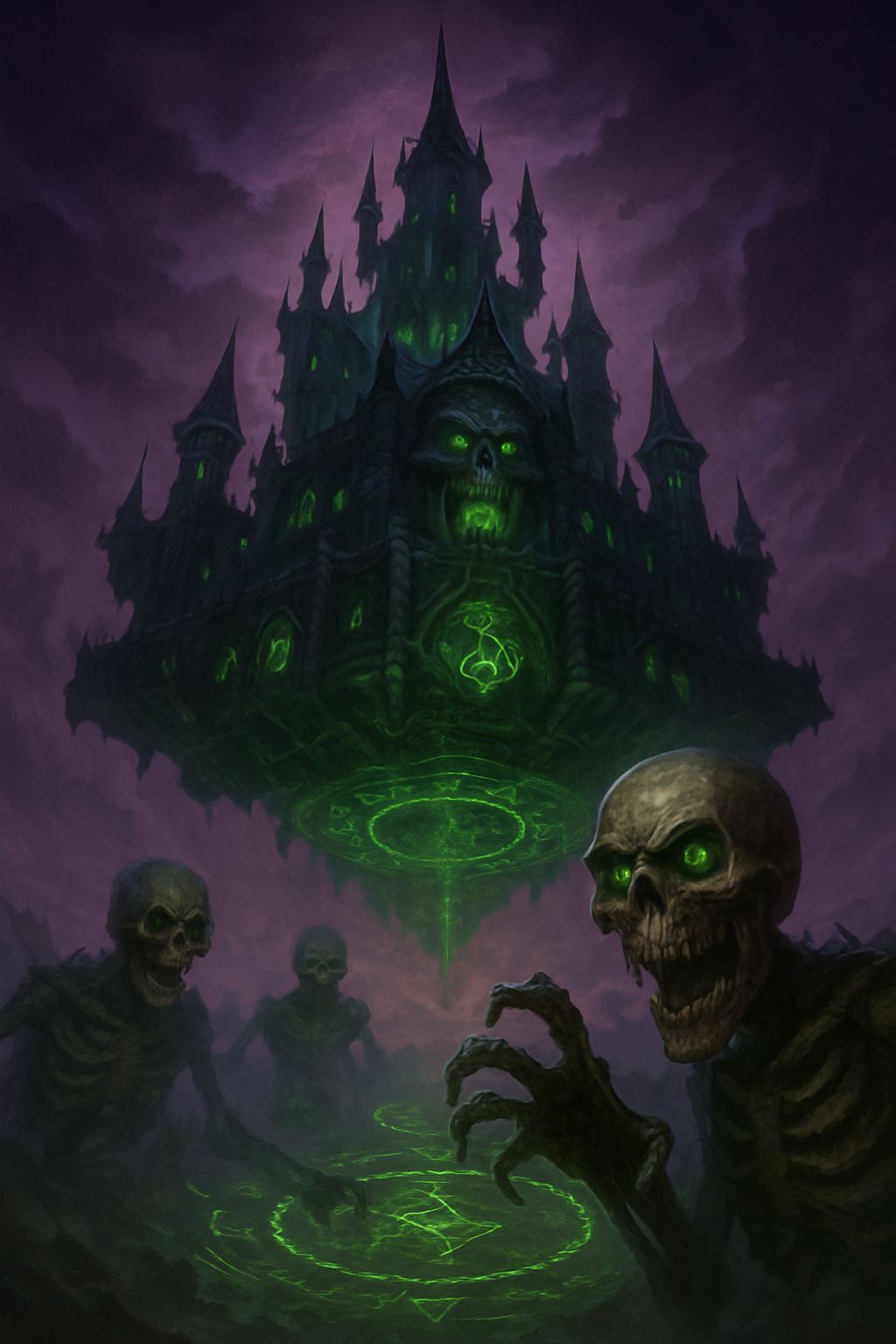
In the ever-changing panorama of digital card games, few titles have left such an indelible mark as Hearthstone: Heroes of Warcraft. Launched by Blizzard Entertainment, the game quickly captured the imagination of millions of players around the world with its accessibility, strategic depth and intrinsic charm linked to the Warcraft universe. But if there is a moment that has marked a real turn, redefining the expectations and possibilities of the game, this is undoubtedly the arrival of The Curse of Naxxramas. Released in July 2014, this was not a simple addition of cards, but the first, historical solo adventure that not only introduced an innovative PvE format, but deeply plasmated the goal and future direction of Hearthstone.
This article aims to explore in detail the phenomenon of Naxxramas, analyzing its context, its revolutionary mechanics, the legendary and common cards that have changed the game, and the lasting legacy that still resonates among the veterans of Hearthstone. Prepare for a nostalgic and thorough journey in one of the most significant chapters in the history of this beloved digital TCG.
Hearthstone at Origins: A Overwhelming Success and Content Fame
Before the advent of Naxxramas, Hearthstone was already a colossus. Since its official launch in March 2014, after a long beta period, he had proven to have all the cards in order to dominate the digital card game industry. Its intuitive interface, spectacular animations and simplicity of learning, combined with a surprising strategic depth, attracted both veterans of the genre and neophytes. The initial card base, divided between classics and bases, offered a relatively stable destination, but the most assiduous players wanted ardently new challenges and, above all, new cards that could refresh consolidated strategies.
The Blizzard release model for expansions was still being defined. In a time when many card games rely solely on the release of purchaseable card packages, the idea of a solo adventure with guaranteed rewards was a bold bet. Naxxramas was not only a response to the demand for new content, but a demonstration of Blizzard's will to experiment and innovate in the genre, offering an experience that went beyond the simple PvP encounter.
The Curse of Naxxramas: The First Revolutionary PvE Adventure
The announcement of The Curse of Naxxramas was welcomed with great enthusiasm. For the first time, players could immerse themselves in a PvE narrative experience, facing iconic bosses of the homonymous flying necropolis of World of Warcraft. The adventure was structured in five wings, released weekly, each with a series of unique bosses, class challenges and, above all, new cards as a guaranteed reward. This weekly distribution model generated a palpable wait and allowed players to explore and adapt gradually to new additions to the card pool.
Each wing presented bosses with hero powers and custom decks, forcing players to develop specific strategies and build decks ad hoc to overcome them. The difficulty was progressive, culminating in the infamous wing of the Tana dei Serpi Alate, with the final confrontation against the fearsome Kel’Thuzad. In addition to the normal mode, there was also an extremely difficult heroic mode, which puts even the most experienced players on the test, rewarding them with a back of exclusive card for each completed wing and a special one for the whole adventure.
The cost of expansion was flexible: each wing could be unlocked with gold coins (700 per wing) or real money, making it accessible to all types of players, both those willing to invest economically and those who prefer to grind games to accumulate gold. This choice was another key element of its success, democratizing access to content and new cards.
New Cards: Pillars of Meta and Strategic Revolution
The cards introduced with The Curse of Naxxramas were not only a numerical addition; many of them became staple immediately, redefining the goal of Hearthstone for months, if not years, to come. The dominant theme was the mechanism Death Rantole (Deathrattle), which triggered an effect when the minion was destroyed. This synergy not only gave rise to new archetypes of bouquets but exponentially enhanced existing ones. We explore some of the most influential cards:
- Mad scientist (Mad Scientist): One of the most iconic and impactful cards. This minion 2/2 with Death Rantolo (Put a random secret on the battlefield from your deck) fully revolutionized the secret-based decks, such as the Wizard and the Hunter. It allowed to play Secrets at no cost, bypassing the cost of mana and providing a huge time advantage. Its removal from the Standard format years later was a cathartic moment for many players.
- Melma Acquitrinosa (Sludge Belcher): This 3/5 with Provocation (Taunt) and Death Rantole (Evoke a Melmino 1/2 with Provocation) quickly became the go-to for defense in mid-game. It offered two Provocations in a single card, making it incredibly difficult to overcome for aggressive decks and providing an impenetrable wall that slowed the game, protecting more fragile minions or the health of the hero.
- Bite del Mietitore (Death’s Bite): A 4/2 weapon for the Warrior with Rantolo di Morte (Deals 1 damage to all minions). This card was not only efficient for board control thanks to its 4 points of attack for two hits, but its Death Rantolo was perfect for activating synergies with minions with Fury of the Warrior (as Grommash Malogrid) or to clean up small opponents, consolidating board control.
- Zombie Infect (Zombie Chow): A minion 1/2 at cost 1 with Death Rantolo (Your opponent recovers 5 Health). Despite the malus, Zombie Infetto was an excellent control card for the early game, ideal to contest the board against aggressive decks. The loss of health for the opponent was negligible if a significant board control was obtained in the first rounds, especially in control decks or combos aiming to win long-term.
- Dark Cultist (Dark Cultist): Minion 3/4 at cost 3 for Priest with Death Ranthol (Confers +3 Health to a casual ally minion). This paper turned the Priest into a much more solid archetype, providing a minion with excellent statistics for his cost and a Rantolo di Morte that increased the longevity of later servants, making the board of the Priest very difficult to clean up.
- Baron Fieramanna (Baron Revender): The legendary Naxxramas for all neutral decks. Minion 1/7 with Death Rantolo (Your Death Rantole is activated twice). This card, although situational, was fundamental for the bouquets that heavily exploited the Death Rantolo, such as the Hunter or Priest decks. With the right combination, it could generate a huge advantage.
- Loatheb: Other legendary neutral, minion 5/5 with Battle Grid (Battlecry) (The costs of the opponent’s spells increase by 5 mana in the next round). Loatheb was an anti-combo and anti-control weapon. It allowed to protect its board from area removals (as Back or Fulmini Storm) or to block the opponent's combo shifts, giving a decisive advantage in crucial shifts.
- Kel’Thuzad: The legendary final, minion 6/8 at cost 8. Effect (At the end of your turn, it evokes allied minions who died in this turn). Kel’Thuzad was a real snowball machine. If played on a board where you already had minion, or used to revive newly exchanged minions, it could create an invincible board, turning a slight advantage into a crushing victory, especially if protected by Provocation.
Innovative Mechanics and Impact on Meta
The massive introduction of the Rantolo di Morte not only gave rise to new individual cards but created an entire philosophy of deckbuilding. The bouquets Deathrattle Hunter and Deathrattle Priest they became dominant archetypes, maximizing synergies between new cards and existing ones. The whole goal became more geared to minions, with a focus on the intrinsic value and the persistence of servants on the board. Direct removal became even more valuable, while silencers (like Silent Owl and Miss) They saw a surge in their use to neutralize the effects of the opposing Death Rantols.
Naxxramas also brought over the management of resources and time. Cards such as Mad Scientist allowed zero-cost play that generated huge advantages of time, forcing opponents to react in unexpected ways. Loatheb, on the other hand, introduced a form of anti-incantism 'interaction' that was almost absent in the game, making the setup shifts of the combo decks much more risky.
The arena was another strongly influenced aspect. Many of the new Naxxramas cards, with their solid statistics and their effects of Rantolo di Morte that guaranteed value, became draft picks of high priority. This led to games in Arena more based on board control and minion resilience, rewarding players who managed to extract maximum value from each servant.
The Bosses and the Memorable Challenges of Naxxramas
In addition to cards, the PvE experience itself was a masterpiece of game design. Each Naxxramas boss was unique, with his own hero power and a deck that distinguished him. Dealing with Queen Anub’rekhan with his ability to summon endless minion, or Great Widow Faerlina which penalized the player for each unsigned attack, required a deep understanding of the mechanics of the game and accurate strategic planning.
The wing of the District of Ragno introduced a focus on Death Rantols and constant pressure. The Peste district presented bosses playing with diseases and board control, as Noth the Reaper and his ability to summon skeletons. The Military district, with Knight of Death Lord Mograine, focused on the power of minions and attack synergies. The District of the Construct, with Patch and Grobbulus, testified the ability to manage boards full of powerful and constantly regenerating minions. Finally, the Tana dei Serpi Alate he brought players face to face with legends Sapphiron and Kel’Thuzad, the latter with its two stages and the ability to steal minion or freeze the board, offering one of the most memorable challenges of Hearthstone.
The class challenges, then, forced players to use predefined decks for a specific class against a boss, testing their mastery of that class and awarding them with exclusive class cards, such as Scarecration for the Warrior or Hereditary evocations for the Witch, which added additional strategic options.
The legacy of Naxxramas: Un Punto di Svolta per Hearthstone
The curse of Naxxramas was not only an immediate success; he established a precedent for all future expansions of Hearthstone. He showed that the format of solo adventure was vital and appreciated, opening the way to future titles as Massive Rocker, League of Explorers and Night in Karazhan. These adventures, while evolving over time, maintained the core of Naxxramas’ experience: a PvE experience full of lore, challenging bosses and new guaranteed cards.
The influence of Naxxramas also extended to the overall game design. The attention to the Death Rantols prompted Blizzard to further explore the synergies between mechanics, leading to more complex cards and archetypes of more layered decks in subsequent expansions. The lesson learned about the power of minions with lasting or zero-cost effects was fundamental to balance the game over the years to come.
For the community, Naxxramas was a moment of great sharing. Players discussed strategies to beat heroic bosses, shared decks and exchanged advice on the most effective cards. He helped cement the sense of community around Hearthstone, joining players both in the PvE and PvP challenges they achieved.
Naxxramas Today: Nostalgia and Lezioni di Game Design
Today, Naxxramas’s Curse is no longer available for direct purchase and its cards are no longer part of the Standard format. This has not diminished its importance, but has elevated it to a piece of Hearthstone history, remembered with affection by veterans. His cards are still playable in the Wild format (Wild), where they continue to influence the goal with their power and versatility.
For many, Naxxramas represents the apex of the solo adventure design of Hearthstone. Its combination of a strong theme linked to Warcraft, innovative game mechanics and cards that redefined the goal makes it a legendary expansion. He has shown that a card game can offer experiences that go beyond the simple clash between two players, creating a narrative immersion and unique challenges that enrich the overall experience.
The lessons learned from Naxxramas, both in terms of success and of any card power imbalances (as in the case of the Crazy Scientist), have contributed to model the design of successive expansions, leading to a more cautious approach in releasing cards with effects too efficient or difficult to fight. This balance between innovation and stability is a constant challenge for any card game, and Naxxramas is a flashing example.
Conclusion
The curse of Naxxramas remains, almost ten years after its release, a fundamental chapter in the history of Hearthstone. It was not only the first solo adventure of the game, but a catalyst of change that introduced innovative mechanics, iconic cards and a new way of interacting with the world of Azeroth. He left an indelible legacy on the goal, game design and community of players.
For players who lived it, Naxxramas is a memory of nights spent defeating insidious bosses and discovering the endless possibilities offered by the new cards. For those who arrived later, it is a piece of history to explore in the Wild format, a reminder to an era in which Hearthstone was still defining his identity and consolidating his status as a global phenomenon. Regardless of the perspective, Naxxramas' Curse will always be remembered as the expansion that gave way to everything, demonstrating the depth and versatility that a simple digital card game could offer.


