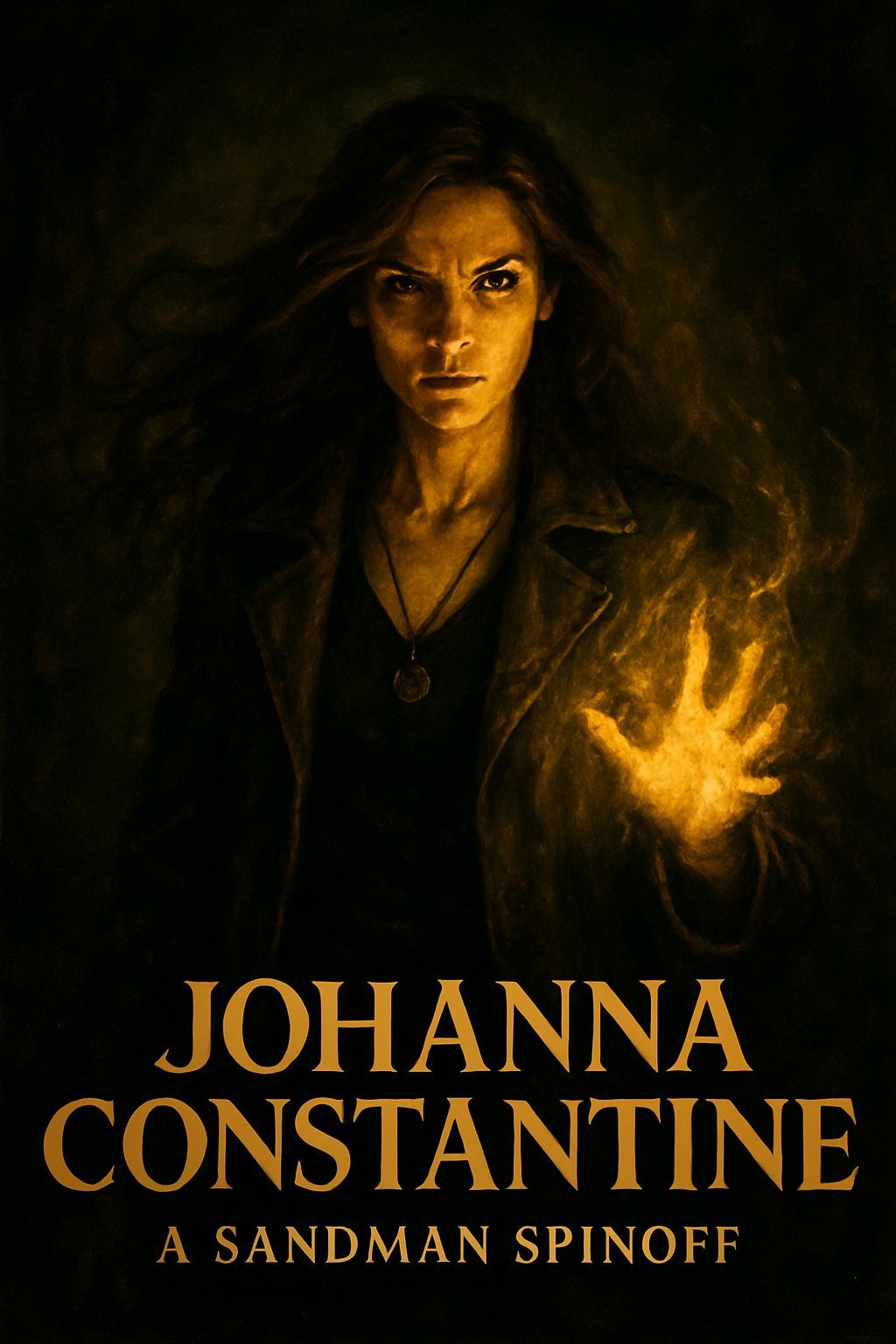
The contemporary television scene is constantly looking for narratives that can capture the imagination of the public, offering rich worlds and unforgettable characters. Among the recent productions that have been able to make breaches in the heart of millions of spectators, the Netflix series The Sandman distinguishes itself as a masterpiece of adaptation, capable of translating the comic book of Neil Gaiman in a breathtaking visual form and faithful to the original spirit. The series has not only conquered criticism and historical fans, but also introduced a vast audience to a universe of dreams, nightmares, deities and enigmatic figures. In this scenario of great success, a character in particular emerged with a magnetic force, so much to generate a feverish enthusiasm for a potential narrative expansion: Johanna Constantine. Magistrately interpreted by Jenna Coleman, in his two temporal incarnations, Johanna took the attention with his sagacity, his cynicism and his undeniable ability to distract between the occult threats. The idea of a spinoff dedicated to her is no longer a simple whisper in fandom, but a concrete possibility, nourished by the statements of Coleman himself and the interest manifested by the creators of the series, Neil Gaiman and Allan Heinberg. This article aims to explore the reasons behind the success of The Sandman, analyze the magnetism of Johanna Constantine and deepen the narrative and thematic potential that a dedicated spinoff could offer, outlining an exciting future for the genre of the investigative occult on the streaming platform. From the depths of the original comics to the brilliance of the actors’ interpretation, each element concurs to draw a picture in which Johanna Constantine is no longer just a comprimary, but the potential protagonist of an adventure all his, ready to explore the darkest and most fascinating corners of the Gaiman cosmos.
The Heritage of Dream: The Sandman’s phenomenal Success on Netflix and its Cultural Impact
The debut The Sandman on Netflix marked a watershed moment in the world of fantasy series and comic adaptation. For years considered infilm due to its narrative complexity, its metaphysical nature and the vastness of its universe, the work of Neil Gaiman is finally approached on the small screen with an overwhelming success. It was not only a triumph in terms of views – with figures that exceeded the billion minutes a few days from the exit and a rapid rise to the peaks of the global rankings – but a real celebration of its intrinsic quality. The series has been able to balance almost maniacal fidelity to the spirit and letter of the original comics, a crucial aspect for long-time fans, with a capacity to open up to new spectators thanks to a production of the highest level. The visual effects were praised for their ability to give life to the dreamy and often disturbing environments of the Dream and its domains, transforming the impossible into a tangible visual experience. The casting proved impeccable, with actors who were able to embody the essence of the characters, from Tom Sturridge as Morpheus to Gwendoline Christie as Lucifer, to Jenna Coleman as Johanna Constantine. Success The Sandman has not only been numerical or aesthetic; it has shown that there is a huge hunger for mature, complex and stratified fantasy stories, which do not fear to face existential, philosophical and psychological issues. The series has deepened concepts such as destiny, freedom, death, despair and, of course, the dream itself, inviting the public to a deeper reflection far beyond mere entertainment. His cultural resonance was immediate, creating debates, analysis and a renewed interest in Gaiman's original work, consolidating his status as a milestone in contemporary narrative and laying the foundations for further exploration of his vast and fascinating universe, of which the spinoff on Johanna Constantine could be a crucial chapter.
Johanna Constantine: A Charismatic Icon Between Two Centurys and the Paper of the Detective of the Exploitation
Among the myriad of fascinating characters introduced in The Sandman, Johanna Constantine a very close space has been cut out in the collective imagination, catalysing the attention of the public and generating an unequivocal desire to see it protagonist of further adventures. It is not an easy task to stand out in such an ensemble full of unique and supernatural personalities, but Johanna succeeded us through a winning combination of acute writing and a masterful interpretation. His character, a detective of the occult by pungent sarcasm and ambiguous morality, but with an undeniable sense of justice, brings with him the legacy of an iconic hunter of demons, John Constantine, while being conceived as an alternative and modern version of that legacy. The choice of Jenna Coleman to interpret two iterations of the character – the 18th century ancestor and its contemporary descendant, both identical in appearance but distinct in their age – added a layer of complexity and mystery, demonstrating the versatility and charisma of the actress. Modern Johanna is a pragmatic, cynical woman, with a weakness for exorcisms and a long list of enemies and debts, but also with a deep understanding of the dark forces acting in the shadows. His appearance in a few but memorable episodes allowed him to taste his witty, his determination and his ability to face the horrid with a blaze that immediately became iconic. Its appeal derives largely from its autonomy and strength: it is not simply a shoulder for the protagonist, but a force of nature itself, able to hold head to Morpheus and to navigate with dexterity in a world where the supernatural is a palpable and dangerous reality. This made it not only popular among fans of the series, but also triggered a discussion on its potential centrality in its own project, highlighting the public’s desire to explore more thoroughly its adventures and its tormented psyche.
From Dream to Your Kingdom: The Prospects of a Spinoff on Johanna Constantine and its Potential Narrative Ramifications
The echo of success The Sandman and enthusiasm for Johanna Constantine quickly transformed the idea of a spinoff from fan speculation to a concrete possibility, with Jenna Coleman's statements confirming the interest of Neil Gaiman and Allan Heinberg. But what exactly could be a spinoff dedicated to this enigmatic occult detective? The narrative potential is almost unlimited, drawing on both the rich material existing in the DC/Vertigo universe, and new creative directions that could expand the loire in unexpected ways. A fascinating aspect would be the exploration of the past of Johanna, perhaps focusing on the origins of his career as an exorcist and investigator of the paranormal. It could be an opportunity to deepen his first encounters with demonic entities, the first victories and, above all, the traumas and losses that forged his cynicism and his resilience. The series could also explore its complex personal relationships, often ephemeral and painful, with other characters in the magical world or with unlucky humans who have crossed their path. Another promising narrative line would be that of self-conclusive adventures, which allow Johanna to face a “case of the week” filled with horror, mystery and black magic, while maintaining a guiding thread that develops the personal narrative arc. This would allow screenwriters to explore different facets of the supernatural world, from vampires to mannarian wolves, from ghosts to esoteric cults, all filtered through Constantine's skeptical but competent lens. His propensity to get into trouble and his ability to boat between good and evil make it the ideal protagonist for a genre that merges the urban horror with the indignation, offering a unique perspective on the dark side of existence. A spinoff would have the opportunity to explore his solitude, his vices, his fears, but also the rare moments of compassion and deep motivations that push her to continue her fight against the dark forces, making her a character not only powerful but also deeply human and relationable to the public.
The Architect of the Worlds: The Crucial Role of Neil Gaiman in the Adaptations and His Vision for Johanna Constantine
The presence and commitment of Neil Gaiman were decisive elements for the critical and public success of The Sandman, and its approval for a spinoff on Johanna Constantine takes on a significant weight. Gaiman is not only the author of the original comics, but also an executive producer and co-writer of the Netflix series, a position that allowed him to guarantee a rare fidelity and artistic integrity to adaptation. This dedication to his works and his ability to translate them into other media with intelligence and respect are a guarantee for fans. His vision for Johanna, both as an ancestor of the 18th century and as its modern counterpart, was not a simple substitution of gender, but a conscious evolution of the concept of “Constantine” in the universe of The Sandman. Gaiman himself has often expressed his desire to explore the richness of his multiverse and his characters. A spinoff on Johanna would be a perfect opportunity to do so, offering a space for stories that, while remaining faithful to the spirit Vertigo, can be innovative and surprising. His experience in creating complex and interconnected worlds, as demonstrated in works such as American Gods, Good Omens and of course The Sandman, makes it the ideal architect to expand the role of Johanna beyond its limited appearance in the main series. Gaiman's interest in creating such a spinoff suggests that he sees in Johanna not only a popular character, but a figure with a deep narrative potential, able to support his own series with the same thematic wealth and the same moral complexity that characterize all his creations. His supervision would ensure that the spinoff is not merely a commercial operation, but an authentic and significant extension of his universe, further deepening the links between the earthly and the supernatural world, and bringing to light new nuances of the character of Johanna, its challenges and its victories. An opportunity to cement the link between the author and the public, offering a narrative that brings his unmistakable trademark.
Constantine: A Character Beyond the Confini di Genere e Media, The Evolution of an Icon
The character of the Constantine, in his original iteration as John Constantine, he has a long and complex history in the world of comics DC Comics and Vertigo, becoming an icon of the urban and occult horror genre. His appearance as Johanna Constantine in The Sandman netflix was not a simple variation on the theme, but a significant evolution that demonstrated the flexibility and resilience of the concept of “Constantine” as a narrative archetype. Traditionally, John Constantine was portrayed as a magician of Liverpool, a nihilistic and disillusioned anti-hero, whose morality is constantly tested. The introduction of Johanna not only offered a different perspective, but also allowed to explore new facets of personality and intrinsic motivations of the character, without betraying its essence. The Johanna of Jenna Coleman maintains cynicism, caustic arguzia, smoking habit and the tendency to end in trouble, but its interpretation gives it its own uniqueness. This adaptation shows how the great archetypes can transcend their genre or their original ethnicity without losing their strength, indeed, often gaining it in depth and contemporary relevance. Constantine's evolution through the media is not new: the character appeared in movies, animated TV series and live-action (with Matt Ryan playing John Constantine in multiple DC series). Every interpretation has brought a different shade, but the essence of the tormented individual who struggles against greater forces than he has remained intact. Version of Johanna in The Sandman has distinguished itself because it was created specifically for the series, with the approval and participation of Gaiman, making it an organic and recognized part of his universe, rather than a simple creative license. This move has opened the way not only to a potential spinoff, but also to a broader dialogue on representation and inclusion in the fantastic media, demonstrating that innovation can go hand in hand with the respect of the source, and that the most beloved characters can find new lives and new voices without compromising their legacy, indeed, strengthening it and making it more accessible to an increasingly diverse and conscious audience.
Building an Expanded Universe: Implications of a Spinoff for DC/Vertigo and Netflix
The idea of a spinoff on Johanna Constantine it is not only an exciting perspective for the character's fans, but also represents a significant strategic move with vast implications for the future of DC/Vertigo properties on Netflix and for the wider panorama of expanded narrative universes. In the age of streaming, creating franchise and of interconnected universes has become a priority for platforms, eager to loyalty the public and offer a constant flow of recognizable content. Success The Sandman has shown that there is a wide audience for the stories of Neil Gaiman and for the mature and complex aesthetics of the Vertigo brand, a DC Comics label known for its most daring and adult-oriented narratives. A spinoff on Johanna Constantine could act as a bridge between The Sandman and the rest of the Vertigo universe, exploring characters and concepts that otherwise might not find space in a main series. It could introduce other exorcists, magicians, demons and mythological figures, expanding the loire and creating new opportunities for further series or films. This would consolidate Netflix's position as a home for high-quality adaptations from non-superheroistic comics, distinguishing itself from competition that mainly focuses on the traditional DC Comics or Marvel universe. For DC and Warner Bros., it would further enhance their vast catalogue of characters and stories, demonstrating their versatility and ability to generate successful content through different distribution partners. In addition, a spinoff would allow you to keep your interest alive The Sandman between one season and the other, nourishing the expectation and involvement of the public in a coherent universe. It would create a replicable success model, in which the main series act as a launch pad for equally compelling secondary stories, building a self-sufficient and constantly expanding narrative ecosystem. In an increasingly competitive industry, the ability to build complex and interconnected worlds is an invaluable resource, and Johanna Constantine could be the key to unlocking new dimensions of the Vertigo universe for Netflix and a global audience.
The Appeal of Fans and the Future of Televisive Employment: Dark and Complex Stories
The enthusiasm for a spinoff on Johanna Constantine it is not an isolated phenomenon, but it reflects a wider thirst of the public for dark, complex and blurred stories that explore the supernatural and occult side of existence. In recent years, the horror and fantasy genre with occult elements has seen a revival, pushing beyond the clichés to offer more mature and psychologically deep narratives. Series Chilling Adventures of Sabrina, American Horror Story, or even more niche productions, have shown that there is a keen audience to explore the forces of evil, the arcane rites and the consequences of the interactions between the human world and the demonic world. Johanna Constantine fits perfectly in this trend, but with a distinctive touch. She is not a naive witch, nor an impotent victim; she is a cynical and navigated professional, who saw the abysses and returned, although marked. Its pragmatic approach and its gray morality make it a fascinating character for an audience that appreciates anti-heroes and complex figures. Fans, in particular, are attracted by his independence and ability to act as a lighthouse of rationality in an irrational world, although she herself is immersed in chaos. The insistence for a spinoff comes from the desire to see a strong and imperfect protagonist, who does not conform to female stereotypes but transcends them, carrying on the tradition of complex heroines in fantasy. The popularity of Vertigo comics, from which many of these stories come, is a testament to the fact that the audience is ready for content that challenge conventions and explore more adult themes. A spinoff on Johanna Constantine would not only be an extension of an existing success, but a statement of the vitality of the genre of television occultism, demonstrating that there is room for narratives that are not afraid to be macabre, philosophic and provocative, while at the same time offering compelling entertainment and memorable characters. Its potential series could define new standards for gender, pushing even further the boundaries of what you can tell on the screen.
Jenna Coleman's Magic: The Soul behind Johanna Constantine and the Impact of a Memory Interpretation
The lightning success of Johanna Constantine would not have been possible without the magnetic interpretation of Jenna Coleman. The actress, already known for iconic roles in series as Doctor Who and Victoria, brought the character a perfect blend of witty, vulnerability and almost punk spavalderia that immediately caught the attention of the public. His ability to pass seamlessly between the cynical detectives of the present and his 18th century ancestoral alter, maintaining a basic identity but differentiating the nuances of each incarnation, was a proof of acting mastery. Coleman was able to instill Johanna a depth that goes beyond the simple cliché of the strong and independent woman. There is an underground pain, an existential fatigue that breaks in his eyes, which reveals the weight of his experiences in fighting the dark forces. At the same time, his performance is loaded with a spavaldery and a black humor that make the character incredibly fun and addictive. He is able to recite cutting monologues with a disarming naturalness, to face demons with a glacial calm and to show flashes of unexpected compassion. His alchemy with the rest of the cast, especially with Tom Sturridge (Morfeo), contributed to make their interactions among the most memorable of the series. Fans not only fell in love with the character of Johanna, but also with the approach of Jenna Coleman, recognizing his essential contribution in creating a figure that, while being an adaptation, feels completely original and necessary. His commitment and his passion for the role, highlighted by his own statements on the interest in a spinoff, are a further sign of the deep connection that the actress developed with the character. A potential spinoff on Johanna Constantine would be a perfect vehicle for Jenna Coleman to further explore this complex figure, allowing her to show the whole range of her talent in a role that seems to have been written specifically for her, consolidating her position as one of the most versatile and charismatic actresses of her generation, and confirming her central role in shaping the face of the TV occult.
Beyond the Surface: Themes Deep and Narrative Complex in a Potential Spinoff on Johanna Constantine
A potential spinoff on Johanna Constantine would go far beyond the simple adventures of an occult investigator, drawing on the thematic depth and narrative complexity that are the trademark of Neil Gaiman and the world of The Sandman. The series would have the opportunity to explore philosophical, moral and existential themes, just like its comic counterpart and the mother series. At the heart of the narrative there might be the constant conflict of Johanna with free will and destiny, his fight against despair and his attempt to find meaning in a often indifferent or hostile universe. His profession confronts her with the darkest manifestations of human psyche and supernatural forces, forcing her to question the nature of good and evil, justice and revenge. A spinoff could deepen the psychological consequences of his work, the price you pay to be constantly in contact with horror and black magic, and how this affects his relationships and his ability to trust. His cynicism, apparently a battleship, could prove to be a fragile defence against a world that threatens to overwhelm her. The narrative could also explore the theme of inheritance and burden: Johanna bears the name Constantine, a name that evokes power but also curses and suffering. The series could investigate how this inheritance affects its identity and path, and whether it is possible to break cycles of pain or whether it is destined to repeat them. The complexity of the secondary characters, a trademark of Gaiman, could further enrich the spinoff, introducing ambiguous allies, charismatic enemies and mythological figures that reflect the different facets of human experience. All wrapped in an atmosphere of Gothic horror and urban noir, with a touch of that magical realism that makes Gaiman’s works so unique. This approach would allow the spinoff to be not only genre entertainment, but also a powerful metaphor on the human condition, inviting the public to reflect on universal issues through the adventures of a seemingly disillusioned occult detective, but ultimately deeply devoted to a very personal crusade.
Ultimately, the enthusiasm for a potential spinoff on Johanna Constantine, born from the clamorous success of The Sandman on Netflix, it is not only a light fashion, but the tangible sign of a deep resonance with the public. This character, skillfully interpreted by Jenna Coleman and conceived in the fertile universe of Neil Gaiman, has proven to have all the cards in order to hold a proper series, not only as an extension of a consolidated franchise, but as an autonomous and meaningful work. His adventures could deepen the rich loire of the occult, explore complex psychological and moral dynamics, and offer a unique perspective on the eternal struggle between light and darkness, reason and madness. The presence of Neil Gaiman and Allan Heinberg, the creators of the mother series, as driving forces behind this project, is a guarantee of quality and fidelity to the original spirit, reassuring fans about consistency and narrative depth. Such a spinoff would not only consolidate the role of Netflix as a platform for mature and innovative fantasy and horror narratives, but would also open new doors to explore the Vertigo/DC universe, demonstrating the versatility and attractiveness of characters that transcend the boundaries of comics to find new life on the screen. The wait is palpable, and the prospect of following Johanna Constantine in his solitary and dangerous journeys through the occult is an irresistible invitation to immerse himself even deeper in a world where dreams and nightmares are only the beginning. The future of television occultism could have the cynical, but brave face of Johanna Constantine, ready to enchant us with new and obscure legends.


