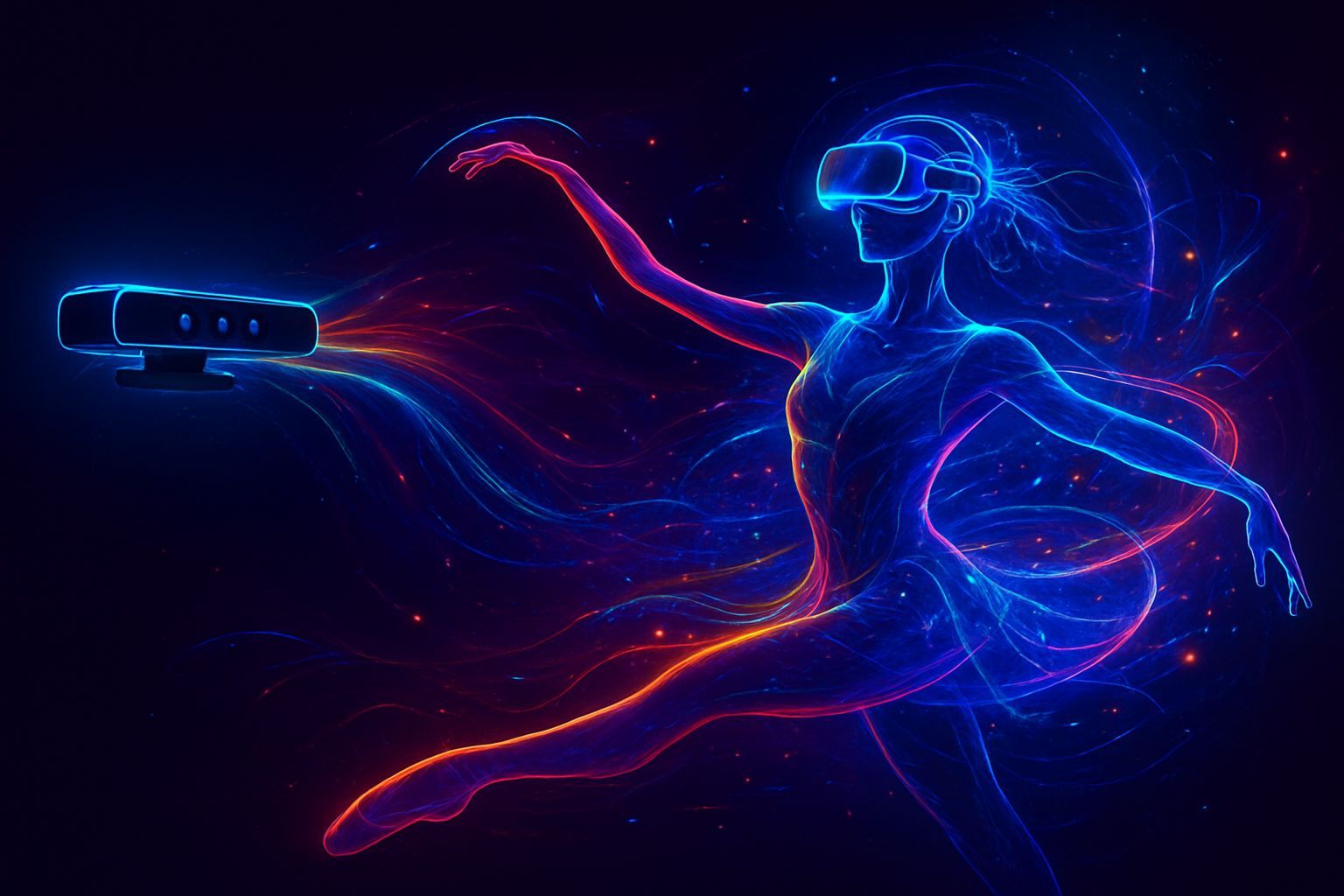
It was far from 2010 when the world of video games was in turmoil. Not for photorealistic graphics or complex narratives, but for an unprecedented promise of physical interaction: motion. Consoles such as the Nintendo Wii had already opened the way to millions of new players, convincing them to harness a remote control to simulate bowling or tennis swings directly from their living room. In this context of euphoria and innovation, Microsoft presented its vision of the future with Kinect, a revolutionary sensor that promised to completely eliminate controllers, transforming the player's body into the interface itself. At the launch, one of the top titles was Kinect Sports, an anthology of virtual athletic disciplines that fully embodied the spirit of this new era. It was a time of great optimism, a time when it was believed that gaming could finally get rid of the chains of the sofa, bringing dynamism and physical activity in the homes of all. But, as often happens with pioneering technologies, the path was not without obstacles, unexpected challenges and valuable lessons that would shape the future of digital interaction. This article aims to explore that period of great excitement, analyzing the success and criticality of experiences such as Kinect Sports, and then tracing an evolutionary line that leads us to the current and future frontiers of interactive gaming, from immersive virtual and increased realities, up to the next horizons of human-machine interaction, on a journey that starts from the dining room and arrives well beyond the limits of the screen.
The Dawn of Physical Interaction: From Wii to Kinect, A Revolution in the Living Room
The beginning of the 21st century marked an authentic revolution in the way people interacted with video games, with the advent of motion who redefined the concept of console and player. The precursor of this wave was undoubtedly the Nintendo Wii, launched in 2006, which, with its innovative motion-sensitive remote controls (Wii Remote), managed to capture the imagination of a vast audience, far beyond the traditional hardcore gamer basin. Its immediacy, simplicity of gesture-based commands and ability to involve the whole family in shared gaming sessions, made Wii an unprecedented cultural phenomenon. It was no longer necessary to master complex key schemes; it was enough to mimic the movements of a sport or activity to actively participate. This accessibility opened the doors of gaming to an unexplored demographic user, from children to the elderly, transforming the living room into a tennis court, a bowling alley or a boxing ring. On the wave of this success, also Sony entered into play with the PlayStation Move in 2010, a similar system based on a wand controller with a light sphere that was drawn by a camera, offering greater precision but maintaining a similar approach to Wii. In the same year, Microsoft launched the Kinect for Xbox 360, an even more daring technological leap: a device that completely eliminated physical controllers, using a combination of RGB cameras, depth sensors and microphones to capture body movements, gestures and player voice. Kinect’s promise was that of a “natural” interface that would make the game more intuitive and immersive than ever. This technology represented a huge bet, but the initial enthusiasm for the ability to control games with your body, without any device in hand, was palpable. These innovations not only expanded the video game market, but also challenged the conventional perceptions of gaming, laying the foundations for a future in which human-machine interaction would become more and more direct and physical, although with a path that is far from linear.
Kinect Sports: Between Infrante Promises and Collective Glory Moments
Within the motion gaming landscape, Kinect Sports emerged as one of the most representative and advertised launch titles for Microsoft’s Kinect device, fully embodying the vision of a game that turned the living room into a sports arena. Published in 2010, the game promised to make “in front of the tv” players, offering a collection of six sports disciplines – football, volleyball, bowling, table tennis, light athletics and boxing – to practice with the movements of their body. The force of Kinect Sports resided in its conceptual immediacy: to play ping-pong it was enough to mimic the racket, for bowling the throw of the ball. This simplicity attracted a wide audience, eager to experience the innovation of controller-less gaming. However, as already pointed out at the time, the experience was not exempt from defects and criticality. One of the most frequently encountered problems was the accuracy and responsiveness of the sensor. Many players found themselves at “in the dark” or having to “place your hands in the right way” several times before the Kinect correctly recognized their movements, leading to moments of frustration that broke the dive. The user interface itself “lack of intuition“, with “endless and little ergonomic menu” that made navigation a difficult task rather than a smooth experience. These technological and design hitches hindered the smoothness of the gameplay, making some sessions less fun than promised. Despite this, the game excelled in a crucial aspect: the multiplayer. Playing Kinect Sports in company, with friends and family, transformed technical imperfections into moments of illicitness and friendly competition. The laughs triggered by the movements “ridiculous” or the errors of recognition became an integral part of social experience, bringing out the “full fun with friends“as the”best appearance of the game“. It was in these moments of sharing that Kinect Sports really shone, demonstrating how, beyond technical perfection, the intrinsic value of a video game could reside even in its ability to aggregate and enjoy, even if with some compromise.
The Obstacle Space and the Challenge of ergonomics: Physical Limitations of the Movement Game
An aspect that emerged overwhelmingly with the introduction of Kinect and motion games in general was the question of the physical space needed for an optimal gaming experience. The original article underlined in a perennial way: “We will never stop saying that: you will need a lot of space!“. This was not a mere recommendation, but a real need to fully enjoy titles like Kinect Sports. The Kinect sensor needed a minimum distance from the player to track it correctly, and for a multiplayer experience that included more people, the size of the “living room” they had to be “really big“. We talked about “at least 3 meters deep” and, possibly, even in width, for “move freely without hurting other players“. These spatial restrictions were an insensitive obstacle for many potential buyers. Not everyone had such a large stay or the possibility of “move the sofa” and other furniture whenever they wanted to play. This limited the accessibility of motion gaming to a specific group of users with suitable homes, in part contradicting the promise of a fun for all. In addition to spatial needs, the ergonomics of the movement game presented other challenges. The Act of “manage ridiculouslyand to perform “a continuous effort” could be tired and sometimes even painful for prolonged sessions. If on the one hand the appearance “exergating“It was a strong point, on the other hand physical fatigue could discourage players less advantageous to sports. Moreover, the wide and rapid movements required could lead to domestic accidents, with broken objects or, worse still, injuries to players or spectators. These aspects highlighted how technological innovation, albeit exciting, should deal with the physical and spatial realities of domestic environments, requiring a balance between the ambition of a complete body interaction and the practicality of use for the general public, problems that later generations of technologies would try to solve with different and more refined approaches.
The Evolution of Technology: From Artificial Vision to Advanced Sensors
The path undertaken by motion gaming, with pioneers like Kinect, has triggered constant research and development in the field of sensor technology, artificial vision and human-machine interaction. What in 2010 seemed a technical “miracle”, that is the ability of a device to track body movements without physical markers, represented only the first step of a much deeper evolution. The original Kinect used a combination of color RGB cameras and depth sensors (initially based on a structured light projector) to create a three-dimensional map of the environment and the subjects within it. This technology, although innovative, had its limitations in terms of precision, latency and sensitivity to ambient light conditions. Over the years, research has focused on improving these aspects. Deep sensors have become more sophisticated, switching to technologies Time-of-Flight (ToF) measuring the time used by the light to travel from the sensor to the object and return, ensuring greater accuracy and lower interference. At the same time, artificial vision algorithms and machine learning they've made giant steps. Today, modern cameras and tracking systems can recognize and interpret complex gestures, body positions and even facial expressions with unthinkable precision for the first generation of Kinect. This progress has not been limited to video games: it has found application in areas such as robotics, surveillance, augmented and virtual reality and even in automotive, with driver fatigue monitoring systems. Integrated cameras smartphone modern, for example, are able to perform a tracking of the face and hands for AR applications with a speed and fidelity that once required dedicated and bulky hardware. The evolution has also led to the development of wearable sensors increasingly discrete and precise, such as those present in smartwatch or VR controllers, which offer advanced aptic feedback and extremely detailed motion tracking. The direction is clear: to make the interaction increasingly natural, transparent and less invasive, overcoming the initial technical difficulties and opening the way to new forms of digital involvement that go far beyond the simple “manage ridiculously” in front of the tv.
Impact on Fitness and Health: When the Game Becomes Training
One of the most intriguing and propaganda aspects of motion gaming, since Wii's time and then with Kinect, was its potential as a fitness and health tool. The idea of “get fit in front of the tv” has generated an entire category of games, known as “exergaming”, which merges entertainment with physical activity. Titles Wii Fit, with its Balance Board, or the various Just dance for Kinect, they were promoted not only as games, but as real platforms for the domestic exercise. The logic was seductive: making training fun and less heavy, camouflaging it behind game sessions. And in fact, for many people, exrgaming has been a good starting point to adopt a more active lifestyle, especially for those who were reluctant to go to the gym or practice outdoor sports. Gamification of the exercise – with scores, goals, rankings and immediate feedback – provided an intrinsic motivation that was often lacking in traditional training routines. It is undeniable that intense sessions of Kinect Sports, which required “sacrifice and continuous effort“, they could make “preventing sweat” the front of players, burning calories and improving coordination. However, the long-term effectiveness of these programmes as substitutes for full physical exercise has been discussed. If on the one hand they could improve mobility, balance and light endurance, on the other, they often did not provide a cardio or force training comparable to more structured disciplines. However, the legacy of exrgaming is tangible. It has laid the foundations for the integration of movement tracking technologies in the health and wellness sector. Today, platforms like Ring Adventure for Nintendo Switch demonstrate how the concept has evolved, incorporating RPG elements and physical equipment (the Ring-Con) to offer a more targeted and challenging training. Beyond video games, the concept of integrating movement with technology has also permeated the smart mirror for fitness, augmented reality training apps and sensor-based physical rehabilitation systems, confirming that the original intuition of motion gaming as a well-being tool was founded, although it needed further refinement and integration to fully express its health potential.
The Decline and Metamorphosis: From the Movement to Virtual Realism
Despite the initial enthusiasm and promises of a revolution, the focus of motion gaming in its pioneering form – represented by Wii and Kinect – gradually began to fade. Several factors contributed to this decline. First, the saturation of the market: After the initial boom, the novelty disappeared and the offer of motion games, often focused on mini-games or simplified sports simulations, did not always manage to maintain the interest of long-term players. The lack of deep and narratively complex titles, which could justify the purchase of a console or a device, was a significant limit. In addition, technical and practical challenges, such as the need for “a lot of space” and imperfections in the tracking that made the”less intuitive interface“, they became more and more evident and frustrating with the passing of time. Many players, after their initial curiosity, returned to traditional controllers, offering more reliable and less tiring accuracy and control. The market also moved towards mobile gaming, that with the advent of smartphones and tablets offered a new form of accessibility and fun “on-the-go”, without the need for a dedicated hardware or large spaces. However, motion gaming decline was not an end, but rather a metamorphosis. The lessons learned and developed technologies were the launch pad for the next large wave of immersive interaction: the virtual reality (VR) and the augmented reality (AR). VR controllers, such as those of Oculus/Meta Quest, HTC Vive or PlayStation VR, are the direct descendants of the concepts of Wii Remote and PlayStation Move, but with a tracking accuracy and aptic feedback significantly higher, and above all, a sense of total immersion that the flat screen game could not match. VR has inherited the promise of body interaction and a “game that makes you sweat“, bringing it to a completely new level, where the movement is not only an input, but an integral and indispensable part of the sensory experience and presence in the virtual world. The “space problem” was partially mitigated by the ability to define virtual play areas (guardian system), but the need to move physically remains a distinctive feature, now integrated in a context that maximizes the illusion of being elsewhere.
The New Frontier of Interactivity: VR, AR and Beyond the Simple Gesto
The legacy of motion gaming, far from being confined to history, has flourished in the new era of immersive technologies: virtual reality (VR) and augmented reality (AR). These platforms represent not only an evolution, but a radical transformation of the concept of physical interaction with the digital world, going “beyond the simple gesture” of a time. Devices like Meta Quest, PlayStation VR2 and the most recent Apple Vision Pro, they offer experiences that transcend the two-dimensional vision of the screen, immersing the user in completely virtual environments or overlapping digital elements in the real world. VR controllers, with their 6-degree space tracking (6DoF), allow precise and natural movements of hands and arms, allowing players to grab, launch, shoot and interact with virtual objects as they would do in real life. Evolution does not stop here: the tracking hand, which allows you to use your hands without physical controllers, has become increasingly sophisticated, allowing intuitive gestures such as pinching, touching or aiming to interact with interfaces and virtual objects. The full body tracking, still in embryonic but rapidly developing, promises to bring the entire player’s body into the virtual world, replicating every real-time movement. This opens the way to new frontiers for gaming, simulation, training and even virtual social interactions. The AR, on the other hand, merges the digital with the physical, enriching our perception of reality with information and virtual objects superimposed, without isolating the user from the surrounding environment. Imagine games that take place in your living room, with virtual characters that interact with your furniture, or work tools that project interactive holograms in space. The possibilities are unlimited and are far beyond the difficulties of a “interface that lacks intuition” or “endless menus” that plagued the first generations of motion gaming. The direction is clear: creating an ever more transparent, intuitive interaction that breaks the boundary between the physical world and the digital world, making technologies a natural extension of our sensory and motor skills, allowing us to enter an age of unprecedented entertainment and productivity.
The role of Multiplayer and Socialization: Reconstructing the Ludic Community
Since its early days, motion gaming has placed a strong emphasis on multiplayer and on socialization, an aspect that the original article on Kinect Sports rightly defined the “best appearance of the game“. The ability to gather friends and family in front of the TV for a shared game session was, and remains, a powerful engine of involvement. The joy of a ping-pong game with exaggerated gestures or competition in a virtual obstacle course generated a kind of social interaction that was less formal and more immediate than traditional gaming. These experiences created memories and ties, transforming technical imperfections into amusing anecdotes and victories into moments of shared triumph. With the evolution towards VR and AR, the concept of multiplayer and socialization has undergone further, profound transformation. If on one side local multiplayer, typical of motion gaming, saw a decline in online interactions, on the other hand VR is trying to “rebuilding the christian community” through a sense of presence unprecedented. Getting into a virtual world with an avatars that mirrors their movements, meeting friends or strangers in three-dimensional digital spaces and interacting with them through the voice and language of the body, creates a social immersion level that far exceeds the voice or text chat. Games like VR Chat, Rec Room or new developmental metaverts, demonstrate the potential of VR as a social platform, where people can not only play, but also meet, learn, create and celebrate together. The challenges related to “spacephysique required by old systems is mitigated by the ability of VR to transport you to unlimited virtual environments, allowing geographically distant people to feel physically close. The AR, in turn, promises to extend this socialization to the real world, with shared experiences that overlap digital elements to the surrounding physical environment, allowing, for example, more people to play the same “layered” game on the same real surface. The key lesson of motion gaming was that the game is often more fun when shared. The new immersive technologies have not only learned this lesson, but have elevated it to a new paradigm, offering increasingly richer and engaging ways to connect and interact with others through the ludic experience.
Interface and User Experience design: Lezioni Apprese dal Passa
The first experiences of motion gaming, and especially Kinect Sports, were a key test bench to understand the principles of interface design (UI) and the user experience (UX) in contexts of physical interaction and without controller. The original article did not criticize the “lack of intuition” of the Kinect interface and “endless and little ergonomic menu” that made navigation a frustrating enterprise. These defects, although seemingly trivial, were actually significant obstacles to adoption and fun. The main lesson learned is that when the body becomes the interface, design must be even more intuitive and predictive. There are no physical buttons to press to guide the user; each gesture must be recognized and interpreted accurately and consistently. Modern VR and AR systems have treasured these experiences, adopting design approaches that favour clarity and simplicity. User interfaces in VR often use space metaphors and 3D objects that you can “enable” or “indicate” with your body or controllers, making the interaction more natural and close to the way we interact with the physical world. The tracking hand, for example, allows you to navigate the menus by simply pointing or pinching, eliminating the need for controllers and reducing the cognitive load of the user. In addition, the introduction of systems aptic feedback advanced in VR controllers, which simulate the tactile sensation, enriches the experience, providing immediate and realistic responses to virtual interactions. Developers also learned the importance of accurate calibration and customization. Unlike the Kinect that had a unique approach, modern platforms allow users to calibrate the play area, their height and control preferences, significantly improving accuracy and comfort. This balance between technological complexity and user accessibility is crucial. The goal is to make technology “invisible”, allowing the user to focus on experience and interaction, rather than on control mechanisms. The initial difficulties of Kinect provided a catalog of errors not to be repeated, pushing industry to develop paradigms of UI/UX that are not only functional, but also deeply intuitive and pleasant, paving the way for a future in which digital interaction will be fluid and almost imperceptible.
The Legacy of the Movement Game: A Bridge to the Future of Entertainment
Looking back, motion gaming, with iconic titles like Kinect Sports, was not just a passenger phenomenon, but a crucial evolutionary passage in the wide panorama of digital entertainment. Its innovations, its triumphs and even its limitations have indelible shaped the path that led to the current and future forms of interaction. Although the peripherals dedicated to movement like Kinect have seen a decline, their spirit, their boldness and the lessons learned have been assimilated and refined by successive generations of technologies. The main legacy of the movement game is the validation of the idea that body and physical interaction with digital content is not only desirable, but essential for a deeper and immersive experience. It has shown that the game can transcend sedentity, promote physical activity and promote socialization in new and engaging ways, anticipating years the concepts of exergating and of metaverso that today are at the heart of the technological debate. The challenges related to “space“, all”intuition of the interface” and the “precision of tracking” were not defeated, but rather faced with new technological solutions and design paradigms. Virtual and increased reality are the direct descendants of this path, raising body interaction to an unprecedented level of immersion and fidelity. VR controllers, hand and body tracking, and future neural interfaces are all heirs to that original spark that saw our body become the controller. The movement game has taught us that the future of entertainment is not limited to ever more realistic graphics, but also lies in the ability to involve the human being at 360 degrees, not only the mind, but also the body. It opened the door to new forms of narrative, competition and exploration that go beyond the simple pressure of a button, projecting us in a future where the boundaries between the physical and the digital world will be increasingly nurtured. The “redictive dance” in front of the TV of 2010 has become the conscious and immersive movement in the metaverso of today and tomorrow, an irreplaceable bridge that led us towards the dawn of a completely new era of interaction and entertainment.


