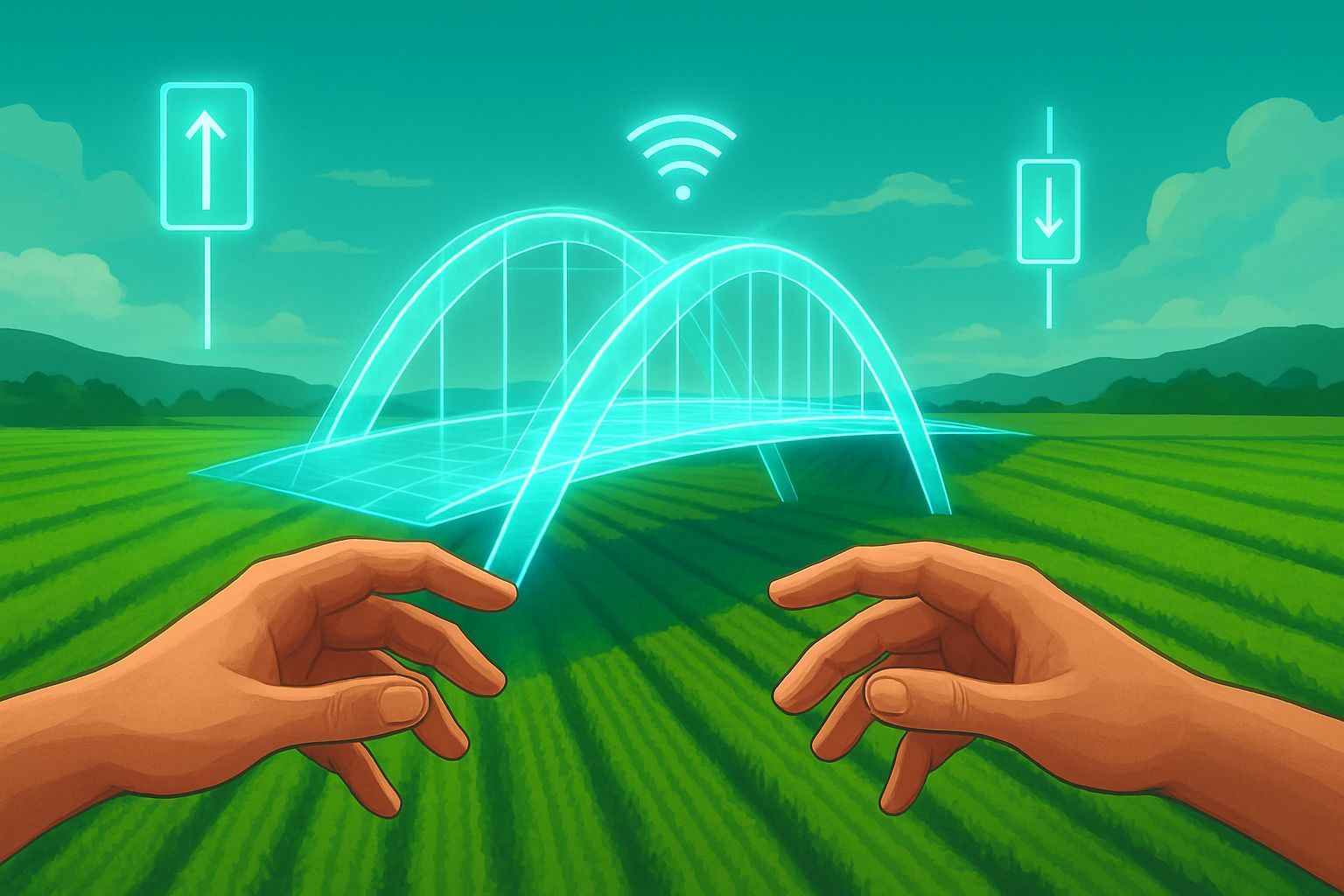
In 2009, a title on Ars Technica played: “Benton Foundation Rural America not ready for broadband? Hogwash, say ISPs”. This apparently simple statement concealed a deep and complex debate that shaped the panorama of digital infrastructure and connectivity policies around the world. The ISP’s “hogwash” was a reaction to the idea that rural areas were not ready or did not need broadband, a perception that was then rooted in many minds, but that industry operators already felt as anachronistic. Fifteen years ago, the concept of high-speed internet was very different from what we know today. Dial-up connections were still a vivid memory for many, and broadband, although expanding, was often a luxury or prerogative of urban and semi-urban areas. The debate was on economic feasibility and on real need to bring fast connections to places where the housing density was low and the return on investment appeared marginal. The ISPs, by their nature oriented to profit, were to have to balance market potential with the high costs of deploying infrastructure in less populated territories. The Benton Foundation, evidently, represented a critical voice or part of the debate that questioned the state of preparation or priorities of rural communities regarding connectivity. This initial scenario offers us a lens through which to observe an epochal transformation: from a service considered optional or even premature for the countryside, the broadband has become, in a relatively short time, an indispensable pillar of modern life, an almost universal right, and an irreplaceable engine for economic and social development. The article by Ars Technica of 2009 touched an uncovered nerve, highlighting a division that, unfortunately, persists in different forms even today, but has seen extraordinary progress thanks to technological innovations, massive investments and a change of cultural and political paradigm.
The Initial Contest: The 2009 Debate and the Birth of Digital Divide
Back to 2009, the digital landscape was characterized by a significant gap between urban and rural areas, often defined as “digital divide”. Cities enjoyed relatively large access to cable and DSL connections, which at the time represented the peak of mass technology, while rural areas were often confined to slower, costly or unreliable options, such as the first-generation satellite or the dial-up that was struggling to disappear. The debate raised by the Benton Foundation, which involved a potential non-prontity of broadband rural America, reflected a mentality in which high-speed connectivity was still perceived as a luxury asset, or at most, a convenience, rather than an essential infrastructure. Many argued that rural communities had different needs, less digitised, or that costs to extend networks were prohibitive in the face of a dispersed and potentially less prone to adoption. The ISPs, on the other hand, even with their obvious commercial motivations, began to recognize the potential for growth in these areas, but above all, the increasing sense of exclusion and the need for fair connectivity. Their replication, the “hogwash”, was a strong statement that underlined how broadband demand was already palpable even in rural areas, and that the problem was not the lack of desire, but the lack of infrastructure and investments. The technologies then available for rural areas were limited: the DSL required short distances from the telephone station, making it unsuitable to many isolated houses; the cable was almost nonexistent outside the inhabited centers; the fixed wireless was still in its embryonic phases, and the satellite offered low speeds and high latitudes, with prohibitive costs for many. This scenario created a vicious circle: less infrastructure meant less adoption, and less adoption justified the lack of investment. The 2009 debate was not only technical or economic; it was inherently political and social, laying the foundations for an awareness that would lead to radical changes in public policies and investment strategies in the following decades, recognizing that the digital divide was not only a question of access, but of opportunities, equity and development.
The Inexorable Evolution: Why the band Larga has become indispensable
From 2009 to today, the needs and expectations regarding internet connectivity have changed so radical and irreversible, transforming the broadband from an optional to afundamental infrastructure, equivalent to electricity or running water. What fifteen years ago was considered an advanced use of the internet – like watching online videos at low resolution – is today the norm, if not the minimum requirement. The proliferation of high-definition video streaming services and even 4K/8K, group video calls, online gaming, and the explosion of social media have made necessary download speeds and uploads considerably higher. But the deepest impact has come with the emergence of paradigms such as remote work (accelerated by the pandemic of COVID-19, but already growing before), the distance learning and the telemedicine. For millions of people, the house has become an office, a school and a medical center, making connectivity stable and fast not only desirable, but indispensable for participation in economic and social life. Companies moved to the cloud, requiring robust uploads and network reliability for data synchronization and access to business applications. Agriculture itself has undergone a digital revolution, with the advent of smart agriculture using IoT sensors, drones and data analysis to optimize crops, irrigation and livestock management, all dependent on reliable connectivity. Banking, public administration and information access have also been digitised, making it almost impossible to fully participate in modern society without adequate access. In this scenario, rural areas, if deprived of broadband, risk further marginalization, losing economic, educational and health opportunities that urban areas give for granted. The broadband is no longer just for entertainment consumption; it is an entertainer productivity, innovation and social inclusion, a prerequisite for sustainable equity and development. The debate in 2009 was therefore overcome by the reality of the facts: the broadband is not only necessary, it is vital vital vital life for the survival and prosperity of rural communities in the digital age, and its lack is a stop to the development of the whole country.
The Technology Solutions of the XXI Century for Rural Connectivity
The challenge of connecting rural areas, while persisting, found technological responses in the 21st century increasingly innovative and scalable, which were unthinkable at the time of the 2009 debate. The technology that has revolutionized the panorama is undoubtedly the fiber optic up to home (FTTH). Offering symmetric speeds, very low latency and unparalleled reliability, fiber is the ultimate solution for the future. Its deployment in rural areas presents significant challenges due to high excavation costs and laying to reach scattered homes, but public investments and innovative business models (such as joint laying with other infrastructures – “dig ounces”) are accelerating its adoption. However, fiber is not always the fastest or cheapest solution in every single condition. Other crucial technologies come into play here. The Fixed Wireless Access (FWA), i.e. fixed wireless access, has made giant steps. Using 4G mobile networks and, more recently, 5G, the FWA allows you to bring ultra-wideband connections without the need for physical cables up to the last mile. The antennas mounted on beams or buildings transmit a radio signal to receivers installed at homes, offering a flexible and relatively fast solution to implement. With the 5G advance, which promises even lower latitudes and higher capacity, the FWA has become an increasingly competitive alternative, especially where the housing density is too low for the fiber or where the soil is too impervious. But the real revolution for remote areas has come with the advent of satellite constellations in low orbit (LEO), like Starlink of SpaceX, OneWeb and, in the future, Amazon's Kuiper. Unlike traditional geostationary satellites that suffered from high latitudes due to their distance (about 36,000 km), LEO satellites operate at much lower altitudes (500-1,200 km). This drastically reduces latency (at levels comparable to terrestrial connections) and increases speed, providing broadband connectivity even in the most isolated areas of the planet, overcoming geographical and morphological barriers that make impractical or too expensive any other kind of infrastructure. These technologies, often used in combination hybrid models, they offer a complete toolbox to deal with the rural digital divide, demonstrating that, with the right strategy and adequate investments, no place is too remote to be connected in the digital age.
The Crucial Role of Public Policy and Financing
The expansion of broadband in rural areas would not have been possible without a change deep and proactive in public policies and financing schemes, both nationally and supranationally. The 2009 debate highlighted a gap that markets alone were unable to fill due to high costs and low economic yields perceived in low density areas. This has led governments to recognize connectivity as a public good essential, a critical infrastructure worthy of significant investments. In the United States, programs such as the Connect America Fund (CAF), the Rural Digital Opportunity Fund (RDOF) and, more recently, the Broadband Equity, Access, and Deployment (BEAD) Program, funded by the Infrastructure Investment and Jobs Act, have allocated billion dollars to encourage companies to build broadband networks where the market did not arrive. Similarly, in Europe, European Structural and Investment Funds (ESIF), together with national plans for the ultra-wideband, supported the development of digital infrastructure. Italy, for example, promoted the “Piano Italia a 1 Giga” and “Italia Connessa”, using resources of the National Plan of Resumption and Resilience (PNRR) to ensure access to connections at least 1 Gbps in areas considered to “market failure”. These programs often rely on public-private partnership models, where public funds are used to fill the “financing gap” which makes the deployment for individuals not economically sustainable. Accurate mapping of unused or subserved areas is essential to effectively direct these funding, avoiding waste and ensuring that resources arrive where they are most needed. In addition, the role of community cooperatives and the municipalities has become increasingly relevant. Many local authorities have taken over the situation, creating their own networks or facilitating the creation of consortia to ensure connectivity to their citizens, demonstrating that innovation can also come from below. These policies and massive investments not only aim to provide physical access, but often also include initiatives for digital literacy and economic accessibility, recognizing that network availability is only the first step towards true digital inclusion. This holistic approach and government commitment have transformed the vision of rural broadband, from a negligible problem to a strategic priority for sustainable development.
The Transformative Impact of Connectivity to Rural Life
The arrival of the broadband in rural areas has triggered a deep and multidimensional transformation, revolutionizing every aspect of life in communities that were once considered at the margins of digital progress. The most obvious impact is onlocal economy. High-speed connectivity not only attracts new businesses and startups that can operate from anywhere, but also offers existing small and medium-sized enterprises (agriculturists, crafts, tourism) tools to compete globally, accessing online markets, optimizing logistics and improving communication with suppliers and customers. The phenomenon of teleworking, amplified by the pandemic but intended to remain, has allowed professionals to move to rural areas, bringing with them skills, income and a vital contribution to the local social and economic fabric, contributing to reverse the tendency to depopulation. On the front of theeducation, the broadband has broken down geographical barriers, allowing rural students to access online educational resources, distance university courses and continuous learning opportunities that were previously exclusive prerogatives of cities. Rural schools can implement advanced teaching technologies, collaborate with research institutes and better prepare young people for the challenges of an increasingly digitized world. The health is another sector deeply impacted: the telemedicine allows remote consultation with specialists, remote monitoring of chronic patients and access to health services that would otherwise be unreachable or would require long shifts, significantly improving the quality of life and reducing health disparities. Theagriculture has been revolutionized by connectivity, with the emergence of precision farming and agricultural IoT. Sensors monitor soil moisture, crop health and livestock welfare, sending real-time data to farmers, which can thus optimize the use of water, fertilizers and pesticides, increasing efficiency and sustainability. In addition to these specific sectors, broadband promotessocial inclusion, connecting people to distant family and friends, offering access to online public services (e-government), entertainment and information, reducing isolation and improving the overall quality of life. Rural communities can thus remain lively, resilient and protagonists in the 21st century, overcoming the old stigma of being “not ready” and demonstrating instead to be a fertile ground for innovation and progress.
Persistent Challenges and Innovative Strategies for Future
Despite the extraordinary technological advances and large investments, broadband connectivity in rural areas continues to confront complex and persistent challenges, which require innovative strategies and a constant commitment. One of the main difficulties is the so-called “middle mile”, i.e. the ability to connect rural communities to the dorsal infrastructure of the internet. Often, even if a given area has the potential for the last mile (for example, through FWA or local fiber), the connection to the nearest main network can be extremely expensive and complex to realize, requiring large investments in data transport infrastructure. This creates “isoles” of connectivity that are struggling to integrate into the national network. Another crucial challenge is theeconomic accessibility and adoption. Even when broadband is technically available, the cost of service can be prohibitive for some rural families or small businesses. Moreover, the mere availability does not guarantee adoption: the lack of digital skills or the perception of not having a real need can curb use, making digital literacy programs necessary and targeted subsidies to ensure that access is not only physical, but also practical and economic. The sustainability infrastructure is another critical point: once built, networks require maintenance, updates and protection from atmospheric events and failures. In rural areas, where technical teams may have to travel long distances for interventions, operating costs may be high. To address these challenges, they have been developed innovative strategies. I open network models (open access networks) are gaining ground, where a single physical infrastructure is built (often with public funds) and then offered to more service providers, increasing competition and reducing costs for the final consumer. The community networks, managed by local authorities or cooperatives, offer tailor-made solutions and greater control by communities themselves. The use of dynamic spectrum and low power technologies for the FWA is optimizing transmission efficiency. In addition intersectoral collaboration between governments, private operators, technology providers, universities and local communities is essential to develop holistic and resilient solutions. The key is to adopt a flexible and technologically neutral approach, ready to combine different solutions to maximize coverage and efficiency, learning from past experiences and adapting quickly to new needs and possibilities. Only then can we overcome the last, tenacious barriers to universal connectivity.
Looking at tomorrow: The Vision of a Rurally Connected Society
Looking at the future, the vision of a rurally connected society is no longer a mirage, but a goal tangible and progressively feasible. The journey undertaken since 2009, from a debate focused on “not being ready” to a global commitment to universal connectivity, is a testament to our ability to innovate and adapt. The ultimate goal is to eliminate digital divides in all its forms, ensuring that every citizen, regardless of its geographical location, has access to a reliable and economic high-speed connectivity. This means not only bringing the signal, but also ensuring that people have the tools, skills and economic accessibility to fully exploit their potential. The emerging technologies they will continue to play a fundamental role. The evolution of 5G and future 6G promises even greater speed and infinitesimal skills, opening the way to new applications of augmented and virtual reality, massive IoT and intelligent automation, which will further benefit rural communities, from remote telesurgery to autonomous agricultural vehicles. LEO constellations will continue to expand, improving coverage and resilience, providing a backup network or a primary alternative in difficult scenarios. The ever greater integration between different technologies – fiber, fixed wireless, satellite – intelligent hybrid networks will be the norm, optimizing costs and performance according to the specific needs of the territory. Policy will continue to support this development, not only through funding, but also with flexible regulations that encourage innovation and competition, simplify permits and promote infrastructure sharing. Digital education must be a fundamental pillar, ensuring that technological literacy is included in curricula and that specific training programmes are available for all age groups. In this future vision, rural areas are no longer simply places to “save” from the digital divide, but become centres of innovation and resilience, capable of attracting talent, hosting advanced industries and offering superior quality of life, balancing technological progress with the preservation of traditions and the environment. The “hogwash” of the 2009 ISPs has become a self-taught prophecy: rural areas not only were ready, but are now demonstrating to be a fertile ground for a connected and prosperous future, where the broadband is the filament that weaves together communities, opportunities and widespread well-being for all.


