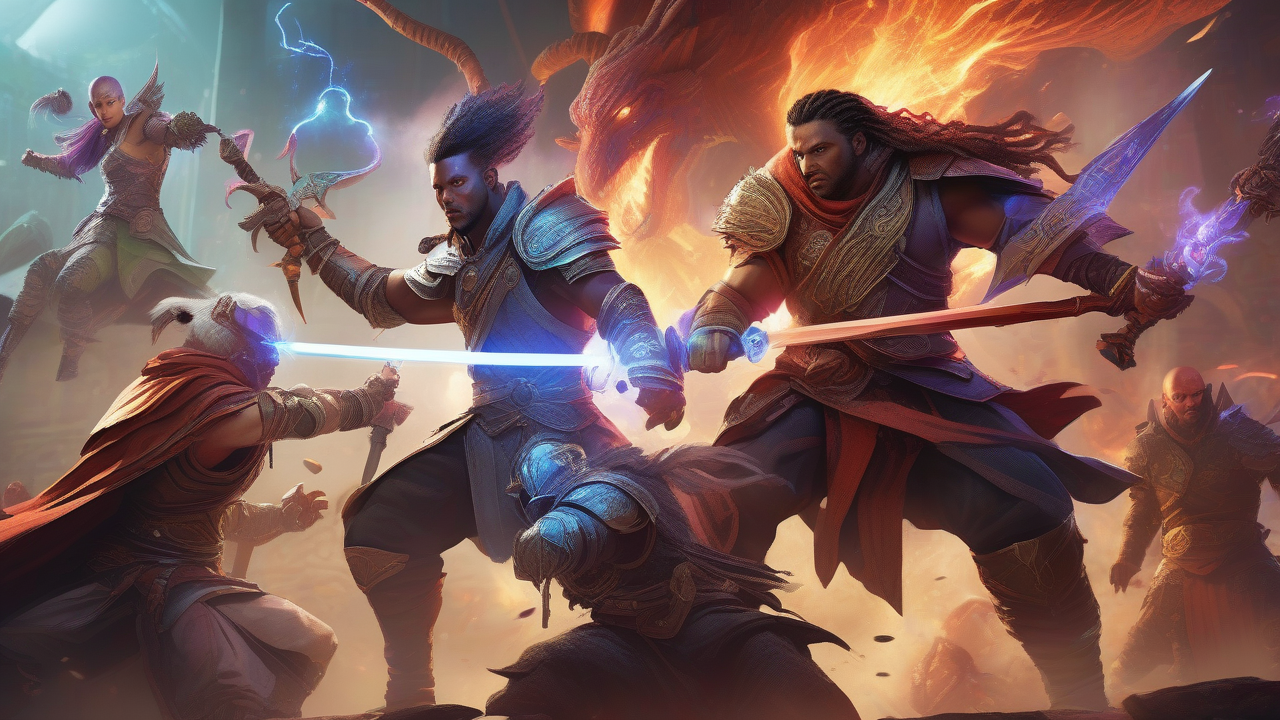
League of Legends, often abbreviated to LoL, has established itself as one of the most famous and discussed free games in the world. Its immense popularity, spread among millions of players and visible even in daily conversations, pushes many to want to discover what lies behind this multiplayer title. If you have found yourself facing the interface or mechanics of LoL with a sense of loss, quiet: you are not alone. This virtual world, in fact, has significant peculiarities that distinguish it from many other videoludic genres.
This guide has been created to accompany you through the foundations of League of Legends, providing you with the necessary knowledge to better address multiplayer battles. From main features to game modes, from strategic goals to character roles, we will explore together everything that a novice needs to know to transform curiosity into fun and skill.
What is League of Legends: Introduction to the MOBA
Before diving into the mechanics, it is essential to understand the nature of League of Legends. LoL is a MOBA (Multiplayer Online Battle Arena), or a kind of game where two teams collide in a default arena, using unique characters. Specifically, it is 5 games against 5, in which five players join to face an opposing team of five others, with the common goal of destroying the enemy base.
Each player selects a Sample (Champion) with its own set of exclusive skills, usually four, activated through the Q, W, E and R keys. These abilities range from offensive attacks to defensive maneuvers, from power-to-mobility, offering a wide range of strategies and game styles. The game map is strategically divided, presenting several sections where the action develops.
The first steps: How to Start Playing
To venture into the world of League of Legends, the first step is to download the game client. Once you have installed and created an account, you can login and access the main hub, ready to select your first match. This is where your journey begins, immersing yourself in a universe full of strategies and challenges.
Game Modes: Changes to Theme
League of Legends offers different game modes, some fixes and always available, other rotating for limited periods. Understanding their specificities is crucial to adapting their approach.
Main Fixes Mode
- Draft (Landa degli Evori): This is the classic and competitive mode par excellence, where the full gaming experience is condensed. Two teams from five players face a map divided into three main lanes: the upper lane (Toplane), the central (Midlane) and the lower lane (Botlane). Each lane usually sees a specific clash: 1v1 in Top and Mid, and a 2v2 in Bot (with a role of Attack/Carry and one of Support). An additional area, the Jungle, is dedicated to the ‘Jungler’, which defeats neutral monsters to accumulate experience and supports lanes with surprise interventions (gank).
The final goal is to destroy the Nexus opponent, the heart of the enemy base. To reach it, it is necessary to strategically break down defensive towers and inhibitors.
The game is articulated through different stages:
- Matchmaking and Acceptance: The search system for opponents and teammates, after which the game must be accepted.
- Selection phase and Ban: Before the start, players can suggest their desired Champion to the team. Next, you proceed with the ‘Ban’, where each player can exclude a Champion from the game. It follows the ‘Pick’ phase, where you choose your Champion, often taking into account synergies and ‘counters’ (Camps that effectively contrast others). For beginners, it is advisable to opt for Champions with which you feel comfortable.
- Partition preparation: In the selection screen, you also choose the Rune (liabilities) and Incantesimi dell’Evoire (extra capacity).
- Home and Acquisition Objects: At the beginning of the game, all the Champions appear in the ‘Fontana’ of the Allied base. Here is theEmporio (Shop) where, with the initial gold (500 Gold), objects are purchased to equip the Champion, creating their own ‘build’. You can return to the base by pressing ‘B’ (recall) to restore health and mana and buy new items.
- Phase of Corsia and Farm: Each Champion runs in his lane. To gain gold and experience, it is essential to give the ‘colpo di grace’ (last-hit) to minion (small characters not playing) enemies. If the last-hit is not taken by you, you won't get gold. The Junglers, on the other hand, focus on killing monsters in the Jungle.
- Challenges and Objectives: During the lane phase, exchanges of shots (roads) with opponents often occur, which can lead to eliminations (kills). Killing enemy champions and minions, as well as destroying towers, allows progress towards the opposing base. It is also crucial to face the neutral monsters of the Jungle that give team advantages, such as Dragons or Baron Nashor.
Quick start: Similar to the draft, but simplified. Delete Ban and Pick steps, allowing you to select up to two preferred lanes and the desired sample in advance, ensuring a faster entry in the game. In this mode, two players can also choose the same Champion, which is impossible in the Draft. The goal and the game mechanics remain identical to the draft.
Classified Mode (Ranked): Dedicate to players looking for a more competitive challenge. They stand out in ‘Classified Solo/Duo’ (to play alone or with a friend) and ‘Classified Flex’ (to play with a larger group of friends, up to 5, but not in 4). These modes follow the rules of the Draft, but introduce a system of points (LP) and 'Rank' (Ferro, Bronze, Silver, Gold, Platinum, Emerald, Diamond, Master, GrandMaster, Challenger), divided into divisions, which reflect the player's ability and allow to "scale" the ranking.
ARAM (All Random All Mid): A non-competitive and hectic mode, where all ten Champions collide in one lane. The system randomly assigns the Champions, with the possibility of ‘reroll’. You cannot make ‘recall’ to return based on buying items, but you have to be eliminated. The goal is always to destroy the opposing enemy Nexus.
Rotation mode
Periodically, League of Legends introduces temporary modes with unique rules, which offer a different gaming experience. Some examples include:
- URF (Ultra Rapid Fire): A 5v5 on the Landa degli Evori, where the Champions can use their skills with very low cooldowns and no cost of mana/energy, leading to a fun and super-fast chaos.
- Arena: A 2v2 combat against multiple teams in a circular arena. Skill cooldowns are reduced, and you unlock upgrades during the game. He wins the couple who defeats all the others.
- All for One: On the Landa degli Evori, all five players of a team play the same Champion against an opposing team also composed of five identical champions (e.g. 5 Yasuo versus 5 Malphite).
- Blitz al Nexus: A mode on an innovative map with two Junglers and modified lanes. It introduces dynamic events during the game that, if completed, give advantages to destroy the enemy Nexus.
Key elements of the Game: Samples, Lanes and Roles
We now deepen the elements that define the game experience in League of Legends.
The Champions: Diversity and Game Styles
With over 180 samples available, each offers a distinct gaming experience thanks to its unique skill kit. These skills can inflict damage, increase mobility, protect or cure allies, enhance (buff) or depotheign (nerf) enemies, or apply effects of Crowd Control (CC), such as slowdowns, misfortunes or immobilizations, which limit the opposing movements.
Samples can be categorized according to their style and main statistics:
Murderers: Fragili (‘squishy’) but with high mobility and ability to inflict great damage in a short time, often from close distance. Examples: Akali, Zed, Katarina. They can be based on physical damage (AD) or magic (AP).
Fighters: Specialized in body-to-body combat, they combine sustained damage with good resistance. Examples: Darius, Sett, Irelia. Many Assassins also fall into this category.
Wizards: They inflict significant magic damage (AP) from distance, compensating for poor mobility with a wide range of action for their abilities. Examples: Lux, Ahri, Syndra.
Shooters (Marksmen/ADC): Samples that inflict physical damage (AD) from distance through basic attacks and abilities. They are also very fragile and depend on the protection of their team. Examples: Caitlyn, Ezreal, Miss Fortune.
Supports: Their strength lies in the skills of utility for the team. They are divided into ‘Engager’ (resistantTanks that start fighting, such as Leona or Blitzcrank) and ‘Enchanters’ (which provide shields, care and allied upgrades, such as Lulu or Soraka). Some Atypical Champions can also work as a Support (e.g. Pyke or Senna).
Tank: Extremely robust, they place themselves in the front line in combat to absorb damage and protect allies. Their resistance makes them fundamental pillars for the team. Examples: Malphite, Ornn, Braum.
Courses and Roles: Map Stratification
Although the development team encourages experimentation, over time and with the introduction of increasingly complex samples, certain sample allocations have been consolidated to specific lanes and roles. This specialization allows to maximize the potential of each Champion within the team strategy.
- Toplaner: Robust samples such as Fighters or Tank that can support long duels and have an impact on the ‘split push’ (single paint in a lane).
- Jungler: They explore the jungle, defeating monsters and looking for opportunities to ‘gankare’ the lanes and get a numerical advantage. Fast samples or with good ‘burst’ are ideal.
- Midlaner: Often Wizards or Assassins, they are Samples that can quickly influence both the Top and the Botlane and play a central role in controlling the map.
- AD Carry (Botlane): Shooters are the main distance physical damage carriers, require support protection and are crucial in the advanced stages of the game.
- Support (Botlane): They protect the AD Carry, provide vision and usefulness to the team, and can be decisive in assigning or dising the fights.
Objectives: The Road to Victory
The League of Legends victory is not limited to defeating opponents. Requires a combination of individual skills, teamwork and goal control. These include:
- Towers: Defensive structures in each lane that must be destroyed to advance.
- Inhibitors: They block the generation of ‘Super Minion’ enemies (enhanced minions) and, once destroyed, allow your Super Minion to push.
- Nexus: The final goal, the destruction of the Nexus in the enemy base decrees victory.
- Neutral Exhibitions of Jungle: In addition to minor monsters, there are greater targets such as Dragons (which give permanent upgrades to the team) and Baron Nashor (which enhances allied minions and champions making them more effective in pushing lanes).
Conclusion: Your Journey to the Arena
League of Legends is a game with a steep but incredibly rewarding learning curve. Understanding the basics, different modes, champions and roles is the first step to master its strategic nuances. Don't be afraid to experiment, try different samples and learn from your experiences. The key to fun and success in LoL lies in constant practice and the ability to adapt. Test your new knowledge, collaborate with your team and prepare to immerse yourself in an epic adventure in the arena.


