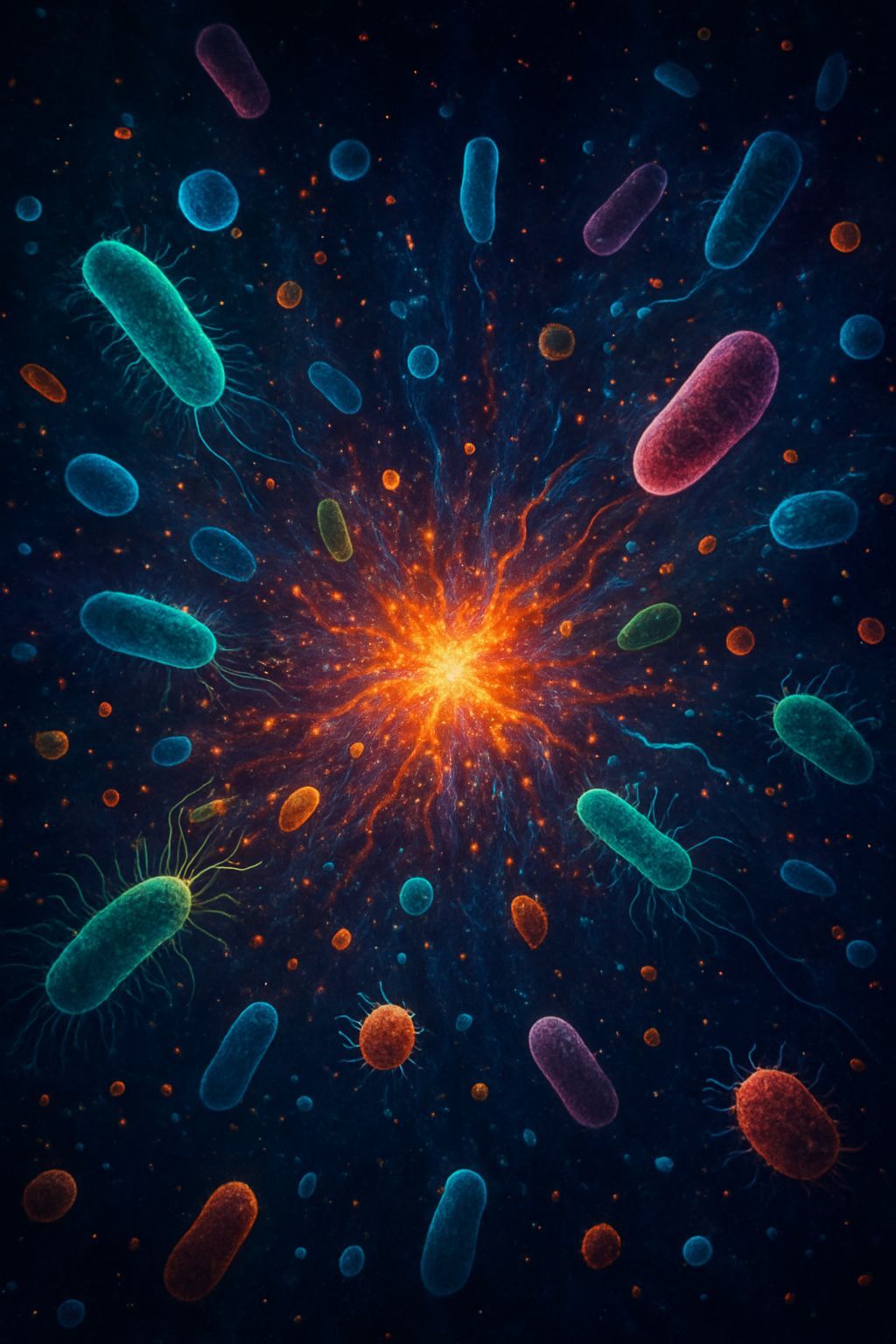
In 2016, the Obama Administration launched the Microbiome Initiative, an ambitious 121 million dollar federal project aimed at coordinating and financing microbiome research. This initiative, driven by a joint call from the scientific community that complained of a dispersion of efforts and resources, aimed at unifying the investigations on the complex microbial communities that inhabit us, our built environment and natural ecosystems. The announcement, which followed other important investments in areas such as cancer research, brain and personalized medicine, marked a crucial moment, raising the study of microorganisms to the rank of a national priority. Private foundations, such as the Bill and Melinda Gates Foundation, joined with $100 million, transforming the initiative into a real one “moonshot” scientific, a coordinated and large-scale attempt to unravel the secrets of an invisible but profoundly influential universe. It was then mentioned that the ocean microbiome could help to reclaim oil spills, that microbes on the surfaces of buildings could curb the spread of infectious germs, that soil microbes could improve agricultural production and, of course, that human microbes could have a profound impact on our health and well-being. But what has happened since? How did this field evolve in less than a decade? This article aims to deepen and extend the topics raised by that announcement, exploring progress, discoveries, challenges and future directions of microbiome research, demonstrating that what was once a specialized niche is today one of the most dynamic and promising borders of science.
From the “Moonshot” of 2016 to the Content Revolution: The Evolution of Microbiome Science
The announcement of Microbiome Initiative in 2016 it was not only a financial investment, but a bold statement: the microbiome was finally recognized as a central element for understanding life, from infinitely small to globally interconnected. This initiative, with its three primary objectives – to finance interdisciplinary research, develop transversal technologies and support the workforce of research – acted as a catalyst, instilling new energy and direction in a field that, despite the progress of the NIH’s Human Microbiome Project (HMP), felt fragmented after the conclusion of its main phase of funding in 2012. The moonshot it aimed to overcome the “national silos” and to generate “universal intuitions that benefit all humanity”. In the following years, this coordinated thrust has had a profound impact. We have witnessed a proliferation of studies that have increasingly mapped microbial compositions of different environments and organisms, revealing not only their surprising diversity but also their intricate functionality. New high-performance sequencing technologies, initially costly and complex, have become more accessible, allowing researchers to analyze samples on unprecedented scales. Bioinformatics, in turn, progressed exponentially, developing algorithms and tools to make sense to the amount of data generated, identifying patterns, interactions and potential functional roles of microbes. However, the path has not been without obstacles. The intrinsic complexity of microbial systems, their dynamism and myriad of factors that influence them (guest genetics, diet, environment, drugs) have made the distinction between correlation and causality a persistent challenge. Despite this, the impulse given in 2016 laid the foundations for a true and proper scientific revolution, moving the paradigm from simple species identification to understanding their ecosystem interactions and their deep impact on biological and environmental processes. The initiative has favoured the birth of centres of excellence, international collaborations and new generations of scientists formed with an interdisciplinary mentality, essential to address the challenges of such a vast and faceted field. The initial investment therefore generated a significant return, not only in terms of scientific publications, but also in the creation of a robust and interconnected research ecosystem.
The Human Microbiome: The Deep Interconnection between Health, Disease and Wellness
The attention to human microbiome has grown exponentially since 2016, radically transforming our understanding of health and disease. Our body, far from being a sterile entity, is a super-organism which hosts trillions of microorganisms – bacteria, fungi, viruses and archaea – which collectively weigh about as much as our brain and are about 10 times more numerous than our human cells. This microbial community, especially the intestinal community, has been recognized as a metabolic and immunological “organ” itself, with functions that go far beyond the simple digestion. The research has unveiled surprising links between the composition and function of the microbiome and a wide range of medical conditions. The so-called bowel axis brain brain brain has become a primary field of study, demonstrating how microbial metabolites, neurotransmitters and immunological interactions can affect mood, cognition and even the development of neurological and psychiatric disorders such as depression, anxiety, Parkinson’s disease and autism. Similarly, the implications for autoimmune diseases, allergies and chronic inflammations have become clear: a microbiome “disbiotic” (squilibrate) can alter the intestinal barrier, promote systemic inflammation and contribute to conditions such as Crohn’s disease, ulcerative colitis and rheumatoid arthritis. On the metabolic front, intestinal microbes modulate nutrient absorption, vitamin production, glucose regulation and lipid metabolism, directly affecting the risk of obesity, type 2 diabetes and cardiovascular diseases. The interaction between microbiome and drugs, especially antibiotics, is another critical area, with studies showing how microbial composition can alter the effectiveness and toxicity of medicines. The field of personalized medicine is increasingly integrating microbiome data, aiming at therapies and tailored dietary interventions. The diet emerged as one of the most powerful factors in shaping microbiome, and interest in prebiotics (fibers that feed beneficial bacteria), probiotics (living beneficial microorganisms) and even phecal microbiota transplants (FMT) exploded as a therapeutic strategy to restore a healthy microbial balance. The challenges remain, especially in the transition from correlation to causality and standardization of interventions, but the human microbiome is undoubtedly the center of a biomedical revolution that promises new ways to prevent and treat a wide range of pathologies.
Beyond Man: The Impact of Microbiome in Earth and Aquatic Ecosystems
The 2016 initiative emphasised not only the human microbiome, but also the environmental one, recognizing thefundamental interconnection between the health of our ecosystems and our very existence. The microbes, although invisible to the naked eye, are silent architects and the main engines of all biogeochemical cycles on Earth, affecting climate, soil fertility, water purification and ecosystem productivity. In the soil, for example, microbiome is a complex network of bacteria, fungi, archaea and protistas that decompose organic matter, cyclicize essential nutrients such as nitrogen and phosphorus, and form vital symbiosis with plants. These are soil microbes increase nutrient absorption by roots, protect plants from pathogens and improve soil structure, making it more erosion resistant and more efficient in water retention. Research has shown that the diversity and health of soil microbiome are directly related to agricultural productivity, crop sustainability and the ability to seize atmospheric carbon, offering natural solutions for sustainable agriculture and climate change mitigation. The excessive use of chemical fertilizers and pesticides, on the contrary, can impoverish these microbial ecosystems, reducing resilience and long-term soil fertility. In aquatic environments, from vast oceans to small ponds, microbes play equally crucial roles. Microbial phytoplankton is the base of the marine food chain and produces a significant part of the oxygen we breathe. The marine microbes are also responsible for the decomposition of organic matter, the cycle of nutrients and the natural reclamation of pollutants, as mentioned in 2016 regarding oil spills. “Oil eaters” batteries have demonstrated significant potential in degrading hydrocarbons, accelerating the recovery of contaminated ecosystems. Understanding these microbial processes has become essential to address global challenges such as pollution, water scarcity and climate change. The targeted manipulation of environmental microbes, through biotechnology or agricultural and sustainable management practices, offers an unprecedented opportunity to improve the health of our planet and ensure food and ecological safety for future generations. The interaction between terrestrial, aquatic and atmospheric microbiomes forms a complex global system that, if properly understood and managed, can be one of the keys to a sustainable future.
The Architecture of the Invisible World: Microbiomes in Built Environments and Their Relevance
The concept of microbiome extends well beyond the human body and natural environments, also embracing the spaces in which we live and work: the environments built. From our homes to hospitals, from offices to public transport, every surface, every air particle and every drop of water houses complex microbial communities that constantly interact with us and among them. The research on microbiomes of the environments built, also stimulated by the initiative of 2016, revealed that the composition of these communities is influenced by factors such as ventilation, moisture, building materials, human activities and the presence of pets. These investigations have opened new perspectives on infection prevention, indoor air quality and the potential impact on human health. In hospitals, for example, surface and air microbiomes play a crucial role in the transmission of pathogenic agents and in the emergence of antibiotic resistances. Understanding the dynamics of these microbial communities can lead to more effective strategies for cleaning and sanitization, going beyond the simple indiscriminate elimination of germs. Instead of creating sterile environments that can favour the selection of resistant strains, it could aim to promote “healthy” and resilient microbiomes that inhibit pathogenic growth. In our homes, the internal microbiome partly reflects the external one, but is also strongly shaped by human presence and our habits. Recent studies have suggested that exposure to greater microbial diversity in the home, especially if derived from contact with nature (e.g., through pets or apartment plants), could be beneficial for the immune system, reducing the risk of allergies and asthma. This reinforces the “hygiene hypothesis” or, more precisely, the “biodiversity hypothesis”, which suggests that a lack of exposure to a rich spectrum of microorganisms can compromise the development of a robust immune system. Research on urban microbiomes is also exploring how the design of cities, green areas and waste management affect microbial biodiversity and, consequently, the health of the inhabitants. The awareness that built environments are not simple backgrounds but dynamic microbial ecosystems it urges us to rethink architecture, engineering and urban management in a more biological perspective, with the aim of creating spaces that are not only safe, but also promoters of well-being and health through a harmonious coexistence with the invisible world around us.
Technology Frontiers: Revolutionary Instruments for Microbioma Study and Manipulation
The acceleration of microbiome research since 2016 has been inherently linked to the development and availability of cutting-edge technologies that have allowed us to explore this invisible universe with unprecedented precision. The metagenomic, that is the direct sequence of DNA extracted from an environmental or biological sample without the need to cultivate microorganisms, has become the corner stone of this field. From the initial analysis of the gene 16S rRNA (which identifies bacterial species) it quickly passed to shotgun metagenomics, which sequences the entire DNA of all present species, allowing not only the taxonomic identification but also the prediction of functional potential (such as genes are present and what metabolic pathways can activate microbes). Other “-omics” have been added to this: metatrascriptmics (which analyzes RNA to understand which genes are actively expressed), metaprotheomics (which studies proteins produced) and metabolomics (which identifies metabolites produced by microbes and host, providing an snapshot of the functional activity of microbiome). The combination of these different “-omics” provides a holistic view of the composition, activity and interactions of microbes, a defined approach multi-omic. In parallel, the advancement of bioinformatics was crucial. The amount of data generated by sequencing is huge and requires sophisticated algorithms for the assembly of genomes, statistical analysis and interpretation of results. Artificial intelligence and machine learning (AI/ML) are revolutionizing microbiome analysis, allowing you to identify complex patterns, predict disease states and even propose customized interventions. In addition to sequencing, new crop techniques, the so-called culturomics, they are allowing to isolate and study microbial species previously considered “non-cultivable”, further expanding our knowledge of biodiversity and microbial features. Advanced imaging technologies, such as fluorescence microscopy and X-ray tomography, allow you to view microbes in situ, including their spatial distribution and interactions within the tissues or environmental aggregates. These innovations not only allowed to “read” the microbiome, but are opening the way to its “writing” and “engineering”. Synthetic biology is exploring the possibility of creating microbial consortia with specific features or genetically modifying existing microbes for therapeutic or environmental purposes, marking a new era in which we could not only observe, but actively model the future of our microbiome and our planet.
The Challenges of the Decade: From Complexity to Standardization and To Ethics
Despite the extraordinary technological and scientific progress, microbiome research still faces considerable challenges, many of which are highlighted by the 2016 initiative and amplified in the following years. The intrinsic complexity of the microbiome is perhaps the greatest of these. Every microbiome, whether human, environmental or built environment, is a dynamic ecosystem with thousands of species that interact in non-linear ways, influenced by a myriad of external and internal factors. Distinguishing causality from correlation remains a difficult task. Many initial discoveries, for example, have identified associations between specific microbial profiles and diseases, but demonstrate that these profiles cause the disease, rather than be a consequence, requires rigorous experiments, often with animal models or clinical studies on man, which are slow and expensive. Another crucial challenge is the standardization. From sample collection (feeds, soil, air), conservation, DNA extraction, sequencing protocols and bioinformatic pipelines, each step can introduce variability and bias. The lack of universally accepted protocols makes it difficult to compare the results between different studies and replicate discoveries, hindering progress. The scientific community is actively working to develop best practices and quality controls, but it is a long and iterative process. Then there is the question of reproducibility, a wider problem in science which is particularly acute in microbiome research because of its complexity and sensitivity to environmental factors. The results obtained in a laboratory or on a population may not be valid elsewhere. In addition, the field raises important ethical issues. The manipulation of microbiome, for example through the transplants of fecal microbiota (FMT) or probiotic engineering, has implications for human health and personal identity. Who holds the intellectual property of a “healthy” microbiome or derived therapies? How do we guarantee informed consent for interventions that alter such a fundamental aspect of our biology? There are also data privacy concerns, since microbiome can reveal sensitive information about our health, diet and lifestyle. Bioethics and regulation are struggling to keep pace with rapid scientific progress, requiring a continuous dialogue between scientists, ethicalists, politicians and the public to navigate this unexplored territory. Addressing these challenges will require not only further investment and interdisciplinary research, but also a concerted commitment to transparency, collaboration and deep ethical reflection.
The Future of Microbiome: Innovative Therapies, Sustainability and Global Collaboration
Looking at the future, the microbiome field is intended to generate an even deeper impact on medicine, agriculture and environmental conservation. One of the most promising developments is the transition from rudimentary to targeted and sophisticated therapies. Fecal microbiota transplants (FMT), which have proven to be extremely effective for treating recurrent infections Hard Clostridioides, they are only the beginning. Research is now focusing on “engineered FMT” or “new-generation probiotics” (live biotherapeutic products, LBPs) consist of defined consortia of bacterial species or single strains with specific functionality, reducing risks and increasing predictability compared to unprocessed fecal material transplants. Synthetic biology is emerging as a powerful tool, allowing you to design microbes that can produce drugs in situ, modulate immunity, diagnose diseases or even fight antibiotic-resistant pathogens directly in the body. We think of “living drugs” within the intestine, able to react dynamically to physiological changes. The application of bacteriophage viruses (fages), which infect and kill bacteria specifically, is emerging as a strategy to combat multi-resistent bacterial infections, offering an alternative or complement to traditional antibiotics. In agriculture, the future will see development organic fertilizers and biopesticides based on specific microbial consortia, which will increase crop yield, reduce the need for chemical input and improve plant resilience to climate change. The “microbiome-driven agriculture” aims to exploit the power of microbial ecosystems for a more sustainable and efficient food production. On the environmental front, enhanced bioremediation with engineered or selected microbes could become a standard practice for cleaning sites polluted by heavy metals, plastics and other toxic substances. To achieve this potential, the global and intersectoral collaboration will be fundamental. No single country or institution can face the complexity of the microbiome alone. It will be necessary to share large-scale data, standardization of international methods and the formation of a new generation of scientists with multidisciplinary skills in biology, computer science, engineering and social sciences. The commitment announced in 2016 was a fundamental step; the future will require sustained commitment, long-term vision and constant adaptability to fully unlock the potential of this invisible universe and shape a healthier future for humanity and the planet.
Microbiome and Health One Health: An Integrated Vision for a Sustainable Future
The approach “One Health”, which recognizes the intrinsic interconnection between human health, animal health and environmental health, finds in the microbiome a fertile ground and an exemplary demonstration of its validity. The understanding that microbiomes do not operate in isolated silos, but are part of a vast and intricate network of interactions, is essential to address many of the current global challenges, from pandemics to antibiotic resistance, from climate change to food security. The health of our human microbiome is influenced by the health of animals we interact with (from parasites to the beneficial microorganisms of our pets and livestock), and in turn is shaped by the microbiomes of the soil, water and air that surround us. An impoverished agricultural land of microbial biodiversity, for example, not only produces less nutritious crops but can also alter the microbiome of animals that feed on those plants and, ultimately, ours. The transmission of antibiotic resistance genes between bacteria in different environments (clinical, agricultural, natural) is another dramatic illustration of this interconnection: excessive use of antibiotics in breeding can facilitate the emergence of resistant strains that can then pass to humans, making ineffective care. Research on microbiome, with its emphasis on interdisciplinary and systemic vision, aligns perfectly with the One Health paradigm. Future projects should integrate microbiomes into different contexts to understand microbes, genes and metabolites through the environment. This implies not only the collaboration between microbiologists, doctors, veterinarians and echoes, but also the engagement of sociologists, economists and politicians to develop solutions that are scientifically valid, ethically acceptable and socially feasible. A concrete example could be the development of strategies for the prevention of infectious diseases that consider microbiome as a key factor. Instead of focusing solely on the elimination of pathogens, we could aim to strengthen “protective” microbiomes in humans, animals and environments. This could include promoting fiber-rich diets, exposure to healthy natural environments and reducing indiscriminate use of antimicrobial. The commitment of 2016 marked the beginning of a new era in microbial research, but its real potential will be fully realized only when we completely embrace the One Health vision, recognizing and enhancing the invisible but ubiquitous microbial fabric that binds every form of life and every ecosystem of our planet. The future is microbial, and our ability to understand and manage it wisely will determine the health and sustainability of generations to come.
Since the initial “moonshot” of 2016, the microbiome survey has taken an extraordinary path, evolving from an emerging field of research to a mature and transformative discipline. What had begun as a coordination of efforts to unravel poorly known microbial communities has blossomed in a deep understanding of how these invisible inhabitants affect every aspect of life, from human health to planetary well-being. We saw how the microbiome is not a simple passenger, but a co-pilot essential for our well-being, affecting digestion, the immune system, metabolism and even our psyche. We explored the critical role of microbes in the vital cycles of Earth, from soil fertility to water purification, and their potential to address global challenges such as sustainable agriculture and environmental reclamation. Research has also shed light on microbial ecosystems that permeate our built environments, revealing how their composition can affect our exposure to pathogens and our general health. These advances were fueled by an explosion of technological innovations, from metagenomics to integrated “-optics”, from advanced bioinformatics to synthetic biology, which allow us not only to read but also to rewrite the microbial code. Despite significant challenges – the complexity of systems, the need for standardization and the deep ethical implications – the path undertaken is irreversible. The future promises increasingly sophisticated therapies, innovative approaches to agriculture and ecological solutions that exploit the power of microbes. The One Health vision, which integrates human, animal and environmental health through the prism of microbiome, is the compass to navigate in this future. The 2016 investment sparked a spark; now it’s up to the global community to fuel it with sustained collaboration, rigorous research and deep ethical awareness to achieve the full potential of this invisible revolution and build a healthier and sustainable tomorrow for all.


