The original article by Ars Technica, drawing on a lively debate among its commentators, has cast a fascinating light on a perennially discussed topic in the world of gaming: what games, though acclaimed, are actually overestimated
? This seemingly simple question unlocks a Pandora pot of subjective opinions, intrigued prejudices of nostalgia, evolving design philosophies and the inert tension between the critical consensus and the individual experience of the player. While professional critics often strive to achieve objectivity, basing their judgments on consolidated metrics such as innovation, narrative, game mechanics and technical execution, the perception of the average player is a much more complex tape, woven by personal preferences, emotional connections, previous gaming experiences and even the pure weight of the pre-launch hype. The source article provided a snapshot of this speech, with passionate arguments against titans as Final Fantasy VII, Call of Duty, Skyrim and even classics seemingly untouchable Ocarina of Time and Metal Gear Solid. What emerges from these discussions is not simply a list of games considered unworthy of their praises, but a deeper investigation into the very nature of appreciation in a form of art that is simultaneously interactive and narrative, technically complex and emotionally resonant. This extended analysis aims to transcend the simple list of controversial titles, entering into the underlying psychological, sociological and design factors that help label a game as overestimated
, exploring the gap between critical acclamation and player sentiment, the corrosive power of unsatisfied expectations and the undeniable truth that, in the realm of interactive entertainment, taste really knows no boundaries. It is a journey into the heart of what makes us love, or perhaps not love, the games celebrated by many, dissecting intricate layers that shape our game perceptions.
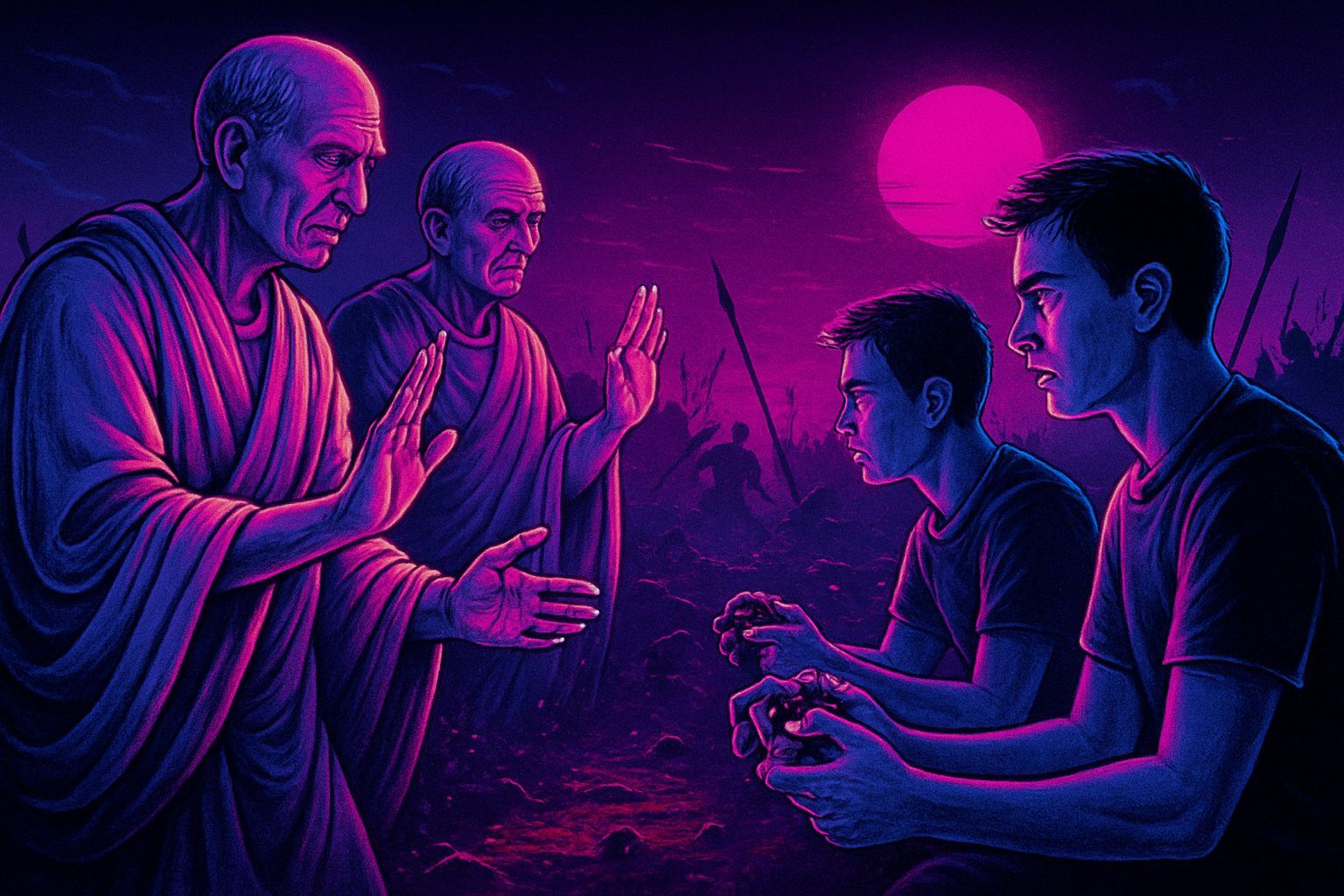
Criticism vs. Players: A Digital Battlefield
The gap between professional reviews and player experiences is one of the most significant fractures in the videoludic landscape, often culminating in the label overestimated
. Critics, armed with years of experience and an in-depth knowledge of industry, tend to evaluate games based on consolidated parameters: innovation in gameplay, quality of writing and narrative, technical performance, aesthetics, value of replayability and cultural impact. They often work with analytical lenses, trying to place a title in the wider context of its gender history and evolution of the medium. However, this methodical perspective may collide violently with the player's perception, which is intrinsically more personal and less structured. A player, in fact, does not value a game only for his technical excellence or originality, but also for the pure fun he draws, for the emotional resonance he manages to establish, or for how he aligns his gender preferences and style of play. This neckline is often evident in games like Final Fantasy VII, where the critics of the time praised his epic narrative and revolutionary 3D graphics, while many commentators of Ars Technica, at a distance of years, found it boring, with interchangeable characters and game mechanics (such as the summon spells
that ruined the experience. The debate on overestimated games
therefore reveals a war of taste
, where the validity of professional metrics is questioned by the democratization of opinion through forums, social media and user reviews platforms. This dichotomy is not necessarily negative; on the contrary, it stimulates a richer and more faceted dialogue on the art of video game, forcing both critics to reconsider the emotional and subjective impact, and players to reflect on objective criteria that can elevate a title beyond the simple personal preference. It is in this clash of perspectives that a more complete understanding is created and, in some ways, more honest than the intrinsic and perceived value of a video game.
The Weight of Nostalgia and the Impact of Expectations: A Double Cut Sword
The phenomenon of overestimated games
is often fed by two powerful and ambivalent forces: the nostalgia and expectations. nostalgia, that sweet and sometimes misleading memory of the past, can induce both a blind veneration for old-time titles, and a cocent disappointment when a game, revisited with modern eyes, does not hold the comparison with the idealized image we had. For many, games like Final Fantasy VII or Ocarina of Time they represent milestones of their youth, titles that shaped their future expectations and left an indelible mark. However, as pointed out by several commentators, reliving these experiences can reveal defects that age has accentuated: obsolete mechanics, dated narratives, or graphics that, once avant-garde, today appear coarse. Criticism to Final Fantasy VII to be less than FF in many respects, or present shitty 3D stuff
against the masterful 2D sprites
, is a classic example of how nostalgia for a specific age can affect judgment. On the other side, the expectations, often pumped from aggressive marketing campaigns and a hype towing
uncontrollable, they can raise a game of unrealistic peaks well before its launch. When a title fails to match this grandiose pre-packaged vision, the fall is fragorous. The example of Assassin’s Creed 3, described with forgettable, shallow characters
, crap art direction
and one story that seems to have been written by M. Night Shyamalan
, reflects a deep sense of treason over what the players expected from an already established series. Similarly, the disappointment for Skyrim, that for some ♪
despite the promises of a vast world, it illustrates how effective marketing can paradoxically contribute to the feeling that a game is overestimated. These forces do not act isolatedly: nostalgia can shape our expectations for sequels or remakes, while unsatisfied expectations can turn into a critical retrospective, leading to reconsidering past titles with a stricter eye. Ultimately, both the comforting warmth of nostalgia and the cold disappointment of unsatisfied expectations are crucial components in the debate on the real value of a game, often determining whether an icon will be eternally venerated or reimagined as simply overestimated
.
The Evolution of Game Design and Yours Defections
Revealed by Time
Time is a relentless judge in the world of game design, revealing mercilessly how yesterday's innovations can become today's rigidity, significantly contributing to the perception that a game is overestimated
. Design philosophies evolve, and what was once considered a pillar of the gameplay, today may appear tedious or even frustrating. A flashing example is the typical grinding of the most dated JRPGs, such as the one criticized in Final Fantasy VI: killing the next boss required a whole lot of leveling-up by definition the same buttons over and over again on a countless pile of completely unchallenging trash mobs
. This mechanic, then accepted as an integral part of the experience, is often seen as an artificial filler that unnecessarily extends the duration of the game, without adding depth or meaning. Similarly, the long cutscenes not skippabili or excessively prolific dialogues, highlighted in series as Metal Gear Solid (the actual gameplay elements are killing the immersion and taking you out of the game, it should have just been a movie
), reflect an era in which interactive narrative was still in an embryonic phase, and developers struggled to seamlessly integrate the plot with gameplay. In a modern panorama that favours the immediateness, the choice of the player and the tight pace, these elements can break the immersion and generate impatience, transforming a cinematic masterpiece into a frustrating experience. Even the vast open worlds, like that of Skyrim, although praised for their ambition, they can be perceived as ♪
if the density of significant content is not up to the geographical extent, a defect that, with the advent of more dynamic and responsive open-world design, becomes more and more evident. The repetitiveness of missions, like the one that afflicted the first Assassin’s Creed (slow paced and the controls were beyond awkward
), is another symptom of a design that has not resisted the test of time. Technological evolution has also redefined expectations on IA systems, collisions or control fluidity: bugs from the previous Elder Scrolls titles are still there
, or abominations
of the engine of generation of the faces, which once could be tolerated as technical imperfections, today are true deterrent. Ultimately, what was innovation becomes convention, and what was convention can become an obstacle. This temporal perspective is fundamental to understand why a game, although revolutionary at its time, can be later considered overestimated
: it is not necessarily a judgement on its intrinsic quality, but rather on its ability to remain relevant and pleasant in a continuous and rapidly evolving panorama.
When Popularity Offuscates Judgement: The Blockbuster Case
Massive popularity, although index of commercial success and often of accessible quality, can paradoxically transform a game into a primary target for the label of overestimated
. When a title transcends the boundaries of its kind to become a cultural phenomenon, expectations, debate and inevitable public scrutiny are exponentially amplified. This amplification can generate extreme polarization, where unconditional love collides with a relentless criticism. Series Call of Duty, commonly referred to as overrated
by the commentators of Ars Technica, they are a compelling example. Its success comes from a refined, accessible first-person shooter gameplay and a competitive multiplayer that defined an entire generation. However, its ubiquity and annual etheration have led some to see it as a repetitive, innovation-free and even toxic due to online dynamics (too many Trolls that would rather see the world burn
). For these critics, the proven formula becomes tired, and commercial success results in conformism, blurring judgment on the real intrinsic value of the game. Similarly, games like Minecraft, World of Warcraft or Angry Birds, although global phenomena have shaped entire subgenres or revolutionized mobile gaming, they have not escaped this scrutiny. Minecraft, with its creative freedom and its simple but deep construction mechanics, has conquered millions of players, yet some consider it ♪
or without a clear direction, precisely because of its sandbox nature. Angry Birds, described as supposed to be physics based, but it seems to have way too large a chunk of luck for that to be true
, it is another example of how popularity can also expose the simplest of mechanics to a critical analysis that exposes its alleged imperfections. The desire to stand out, to appreciate something more than niche
or less
, plays a role in this dynamic. For some players, the fact that a title is universally loved can be almost a deterrent, a signal that may lack depth or complexity compared to less conventional experiences. Therefore, popularity is not only a measure of success, but also a catalyst for more severe critical analysis, transforming blockbusters into debate arenas where the overestimated
becomes an epithet to confront.
Mechanics of Game and Experimentation: Dark Souls, Half-Life 2 and Other
Some games are labeled as overestimated
not for obvious defects, but for their intrinsically divisive gameplay mechanics or for their bold experimentation that does not resonate with all the public. These titles push the boundaries, but in doing so, they create a deep groove among those who appreciate their vision and those who refuse their execution. Dark Souls is perhaps the most emblematic example of this category. Universally acclaimed for its design of intricate levels, its oppressive atmosphere and its meticulous combat system, is also criticized for being stupidly hard
and/or inhumanely difficult
. For its detractors, the high level of challenge is not a demonstration of design mastery, but rather an artificial and frustrating barrier that prevents enjoyment, masked by depth. This debate emphasizes a fundamental question: is difficulty a valid design element that enriches experience, or an obstacle that alienates players? The answer depends entirely on the subjectivity of the player, his expectations and his tolerance to frustration. Another interesting case is Half-Life 2, another acclaimed giant who received criticism for his puzzles that were obnoxious and tedious, inherent the game designers trying to show off their physics engine more than being interesting gameplay
. The introduction of a revolutionary physical engine like the Source Engine was undoubtedly a technical strength, but its integration into gameplay through puzzles that some found forced or didactic, rather than organic, divided opinion. What for some was a brilliant example of how technology could enrich interactivity, for others it was a demonstration of technical force at the expense of fluidity and game rhythm. Similarly, the series Metal Gear Solid, in particular the fourth chapter, was criticized for its excessive emphasis on cutscene and interactive narrative sequences, with a given action break at over sixty minutes [long]
and hour-long cut scenes
. This choice of design, which for many fans was the culmination of film narration in the video game, for others translated into an experience more similar to a interactive movie
that at a real game, interrupting the dive with long passive breaks. These examples show that even the most daring and technically impressive design choices can be perceived as overestimated
if they can’t balance innovation with the accessibility or gratification of gameplay for a wide range of audiences. Experimentation is essential for the advancement of the medium, but inevitably generates disputes, and in that dispute, the label of overestimated
.
The Technological Context and the Water Barriers: When Technique Infrange the spell
A crucial aspect that can turn a acclaimed game into a overestimated
is the technological context and how its imperfections or design choices, even minimal, can break the player's dive. In a videoludic experience, immersion is the spell that transports us to another world; when that spell breaks because of technical limits or faulty design, disappointment can be profound. The criticism of the series Elder Scrolls, for example, do not concern only the alleged empty
of its worlds, but also specific technical elements: bugs from the previous Elder Scrolls titles are still there
, a ♪
level progression and a ♪
. These persistent technical problems, combined with aesthetic imperfections such as abominations
of the face generation engine, they can erode the credibility of the game world and the feeling of being part of it, making the experience less magical and more frustrating. Similarly, Assassin’s Creed 3 has been the subject of harsh criticism for its itches everywhere
and one pointlessly, overly difficult AI
. In a game based on the fluidity of movement and stealth precision, visual bugs or unpredictable artificial intelligence can completely destroy illusion, transforming a potential masterpiece into a source of irritation. The breakdown of the dive is not only related to bugs. Long loading screens or extended installation times, as mentioned for Metal Gear Solid 4, can also contribute to this feeling of disconnection. Every time the player is extracted from the interactive experience to wait, to read an excessive exposure or to face a dizzy control, the spell fades. Even control choices, if you perceive as beyond
as in the first Assassin’s Creed, can act as a barrier, making interaction with the game world less intuitive and more mechanical. A game can have a stellar narrative, a breathtaking artistic direction and a commendable ambition, but if its technical execution and user interface are not up to date, the overall experience can be irreversible. These defects, which in other contexts could be neglected, in highly celebrated games become painful points, engulfed by the expectations created by their status. It is the disconnection between the ambitious vision and the reality of technical implementation that often leads to that feeling of overestimated
, where the promised magnitude is not fully realized because of imperfections that prevent a full and fluid immersion.
Beyond Guilty Pleasure
: Recognize absolute objectivity in Gaming
At the end of every lively debate on overestimated games
, an ineludible truth emerges: taste is inherently and deeply subjective. The label overestimated
, although often used with tones of disappointment or even contempt, does not intrinsically invalidate the quality or impact of a game, nor diminishes the pleasure that millions of people draw from it. Rather, it highlights the richness and diversity of individual experiences and preferences within the vast community of players. The phenomenon of machine gun trolls
in the article by Ars Technica, which listed a myriad of universally loved titles – from Super Mario 64 a Tetris, from Chrono Trigger a Red Dead Redemption – demonstrates in an eclatating way that no game is immune to subjective judgment and even the masterpieces
can not resonate with everyone. This diversity of opinions should not be seen as a problem, but as an added value. It is through confrontation and discussion, also on, that the gaming community evolves, questions and deepens its understanding of the medium. There is no universal formula for perfect game
, and what for one is a transcendent experience, for another can be a missed opportunity or irritation. The value of a game is not only determined by objective metrics of design and technology, but also, and perhaps above all, by its ability to connect emotionally with the player, to challenge him in ways he finds rewarding, or to offer him an escape that suits his mood. Recognising absolute subjectivity means accepting that professional criticism, though precious, is only one of the many voices in the choir. It means enhancing the reasons behind criticism, even the most obvious, because they often reveal unexpected expectations, desires for innovation or simply deeply rooted stylistic preferences. Instead of rejecting the discordant opinions, we should welcome them as an invitation to explore the videoludic landscape from different perspectives, enriching our appreciation for the complexity of this form of art. Finally, the debate on overestimated games
it is not a war to win, but a continuous dialogue that celebrates the wealth of gaming and the plurality of ways in which we can interact and perceive the digital worlds we love.


