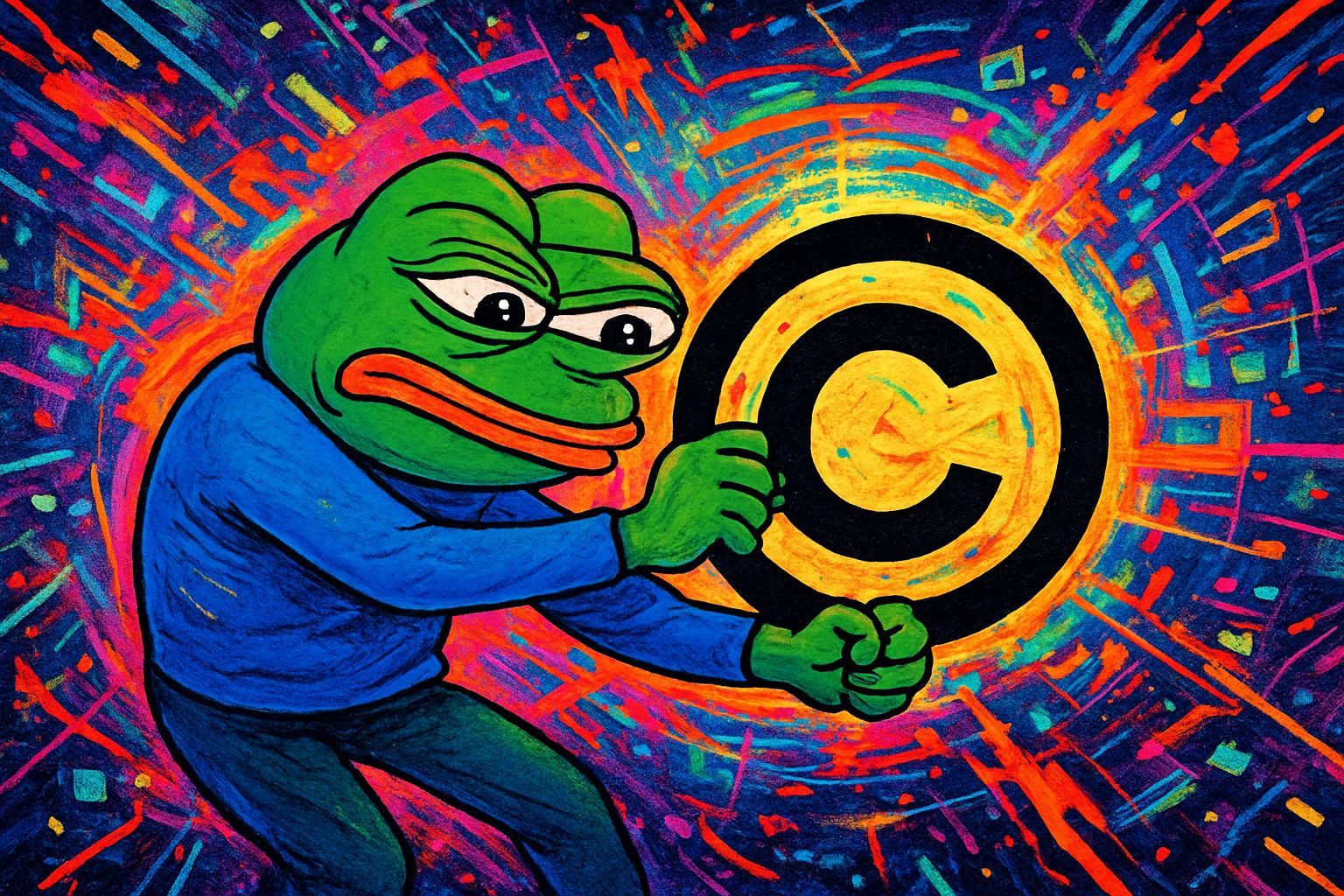
In the effervescent and often unpredictable universe of the Internet, few stories capture the essence of its complex dynamics as Pepe the Frog. Born in 2005 by cartoonist pencil Matt Furie, as a harmless and relaxed character of his webcomic ‘Boys Club’, Pepe embarked on an extraordinary and tumultuous journey, evolving from simple image to global cultural phenomenon, then turning into a controversial symbol and the center of an unprecedented legal battle. Its parable is an emblematic case of how digital creativity can escape the control of its creator, be coopted by ideological movements and finally force the world of copyright to confront the unique challenges posed by the era of the memes. This narrative is not only the story of a comic book, but a deep exploration of intellectual property in the digital age, freedom of expression, cultural appropriation and the ethical and legal implications resulting from it, revealing the tensions between the open and collaborative nature of the Internet and the fundamental rights of artists. Pepe’s odyssey raises crucial questions about who really owns the property of an image once this becomes viral, about how to protect content in an environment where reprocessing and redistribution are the norm, and on which legal and cultural tools are available to claim their work from distorted and harmful interpretations, in an attempt to redirect the meaning of a now compromised symbol.
The Birth of Pepe and the Culture of Digital Memes: An Unpredictable Phenomenon
The genesis of Pepe the Frog is inherently linked to the emergence and proliferation of the culture of memes, a digital phenomenon that has redefined communication, humor and spread of ideas in the Internet age. Matt Furie, in 2005, conceived Pepe as part of a cast of carefree and friendly characters for his webcomic ‘Boys Club’with its famous original catchphrase, ‘Feels good man’, which expressed a sense of satisfaction and tranquility. This initial context is fundamental to understand the subsequent and radical transformation of the character. Its rise to meme began around 2008, mainly on platforms such as 4chan, an anarchist and often controversial forum of images, known for its niche culture and the creation of viral trends. On 4chan, the image of Pepe, in particular the vineyard ‘Feels good man’, it was decontextualized and reworked in countless variants, becoming a vehicle to express a wide range of emotions, from hylary to sadness (transforming into ‘Sad Frog’). The very nature of the memes, their ability to be easily modified, copied and redistributed by anyone with minimal knowledge of digital instruments, was the key to its exponential diffusion. Each user who shared, adapted or created a new version of Pepe contributed to its evolution, feeding a viral cycle that, without central control, made it a collective cultural property, although not legally recognized. This embryonic phase of Pepe's life as a meme perfectly embodies the democratic nature and at the same time chaotic of creating online content, where the original meaning can easily fade under the weight of infinite interpretations and appropriations, transforming a simple design into a shared visual language, but vulnerable to future manipulations, as it would unfortunately be for the ill-placed amphibian.
From Pacific Stonatore to Simbolo d'Odio: The Appropriation of the Alt-Right
Pepe the Frog metamorphosis from harmless icon to symbol of white hatred and supremacy is one of the darkest and most studied episodes in the history of the memes. During the 2016 electoral cycle in the United States, the alt-right, a far-right political movement emerged online, recognized in the malleable character and in Pepe's vast popularity a powerful tool of communication and propaganda. They began to co-opt and redesign the image of Pepe, alongside Nazi symbols, racist, anti-Semitic and islamophobic images. This appropriation was not random; it was a deliberate strategy to normalize the ideology of alt-right, to communicate in a visual language that often escaped the detection of traditional moderators of platforms and to create a sense of belonging among their followers. Pepe became a “ever-mememe” of the alt-right, used in contexts ranging from simple ‘tight’ to real manifestations of hatred. His initial ambiguity – the idea that could be ‘just a joke’ – allowed the members of the movement to deny malicious intentions, a phenomenon known as ‘ plausible reliability’, making it difficult for strangers to discern the true intent behind the use of the meme. The gravity of this transformation was such that, in September 2016, the Anti-Defamation League (ADL), a leader in the fight against anti-Semitism and hatred, officially ranked Pepe the Frog as a symbol of hatred. This designation not only condemned the malignant use of the character, but also amplified the frustration and shock of Matt Furie, his creator, who saw his innocent creation stained by an association he would never want, transforming a source of joy into a vehicle for the spread of harmful and divisive ideologies, highlighting the destructive power of online cultural appropriation and the responsibility of creators in attempting to recover the original work.
The Right to Author in Digital Era: A Consistent Challenge for Creators
Pepe the Frog saga dramatically highlighted the gaps and complexity of copyright in the digital age, where the viral spread of images and content is the norm. Traditionally, the copyright gives the creator the exclusive right to reproduce, distribute, perform, display and adapt their work. However, in the context of the memes, reproduction and adaptation take place at a speed and on a scale such that the very concept of ‘control’ becomes almost obsolete. The ability of an image to be copied, glued, modified and redistributed millions of times in a few seconds through global platforms makes the application of copyright laws extremely arduous. One of the most common defensive arguments in cases such as Pepe is “fair use” (or fair dealing in other jurisdictions), a legal doctrine that allows the limited use of copyrighted material without the need for authorization, especially for purposes such as criticism, comment, reportage, teaching, study or research. The defense of Mike Cernovich, represented by lawyer Marc Randazza, was based on the statement that the use of Pepe was part of the fair use, qualifying him as “political and satire.” However, the line between legitimate satire and illicit exploitation is often nurtured and depends on factors such as the purpose and character of use (transformative or otherwise), the nature of the copyrighted work, the quantity and versatility of the portion used and the effect of use on the potential market or on the value of the original work. In the case of Pepe, the question was further complicated by the fact that the use of alt-right was not only aimed at satire, but also at conveying hate messages, questioning the protection that fair use should guarantee freedom of expression against copyright protection. This legal battle is not just about a single character, but it establishes a precedent on how copyright can protect creators in the face of massive and harmful appropriation, forcing the legal system to find new balances in a constantly evolving digital panorama and to define the boundaries of creative freedom and responsibility in the vast sea of online content.
The Legal Battle of Matt Furie: Global Preferences and Implications
Matt Furie’s decision to use the legal ways to reappropriate Pepe the Frog was a crucial moment, not only for the cartoonist, but for the entire debate on copyright in the digital age. For years, Furie had tolerated the uncontrolled use of his character, a common practice for many meme creators, who often see viral diffusion as a form of recognition, although not monetized directly. However, the association of Pepe with hatred and white supremacy has crossed an ethical and moral threshold for Furie, pushing him to take a position. With the help of his lawyers, he began sending letters of distrust (cease and desist letters) to different figures of the alt-right and online platforms, including Richard Spencer and Mike Cernovich, requiring the removal of images and videos containing Pepe and compensation for the damage suffered by the copyright infringement. An initial success was achieved with the case of a man in Texas who had created an Islamic version of Pepe for a children's book, which ended with an extrajudicial agreement. The answer of Cernovich, through his lawyer Marc Randazza, was aggressive, supporting the fair use for “political settlement and satire” and threatening legal actions against Furie himself. Despite intimidation, Furie and his team persevered, prosecuting lawsuits against entities that commercially exploited Pepe without permission, as a site that sold Pepe posters depicted with Nazi symbols, obtaining compensation and the cessation of activities. These legal actions are of fundamental importance: they demonstrate that, even in the volatile environment of the Internet, copyright can be defended and that creators are not impotent in the face of the malicious appropriation of their work. These cases have contributed to establish important precedents, not only for the recovery of intellectual property, but also for the fight against the exploitation of cultural symbols for purposes of hatred, providing a model of action for other artists who might find themselves in similar situations, and laying the foundations for greater awareness and respect of the rights of creators in the vast and often savage digital world, where the battle for the meaning and ownership of images is more than ever present and crucial.
Psychology of Appropriation and Rehabilitation of a Counterverse Symbol
The appropriation of Pepe the Frog by alt-right was not an isolated incident, but a paradigmatic example of how extremist movements exploit popular culture to spread their messages and recruit followers. The psychology behind this appropriation is complex: the iconic and widely recognizable symbols offer an effective means to reach a vast audience, often bypassing traditional and institutional filters. The intrinsic ambiguity of a meme, which can be interpreted in different ways depending on the context and the public, has allowed the alt-right to vehicular messages loaded with hatred under the patina of “satira” or “humour”. This creates an environment where hatred can proliferate under the veil of irony, making it difficult for the outside to distinguish between a harmless joke and an extremist message, and offering a mechanism of denial (plausible deniability) for those who spread it. The phenomenon ofironic bigotry, that is the expression of prejudices in the form of a joke or meme, is particularly insidious because it normalizes hatred and makes it acceptable in wider circles. For Matt Furie, the challenge was not only legal, but also cultural and moral: how did a symbol that was irreparably stained? Furie’s attempt to “save” Pepe included not only legal actions, but also creative initiatives, such as the campaign ♪SavePepe and the creation of new illustrations by Pepe in positive contexts or even ‘killing’ the character symbolically in an attempt to free him from his distorted meaning. However, the ability to ‘reclamate’ a symbol once it has been co-opted and diffused so widely is an arduous enterprise, if not impossible, as evidenced by the history of other cultural or religious symbols that have been irrevocably associated with hate movements. The battle for Pepe the Frog is not only a struggle for copyright, but a war for the very meaning of an image, a warning about the vulnerability of cultural symbols in a period of fragmentation and digital polarization, and a call to collective responsibility in countering the instrumentalization of art for malicious purposes, reflecting on the difficulty of decoupling an image from its context of use and the resulting public perception.
Over Pepe: The Future of Intellectual Property and Online Creativity
The story of Pepe the Frog is much more than an anecdote on the culture of memes; it is a lighthouse that illuminates the changing challenges of intellectual property and creativity in the digital age. The questions raised by the Furie case have not been completely resolved and continue to resonate in a technological panorama that evolves at vertiginous rhythms. The advent of new technologies such as Non-Fungible Token (NFT) and blockchain-based platforms introduced new dimensions to the concept of digital property and attribution. The NFTs, which guarantee a unique certificate of ownership for a digital asset, could offer creators more robust tools to claim and monetize their works, potentially mitigating issues of appropriation and intellectual theft. However, NFTs also present their complexity, with debates on the actual ownership of the underlying content and the application of copyright laws to this new form of digital “title”. The future of online creativity will require a delicate balance between freedom of expression that fuels the culture of memes and innovation, and the need to protect the rights and integrity of creators. Social media platforms, in particular, will play a crucial role in implementing more effective policies to address the abuse of copyrighted content and the spread of hate symbols, balancing content moderation with the protection of speech freedom. International copyright legislation will probably have to adapt to address the transnational and decentralized nature of the creation and dissemination of digital content. The case of Pepe the Frog serves as a powerful reminder that while technology continues to redefine the ways we create and interact with art, the fundamental principles of authorship, attribution and integrity of the work remain vital. The creators will have to be increasingly vigile and proactive in the protection of their works, while society as a whole will face the ethical and legal responsibility of how it consumes, reworks and spreads cultural content, modeling a digital future where innovation and creative justice can coexist harmoniously, ensuring that the artist’s voice is never completely suffocated or distorted by the cacophony of the web, and that the intellectual intrinsic value and origin recognized.
Conclusions: A World for Digital Era
The intricate saga of Pepe the Frog, from simple comic design to globally controversial symbol, acts as a powerful metaphor and a warning for our digital age. The legal and cultural battle undertaken by Matt Furie to recover his creation is not only a matter of copyright, but a reflection of the deep tensions between the open and borderless nature of the Internet and the need to safeguard the intellectual property and moral integrity of artists. The Pepe case highlighted the extraordinary ability of memes to permeate every layer of society, shaping narratives and affecting perceptions, but also their vulnerability to be co-opted and instrumentalized for nefarious purposes. He has shown that although digital proliferation may seem unstoppable, there are still legal and moral tools for creators to fight against the malicious appropriation of their works. In a world where digital identity and reputation can be built or destroyed with the same ease as sharing an image, Pepe’s story emphasizes the importance of greater critical awareness by users and greater responsibility by online platforms. As we forward in an increasingly interconnected future and dominated by artificial intelligence and virtual reality, property issues, attribution and meaning of digital content will become even more complex and pressing. Matt Furie’s resilience in defending his friendly frog, despite the challenges and threats, reminds us that behind every pixel and every viral there is often a creator with rights and feelings. Its struggle is an appeal to respect the origin of the works, to understand their context and to actively resist any attempt to transform art into a vehicle of hatred or division, ensuring that creative freedom and justice find a common ground in the vast and changing digital landscape. The story of Pepe the Frog will remain a fundamental chapter in the history of Internet culture, a symbol not only of appropriation, but also of the strenuous resistance of an artist determined to reaffirm his moral and legal right on his own creation.


