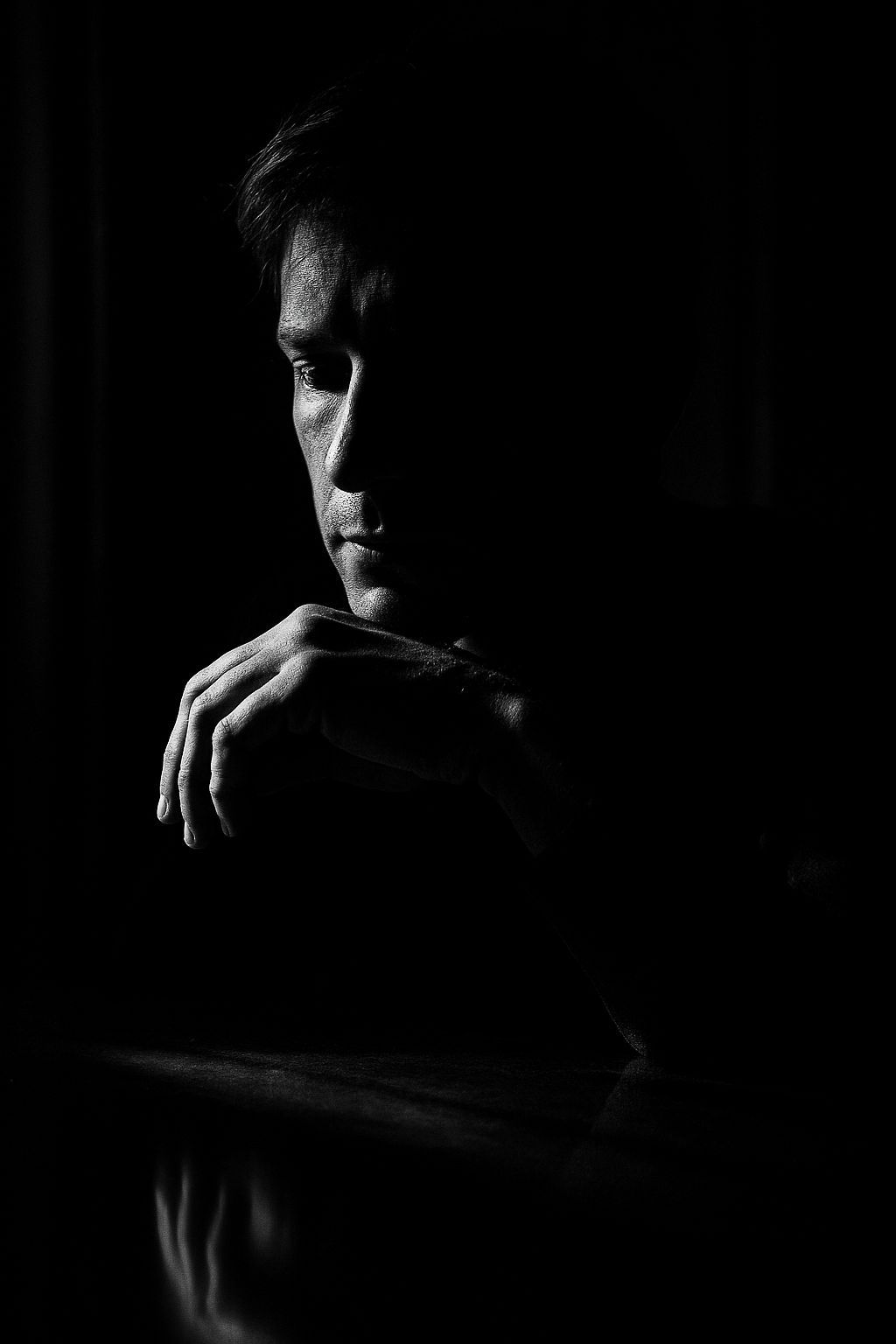
The world of photography is a boundless universe, a crossroads of technique, vision and sensitivity that, through the goal, captures the essence of reality and transforms it into emotion. For those who approach this fascinating art, the research of inspiration is a fundamental step, almost an initiatory rite that leads to confront the giants who have shaped the visual language through decades. It is not just about admiring images, but about immersing yourself in the stories, philosophies and innovations that made certain immortal photographers capable of affecting entire generations with just one shot. The “road” in this field, as is often said, is never straight, but a winding path made of study, experimentation and, above all, a continuous dialogue with the work of those who preceded us. The aim of this study is to go beyond the simple enumeration, to dissect the impact of some of the most famous masters, both worldwide and Italian, and to understand how their legacy can act as a springboard to develop its own, unmistakable artistic identity. From the monumental compositions of Ansel Adams to the psychology of portraits of Richard Avedon, from the “geography of the soul” of Luigi Ghirri to the raw honesty of Letizia Battaglia, each artist has contributed to define the boundaries and possibilities of photography, offering valuable insights not only on technique, but above all on vision. To deepen their work means learning to “see” the world with different eyes, to grasp the beauty in the daily life and to tell stories that resonate far beyond the click of the shutter. This journey into photographic art is an invitation to explore not only the works, but also the cultural context, the technical challenges and creative choices that have distinguished the path of these masters, providing a solid basis for anyone who wishes not only to take pictures, but to create images that speak, that interrupt and remain imprinted in collective memory, in a constant balance between respect for tradition and thrust towards innovation.
The Legacy of International Masters: Beyond the Simple Image
The pantheon of world photography is populated by figures who have not only documented their time, but have reinterpreted it, forging new visual and conceptual paradigms. Ansel AdamsFor example, he was not just a sublime landscaper, but a real architect of light and shadow. His revolutionary Zone System, a methodology to control the exposure and development of the film to obtain maximum tonal detail in black and white prints, has transformed landscape photography from simple documentation to artistic expression of the highest level. His images of American national parks are not only iconic for their beauty, but powerful statements on the value of nature conservation, a theme that still resounds today. Richard Avedon, for his part, he redefined portraiture and fashion photography with a minimalist and bold style. His subjects, often photographed on a neutral white background, revealed an unexpected psychological depth, bareing the soul behind the public face. From pop culture icons to workers, Avedon has shown that every face is a universe of stories, indelibly affecting the way we perceive portraits. Then there is Henri Cartier-Bresson, whose concept of “decisive motion” has become the mantra of street photography and photojournalism. His ability to capture the fleeting moment in which all compositional and narrative elements align in perfect harmony, often with a discreet Leica between his hands, elevated photography in the form of art that documents the human condition with poetry and immediacy. Its impact on photojournalism, in particular, is incommensurable, having co-founded the prestigious Magnum Photos agency. Werner Bischof, swiss photoreporter, has been able to pass from the compositional elegance of fashion to the ethical urgency of post-war documentation, showing remarkable versatility and human depth. Michael Grecco, with its dynamic work on celebrities and advertising campaigns, demonstrates how technical rigour can merge with creativity to produce images of great visual impact. Philippe Halsman he is famous for his vivid portraits and his “jumpologies”, where he invited subjects to jump, revealing their true essence at a time of joy or surprise. The Austrian Ernst Haas was a pioneer in the use of color, demonstrating that it could be used with the same depth and complexity of black and white. ♪, master of Hong Kong’s street photography, has been able to transform the daily scenes into operas of honorary art, playing masterfully with lights, shadows and geometric compositions. You're under Karsh, the Armenian-Canadian portraitist, is known for having immortalized some of the most influential personalities of the 20th century with a depth and almost sculptural intensity. Michael Kenna, with its long exposures of ethereal and minimalist landscapes, and Frans Lanting, with its naturalistic photography that often transcends the documentary to become a celebration of wild life, demonstrate how nature can be interpreted in infinite ways. The enigmatic Vivian Maier, a Chicago nanny whose thousands of unpublished rollers were discovered posthumously, revealed an extraordinary talent for street photography, an intimate and honest narrative of urban life. Mary Ellen Mark, with his empathetic photojournalism, he gave voice to the margins of society. Steve McCurry, with his famous Afghan girl, has demonstrated the universal power of a portrait of war. Paul Nick and Ami Vitale are among the greatest exponents of naturalistic photography and conservation, whose images are a powerful alarm cry for our planet. Finally, Mika Ninagawa and Tim Walker, in the fashion world, they push the boundaries of the fantastic and surreal, creating visual worlds that enchant and challenge conventions. These masters, though with different styles and subjects, share an unwavering dedication to their art and the ability to transform the ordinary into extraordinary, providing an inspirational treasure for anyone who wants to explore the unlimited potential of photography.
The Invaluable Contribution of the Giants of Italian Photography
Italy, cradle of art and culture, gave birth to photographers who left an indelible mark not only in the national panorama, but also on the international scene, enriching visual language with their unique sensitivity and their ability to interpret reality through personal and often deeply emotional lenses. Letizia Battaglia, an emblematic figure of Italian photography, was much more than a photoreporter; she was a relentless and courageous chronicler of social plagues and mafia violence that hallowed Sicily between the 1970s and 1990s. His shots in black and white, raw and very powerful, like that of the attack on Pier Santi Mattarella, are not only historical documents, but real visual complaints that have shaken consciences, revealing his unwavering faith in photography as a tool of truth and civil struggle. The Battle has shown that photography can be a political act and a cry of pain and hope. Franco Fontana revolutionized the landscape and aesthetics of color, transforming photography from mere reproduction of real to pure abstraction. His graphic compositions, often characterized by horizontal and vertical lines that divide the field in intense chromatic fields and satures, have opened new perspectives on landscape interpretation, demonstrating that color is not only an attribute, but a structural element and primary narrative. Its distinctive style is immediately recognizable and influenced generations of photographers to dare with form and color. Luigi Ghirri is considered one of the most influential masters of the Italian twentieth century, a thinker for images that explored the banality and poetry of the domestic and everyday landscape with an extraordinary delicacy and intellectual depth. Its shots, characterized by soft and unsaturated colors, often conceived in series or sequences, invite to a reflection on the meaning of the image, perception and relationship between man and the environment. Ghirri not only photographed what he saw, but questioned the process of seeing, leaving an immense conceptual inheritance. Alongside these giants, other talents have enriched the Italian landscape. Mimmo Jodice, with its evocative and often dreamlike images of Naples and the Mediterranean, has been able to explore the historical and mythological roots of the places, creating works of great emotional and aesthetic impact that have found space in the most important museums of the world. Ferdinando Scianna, the first Italian to enter the Magnum Photos agency, is a visual narrator who was able to merge the rigour of photojournalism with a deep sensitivity to the culture and traditions of the places he visited, from the Sicilian religious festivals to the portraits of celebrities. Oliviero Toscani, with its provocative and iconic advertising photography for Benetton, has demonstrated the communication and social power of the image, breaking patterns and stirring global debates. Among the contemporaries, Elena Datrino stands out for its project Blogger Faces, a reportage that captures the essence of key figures of the italian digital landscape, showing how photography can tell the evolution of the media and personalities that animate them. Ricky Delli Paoli and Fabio Porta, active also in the world of YouTube, exemplify the new generation of photographers who, in addition to producing quality images, share their technical and creative knowledge, democratizing learning and inspiring new levers. These Italian photographers, each in their own way, were able to capture the soul of a country full of contrasts and beauty, offering visions ranging from the rawest to the most refined abstraction, from social documentation to the celebration of culture, demonstrating the vitality and depth of Italian photography in the global context.
The Art of Finding Your Voice: From Inspiration to Innovation
After contemplating the works and philosophies of the great masters, both international and Italian, the aspiring photographer is faced with the most fascinating challenge: turning inspiration into innovation, finding his unique and distinctive voice in the vast choir of images. Imitation is a natural starting point, a way to understand the techniques and compositional logic of admired photographers. However, the true artistic path is to overcome the mere reproduction in order to reach an expressive form that reflects its interiority, its experiences and its worldview. This process requires careful self-analysis and constant experimentation. It means asking yourself not only “what do I want to photograph? ”, but also “why do I want to photograph it? ” and “how can I do it in a way that is authentically mine?” The first step is the critical analysis of the work of others: do not limit itself to saying “like”, but to investigate “why”. What compositional choices have been made? How was the light managed? What story is told and by what means? This analytical dissection allows you to break the style of the masters in its constituent elements, making them digestible and reusable as bricks for your creative construction. Subsequently, it is essential to devote themselves to personal projects, even small ones, that allow to explore themes that resonate with their own sensitivity. Whether it’s a reportage on your city, portraits of loved ones or abstract experiments, each project is an opportunity to put into practice new techniques and to sharpen your gaze. Failure, at this stage, is not a mistake, but a precious lesson: it is through attempts and errors that you understand what works and what not for your expressiveness. Another crucial element is the constant research of novelty, not only technological, but conceptual. In an age of visual overload, being original does not necessarily mean inventing something ever seen, but rather re-interpreting the existing with a fresh and personal perspective. This can mean working with unusual lights, exploring unexpected perspectives, or combining different genres in innovative ways. Participation in workshops, courses and photo circles can provide external stimuli and valuable feedback from colleagues and mentors, helping to overcome creative blocks and refine their technique. It is also essential to learn to accept and interpret constructive criticisms, using them as tools of growth. Finally, finding one's voice also means embracing one's imperfections, its peculiarities, what makes one's gaze unique. Sometimes, it is precisely in that seemingly insignificant detail, in that corner of the world that only we are able to see and capture, that resides the true essence of our style. The journey from inspiration to innovation is never completed; it is a dynamic process of learning, learning and rediscovering, a continuous exploration of the boundaries of its creativity and its ability to communicate through images. Only so, photography stops being a simple hobby to become an authentic extension of its being.
Photographic genres: Exploring the Different Creative Cams
Photography, in its boundless versatility, branches in countless genres, each with its own rules, its own challenges and its expressive potential. Understanding these creative paths is essential for anyone who wants to specialize or simply explore the different facets of this art, drawing from the masters who have defined its boundaries. The Street photographyFor example, it is the art of capturing everyday life and unexpected moments in public spaces, often without direct interaction with subjects. Masters such as Henri Cartier-Bresson and Vivian Maier have demonstrated how the attentive eye and readiness of reflections can transform a fragment of reality into a powerful visual narrative, seizing the "soul" of the city and of the human condition with authenticity. It requires discretion, acute observation and deep sensitivity for the moment and composition. The Photo portraitInstead, he focuses on the human figure, trying to capture not only physical appearances, but personality, emotion and inner essence of the subject. Artists like Richard Avedon and Yousuf Karsh were masters in creating images that transcend the mere resemblance, digging into the psychology of their subjects. Whether in the study with controlled lights or in a natural environment, the portrait is a dialogue between photographer and subject, a deep investigation into identity. The Landscape Photography, made iconic by Ansel Adams and Michael Kenna, celebrates the beauty and grandeur of nature, from mountain panoramas to marine scenes, often with a manic focus on composition and light management. This genus may vary from realistic representations to more abstract or spiritual interpretations of the natural world, often with a subtext related to environmental conservation. The Photojournalism and Documentary Photography, practiced by figures such as Letizia Battaglia and Steve McCurry, have the crucial task of telling stories, events and social issues with honesty and impact. These images are historical testimonies and often complaints, able to influence public opinion and promote change. It requires courage, integrity and a deep understanding of the context in which it operates. The Fashion Photography, embodied by Richard Avedon and Tim Walker, goes beyond the simple presentation of clothes, creating fascinating and often surreal visual worlds that reflect cultural trends and aesthetic aspirations. It is a field where visual creativity meets marketing, constantly pushing the boundaries of innovation. The Naturalistic and Wildlife Photography, with masters such as Frans Lanting and Paul Nicklen, he devoted himself to catching animals in their natural habitat and ecosystems. It requires extreme patience, naturalistic knowledge and often specialized equipment, as well as a deep ethics in respect of animals and the environment. Finally, the Fine Art and Conceptual Photography, explored by Franco Fontana and Luigi Ghirri, focus on personal expression and the investigation of abstract ideas or concepts, rather than on the mere representation of reality. Here, photography becomes a means to explore philosophy, psychology or politics, challenging expectations and inviting the viewer to a deeper reflection. Each genre, with its peculiarities, offers a vast area of exploration and a unique opportunity for the artist to express his vision of the world.
Tools and Techniques: From the Dark Room to Artificial Intelligence
The path of photography is inherently linked to technological evolution, a symbiotic relationship that has constantly redefined the expressive possibilities and the role of the photographer. From the primordial dark rooms to sophisticated artificial intelligences, tools and techniques have always played a crucial role, while remaining subordinate to artistic vision. The masters of the past, like Ansel Adams, have not only used the available technology, but also developed it, as in the case of his famous Zone System. This method was not a simple set of rules, but a real philosophy of control of the whole process, from the measurement of light on the scene to the final printing in the darkroom, allowing unprecedented tonal accuracy in its black and white images. The photographic film and the development in the darkroom have been for over a century the heart of photography, teaching photographers the value of patience, precision and anticipation, given the limited number of shots and the impossibility to see the immediate result. The advent of digital has marked a Copernican revolution. Digital cameras, initially seen with skepticism by many purists, quickly exceeded the limits of the film in terms of sensitivity, versatility and immediacy. The ability to take thousands of photos, view them instantly and edit them with software like Adobe Lightroom and Photoshop has democratized photography, making it accessible to a wider audience and pushing the boundaries of post-production creativity. Today, a photographer can switch from a RAW shot, which captures the maximum amount of information, to a final print or online sharing, with almost total control over every aspect of the image. The lenses, accessories, lighting systems (from studio flashes to portable LEDs) have multiplied and refined, offering a range of technical possibilities that was unthinkable only a few decades ago. The mobile photo, with the integration of increasingly performing cameras in smartphones, has further broken down barriers, transforming billions of people into potential image creators. Mobile editing apps allow you to apply filters, correct exposure and even make complex changes with few touches, making the entire creative chain extremely fluid and immediate. The future of photography, however, is already looking beyond. TheArtificial Intelligence (AI) is emerging as a transforming force, not only in the optimization of images (reduction of noise, improvement of focus, recognition of scenes) but also in the generation of completely new images, so-called deepfakes or works created by text-to-image AI as DALL-E and Midjourney. This raises fundamental ethical and creative issues: what will be the role of the photographer when machines can create indistinguishable images from reality or even fantastic worlds? It is crucial that photographers do not limit themselves to undergoing these innovations, but embrace them critically, using them as new brushes or new canvases for their own expression. After all, technology has always been a means, never an end. The true art lies in the vision and the ability to tell stories, and the tools, however powerful, are at the service of that intent. Understanding the evolution of instruments and mastering techniques, both analog and digital, is essential for the modern photographer, but the real challenge remains always to instill the image with meaning and soul, regardless of the technological complexity behind it.
Professional Photographer: Building a Sustainable Business and a Strong Brand
In the digital age, where millions of people take photos every day, distinguishing themselves as a professional photographer requires much more than just technical skill or artistic vision. It involves the ability to build a sustainable business, to define a recognizable personal brand and to navigate an increasingly competitive market. For those who aspire to make photography a profession, or for those seeking to hire a professional, it is essential to understand the dynamics that support this sector. On the side of the photographer, the creation of a portfolio impeccable is the starting point. It is not only a matter of showing your best images, but of curating a selection that communicates stylistic coherence, technical skill and your specialization (e.g. weddings, corporate portraits, product photography, photojournalism). A well-structured portfolio must tell a story, that of the photographer and his vision, and must be easily accessible online, through a well-designed professional website and active profiles on relevant social media (Instagram, LinkedIn, Behance). The definition of a niche it's just as crucial. Trying to be everything for everyone is a recipe for mediocrity. Specializing in a specific sector allows you to refine your skills, build a reputation as an expert and attract customers who look for exactly that type of service. This leads to the creation of a personal brand strong, that goes beyond the logo or the name: it is the set of values, style, reliability and professionalism that the photographer projects. The marketing and promotion are ineludible aspects. This includes not only online presence, but also networking, participation in industry events, collaboration with other professionals and, for many, the creation of educational or inspiring content (blog, YouTube video) that demonstrate its competence. From a commercial point of view, it is essential to understand price policies, know how to prepare clear contracts that protect both the photographer and the customer, and professionally manage relationships with customers, from the first interaction to the delivery of the final job. Understanding copyright and intellectual property is also fundamental to protect their work. For customers looking to hire a photographer, platforms like Five-, Hello, Jobby and Addlance, mentioned in the original article, are useful tools, but require conscious use. It is important not only to rely on the price, but to carefully evaluate the portfolio, read reviews, check the experience in the type of photography desired and, above all, establish a good communicative feeling with the professional. A good photographer is not only a technician, but a creative partner who knows how to listen to customer needs and translate them into effective images. Other ways to find professionals include category associations, wording, art galleries or cultural events. Choosing a photographer means entrusting a precious moment or a crucial image to an artist; investing time in research and selection is a step that largely repays, ensuring results at the height of expectations and a fruitful collaboration that goes beyond the simple exchange of money, enriching both parts with a lasting and significant value.
Ethics and Liability: The role of the Photographer in the Contemporary Society
In the age of over abundance of images and their instantaneous diffusion, the role of the photographer is charged with unprecedented ethical and social responsibility. Each shot is no longer a neutral act, but a statement, an interpretation, sometimes a manipulation that can affect perceptions, opinions and even the course of events. Reflection on ethics and responsibility is a fundamental pillar for the modern photographer, both a photo-journalist documenting conflicts, a portraitist investigating identity, or a commercial photographer who conveys consumer messages. In photojournalismThe ethical question is particularly acute. Masters such as Werner Bischof and Letizia Battaglia have worked in contexts of great suffering and injustice. Their choice to document these realities raises crucial questions about the veracity of the image, the privacy of the subjects, the informed consent and the potential emotional impact both on the subjects portrayed and on the public. Manipulate an image, even slightly, can alter the truth and undermine confidence in journalism. Debates of the European Parliament photo truth is more alive than ever, especially with the ease offered by digital post-production tools. The photographer has the duty to be honest and transparent about any alteration of the image that can affect its original meaning, especially in documentary contexts. Beyond the truth, there is the question of respect and dignity of subjects. Whether it's vulnerable people, victims of tragedies or simple walkers in street photography, the photographer has to question the implications of his shot. What is the ultimate end of this image? Is there a less invasive or more respectful alternative? The boundary between necessary documentation and exploitation is subtle and requires a constant self-critical. In the field of commercial and advertising photographyEthics manifests itself in the social responsibility of the image. The photographs shape ideals of beauty, success and well-being, affecting behavior and aspirations. The photographer plays a role in promoting an inclusive and diverse representation, avoiding harmful stereotypes or misleading messages. Oliviero Toscani, with his controversial campaigns for Benetton, demonstrated the power of photography in raising social and political issues, but also triggered debates on the ethical implications of this approach. The advent ofArtificial Intelligence introduced new and complex ethical challenges. The ability to create hyperrealistic images of events never happened or of non-existent people opens up unpublished scenarios of disinformation and manipulation. The photographer, now more than ever, must be a guardian of visual truth, an educator who helps the public discern between reality and fiction, and an artist who uses technology responsibly for creative enrichment, not by deception. The responsibility of the photographer is not limited at the time of shooting or post-production, but extends to the diffusion of his works and to the dialogue that they generate. Being a photographer in the contemporary world means being a conscious witness, an honest narrator and a critical custodian of reality, committed to using the extraordinary power of the image to contribute to a more informed, empathetic and just society, without ever underestimate the profound impact that every pixel can have on the world.
The Infinite Photo Discovery Trip
The journey into the world of photography, through the works and philosophies of his masters, is an endless odyssey, a continuous process of learning, discovery and rediscovery. From the technical rigour of Ansel Adams to the deep humanity of Letizia Battaglia, each artist left us not only iconic images, but also precious lessons on vision, persistence and ability to transform the chaos of the real into meaningful forms of art. We have explored how inspiration is not a simple act of imitation, but a trampoline for innovation, pushing us to find our unique voice in an increasingly large choir. We have dissected the different genres of photography, understanding how each creative road offers unique challenges and rewards, and how mastery of specific techniques is crucial to expressing its intentions at best. The evolution of the instruments, from film to artificial intelligence, has shown us how technology is a powerful ally, but also an ethical battlefield, requiring the photographer to be not only an expert technician, but also a guardian of the truth and a responsible narrator. Finally, we outlined the path for those who want to transform passion into a profession, stressing the importance of building a solid brand and navigating the market with awareness and integrity. In this constantly evolving world, where every day billions of photographs are taken, the true distinction does not lie in technical perfection fine to itself, but in the ability to instill soul and meaning in their images, to tell stories that resonate with human experience and to touch the heart and mind of spectators. Today's photographer is called to be a keen observer, a sensitive interpreter and an effective communicator, constantly in dialogue with his own environment, culture and interiority. Whether you are a beginner looking for your style or a professional who aims to redefine your path, the message is clear: never stop exploring, experimenting and questioning. Every new shot is an opportunity to see the world with new eyes, to capture a fleeting emotion, to reveal a hidden truth. Photography is a living art, a perpetual dialogue between light and shadow, between real and imagined, offering endless possibilities of expression for anyone who has the courage to look, feel and dare. Whether this article is a guide and encouragement to undertake or continue with passion this infinite and rewarding journey into photographic discovery, transforming every moment into a work of art destined to last.


