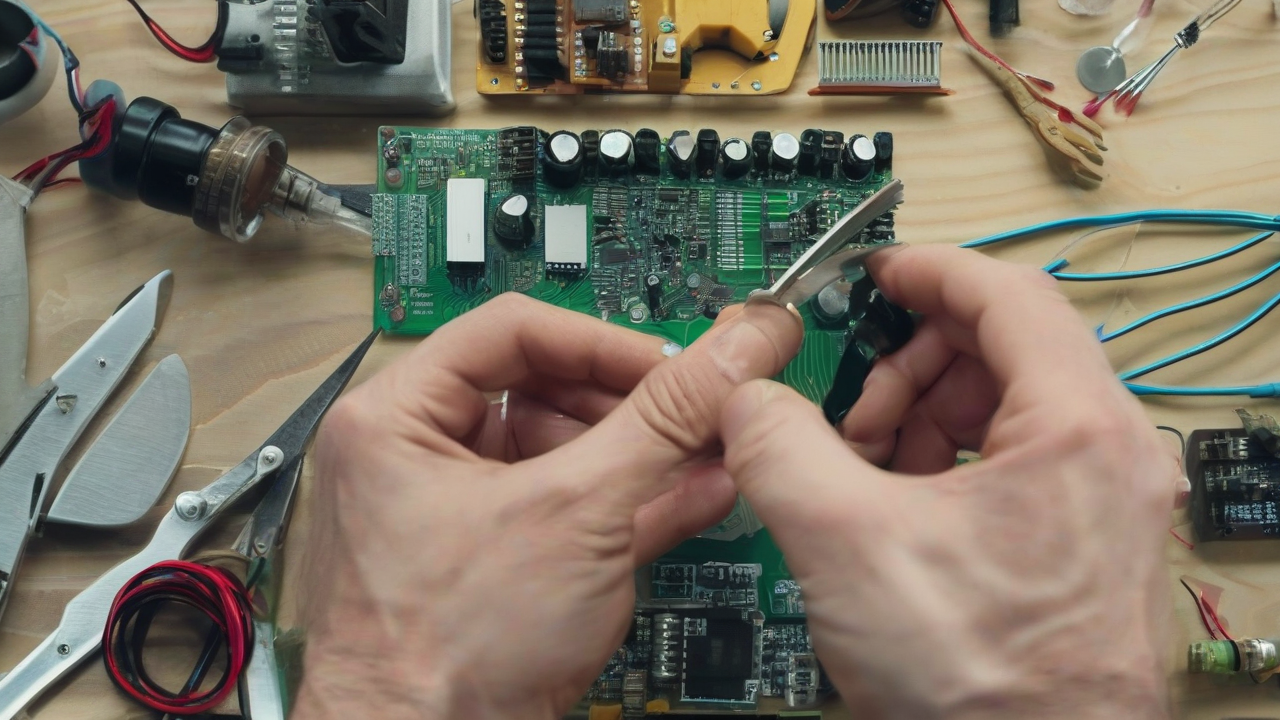
When an electrodomestic unexpectedly stops working, the first reaction is often frustration. If the warranty is now a distant memory and is familiar with electronics, the idea of trying a DIY repair can turn into an interesting and rewarding challenge. This path, however, requires attention, precision and a good dose of caution, since it will work with delicate components and, sometimes, with instruments that reach high temperatures or directly with the electric current.
It is essential to underline immediately that the repair of an electronic card is not a trivial operation and does not always guarantee success. In some circumstances, especially in the presence of extensive damage or significant burns on the board, the complete replacement of the component or the whole appliance could prove to be the most sensible and convenient option. If, despite these warnings, you are ready to test your skills, here is a detailed guide to face repair.
Warning and Security Before Starting
Before diving into practice, it is essential to devote a moment to safety. The described operations involve the manipulation of electrical circuits and the use of tools that can reach temperatures above 300 degrees Celsius. For this reason, it is highly recommended to proceed only if you have full awareness of the actions that are taking place or if you are flanked by an expert and competent person. Improper execution of these steps may result in risks of personal injury or damage to the appliance and the surrounding environment. The responsibility for any inconvenience resulting from incorrect application of the instructions is entirely on the operator.
Preparation: Disassembly and Remove Card
The first crucial step to start any intervention on an electronic card is to ensure that the device is completely disconnected from the power supply. This elementary precaution is vital to prevent electrical shocks. Once the plug is unplugged, the device can be dismantled.
During the disassembly phase of the cover or external shell, it is highly advisable to document each passage with photographs taken by different angles. The use of a smartphone or tablet to capture the sequence of screws, frames and connections will prove valuable at the time of reassembly, avoiding errors and facilitating the process. Once the external envelope is removed, you will have to locate the electronic card on which to intervene. The boards can be fixed in various ways: some are simply recessed, requiring the pressure of a pin or the application of a slight force to be lifted, others are blocked by screws that will be removed with a proper screwdriver.
In-depth Visual Inspection
With the electronic card between the hands, the next step is a meticulous visual inspection. Often, already to the naked eye, it is possible to identify significant abnormalities that indicate the cause of malfunction. Look carefully:
- Piste Bruciate: Printed circuit signs that appear blackened or damaged. If a burn completely breaks the communication between the components, the repair could be complex or even impractical, making it more convenient to replace the entire board.
- Saused or Damaged Components: Inflated or burst capacitors, blackened resistors, chips with burn marks or pins detached from the base. Even a visibly out of place or corrupt component can be the root of the problem.
- Cold or cracked welding: Especially in PTH type cards (Pin Through Hole), where components cross the board and are welded on the lower side, it is essential to carefully examine welding. A welding that appears opaque, granulous or with small cracks may indicate a faulty connection.
Remember to inspect both sides of the board: the upper one, where most components are mounted, and the lower one, where welds and circuit tracks are located.
Gain Diagnosis with Specific Tools
If visual inspection has not revealed any obvious anomaly, it is likely that the problem lies in an electronic component that simply stopped working internally. To proceed with a more thorough diagnosis, there are several approaches and tools:
Search for the Electric Scheme
A valid help at this stage is the consultation of the electrical scheme of the device. This technical document illustrates the path of the current within the board and the layout of the components, facilitating the understanding of the overall operation. You can try to find the electrical schematic online, doing a search on a search engine with terms like “[mark and device model] datasheet” or “[mark and device model] schematic”.
Identification of Critical Components
Although any component may fail, some elements are more subject to yields. The input fuses, for example, are designed to burn and interrupt the circuit in case of overcurrent. The capacitors, especially the electrolytic ones of great capacity, are often sources of problems, manifesting swellings or losses. However, these are only general indications; a precise diagnosis requires the use of adequate instrumentation.
Use of Multimeter (Tester)
The multimeter, or tester, is the indispensable tool for the diagnosis of electronic circuits. It allows to measure various electrical parameters, such as voltage (Volt), current (Ampere), resistance (Ohm) and, in some models, also the capacity (Farad) of capacitors. Its use is relatively simple but requires precision:
- Setting: Select the correct mode on the multimeter based on the measurement type (e.g., Ω for resistance, V for voltage, A for current or the diode symbol for continuity).
- Positioning of the Toes: Place the two heads of the tester on the two components to check.
- Reading and Interpreting: Read the displayed value on the display. If the measured value is close to the nominal value (often printed on the component itself or indicated in the schematic), the component is probably working. A significant deviation or lack of reading indicates a failure.
It is important to note that checking each single component on complex cards can be a long and laborious process. Familiarity with the most critical components and the ability to interpret the schematic can accelerate diagnosis.
Replacement of the Damaged Component
Once you have identified the fault component thanks to the multimeter, you can proceed with its replacement. This step requires the use of a welder and other accessories:
Drying and Cleaning
The first step is to deselate the faulty component. To do so, you use a welder to heat the weld and a vacuum cleaner (or disabling pump) to remove the molten pond. It is essential to work gently to avoid damaging the slopes of the printed circuit board. After removing the component, it is good practice to clean the area from any welding or fluxing residues.
Purchase of the Substitute
It is essential to obtain a new component that has the same characteristics as the fault. For resistance, for example, you will need to buy one with the same value in Ohm. The specifications (value, tolerance, power) are usually printed on the body of the component itself or available through the schematic and datasheet. Components such as capacitors, diodes, transistors and integrated circuits require an exact match of type and value.
Welding of the New Component
With the new component available, weld is proceeded. Using a tin and tin/pipe wire welder, fixes the new element to the board. It is important that the welding is bright, smooth and provides good electrical contact, without bridges with adjacent slopes. Welding techniques vary slightly depending on whether they are working on PTH cards (Pin Through Hole), where the feet cross the board, or SMD (Surface Mounting Device), where the components are welded directly on the surface.
Final considerations and When To Address a Professional
The DIY repair of an electronic card, as you could guess, is not an undertaking to be underestimated. It requires patience, specific tools and a good understanding of the basic principles of electronics. However, with the right dedication, it can turn into an extremely rewarding experience that allows to extend the useful life of household appliances and save money.
If, despite all efforts, insurmountable difficulties are encountered, or if the extent of the damage exceeds its competence, it is always wise to turn to a specialized technician. There are numerous electronic shops and repair centers that offer services of this type. An online search for “electronic card repair” followed by the name of your locality can help you locate a professional nearby.


