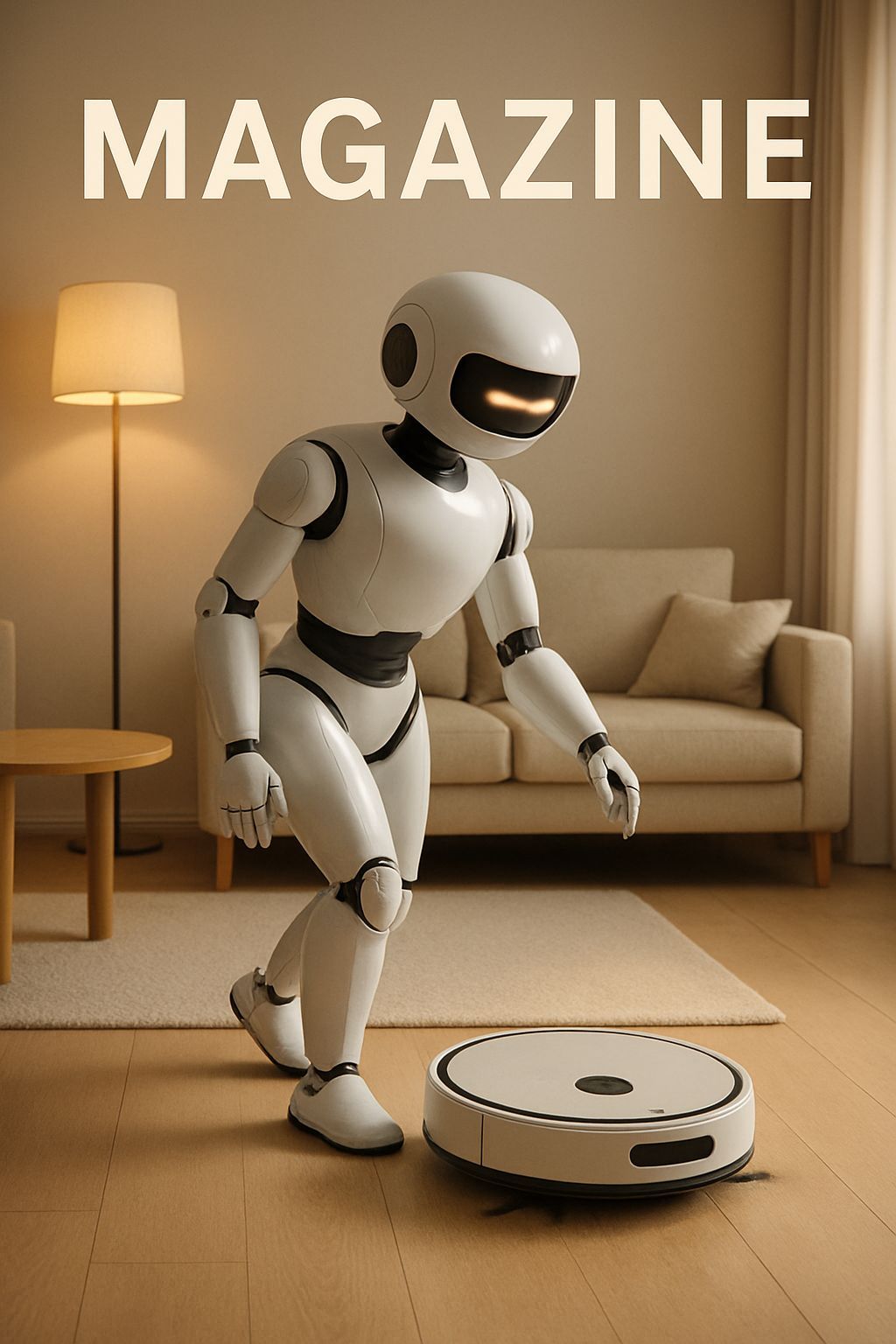
The constant ballet of everyday life, between work, family and personal commitments, often relegates household cleaning to an ungrateful task, a voice always present on the list of things to do that steals precious time and, let's face it, energies. For decades, the traditional vacuum cleaner and the rag were our faithful allies in this battle against dust, dirt and allergens. But what would happen if this heavy assignment could be delegated to a silent, tireless and incredibly intelligent assistant? Welcome to the era of vacuum robots, devices that have redefined the concept of domestic cleaning, turning it from a manual corvée to an automated, efficient and almost invisible operation. The market, in continuous evolution, offers a myriad of solutions, from the most basic models to those equipped with the most cutting-edge technologies, able not only to aspire, but also to wash, map and interact with the ecosystem of your smart home. The rise of these silent little heroes is not a simple technological trend, but a real revolution that promises to free time and offer more salubrious environments, without having to move a finger. It is no longer a luxury for a few, but an accessible solution that brings innovation and practicality to everyone's homes. In this article, we will immerse ourselves deeply in the fascinating world of vacuum robots, exploring their evolution, the technologies that animate them, the features that distinguish them and how to choose the most suitable model for their needs, to understand how these devices integrate perfectly into the ecosystem of modern smart home, projecting us towards a future where cleaning is synonymous with intelligence and automation. The goal is to provide a complete and detailed guide, which goes beyond the simple promotion of a single product, to offer a broad and in-depth perspective on a category of devices that is radically changing our approach to home management, making us rediscover the pleasure of returning to an always impeccable environment.
no
From Manual Work to Intelligent Automation: The Ascese of Vacuum Robots
no
For generations, the image of domestic cleaning was inherently linked to a tiring activity, a weekly commitment that required time, energy and a good dose of elbow oil. The introduction of traditional vacuum cleaners represented a first, significant step towards lightening this load, but the need to manually push the appliance, move furniture and empty containers remained an obstacle for many. It is in this context that, at the beginning of the new millennium, the first vacuum robots have made their appearance, promising a radical liberation from these impairments. Initially seen with skepticism, almost as expensive toys or niche solutions, these pioneers of domestic automation were often limited in their effectiveness, with rudimentary navigation systems that led them to slam against obstacles and to leave unclean areas. However, the potential was clear: a device that could independently clean while the owners were at work or devoted themselves to more rewarding activities. Over the past two decades, this vision has become a tangible and accessible reality. The technological evolution has transformed these luminaires from simple “robots to case” to sophisticated intelligent cleaning systems, capable of mapping environments, avoiding obstacles with millimetre precision and learning the habits of the house. They stopped being a curiosity to become a pillar of the modern house, an investment that repays in free time and comfort. Their rise is not only an engineering triumph, but a symbol of how technology can really improve the quality of life, delegating repetitive and tiring tasks to allow us to focus on what really matters. They opened the way to an entire category of smart devices for the home, demonstrating that automation, if well designed, can be a valuable ally in everyday management. The experience of use has become increasingly intuitive, with dedicated apps and vocal integrations that make programming and control a children’s game, further approaching the dream of a house always impeccable without any effort.
no
Heart and Brain: Technology Behind Navigation and Intelligent Mapping
no
The real magic that allows a vacuum robot to operate effectively lies in its navigation and mapping system. It is no longer a simple random wandering for the room, but a calculated and optimized path that ensures complete coverage and unprecedented efficiency. The first models relied on infrared sensors and basic motion logic, which were often in unpredictable paths and forgotten areas. Today, the technological landscape has radically changed, with the introduction of advanced systems that give robots a real “space intelligence”. The most common and effective system is undoubtedly the LiDAR (Light Detection and Ranging). A rotating sensor placed on the top of the robot emits a laser that scans the 360-degree environment, creating a detailed and precise map of the house in real time. This technology allows the robot to navigate surgically, identify furniture, walls and obstacles, plan the most efficient route and even operate in dark environments. Another widespread technology is VSLAM (Visual Simultaneous Localization and Mapping), which uses a camera to “see” the environment and motion sensors to track its location and build a map. Although slightly less precise than the LiDAR under poor lighting conditions, VSLAM is often cheaper and allows robots to be more compact. There are also systems based on gyroscopes and accelerometers that, while offering a less detailed mapping, allow a more methodical approach to random navigation. Regardless of specific technology, capacity map the environment it's crucial. Once the map is created, the user can interact with it through the dedicated app: it is possible to define “no-go” zones (where the robot does not enter), virtual walls, or to program the cleaning of specific rooms. Some more advanced models even offer the possibility to store multiple maps, ideal for multi-storey houses. The smart Exploration 2.0 technology, mentioned in the original article for the Rowenta X-Plorer Series 40, is an example of how these systems integrate different sensors (such as anti-coating and anti-fall sensors) to ensure safe and seamless navigation, avoiding collisions with precious furniture or falling from the stairs. This level of sophistication not only improves the effectiveness of cleaning, but also extends the life of the robot itself and protects the domestic furnishings, making the investment even more profitable and the experience of use without frustrations.
no
Beyond Suction: Functions Multifunction for Full Cleaning (Aqua Force and not only)
no
The evolution of vacuum robots has not been limited to the only ability to navigate intelligently; these devices have become real multifunctional cleaning centers, able to go far beyond the simple removal of dust. The search for deeper and more complete cleaning has led to the integration of innovative features that meet different needs, transforming a simple vacuum into an ally inclusive for home management. One of the most appreciated innovations is the function of washing floors, like the Aqua Force system mentioned for Rowenta X-Plorer Series 40. These robots are equipped with a water tank and a microfiber cloth that is moistened and crawled on the floor after suction. Some more advanced models offer electronic control of the water flow, allowing to adjust the moisture according to the type of floor or the degree of dirt, and sometimes they also integrate a vibrating system to simulate manual rubbing and remove more stubborn spots. Although they do not replace a deep cleaning with bucket and mop, they are ideal for daily maintenance, keeping the floors fresh and igienized. Another crucial aspect, especially for those who live with pets, is the ability to manage hair. Robots such as Rowenta X-Plorer Series 40, with its efficient motorized brush and two side heads, are designed to effectively collect short and long hair, hair and other hard-to-remove particles. Many pet-specific models include anti-growth brushes, made of rubber or with a special design to prevent the accumulation of hair around the axis, reducing the need for frequent maintenance. The presence of hEPA filters (High-Efficiency Particulate Air) has become a standard for many medium and high-end robots. These filters are able to capture microscopic particles, such as dust mites, pollen, animal hairs and mold spores, making the air cleaner and alleviating the symptoms of allergies and asthma. This is a fundamental feature to ensure not only clean floors, but also a healthier home environment overall. Finally, the last frontier of automation is represented by automatic emptying bases. These accessories, often sold separately or included in premium versions, allow the robot to independently download the dust collected in a sealed bag inside the base, prolonging the cleaning autonomy for weeks and minimizing human interaction. This innovation eliminates the discomfort of having to empty the dust container after each cleaning cycle, further raising the level of comfort and automation offered by these amazing devices.
no
Autonomy and connectivity: Intelligent Battery and Hand Flow Control
no
The effectiveness of a vacuum robot is inherently linked to its autonomy and its ability to interact with the user intuitively. The battery, the silent engine of these technological wonders, has made giant steps in terms of capacity and energy management. Most modern robots are equipped with lithium ion batteries, the same technology that feeds our smartphones and laptops. These batteries offer a high energy density, allowing robots to operate for prolonged periods, often exceeding two hours of autonomy with a single charge, such as the 2 hours and 30 minutes mentioned for the Rowenta X-Plorer Series 40. This duration is widely enough for cleaning medium-sized apartments and houses. What distinguishes the most advanced robots is not only battery life, but also intelligence in its management. Functions like the automatic charging and cleaning restoration are now standard: when the battery is about to run out, the robot returns autonomously to its charging base and, once loaded enough, recovers cleanliness exactly from the point where it had stopped. This ensures that even larger homes are completely clean, without the user having to worry about anything. Parallel to autonomy connectivity radically transformed the experience of use. The vast majority of medium and high-end vacuum robots is now compatible with dedicated apps (such as the Rowenta Robots app, available for iOS and Android), which allow complete remote control. Through these apps, you can start or pause cleaning, schedule cleaning cycles for specific days and times, define exclusion zones or areas to be cleaned intensively, monitor the battery status and consult the cleaning maps to see where the robot has already operated. Connectivity often extends to integration with voice assistants like Google Assistant and Amazon Alexa. This means that you can start or stop the robot simply with a voice command, a level of comfort that further elevates the smart experience. This combination of long autonomy and intelligent control makes the robots vacuum not only efficient, but also incredibly practical and suitable for modern lifestyle, allowing users to delegate cleaning without sacrificing control or flexibility.
no
Choose the Ideal Companion: A Guide to Purchase for Every Exemption
no
The wide range of vacuum robots available on the market can make the model more suitable for a real challenge. To navigate this sea of options, it is essential to carefully consider your specific needs and budget. A conscious purchase begins by understanding what characteristics are really important for your home and your lifestyle.
no
The first factor to consider is the budget. Prices can vary enormously, from basic models under 200 euros to high-end devices that exceed 1000 euros. Establishing a limit of spending helps to circumscribe research. Generally, a higher budget allows access to more advanced navigation technologies (LiDAR), greater functionality (washing, automatic emptying) and better building quality.
no
Subsequently, evaluate the size and complexity of your home. For small apartments or single rooms, a model with gyroscopic navigation or IR sensors could be enough. For large or multi-storey houses, a robot with LiDAR or VSLAM mapping and the ability to save multiple maps is almost indispensable to ensure efficient and complete cleaning. Also the presence of thick carpets or high thresholds is relevant: some robots are able to overcome obstacles of a couple of centimeters, while others struggle.
no
A crucial aspect is type of floor. If you mainly have hard floors (floors, parquet, laminate), the washing function (such as the Aqua Force) could be a huge advantage for daily cleaning. If you have many carpets, it is important that the robot has a good suction power and, ideally, an automatic suction enhancement function when detecting a carpet. Also, check the compatibility of brushes: for carpets, brushes with bristles are more effective, while for hard floors and animal hairs, rubber brushes or multi-surfaces are preferable to avoid scratches and tangling.
no
The presence of pets allowed is another decisive factor. Long and short hairs require robots with specific brushes, often in rubber or with anti-great design, and a high suction power. HEPA filters are a must for those suffering from animal allergies, as they capture finer particles and allergens.
no
Do not underestimate additional features. Integrated washing, automatic emptying, compatibility with voice assistants and the ability to create exclusion zones or clean specific areas via app greatly increase the convenience of use. Think about how much you are willing to interact with the robot: if you want almost total automation, investing in premium functions as automatic emptying can make a big difference.
no
Finally, consider the brand reputation and reviews. Consolidated brands like Rowenta, iRobot, Roborock, Ecovacs and Xiaomi often offer good after-sales support and software updates. Read detailed reviews and compare other users’ experiences can provide valuable insights into the durability and real effectiveness of the product over time. Taking into account these elements, you will be able to locate the vacuum robot that not only meets your expectations, but which perfectly integrates into your daily life, making cleaning a distant memory.
no
Smart Home Integration: The Robot Vacuum as the Piece of the Connected Puzzle
no
In the domotic era, the house is no longer a simple set of rooms, but an interconnected ecosystem where each device works in synergy to optimize comfort, safety and efficiency. In this scenario, the vacuum robot evolved from autonomous gadgets to essential component of the smart home modern. Its ability to integrate with other devices and platforms elevates the experience of use to a higher level of automation and comfort, allowing a management of the house even more intelligent and seamless.
no
The core of this integration is often theapp dedicated of the manufacturer, which acts as a bridge to the wider smart ecosystem. Through the app, not only you control the robot, but you can also create complex scenarios. For example, you can set up a routine that starts cleaning as soon as the last person comes out of the house (relevated by geolocation of the smartphone or motion sensors connected to a smart hub), and that interrupts or pauses if someone unexpectedly returns.
no
Compatibility with voice assistants like Amazon Alexa and Google Assistant is another pillar of smart integration. With a simple voice command, you can ask the robot to start cleaning, go back to the base, or clean a specific room. “Alexa, ask [the robot name] to clean the living room” is now a common phrase in many smart homes. This eliminates the need to take the smartphone in hand, making the interaction even more natural and immediate.
no
In addition, many vacuum robots support automation platforms as IFTTT (If This Then That) or smart hub proprietary systems (such as Samsung SmartThings, Apple HomeKit in some cases, or Zigbee/Z-Wave via bridge). This opens a world of possibilities to create custom automations: for example, if the input door sensor detects that it was closed and the alarm is inserted, the robot can start cleaning. Or, if the air quality sensor detects an increase in pollen, the robot can be programmed to perform extra cleaning.
no
Integration with smart home is not only about convenience, but also resource optimization. A robot that communicates with a smart thermostat, for example, could ensure that the house is warm only when people are present and that cleaning takes place in their absence, reducing energy waste. This synergy between devices transforms cleaning from an isolated task to a harmonic part of a larger domestic system, making the house not only cleaner, but also smarter and responsive to the needs of its inhabitants.
no
Maintenance and Duration: How to Guarantee a Long Life at Your Robot
no
Buying a vacuum cleaner robot is a significant investment in comfort and leisure, and as every investment, requires proper care to ensure longevity and efficiency over time. Regular and conscious maintenance not only extends the life of the device, but also ensures that it continues to operate to the maximum of its performance, keeping your home impeccable. Ignoring these simple steps can lead to a decrease in performance, premature failures and ultimately the need to replace the robot before time.
no
The first and most obvious maintenance task is the dust container emptying. Models with automatic emptying also need a periodic change of the bag in the base. For traditional models, it is advisable to empty the tank after each cleaning cycle, or however when it is full, to avoid overloads of the engine and maintain an optimal suction power.
no
The cleaning of brushes it's just as critical. Hair, animal hair and fibers can easily cling around the main and lateral brushes, reducing its effectiveness and stressing the engine. Many robots include a small cleaning tool with a blade to cut bored hair. It is advisable to check and clean brushes at least once a week, or more often if you have pets. Side brushes, in particular, can wear or damage and are often replaceable.
no
I filters, in particular HEPA, are essential for air quality and must be cleaned regularly and replaced periodically. Some filters can be shaken or brushed to remove the accumulated dust; others, if washable, can be rinsed under running water (make sure they are completely dry before being put back into the robot). The replacement frequency varies depending on the model and use, but it is generally recommended every 3-6 months.
no
Don't forget sensors. The vacuum robots rely on a multitude of sensors (antillision, anti-fall, LiDAR, VSLAM) to navigate. If these sensors are covered by dust or dirt, navigation accuracy can be compromised. Clean them gently with a soft and dry cloth.
no
Finally, the battery. Although lithium-ion batteries are robust, their performance decreases over time. Avoid leaving the unloading robot for long periods and follow the manufacturer's instructions for charging. In case of significant decrease in autonomy, the battery is often a replaceable component. Keeping updated robot software, if available, can also improve performance and fix any bugs, ensuring that your home assistant continues to work as new for many years.
no
The Future of Domestic Cleaning: Artificial Intelligence and Advanced Robotics
no
The evolution of vacuum robots, already remarkable, is far from finished. The horizon of domestic cleaning is constantly expanding, with the integration of artificial intelligence (AI), advanced robotics and increasingly sophisticated sensors that promise to further transform these devices, making them even more autonomous, efficient and integrated in our daily life. The future reserves us robots capable not only of cleaning, but of understanding and anticipating our needs, becoming real robotic butlers.
no
One of the most promising directions isArtificial Intelligence (AI) and Machine Learning (Machine Learning). The robots of the future will not limit themselves to mapping and following predefined paths; they will actively learn from the surrounding environment and the habits of the inhabitants of the house. For example, a robot might learn that a certain area of the house is more busy and requires more frequent cleaning, or that in certain days it accumulates more dirty (maybe after a rainy day that brings mud to the house). The AI will allow them to recognize and classify objects on the floor, distinguishing between a cable that should avoid and a sock that could safely aspire or, in more advanced models, identify and report unusual objects. This will drastically reduce the need to “prepare” the house before cleaning.
no
I vision systems and sensors they will become even more advanced. In addition to the LiDAR and VSLAM, we could see the integration of multispectral sensors to identify different types of dirt (fat, liquid, fine dust) and thus adapt the suction power or washing mode. Acoustic sensors could detect particularly dirty areas (for example, the sound of aspirated debris) and concentrate there effort.
no
THEinteraction with the environment and the user will be more fluid. Robots could respond to more complex and contextualized voice commands, or even use the text interface. Their integration with the smart home ecosystem will become even deeper, with the ability to coordinate with other smart appliances to optimize energy efficiency and resource management.
no
Finally, enlargement of the functions and mobility is another key aspect. We could see robots with robotic arms to reach difficult angles, or the ability to clean not only floors, but also other vertical or mobile surfaces. Modularity could allow you to exchange accessories for different functions (for example, a window cleaning module). In summary, the vacuum cleaner of the future will not only be a cleaning device, but a multifunctional, intelligent and proactive domestic assistant, which will help create increasingly comfortable, clean and automated living environments, further liberating man from routinarian tasks and allowing him to devote his time to more meaningful experiences. This future, which until recently seemed pure science fiction, is now at the door, promising to redefine the very concept of “home”.
no
Conclusion
no
In conclusion, the era of vacuum robots marked a turning point in the management of household cleaning, transforming an honest activity into an automated, efficient and almost imperceptible process. From simple technological curiosity, these devices have become indispensable allies for millions of families, offering not only impeccable floors, but above all an invaluable gift: time. We have explored how advanced navigation technologies, such as LiDAR and VSLAM, allow these robots to map and clean the house with surprising precision, avoiding obstacles and optimizing the paths. We have deepened their multifunctional capabilities, from simple aspiration to sophisticated Aqua Force washing function, to animal hair management and HEPA filtration, which help create a healthier home environment. The autonomy of lithium-ion batteries and connectivity with apps and voice assistants have made control more intuitive and cleaning a matter of few touches on the smartphone or a simple voice command. The choice of the ideal robot, as we have seen, requires careful evaluation of factors such as budget, house size, floor type and the presence of pets, ensuring that the investment is calibrated on your needs. Finally, integration with the smart home ecosystem further increases the value of these devices, transforming them into a fundamental part of a connected and intelligent living environment. What about the future? It promises even more autonomous robots, capable of learning and anticipating, driven by artificial intelligence and increasingly advanced sensors. Investing in a vacuum robot today means embracing a future where cleaning is no longer a burden, but an automated and intelligent function, which effectively improves the quality of life, freeing valuable resources for what really matters. It is time to let the technology work for us, giving us the pleasure of a clean house, without the slightest effort.


