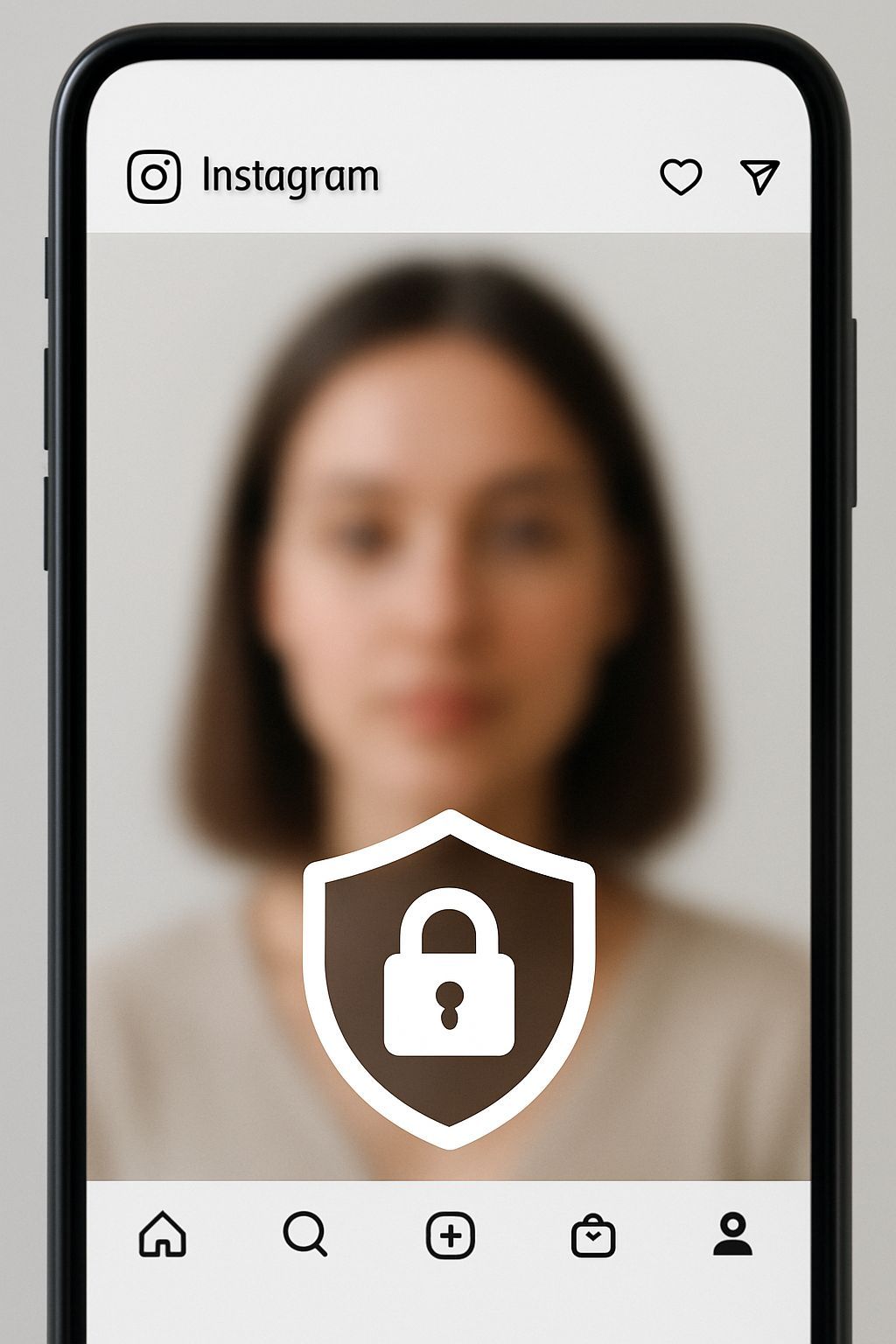
In the digital age, where the image is sovereign and social networks like Instagram are the main stage for personal and professional expression, visual content management assumes a crucial importance. It is not only a matter of catching a moment, but of curating it, protecting it and presenting it so that it resonates with its own message or aesthetics. Among the countless editing and customization options offered by third-party platforms and applications, the ability to blur a face has emerged as a particularly versatile and required functionality. The reasons behind this choice are multiple and layered: we go from the sacred need to protect our privacy or that of third parties – an ethical and often legal imperative in an increasingly connected world – to the opportunity to explore new aesthetic borders, giving content a touch of mystery, depth or a cinematic atmosphere that captures attention. This technique, in fact, can transform a simple photography or video into a work of art, conveying emotions and stories without the need to show every detail. The phenomenon of blurred faces has become a real trend on Instagram, not only for those who want to remain anonymous, but also for content creators who try to distinguish themselves with a unique and recognizable style. The blur effect, applied selectively, can guide the observer’s gaze, highlighting other elements of the image or video, or create a sense of intimacy and confidentiality. This guide has been designed to explore the world of face blur on Instagram, going far beyond the basic features offered by the app itself. We will deepen the techniques available, from the most intuitive mobile applications to professional desktop editing tools, analyzing how artificial intelligence is revolutionizing this field and what are the best practices to achieve impeccable results. We will not limit ourselves “how to do”, but we will also investigate “why”, discussing the ethical implications, privacy regulations and creative possibilities the blur offers. The goal is to provide a complete and updated resource for anyone wishing to master this technique, transforming the need in art and functionality into expression, whether it is an occasional user eager to protect their identity, both a professional who aims to elevate the quality and impact of their content on social media. Prepare to discover how the simple act of blurring a face can open a universe of creative and responsible possibilities, making your posts and your stories on Instagram not only appealing, but also aware and respectful.
Beyond Simple Blur: Privacy, Ethics and Digital Consent
The decision to blur a face in a digital content transcends the mere aesthetic choice, immersing itself deeply in the field of privacy, ethics and, more and more often, legal regulations. In a time when our digital identity is constantly exposed and images circulate at dizzying speed, protecting anonymity becomes a fundamental act of responsibility. Personal data protection legislation, such as the General Data Protection Regulation (GDPR) in Europe or the California Consumer Privacy Act (CCPA) in the United States, has raised the level of awareness and imposed stringent standards for managing identification information, including faces. Exploring a face is not only a good practice, but it can be a legal requirement, especially when publishing images of people who have not provided explicit, or even more delicate, consent of minors. The consent is the cornerstone of any image publication: it must be informed, specific, free and revoked. This means that the retracted person must be fully aware of how his image will be used and have the opportunity to withdraw his permission at any time. In the context of social media, where the line between public and private is often labile, the act of blurring a face becomes a powerful tool to respect individual autonomy and prevent potential abuse. We think, for example, about situations where public events or events are documented, where the presence of individuals not actively involved but simply passing through could involuntarily violate their privacy. In these scenarios, blurring is not only a caution, but an ethical duty. In addition, for professionals such as journalists, activists or researchers who publish sensitive content, subject anonymization is often an indispensable condition to protect sources, ensure the safety of people and maintain the integrity of their work. The blur allows you to tell a story, to show a context, without compromising the identity of those involved. It is a delicate balance between the need to inform and the responsibility to protect. Beyond the legal and professional implications, there is a profoundly personal dimension: the need to preserve its privacy or that of its loved ones in a hyperlinked world. Not everyone wants every aspect of their lives to be visible online, and blurring offers a degree of control over what is shared. This applies in particular to children, whose image should always be handled with utmost caution and whose right to anonymity and protection is universally recognized. Adopting blur as standard practice, where appropriate, not only mitigates legal and ethical risks, but also raises the level of trust and professionalism of published content, demonstrating a commitment to privacy and respect for people. It is a signal that the creator of content values human dignity as much as the visual impact, contributing to a more secure and conscious digital ecosystem for all. This reflection on privacy and ethics is fundamental to fully understand the potential and responsibility that accompany the use of blurring on social media.
The Art of Blur: Aesthetics, Trends and Visual Language on Instagram
Beyond the impelling reasons related to privacy, the blur of faces – and more generally, the creative use of blur – has assumed an increasingly central role in contemporary visual language on Instagram, turning itself into a powerful aesthetic lever and a vehicle to express moods, narratives and distinctive styles. The blurred effect, in fact, is not a recent innovation in photography or cinema; it has long been a tool to manipulate depth of field, guide the eye of the observer and create a sense of three-dimensionality. However, its democratization through apps and filters has expanded its scope, making it accessible to all for artistic purposes. On Instagram, a blurred face can communicate mystery, stylistic anonymity, or a sense of dream and unreality. It may suggest that the subject is lost in thoughts, that a moment is ephemeral or that attention is focused on something else. This approach is often borrowed from film techniques, where a selective blur (the so-called “bokeh”) is used to isolate a subject, create an emotional atmosphere or simulate vision through the eyes of a character. There are different types of blur, each with its own aesthetic impact: gaussian blur, uniform and soft, it is ideal for a delicate and dreamy effect; the motion blur (motion blur) can evoke dynamism and speed radial blur or zoom creates a sense of movement towards or far from the center of the image, adding dramatic emphasis; and the aforementioned bokeh, characterized by bright circles in the blurred background, is particularly appreciated for its ability to make images more “professional” and artistic. The selective application of these effects on the faces, rather than on the whole background, is a trend that allows content creators to play with the focal point, leaving the rest of the sharp image but making the face a graphic element or a fascinating unknown. This can be used to create a series of consistent content with a certain aesthetic, for example for a brand that wants to evoke a sense of exclusivity or for an artist who explores themes of identity and anonymity. The blur is no longer just a way to hide, but to reveal in a deeper way, inviting the observer to a more attentive reading of the context or details remaining on fire. In addition, the effect “soft focus”, a light form of blur applied to the whole face, is often used to soften the strokes, create an ethereal aura or a vintage look, recalling analogue photography. This versatility makes blurring an indispensable tool in the kit of each influencer, photographer or simply Instagram fan who wants to elevate his own visual storytelling, distinguishing himself in a sea of content and creating a memorable aesthetic footprint. The integration of these effects into the Instagram story editor, or through third-party apps, further powered this trend, allowing creative experiments and the rapid adoption of styles that would otherwise require advanced editing skills.
Advanced Techniques for Sfocare Faces in Photos: From Mobile to Desktop Professional
Although Instagram and some basic apps offer blur functionality, to achieve professional, precise and highly customizable quality results, it is often necessary to resort to more advanced tools, both on mobile and desktop platforms. The transition from an editing “use and throw” a more weighted one opens a world of possibilities for image manipulation, allowing you to control every aspect of blur. On the mobile front, in addition to PicsArt, there are several applications that offer more granular control. For example, FaceTune, while being known for beauty touches, it includes powerful tools for selective blur and depth modification. Similarly, Snapseed (of Google) offers a “Objective Blur” option that allows you to apply circular or linear blur with precise adjustments of intensity and transition, simulating the effect of expensive objectives. Adobe Lightroom Mobile, while being more oriented to the correction of color and exposure, through masks and brushes, allows to apply localized blurring, maintaining a professional workflow even on smartphones or tablets. Pixelmator Photo (for iOS/iPadOS) is another excellent option, which integrates powerful machine learning algorithms for intelligent object selection and offers advanced image editing tools, including high quality blur. The approach with these apps is often based on manual masking or intelligent subject detection, allowing the user to accurately define the areas to blur and those to maintain sharp, a higher level of accuracy than the automatic blur of the entire image. Moving to the desktop world, professional tools offer maximum control and flexibility. Adobe Photoshop is the undisputed king of photo editing and offers a myriad of techniques for the blur of the faces. The most common and versatile method is to use “Levels” and “Level masks”: duplicate image level, apply a blur filter (for example, “Gaussian Blur” or “Objective exhaust” for a controlled bokeh effect) at the top level and then apply a black mask at this level. With a white brush, you “paint” on the mask only in the areas of the face you want to blur, revealing the underlying effect. This approach is not destructive and allows you to adjust the intensity of blur and the precision of the mask at any time. Photoshop also offers advanced features such as “Smart Object”, which allows to apply blur filters in a non-destructive way, and selection tools based on artificial intelligence (as “Select Subject” or “Select and Mask”) which greatly simplify the creation of precise masks around the faces. Free and open-source alternatives such as GREAT (GNU Image Manipulation Program) offer similar features, with selection tools, levels and blur filters that, although with a less refined interface, allow to achieve comparable results. Also Affinity Photo it is positioned as a robust competitor, with a modern user interface and a complete set of tools for handling masks and blur filters. The key to a professional result is the precision in the selection and gradual application of the effect, avoiding sharp gaps between blurred and sharp area. The use of soft brushes and the regulation of opacity and flow allow to obtain natural transitions, fundamental for a credible and artistically valid appearance. These tools, although they require a learning curve, offer unparalleled control, allowing content creators to elevate the quality of their images well beyond the capabilities of publishers integrated into social apps.
Specify Faces in Videos for Storie and Reel: Tools and Workflow Detailed
While the blur of a face in a photo is a relatively linear process, the application of the same effect to a video introduces a significantly greater complexity, especially due to the continuous movement of the subject. Instagram, with its Stories and Reel, made the video a predominant format, and the ability to blur moving faces became essential for both privacy and aesthetics. Fortunately, there are tools and techniques that allow you to address this challenge successfully, both on mobile devices and on professional workstations. For video editors on mobile, applications like InShot, Cap and KineMaster are among the most popular and offer surprisingly advanced features for face blur. The typical process involves the import of the video, the selection of the “blur” or “mosaic” effect and the application of a “mask” or of a “adhesive” blurred. The real challenge is to make this mask follow the face as it moves within the frame. The most sophisticated apps include a function of “tracking” or “tracement” automatic: the user draws a mask around the face in the first frame, and the app tries to follow the movement for the duration of the clip. Even if these functions are constantly improving thanks to AI, they may require manual frame adjustments for frames if the movement is too fast, irregular or if lighting changes drastically. The manual approach involves the use of “keyframe”: in specific points of the video, you manually adjust the position and size of the blurred mask, and the app interpolates the movement between a keyframe and the other. Adobe Premiere Rush offers a more professional interface for mobile and tablet devices, allowing more precise control over keyframes and effects application, making it a bridge between amateur and professional mobile editing. Moving to desktop tools, professional video editing software like Adobe Premiere Pro, DaVinci Resolve and Final Cut Pro offer much more robust and precise solutions. The standard workflow includes: Import and Duplication: you import the video and you duplicate the clip on the timeline. Effect Application: the duplicated clip (the upper one) applies a blur effect (e.g., “Gaussian Blur” or “Mosaic”). Creation of Mask: you use the tool “Penna” (or predefined shapes) to draw a mask around the face in the first frame. This mask defines the area where the blur effect will be visible. Movement Tracking: This is the crucial stage. All professional software offer powerful tools “motion tracking”. After creating the mask, you start the tracking process, and the software scans the pixels around the face to follow the movement through each frame of the video, automatically adapting the location and size of the mask. In case of imperfect tracking (overlapping turns, sudden lighting, objects passing in front), it is possible to manually intervene with keyframes to correct the trajectory of the mask. Regulation of Intensity and Feathering: once the face is drawn, the intensity of the blur and the “feathering” (swimming the edges of the mask) to obtain a soft and natural transition between the blurred and the sharp. This is essential to avoid an artificial aspect. Export: Finally, you export the video to the desired format for publishing on Instagram. The main challenges in video editing are the consistency of tracking in complex scenes, managing multiple faces and optimizing rendering. However, with the practice and use of the right tools, you can get impeccable results that meet both privacy and aesthetic needs, transforming simple videos into sophisticated and responsible visual narratives for Instagram stories and reels.
Artificial Intelligence at the Privacy Service: Automatic Recognition and Disposal
The advent and rapid evolution of Artificial Intelligence (AI) and Machine Learning (ML) have revolutionized many fields, and photo editing and video is no exception, especially with regard to face detection and blur. What was once a manual and often tedious operation, which required frame accuracy for frames, today can be automated with impressive speed and accuracy, democratizing access to advanced privacy protection and aesthetic manipulation techniques. At the heart of this revolution there are facial recognition algorithms, which, although often associated with controversial issues of surveillance and privacy violation, can be used ethically to protect anonymity. These algorithms are trained on huge datasets of images and videos containing faces of different people, learning to identify unique features such as the shape of the eyes, nose, mouth, distance between strokes and the overall structure of the face. They do not only recognize “a face”, but are able to distinguish it from the background, even in varying lighting conditions, different angles or with the presence of accessories (doors, hats). Once the AI has detected one or more faces within an image or video stream, it can automatically apply a blur or pixelation effect to those specific areas. Magic lies in the fact that AI not only identifies the face, but can also trace it dynamically over time. This means that, in a video, if a person moves, turns or enters and exits from the frame, the algorithm is able to maintain the active blur on the face for all its stay, without requiring manual keyframing interventions. Examples of this technology are already integrated in many applications and platforms. Google Photos, for example, offers features to automatically group people and sometimes suggests blurring faces into sensitive images. Many latest mobile editing apps, such as those mentioned above, already include automatic face detection features to apply cosmetic or privacy effects. Professional editing software, such as the latest versions of Adobe Premiere Pro and DaVinci Resolve, have also dramatically improved their AI-based tracking tools, making the process of masking and blurring in much more efficient videos. The implications of this technology are vast. For journalists or documentaries, AI-powered blurring means being able to process large quantities of films quickly, ensuring the anonymity of subjects in delicate situations. For content creators, it simplifies privacy management in their vlogs or stories, allowing them to focus on narrative rather than technical editing. For the average user, it makes accessible privacy protection tools that were once exclusive to professionals. However, it is important to note that AI is not infallible. There may be detection errors (positive or false negative effects), especially in extreme conditions or with partially covered faces. For this reason, human control remains essential, especially for content requiring maximum privacy accuracy. Despite these limitations, AI is undoubtedly accelerating and improving the blurring process, making it a more widespread and less honest practice, and consolidating its role as a crucial ally in responsible digital image management in an increasingly visual and interconnected world.
Beyond the Blur: Alternative Creative for the Visive Anonymity
Although blurring is an effective and widely used technique to mask faces, it is not the only option available for those seeking to protect privacy or add a stylistic touch to their content. There are several creative alternatives that can be used, each with its own aesthetic and functional implications, allowing content creators to choose the most suitable approach to the context and message they intend to convey. One of the most common alternatives is pixelation, often referred to as effect “mosaic”. Instead of softening the details with a blur, the pixelation breaks the face into a grid of colored blocks, making the features unrecognizable. This effect has a very specific connotation in the collective imagination, often associated with news or documentaries that protect the identity of witnesses or victims. Externally, pixelation can give a more “hard” or “digital” aspect than blur, and can be used intentionally to evoke a sense of censorship or confidential information, or for a retro/8-bit look. It is particularly effective when you want an evident and unequivocal anonymization. Another direct alternative is the application of black or white bars on the face area. This method, although aesthetically less refined, is extremely effective and unequivocal. Black bars are often used in journalistic contexts or reporting for explicit and direct censorship. White bars, or other colours, can be chosen to match a specific colour palette or for a more distinctive graphic effect. They are simple to implement with any editing tool and leave no room for interpretations about the intention of hiding the identity. For a more playful and integrated approach in the context of social media, the use of overlay, sticker or emoji is a very popular option. Instagram itself offers an extensive library of stickers and emojis that can be placed on the faces to hide them partially or totally. Many story editors also include privacy-specific stickers, such as stylized faces or “anonymous” icons. This solution is quick, easy and perfectly integrates with the casual and fun aesthetics of stories and reels. However, it may not be sufficiently “professional” for more serious contexts or for the protection of sensitive identity, as a determined observer may be able to see the underlying features. A more creative and less direct option is the application of stylized filters that completely alter the facial features, such as those that turn a face into a cartoon, an abstract painting or a fantastic character. These filters, often based on artificial intelligence and augmented reality (AR), can create an effective anonymization by distorting or replacing the original image of the face. The effect is often aesthetically appealing and can be an integral part of a narrative or a specific aesthetic. However, the purpose of anonymizing may be less explicit and the final effect may vary according to the chosen filter and the details of the original face. Finally, the use of graphical overlaps or design elements that are not necessarily “adhesive” but rather parts of the graphic layout of the content that strategically cover the faces. This may include logos, text blocks or abstract elements that are part of an overall design. The choice between these alternatives depends closely on the context, audience, message tone and the desired anonymization level. Every technique has its moment and place, and mastering them all allows content creators to have a wider range of tools to express their vision, protect privacy and maintain the integrity of their brand on social media.
Best Practices & Tips for Quality Content with Faded Faces
Integration of faces vented into Instagram content, both for aesthetic and privacy reasons, requires not only the knowledge of technical tools, but also the adoption of a series of best practices that ensure the quality, consistency and effectiveness of the message. A superficial or inaccurate application of blur can compromise the visual impact and, worse still, undermine the privacy protection goal. The first fundamental council concerns the consistency. If blurring is an integral part of your style or brand, it is crucial to maintain a uniform approach through all content. This includes the intensity of blur, the type of effect (gaussian, bokeh, mosaic, etc.), and the way the faces are masked. A visual consistency not only strengthens the identity of your brand, but also facilitates the perception of the message by the audience, especially when it comes to anonymization. Random changes in the application of blur can make work look unprofessional or disregarded of privacy. One critical aspect is quality of application. Regardless of the chosen tool (mobile app or desktop software), the goal is always that the blur looks natural and intentionally, not as a mistake or a fast correction. The blur edges must be soft (through “feathering” or shade), avoiding net and unnatural contours between the blurred and the sharp area. This is especially important in the videos, where an imprecise tracking can make the effect “salt”, ruining the illusion. Take the time to finish the masks and adjust the blur intensity to get the best possible result. The context: the choice of blur technique (blur, pixelation, black bars) should always be guided by the context of the content and the message you want to convey. A dreamy and artistic atmosphere will benefit from a delicate blur and bokeh, while a journalistic reportage on sensitive issues may require pixelation or black bars for a more incisive impact and unequivocal anonymization. There is no universal solution; customization is the key. With regard tosEO optimization for visual content, images and videos with blurred faces can also contribute to visibility. Be sure to use “alt text” descriptive for images uploaded to blogs or websites, describing the image even if the face is blurred (e.g. “Anonymous person in the square during an event”). Instagram captions must be clear and relevant. The ethical aspect deserves constant attention: always prioritize consent. If you blur a face to protect someone’s privacy, it is essential that this person agrees with the publication of the content, although anonymous. In case of minors, the consent of parents or guardians is indispensable. Blurring is a means to protect, not a substitute for dialogue and respect. Finally, the management of instruments: do not feel obliged to use the most complex software if a mobile app meets your needs. The choice of the tool should balance the learning curve with the quality and precision required for your specific project. Familiar with a couple of tools and master them, rather than try to learn them all superficially. Keeping the original unfocused, if allowed, can be useful for future references or changes. Following these practices, your content with blurred faces will not only achieve privacy or aesthetic goals, but will also maintain a high standard of professionalism and integrity, contributing to a more responsible and well-maintained digital ecosystem.
The Future of Privacy and Visual Ethics on Social Media
The digital panorama is constantly changing, and with it, technologies and expectations related to privacy and visual aesthetics on social media. Face blur, from niche technique for photographers and investigators, has become a common tool, but its future promises to be even more integrated, sophisticated and personalized, driven by the advancement of Artificial Intelligence, Augmented Reality (AR) and increasing public awareness. One of the most anticipated evolutions is aI blur in real time, especially for live content. Imagine broadcasting a live Instagram or TikTok live, with the AI that automatically detects and blushes the faces of passers or participants who have not expressed their consent to be recovered. This technology, which is already being developed in some professional contexts, could become an integrated standard in social platforms, eliminating the need for post-production editing and ensuring a proactive privacy level. This would open up new possibilities for creating spontaneous and authentic content without compromising the protection of personal data. The Increased Reality (AR) is another field destined to revolutionize the anonymization and aesthetics of the faces. AR filters will not be limited to blurring, but will be able to replace faces with stylized avatars, dynamic masks or interactive graphic elements that adapt to movements and facial expressions in real time. This will go beyond the simple blur, offering a more immersive and creative user experience for anonymity, transforming the need to hide a face into an opportunity of artistic expression that is both ludic or sophisticated. Social platforms themselves will play a crucial role. It is probable that we will see increasingly sophisticated in-app editing tools for privacy, with AI-based blur and anonymization functions integrated directly into story and reel editors. This will make it even easier for the average user to apply these techniques without having to use third-party apps, pushing for greater adoption of responsible practices in creating content. There is also increasing pressure from users and legislators for a greater transparency and control over biometric data. This could lead to more granular features, where users can manage not only those who can see their face, but also how it is processed by facial recognition algorithms, even in blurring contexts. We could witness the emergence of decentralized identity solutions, where individuals have a more direct and verifiable control over how and when their image is used and anonymized online. The demand for authentic and high quality content will continue to grow, but with greater awareness of ethical implications. The creators of content that will be able to balance innovative aesthetics and ethical responsibility will be those that will resonate more with the public. The blur, or its evolutions, will become not only an option, but an integral element of a production of conscious and respectful digital content, a bridge between the need to share and the right to privacy, shaping the future of our online visual interaction.
Conclusion: Sfocare Volti – Between Digital Responsibility and Creative Maestria
Through this in-depth exploration, we traveled from the most basic motivations to the most advanced techniques for blurring faces on Instagram and beyond. We found that this apparently simple practice is full of complex meanings and multiple functions, positioning itself at the intersection between the pressing needs of privacy in a hyperlinked digital age and the infinite possibilities of artistic and stylistic expression. The act of blurring a face is no longer a purely technical gesture, but a statement: a declaration of respect for the individual and his right to anonymity, an ethical position in the treatment of images of others, and a deliberate aesthetic choice to communicate a specific emotion or message. From intuitive mobile apps such as PicsArt, which democratize access to editing, powerful desktop software such as Adobe Photoshop and Premiere Pro, which offer unparalleled control and open doors to professional post-production, the tools available are increasingly numerous and sophisticated. The advancement of Artificial Intelligence further simplified and speeded processes that once required meticulous working hours, making the detection and tracking of faces in almost automatic photos and videos. This not only improves efficiency, but also elevates blur accuracy, ensuring more natural and credible results. However, we have also stressed that technology, however advanced, does not replace human judgment. Understanding the context, ethical sensitivity and ability to make informed decisions remain fundamental prerogatives of the content creator. The choice between a soft blur, a defined pixelation or the use of stickers and overlays is not random, but reflects a deep understanding of the message you want to convey and the audience you address. We've looked at it best practices to ensure that blur is applied consistently, of high quality and in line with the expectations of privacy and brand. And we have looked at the future, imagining a world where real-time blur, advanced AR filters and greater user autonomy on their biometric data will become the norm, not the exception. Ultimately, mastering the art and science of face blur has become an indispensable skill for anyone to navigate the social media landscape. It is an opportunity to exercise digital responsibility while expressing its creativity. Whether you are an occasional user eager to protect their privacy, an influencer who tries to define a unique aesthetic, or a professional who manages sensitive content, the understanding of these techniques will equate you to create a significant and lasting impact. Knowledge, awareness and practice are the keys to transform blur from a simple function to a form of art and a pillar of responsible visual communication.


