The world of cinema has a long and fascinating history of literary adaptations, but few were able to capture the essence of a classic so fresh and relevant as it did Greta Gerwig with his Small Women. The announcement of the arrival in home video, due to Universal Pictures Home Entertainment Italia, of this Oscar winning film for Best Costumes is not only a news for cinema lovers, but an opportunity to immerse yourself again in a narrative that, despite being written over 150 years ago by Louisa May Alcott, resonates with a surprising power in the contemporary cultural landscape. Gerwig’s film, a real masterpiece of rewriting and interpretation, goes far beyond the simple transposition of a beloved text, offering a modern lens through which to explore the eternal issues related to female independence, artistic ambition and complex family ties. This version, with its stellar cast that includes Saoirse Ronan, Emma Watson, Florence Pugh, Eliza Scanlen, Timothée Chalamet, Laura Dern and Meryl Streep, is not limited to telling the story of the March sisters; the decomposition, reorganization and illuminates it from new perspectives, making it accessible and stimulating for a new generation, while maintaining intact its original charm for long-standing readers. The DVD, Blu-ray and Digital HD release, enriched by over forty-five minutes of special content, invites viewers to an even deeper journey into the creative process that gave rise to a film that is both a faithful representation of the past and a daring comment on the present. The Oscar won and the many Academy Awards nominations, including Best Film and Best Protagonist Actress, are just a confirmation of his artistic stature and impact. This article aims to explore in detail the many facets of Small Women gerwig, from his roots in Alcott's novel to his innovative narrative structure, from the masterful interpretation of actors to the richness of his themes, demonstrating how a classic can be not only revisited, but reinvented to continue to inspire and provoke reflections in an increasingly complex era. The experience of home video thus becomes not only a way to own a film, but to study, analyze it and appreciate every single layer of meaning, from costumes to dialogues, from registic choices to actors performances, to the deep emotional resonance that continues to generate in the audience around the world. It is an invitation to rediscover, or to discover for the first time, the timeless force of a story that celebrates resilience, creativity and love in all its forms.
The Timeless Changing of “Little Women”: A Classic that Challenges the Century
The novel Small Women of Louisa May Alcott, first published in 1868, stands as a pillar of American and world literature, a narrative that has transcended generations and cultures, continuing to enchant and inspire. Its lasting resonance comes not only from its fascinating plot, but from the depth with which it explores universal themes such as growth, love, ambition, loss and, above all, female emancipation at a time when this concept was anything but common. Alcott, broadly drawing from his life experience and from that of his three sisters, painted a vivid and authentic picture of family life during the American Civil War, instilling in his characters a surprising complexity and modernity for the time. The character of the Jo March, in particular, has become an icon for entire generations of girls and women, a symbol of rebellion against social conventions, desire for intellectual and artistic independence, and an unwavering determination to forge one’s own destiny. Jo did not want to marry for convenience, he did not conform to the ideals of femininity of the nineteenth century, and his struggle to assert himself as a writer in a world dominated by men was, and is still, deeply relatable. But Alcott was not limited to creating an iconic character; he fabricated a narrative full of nuances, where the Meg, Amy and Beth sisters represent different facets of femininity and possible life paths. Meg, the most traditional, that aspires to the house and family; Amy, the ambitious and vain artist, who seeks refinement and economic security; and Beth, the sweet and shy musician, who embodies purity and sacrifice. Their mother, Marmee, is a figure of wisdom and compassion, which guides daughters through the challenges of life with unconditional love and moral teachings. The novel was revolutionary because it dared to put at the center of narration the aspirations, disappointments and victories of women who were not relegated to mere composers in male stories. He offered an intimate look on family dynamics, economic sacrifices and broken dreams, but also on the joy of creativity, the strength of sisterhood and the importance of authenticity. His continuous rereading and his numerous adaptations – from theater to cinema, from television to musicals – testify his ability to remain current, to speak to the restlessness and hopes of every age, demonstrating that some stories, if well told and intrinsic to human truths, possess an intrinsic immortality that transcends the historical context in which they are born. Small Women it is more than just a novel for girls; it is a deep exploration of the human condition, the search for happiness and meaning, and the courage to be yourself in a world that often seeks to homologate.
The Revolutionary Vision of Greta Gerwig: Renewing a Iconic History
The approach to Greta Gerwig a Small Women it was not simply an adaptation, but a real reinstatement, a daring operation that honored Louisa May Alcott's original material while instilling a vitality and a decidedly contemporary perspective. Gerwig, already acclaimed for his narrative sensitivity and his ability to portray complex female characters in movies as Lady Bird and Frances Ha, has demonstrated a deep understanding of the author’s text and life, woven elements of the novel with fragments from the letters and diaries of Alcott himself. This choice has allowed to deepen the figure of Jo March, the alter ego of the writer, exploring his struggle not only as an ambitious woman but also as a professional in an editorial industry that often underestimated female work. The non-linear narrative structure of the film is perhaps its most distinctive and innovative feature. Alternating between two temporal periods – the adolescence of the March sisters and their adult life seven years later – Gerwig created a constant dialogue between the past and the present, highlighting dreams, expectations and realities that confront each other. This stylistic choice is not a mere exercise of form; it serves to emphasize the way decisions made in youth shape the future, to emphasize the weight of social expectations on the individual path of each sister, and to give greater emotional depth to already known events. The chromatic contrast between the two periods – the warm and luminous colors of childhood and the coldest and most off-aged shades of adulthood – guides the viewer through this temporal ballet, strengthening the sense of nostalgia and the comparison between idealism and pragmatism. The direction of Gerwig is dynamic, energetic, almost button, reflecting the vitality and fervent imagination of the March sisters. The dialogues are rapid and overlapping, recreating the lively and chaotic atmosphere of a house full of young women full of ideas and feelings. But beyond style, what makes Gerwig's vision so revolutionary is his keen feminist look. The film is not limited to telling a story of women; it explores it through a lens that questions the role of marriage as an economic institution, the search for creative autonomy for women artists, and the intrinsic value of female lives beyond their relationship with men. Gerwig has intelligently stressed that Alcott herself was a businesswoman in the editorial world, projecting this awareness on the figure of Jo, who negotiates his copyright and defends the commercial value of his work. In this way, the film not only celebrates the legacy of Small Women, but it extends its meaning, making it a manifesto for independence and feminine realization that resonates strongly in the 21st century. It is a work that shows how a classic can be not only respected, but also reinvented to continue to speak to the present with a clear and passionate voice, offering new perspectives on universal themes that never stop being relevant.
A Star Cast for a memorable performance: Giving Life to March
Success and emotional impact Small Women by Greta Gerwig are indissolubly linked to the extraordinary performance of his star cast, an ensemble of actors who knew how to instill new life and unexpected depth to characters already carved in the collective imagination. The choice of interpreters has not been casual, but the result of a meticulous search for talents capable of grasping the psychological nuances and complexity of the March sisters and their fellows. At the center of this constellation shines Saoirse Ronan in the form of Jo March, offering an interpretation that has been universally acclaimed and has earned her an Oscar nomination as Best Protagonist Actress. Ronan embodies a rebel and passionate Jo, whose irresponsibility and vulnerability merge into a portrait of rare authenticity. His Jo is a force of nature, with a burning desire for freedom and artistic expression, and Ronan manages to convey his inner struggle between the desire for independence and the need for connection, between his unbridled ambition and his deep affection for the family. Next to her, Emma Watson offers a measured and moving performance as Meg March, the older sister, whose path of life is marked by the desire for simple and traditional happiness, often in contrast to the expectations of the sisters. Watson manages to balance his aspiration to modesty with melancholy and resilience flashes, making Meg a more faceted character than he is sometimes perceived. Florence Pugh, in the role of Amy March, it was a revelation, also gaining an Oscar nomination as Best Non-Protagonist Actress. His Amy is not the capricious and spoiled girl of the previous versions, but a smart, pragmatic young woman with a sharp intelligence, which understands the dynamics of the world and knows how to navigate them to get what they want. Pugh perfectly captures her evolution as a selfish child to a woman aware of her own choices and responsibilities. Finally, Eliza Scanlen interprets a touching and delicate Beth March, the sick sister whose purity and kindness are the emotional heart of the family, a lighthouse of innocence and beauty that illuminates the lives of all. The interactions between the four actresses convey an authentic fraternal chemistry, making palpable the bond of love, rivalry and support that unites the March sisters. The support cast is equally impressive: Timothée Chalamet is a ♪ charming and melancholy, a friend and courtier who embodies youth romanticism and the disappointments of unpaid love. His alchemy with Saoirse Ronan is electric and helps make their relationship central and painfully complex. Laura Dern, in the role of Marmee, is the warm and wise matriarch, a figure of strength and compassion that guides his daughters with a mixture of unconditional love and moral principles. His interpretation is rich in humanity and depth. Finally, the immense Meryl Streep, in the role of Zia March, offers a witty and irreverent performance, a character who, although apparently traditionalist, pronounces some of the most harsh and necessary truths on the feminine condition of the time, questioning social conventions with a cynical but enlightening wisdom. Gerwig’s ability to direct such an ensemble, extracting the best from each actor and orchestrating their performances in a perfect harmony, is one of the pillars on which the greatness of the film is based. Each interpreter is not limited to acting a role, but lives in the character with such a conviction to make it unforgettable, contributing to make Small Women a rich and deeply exciting film experience.
Visive and Sonora aesthetics: Between Historical Authenticity and Cinematographic Innovation
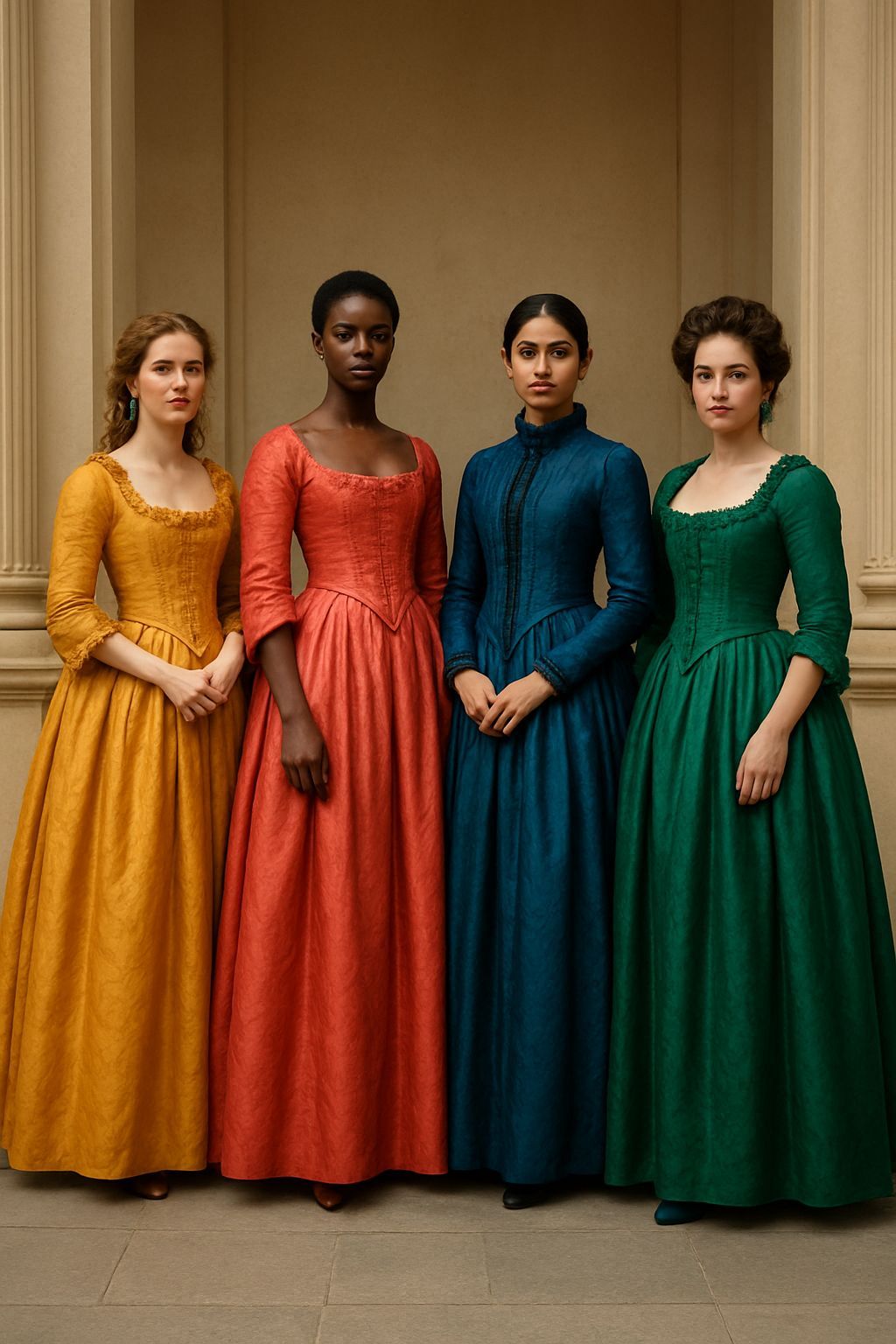
The charm of Small Women by Greta Gerwig not only resides in his brilliant rewriting of history and the masterful performance of the cast, but also in the exceptional care and sophisticated vision that shaped his visual and sound aesthetics. The film is a triumph of production design, cinematography, costumes and soundtrack, elements that blend harmoniously to create an immersive and deeply evocative experience, a bridge between the past and the present. The meticulous authentic historical research, as pointed out in the special content, is palpable in each frame. The stage faithfully recreates the environments of the 19th century, from the modest but welcoming Orchard House delle March, inspired by the real house of Louisa May Alcott, to the gorgeous dwellings of the high society, to the studies of New York where Jo tries to affirm himself as a writer. Every detail, from furniture to props, contributes to transport the viewer at the time, while maintaining a freshness that prevents the film from appearing museal or dusty. The real jewel of the aesthetics of the film is undoubtedly the design of costumes, work of the talented Jacqueline Durran, who deservedly won the Oscar in this category. Costumes are not only historically accurate; they are narrative instruments that reflect the personality and evolution of each character. Durran played with fabrics, colors and silhouettes to emphasize the differences between the sisters: Jo's practicality with his often male dresses and skirts that recall freedom of movement, Meg's sophistication, Amy's refined elegance and Beth's ethereal sweetness. The use of colors is particularly significant: brighter and warmer shades for the scenes of childhood and adolescence, symbolizing carefreeness and idealism, leaving the place in softer and colder colors in the scenes of adulthood, reflecting the hardness of life and the more mature choices. This chromatic choice also extends to cinematography by Yorick Le Saux, who captures natural light and atmospheres with a mastery that gives the film a pictorial aspect. The Saux alternates wide shots that capture the beauty of the landscapes of New England with intimate first floors that reveal the deepest emotions of the characters, creating a sense of immediacy and involvement. The transition between timelines is often marked by a subtle change in brightness and saturation of colors, smoothly guiding the viewer's gaze through narrative complexity. To complete this impeccable visual picture, the soundtrack of Alexandre Desplat is a wonder of sensitivity and refinement. Desplat, a master in creating scores that blend with narrative, has composed themes that are both playful and malicious, energetic and delicate, reflecting the many emotional nuances of the film. Music is not limited to punctuating scenes; it amplifies its meaning, suggesting feelings, anticipating events and strengthening the emotional bond between characters and the public. His music is a thread that binds the different parts of the story, giving the film a cohesion and a resonance that elevates the entire experience. The harmony between these technical and artistic elements is what makes Small Women un’opera così completa e potente, un film che non solo racconta una storia, ma la dipinge, la orchestra e la incide nella memoria dello spettatore con una bellezza e una precisione ineguagliabili.
Temi Centrali e Messaggi Duraturi: Femminismo, Arte e Libertà
Al di là della sua estetica impeccabile e delle performance memorabili, Small Women di Greta Gerwig è un’opera profondamente risonante grazie alla sua audace e perspicace esplorazione di temi centrali e messaggi duraturi that transcend the historical context of the XIX century. The film stands as a poster for the femminismo, lart and the libertà individuale, offrendo una riflessione acuta sulle sfide e le aspirazioni delle donne, sia allora che oggi. Uno dei temi più prominenti è senza dubbio la research of female independence. Gerwig mette in discussione la narrativa tradizionale del matrimonio come unica e ultima aspirazione per le donne, esponendo la realtà spesso cruda delle scelte matrimoniali dettate dalla necessità economica piuttosto che dall’amore. Attraverso il personaggio di Amy, si articola una delle battute più incisive del film, che demolisce il romanticismo superficiale del matrimonio dell’epoca, rivelandolo come un accordo economico per la sopravvivenza. Questa prospettiva, lungi dall’essere cinica, è profondamente realistica e serve a sottolineare l’importanza dell’autonomia finanziaria e intellettuale per le donne. Il film celebra la sisterhood as a source of strength and support. The link between Jo, Meg, Amy and Beth is the heart of history, a network of unconditional love, occasional rivalry and deep mutual understanding that helps them navigate the complexities of life. Their relationship is a model of women's solidarity, demonstrating how women can support each other in pursuing their dreams and overcoming their difficulties. Theart and creativity are other thematic pillars. Jo is a writer with an arduous passion, and the film explores not only his struggle to find his own artistic voice but also the complexity of the creative process, publication and negotiation of his own value in a male publishing world. Gerwig, drawing from the life of Alcott, emphasises the commercial side of art, showing Jo that, in order to see his published work, he is willing to compromise but never to betray his artistic integrity. The film thus becomes a celebration of the artist’s resilience and the power of narration as a means of expression and emancipation. The individual freedom, in all its variations, is another red thread that crosses the narrative. Every sister, in her own way, seeks a form of freedom: Jo the freedom to be herself and to create, Meg the freedom to choose simplicity and love, Amy the freedom to affirm herself in the world with her own means and talents, Beth the freedom from suffering through music and inner peace. The film challenges social expectations and conventions of the time, suggesting that true happiness does not reside in conforming, but in being faithful to oneself and to one’s deepest desires. Gerwig's narrative, with its non-linear temporal structure, strengthens these themes, showing how the choices and aspirations of the past affect the present and vice versa, creating a continuous dialogue on the possibilities and limits imposed by society and its own will. Ultimately, Small Women it is not only a vintage story; it is a deep meditation on the costs and benefits of freedom, on the value of art as an instrument of self-realization and resistance, and on the unparalleled force of female relationships. It is a film that, although rooted in a classic of the past, speaks with a clear and powerful voice to the most pressing issues of our time, making it a work of universal and lasting resonance.
The Meaning of Home Video and Special Content: A Journey to the Behind the Quinte
In the era of on-demand streaming and digital platforms that offer immediate access to a dirt catalogue of films and series, the meaning of home video it might seem diminished. However, the arrival of Small Women by Greta Gerwig on DVD, Blu-ray and Digital HD, with the promise of over forty-five minutes special content, reaffirms the priceless value of the physical format and the possession of a film. The home video is not simply a means to review a film; it is a portal for a deeper and enriching experience, an opportunity for filmmakers and enthusiasts to explore behind the scenes of the creative process and better understand the intentions of artists. Special content is the heart of this extensive experience, acting as a narrative extension that illuminates the registic choices, productive challenges and artistic visions. In the case of Small Women, the bonuses offered by Universal Pictures Home Entertainment Italy are particularly valuable. The section “A new generation of Small Women” offers an intimate look on casting and performance, allowing viewers to appreciate how actors of such caliber have interpreted such iconic characters. Listening to their reflections on the role, group dynamics and challenges faced can reveal layers of additional meaning in the film. This featurette not only celebrates the talent of interpreters, but also illuminates the way the film has been able to give new life to timeless characters, making them fresh and current for a modern audience. “A classic revisited in a modern key” is a crucial chapter that deepens Gerwig's approach to the rereading of Alcott's novel. Here, you can understand how the director balanced historical loyalty and stylistic innovation, combining modern elements such as dynamic shooting and fast dialogues with meticulous historical research, from costumes to location. This section is essential to appreciate the complexity of the project and the vision behind the reorganization of the plot and emphasis on certain themes. “Greta Gerwig: women who make art” is a featurette dedicated entirely to the director and screenwriter. In an industry still dominated by male voices, exploring the creative processes of such a female filmmaker is in itself a significant act. This section offers a valuable insight into his methodology, inspirations and his ability to instill in history a distinctly feminine and contemporary perspective, highlighting his role as an artist and author. The “Prove makeup and hair” and the chapter “Behind the scenes of Little Women” are more technical but equally fascinating elements. They reveal the dedication and precision of the production team in creating the visual authenticity of the film, from the evolution of costumes to details of makeup and hairstyles. These sections demonstrate the incredible teamwork needed to build a credible and visually stunning world, showing how every detail contributes to cinematic magic. Finally, “Orchard House, the house of Louisa May Alcott” offers a journey to the roots of the novel itself. Visiting the true home of the writer and discovering the details of his life can provide a precious context to understand the sources of inspiration and the deep autobiographical connections of the novel. This section is a bridge between fiction and reality, a tribute to the original author who laid the foundations for this timeless story. Buying Blu-ray or DVD, therefore, is not only the acquisition of a product, but the investment in a cultural experience that allows you to fully appreciate the complexity, art and impact of an exceptional film as Small Women, transforming passive vision into an active and conscious analysis.
The Cultural Impact and the Dialogue between Generations: “Little Women” Today
The exit Small Women by Greta Gerwig has generated considerable cultural impact and turned on a dialogue between generations that goes well beyond the simple film review. The film was not only a critical and public success, but also catalyzed new conversations on the role of classics in contemporary culture, on female representation in cinema and on feminism heritage. His ability to resonate so strongly with a modern audience is a testament to the far-sightedness of Alcott and the brilliance of Gerwig in knowing how to update his messages. The film has shown that the stories of women, focusing on their aspirations, challenges and ties, have a universal power and are not confined to a niche audience. He encouraged many people, especially young women, to reread the original novel and explore other works of authoritarians who dealt with similar themes of independence and self-determination. This has contributed to strengthen the link with classical literature, demonstrating that ancient texts can offer surprisingly current reflections. Small Women it was included in the wider debate on the representation of women in cinema, offering a model of narrative that escapes conventional tropes. It is not a story of women who seek happiness through a man, but of women who pursue their own personal, professional and artistic realization. Gerwig's perspective, which highlights Jo's struggle as a writer and economic considerations behind marriage, offered a more blurred and realistic view of the female condition, stimulating discussions on how women continue to balance ambition and social expectations. The film played an important role in celebrating the work of women directors. In an area that has historically struggled to recognize and promote filmmakers, Gerwig's critical and commercial success is a beacon of hope and an example of what is possible to achieve when women are led by high-profile projects. His Oscar nomination for Best Non Original Screenplay and the plausion for his direction reinforced the idea that female voices are essential for enriching the cinema scene. The dialogue between generations was particularly evident in the reception of the film. While long-time fans of the novel enjoyed fidelity to the spirit of the text and the new interpretations of the characters, a younger audience discovered the story for the first time, finding in Jo March a modern heroine struggling with issues of identity, ambition and desire to leave a mark in the world. This double resonance is proof of the film's ability to build bridges between different eras, demonstrating that great stories have the power to speak through time. The legacy Small Women by Gerwig is that of a film that is not limited to entertaining, but which provokes, inspires and invites reflection. It is a work that reminds us of the importance of revisiting the classics with new eyes, giving voice to different perspectives and to celebrate the stories that highlight the complexity and resilience of the human spirit, especially the feminine one. In a constantly evolving world, Gerwig's film stands as a powerful reminder of the lasting strength of a story that continues to teach, to move and inspire.
Small Women by Greta Gerwig is not simply the new adaptation of a literary classic; it is a bold, intelligent and deeply felt revisitation that honors the original material of Louisa May Alcott while projecting it vigorously in the 21st century. Through an innovative narrative, masterful interpretations and a breathtaking visual and sound aesthetic, Gerwig has created a film that is both a work of art itself and a powerful catalyst for a contemporary dialogue on feminism, ambition, art and the eternal search for freedom and personal realization. The arrival of the film in home video, enriched by a treasure of special content, offers spectators an unprecedented opportunity to immerse themselves even deeper in the creative process and to appreciate every layer of this complex and fascinating work. From the meticulous historical research that shaped the costumes and scenery, to the deep understanding of the characters by the star cast, to the unique vision of the director who has been able to merge past and present, each element contributes to making Small Women an unforgettable film experience. This film reminds us that classics are not relics of the past, but inexhaustible sources of inspiration and reflection, able to assume new forms and meanings with every generation that discovers them and reinterprets them. It is a work that celebrates the resilience of the female spirit, the power of sisterhood and the importance of pursuing their dreams, even in the face of social conventions and personal challenges. In a time when female voices are finally gaining the space they deserve in the cultural landscape, Small Women gerwig stands as a lighthouse, a luminous example of how stories can continue to educate, entertain and, above all, inspire. We invite everyone to take this opportunity to relive, or discover for the first time, the magic of this extraordinary film, letting themselves be transported by its beauty, intelligence and deep humanity. It is not only a film to watch, but a work to study, to discuss and to guard, a lasting testament to the strength of small women and the great stories that accompany us through the centuries.


