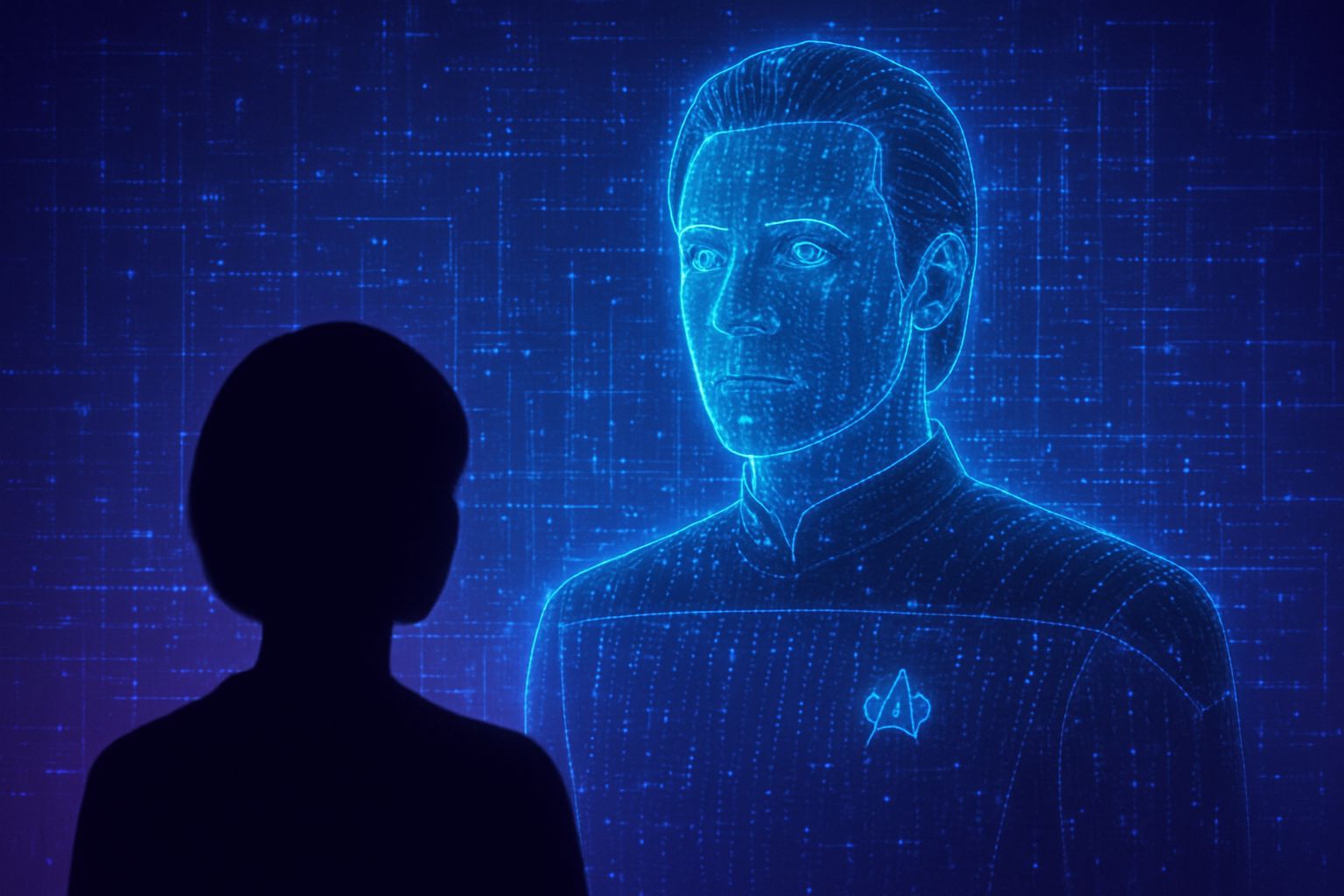
Since its debut in 1987, Star Trek: The Next Generation (TNG) captured the imagination of millions, not only as a mere successor to the original classic series, but as a visionary exploration of the future of humanity. With its emphasis on exploration, diplomacy, deep ethical issues and constant research of a more enlightened society, TNG redefined television science fiction, establishing new standards for serial narrative and building complex and multidimensional characters. Ten years after its conclusion, the echo of the NCC-1701-D and its crew, led by the iconic Captain Jean-Luc Picard, continues to resonate powerfully, not only in the memories of its faithful spectators, but in a flourishing ecosystem of creativity and commitment fueled by modern technology. The original article by Ars Technica, hinting at simulators of the Enterprise bridge, dedicated podcasts and discussions on the “peggiori” episodes, offers a split revealing how this inheritance is not only preserved, but actively reinvented and deepened by a community of tireless and technologically rash fans. In an era in which the boundary between creator and consumer becomes increasingly thin, TNG stands as a lighthouse, demonstrating how iconic narratives can transcend their original medium, evolving in new forms of expression and interaction, supported by digital platforms that, like Ars Technica, are dedicated to separating the signal from noise in the vast universe of technological and cultural information. This exploration will lead us through the galaxies of fan passion, immersive technology and critical debate, revealing how Star Trek: The Next Generation remains a powerful catalyst for cultural innovation and community ingenuity, continuing to inspire new generations to “holy go where no one has ever come before” even in the realm of digital fandom. Its lasting relevance is a testimony of the power of speculative narrative to reflect and shape our aspirations for the future.
The Enterprise-D Return: Fan Simulations and Digital Immersion Art
The call to a NCC-1701-D bridge simulator in Ars Technica's article is not a simple anecdote; is the tip of the iceberg of a deep cultural phenomenon: the incessant search of fans of Star Trek: The Next Generation to live, rather than just observe, the universe they love so much. These projects, often created with an almost monastic dedication, go far beyond the simple video game; they are ambitious attempts to recreate the aesthetics, functionality and even the tactile feeling of the Enterprise bridge, allowing fans to assume the role of captain, first officer or chief engineer. The emergence of virtual reality and increased has only amplified this desire, offering the promise of an even deeper immersion, where the lines between the real world and the command bridge of the most iconic starship of science fiction dissolve. The creation of such simulators requires extraordinary technical expertise, from 3D modeling and complex programming to meticulous attention to details of the original production design, often recovered from archives and online discussions. These projects are not only demonstrations of technical skills, but also acts of pure love, a form of “fan art” that takes on an interactive dimension. However, as often happens with derivative works, these initiatives inevitably collide with intellectual property issues. The “cease and desist” by Starfleet Command (CBS), as mentioned in the Stage 9 project, highlights the delicate tension between rights holders and fan communities that, through their passion, contribute to keeping alive and vibrant the legacy of a franchise. It is a dilemma that reflects the complexity of digital culture: to what extent fan creativity, while being a tribute, can coexist with commercial protection? These simulations, even if ephemeral or forced to clandestineness, represent a significant evolution in how the public interacts with fiction, transforming passive contemplation into active participation and demonstrating that the final frontier is not only in space, but also in the depths of digital creativity. The desire to “be inside” is stronger than ever, and technology continues to offer new ways to satisfy it, pushing the boundaries of engagement and redefining the very concept of fandom.
New Starfleet Signals: Podcast, Profonde Analysis and Digital Fandom Voice
The digital age has revolutionized not only how we consume the media, but also how we discuss and interpret them. The hint at “a Star Trek podcast of two guys a bit embarrassed to have a Star Trek podcast” in the original text is an excellent microcosm of a macro-phenomenon: the proliferation of content created by fans that enrich and amplify the experience of a franchise. Podcasts, in particular, have become an incredibly popular vehicle for in-depth analysis, humorous commentary, constructive criticism and the pure celebration of works such as Star Trek: The Next Generation. It is no longer just printed fairy tales or niche forums; on-demand audio provides an accessible platform for conversations that can be both intimate and global. The hosts of these podcasts often combine an encyclopaedic knowledge of Star Trek's lore with an analysis ability that would stack many professional critics, dissecting each episode, character and moral dilemma with a passion and depth that only the real fans can possess. From detailed episodic discussions to philosophical debates on the utopian or dystopian implications of the Federation, Star Trek's podcasts cover an incredibly broad spectrum, creating real audience communities. These “new signals from the fleet” are not limited to audio; platforms such as YouTube feature channels dedicated to video analysis, visual essays and even scene recreations, while fan fiction sites host millions of stories exploring alternative timelines or deepening the lives of secondary characters. Democratization of content production has transformed fans from mere passive recipients to active participants and creators, giving them a powerful and multifaceted voice. This shift is essential to understand the resilience and adaptability of franchises such as Star Trek: it is not only production companies that keep the legacy alive, but it is the incessant energy and unlimited creativity of fans who continue to weave new plots in the narrative arc. These digital channels not only celebrate the past, but actively contribute to shaping the future of fandom, demonstrating that love for an imaginary universe is a generative force, able to expand in unexpected and challenging directions, much beyond the original intentions of its creators.
The Scories of Warp: Critical Analysis and the Acceptance of “Episodes Peggiori”
The selection by the staff of Ars Technica of the “less preferred epidedies of Star Trek: The Next Generation reveals a fundamental truth about fandom: deep love for a work does not exclude the ability to criticize, indeed, it often strengthens it. The idea that “Trek is not like pizza – when it is bad, it is simply very, very bad” resonates with many fans who, while revering the series, recognize that not every episode could be a masterpiece. This intellectual honesty, the will to openly discuss and even ridicule the episodes that are not up to it, is a sign of a mature and confident fandom. Instead of ignoring imperfections, the TNG community embraces them as an integral part of overall experience, transforming them into rich and often fun discussion points. The analysis of the “episodes worst” is not an act of contempt, but rather a critical exploration of what makes TNG so special when it is at its best. It allows fans to deepen their understanding of narrative elements, characterization, world construction and themes that work, and those that do not. Discussing poor episodes also serves to strengthen the sense of community; it is a shared experience of recognition and rash that unites fans through humor and debate. Online platforms, from discussion forums to social media groups, to podcasts themselves, become arenas for these debates, where the rankings are created, defended and demolished with equal passion. This culture of constructive criticism is vital; it prevents fandom from becoming an acritical echo-camera and ensures that dialogue around the work remains dynamic and intellectually stimulating. It is a reminder that even in the most beloved works there are moments of narrative or conceptual dysfunction, and that the ability to discern and discuss these “warp stories” is an essential part of the long-term appreciation of a complex and faceted work as Star Trek: The Next Generation. This continuous evaluation process contributes to consolidating the overall narrative of the series, cementing its position not only as entertainment, but as an object of cultural study and passionate discussion.
Ars Technica and Nexus: The Care of Tech Culture and Fandom
The site of origin, Ars Technica, is not only a platform that hosts articles on Star Trek: The Next Generation; is a paradigmatic example of how modern technological media act as catalysts for intersection between innovation, science and pop culture. His mission to “separate the signal from noise” and to be “the source trusted in a sea of information”, thanks to his “unique combination of technical acumen and a vast interest in the arts and technological sciences”, is particularly relevant when considering the role he plays in fandom. Ars Technica is not limited to reviewing the latest gadget; it immerses itself in the broadest implications of technology, whether it is the impact of AI on society, NASA spatial policies or, in this case, the persistence of an icon of science fiction. The ability of a site like Ars Technica to cover both the latest news on MacBook Pro and detailed analysis of the Star Trek lore demonstrates a deep understanding that technology does not exist in a vacuum, but is inherently linked to our cultural narratives, our dreams and our obsessions. They not only report the facts, but contextualize them, offering a perspective that enriches understanding. For TNG fans, an article on an Enterprise plank simulator published on Ars Technica is not only news, but a validation that their passion is recognized and valued within a broader technological speech. It is a bridge between the fan culture and the dominant technological trends, demonstrating that the fun and critical analysis are not mutually exclusive. The forums of Ars Technica, the comment sections and newsletters are not just communication tools; they are spaces where the “signal” of the meaningful discussion is amplified, where the community can connect, debate and deepen its own understandings. In this sense, Ars Technica acts as a cultural “nexus”, a meeting point where technology meets narrative, and where fan passion can find a fertile ground to flourish, supported by a journalism that is both technically competent and culturally conscious. Their dedication to providing important information, rather than simply everything, is essential to navigate the complexity of modern fandom, an expanding universe that requires reliable guides.
Beyond the Final Frontier: The Future of Fandom in Digital Era and AI
The inheritance of Star Trek: The Next Generation and its interaction with modern technology offer us a lens through which to observe the very future of fandom. The evolution from rudimentary simulators to complex virtual worlds, from amateur fanzines to professionally produced podcasts, is only the beginning. As technologies such as virtual reality (VR), augmented reality (AR) and, in particular, artificial intelligence (AI) become more sophisticated and accessible, the possibilities for fans to interact with their favorite universes expand exponentially. We imagine VR experiences in which you can not only visit the Enterprise-D bridge, but interact with AI replicas of crew members, undertake missions generated procedurally that fit the player’s choices, or even actively contribute to the creation of new narratives through AI-assisted co-creation tools. The AI could even help generate “lost” episodes or explore what happened to loved characters after the end of the series, feeding endless possibilities of interactive and dynamic fan fiction. However, new challenges arise with these innovations. Intellectual property issues, already complex with simulators, will become even more intricate when AI will be able to generate content indistinguishable from “official” ones. Who owns the content generated by the AI that is based on an existing franchise? How do you balance copyright protection with fans’ desire to expand and customize their experiences? These questions will require new legal and philosophical structures to navigate. The future of fandom will not only be a question of passive consumption, but of active participation, co-creation and customization. Fan communities, such as those forming around discussions on Ars Technica, will continue to be vital places for criticism, celebration and innovation. They will push the boundaries of what it means to be a fan, transforming imaginary universes into increasingly dynamic and interactive spaces. TNG’s lesson, with its ethos of exploration and progress, teaches us that the future is not something that happens to us, but something that we create together with a combination of technology, imagination and an unbreakable thirst for discovery.
TNG Duration inheritance: A Bridge between Generations and Technologies
The odyssey of Star Trek: The Next Generation, from his triumphal television return in the 1980s to the present day, he embodies one of the most powerful and lasting narratives of our time, a real epic that continues to inspire and reflect. The analysis of its impact on popular culture and technology, stimulated by the ideas provided by Ars Technica, revealed how the legacy of a television series can be infinitely expanded and enriched through the ingenuity, passion and dedication of its fans. From the detailed simulators of the bridge that invite to total immersion, to the podcasts that dissect every narrative and philosophical nuance, to the honest self-critical of the less successful episodes that demonstrates a deep and mature love for the franchise, TNG has shown to be much more than a simple TV show; it is a living universe, constantly redefined, reinterpreted and enriched by those who love it. Platforms like Ars Technica play a crucial role in this dynamic ecosystem, providing a fertile and authoritative ground for these discussions, combining technical rigour with cultural sensitivity, and validating the contribution of fan communities. While we look “beyond the final frontier”, the intersection between iconic narrative, emerging technology – especially VR, AR and AI – and a vibrant fan culture promises a future where stories are not simply told, but lived, co-created and perpetuated in ways that Gene Roddenberry could only dream. The Enterprise-D, with its eternal message of exploration, progress and hope for a better future, continues its journey, not only on the screens, but in the hearts and minds of a new generation of digital dreamers, ready to confront the stars, both real and imaginary.


