The straw of artillery has for centuries been the distinctive sound of the battlefield, a symphony of destruction that shaped the outcome of countless conflicts. From early medieval bombs to modern semotive artillery systems, the ability to strike the enemy at a distance has always been a pillar of military strategy. However, the announcement dating back to 2019 by Ars Technica, that the Pentagon was “opening the road to a ‘strategic year’” with the ambitious goal of testing a prototype capable of a trip greater than a 1,000 miles (approximately 1,600 kilometers) by 2023, has signaled an epochal change, a quantum leap that rewrites the rules of the terrestrial and marine engagement. This is not the usual incremental evolution of a weapon system; it is a real ballistic revolution, a bold attempt to transform the artillery from a tactical asset to support a strategic instrument of projection of power, able to influence geopolitical balances on a global scale. The promise of such a “super cannon” raises fundamental questions about its technological feasibility, its doctrinal implications, its role in a landscape of rapidly evolving threats and its ability to redefine the very concept of strategic depth in a modern conflict. This article aims to thoroughly explore this fascinating perspective, analyzing the motivations behind such development, the engineering challenges to overcome, the strategic repercussions and the long-term vision for the artillery of the future, a future in which the "big gun" is protagonist on the global scene with unprecedented scope and precision.
The New Armour Race: Why a Strategic Cannon?
The thrust towards the development of a very long-range cannon is not born in a vacuum, but is the direct result of a complex evolution in the geopolitical and military panorama of the last decades, characterized by the emergence of rival powers and the spread of sophisticated strategies of Anti-Access/ Denial Area (A2/AD ). Countries such as China and Russia have massively invested in the development of missile, air and naval systems designed to deny the opposing forces access to key regions or freedom of manoeuvre within them. This has created a grey area where traditional long-range attack platforms, such as aircraft carriers or bombers, could be operating at unsustainable distances or facing unacceptable risks. In this context, the need for long-range attack tools, relatively cheap and able to support a high volume of fire from safe positions, has become pressing. While ballistic and cruise missiles offer long distance precision attack capabilities, their production is expensive, their limited number and their use can be perceived as aescalation significant. A strategic cannon, on the other hand, while offering a comparable range, could be seen as a more conventional weapon, with potentially lower cost per shot and greater flexibility of use. The ability to achieve critical goals such as control and control centers, logistic infrastructure, missile sites or enemy air bases well beyond the front line, and from security positions, offers a decisive strategic advantage. Allows erode the opposing A2/AD ability, create routes for other forces or simply maintain constant pressure, without necessarily engaging air or naval resources in high-risk environments. It is an attempt to restore the advantage of strategic depth, making vulnerable targets that were previously considered unassailable by Earth forces, and adding a new layer of deterrence and ability to respond to a nation's military options.
Overcoming Physical Limits: Science Behind the Gittata di 1.000 Miglia
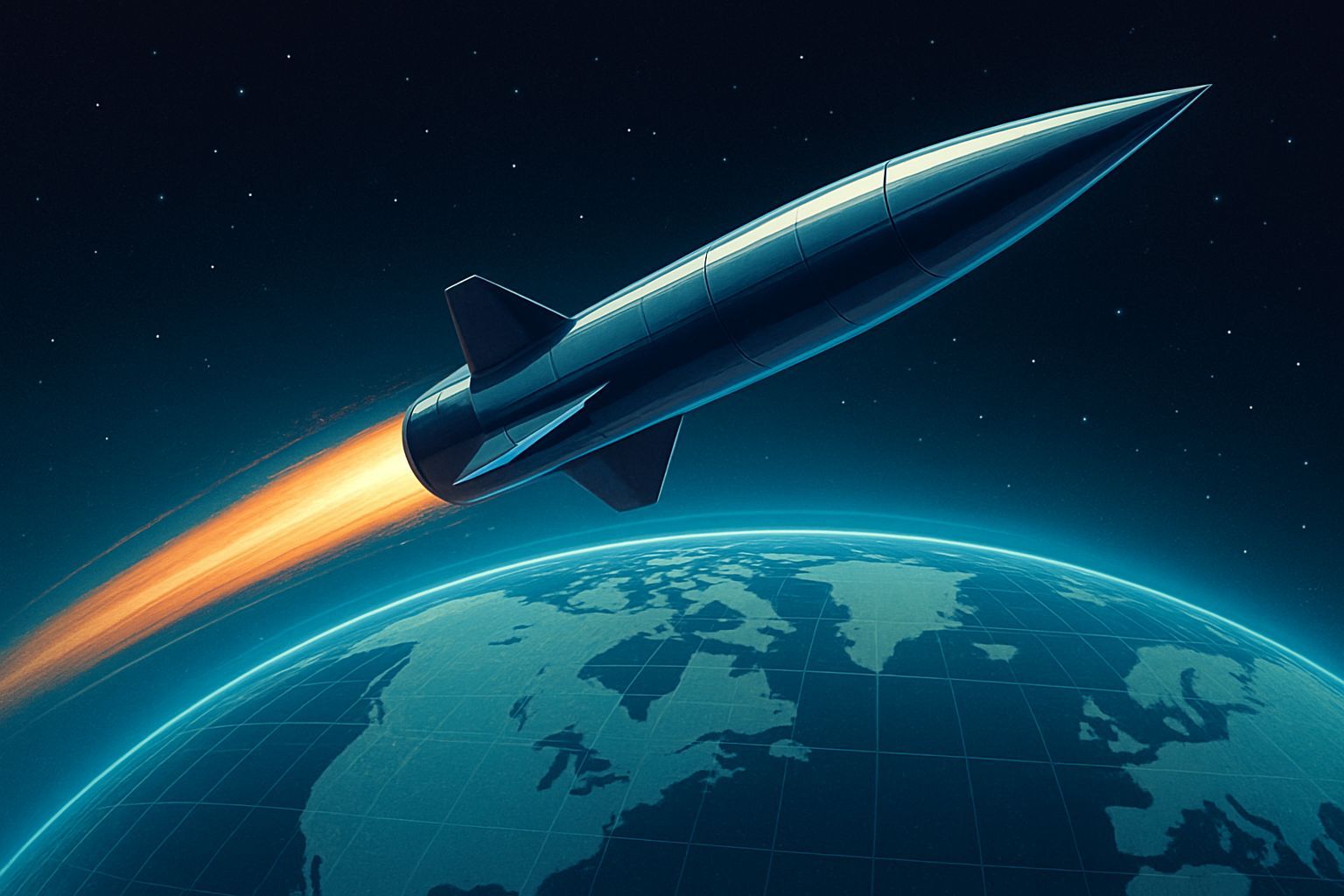
The achievement of a range of 1,000 miles with a conventional artillery bullet is an enterprise that pushes the boundaries of engineering and physics far beyond current capabilities, requiring innovative solutions in different technological areas. The first and most obvious obstacle is the propulsion. To generate enough energy to throw a bullet at such a distance, speed is needed to the inaudite mouth, well beyond the limits of conventional propellants that employ a single explosive charge. Several solutions are being explored: one of these is the use of advanced modular propellants that light up in sequence to gradually increase the thrust into the cannon. Another, more radical, involves the integration of rocket engines or, even more ambitiously, ramjet or scramjet directly into the bullet itself. These engines, once the bullet has reached a sufficient initial speed, would activate to support the flight at ipersonic speeds (Mach 5 and more) for most trajectory. This not only increases the range, but drastically reduces flight time, making interception more difficult. In parallel, the science of materials plays a crucial role. The cannons themselves and the bullets must resist extreme pressures and temperatures, with the barrel that must endure immense forces and the bullet that must maintain its structural integrity during the acceleration and the ipersonic flight in the dense atmosphere. New high-strength metal alloys and advanced composite materials are indispensable. Finally, theaerodynamics is fundamental. A projectile designed for these distances can not be a simple shell; it must be an aerodynamic vehicle optimized for the personal flight, minimizing resistance and maximizing efficiency. Sharp forms, control surfaces and a carefully calculated centre of gravity are essential to maintain stability and trajectory over long distances, even in the presence of atmospheric turbulence. The combination of these innovations is what makes the idea of a transcontinental artillery conceivable.
Extreme Distance Precision: Navigation and Intelligent Projects Guide
Throwing a bullet 1,000 miles away is one thing; hitting a target with micrometric precision is another challenge that requires a sophisticated integration of advanced navigation systems and guidance. Traditional artillery bullets are by their nature ballistic weapons, whose trajectory is determined by the laws of physics and influenced by factors such as wind, air density and earth rotation (Coriolis effect). At extreme distances, these variables become exponentially more significant, making it impossible to accept accuracy without flying corrections. That's where they come in smart bullets, which transform a simple grenade into a miniature missile. Most of these systems rely on a combination of GPS (Global Positioning System) and INS (Inertial Navigation System). The INS provides a continuous estimate of the position, speed and orientation of the bullet, while the GPS corrects the cumulative errors of the INS, providing an extremely precise position. However, only these two systems may not be sufficient for the terminal accuracy required at 1,000 miles, especially in environments where the GPS signal may be disturbed or denied. For this reason, strategic bullets will probably integrate terminal seekers: radar, infrared (IR) or laser sensors that acquire the target in the final phases of the flight, allowing micro-corrections to the trajectory through small aerodynamic control surfaces or maneuver engines. Some concepts also include the ability to receive flight route updates via date link, allowing the bullet to adapt to moving targets or changes in mission priorities. This level of autonomy and adaptability is what distinguishes the strategic cannon from its predecessors, raising it from an area weapon to a surgical attack system able to neutralize high-value targets with an unthinkable effectiveness for the artillery of the past. The real challenge is to miniaturize all these components and make them strong enough to resist the stress of cannon launch, a company that is pushing the defense industry to its limits.
The Evolution of Artillery: From Cannone d’Assedio to Strategic Instrument
To appreciate the revolutionary reach of a 1,000-mile cannon, it is essential to contextualize it in the wide and varied history of the artillery, which saw this tool evolve from a simple siege machine to an indispensable component of every modern army. The origins date back to the Chinese gunpowder and the first European bombs of the fourteenth century, massive and imprecise weapons, but capable of breaking the fortified walls, always changing defensive architecture. The innovation progressed slowly but constantly: in the 15th century, the French introduced the mobile artillery, and in the 17th century, Gustavus Adolf of Sweden made the guns lighter and maneuverable, turning them into a tactical support weapon on the battlefield. The 19th century witnessed crucial developments such as regulating rod (which drastically increased precision and spin) and rechargeable charges, which greatly speeded the rate of fire. The two World Wars saw the apex of the long barrel artillery, with the famous German “Paris Gun” which in the First World War terrorized the French capital for over 120 km, while being extremely imprecise and inefficient. After-war has led to the introduction of systems if you, which combined power of fire and mobility, and the development of increasingly sophisticated ammunition, including laser and GPS guide bullets. However, even the most modern systems such as the M109 or the PzH 2000 have ranged which rarely exceed 50-70 km with assisted ammunition. The 1,000-mile cannon represents a leap not only quantitative, but qualitative. It is no longer a tactical support weapon or disembarkation; it is a long-range attack platform that is located in the same strategic segment of ballistic missiles and cruise. This marks the definitive passage of the artillery from a role mainly of direct support to a role of strategic power deterrence and projection, a transformation that redefines its hierarchical position and its applications in the modern war panorama.
Doctrinal implications: Redesign the Future Battlefield
The introduction of a strategic cannon with a range of 1,000 miles is not simply an improvement of an existing weapon; it is a change that has the potential of radically redesign military doctrines and future operational strategies. Traditionally, the artillery has been used for close fire support, suppression of enemy defenses and logging of troops. A transcontinental system, however, extends its influence far beyond the tactical front, projecting it directly into the strategic domain. One of the most significant implications is the ability to lead deep attacks (deep strikes) on a large scale, a capacity that so far was almost exclusive prerogative of aviation and missile forces. This means being able to hit command and control centers, ammunition and fuel deposits, airports, ports and vital logistic knots of the enemy, although located hundreds of kilometers behind the lines. The ability to deny the enemy the possibility to gather and project forces from areas considered “sanctuaries” drastically changes strategic calculations. In addition, a strategic cannon supports the doctrine of multi-domain operations (Multi-Domain Operations – MDO), which aims to integrate and synchronize operations on land, sea, air, space and cyberspace. Being an earthly asset, it can provide precision focus on targets that would otherwise require risky air attacks, freeing air resources for other tasks or acting as a low cost complement for air and naval missions. It could also play a crucial role in suppression of enemy air defenses (SEAD), creating gates for fighter planes. The ipersonal speed of the bullets, with reduced flight times, would make it harder for the enemy to react or intercept. This creates an effect of “tyrant dilemma” for the opponent, forced to defend a much greater number of targets on a wider geographical area. The flexibility, the volume of fire and the potential persistence of such a system would open new paths for deterrence and offensive action, affecting strategic and operational planning well beyond the mere use of the weapon itself, forcing each opponent to reconsider the vulnerability of their most valuable assets and the depth of their operating sanctuaries.
Logistics and Deployment: The Challenge of a “Great Cannon” Tactician-Strategic
The idea of a 1,000-mile “strategic dog” is electrifying from the point of view of the fire power, but its true military value will intrinsically depend on its logistic feasibility and deployment. A weapon of this magnitude and complexity presents operational challenges that go beyond that of conventional artillery. First, the size. To achieve sufficient speed, the barrel will have to be extremely long, potentially tens of meters. This makes transport and positioning a colossal enterprise. It cannot be a “tactic” system in the traditional sense, mobile on standard trucks. It is more likely to be a weapon semi-moving, based on a rail chassis for long distance travel (such as Big Bertha or Dora guns of the Second World War, although with infinitely more advanced technologies), or an unmatched system, transportable by sea or with heavy strategic cargo planes (such as the C-17 or C-5) and then assembled on site. This involves the need for dedicated infrastructure, as reinforced rail tracks or large pitches, limiting its geographical flexibility. Then there is the question ofsupply of ammunition. Each bullet, given its complex design (with rocket/ramjet engines and driving systems), will be expensive and probably large. The logistics to transport, store and provide a constant flow of such ammunition to the cannon will be a critical chain. A single “big cannon” could require an entire logistic support brigade. The repositioning speed and battery time will be crucial factors for its survival in a modern combat environment. If the cannon is slow to move or prepare for fire, it becomes a vulnerable target for enemy reconnaissance and counter-bacterial attacks. Finally, theintegration with existing forces and crew training represent a further challenge. The operation of such a complex system will require highly specialized personnel, not only artillery, but also engineers, electronic technicians and data specialists. Its effectiveness will be maximized only if fully integrated in command and control networks, exploiting intelligence and targeting information in real time. The logistical difficulties and unfolding, therefore, are not only a technical detail, but central elements that will influence the doctrine of use and the economic feasibility of the strategic cannon.
Comparison with Alternative: Cannons, Missiles and Specific Advantages
In the modern arsenal, there are already numerous weapons systems capable of long-range attacks, including ballistic missiles, cruise missiles and armaments launched by aerial platforms. This raises a fundamental question: why invest in a “strategic year” when these alternatives already exist? The answer lies in a series of specific advantages that a system of artillery of this type could offer, distinguishing it from other options and filling a current capacitive gap. The first advantage is potentially the cost per shot. Although the initial development and cost of the cannon system itself are high, it is expected that the cost of production and the operating cost of a single artillery bullet, although advanced, are significantly lower than that of a ballistic missile or a comparable cruise. This allows to support a much higher fire volume and for prolonged periods, making it ideal for flagging campaigns or to hit numerous low-medium-value targets on a large scale. The fire rate and charging speed i'm another strength. Missile systems require longer charging times and complex infrastructure for refuelling. A cannon, once placed, could be able to shoot a sequence of bullets at much faster intervals, keeping a constant pressure on the enemy. From the political-strategic point of view, the use of “artillery” could be perceived as less escalator with regard to the use of “ballistic missiles”, especially if they are associated with nuclear warheads or specific international treaties. This could offer greater flexibility in the rules of engagement and crisis management. In addition “not ballistic” trajectory of a ramjet/scramjet bullet, with a phase of flight sustained in the atmosphere, makes it different from a traditional ballistic missile, potentially more difficult to intercept for some antimissile defenses that focus on predictable parabolic trajectories. Ballistic missiles tend to fly at much higher altitudes, leaving the atmosphere and returning there, while cruise missiles are slower and fly at lower altitudes. The strategic cannon bullet could occupy an intermediate niche, flying at odds and speeds that challenge both types of defense. Finally, a cannon offers the flexibility of different types of ammunition, from conventional to penetrating headboards, to clusters (if allowed), or even ammunition with EMP or non-lethal capacity, expanding the range of possible answers. These combined advantages suggest that the strategic cannon is not intended to replace missiles, but to complement them, offering a new, powerful and flexible option in the spectrum of long-range attack capabilities.
The Ethics of Long Gittata and the Future of the Earth War
The advent of weapon systems such as the 1,000-mile strategic cannon does not only raise technological and doctrinal questions, but also introduces deep reflections on theethics of war and long-term geopolitical implications. The ability to accurately millimeter targets at previously unthinkable distances for artillery, and from positions that make the attack almost immune to direct retaliation, changes the dynamics of the conflict. One of the main concerns is the risk of escalation. Although an artillery bullet is intrinsically a conventional weapon, its strategic reach and its ability to threaten high-value targets could be perceived by an opponent as an existential threat, pushing him to more aggressive responses or the use of unconventional weapons. The distinction between tactical and strategic weapons, already labile, becomes even more nurtured. The relatively lower ease and cost per shot compared to missiles could lead to more frequent use, lowering the threshold for the use of long-range attacks and increasing the potential of conflict. In addition, the question of liability and the legitimacy distance attacks are increasingly complex. With intelligent bullets and autonomous systems, who is responsible for errors or collateral damage? While precision aims to reduce civilian casualties, the extension of the range of action means that many more areas and populations could be at risk. The possibility of hitting “sanctuaries” enemies means that there will be almost no safe place in a conflict, increasing pressure on civilians and non-military infrastructure. On the front of the arms control, the development of such systems could trigger a new arms race, with other powers seeking to develop similar capacities or countermeasures. This could destabilize regional and global balances, making negotiations more difficult on arms reduction. The future of the Earth’s war, with the integration of the strategic cannon, will be increasingly focused on network war and artificial intelligence. The artillery systems will no longer operate in isolation, but will be nodes of a wide network of sensors, targeting platforms and command and control systems, orchestrated by advanced algorithms. The ability to make quick decisions and act on real-time information will be decisive. This leads us to consider the growing role ofautonomy on the battlefield. How far will the systems take decisions of engagement? The ethical and legal implications of this autonomy must be dealt with urgently. In summary, the strategic cannon is not only a more powerful weapon, but a catalyst for a wider debate on the nature of war, its morality and its impact on global stability.
Towards 2023 and Beyond: The Vision for the New Era of Artillery
The ambitious goal set in 2019 to test a prototype of strategic cannon with a range of over 1,000 miles by 2023 represented a milestone in the vision of the United States Army for the modernization and maintenance of superiority on the battlefield. While 2023 passed, the push for Long Range Precision Fires (LRPF), of which the strategic cannon is a key component, continues to be an absolute priority. The achievement of this goal, or its continuous development beyond the date initially set, symbolizes much more than a simple technological improvement; it represents a commitment to redefine the power of earthly fire and its ability to influence the balances of global power. The vision for the new era of the artillery does not stop at the trip. It involves the integration of artificial intelligence and machine learning to improve targeting, optimize trajectories and predict enemy countermeasures. Systems will be increasingly connected in a network of fight cloud, where sensors from different domains (terrestrial, air, space) will feed in real time the data necessary for a precise and rapid engagement. They will also explore multi-mission capacity for bullets, not limited only to explosive warheads, but including potentially electronic war capabilities (EW), reconnaissance, or even the use of micro- drones for long distance monitoring and identification of targets. This versatility would further increase the strategic value of the cannon, turning it into a multipurpose platform. The research and development (R& D ) will continue to focus on the miniaturization of driving components, on the efficiency of impersonal propellants and on the resistance of materials, opening the way to even more powerful and compact systems in the future. It is not only about creating a weapon, but building an entire long-range precision fire ecosystem, which works in synergy with all other aspects of the armed forces. The strategic cannon is therefore a pioneer, a symbol of the determination of the armed forces not to be overclassed by rapid technological advances and emerging geopolitical challenges. Its concreteization, regardless of the initial deadlines, will mark the beginning of an era in which the artillery, the oldest of modern weapons, regains an unprecedented strategic importance, ready to dominate the battlefields of the 21st century with a power and precision that would also amaze the most visionary military strategists of the past.


