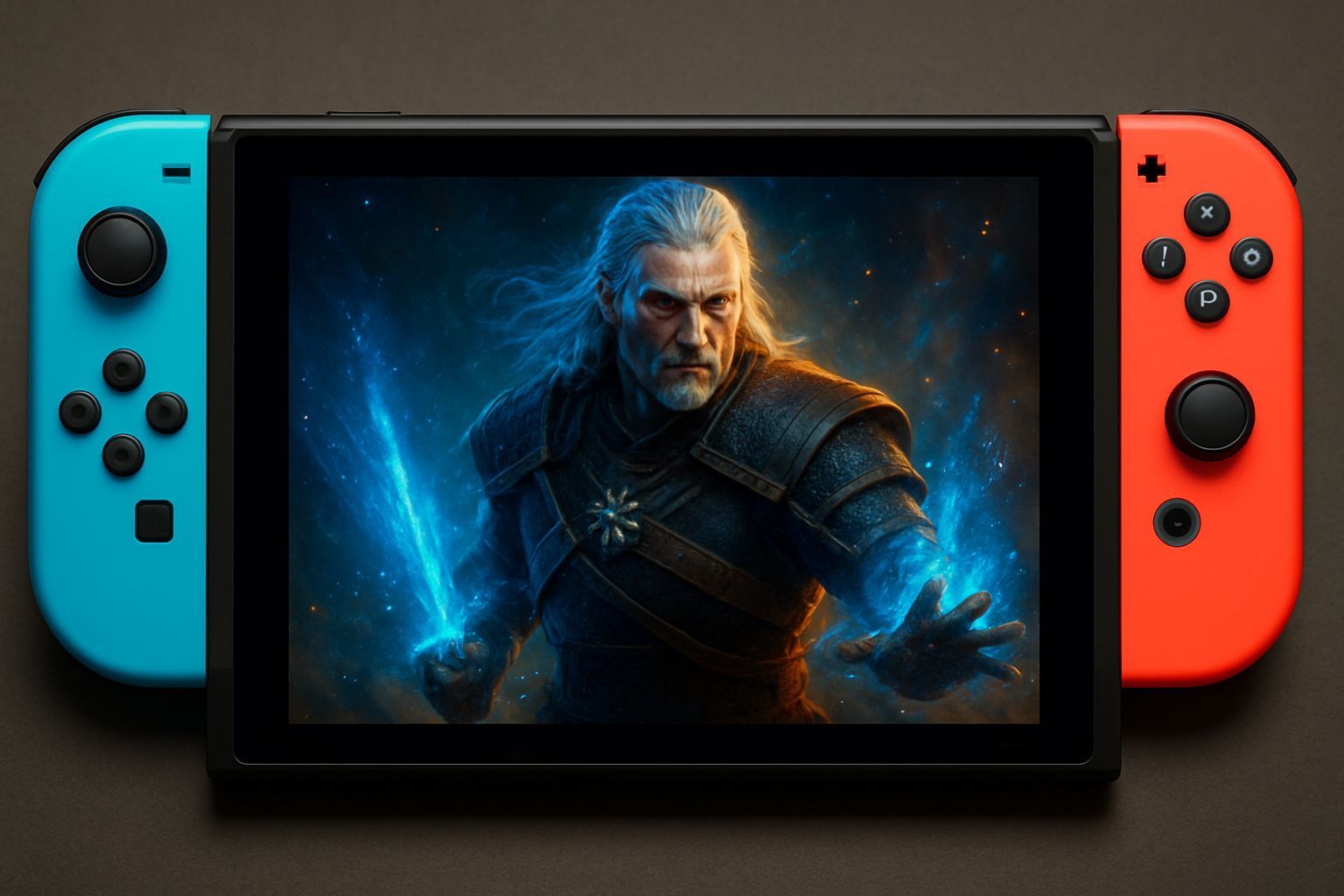
In the dynamic and unstoppable universe of video games, news of the return of a masterpiece on a new platform is always able to unleash a wave of enthusiasm and debate. A modern classic The Witcher 3: Wild Hunt, universally acclaimed for its epic narrative, the boundless open world and unforgettable characters, has already demonstrated its ability to transcend the boundaries of the videoludic medium, affecting the pop culture at 360 degrees — last but not least through the television adaptation of Netflix which, as many claim, would have much to learn from the depth of the original games. The announcement, then realized, of its version for Nintendo Switch, represented not only an opportunity for a new audience to immerse themselves in the adventures of Geralt of Rivia, but also a technical challenge that pushed the limits of the Nintendo hybrid console. This strategic move, aimed at extending the life of an already successful title, raises fundamental questions about the future of porting, the evolution of hardware and the intrinsic value of the great videoludic works in a constantly changing market. Let’s discover how this ambitious project fits into the broadest context of industry, among fans’ expectations, engineering skills and the endless search for new frontiers of digital fun.
The Phenomena The Witcher 3: Wild Hunt and His Longing Heritage
Originally launched in 2015, The Witcher 3: Wild Hunt it was not simply a video game; it was a cultural event that has redefined expectations for open-world role-playing games, raising the asticella regarding narrative, the complexity of moral choices and the wealth of a fantasy universe. Its setting, based on the novels of Andrzej Sapkowski, has been explored with depth and detail such as to make every corner of the world a living and button place of stories and secrets. From the intricate political plots of Velen to the majestic peaks of the Skellige Islands, each mission, principal or secondary, was filled with a sense of purpose and authenticity that few other titles managed to match. The protagonist, Geralt of Rivia, the White Wolf, became an indelible icon, a complex and morally ambiguous hero who managed to conquer the heart of millions of players. The success of the game has transcended the simple critical appreciation, translating into exceptional sales and an extremely active and faithful fan community, which continues to celebrate the game years after its debut. This longevity is a testament to its intrinsic quality, a factor that unites The Witcher 3 to other giants of the past, like Halo: Combat Evolved, a title mentioned in the original text that, despite the past twenty years, remains impressed in the collective memory of the players for his ability to innovate and leave a deep mark. The inheritance of The Witcher 3 it is manifested not only in its immediate impact, but also in its influence on successive generations of developers and the expectations of players, who now seek a level of immersion and narrative sophistication that the masterpiece of CD Projekt RED has contributed to making a standard. Its ability to maintain relevance, even in the face of new outputs and a rapidly changing industry, bears witness to its nature milestone of modern gaming, a work that continues to resonate and find new ways to reach the hearts of players.
The Technical Challenge: Bring a Colossus to Nintendo Switch
The project to bring a game of graphical and computational scope of The Witcher 3: Wild Hunt on a console like Nintendo Switch was, without means terms, a miracle of engineering and optimization. The Switch, while being an innovative and successful console, operates with hardware specifications significantly lower than PlayStation 4, Xbox One and PC, platforms on which the game had originally shone with high graphic settings. The technical details emerged, such as the resolution 720p in television mode and one 520p dynamic resolution in portable mode, with a frame rate fixed at 30 FPS, preannounced inevitable compromises. However, the magic of optimization lies in the ability to make these compromises almost imperceptible or, however, acceptable, keeping intact the gaming experience. The development team, in collaboration with Saber Interactive, had to work meticulously on every aspect of the game: from reorganizing world geometry to downsampling textures, from reducing shadow detail to managing the density of vegetation and the crowd. It was not a simple ‘copy and paste’, but a real adaptation reconstruction, which required an incredible mastery of development tools and a deep understanding of the Switch hardware. The final result was a porting that, while not matching the sharpness and fluidity of the most powerful versions, kept thesoul of the game, allowing players to enjoy the vastness and depth of the world of The Witcher wherever they were. This not only demonstrated the potential of the Switch as a AAA title platform, but also highlighted the ability and dedication of development teams to overcome seemingly insurmountable technical obstacles, offering a flashing example of how software engineering can extend the life and accessibility of videoludic masterpieces to a wider and diverse audience, overcoming the barriers imposed by hardware differences and offering a surprisingly complete experience despite the obvious technical limitations.
Expectations and Reality: The Role of the Community and the Fugues of News
The waiting for the arrival of The Witcher 3 on Nintendo Switch was accompanied by a mixture of hope and skepticism, a common phenomenon in the world of gaming, amplified by the digital age and the pervasiveness of social media. The first indiscretions and leaks of news, like that of czech retailer that hypothesized an exit date on September 24, they acted as gasoline on the fire of online discussions. Every unofficial fragment of information is dissected, analyzed and debated fervently by the communities of players, eager to anticipate the future and to form an opinion before even official communications. This dynamic creates a significant pressure on developers and publishers, who must navigate between the need to maintain the reservoir and the desire to involve their fan base. The case Escape From Duckov, which sold 500 thousand copies in just three days, demonstrates how the combination of pre-launch hype, word and visibility on the media can result in a lightning commercial success, even for less anticipated titles but capable of capturing the collective imagination. On the other hand, even extremely anticipated games like Cyberpunk 2077, mentioned in the original text for its development dynamics, have shown how much expectations can, if mismanaged, quickly turn into disappointment. The credibility of information, often, is all to be verified, and the warning to “do not raise your hopes too much” becomes a mantra for the benefited consumers. The online community, with its forums, comment sections and discussions on the various social networks, plays a crucial role not only in the dissemination of these news, but also in the formation of the general feeling towards a title. It is a complex ecosystem in which specialized media, player voices and marketing strategies intertwine, shaping the perception of a product well before it reaches the market and demonstrating how the management of expectations has become a fundamental and delicate component in the life cycle of each video game.
The Porting and Remaster Market: A Sustainable Business Model?
The arrival of The Witcher 3 on Nintendo Switch is not an isolated event, but it fits into a broader and more consolidated trend in the gaming industry: the prolific market portingof the remastered and the remake. This strategy of reproposing existing titles on new platforms or with updated graphics has become an economic pillar for many developers and publishers. There are multiple reasons behind this choice. First, it significantly extends the life cycle of a successful game, allowing it to reach a completely new audience that may not have had the opportunity to play it on its debut, perhaps because it did not own the original platform. This is especially true for the Switch, which attracted millions of new players and families. Secondly, the cost of developing a porting or remaster is, in most cases, considerably lower than the creation of a new AAA title from scratch, offering a higher investment risk in the face of a potential high economic return, especially when it comes to an already proven quality and popularity. The decision to include all expansions (Hearts of Stone and Blood and Wine) and DLC published on PC and console in the Switch version The Witcher 3, as indicated by the source, represents a further proposal of value that calls for purchase, offering a complete and immediately enjoyable package. However, not all ports are welcomed with the same enthusiasm; the quality of implementation is fundamental. Poor porting can damage the reputation of a franchise and development team, while a well done job, like that of The Witcher 3 on Switch, it is celebrated as a technical victory. This phenomenon also extends to the world of retrogaming, where the return of historical marks as Amounts with new back consoles, loaded with classics and equipped with HDMI connectivity for modern TVs, demonstrates an insatiable hunger for the ludic experience of the past. This dual approach — reproducing modern masterpieces on more modest hardware and rediscovering gems of the past with contemporary technologies — highlights a market dynamic that enhances both innovation and nostalgia, ensuring a constant flow of content that draws on the rich history of the videoludic medium, making it accessible to an increasingly wide and diverse audience in terms of preferences and gaming platforms.
The Evolution of Hardware Gaming: From Retro Consoles to New Generations
The video game industry is inherently linked totechnological evolution of hardware, an evolution that saw consoles switch from simple ludic devices to real multimedia entertainment centers, with computing powers and graphic skills that until a few years ago seemed science fiction. The Nintendo Switch, with its innovative hybrid design that allows you to play both in portable mode and on TV, represents a turning point, demonstrating that flexibility and accessibility can be as important as pure brute power. Success The Witcher 3 on Switch is emblematic of this philosophy, challenging the convention that only the most powerful hardware can host the most ambitious games. On the other hand, the arrival of new generation consoles such as PlayStation 5 and Xbox Scarlett (or Series X/S), with the introduction of Ultra-fast SSD, has marked another leap forward, promising almost non-existent loading times and new possibilities for the design of the game worlds. This is what the creators of Control and Alan Wake they praised, recognizing the revolutionary potential of such technology. The impact of SSDs is not limited to speed, but opens doors to more complex game architectures, denser worlds and more fluid and immediate gaming experiences, eliminating barriers between the player and the action. This push towards innovation is in constant dialogue with the desire to revive the past, as evidenced by the relaunch of the brand Intellivision by Atari, with a back console that includes 45 classic games and wireless controllers, offering a bridge between generations of players. The mobile hardware, cited in the categories of the original site, also continues to progress at dizzying pace, affecting the design of user interfaces and portability of games, pushing consoles to become increasingly versatile. This coexistence of cutting-edge technologies and a renewed interest in gaming roots creates a vibrant and diverse ecosystem, where each player can find their own size, whether they explore vast and graphically complex worlds on the latest consoles, or prefer the simplicity and timeless charm of the classics on portable devices, highlighting a constant search for balance between power, innovation, accessibility and nostalgia that continues to shape the digital entertainment landscape.
Beyond the Game: Intersection between Video Games, Media and Pop Culture
Video games, from niche pastime, have become one of the most influential and pervasive forms of entertainment of the 21st century, woven deeply with other media and becoming a pillar of global pop culture. The case The Witcher 3 is a striking example of this synergy: its immense popularity has led Netflix to produce a TV series based on the Rivia Geralt universe, creating a virtuous cycle where the success of the game fuels interest in the series and vice versa. This phenomenon is not isolated; more and more often, videoludic franchises are adapted into movies, comics, books and merchandising, expanding their scope far beyond the player's screen. Similarly, other media influence video games, providing inspiration for new stories, settings and mechanics. The quality of these transpositions, however, is a crucial aspect. As suggested by the original text, Netflix’s adaptation could ‘learn a few things from games’, underlining how the depth and interactivity of the original medium are difficult to replicate in passive formats. The discussion on platforms like forums and comment sections, cited in the text, amplifies these debates, transforming video games into a real social phenomenon. Reviews, like that of Ninja Gaiden 4 mentioned in the starting article, they are no longer just simple reviews about a product, but they become part of a broader conversation that shapes audience perception and evolution of genres. The quiz world, as ‘How much do you know about Halo: Combat Evolved?’, highlights how games generate deep knowledge and a passion that fans love to test and share. This cultural intersection goes beyond mere entertainment; video games become a mirror of society, exploring complex themes, offering new perspectives and acting as catalysts for dialogue. Their ability to create immersive narrative universes, memorable characters and global communities places them as a dominant force in the panorama of contemporary entertainment, demonstrating that their impact goes far beyond the simple interaction between a player and a screen, permeating every aspect of popular culture and continuing to shape future trends and directions.
The Future of Gaming: Innovation, Accessibility and Constant Research of New Experiences
The future of gaming is an expanding horizon, shaped by a combination of technological innovation, increasing accessibility and an insatiable thirst for new experiences by players. The main guidelines include the advancement ofartificial intelligence, that according to some visions is not only a bubble but the “destruct of entire industries”, and that in gaming promises to revolutionize the complexity of non-playing characters, the procedural generation of worlds and the adaptability of challenges, making every game unique. At the same time, accessibility remains a fundamental pillar: platforms such as Nintendo Switch that carry AAA titles in the pocket or the successful porting phenomenon, such as that of The Witcher 3, show how industry is trying to reach any type of player, regardless of platform or time availability. The diversity of the market is an encouraging signal: from the success of indie games as Escape From Duckov, which with its 500 thousand copies sold in a few days shows that great sales are not exclusive to AAA colossi, to discussions on new skins in games as Battlefield 6, which, while being a minor detail, generate enormous engagement in the community, industry is a cauldron of ideas and creativity. New hardware technologies, like next-generation SSDs, will continue to push the limits of what is graphically and technically possible, but true innovation is not only in the brute power, but in the ability to create meaningful interactions and memorable stories. The involvement of the community, through forums, comments and active participation in debates on every aspect of the game, from the lore to mechanics, is stronger than ever, transforming players from simple consumers to co-creators of the play experience. This dynamic ecosystem, in which technology merges with narrative and creativity with engineering, promises a future in which video games will continue to surprise us, to connect and inspire us, offering increasingly immersive and meaningful adventures, overcoming the boundaries of imagination and continuing to consolidate itself as the most interactive and participative form of art of our time, constantly changing and always looking for the next frontier of fun.
Conclusion: The Journey of Geralt Continues, and Our With Him
In summary, the path The Witcher 3: Wild Hunt, from its acclaimed debut to its amazing rebirth on Nintendo Switch, perfectly encapsulates the many facets of the contemporary video industry. It is not only the story of a game that has conquered millions of hearts with its narrative depth and its boundless world; it is also the demonstration of how the engineering vision can overcome hardware limits, transforming technical challenges into accessibility triumphs. The porting on Switch, with its inevitable but masterly managed graphic compromises, opened the doors to a new audience, allowing a masterpiece to continue its journey and further consolidate its legacy. The whole discussion led us to reflect on broader themes: the importance of the community in shaping expectations and spreading the hype, the economic and cultural value of porting and remasters as sustainable business models, the unstoppable evolution of hardware that constantly pushes the boundaries of what is possible, and the ever deeper interconnection between video games and other media forms. The epic of Geralt of Rivia, which can now be experienced both on the large screen of the TV and in the palm of the hand, symbolizes the flexibility and adaptability that define the modern videoludic panorama. As we look to the future, with the advance of AI and the emergence of new technologies, one thing remains certain: the search for new, immersive and meaningful gaming experiences will continue to lead innovation. The story of The Witcher 3 on Switch is not only a review or a technical analysis; it is a testimony of inexhaustible passion that binds players and developers, a passion that nourishes the constant evolution of a medium that never stops surprising us and exciting us, ensuring that the journey through fantastic worlds and epic stories, just like that of our beloved Strigo, is destined to continue, enriching new forms and new possibilities.


