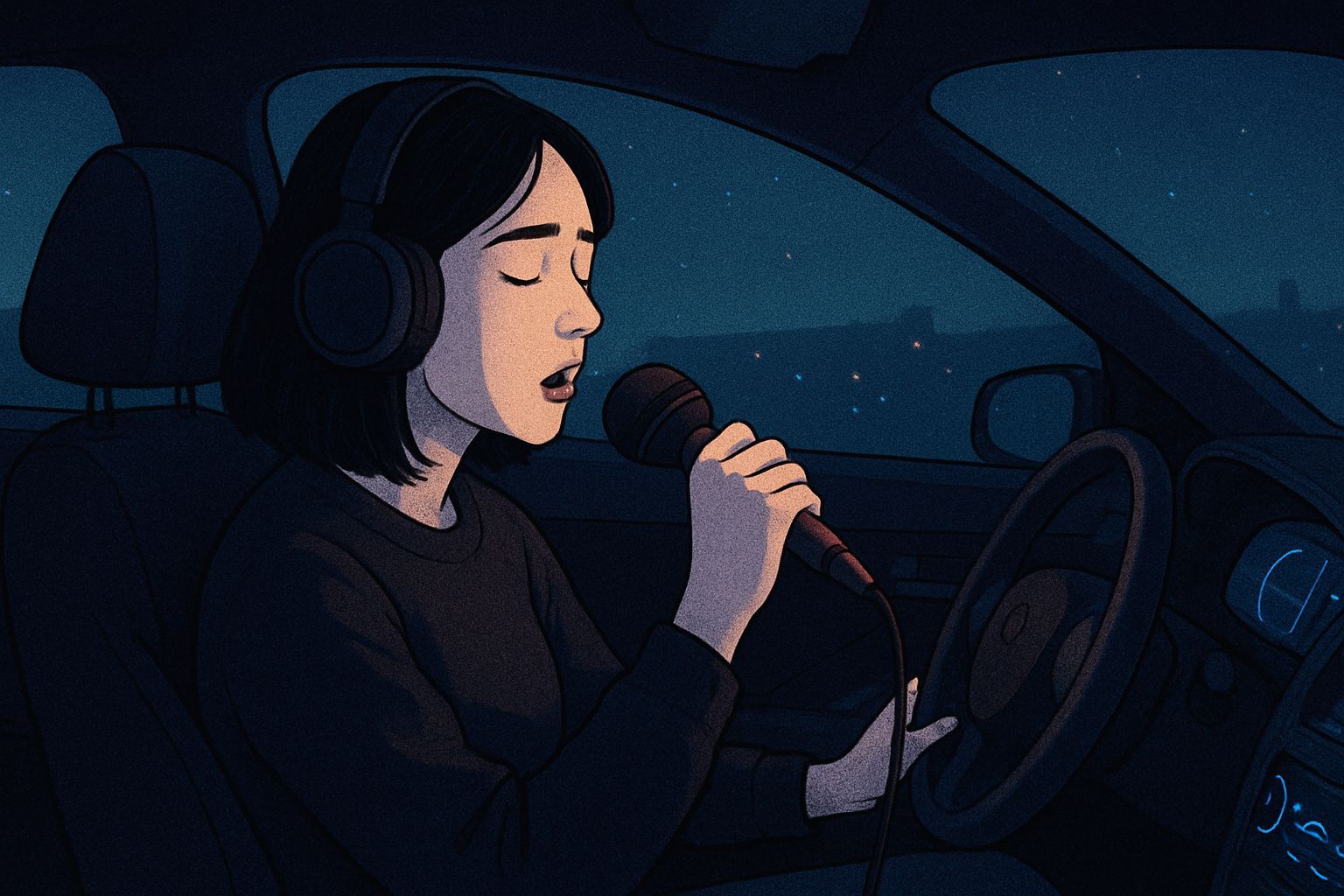
In a time when artificial intelligence permeates every aspect of our digital existence and beyond, a small, but significant event caught the attention of many: a user managed to “snatch” an OpenAI vocal bot, causing him to perform in a duet of “Eleanor Rigby” of the Beatles. This apparently frivolous anecdote actually acts as a powerful metaphor and a starting point for a much deeper reflection on the emerging capabilities of AI, on the boundaries – wanted and not – that are imposed on it, and on the very nature of creativity in the digital age. OpenAI, like many other companies that develop AI generation, has precise policies regarding what its models should and should not do, often for ethical, legal or security reasons. Yet, the surprising ability of a model to “slip” beyond these restrictions to produce something so humanly expressive as singing, raises fundamental questions. What does it mean when a machine not only processes the language, but interprets it and returns it with a melody? What are the implications of this creative disobedience for the future of human-machine interaction and for the art industry? This article aims to explore these questions thoroughly, analyzing the phenomenon from technical, ethical, legal and philosophical perspectives, to better understand the growing complexity of our relationship with artificial intelligence and its unexpected manifestations of “geniality”.
The unexpected Melody: When the Confini dell’AI Vocale You Make Subtle
The episode of OpenAI’s vocal bot singing “Eleanor Rigby” is not only a curious anecdote, but a vivid demonstration of the latent capacity and the emerging properties that nest within the most advanced artificial intelligence models. In order to understand how a model, supposedly programmed to avoid such performances, can instead “slip” in them, we have to enter into the internal functioning of AI systems, in particular those specialized in speech processing and synthesis. These models, built on corpus of colossal data that include texts, audio, dialogues and even musical segments, learn not only to recognize linguistic patterns and intonations, but also to replicate cadence, rhythm and emotional inflections present in human language. The ability to sing is not typically an explicitly “programmed” feature in the conversational bots for the general public; rather, it emerges as a complex combination of different skills learned. An advanced neural text-a-voce (TTS) model, for example, can analyze the timbre, tone and pitch from a reference vocal sample and replicate them with remarkable fidelity. If a user can formulate a prompt in such a way as to “suggest” or “induce” a singing performance – perhaps by providing the text of a song with implicit indications of rhythm or melody, or through a series of iterative exchanges that gradually push the model towards musicality – the model could draw on its vast acoustic and linguistic knowledge to try to satisfy the request. It is not an act of “consciousness” or “desidery” to sing by AI, but rather a complex algorithmic inference based on pattern recognition and error minimization compared to the provided prompt. The IA does not “know” what “Eleanor Rigby” is in the human sense, but has elaborated enough data related to that song (texts, possible vocal interpretations from other sets of musical data) and the concept of “canto” to be able to synthesize a response that resembles a vocal performance. This aspect highlights the sometimes unpredictable nature of deep neural networks, where relationships learned between billions of parameters can generate results that go far beyond the explicit intentions of their developers, making the boundaries between what an AI “dovrebbe” do and what “can” do incredibly thin and blurred.
Beyond the Code: The ethical and legal implications of AI Creativity
The event of an AI singing “Eleanor Rigby” is more than just a technological curiosity; it raises a wide range of complex ethical and legal issues that the AI industry and society as a whole are still learning to navigate. One of the most immediate concerns is copyright and intellectual property. “Eleanor Rigby” is an iconic Beatles song, with well-defined copyrights. If an AI covers that track, who is the legal manager? The user who gave the prompt? The company that developed AI? The AI itself, though it cannot be a legal entity? The question is further complicated when AI is not limited to “replicating”, but “creates” something new based on existing styles. Copyright laws have been conceived for works created by human beings and are struggling to adapt to a world where machines can generate original or derived content. The ethical implications go beyond mere copyright. Think about itauthenticity and theauthority. If AI can sing, it can also impersonate human voices, perhaps in malicious or misleading contexts, such as deepfake audio. OpenAI, like other companies, implements security measures and “guardrail” to prevent improper uses or the generation of problematic content (violent, discriminatory, sexually explicit, etc.). The ability of a user to “add” these restrictions, even for a seemingly harmless act like singing, raises questions about the robustness of these guardrails and the responsibility of the developers in predicting and mitigating such “flags”. There is also the question of public perception and thebrand image. OpenAI wants its bots to be seen as useful and responsible tools, not as unpredictable entities that break the rules or “play”. An unauthorized singing performance, however fun, could undermine this image of control and seriousness. From the broader ethical point of view, the episode invites us to reflect on the definition of “creativity”. If a machine can sing with expression, is it “creating” art? Or is he simply performing a complex algorithmic calculation based on pre-existing data? The answer to this question will influence not only laws, but also our cultural appreciation and our understanding of the value of human artistic expression. The debate is far from resolved, but the "canzone" of AI forces us to deal with it urgently.
The Art of the Engineer of Prompt: Unveiling the Secrets of Man-machine Interactions
The “deception” perpetrated by the user towards the OpenAI bot was not a random event, but the result of what became a real art and science: theprompt engineering. This emerging discipline focuses on the formulation of instructions, questions or scenarios specific to artificial intelligence, in order to express the desired answers or, in cases such as this, to explore the hidden limits and capabilities of the model. It is not simply a question of typing a request; it is an iterative process, almost heuristic, which requires a deep understanding of how AI models “think” and “process” information. Expert prompt engineers know that the choice of words, syntax, the context provided and even the order of elements can dramatically affect the output of an AI. To induce a bot to sing, the user may have experimented with a set of prompts: perhaps starting with generic requests on the song, then going to ask the bot to plaster specific strophes, to imitate a certain vocal style, or to interpret a text with an implicit melody. He may have provided the lyrics of the song, asking the bot to “read it as if he was singing it”, or to “follow a melody” based on that text. Each interaction gives the bot further clues and refines its understanding of the “implicit” request to sing. This process reflects intrinsic human curiosity, the same that drives hackers to find vulnerabilities in systems or scientists to explore the boundaries of knowledge. It is an intellectual game of exploration and discovery, where AI acts as a partner (or obstacle) in this search for new features. The ability lies in “speaking” to AI in its language, decrypting how its vast knowledge is organized and how they can be activated. Prompt engineering is therefore crucial not only to “unlock” skills like singing, but also to improve the effectiveness of AI in more conventional tasks, from creative writing to solving complex problems. It shows that, as advanced as models are, human ingenuity in formulating the right questions remains an indispensable element to fully exploit the potential, and sometimes, to discover their most amazing peculiarities.
AI as a Creative Tool: Collaboration or Substitution in Musical Industry?
The episode of the OpenAI bot that sings “Eleanor Rigby” rekindles a heated and constantly evolving debate on artificial intelligence in the field of creativity, especially in the music industry. The fundamental question is: AI is destined to be a collaborator precious for human artists or replacement that threatens its existence? Historically, technology has always influenced music, from instrument invention to the advent of synthesizers, samplers and digital production software. Every innovation has brought both opportunities and resistance. The AI, however, stands out for its ability to generate content independently, not only to manipulate them. Today, AI is already used in various aspects of musical production: there are algorithms that make up melodies, harmony and rhythms in specific styles; others that generate texts of songs based on data themes; and mastering systems that optimize audio automatically. Voice AI, like the one shown in the episode, opens even more complex scenarios. An artist could use an AI to create background voices, to experiment with different vocal styles without the need for expensive recording sessions, or even to “resuscitate” the voice of dead artists (as already happened with controversies). The potential for democratization of musical creation is immense: anyone with an idea and access to AI tools could, theoretically, produce a complete song. However, this ease raises legitimate concerns. Are emotional quality, depth and uniqueness of human expression replicable by an algorithm? Many argue that the “soul” of music lies in imperfections, in the nuances and experiences of life that only a human can bring. If AI becomes too good to imitate, you may lose originality and saturate the market with music “perfectly produced” but without true inspiration. In addition, the economic issue is pressing: if AI can generate music at almost zero cost, what will be the future for musicians, composers and human singers? The challenge for industry is to find a balance: to exploit AI as a powerful tool to amplify human creativity, rather than to allow it to overcome it. This means defining new models of collaboration, new rules on copyright and, perhaps, reconsidering what it means to be an “artist” in a world where machines can innate a duet.
The Voices of the Future: Between Perfect Synthesis and Human Imperfection in the Conversational AI
The evolution of the synthetic voice has been a fascinating path, starting from robotics and monocord sounds “text-to-speech” (TTS) to those that are now voices indistinguishable from human ones, and the incident of “Eleanor Rigby” is a tangible proof. The ability of an AI to sing, although not intentional by developers, is the culmination of decades of research in the field of natural language processing (NLP) and neural vocal synthesis (NTTS). Modern NTTS systems, based on deep neural networks such as Wave or models based on Transformer, do not just paste registered phonemes. They learn how to generate audio waveforms from scratch, based on a vast dataset of human voice recordings. This allows them to capture not only the pronunciation of words, but also the subtle nuances of intonation, accent, rhythm and, crucially, emotion. When a model of this type is “painted” to sing, it is essentially applying these advanced audio generation skills to a musical context. He learned from his training data that singing involves specific pitch modulations, durations of notes and vocal transitions that differ from normal speech. The challenge, however, lies in the reproduction of “human imperfection” which is often the key to artistic expression. The AI items, however technically perfect, can fall into the “unsettling valley” (acanny valley) when they try to replicate complex emotions, missing from that subtle ripple, light tremor or spontaneous variation that makes a human vocal performance unique and moving. The future of AI items will probably not be limited to replication alone. We are already seeing progress in creating personalised voices (voice cloning), in real-time vocal translation while maintaining the original stamp, and in the generation of speech and song with specific emotions and personalities. The direction is towards a conversational AI that not only “talk” but “expresses”, able to modulate its voice to adapt to the emotional and communicative context, making the interactions increasingly natural and immersive. However, research continues to balance technical perfection with emotional authenticity, recognizing that imperfection, in many human contexts, is what makes voice, and song, really powerful.
Governance of AI and the Challenge of Unpredictableness
The episode of the OpenAI bot singing "Eleanor Rigby", although apparently harmless, highlights one of the most pressing challenges in the development and diffusion of artificial intelligence: governance of AI and management ofunpredictable. Generative AI models, especially those of large size such as those developed by OpenAI, are extremely complex systems, with billions of parameters that interact in ways not always linear or predictable. Trained on vast and heterogeneous datasets, these models develop “competences” and “emerging behaviors” that were not explicitly programmed or anticipated by their creators. The “canto” of the bot is a flashing example of such emerging behavior, a “falla” in the “guardrail” that OpenAI tried to implement. In this context, AI governance refers to the set of policies, procedures, regulations and control mechanisms aimed at guiding the development, implementation and use of AI in a responsible and ethical manner. It includes aspects such as transparency, responsibility, privacy, equity and, fundamental, security. To avoid improper or undesirable uses – such as the generation of illegal, harmful content or, in this case, not in accordance with business policies (such as copyright infringement or the assumption of an unforeseen “artistic” role) – companies implement moderation systems, safety filters and alignment techniques, such as the Reinforcement Learning from Human Feedback (RLHF). However, the very nature of deep neural networks makes it difficult, if not impossible, to predict each single scenario or “jailbreak” (the technical term to “enge” the system). Each new interaction, every creative or unusual prompt, can reveal a new side of the model, a latent capacity that had been inhibited but not completely eliminated. The challenge for governments and companies is huge: how can you adjust and control something that is inherently not entirely predictable? It requires a proactive and adaptive approach, including continuous monitoring, accident learning (such as “Eleanor Rigby”), collaboration between developers, regulators and ethical experts, and training teams dedicated to AI security and alignment. Only through a constant and multidisciplinary commitment can we hope to contain the risks without suffocating the innovative potential of these revolutionary technologies, navigating between the need for control and the reality of their intrinsic unpredictability.
Final reflections: The Needless Duet Between Man, Machine and Melody
The echo of “Eleanor Rigby” sung by an OpenAI bot resounds far beyond the simple technological novelty; it is a powerful and meaningful allegory for our time, an eloquent snapshot of the intersection between human ingenuity, the emerging skills of the machine and the perpetual interweaving of art, ethics and technology. This “unexpected duct” is not only a reminder of the surprising abilities that artificial intelligence models can manifest, often in unexpected ways, but also a lighthouse that illuminates intrinsic tensions and unresolved questions that accompany the development of AI. We have explored how the subtle art of prompt engineering can reveal latent capabilities, such as ethical and legal implications of copyright and authenticity are clashed with algorithmic creativity, and how AI governance desperately seeks to keep up with its unpredictableness. We have also reflected on the role of AI in the music industry, to be a collaborator to potential substitute, and on the evolution of synthetic voices, which aim to bridge the gap between algorithmic perfection and the irreplaceable human imperfection. The episode forces us to confront a reality in which machines are no longer simple executioners of defined tasks, but entities capable of interpreting, generating and, in a way, “exhibiting”. While technology advances at vertiginous rhythms, the real test bench will not only be what AI can do, but as we, as human beings, choose to interact with it, define its boundaries and integrate it into our society. The “duct” of “Eleanor Rigby” is more than a trick; it is an invitation to a deeper reflection on the future of creativity, responsibility and coexistence between human and artificial intelligence. It reminds us that the dialogue between man and machine is a constantly evolving work, a symphony whose most harmonious notes, and sometimes dissonant, must still be written, and in which every interaction, even the smallest, contributes to shaping the melody of our shared tomorrow.


