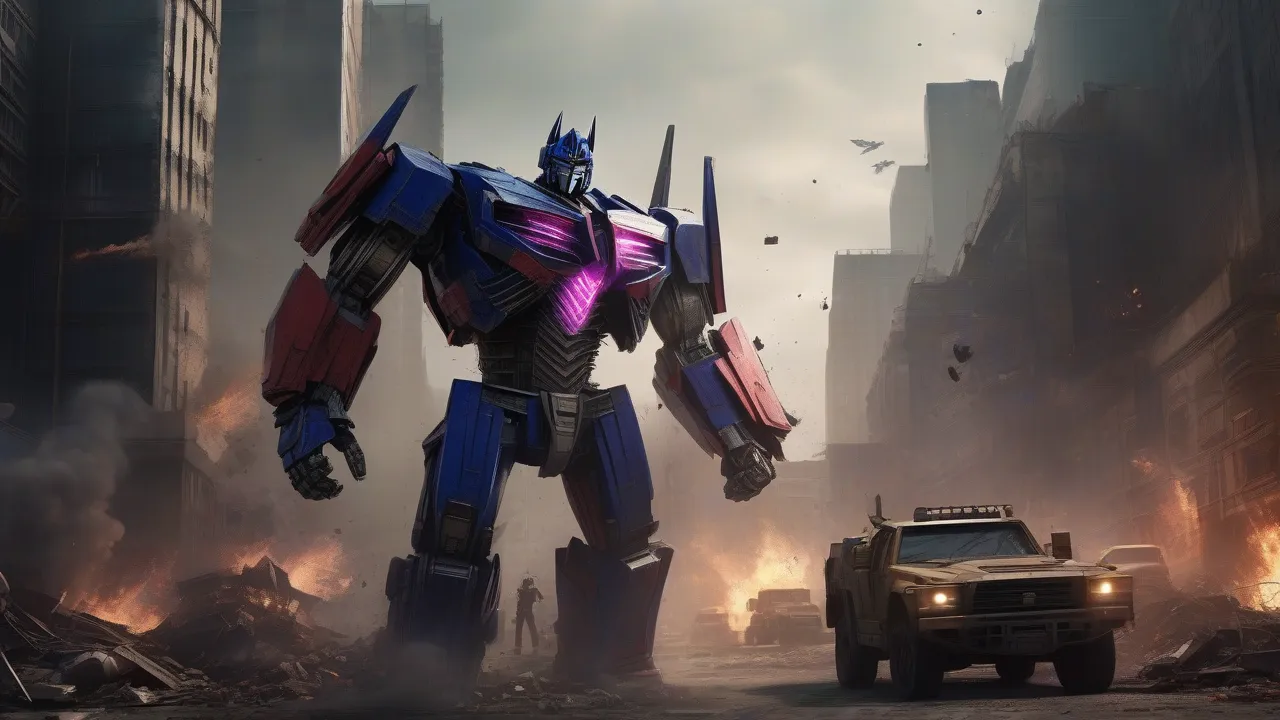
The world of Transformers, with its epic narrative of eternal conflict between Autobot and Decepticon, has always exerted a deep fascination on millions of fans around the globe. From the animated series that have defined generations to the movie champions and a wide comic production, the franchise has become synonymous with large-scale battles, complex characters and explosive action. It is not surprising, therefore, that the announcement of a new Transformers video game generates an almost feverish wait among fans. There is always intrinsic hope, the burning desire, that every new iteration can finally offer the definitive experience, able to capture the essence of these sentient machines and their millenary struggle. For years, players have dreamed of a title that not only immersed them in the metal strawberries of the battle, but also offered a compelling narrative, addictive game mechanics and a faithful representation of iconic characters. However, this hope has been, too often, broken by a disappointing reality. The balance of video games on the Transformers was, to use an euphemism, swinging, often characterized by rushed development cycles, uninspired gameplay and a blatant inability to fully exploit the rich starting material. It is in this context of historical disappointment and unexpressed potential that has emerged Transformers Rise of the Dark Spark, positioned to break the cycle of mediocrity or, as many feared, to perpetuate it further. The game promised an ambitious crossover, combining the cinematographic universe with Cybertron's most traditional saga, a premise that, on paper, held immense potential for both long-standing and newcomers. Yet, despite this intriguing setting, the final product delivered an experience that not only failed to maintain its high ambitions, but actively undermined the brand itself that intended to represent, consolidating its place in the unfortunate strain of Transformers’ forgetable adaptations. The palpable disappointment that followed his release was a testimony of the abyss between expectation and reality, a bitter pill for those who had so desperately hoped for something more. This article aims to analyze the various facets of why Rise of the Dark Spark in the end failed to turn on any genuine enthusiasm, meticulously dissecting its defects and illuminating the reasons for its negative critical reception and fan disillusionment, aiming to provide a complete understanding of where the game was wrong and what lessons could be drawn from its false steps for future iterations within this beloved franchise.
Gameplay: A Shooter in the Standard
Inside, Transformers Rise of the Dark Spark presents itself as a third-person shooter, a genre that, when well performed, can offer exciting and engaging action. However, the implementation here is, in the best case, pedestrian, never venture beyond the most basic conventions of the genre. Shooting mechanics appear generic, without the visceral impact and the tactical depth that would elevate them from mere operation. The weapons, although various in design and equipped with iconic names familiar to fans, largely fail to stand out in terms of feeling or effectiveness. Many firearms simply serve as ♪ standard archetypes – a quick-fire assault rifle, a powerful pump rifle, a long-range precision rifle – without unique or innovative features that encourage strategic weapon change or mastery. The feedback from hitting enemies is often minimal, making shots gone less impactful and leading to a sense of detachment from combat. The enemies, consisting mainly of swarms of generic Decepticon drones or human soldiers, show a rudimentary AI. They tend to follow predictable patterns, often remaining under open fire or using ineffective coverage, making clashes more like a target than real battles. The cover system, a pillar of modern shooters, is awkward and unreliable, frequently failing to record inputs correctly or leaving players exposed in frustrating ways. Instead of offering dynamic engagements, the game often degenerates into repetitive corridors where players simply move from one arena to another, eliminating waves of indistinguishable enemies. There is a clear lack of environmental interactivity or destructibility that you would expect from a game that presents giant robots that turn, contributing further to the sensation of a sterile and little inspired combat cycle. The potential for creative combat scenarios, using the unique abilities and alternative modes of Transformers, is widely ignored in favor of direct clashes, coverage and shooting that quickly become boring. This adherence to the indispensable minimum of the third-person shooter formula prevents the game from generating a sense of excitement or urgency, leaving players with a pervasive feeling of déjà vu and an unsatisfied desire for something more dynamic and inventive, an experience worthy of the powerful beings who control. The fight, destined to be the heart of the game, unfortunately beats with a weak and forgetable rhythm, failing to resonate with the player at no significant level and ultimately becoming another victim of the general mediocrity of the game, adding to the pile of missed opportunities rather than distinguishing itself as a strength for the title.
Beyond the simple shot, the main charm of a Transformers game lies in the unique ability to turn between robot and vehicle modes. In Rise of the Dark Spark, however, this iconic mechanic appears subused and often irrelevant to actual gameplay. Although players can transform themselves at will, the game rarely provides compelling reasons to do so outside specific linear segments. Vehicular forms are mainly used for rapid crossing through largely empty corridors or for poorly conceived driving sections, which we will address in detail later. There is a remarkable absence of integrated puzzles or combat scenarios that genuinely exploit the unique capabilities of both modes, leading transformations to look more like a cosmetic device than a fundamental aspect of the game strategy. Character skills, linked to specific Autobots and Decepticons, also suffer from a lack of creativity and impact. Many abilities are simple variations of existing tropes in shooters, such as a temporary shield or an enhanced body attack, rather than powers that reflect the personalities and distinct forms of Transformers. The design of the levels further exacerbates these problems, consisting mainly of narrow paths and closed arenas that suffocate any potential for expanding and multi-tier approaches or strategic use of character skills. The environments are visually switched off and repetitive, devoid of memorable reference points or intricate layouts that would encourage exploration or favour different combat tactics. Players are channeled through predictable paths, leaving little room for emergent gameplay or player agency. The whole experience seems on track, sacrificing freedom and creativity for a rigidly structured and little inspired campaign. This pervasive lack of innovation extends to almost every aspect of the gameplay cycle. From the goals of the missions that constantly reduce themselves to “go here, shoot at that” to the clashes with bosses who concern more the mechanical recognition of patterns than the engaging skill, the game constantly opts for the safest and less inspired design choices. It is a game that plays so securely to become absolutely forgetable, failing to leave any lasting impression or to provide a single moment of genuine excitement. The promise to control powerful transformable robots is never really realized, leaving players to wonder what could have been if developers had dared to inject more creativity and ambition into basic mechanics, rather than content themselves with a product that seems a generic model simply coated with the skin of a beloved franchise, an opportunity not of significant proportions that ultimately contributes to the general sense of mediocrity that pervades the entire experience.
The Guide and Controls: A Calvary on Wheels
One of the most obvious and universally critical aspects of Transformers Rise of the Dark Spark is undoubtedly his driving mechanics. Where the transformation into a vehicle should be a moment of strengthening and euphoria, offering a dynamic change in gameplay, it instead becomes an exercise of frustration and comic ineptitude. The original text rightly compared it to “the worst air-hockey games”, and this analogy is disturbingly accurate. The vehicles, whether they are elegant sports cars, powerful tanks or jet agile, manoeuvre with a surprising lack of weight and precision. They slide, derap and bounce with unnatural lightness, as if they were constantly suspended just above the ground instead of firmly clinging to it. The physical engine seems to challenge all known laws of the movement, resulting in collisions that are annoyingly unrealistic and curved that are often impossible to deal with without savagely disbanding out of control. Even small bumps can make your Transformer turn uncontrollably, breaking every sense of immersion and making the simple shift a work of fatigue. The feeling of driving a powerful alien machine is completely absent; instead, players are subjected to an experience similar to trying to control a slippery soap on a polished floor. This problem is particularly serious in the sections that explicitly require travel in the vehicle, transforming those that should be fast and exciting chases or explorations in tiring and prolonged struggles. Trying to engage in a vehicle combat is even worse, since the combination of poor manoeuvrability and imprecise aim makes the targets strike a futility exercise. The transition from robot mode to that vehicle, although visually fluid, often leads to an immediate decline in the quality of the gameplay. It seems that the driving mechanics have been a rethink, or perhaps implemented with a fundamental misunderstanding of what makes the gameplay fun. There is no sense of speed, no sense of momentum, and certainly no tactical advantage to be achieved by operating in alternative mode, as well as simply moving from point A to point B in the most awkward way possible. This fundamental defect not only detracts significantly from the overall gaming experience, but also highlights a deeper problem with the design philosophy of the game: the inability to correctly integrate the fundamental principles of the Transformers franchise into a cohesive and fun interactive experience. The guide, which should be a distinctive and exciting element, instead becomes a flashing example of how Rise of the Dark Spark constantly wastes its potential, leaving players exasperated and questioning the basic design choices behind such a critical game element in a game built around transformable vehicles, an important oversight that ultimately minees the player's fun and strengthens the reputation of the game for mediocrity.
Technical Compartment: A Hurry and Incured Porting
The technical performance of Transformers Rise of the Dark Spark, in particular on PC, is evidence of a rushed development and a daunting lack of care. The original text rightly indicates a “failing PC porting”, and in fact, the game arrived on the platform afflicted by a litany of problems that severely hindered the experience. Optimisation was an important concern; even systems well above the recommended specifications often struggled to maintain a frame rate constant, especially during more intense action sequences or in graphically crowded environments. This stuttering and the inconsistent performance not only broke the dive but influenced directly on the gameplay, making it difficult to precise aim and rapid reactions, transforming challenging clashes into unjust because of technical limitations rather than the ability of the player. Graphical fidelity, although not entirely disastrous, was anything but impressive, especially for a title released in its era. The texture were often confused, the characters models lacked intricate details and the asset environment appeared generic and reused. The visual presentation failed to capture the greatness and metallic shine expected by a Transformers title, appearing more similar to a previous generation game than to a contemporary release. In addition to performance, the game was full of bugs and ♪. Players reported frequent crashes on the desktop, corrupt rescue files and various in-game abnormalities, such as characters that stuck in geometry, AI comrades who did not follow scripts or visual artifacts that ruined the display. These technical deficiencies were not minor problems; they basically undermined the playability and stability of the game, creating an experience that seemed unfinished and neglected. The user interface was often embossed and poorly adapted for mouse and keyboard, suggesting a development approach ‘console- ♪‘With insufficient attention to translation for PC. The lack of robust graphical options or customizable key allocations further solidified the impression of a fast porting without due consideration for the specific needs and expectations of the platform. This technical negligence was not only an inconvenience; it reflected a broader indifference for the quality control and experience of the player, making it difficult even for the most indulgent fans to ignore. He painted a picture of a development team that either lacked resources, time, or perhaps even the will to deliver a curated product, resulting in a game that looked like a technical compromise from the beginning to the end, further consolidating his reputation as a disappointing entry into the franchise.
In addition to visual and performance problems, the overall technical presentation of Transformers Rise of the Dark Spark also suffers from a general lack of attention to detail that permeates its audio design and dubbing, further decreasing the player's immersion. Although the presence of iconic doublers is a force for any Transformers game, their performances here often seem uninspired, with general dialogues without the compelling gravity that is expected by these legendary characters. I do script itself contributes to this problem, offering a largely forgetable narrative and characters whose motivations are outlined in a superficial way, preventing the dubbing to truly give life to their roles. The sound effects, crucial to convey the power and impact of giant robots in battle, are equally disappointing. Explosions lack vigor, gunshots seem generic and the satisfying metal clan of Autobots and Decepticons engaged in close fights is largely absent or actuated. This often leads the battles to seem less impact and more like suffocated screens, detaching the player from the intensity of the fight. Environmental sounds of environments are also scarce and repetitive, failing to create a vibrant or credible world. In addition, the soundtrack of the game, while trying to evoke a sense of epic conflict, disappears largely against the background, providing little in terms of memorable tracks or dynamic changes that would underline the drama in place. This holistic lack of care throughout the technical spectrum contributes to a pervasive feeling of mediocrity. It is not just one or two isolated problems, but a confluence of underdeveloped elements collectively dragging down the entire experience. When a game fails to respect the fundamental technical aspects, it signals a deeper problem with its production values and its priorities. The technical errors in Rise of the Dark Spark were not simply superficial defects; they were symptoms of a project that apparently cut corners at each turn, ultimately delivering a product that seemed unfinished and unrefined. This eroded the confidence and enthusiasm of the players, painting the game as another example of a beloved franchise exploited for a quick release rather than receiving the care and attention it deserved, leaving fans with a sense of disappointment that persists long after the titles of tail, a sharp reminder to what could have been.
The Transformers Brand: A Sprecata Opportunity
The Transformers brand is a gold mine of rich mythology, compelling characters and epic narratives, yet Transformers Rise of the Dark Spark incomprehensibly wasted almost every opportunity to exploit this incredible starting material. The most striking failure lies in its inability to convey the iconic sense of scale that defines the Transformers universe. The original text jokes: “Since when are the autobots smaller than a tree? ” and this observation affects a fundamental design defect. The Autobots and Decepticons, imposing war machines that often exceed tens of meters of height, seem strangely shredded in the environments of the game. They often sail in narrow corridors and fight in spaces that make them appear less like colossal titans and more like oversized action figures, severely undermining the greatness and intrinsic power of these characters. This false representation of the scale is not only an aesthetic question; it fundamentally influences the perception of the player of power and impact. Battles that should seem catalytic often appear as small-scale screens due to the confined design of levels. The narrative, which attempts to bridge the gap between the cinematographic universe and Cybertron games, seems disconnected and lacks emotional resonance or thematic depth expected by a history of Transformers. The key characters, despite their consolidated retrostories and personalities, are reduced to superficial caricatures, uttering generic dialogues without any significant development or memorable interactions. The game struggles to tell a cohesive story, often jumping between factions and different places without establishing a clear purpose or a compelling conflict. The same “Dark Spark”, a powerful artifact, serves little more than a McGuffin to carry out the plot, without the threat or meaning it should possess within mythology. This lack of character development and narrative coherence leaves players detached from the difficult situation of Autobots and Decepticons, transforming an epic struggle into a series of broken screens. Developers seem to have failed to grasp the main charm of franchise, which resides not only in the robots that turn, but in the compelling personalities, in the moral dilemmas and in the monumental stakes involved in their endless war. The absence of these crucial elements makes the game an empty shell, wrapped in the iconography of Transformers but devoid of its soul, failing to draw on the very essence that makes the brand so loved, leaving fans with a deep sense of wasted potential.
For devout fans of the Transformers franchise, a new game is not just another exit; it is an opportunity to regain contact with a universe they love deeply, to fall into the metallic cloths of their heroes and their bad, and to experience new facets of their current saga. Transformers Rise of the Dark Spark failed completely to connect with this fervent fanbase, mainly because it has shown a deep understanding of what makes the brand so special. Arrived after critically acclaimed titles such as War for Cybertron and Fall of Cybertron, who were praised for their faithful interpretations of Cybertron mythology, robust gameplay and solid narratives, Dark Spark seemed a significant step back. He failed to build on the strengths of his predecessors, opting instead for a generic approach that alienated both new players and long-time enthusiasts. The element “crossover” promised, understood as an important point of force, it seemed small and in the end it served to dilute both time lines rather than to improve them. There was no significant exploration of the implications of the convergence of these different universes, no cunning mention or deepening for mythological enthusiasts; instead, it was a superficial mashup without purpose. The game has lost countless opportunities for creative gameplay mechanics that could have been derived directly from the Transformers mythology. Imagine puzzles that require cooperative transformations, environmental manipulation using unique alternative modes, or tactical battles where the management of scale and abilities of various Transformers was fundamental. Instead, the game offered a mechanic of shooting and simplistic coverage that could have been applied to almost any third-person shooter, undressing the unique identity that the Transformers brand carries with it. The roster of the characters, although it included some of the fan favorites, seemed subused, with many powerful Transformers and interesting relegates to background roles or simply present without any significant impact on history or gameplay. The emotional nucleus, the loyalty of the Autobots, the cunning of the Decepticons, the philosophical debates between Optimus Prime and Megatron – these elements, which are vital to the lasting charm of the brand, were absent or presented so superficially to lose all impact. This indifference to the strengths of the franchise and the failure to evolve the gameplay beyond the basic genre tropes represents not only a missed opportunity, but a real disservice for a beloved universe, consolidating the place of Rise of the Dark Spark as a forgotten chapter in the history of the Transformers video games, one that leaves a bitter aftertaste for those who had hoped in an experience that truly honored it.
Longevity and Additional Mode: Repetition Without Purpose
The Transformers Rise of the Dark Spark campaign, although initially it seems to offer a dual narrative perspective between Autobot and Decepticon, is quickly relatively short and alarming without substantial content, severely affecting its longevity. That little extant narrative can be completed in a handful of hours, and at its conclusion, there is little incentive for players to revisit the experience. The missions, as discussed above, are largely repetitive, presenting similar targets and types of enemies, which means that a second play offers little in terms of new challenges or discoveries. The lack of branched paths, significant choices or different scenarios of play suffocates any potential for replayability, transforming subsequent attempts into a monotonous grinding rather than an engaging journey. To integrate the main campaign, the game includes “Escalation”, a way of survival in the orda style where players train to repel waves of increasingly difficult enemies. Although conceptually attractive, especially for fans of co-op, the implementation of the Escalation mode in Dark Spark is just as little inspired as the rest of the game. The limited number of maps, combined with the same types of generic enemies and the already mentioned faulty gun mechanics, also causes this cooperative mode to quickly degenerate into a repetitive and tiring activity. The progression system within Escalation, which provides for the unblocking of new characters and equipment, appears as a surface layer rather than a compelling hook, since rewards rarely result in a significantly different or more fun gaming experience. In addition matchmaking and online stability for Escalation have often been problematic, aggravating the frustration of players. There are no other significant additional modes, such as a robust competitive multiplayer or creative challenges, which could extend the duration of the game. The attention seems to have been concentrated exclusively on the experience for single, short and underdeveloped player, with a minimum effort dedicated to providing value beyond this. This lack of significant content and pervasive repetition in all available modes contribute significantly to the overall feeling of the game being underdeveloped and rushed. Players remain with the clear impression of having experienced everything that the game has to offer in a very short time, without any desire to deepen, underlining ultimately the fundamental lack of long-term involvement of the game and failing to provide any compelling reason to keep the disk in the tray or digital download installed, a critical defect for a full-price title in a competitive market.
Final verdict: A False Pass for Robots
Transformers Rise of the Dark Spark stands as a flashing example of licensed play that failed to capitalize on the immense potential of its starting material, ultimately delivering a product that is, in almost every aspect, deeply mediocre. From his generic third-person shooter mechanics and little inspired by his frustratingly poor driving sections and his series of technical deficiencies, especially on PC, the game is constantly below expectations. The fundamental disdain for the Transformers brand, evident in the wrong management of the character scale, in the lack of narrative depth and in the failure to integrate unique elements of the franchise into a compelling gameplay, is perhaps its most exclatating sin. It seems less a passionate project designed to honor the legacy of Optimus Prime and Megatron and more a cynical effort of easy gain, placed on the market without the necessary care or innovation. The pervasive sense of repetition, combined with a short campaign and a little inspired cooperative mode, further consolidates its title status with a severely limited longevity. Players remain with a persistent sense of disappointment, a reminder that the promise of an epic Transformers experience remains largely unfulfilled in this particular iteration. Rise of the Dark Spark is not just a bad game; it is a wasted opportunity, a lost opportunity to offer a truly immersive and memorable adventure within one of the most beloved science fiction universes. Its defects are not minor imperfections but deeply rooted structural problems that prevent it from rising above the level of just functional. For Transformers fans, it represents another painful reminder of the challenges in translating complex and popular IPs into successful video games. For newcomers, it offers little to train or impress, serving as a poor introduction to the rich world that claims to represent. Ultimately, Transformers Rise of the Dark Spark serves as a warning in the development of games, highlighting the dangers of relying exclusively on brand recognition without investing in robust gameplay, technical care and a genuine understanding of what makes the starting material special. It is a game that is better to leave in the archives of the forgotten tie-ins, a testimony of what happens when the ambition is absent and the execution is lacking, consolidating its place as one of the most disappointing voices in the long history of Transformers video games, a significant false step that unfortunately colored the perception of the franchise in the world of video games.


