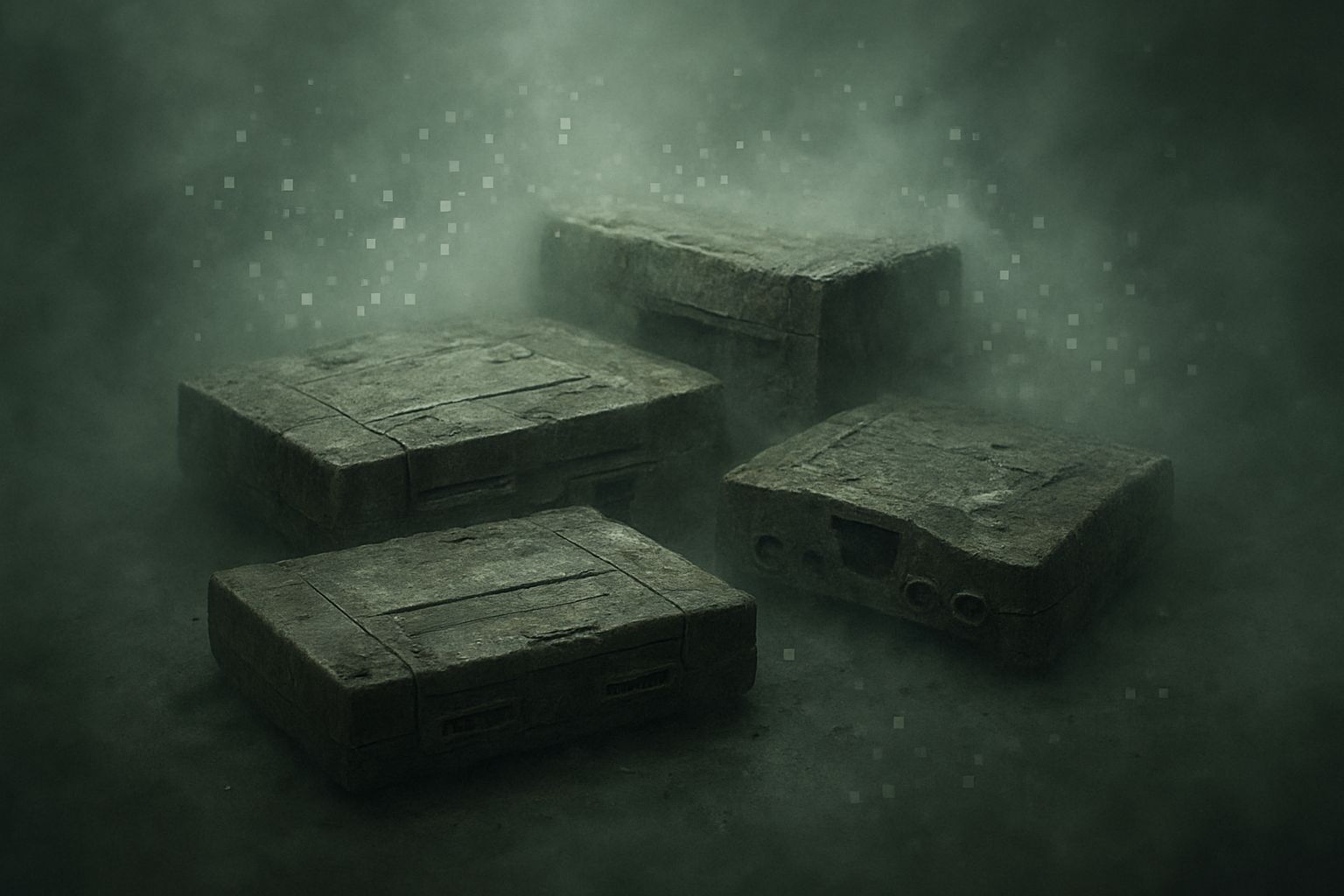
In the hectic world of video games, where technological innovation constantly pushes towards new graphic and narrative borders, a persistent shadow stretches over the past: the difficulty, sometimes the impossibility, of resurrect the classics. The news that a remaster of a title loved as Diablo 2 would be "very complicated to achieve" due to the loss of source code and original assets, as revealed by the same creators Max and Erich Schaefer and David Brevik, is much more than just a disappointment for fans. It is a magnifying glass on a systemic problem that afflicts the video industry, in particular its most dated masterpieces. This circumstance is not an isolated case, but rather a symptom of practices of development and preservation of the past which today turn out to be inadequate, or simply unthinkable for the costs and technologies of the time. The episode of Diablo 2, with his tale of days of panic for the search for backup copies and the subsequent admission of the irrevocable loss of fundamental material, he highlights a uncomfortable truth: most of our digital legacy is at risk. He forces us to question ourselves: what does it really mean to preserve a video game? What are the challenges, not only technical but also economic, legal and cultural, which hinder the return of titles that have defined generations of players? This article aims to explore these issues in depth, going beyond the single case to analyze the wider phenomenon of preservation and preservation remastering in the context of a constantly evolving industry, but with deep roots in a often precariously documented past.
The Anathema of Loss: Why the Source Code vanishes in the Golden Age of Video Games
The story of video games, in particular the story of its first decades, is filled with stories of lost, forgotten or simply not archived with due care. The episode of Diablo 2 it is not an exception at all, but rather a tragic rule for many titles developed in the 1980s and 1990s. Several convergent factors have contributed to this endemic lacuna in digital preservation. First, the industry was young and rapidly evolving; development practices were often crafted, driven more by the urgency of releasing a product than by the far-sightedness of archiving every single bit. The teams were smaller, the less defined hierarchy and internal documentation, where it existed, was often fragmented or informal. There were no stringent industry standards for managing source code, graphical assets, audio tracks or design documents. Each study, and sometimes every single developer, had its own approach, often inconsistent and devoid of a centralized or long-term backup strategy. Second, the storage costs they were a significant obstacle. Hard disks and storage media were at the time extremely expensive and had limited capabilities compared to today’s standards. The compression of the data was a necessity, but the philosophy was often to store only the distributed final product, not necessarily every iteration or raw file that composed it. It was not infrequent that, once a project was completed, the hard drives were formatted to make room for the next project, or that the magnetic media deteriorated over time without being transferred to new technologies. Many developers brought home copies of work on floppy disk or CD-R, as in the case of Diablo 2, which then turned out to be the only bastions against total loss. But these copies were often incomplete or non-definite versions, making reconstruction a difficult and often frustrating enterprise. Finally, there was a real lack awareness of historical and cultural importance video games. They were mainly seen as ephemeral consumer products, more similar to toys than works of art or cultural finds worthy of museum conservation. The idea that one day someone would want to play again in a title of 20 or 30 years earlier, and even less that the development files would be precious, was often alien to the mentality of the time. This approach has left a generational void in the documentation and archiving that today makes the work of remastering and preserving a real race against time, a battle to recover what remains of a golden age, before it disappears completely into digital oblivion.
Remaster, Remake or Reimagining? Deciphering the Technical Challenges of Video Resurrection
When it comes to bringing back a classic videoludic, industry uses terms that, although similar, involve profoundly different technical approaches and development challenges: remastered, remake and reimagining. Understanding these distinctions is essential to appreciate the complexity of the operation and the implications of the loss of original assets. A remastered is typically the least invasive reissue. The goal is to improve the experience without altering the heart of the game. This often means applying high resolution textures, graphic upscaling, widescreen optimization, support for modern resolutions and a higher framerate. The original source code is almost always the starting point, allowing developers to reuse existing game logic, basic 3D models and animations. The loss of original assets, as in the case of Diablo 2, transforms this operation into a nightmare. Without the source files, developers are forced to do reverse engineering from the final product, an extremely laborious and imperfect process. It means extrapolating textures from low-resolution images, reconstructing polygonal patterns from scratch based on screenshots and gameplay, and deciphering the logic of the game without access to the commented code or the original variables. The result, although commendable for the effort, is often a compromise, with assets that do not reach the quality they could have if they had left the originals. A remake, on the other hand, involves a deeper reconstruction. The game is generally recreated from scratch with a new graphic engine, new artistic assets and often mechanical game magazines or expanded. Although the narrative essence and general design remain faithful to the original, the code is entirely rewritten. This approach is less dependent on the availability of the original source code, since it starts from a technical tabula rasa. However, the lack of original assets (concept art, high fidelity models, raw audio recordings) can still make it difficult to capture the authentic aesthetics and atmosphere of the original game, forcing the artistic team to interpret and create from scratch without primary references. Finally, a reimagining goes beyond, taking inspiration from the original game but significantly altering the plot, characters, mechanics or the whole genre. Here, the availability of the original assets is almost irrelevant for direct reuse, but can be precious as historical and creative reference. Each approach has its own pitfalls. The choice between these options depends not only on the will of the study, but also, and more and more often, on what is actually recoverable from the past. The loss of material not only makes every process more expensive in terms of time and costs, but also jeopardizes the authenticity and quality of the final product, leaving fans with the perennial question about what could have been if the files had never vanished.
Beyond Bits: Licenses, Rights and the Intricate Legal Web of Classics
The challenges that arise in the resurrection of a classic video game are not limited to purely technical aspects and the availability of source and asset code. A dense and often inextricable web of legal and rights issues can transform the dream of a remaster or remake into an insurmountable bureaucratic labyrinth. The loss of licence documentation is as common as the loss of the code. Many games from the 1990s, and even early 2000, incorporated third-party middleware, secondary graphic engines, audio library, fonts, licensed soundtracks and even design elements or concept art made by external studios. Original contracts, often stipulated in a pre-digital era, may have been lost, expired or not foresee clauses for new distributions on future platforms or for the creation of updated versions. Reconstructing this chain of rights may require a very expensive legal investigation and, in many cases, unsuccessful. Think about the soundtracks: many games used famous music songs on license for a limited period or for a specific platform. Without the possibility of renewing those licenses or acquiring new ones, developers are forced to replace music, altering a crucial element of the original experience and often triggering fan disappointment. Similarly, character rights, voices of actors or even some marketing elements can be problematic. Another critical aspect is intellectual property (IP). The history of the video industry is full of acquisitions, mergers and corporate failures. A game developed by an independent studio and then published by a publisher may have rights subdivided or finished in the hands of a completely different company after a series of transactions. Determining who holds the rights of a specific game, and of all its components, can be a difficult undertaking. The example of the Schaefer and Brevik brothers who had developed the first Diablo as an independent study before Blizzard's acquisition, it already suggests a complexity in the chain of ownership. Imagine this situation multiplied by dozens of components. Not only, but licenses for certain consoles or platforms could be binding. A game originally designed for a specific console could have clauses that prevent easy portability on competing or later systems without complex renegotiations. These legal complications not only add exorbitant costs to remaster projects, but can also block them completely, making it impossible to bring back loved games to light, regardless of the availability of their source code. It is a reminder that the creation of a video game is a complex act, and its rebirth is even more, requiring not only technical and creative skills, but also a meticulous and often expensive navigation in the winding world of copyright and intellectual property.
The Charm of Nostalgia and the Crude Reality of the Market: Why do Companies Risk with Remasters?
Despite the immense technical, legal and economic challenges, the video industry continues to invest heavily in remasters and remakes. The main reason for this persistence lies in a powerful emotional and commercial engine: the nostalgia. For millions of players, the classics represent more than simple games; they are windows on past times, childhood memories or teens, and moments shared with friends and family. Companies know that there is a vast and passionate audience, willing to pay to relive those emotions with a graphic dress and an updated gaming experience. This market segment offers an intrinsic advantage: the game is already known, loved and has a consolidated brand. The risk of game design is greatly reduced, since the basic formula has already been tested and approved by millions of people. In addition, a remaster or remake can attract a new generation of players that never had the opportunity to experience the original. This expands the franchise's fan base and can act as a bridge to new chapters of the series, as often happens with remakes Final Fantasy or of Resident Evil. It is a way to keep a brand alive, introduce it to a younger audience and create a fertile ground for future developments. From the economic point of view, remasters are often seen as a less risky investment than developing a completely new title. Although they can be expensive, especially if it comes to complex remakes, marketing costs can be lower thanks to brand recognition and community enthusiasm. Development times can be shorter, and return on investment can be significant, especially if the original game had a devout fan base. The question of profit margins, such as the one that afflicts Xbox (cited in the original article), makes the option of re-publishing an existing, but renewed, particularly attractive title, as it can generate revenue with a relatively controlled risk. However, this equation is not always simple. The success of a remaster is not guaranteed. Costs can explode due to unforeseen difficulties in recovering assets or solving technical problems arising from reverse engineering. The community, if disappointed by poor execution, can react extremely negatively, damaging brand reputation and compromising future sales, as sadly demonstrated by cases such as Warcraft III: ♪ or the initial launch of Grand Theft Auto: The Trilogy – The Definitive Edition. The balance between the potential for profit, the nostalgic appeal and the harsh realities of development is a delicate dance that companies continue to dance, pushing them to risk in the hope of capitalizing on immortal love for classics.
Between expectations and decisions: When the Dream of the Remaster meets the Durissima Law of Implementation
Fans' desire to review their favorite games with a new outfit is often immense, full of expectations that can reach almost unrealistic levels. When a remaster or remake ad is made, enthusiasm is palpable, but with it a huge pressure on development teams also arises. The difficult task is to balance loyalty to the original with modernization needs. A ‘perfect’ remaster must be recognizable, evoke the same sensations of the original game, but at the same time must appear and function as a modern title, devoid of friction and technical limitations of the past. This balance is incredibly difficult to achieve, and the story of video games is full of examples that illustrate both the triumphs and the ruinous falls of this effort. On the front of successes, titles like the Crash Bandicoot N. Sane Trilogy or Spyro Reignited Trilogy have demonstrated how, with care, dedication and recovery (or faithful recreation) of the original assets, it is possible to create remakes that satisfy both veterans and newcomers. They updated the graphics and mechanics keeping intact the spirit of the original games. Even the Final Fantasy VII Remake, while being a real reimagining that deeply expands and alters the narrative, has demonstrated an excellent understanding of the starting material and a technical and narrative ambition that has been able to conquer much of the audience. However, not all stories have a happy ending. The most emblematic case of failure is probably Warcraft III: ♪. Announced with great clamor, promising updated graphics and even new animated scenes, the final product turned out to be a disappointment on multiple fronts. Graphics not up to promises, removing some original features and an inspiring user interface have generated deep anger in the community. The main problem was a poor performance, combined with a perceived alteration of the original game, which has encrypted the confidence of fans in Blizzard itself. Similarly, the launch of Grand Theft Auto: The Trilogy – The Definitive Edition suffered from widespread technical problems, bugs, unconsistent aesthetics and a lack of care that displeased millions of players, highlighting the dangers of entrusting such a delicate job to inexperienced teams or not to invest properly in the QA process. These examples show that expectations are a double-cut weapon. If you do not manage correctly and if the final product does not satisfy them, the negative reaction can be much stronger and lasting than any initial applause. The law of implementation is ruthless: what looks like a brilliant idea on paper, must be translated into a working product and treated in detail, especially when playing with the nostalgia and heritage of millions of players.
Digital inheritance: Preservation Strategies and Promise of a Future (Perhaps) Immortal
Faced with the challenges we discussed, industry and community are finally starting to take seriously the issue of preservation of video games. The goal is not only to facilitate future remasters, but to ensure that these interactive art works are accessible and playable for generations to come, just as movies, books or music are preserved. One of the key strategies is the adoption of standardized storage practices and long-term from the beginning of the development process. Large modern companies have departments dedicated to storing their digital assets, using redundant servers, cloud backups, offline archives and advanced version control management systems for each line of code and creative assets. This ensures that even after decades, the original source files are available and intact. However, it is not enough to store files; it is also essential to document the development context, the libraries used, the graphic engines, the tools and even the machines on which the game was spinning. The documentation is the key to retrocompatibility and future understanding of complex systems. Another fundamental approach is that ofemulation. Although it is not a remaster, the emulation allows you to play games on modern hardware and operating systems simulating the original environment. Projects such as MAME (Multiple Arcade Machine Emulator) or home console emulators are community monumental efforts to save and play a wide range of titles, often when the original manufacturers abandoned support. These emulators are priceless, but depend on the availability of the ROMs of the games, which often come from now rare and wearable physical copies. Theintervention by the institutions it's just as crucial. Museums, libraries and national archives are beginning to consider video games as an integral part of cultural and technological heritage. Initiatives such as the Library of Congress in the United States or VIGAMUS in Italy are collecting and cataloguing games, hardware and development documents. These institutions not only physically preserve materials, but also promote research and awareness of the importance of conservation. Finally, the collaboration with the community is indispensable. Often, they are enthusiasts and modders who, through reverse engineering and reverse engineering (as mentioned in the original article to rebuild the code), they manage to bring back lost games or improve their compatibility on modern platforms. The story of the eBay user who returned the source code StarCraft in Blizzard in return for rewards is a flashing example of how the community can play a vital role. The joint commitment of developers, institutions and enthusiasts is the only way to ensure that the digital heritage of video games is not an ephemeral heritage, but a lasting resource for the future.
The Clean Heart of Memory: Why Video Games Conservation is a Cultural Imperative
The question of video preservation transcends simple nostalgia or market strategies. It is a cultural imperative, a duty towards the history of technological innovation, artistic expression and social interaction. Video games are not only pastimes; they are cultural artifacts that reflect the eras in which they were created, available technologies, social and artistic trends and the aspirations of their creators. They represent a unique, interactive medium, which shaped the way millions of people interact with stories, solve problems and connect with each other. If we do not retain video games, we risk losing a significant share of our recent cultural history. Imagine you can no longer access the movies of the 1920s, books of the nineteenth century or music of the seventeenth century. This is the reality we face with video games if we do not act decisively. Each title is a stamp in the mosaic of the evolution of game design, interactive narrative and software engineering. Their loss means a gap in our understanding of how art and technology merged to create new forms of expression. In addition, preservation is fundamental for purposes educational and research. Academics and future historians will need access to these titles to study the cultural impact of video games, the evolution of the medium, monetization strategies or the interaction between player and machine. Without the games themselves, much of this research would be impossible, limited to indirect testimonies or partial descriptions. Another crucial dimension is that ofinspiration. The classics of the past continue to influence modern designers and developers. Understanding the roots of genres, mechanics or aesthetics is vital for future innovation. A game like Diablo 2 it is not only a beloved title, but a pillar in the genre of RPG action, whose influences still feel today. Not being able to study it, not being able to play it in its original form or in a faithful re-edition, would mean losing a piece of our collective memory and an invaluable source of inspiration for the next generation of creators. The community of players, through the love and devotion shown for the titles of the past, is the most tangible proof of the cultural value of video games. They are often the ones who guide conservation efforts, find lost copies, develop patches for compatibility or create emulators. This collective passion is a powerful engine that must be supported and integrated by institutional and industrial efforts. In summary, video game preservation is not a luxury, but a necessity to ensure that a young art, but deeply influential, can be appreciated, studied and remembered in the long term, thus helping to define our cultural heritage in the digital world.
The saga of Diablo 2 and the potential loss of its source code are a powerful warning and a metaphor for the whole issue of video game preservation. They remind us that behind each pixel and every dialogue line there is a fragile heritage, exposed to the whims of time, obsolete technologies and incomplete storage practices. The journey towards the complete digital immortality of our most beloved games is full of obstacles, ranging from the technical complexity of reconstruction to the legal labyrinth of licenses, to the harsh reality of the market that weighs on business decisions. However, as we have seen, not everything is lost. The increased awareness of the cultural importance of video games, combined with the concerted efforts of developers, archives and a vibrant community of enthusiasts, is laying the foundations for a brighter future. The lessons learned from the mistakes of the past, and the strategies of preservation in place, offer the hope that the next generations can enjoy not only the technological wonders of their time, but also the milestones that preceded them. The pulsating heart of videoludic memory continues to beat, fueled by nostalgia, innovation and a growing commitment to protect a digital heritage that is, in the end, an invaluable part of our history and our collective culture. The challenge is great, but the commitment to winning it is stronger than ever, promising a future in which our favorite classics will not be condemned to oblivion, but will live forever in our hands and in our memory.


