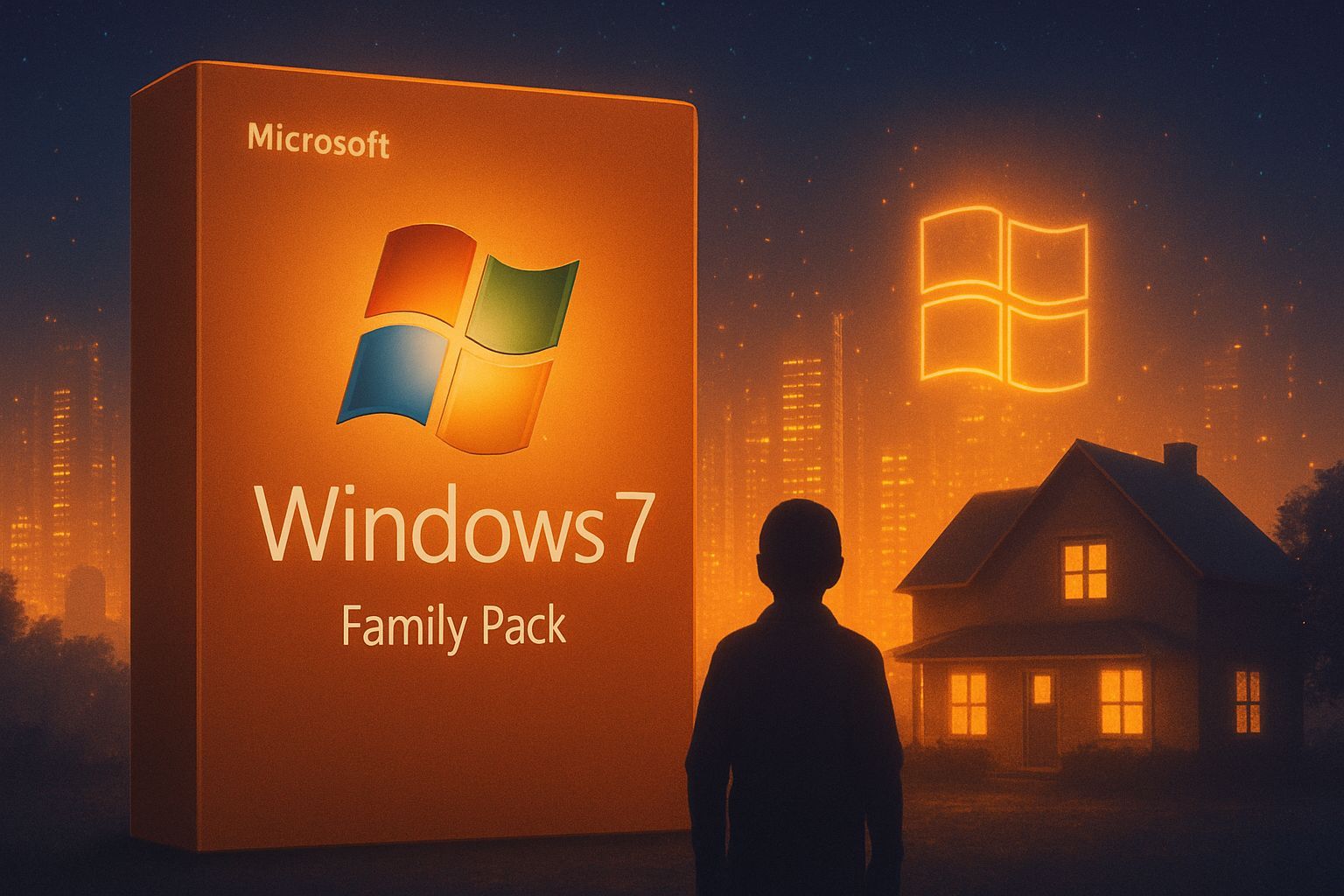
On August 26, 2009, news spread rapidly in the world of technology: Microsoft had finally confirmed the availability of Windows 7 Family Pack also for eight European countries, including the United Kingdom, Ireland, Germany, France, Switzerland, Austria, the Netherlands and Sweden, at the price of €149.99. This limited-time offer, which enabled three PCs to upgrade to Windows 7 Home Premium, was not only an astute commercial move to encourage the adoption of the new operating system, but was a significant crossroads in software history, woven market dynamics, licensing strategies and complex antitrust negotiations with the European Union. The European announcement followed the North American one and arrived in a particularly delicate context for Microsoft, which only a month before had agreed to implement the famous ‘browser choice screen’ to address the concerns of the European Commission on competition, linked to the integration of Internet Explorer in its operating system. This episode marked the end of the controversial ‘It’ version of Windows 7, without browsers, before it even saw the light, ensuring that European consumers received the same full version of the operating system available in the rest of the world. The Family Pack, whose existence had initially emerged from a clause in the software licensing conditions leaked, embodied a philosophy of democratization of access to technology, aiming to make the upgrade more convenient for families with multiple computers at a time when the PC was still the core of domestic digital experience. Analyzing this moment does not only mean retracing a specific event of 2009, but rather immerse yourself in a crucial chapter that has shaped not only the fate of Windows 7, but also future software licensing policies, relations between technological giants and regulatory authorities, and the evolution of the operating system market. We will then explore the profound implications of this offer, from the competitive context that generated it to the impact on the consumer, to its legacy in today’s digital panorama, which continues to be influenced by the decisions and challenges of that time.
The Ascesa of Windows 7: A Headlight in Digital Era
The introduction of Windows 7 on October 22, 2009 was not an isolated event, but rather the culmination of a complex path for Microsoft, aimed at regaining consumer confidence and consolidating its dominant position in the operating systems market after the controversial experience of Windows Vista. The latter, although ambitious in many respects, had struggled to gain general acceptance due to high hardware requirements, compatibility issues with existing drivers and software, and a graphical interface (Aero Glass) which, aesthetically pleasing, weighed performance on less powerful machines. Users were fond of Windows XP, a robust and reliable operating system launched almost a decade earlier, whose longevity witnessed a stability that Vista had failed to replicate. In this scenario, Windows 7 presented itself as a promise of renewal and optimization, inherit the technological bases of Vista but drastically refine them. The goal was clear: to offer a smoother, faster and intuitive user experience, with particular attention to the compatibility and reduction of resource consumption. The new operating system introduced significant improvements such as a redesigned application bar (Superbar), Jump Lists for quick access to recent program features, and integration of a more efficient notification center while maintaining a familiar interface that would not disorient users accustomed to XP. The response of the public and the critics was immediately positive; Windows 7 was acclaimed for its stability, optimized performance and ease of use, quickly becoming a benchmark for industry and consumers. This success was fundamental to Microsoft, not only for corporate prestige, but also to support the entire PC ecosystem that, at the time, still largely depended on operating system updates to stimulate hardware and software sales. Its ability to work well on a wide range of hardware configurations, from the most dated machines to new laptops, made it the operating system of choice for millions of users, marking an era of regained confidence in the Windows brand and preparing the ground for future evolutions of desktop computing. Its clean interface and improved functionality made it a real ‘new standard’ that everyone waited for and finally came, robust and performing, years away from the glorious XP and the controversial Vista, giving back momentum to the market and the overall perception of Microsoft products.
Family Package: Marketing strategy and Pirate Countermeasuring
The concept of ‘Family Pack’ for Windows 7 Home Premium represented an acute strategic move from Microsoft, going beyond the simple offer of a convenience package. At a time when families often owned multiple computers – desktops for work and study, laptops for mobility, and maybe an old PC for children or as a spare machine – the single license for upgrade could be prohibitive for home budgets. The Family Pack, with its three PC license at a significantly lower price compared to the purchase of three separate licenses, it aimed directly at this market segment, encouraging a large-scale legal update. This strategy had multiple goals: first, fighting software piracy, which remained a persistent challenge for Microsoft. Making the legitimate update more accessible and convenient, the attractiveness of illegal copies was reduced. Second, the Family Pack helped to loyalty customers, creating a unified Windows experience on all household devices and strengthening the Microsoft ecosystem. Limited-time availability (‘until supplies last’) added a sense of urgency and exclusivity, stimulating initial sales and generating a buzz around the launch. This marketing tactic, although common, proved particularly effective for such an expected product. In addition, the offer reflected an evolution in Microsoft’s understanding of consumer dynamics: it was no longer just individual users or companies, but family groups that needed flexible solutions. This flexibility prefigured, in a way, future software trends towards subscription-based models and multi-device licenses, which would later feature products like Microsoft 365. The Family Pack was not only an economic deal; it was a vehicle to normalize the idea of having an updated operating system on every significant device in the house, raising the standard of home computer experience and preparing the ground for the era of pervasive connectivity that would soon be followed, making obsolete the individual restrictive licenses in favor of a more holistic and affordable approach to the needs of an increasingly digitized and interconnected world.
Microsoft and the EU: A History of Antitrust and Adaptation
Microsoft’s decision to offer the Windows 7 Family Pack in Europe and, more generally, the same full version of Windows 7 (‘non-E’) available worldwide, was deeply influenced by a long and complex history of antitrust disputes with the European Commission. These controversies, which began in the 1990s and culminated in billionaire sanctions, mainly concerned Microsoft’s abuse of dominant position in the PC operating systems market, particularly the forced integration of products such as Internet Explorer and Windows Media Player. The European Commission argued that this integration would suffocate competition, preventing alternative browser developers or multimedia players from competing equally. In July 2009, just before the launch of Windows 7, Microsoft faced an ultimatum: to avoid further sanctions and ensure the distribution of the new operating system in Europe, he had to agree to implement a browser selection screen. This screen, which would appear to new Windows users in Europe, offered the ability to easily choose and download one of several competing web browsers, such as Firefox, Chrome and Opera, instead of being forced to use Internet Explorer. The direct consequence of this agreement was the abandonment of the controversial ‘It’ version of Windows 7, which was originally designed for the European market and should have been distributed without any preinstalled browser, forcing users to download one separately. This version, perceived as an embossed and potentially disorienting solution for the end user, was finally set aside, allowing European consumers to receive the same full and functional version of Windows 7 that they would enjoy users throughout the world. This episode not only showed the EU’s regulatory power towards large technological companies, but also forced Microsoft to adapt its global strategies to the specific regional needs and regulations, marking a significant precedent. The lessons learned from these antitrust battles continue to influence the policies of distribution and integration of technological products even today, with debates always open on the neutrality of the platform and on the protection of competition in the digital age, reaffirming the crucial importance of a fair market environment for innovation and consumer choice.
The PC Market in 2009: A World in Transformation
The context in which Windows 7 was launched and its Family Pack was a PC market in full boiling, but at the same time on the brink of an epochal transformation. In 2009, the personal computer was still the undisputed king of personal and professional information, with a constant growth in global sales. However, the first warnings of a radical change were already in the air. Apple’s iPhone, launched only two years earlier, had already begun to redefine user expectations in terms of interface and mobile connectivity, while the iPad was still a year after its debut, but the ferment around the tablet and smartphone it was palpable. This meant that although the PC was central, its hegemony was about to be challenged by a new wave of mobile devices that would soon catch the attention and consumer portfolios. In this scenario, Microsoft had to make sure that Windows 7 was not only a solid and well-received update, but also that it could serve as a bastion against the rise of competing platforms, strengthening the position of the PC as a nerve center of productivity and domestic entertainment. The hardware trends of 2009 saw a progressive spread of laptops compared to desktops, increasing adoption of multi-core processors and increased RAM capacity, making PCs increasingly powerful and versatile. The market was mature for an operating system that could take full advantage of these new capacities, while at the same time offering greater energy efficiency and better resource management. The focus also shifted to the user experience, with more intuitive interfaces and advanced multimedia features. The Windows 7 Family Pack responded to this need for unification and technological upgrade in an age of growing family digitization, before the fragmentation of mobile devices became the norm. The success of Windows 7 helped extend the PC’s golden age for several years, providing a robust and appreciated platform that would resist the shockwave of the mobile revolution for a considerable time, demonstrating the resilience of a model that, although challenged, maintained its relevance through innovation and adaptation to the needs of the moment.
The Evolution of Software Licenses: From Posses to Service
The Windows 7 Family Pack, with its offer of three ‘perpetual’ licenses for updating at a fixed price, represents a significant reference point in the evolution of software license models, an evolution that has since undergone radical transformations. At the time, the purchase of a software license was typically a one-time event, which granted the customer the right to use a specific version of the software forever, or however for the duration of the useful life of the product, without additional costs unless a subsequent update to a new version greater. This model, based on the ‘possession’ of the software, was the standard for decades. However, since 2009 and over the next few years, industry has begun a transition to models based on ‘software as a service’ (SaaS) and subscription licenses. Microsoft itself has been a protagonist of this transformation, culminating in the introduction of Microsoft 365 (previously Office 365), which offers access to a suite of applications always updated in the face of a monthly or annual canon. This change reflected different trends: the need for companies to ensure more predictable recurring revenue, the desire for users to always access the latest and safest version of the software without having to purchase new licenses, and the rise of cloud computing that facilitated the distribution and management of updates. The Family Pack of Windows 7, although still anchored to the perpetual license model, was an anticipation as it proposed a multi-device license, recognizing the emergence of domestic environments with multiple PCs. In this sense, it has laid the conceptual basis for flexibility that would become the norm in current subscription models, where often a single subscription covers more devices and users. Today, the purchase of a single license for an operating system is almost anachronistic, with Windows 10 and 11 appearing as a ‘service’ with continuous updates and, often, as an integral part of the purchase of a new hardware. This metamorphosis from possession to service has redefined the relationship between software houses and users, moving attention from the sale of a product to that of a continuous experience, with deep implications for software sustainability, its accessibility and its integration into everyday life.
Windows 7 legacy: An Iconic Operating System and Your End
Windows 7 quickly became one of the most popular and successful operating systems in Microsoft's history, a true spiritual successor to Windows XP for its reliability, performance and intuitive user interface. Its legacy is complex and lasting, characterized by a very long stay on the market that has largely exceeded initial expectations. Despite the introduction of Windows 8, 8.1, and later Windows 10, millions of users continued to prefer Windows 7, resisting the update for years. This persistence was due not only to its robustness and familiarity, but also to the perplexities aroused by Windows 8, with its radical interface Modern UI optimized for touchscreen, that many desktop PC users found counterintuitive. Microsoft, aware of its popularity, extended support for Windows 7 well beyond the typical life cycle, providing critical security updates for over a decade after its launch. However, the 14 january 2020, arrived on the day ofEnd of Life (EOL) official for extended support, marking the end of free security updates. This event has placed millions of companies and domestic users in the face of the difficult choice to update their systems, buy extended support for payment (Extended Security Updates – ESU) or continue to use a potentially vulnerable operating system. The EOL of Windows 7 highlighted the challenges related to the management of the large-scale software lifecycle and stimulated a massive migration process towards Windows 10 and, subsequently, Windows 11. For many, the passage was an opportunity to modernize the hardware and adopt new features, but for others it represented a cost and complexity not indifferent. The longevity of Windows 7 and its forced end are a warning about the speed with which technology advances and the need to remain updated to ensure security and compatibility, while demonstrating how a well-designed operating system can leave an indelible mark in the collective imagination and the digital habits of an entire generation, affecting the way we think and interact with our computers for years to come.
Looking at the Future: Windows 7 Lessons for Current Innovation
The events related to the launch of the Windows 7 Family Pack and antitrust challenges with the European Union offer valuable lessons that continue to shape today's technological landscape and innovation strategies. First, the Windows 7 experience has shown the crucial importance of a balance between innovation and familiarity for user acceptance. While Windows Vista had dared too much in terms of requirements and interface, Windows 7 was able to innovate while maintaining a reassuring usability, a principle that Microsoft tried to reapply with Windows 10 and 11, trying to offer new features without completely overturning the traditional desktop experience. The second lesson concerns the flexibility of license models: the Family Pack was a precursor to offering a multi-device solution at a low cost, anticipating today’s trend towards subscriptions and services that cover multiple users and devices, reflecting a profound change in digital consumption habits. This ‘as a service’ approach is now the standard, with the attention shifted from the product to the continuous value offered. In addition, continuing interactions with antitrust authorities, particularly EU ones, highlighted the need for technological giants to be proactive in managing competition concerns and adapting their market strategies to regional regulations. These debates are still very current, with new investigations concerning digital platforms, artificial intelligence and personal data management, demonstrating that the power of regulators is stronger than ever and that transparency and openness have become essential components for global operations. The legacy of Windows 7 teaches us that while innovation is unstoppable, the lasting success of a product depends not only on its technological excellence, but also on its ability to respond to the real needs of users, adapt to regulatory contexts and anticipate future market developments. The Windows 7 Family Pack was not only a product, but a fundamental chapter in a wider story of how software interacts with society, economy and regulation, offering ideas of reflection still valid for developers, legislators and consumers today in an era of continuous and rapid digital transformation.


