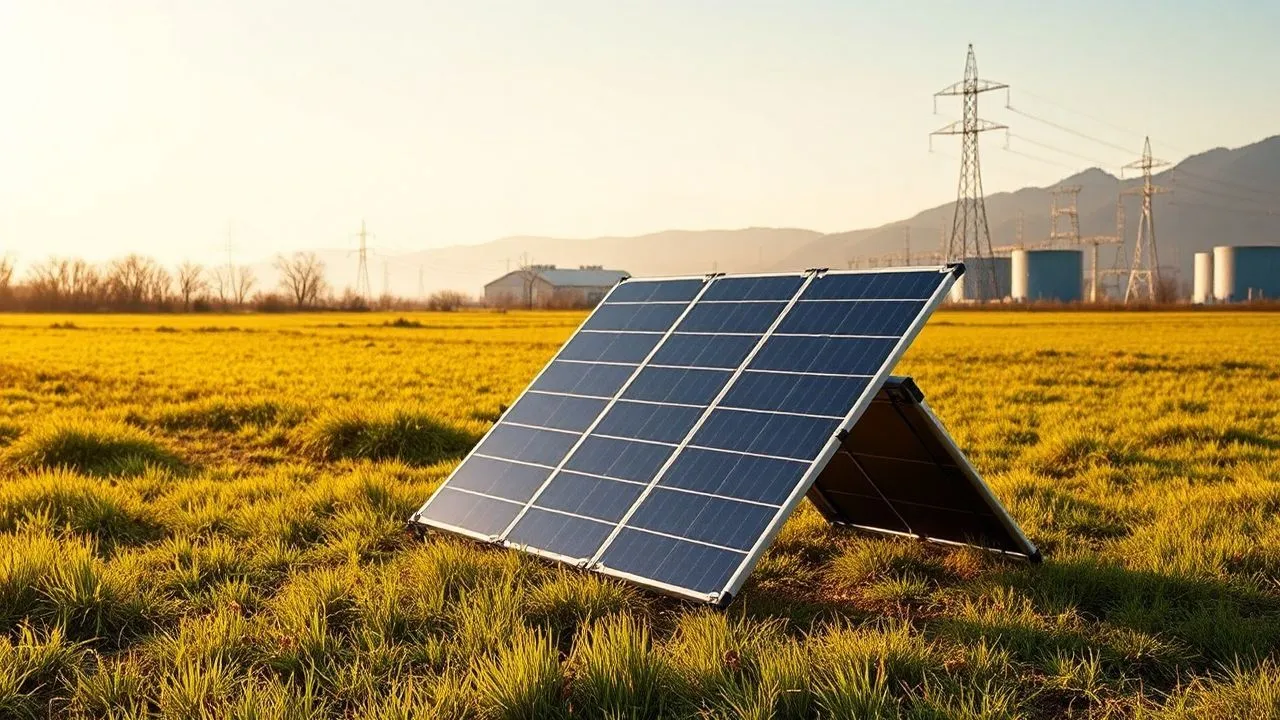
In the energy landscape of May 2026, the search for best photovoltaic systems portable has become a priority not only for lovers of outdoor life, but for anyone who wants a modular energy security. With the technological advance of recent years, folding solar panels have reached previously unthinkable efficiency levels, often exceeding the threshold of 23% conversion. If you are looking for the best portable photovoltaic systems for your adventures, for your van or as a home backup, this guide analyzes the most performing solutions currently on the market. The choice of the ideal system depends on crucial variables such as nominal power, atmospheric resistance and compatibility with modern phosphate lithium iron power stations (LiFePO4). In this article we will explore the fundamental components, from high-density monocrystalline modules to pure sinusoidal inverters, providing objective technical parameters to guide you in purchasing. Whether you are a digital nomad that needs to feed a work station on the beach or an occasional camper looking for a charge for the smartphone, you will find here all the necessary information. The versatility of today's portable solar systems allows you to configure custom kits, capable of supporting important loads such as compressor refrigerators or professional photographic equipment, ensuring total independence from the traditional electricity network.
Technological evolution and types of solar cells in 2026
High efficiency monocrystalline silicon domain
In 2026, the market for best photovoltaic systems is dominated almost exclusively by the cells in new generation monocrystalline silicon. These cells, characterized by a homogeneous crystalline structure, allow the electrons a smoother flow, drastically reducing energy losses in the form of heat. Compared to the models of a few years ago, today's panels integrate technologies such as multi-busbar (MBB), which shortens the distance traveled from the current on the surface of the cell, increasing the overall yield also under partial shading conditions. This is a critical factor for portable use, where perfect orientation is not always guaranteed. The conversion efficiency of the top range models is now stable between 23% and 25%, making it possible to generate a significant amount of wattora even with small and compact surfaces.
In addition to pure efficiency, another fundamental parameter concerns the temperature coefficient. Modern solar panels are designed to maintain high performance even when the surface of the hot form under the summer sun. Coating materials, such as ETSFE (ethylene tetrafluoroethylene), have replaced old PET polymers because they ensure better light transmission and superior resistance to UV rays and scratches. A panel covered in ETFE not only lasts longer, but is also self-cleaning: its non-stick surface facilitates the slipping of dust and water, keeping the cell free from obstructions that could drastically limit energy production during a stop in dusty areas or after a sudden storm.
Mini panels and solutions for micro-generation
Not all users need hundreds of watts to meet their needs. There is a very active niche, consisting of hobbyists, students and electronics enthusiasts, which addresses solar micro-generation systems. These small modules, often sold in multi-unit kits, work at reduced voltages (usually between 3V and 6V) and are ideal for feeding IoT sensors, small didactic circuits or to maintain emergency battery charges for torches and small gadgets. Their architecture, albeit miniaturized, follows the same principles of large plants: the use of polycrystalline or monocrystalline silicon cells ensures constant operational stability, allowing you to learn the standard and parallel concepts in total safety and with low costs.
The importance of these devices lies in their flexibility. They can be integrated into technical backpacks, placed on vehicle dashboards or used for solar domotic projects. Despite the low nominal power, the construction quality has made giant steps: many of these mini-models are now sealed with high quality epoxy resins that make them resistant to impact and weather. For those who approach the world of photovoltaic for the first time, starting with these small plants is the best way to understand how solar radiation is transformed into usable electricity, without having to invest important figures in complex and bulky systems.
Analysis of the best portable and foldable solar panels
200W models: the perfect balance for van life
The 200W solar panels today represent the golden standard for those traveling in camper van or equipped van. Brands like DOKIO and VDL offer solutions that combine fast charging power with excellent portability. A 200W module, under conditions of good irradiation typical of a day of May or June, can generate about 1kWh of energy per day, enough to maintain a portable refrigerator, recharge multiple times a smartphone and a laptop, and feed the LED lighting of the medium. The folding structure, which is often transformed into a practical case with handle, solves the problem of storing, allowing to store the plant in cramped spaces when not in use.
The robustness of these models is guaranteed by anodized aluminum frames or high-strength technical fabrics. For example, the VDL 200W panel uses five-layer technology that protects cells from excessive bending, a common risk during continuous shifting. IP67 certification has become a standard requirement, ensuring that the panel does not suffer damage if left in the rain. In addition, the inclusion of integrated adjustable supports allows to tilt the panel of 30 or 45 degrees on the ground, optimizing the angle of incidence of solar rays compared to the horizontal position, a shortening that can increase the production of energy up to 25% during the morning or afternoon hours.
Solar battery charger for car and battery maintenance
Another category of great success in 2026 concerns solar charge handlers for 12V batteries. These devices, usually with powers between 10W and 25W, are designed not to feed energy utilities, but to counteract the natural self-charging of car batteries, motorcycles or boats remained firm for long periods. Products such as those of the ECO-WORTHY line often include block diodes to avoid reverse discharge during the night and ready-to-use connectors, such as crocodile clamps or lighter adapter. It is an ecological and intelligent solution that extends the useful life of expensive lead or AGM batteries, avoiding unpleasant surprises when igniting the engine.
These small photovoltaic plants are extremely light (often under 500 grams) and can be attached to the windscreen by suction cups or supported on the dashboard. Despite the power contained, their utility is maximum in emergency situations. Imagine finding yourself in an isolated place with the car battery slightly below the point threshold: a solar maintainer, left to act for a few hours under the sun, can provide those few amperes necessary to try a successful start. The simplicity of use and affordable cost make these chargers an indispensable accessory in the survival kit of every conscious driver.
Photovoltaic kit with storage and portable power stations
Energy independence with LiFePO4 batteries
The real quality jump for best photovoltaic systems 2026 portable is the integration with advanced storage systems. Kits that include a solar panel and a phosphate lithium iron battery (LiFePO4) offer unparalleled advantages in terms of safety and longevity. Unlike the old lithium-ion, LiFePO4 batteries can withstand over 3500 cycles of charge and discharge while maintaining 80% of the original capacity, which means over 10 years of daily use. These systems include an internal charge controller (often MPPT type) that optimizes energy withdrawal from the solar panel, ensuring that every sun radius is turned into a useful charge for the battery, even when the sky is partially cloudy.
The use of a system with accumulation allows to unleash energy consumption from its production. You can recharge your power station during the day while hiking and use the energy accumulated in the evening to cook with a portable induction plate or to feed a projector for a movie evening under the stars. Many modern kits offer multiple outputs: 230V AC sockets to pure sinusoidal wave (fundamental not to damage laptop sensitive electronics), 100W USB-C Power Delivery ports and 12V DC sockets. This versatility transforms a simple solar panel into a real portable power plant, capable of managing complex loads in total autonomy.
PWM vs MPPT charge controllers: what to choose
Within a photovoltaic kit, the charge controller plays the role of “brain” of the system. There are two main technologies: PWM (Pulse Width Modulation) and MPPT (Maximum Power Point Tracking). In 2026, MPPT technology became much more accessible and is highly recommended for plants over 100W. An MPPT regulator is able to convert the excess voltage of the additional current panel for the battery, increasing the overall efficiency of 20-30% compared to a PWM model. This is particularly evident during winter days or when the panel is not perfectly perpendicular to the sun.
On the other hand, for small maintenance systems or for cheap kits under 50W, a PWM regulator can still be a valid choice thanks to its simplicity and reliability. These devices effectively protect the battery from overload and deep discharge, two of the main causes of premature failure of the accumulators. Many modern regulators are equipped with LCD display that show in real time the watts produced by the sun, the voltage of the battery and the energy consumed by the connected users. This informational transparency allows the user to manage their consumption in a conscious way, avoiding remaining energyless in critical moments.
Basic criteria for choosing the ideal system
To identify best photovoltaic systems suitable for your specific needs, it is necessary to evaluate a series of technical and logistic parameters. There is no universal solution, but rather the best compromise between power, weight and price. Consider the following key points before purchase:
- Daily energy needs: Calculate the amount of the watts consumed by each device for the number of hours of use expected.
- Boot space available: Measure the folded panel in comparison to the trunk or the toilets of your vehicle.
- Climate conditions prevailing: Choose materials with high thermal resistance (ETFE) if you often travel in desert or tropical areas.
- Connectors compatibility: Check that the panel uses standard such as MC4, DC5521 or XT60 to facilitate connection to the battery.
- Overall weight: Consider if you can easily move the panel and battery during daily setup operations.
Another aspect often underestimated is the guarantee of long-term performance. Leading manufacturers in 2026 offer linear guarantees that ensure at least 80% of the nominal power after 20 or 25 years. Although a portable system is subject to greater mechanical wear than a fixed roof, a quality construction with reinforced corners and double stitching in the support fabric can make the difference between a product that lasts only one season and one that accompanies you for a decade. The transparency of glass (if present) or the quality of the polymer coating determine how much light actually reaches the cells: an initial savings of a few euros could result in a constant loss of energy produced every day.
Benefits of portable solar energy in different contexts
Camping and hiking solutions
Integration of best photovoltaic systems in the outdoor world has revolutionized the way we live nature. For a multi-day trekking hiker, a small 20W folding panel fixed on the backpack can make a difference, allowing you to keep your GPS and smartphone always loaded without having to carry heavy additional power banks. On camping, the possibility of feeding a small pump for water, a fan for aphobic nights or a lighting system for the outdoor area drastically increases comfort without noise pollution produced by gasoline generators, now increasingly limited or prohibited in many protected areas.
Silence is, in fact, one of the most competitive advantages of solar. Being able to generate energy in the absolute silence of a forest or a remote beach preserves the experience of nature. In addition, modern panels are designed to be mimetic or have neutral colors that fit perfectly into the environment. The ease of installation (just open the panel and direct it) makes technology accessible to everyone, from young scouts to pensioners who enjoy the holiday in caravans, democratizing access to clean energy wherever the sun shines.
Emergency and home backup
We must not forget the usefulness of portable photovoltaic systems in the home, especially as an emergency kit. In case of prolonged blackout, caused by extreme atmospheric events that in 2026 are unfortunately frequent, having an independent system allows to maintain critical devices. A 400W kit with a capacious power station can feed a refrigerator for several hours, allowing you to save food supplies, or provide energy to medical devices like CPAP for those suffering from night apnee. The portability allows you to move the panel from one window to another by following the sun or bringing it to the garden to maximize charging.
Many families today choose to install small “plug & play” plants on the balconies. These systems, while being technically portable, are temporarily fixed to the railings and directly connected to the home electrical network via certified micro-inverters. Although production is limited to a roof plant, the basic consumption (the so-called “ghost load”) can be significantly reduced due to routers, standbys of household appliances and alarm systems. It is a first concrete step towards self-consumption that does not require complex condominium permits or invasive installations by specialized technicians.
Maintenance and accessories to optimize energy yield
Cleaning and surface care of panels
To maintain best photovoltaic systems to the maximum of their potential, regular maintenance is essential. Dust, pollen, bird excrement or salsedine if you are near the sea can create a matte patina that blocks photons. It is good to clean the panel surface with a damp microfiber cloth and distilled water, avoiding aggressive detergents that could damage anti-reflective treatments. In portable models, it is essential to also control the integrity of connectors: traces of oxidation or dirt within the sockets can increase electrical resistance, causing dangerous overheating or efficiency in charging.
In addition, storage plays a key role. When the panel is folded, make sure that there are no stones or sharp objects stuck between the cells that could cause micro-fractures during transport. Although modern panels are tested to resist hail, the inner cells are thin and fragile: localized pressures very strong can damage them invisibly, creating the so-called “hot spot” that reduce the life of the module. Protecting the kit with a dedicated padded bag is a minimum investment that preserves the value of the system over time.
Essential accessories: from extension cables to testers
An efficient portable photovoltaic system often uses targeted accessories. To maximize the performance, you may need appropriate section solar extension cables (at least 4mmq or 6mmq) to place the panels in full sun while the battery or motorhome remain in the shade. Using too thin or too long cables introduces voltage falls that distort panel efficiency. Another very useful accessory is the online watt meter (wattmeter) which allows you to display exactly how much current is entering the system, helping you find the best orientation and inclination in seconds.
- Adapter cables: A complete kit should include adapters from MC4 to DC, XT60 and Anderson.
- Adjustable supports: Additional racks to lift the panel from damp or sandy soil.
- Power bank transit: Small accumulators to stabilize the current in case of variable cloud.
- Cleaning kit: Soft brushes and specific solutions for ETFE coating.
The use of quality connectors, such as the original Multi-Contact, guarantees a waterproof and secure connection. Many advanced users also integrate small temperature sensors to monitor cells or use dedicated apps that, via Bluetooth, provide detailed statistics on daily and historical production. These data are valuable to understand whether the system is performing as expected or whether the time for deep cleaning or a cabling revision has come. Technical awareness transforms a simple user into an experienced energy manager, able to get the most out of every hour of sunlight available in 2026.
Frequently asked questions about the best portable photovoltaic systems
How long does it take to recharge a 500Wh power station with a 100W panel?
In theory, it would take 5 hours of full sun. However, due to the efficiency of the charge controller and angle not always perfect, it is more realistic to calculate about 6-8 hours in optimal weather conditions. During days with variable cloud, the times can double, making it advisable to use an oversized panel (e.g. 150W or 200W) to ensure full charging within the day.
Can I leave portable solar panels outside in the rain?
Most high-quality portable solar panels produced in 2026 have IP65 or IP67 certification, which means they are resistant to water sprays and light rain. However, it is not recommended to leave them exposed to violent storms or total dives, since moisture could penetrate into junction boxes or connectors if not perfectly sealed, causing long-term corrosion.
What is the real difference between monocrystalline and polycrystalline cells?
Monocrystalline cells are made from a single silicon crystal and offer the highest efficiency (20-25%) and a smaller footprint. Polycrystalline is composed of multiple crystal fragments, have a characteristic bluish color and lower efficiency (15-17%), but are generally cheaper. For portable use, where space is limited, the monocrystalline is almost always the obligatory choice.
Can portable photovoltaic plants feed a hairdryer or coffee machine?
It depends on the capacity and power of the connected power station inverter, not only on the panel. A hair dryer usually takes between 1200W and 2000W. If your power station has a pure Synusoidal inverter from at least 2000W, it can make them work, but it will consume the battery very quickly. The solar panel will then serve to slowly recharge the energy consumed during the following hours.
How can I maximize the performance of my panel in winter?
In winter, the sun is lower on the horizon. To maximize the output, you have to tilt the panel more vertically (about 60 degrees) than summer. It is essential to avoid any type of shadow, even partial, because in winter the irradiation is already weak and a shadow produced by a branch or pole can almost completely zero the production of the module.
Conclusions and final tips for purchase
Choose the best photovoltaic systems portable in May 2026 means investing in freedom and sustainability. We have seen how monocrystalline cell technology and the use of resistant materials such as ETFFE have made these devices reliable and performing in every context, from extreme camping to home backup. Before proceeding to purchase, carefully evaluate your energy requirements and do not be afraid to slightly oversize the panel compared to the battery: having excess power is always better than being with the discharge devices at sunset. Remember to focus on recognized brands that offer real assistance and guarantees, thus ensuring you a lasting and safe travel companion. The transition to portable solar energy is a step towards a cleaner and independent future. Are you ready to exploit the energy of the sun for your next adventures? Choose your plant today and start generating your green energy!


