Google, the giant of mountain view, has always had the ambition to organize the information of the world and make it universally accessible and useful. in 2009, this vision took on a new dimension, taking a decisive look at the digital music scene with the introduction of the onebox service. this step was not a simple addition to the search features; it represented a bold strategic move, an attempt to integrate discovery and buying music directly into the heart of its search engine. the initiative, although it may appear as a precursor experiment in an era dominated by downloads, was an unequivocal signal of google’s ambitions to extend its influence far beyond the traditional web, directly involving sectors such as the record one, at the time still in the balance between the decline of physical sales and the nascent but tumultuous transition to digital. with onebox, google offered u.s. users the opportunity to search for music by title, album or artist, playing fragments of songs (or sometimes the whole piece) directly on the results page, and then direct them to purchase via partner platforms such as lala and ilike. this native integration not only simplified the user’s path from research to listening and purchasing, but put google in direct competition with established giants as , who at the time firmly held the digital market sceptre. the move was perceived by many as an attempt to “get a shadow” on the musical empire of streaming, prefigured a battle for controlling access to content that would redefine industry for years to come. the thorough analysis of this historical moment and its repercussions allows us to understand how musical research has evolved, from a simple search engine to a sophisticated ecosystem of discovery, customization and consumption, culminating in the era of ] and the artificial intelligence that we live today. this article aims to explore the roots of this transformation, analyzing the genesis of onebox, the context in which it emerged, its immediate and long-term implications, and how it laid the foundations for today’s digital music landscape, dominated by algorithms, customization and a constant battle for user attention. going beyond the news of a 2009 announcement, we will try to grasp the underlying strategic vision and how it influenced the evolution of business models, technologies of discovery and the very experience of enjoying music.
Digital dawn and the rise of : the pre-onebox context #
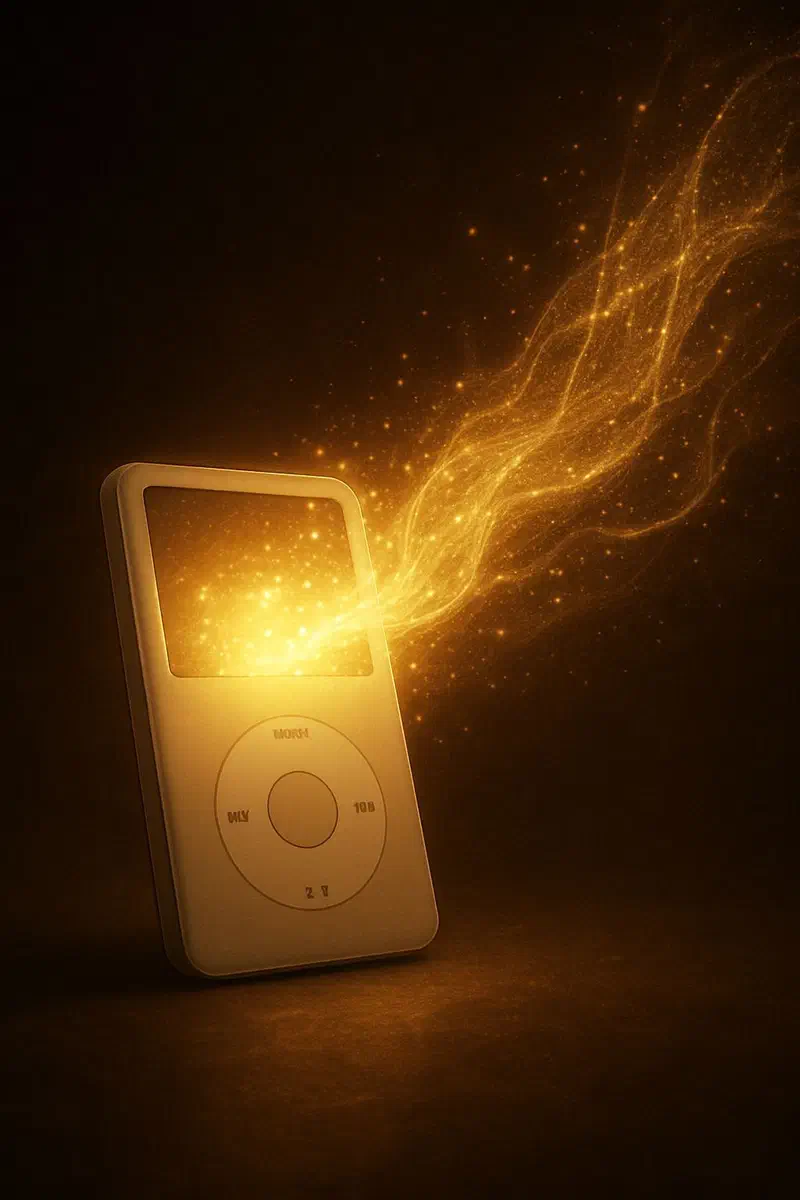
To fully appreciate the scope of the google onebox initiative of 2009, it is essential to understand the panorama of digital music in which it was inserted, an era still dominated by the transition from physical support to digital audio and battle against piracy. before the advent of legitimate and user-friendly platforms, the world of music had been shaken by the impact of services such as napster*, which, although technically illegal, had demonstrated the potential of digital distribution “peer-to-peer” and created a generation of consumers accustomed to instantaneous and free access to music. this chaotic and destructive phase for the record industry prepared the ground for a figure that would redefine the market: streaming with its ipod* and* store**. launched in 2003, store offered a simple and revolutionary model: high quality single tracks at 99 cents, easy to buy and synchronize with the ipod. this winning combination – an iconic music player and an integrated and legal digital store – not only offered a valid alternative to piracy, but also established streaming as the main actor in the digital music market, selling millions of songs and albums. the ecosystem of streaming was closed but incredibly effective, offering a smooth user experience, a well-groomed catalog and the trust of record labels finally agreed to collaborate. at the time of onebox, Streaming was not just a store; it was an identity*, a cultural reference point for modern music listening. its almost monopoly position in digital download made it the natural target for any technological giant with ambitions in the industry. the challenges for industry were many: the continuous decline in cd sales, the need to find new monetization models and the constant threat of new forms of piracy. in this context, google onebox was not only a new feature, but a declaration of intent by a company that had already demonstrated its ability to dominate entire web sectors, and that now focused on a slice of profitable and influential music market, questioning the sacredness of the ecosystem streaming.
Google onebox: a strategic move in the content ecosystem #
The introduction of google onebox in 2009 was not an isolated event, but an expression of google’s broadest and most daring strategy to “organize all information in the world” and make it immediately available and accessible. in this context, music, with its immense variety and universal appeal, represented a category of primordial information. the onebox functionality allowed users to search for songs, artists or albums and receive enriched results directly on the search engine results page (serp), including the ability to listen to previews of 30 seconds – or, in some cases, the entire track – through a pop-up window. the real stroke of genius, however, resided in its partnership architecture. instead of negotiating complex and costly agreements directly with record majors – a path that ] had successfully undertaken, but not without difficulty – google chose to collaborate with existing and consolidated music services such as lala, ilike** (myspace), pandora, imeem* and rhapsody**. this strategy enabled google to quickly enter the digital music market without incurring the prohibitive licensing costs or the legal complexities of direct management of rights, delegating the actual delivery and sale of content to its partners. users could click on the links provided to buy songs or albums directly from the associated platforms, making google a sort of “aggregator” and “facilitator” music content. this move was immediately perceived as a “shade” thrown on , not only because of its ability to hijack the search traffic to different destinations from the ecosystem streaming], but also because it signaled a growing trend of google to integrate advanced features directly into its serps, a phenomenon that we call today serp feature creep. this integration not only improved user experience, offering convenience and a path of discovery without friction, but also allowed google to collect valuable data on music tastes and user search behaviors, information that would be crucial to the future development of its services. google’s indirect approach also underlined its intrinsic reluctance, or perhaps a forward-looking strategy, to become a direct editor or distributor of content, preferring instead to maintain its position as a universal “porter” of information.
From property to : the evolution of music consumption and the impact of onebox #
Google’s onebox initiative, though focusing on downloading and buying songs, was revealed to be a precursor of one of the greatest revolutions in music consumption: the transition from propriety******* access via . in 2009, mp3 download was still the dominant model, but the first seeds of “on-demand” had already been planted by services such as rhapsody and, more significantly, by the emerging spotify*, launched in sweden in 2008 and expanding globally. while onebox offered a search interface to find and buy music, the real evolution would be the possibility to listen to unlimited music in exchange for a subscription or through a “freemium” model supported by advertising. this radical change has shifted the focus from “posing” a digital copy of a track to the “poter access” to a dirt catalog at any time and from any device. if onebox had shown the power of integration of music content into research, the services of streaming would have demonstrated the power of a universal catalogue instantly accessible. google’s next steps in the music industry, with products such as google play music and later youtube music, have clearly shown an adaptation to this new reality. they tried to capitalize both on the research and discovery experience inaugurated with onebox, and on the growing domain of Streaming, often integrating also the vast archive of youtube music video content. the challenges for streaming were immense, from the negotiation of global licenses with thousands of labels and artists, to the management of copyrights, to the construction of robust and scalable infrastructures. however, the convenience and value offered to users have proved irresistible, leading to exponential growth. today, the market is dominated by colossi of streaming as spotify, streaming music and youtube music, which transformed musical research into an experience of algorithmic discovery. it is no longer just a question of searching for a specific track, but of letting yourself be guided by algorithms that suggest custom playlists, related artists and new outputs based on your own tastes. in this context, onebox, while being a product of a past era, has laid the foundations for the idea that music could and should be more integrated in the research experience and, by extension, in the digital life flow of users.
Artificial intelligence and personalization: the future of musical discovery post-2009 #
The post-onebox era saw the unstoppable rise of artificial intelligence (ai)*** as a fundamental engine of musical discovery, radically transforming the way we interact with music. if in 2009 onebox was a first step towards integrating research and listening, today ai has brought customization to unthinkable levels, raising user experience beyond simple query. modern services of ] and musical discovery platforms are powered by sophisticated recommendation algorithms that no longer suggest songs based on genres or similar artists. these systems use a combination of techniques, including the ** collaborative filter*** (which analyzes user tastes with similar profiles), the ** content-based filter** (which analyzes audio features such as time, tone, instrumentation, text) and the deep learning of user behaviour (such as tracks are played, jumped, added to playlists, shared, as long as they are heard). google, with its immense experience in ai and machine learning*, continued to invest heavily in these technologies for its music services, particularly with youtube music and integration with the*** google assistant***. the possibility to ask for “reproduce relaxing music” or “recommend something new based on [artist]” would not have been possible without the enormous progress in the elaboration of natural language and in contextual understanding. playlists such as spotify’s “discover weekly” or “mix daily” are flashing examples of how ai can cure unique musical experiences for each individual, often leading to the discovery of artists or genres that would otherwise never have been met. however, the rise of ai also brings new challenges. the risk of “filter bubbles” (filter bubbles), where users are constantly exposed only to content that reflects their current tastes, can limit true discovery and exploration. there are also ethical issues regarding the equity of algorithms, transparency and, more recently, the impact of generating ai* on music itself. with ai able to compose original songs or replicate artistic styles, the debate on copyrights, paternity and the future of human creativity in the music industry emerges. ai is no longer just a tool to organize existing music; it is becoming a co-creator and an active curator of the global sound landscape, a deep transformation that onebox, although in its simplicity, anticipated by integrating the first layer of intelligence into the musical research path.
Integrated ecosystems and battle for attention: from onebox to web 3.0 of music #
The vision of google onebox, though rudimentary to today’s standards, contained seeds of an irreversible trend: the ever deeper integration of multimedia content within closed and interconnected digital ecosystems. what in 2009 was a “pop-up window” to play music, has now become a myriad of applications, platforms and devices that offer an all-inclusive and often exclusive musical experience. the current digital landscape is dominated by “ fenced gardens” (walled gardens) controlled by technological giants such as (with streaming music and its hardware ecosystem), google (with youtube music, android and google assistant), amazon (with amazon music, alexa and echo devices) and spotify (which while being independent, aims to build a broader audio content ecosystem). these actors compete fiercely not only for musical subscriptions, but for the most valuable asset in the digital age: the user’s attention*. music is no longer a product in its own right; it is an essential element in a wider battle for time and engagement of consumers, integrated with video, social media, video games and even experiences of augmented or virtual reality. youtube, for example, has become the world’s largest music catalog, offering a unique mix of official videos, user-generated content and live performance, demonstrating the convergence of formats that onebox could not predict. looking at the future, new frontiers such as the web 3.0*** and blockchain**** emerge, promising to redefine the relationship between artists, fans and platforms again. concepts such as musical nft (non-fungible tokens) aim to decentralize the ownership and monetization of music, allowing artists to connect directly with their fans, bypassing traditional intermediaries and percentages retained by the giants of . music experiences in the metaverso*, with virtual concerts, custom avatars and immersive interactions, suggest a future where music is not only heard, but lived and shared in three-dimensional digital environments. from the “simple” search engine with which google began to explore the musical world, we went to an era of complex and interconnected ecosystems, where music is at the center of a constant technological and business evolution, always looking for new ways to capture and monetize attention.
Beyond the query: the changing landscape of research and musical consumption #
The journey undertaken by google with onebox in 2009 represents a pivotal moment in digital music history, marking an evolution from a search model based on simple queries to an ecosystem of discovery, personalization and consumption deeply integrated. if the initial goal was simply to make music “reachable” and “purchasable” with few clicks, its long-term impact was to accelerate the convergence between technology and entertainment, prefigure the domain of streaming and the omnipresence of artificial intelligence. today, the musical “research” is no longer limited to typing a title or artist in a search bar. it has evolved towards the ** voice search** (“hey google, play the last track of…”), the ** contextual search*** (recommendations based on mood, activity or time of day), and even the ** visual search**** (identification of a track from a video or ambient sound). the search engine, once a static portal, has become a dynamic and predictive system, able to anticipate our musical desires. the success of onebox, although it was not a long-term product like streaming], lies in its ability to test the ground], to show that a search engine could and had to be more than a simple index of web pages, actively expanding in the domain of multimedia content. this has paved the way for google’s subsequent incursions in the music industry and has influenced the entire digital panorama, demonstrating the power of integration of content directly into the serp. the legacy of onebox is evident in the current model of music business, dominated by giants of Streaming who use sophisticated algorithms to cure personalised experiences, in a delicate balance between user convenience and monetization challenges for artists and labels. the tension between democratization of music distribution (which allows anyone to upload songs) and the need for effective care (which helps users navigate a sea of content) remains a central challenge. as we project towards a future in which ai could compose entire customised soundtracks for our lives, and the metaverso could host virtual concerts with millions of viewers, the essence of google’s mission – organize and make accessible – continues to be the guiding thread. music, in its purest form, will always remain a deeply human experience, but the way we discover it, we use it and share it will continue to be shaped by technological innovations that sink their roots at pioneering times like the introduction of google onebox.