The universe of domotics has undergone radical transformation in recent years, reaching an unprecedented level of technological maturity in this april 2026. among the protagonists who marked the path of the smart home, hive smart home* occupies a prominent position, especially for those seeking a simplified but powerful approach to home management. although the market has evolved with the introduction of new protocols, the hive system remains a reference point for the reliability of its devices and the ease of use of its interface. in this complete guide, we will explore every detail of the hive ecosystem, a brand born from the british experience of centrica that has been able to bring the concept of intelligent heating into the homes of millions of users. despite the commercial dynamics that have led the brand to focus on specific markets, the interest in the configuration and optimization of these products remains very high for those who already own an installation or for those who want to recover quality hardware on the market of technological use. understanding how hive works means immersing yourself in a philosophy where technology is not an obstacle, but an invisible facilitator of everyday life, allowing you to break down energy costs and increase living comfort without requiring skills from computer engineer. the management through smartphones, tablets and computers represents the heart of an experience that, still today in 2026, is modern and incredibly intuitive for every type of user.
The evolution of hive smart home in the panorama of the current home automation #
The birth of hives and success in the united kingdom #
The hive brand moved its first steps in 2013, a time when domotics was still considered a luxury for a few enthusiasts or a complicated set of expensive cables and power stations. thanks to british gas’s impulse, the hive active heating system revolutionized the way british citizens interacted with their boiler. the winning idea was to move heating control from analog boiler knobs to a digital interface accessible everywhere. this step was not only aesthetic, but it introduced the dynamic management concept based on user lifestyle. in the following years, the ecosystem has expanded including a plethora of sensors, bulbs and smart sockets, creating a digital connective tissue that can monitor the entire home. the solidity of the hive brand lies in this transition from a single product to an integrated platform that communicates in an impeccable way. still today, in 2026, the historicity of this brand guarantees a constructive quality that many new players in the smart market struggle to match, making hive devices of the real pieces of domestic engineering durable over time.
Analyzing the success of hive, it clearly emerges how simplicity was the key to time. while other systems required complex network configurations or specialized technicians for each small change, hive focused on a “plug and play” installation supported by a central hub. this device, connecting directly to the router, creates a dedicated network (often based on the zigbee protocol) that avoids overloading domestic wi-fi, ensuring superior connection stability. in a context like that of 2026, where our home networks are saturated with devices of all kinds, having a system that travels on a parallel and protected frequency is a technical advantage not indifferent. those who use hive know that the answer of the controls is immediate, whether it is to turn on a light from the sofa, or that it is planning the heating for the return from the winter holidays. the foresight of designers allowed hive to remain relevant despite the global market fluctuations of smart home and changes in local distribution strategies.
The state of the hive ecosystem in the italian market today #
In 2026, the situation of hive in italy requires an important clarification for all potential users and for those who already own the system. after an initial expansion phase, the company changed its commercial strategy, limiting the direct sale of new kits on the italian territory. however, this has not affected the functionality of servers and applications for those who already have installed devices or for those who purchase compatible components. hive’s cloud infrastructure continues to be operational and ensures that every automation, program or remote control functions smoothly. it is essential to understand that having a hive system today means having a solid technology in your hands that continues to receive security updates on the server side, maintaining high protection of personal data and domestic privacy. the following guide is therefore essential both for the maintenance of existing systems, and for those who want to maximize the potential of a hardware that, for the quality of the materials and precision of the sensors, remains at the top of the domotic category.
The resilience of hive products is demonstrated by their ability to integrate, in many cases, with third-party ecosystems through bridge or advanced configurations that the most experienced users continue to explore. in the current landscape, where interoperability has become the mantra of the smart home, hive represents an example of how a closed system can still offer a consistent user experience without frustrations. navigation within the official app remains a strong point: clean, responsive and translated correctly, allows you to control the status of each room in a few touches. although you will no longer find hive products on the shelves of the great physical distribution in italy, the user community remains extensive and active, exchange advice on how to optimize the “actions” to save on the energy bill, a theme that in 2026 is more current than ever. in deepening hive’s knowledge means therefore enhancing a technological investment that continues to bear fruit in terms of comfort and savings.
Complete guide to hardware components of the hive ecosystem #
The importance of the hive as the central heart of the system #
The heart of each home managed with this technology is undoubtedly thehub hive. it is a small device, with minimalist design, which acts as a bridge between the internet connection of the house and the various smart devices distributed in the rooms. without the hub, sensors and bulbs would not be able to communicate with the application on your smartphone. its installation is deliberately elementary to allow anyone to start it: connect the ethernet cable to a free port of the router and the power supply to a power outlet. once connected, the hub creates a secure wireless communication mesh that crosses the home walls to reach every corner. in 2026, the stability of this hardware is widely demonstrated, making it one of the most reliable components of the kit. it is interesting to note that the hub is able to manage dozens of devices simultaneously without showing signs of slowing down, ensuring that the input sent by the app translates into a physical action (such as the ignition of a plug) in a few milliseconds.
An underrated technical aspect of hive hub is its intelligent interference management. using specific frequencies other than the common 2.4ghz or 5ghz wi-fi, the hub ensures that the heating command is not disturbed by the streaming 8k video you are looking at in the living room or at work video calls. this isolation of communication channels is what distinguishes a professional system like hive from the economic solutions that often lose the connection in the less appropriate moments. for those living in very large homes or placed on multiple levels, hive also provided specific signal amplifiers that work in tune with the hub to extend coverage. care for the placement of the hub is the only real task required to the user: ideally it should be in a central position, away from large metal masses, to radiate the signal homogeneously. once configured, the hub becomes a silent partner who works h24 to keep your home always connected and ready to respond to your climate and lighting needs.
Different models of thermostats and thermostatic valves #
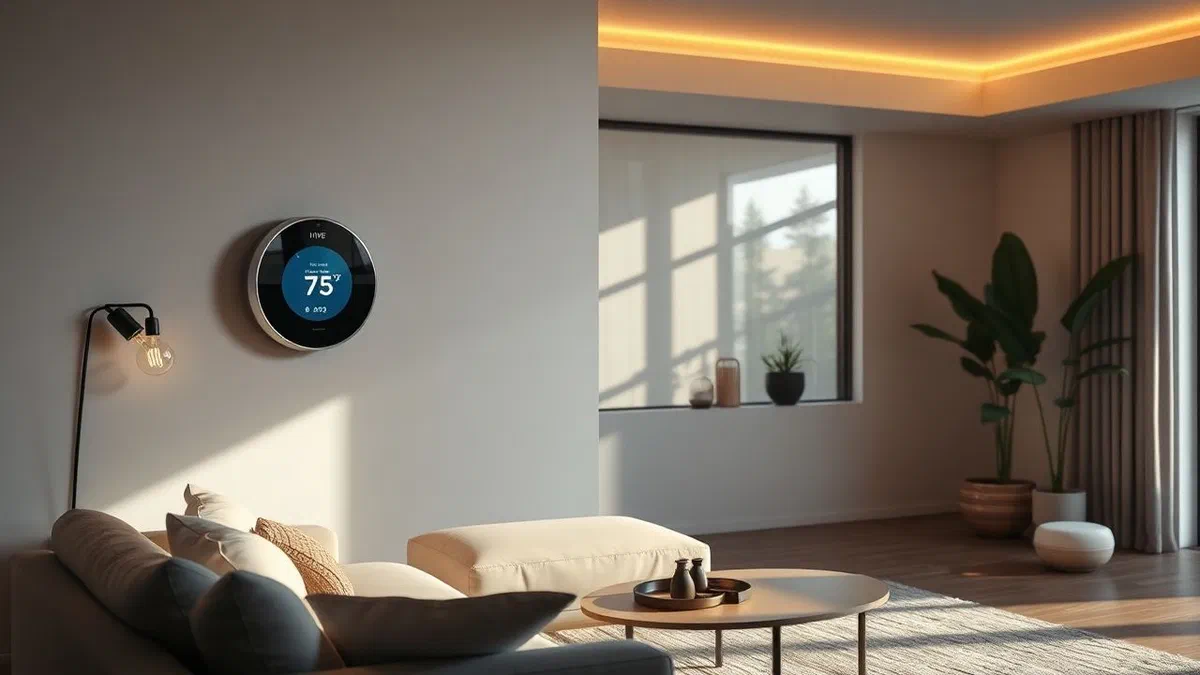
The strong piece of the collection remains the hive active heating, the smart thermostat that has redefined the aesthetic and functional standards of the industry. characterized by a rotating silver ring and a mirror display that only lights up when necessary, this device is not only a technical tool, but a real furnishing item. the thermostat communicates with a receiver physically connected to the boiler, allowing to turn on or off the heating according to the temperature detected or the scheduled times. the millimetre accuracy of the internal temperature sensors ensures that there are no thermal shocks, keeping the environment constantly at the desired comfort level. in 2026, the use of intelligent thermostats has become a necessity to counter the increase in energy costs, and hive responds to this requirement with optimization algorithms that learn how much time it takes your home to warm up, avoiding unnecessary waste of gas or electricity.
In addition to the main thermostat, the ecosystem is enriched with intelligent thermostatic valves (trv), which are installed directly on the individual radiators. this allows an unprecedented multi-zone management: you might decide to have 21 degrees in the bathroom for the moment of the shower and keep the bedroom at 18 degrees for a better rest, all managed independently from the app. hive valves are renowned for their quietness during water flow regulation, a fundamental detail if installed in the bedroom. the synergy between the central thermostat and the trv valves creates a dynamic heating system that fits room by room, a luxury that until a few years ago required domotic systems wired by the cost of thousands of euros. thanks to hive, this technology has become accessible and installable on almost all standard radiators on the market, making your old house an example of modern energy efficiency.
- Hub hive: the control center needed to communicate all devices.
- Hive active heating: intelligent thermostat for central heating management.
- Hive trv (thermostatic radiator valve): valves for individual control of each radiator.
- Hive active plug: smart sockets to make small appliances smart.
- Hive active light: led bulbs adjustable in intensity, shades of white or color.
Detailed procedure for installation and initial configuration #
Technical requirements and preparation of the home environment #
Before proceeding to the physical installation of the hive system, it is appropriate to verify that the domestic environment meets some basic requirements to ensure the success of the configuration in 2026. first, it is essential to have a stable internet connection and a router with at least one free ethernet port for the hub. although hive does not consume much bandwidth, connection stability is crucial for remote management. another aspect not to be neglected is the compatibility of the boiler: the hive active heating system is compatible with the vast majority of modern heating systems, but it is always advisable to consult the technical manual or rely on a certified installer if you are not familiar with the electrical connections of the boiler receiver. once you have hardware compatibility, make sure you have your smartphone at hand with the latest version of the hive app downloaded from the official store (google play or streaming app store).
The preparation also includes the strategic choice of the points where to place the sensors and bulbs. remember that each hive device must be able to “see” the hub or another powered device that acts as a mesh repeater. during the first installation, it is good to set up the devices in the same room as the hub and then move them to their final location once properly coupled. this approach drastically reduces the chances of timeout errors during the pairing procedure. also make sure you have the passwords of your account and the wi-fi network ready, even if the hub uses the physical cable, the app will need to communicate via the wireless network of your phone. a well-prepared house is the first step to transform the house into a functional smart home without annoying technical problems that could discourage the less experienced user.
Step-by-step guide to hive account registration #
Creating an hive account is the gateway to smart management of your home. once you open the application on your mobile device, you will be asked to register by providing a valid email address and creating a robust password. in 2026, computer security is priority, so we suggest you use a combination of uppercase, lowercase letters, numbers and symbols. after entering your data, you will receive a verification email: it is a mandatory step to activate your account and protect your privacy. without this confirmation, you will not be able to activate the hub. the application will then guide you in the choice of the country and time zone, fundamental parameters to ensure that the hourly programming of heating and lights are synchronized with the local time and with the automatic solar/legal hour changes.
Once the profile is completed, the app will ask you to enter the identification code of the hub, usually consisting of six alphanumeric characters on the rear label of the device. entered the code, the app will start a search on the local network to hook up the hub. this phase can take from a few seconds to a couple of minutes: during this time, the hub could flash with different colors to indicate the connection status (usually fixed green indicates that it is all ready). if the activation fails, the first suggestion is always to restart the router and check that the ethernet cable is correctly inserted until the “click”. once the hub appears as “connected” in the app, you will finally have access to the main control panel, from where you can start adding all the other components of your home ecosystem, one at a time, following the intuitive wizard.
- Download the hive app and create a new user account by checking the email.
- Connect the hive hub to the router via ethernet cable and power it.
- Enter the hub identifier code in the application to activate it.
- Add devices (termostats, lamps, sensors) by selecting “install devices”.
Intelligent lighting management and smart sockets #
Types of active light hive bulbs available #
Lighting plays a key role in the atmosphere of a home and hive offers a range of smart led bulbs, called hive active light, designed to meet every aesthetic and functional need. there are three main categories: those with adjustable intensity (dimmable) to warm white light, those that allow to vary the temperature of white (from an energizing cold to a relaxing heat) and finally the multicolor rgb bulbs. the latter are particularly appreciated in 2026 for their ability to completely transform the appearance of a room with a simple touch on the screen of the smartphone or through a voice command. all hive bulbs use low-consumption led technology, guaranteeing a multi-year duration and a minimum impact on the electric bill, while offering a brightness comparable to the old 60w incandescent bulbs or more.
The true added value of hive bulbs is not only in their light quality, but in advanced programming functions. through the app, you can set up ignition and shutdown times, but also activate the “holiday mode”. this function simulates the presence of people at home by lighting and switching off the lights randomly during the evening hours, representing an effective deterrent against theft attempts. in addition, the intensity adjustment allows you to create default scenarios: for example, you could set a “cinema” scene that lowers the lights of your stay to 10% when you turn on the tv, or a “watch” scene that gradually increases the brightness in the morning to help you wake up naturally. the installation is very simple: the bulb is screwed in the lampholder, the physical switch is turned on and the search starts from the app; in a few moments the light will become part of your home ecosystem.
In addition to classic bulbs with e27 or b22 (very common in anglo-saxon countries), hive also introduced gu10 spotlights, ideal for kitchens and bathrooms with countertops. this variety allows to uniform the lighting of the whole house under a single control system. reactivity is excellent thanks to the zigbee protocol, which allows bulbs to communicate with each other forming a mesh network. this means that if a bulb is far from the hub, it can receive the command from the nearest bulb, effectively extending the signal flow organically. in 2026, the management of intelligent lighting has become a standard of irrelevant comfort and hive is a solid choice for those looking for reliability and high-level colour rendering, without the annoying flickers typical of low-end products.
Optimization of consumption with hive active plugs #
The hive active plug* is perhaps one of the most versatile devices in the entire catalogue. it is a smart grip that interposes between the wall socket and the plug of the appliance you want to control. it is not only necessary to turn on or off remotely “stupid” devices like an old floor lamp or a fan, but it becomes a powerful tool to monitor and reduce energy consumption in standby. many electronic devices continue to consume energy even when they look off; with the hive socket, you can program the total shutdown during the night, eliminating unnecessary waste. in 2026, with the attention to consumption that has become a priority for each family, the possibility of automating these processes results in tangible economic savings at the end of the month.
Creative use of active plugs involves integration with other system sensors. for example, you could connect a coffee machine to the smart socket and make sure that it turns on as soon as the motion sensor in the hallway detects that you got up from the bed, or that the hair plate automatically turns off if the input door sensor detects that you went out of the house (avoiding anxieties and potential dangers). the signal flow of the sockets is excellent and they act as repeaters for the hive network, improving coverage for the farther devices like sensors placed in the garage or in the cellar. the building robustness of hive sockets allows you to manage important electrical loads safely, supporting most common household appliances without overheating or internal relay malfunctions.
The interface of the app dedicated to the sockets is extremely clear: a large central button allows immediate manual control, while the programming card offers a calendar display where to insert the time slots. you can set different programs for each day of the week, adapting perfectly to work shifts or weekend habits. in a time where domotics must be at the service of man and not vice versa, the hive active plug perfectly embodies this philosophy, offering total control without complications. whether to turn off the christmas tree automatically or to ensure that the electric bike charger does not remain in operation more than necessary, this small smart plug will reveal one of the best investments for your modern home in 2026.
Safety and monitoring: motion and contact sensors #
Strategic positioning of sensors for doors and windows #
Domestic security is not only about complex alarm systems, but also awareness of what happens at home in real time. hive door and window sensors are small and discrete devices, consisting of two magnetic parts that detect when a fixture is opened or closed. their positioning is crucial to achieving maximum effectiveness. in addition to the entrance door, it is advisable to install them on windows easily accessible from the outside or on the garage door. in 2026, these sensors do not only serve as an anti-theft, but also for climate optimization: you can set an action that automatically shuts down heating in a room if the window remains open for more than a minute, avoiding heat wasting outward. this type of interaction between sensors and thermostat is what makes a modern home “intelligent”.
The installation is facilitated by high-seat adhesive strips provided in the package, which allow to fix the sensors without having to pierce the fixes, a remarkable advantage for those who live on rent or own valuable locks. once mounted, the sensors instantly communicate any state change to the hub, which in turn sends a push notification to your phone. you can customize these notifications so that they are active only at certain times (for example during the night or when you are at work). the battery life of these small components is surprising, often exceeding the two years of continuous use thanks to the efficiency of the wireless communication protocol used by hive. monitoring access to sensitive areas of the house, such as the medicine cabinet or wine cellar, thus becomes a simple and immediate operation, increasing the sense of control and protection for the whole family.
Configuration of alerts and notifications in real time #
The hive motion sensor completes the monitoring suite, offering a wide detection range and an adjustable sensitivity. it is ideal to be placed in a corner of the ceiling or on a shelf in the hallway. its primary function is to detect unauthorized presences, but in everyday life it is used especially for the automation of the lights: imagine entering a dark room with busy hands and see the lights turn on automatically, and then see them turn off after a few minutes of inactivity. this is not only convenient, but actively contributes to energy saving, eliminating the problem of forgotten lights lit by children or the most distracted members of the family. in 2026, the accuracy of these sensors is such as to minimize the false positives caused, for example, by small pets, provided they follow the installation instructions on the recommended height.
Alert configuration takes place through a dedicated section of the app, where the user can decide the priority of notifications. you may choose to receive a silent notification for opening a drawer and a critical sound notice if a movement is detected in the living room after midnight. the history of events recorded by the app allows you to review all the movements and openings of the last days, offering a complete overview of home life. if combined with a compatible camera or other hive devices, the motion sensor becomes part of a proactive security system. the speed of reception of the notice is critical in case of emergency and the hive infrastructure ensures that the signal arrives to your smartphone in less than two seconds, wherever you are in the world, provided you have an active data connection. this reliability makes hive an excellent choice for those who want a smart security not invasive but extremely punctual.
The hive system demonstrates how technology can integrate harmoniously into the home environment, transforming daily gestures into an experience of automated comfort and unprecedented energy awareness.
Creating complex scenarios and intelligent automation #
Use of hive actions for interaction between devices #
The real quality jump for a smart home is achieved when devices stop running as isolated entities and begin to dialogue with each other. in the hive system, this is possible thanks to the “actions” section. an action is essentially a logical rule of the type “if this happens, then do that”. the combinations are limited only by your imagination and the number of devices in your possession. for example, you could create an action called “welcome home” that is activated when the input door sensor detects the opening between 18:00 and 21:00, controlling the lighting of the light in the hallway and increasing the thermostat temperature to 20 degrees. these automations make the interaction with the fluid home and reduce the need to continuously extract the phone to manage the individual parameters, bringing the domotic to a higher level of practical utility.
Another very useful application of the actions concerns security and savings. you can set a rule that turns off all lights and smart sockets when the heating is put in “away” mode (out of home), or make sure a bulb flashes of a specific color if the motion sensor in the garage detects something during the night. in 2026, these routines became the standard for those who want a home that “thinks” independently, anticipating the needs of tenants. hive cloud stability ensures that these rules are executed accurately, even if the user’s smartphone is switched off or not connected, since once you create, the instructions are stored and managed by the central hub and the company’s servers. experimenting with actions allows you to discover new ways to make everyday life less stressful and more organized.
Integration with external voice assistants and future protocols #
Although hive is a complete ecosystem, its strength also lies in the ability to integrate with major vocal assistants such as amazon alexa and google home, a feature that in 2026 is considered unreliable. by connecting the hive account to the respective voice management apps, you can control heating and lights simply using the voice. commands like “alexa, set heating at 21 degrees” or “hey google, turn off all hive lights” work instantly, offering a very comfortable alternative when you have your hands busy or you don’t want to look for your phone. this integration also allows you to insert hive products within a wider routine that involve devices of different brands, creating an experience of unified smart home and without technological barriers among the various manufacturers.
Looking at the future of domotics and the evolution of protocols such as matter, which is taking more and more foot in this 2026, hive continues to maintain its relevance thanks to the solidity of its installed base. many advanced users use bridge software to communicate hive devices with new standards, ensuring exceptional longevity to hardware. the company has always focused on technology that did not become obsolete after a few months, and the results are seen in the satisfaction of those who, at a distance of years, continue to use their devices profitably. investing in a system that offers open apis and official integrations with tech colossi means ensuring that your home remains intelligent and functional even in the face of rapid changes in the global technological market.
- Climate automation: switch off heating when an open window is detected to save energy.
- Welcome bright: automatic ignition of the outside lights and the corridor on the evening return detected by the sensors.
- Presence simulation: random management of lights during the holidays to discourage maliciously.
- Vocal control: total integration with alexa and google assistant for hands-free management.
- Mesh zigbee network: each powered device extends signal coverage throughout the home.
Frequently asked questions about hive smart home #
What if the internet connection stops? #
In case of lack of internet connection, hive devices will continue to work locally following the latest scheduled programming. the thermostat will maintain control of the boiler and the physical switches of the lights will continue to operate normally. however, it will not be possible to send remote commands via smartphones or receive notifications from sensors until the recovery of the network. automations based on complex local rules may be restricted, but the basic functionality of heating and lighting is always guaranteed not to leave the user in cold or dark.
Is the hive system compatible with all boilers in italy? #
Hive active heating is designed to be compatible with most gas, oil boilers and also with some electrical heating systems. it supports both combined boilers (which produce instant hot water) and those with storage tank. in 2026, it is rare to find a modern system that cannot be managed by hive, but it is essential to verify the presence of a pre-existing wired thermostat, since the hive receiver must be installed in its place or directly on the boiler board following the official electrical schematics.
Can i bring my hive system to a new house if i move? #
Of course. one of the advantages of wireless smart systems like hive is their portability. you can disassemble the hub, bulbs, sockets and sensors to reinstall them in the new home. as for the thermostat, you will have to disassemble both the control unit and the receiver connected to the boiler. once in the new home, just reconnect the hub to the new router and all devices should reconnect automatically. it will only be necessary to update the names of the rooms and programming in the app to adapt them to the new layout of the spaces and your new habits.
How many devices can i connect to a single hive hub? #
The hive hub is extremely powerful and can handle up to 100 devices simultaneously. this includes a combination of thermostats, trv valves, bulbs, sensors and smart sockets. for the vast majority of private homes, even large, a single hub is more than enough. if you have to encounter signal flow problems in houses on multiple floors or with very thick walls, adding a hive active plug or a dedicated signal amplifier will solve the problem by acting as a node in the mesh network.
The batteries of the hive sensors how long they last and how do they replace? #
Hive motion and contact sensors batteries are designed to last between 18 and 24 months on average, depending on the frequency of activation. when the charge is low, you will receive a prompt notification on the application that will invite you to change. the procedure is very simple: just slide the sensor lid and replace the battery (usually type cr123a for movement or cr2032/. aaa for other models) with a new one. once the cover is closed, the sensor will reconnect to the hub in seconds without losing the previously created settings or automations.
In conclusion, adopting the hive smart home* system in 2026 is still a smart choice for those who want an efficient, safe and easy-to-manage home. despite market developments, the solidity of hive hardware and the intuitiveness of its application remain points of reference for the entire domain of domotics. whether your goal is to drastically reduce gas consumption thanks to an oculated heating management, or simply enjoy the comfort of lighting that fits your moods, hive offers all the tools necessary to transform this desire into reality. remember to keep the application up to date and periodically explore the actions section to discover new ways to automate your daily routine. if you already own hive devices, value them at the most by following our advice and enjoy your smart home. if you haven’t done it yet, start small steps, maybe with a lighting kit, to find out how much technology can really improve the quality of your home life. **discover how to make your home smart today! *