On october 22, 2013, the world of technology had its eyes focused on an event that was essential for Apple. the expectations were high, powered by insistent rumor and a consolidated track record of allthingsd in predicting the moves of the cupertino giant. the event, in fact, soon followed the announcement of iphone 5s and 5c and the introduction of ios 7, marking a period of intense activity and redefinition for the company. in a context where the tablet market was booming and that of pcs was under pressure, Apple was preparing to refresh and, in some cases, to reinvent entire product lines. the air was loaded with expectation not only for the new ipads, with the so-called redesign for the 9.7-inch model and the ambitious integration of the retina display in the ipad mini, but also for the professional macs, with the mac pro promising radical innovation, and the official launch of os x 10.9 mavericks. this was a crucial moment, not only for the consolidation of market positions of Apple, but also for defining future trajectories of hardware design, software performance and integrated user experience that always distinguishes the ecosystem of the company. this article intends to analyze in depth those ads, their historical-technological context, the immediate impact and, above all, the legacy that such innovations have left in the modern technological landscape, drawing a path that goes from 2013 to today.
Ipad era: redesign, retina and the struggle in the tablet market #
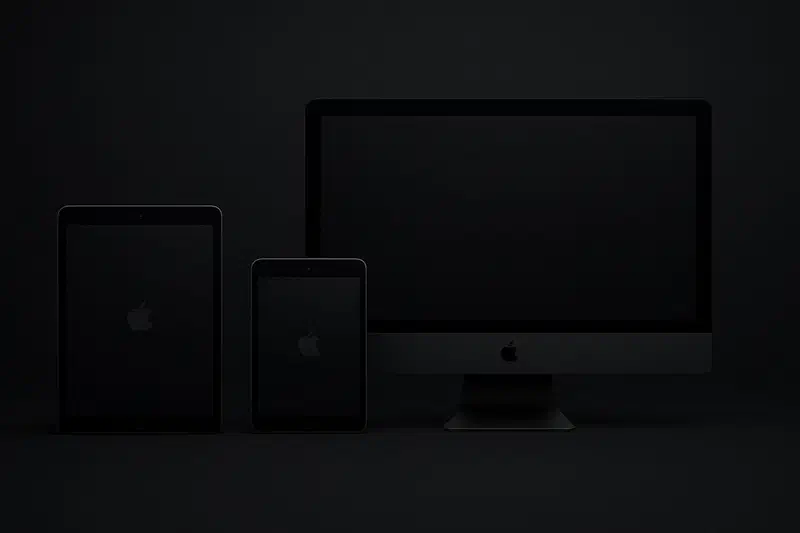
The ipad, since its debut in 2010, had redefined the tablet category, creating a former novo market and dominating it encountered for years. however, by 2013, the competition had become fierce, with a myriad of android tablets – from google nexus 7 and 10 to the various samsung galaxy tab models – offering valid alternatives at often more competitive prices. in this scenario, Apple felt the pressure to innovate and maintain its leadership. the october 2013 announcement revealed the new ipad air***, which represented a real generating leap for the 9.7-inch flagship tablet. it was not a simple internal update, but a complete aesthetic redesign** that approached it surprisingly to the ipad mini. the ipad air was significantly thinner (7,5 mm versus 9,4 mm of ipad 4), lighter (about 469 grams against 652 grams), and had drastically reduced side frames, giving it a more modern and refined look. this change was not only cosmetic; it greatly improved ergonomics, making the tablet more comfortable to hold with a hand and carry. at the same time, theipad mini with retina** (then known as ipad mini 2) responded to one of the most pressing requests of users. the original model, while being appreciated for its portability, suffered a lower resolution than the competitors and the larger ipad. the introduction of the retina display from 2048×1536 pixels (the same density as the ipad air, but in a smaller format) raised the visual experience to a new level, making texts and images incredibly sharp and detailed. both new ipads were equipped with the 64-bit*************************************, the same revolutionary processor introduced with the iphone 5s, promising double performance compared to the a6x chip and improved energy efficiency. this not only guaranteed exceptional fluidity in everyday use and demanding apps, but also laid the foundations for an ever more sophisticated software future. the choice of integrating the 64-bit a7 chip was not only a sharp increase in power, but a clear declaration of intent Apple] to unify the architecture of its mobile devices and open the way to future developments that would combine hardware and software in ever deeper ways. the impact on the market was immediate: the ipad air and ipad mini retina strengthened the position of Apple in the premium segment of the tablets, offering products with design, performance and display hardly comparable to the competition, although the price remained a distinctive factor. the reviewers enhanced the lightness and power of the air, while the ipad mini retina was acclaimed as the 7-8-inch final tablet.
Mac pro: the revolutionary cylinder and professional ambitions of Apple #
One of the most anticipated and controversial ads of 2013 was the presentation of the new mac pro*. already anticipated with a teaser enigmatic during the wwdc in june with the bold slogan “can’t innovate anymore, my ass”, the new mac pro was revealed in all its radical and unexpected glory. its cylindrical shape, about 25 cm tall and with a diameter of 16.7 cm, quickly earned it the nickname “cestine” or “cylinder”. this design was not only a bold aesthetic choice, but an innovative engineering solution for thermal management. the heart of the system was the so-called “thermal core” a central triangular dissipator around which the main components were arranged: the intel xeon e5 cpu (up to 12 cores), the ecc ram memory (up to 64gb ddr3 at 1866mhz) and, above all, two professional amd firepro gpus. the decision to integrate two gpus from the beginning, instead of allowing post-sales customization, underlined the orientation of the mac pro towards intensive professional workloads, such as 4k video rendering, 3d modeling and complex graphics processing. Apple] had clearly aimed at an audience of creative professionals who needed maximum performance in a compact format. however, the cylindrical design, although brilliantly solving the problems of heat dissipation in a reduced space, also raised questions about its expandability. unlike previous mac pro “tower” that allowed users to add pci cards, hard drives and update gpus with relative ease, the new model was much more closed. access to internal components was limited and updating key components such as gpus was virtually impossible, binding users to the configuration chosen at the time of purchase. this choice reflected a wider trend of Apple towards integrated and less modular systems, which, on the one hand, ensured greater stability and optimization, on the other, displeased a part of its pro user base, used to customize its hardware. despite criticism of modularity, mac pro’s performance in specific tasks was exceptional at the time of launch, and its design represented a strong statement*** of Apple on its ability to innovate even in the professional desktop segment. its high cost made it a niche product, but its stylistic and technological audacity made it immediately recognizable as an iconic piece in the history of computer design.
Os x 10.9 mavericks: the beginning of a new era software for mac #
The october 2013 event was not only a showcase for hardware, but also for software, with the official launch of os x 10.9 mavericks. this release marked a significant turning point in the Apple strategy for its desktop operating system. first of all, he abandoned the historic nomenclature based on the great felines (from cheetah to mountain lion) in favor of names inspired by iconic places in california, opening a new tradition. but the real novelty, which surprises many, was the decision to make mavericks a update completely free* for all mac users eligible. this unprecedented move for a desktop operating system of this magnitude was intended to accelerate the adoption of new versions and ensure that a wider user base could benefit from the latest features and security improvements. from a technical point of view, mavericks focused less on the introduction of revolutionary features and more on the improvement of performance, energy efficiency and integration with ios. technologies such as app nap were introduced, which paused apps that were not used to reduce energy consumption, and compressed memory, which allowed the system to compress data into ram when physical memory was scarce, improving general reactivity without having to resort to disk swap. these optimizations were particularly important for macbooks, promising a significant increase in battery life. on the user side, mavericks brought several practical additions. the finder got the long-awaited tab*, which allowed multiple windows to be managed in one interface, and the tag*, to organise files more flexiblely. integration with ios services began with the arrival of map* and ibooks** directly on mac, creating a more consistent experience between devices. improved support for multiple monitors, with the possibility of having a menu bar and the dock on each screen, and performing full-screen apps on separate monitors, was a relief for professionals and advanced users. mavericks represented a declaration of intent Apple: an operating system that was not only aesthetically pleasing, but also deeply optimized, efficient and increasingly interconnected with the rest of the ecosystem Apple. this strategy to offer free updates and focus on efficiency and integration would become a key pillar for future macos developments.
Intel haswell processors: a leap of efficiency for the mac ecosystem #
While the spotlights were focused on the new ipads and mac pros, less striking but equally crucial updates were the integration of the intel haswell********** (the fourth generation of the core i) in most of the mac line. already weeks before the october event, imac had received a silent update with haswell chips, and the wait was high for their impact on macbook pro retina and potentially on mac mini. haswell processors were an important step forward for intel, focusing not only on an increase in cpu performance, but above all on a dramatic improvement in energy efficiency**** and integrated graphics****. for laptops, this resulted in a significantly extended battery life, a critical factor for user experience. the macbook air, updated with haswell in mid-2013 had already demonstrated this ability, reaching autonomy that exceeded 12 hours, an impressive figure for the time. when the macbook pro retina** were updated with haswell at the october event, they benefited enormously. in addition to performance gains, battery life passed from about 7 hours to 9 hours for the 13-inch model and up to 8 hours for the 15-inch one, a net improvement that made them even more competitive against the windows notebook. theimac, with its haswell processors, also saw improved efficiency and graphics performance, especially in configurations including intel iris or iris pro integrated gpus, which for many professional users offered sufficient power without resorting to dedicated graphics cards. the mac mini*, although it was not a main focus of the event, was also waiting for a haswell refresh, which was subsequently realized, bringing the same benefits in terms of efficiency. the adoption of haswell by Apple] underlined its strategic dependence on intel for the performance of its computers, and the ability of Apple to optimize the software (os x mavericks) to maximize the new hardware architectures. this period, however, also began to highlight the limits of intel’s innovation, especially on the energy efficiency front, a consideration that, years later, would prompt Apple to embark on the revolutionary transition to its processorsApple silicon*** based on arm architecture. in 2013, however, haswell represented the leading intel innovation diamond and allowed Apple to offer its mac users an unprecedented combination of power and autonomy.
The shadow of the iwatch: from speculation to the birth of a new category #
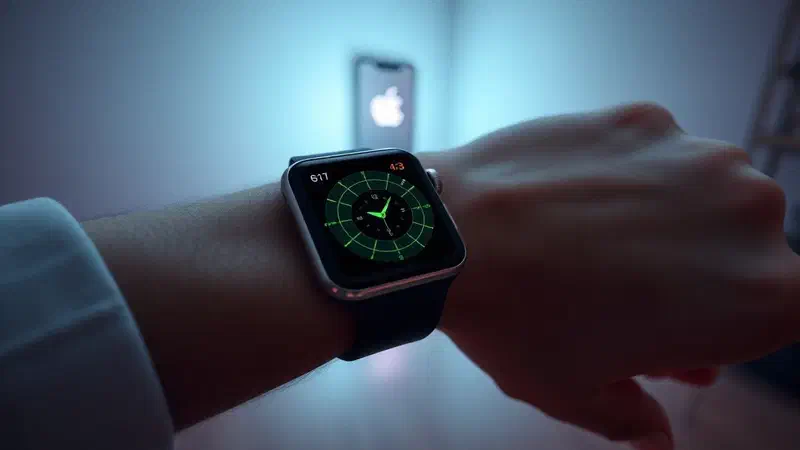
The allthingsd report anticipating the 22 october 2013 event also contained an intriguing phrase: “analysts are also looking for an all-new (perhaps watch-shaped) product line, but if it’s coming, Apple’s notoriously sieve-like supply chain has yet to give us any indication.” this little observation, almost an incident, was actually one of the greatest bets of Apple in the following decade: theApple watch. although the iwatch (the most popular name among initial speculations) was not announced in 2013 – it would take two more years before the product was revealed and put on sale – its mention already highlighted a ferment in the technological sector and the expectation that Apple, after revolutionizing the sectors of personal computers, music players, smartphones and tablets, was ready to create a new category of products. the wearable, or wearable devices, were a nascent concept. smartwatch from other companies like samsung (galaxy gear) and pebble had already entered the market, but without a revolutionary impact. the reputation of Apple in the design and integration of hardware and software made sure that, if ever launched a smart watch, this would have had the potential to define the category, just like the iphone had done for smartphones. iwatch speculations focused on different aspects: a flexible display, biometric sensors for health and fitness, the ability to show notifications and interact with your smartphone without having to extract it from your pocket. the phrase in the 2013 report was a demonstration of how the *philosophy of the “one more thing” of Apple had created an almost pathological expectation for new product categories. the fact that the supply chain, usually “here-like” (as a colander), had not revealed anything, did only increase the mystery and excitement. the birth ofApple watch, which took place only in september 2014 with its presentation and then commercialization in 2015, would be the ultimate response to these speculations, transforming a wrist object into a real wearable computer focused on health, well-being and discreet communication. this move would further consolidate the strategy of Apple] to extend its ecosystem far beyond traditional devices, creating new market opportunities and strengthening its influence in the daily lives of users.
The unified ecosystem: the holistic vision of Apple in 2013 and beyond #
The 2013 ads, though focused on specific hardware and software updates, were part of a broader and more consistent vision of Apple: creating a unified and interconnected ecosystem*. already with the introduction of ios 7 in september, and then with os x mavericks, Apple was pushing for greater aesthetic and functional uniformity among its mobile and desktop operating systems. ios 7, with its flat design and transparencies*, had represented a significant break with the skemanphism of its predecessors, affecting the mavericks interface that, while maintaining a distinct desktop identity, adopted visual and functional elements reminiscent of its mobile brother. this strategy was not just about the visual aspect. integration between devices was at the heart of user experience. the introduction of applications such as maps and ibooks on mac, along with an expansion of icloud features, aimed at ensuring that data and content were accessible and synchronized on all user devices Apple. the concept of “continuity“, although fully implemented only with subsequent updates of os x yosemite and ios 8 in 2014, had already its deep roots in the philosophy that permeated the announcements of 2013. Apple was building the foundation for functionality like handoff (to start a task on one device and continue it on another), instant hotspot (to use mobile phone as a configuration-free hotspot) and phone calls and sms/mms messages directly from mac or ipad. the power of the 64-bit a7 chip, unifying the architecture of the processors between iphone, ipad and in the future also macs (with the transition to Apple silicon), was another fundamental piece of this holistic vision. it allowed developers to create more powerful and complex applications that could work efficiently on different platforms, making the most of the underlying hardware. the goal was clear: to create a seamless user experience, where the switch from one device to another was natural and intuitive. this strong emphasis on the ecosystem and hardware-software integration not only did users loyalty, but also created a barrier at the entrance for competitors, who struggled to replicate the same level of cohesion between devices and services. 2013 was a year when Apple not only updated its products, but strengthened its vision of a future where all its devices worked in perfect harmony to enrich the digital life of users.
A decade of transformation: the legacy of 2013 in today’sApple #
Reflecting on the ads of Apple of 2013 at a distance of more than a decade, it is evident that those events have left a deep and lasting legacy**, shaping the trajectory of the company and the entire technological industry. the 2013ipad air** with its subtle and light redesign, defined the aesthetics of the tablets Apple for the coming years, affecting later models such as the ipad pro. its 64-bit a7 chip integration anticipated the powerful fusion of hardware and mobile software that would lead to the ipad pro line with m-series chips, capable today to rival desktop computers. theipad mini with retina* display showed the commitment of Apple to bring the best display technology even in the most compact formats, consolidating its position in the segment of small and portable tablets, a category that, even with high and low, maintained its space in the market. the mac pro “cestine”, although initially controversial for its limited expandability, has become a symbol of the audacity of Apple in design and engineering, although its internal architecture has shown its limits over time, bringing Apple] to reconsider the modular approach with mac pro 2019 and finally the transition to Apple silicon. however, its existence has demonstrated the will of Apple to serve the professional market with innovative solutions, although sometimes unconventional. os x mavericks, with its transition to free updates and its emphasis on efficiency and integration, has laid the foundations for macos evolution, which has since continued to improve performance, security and cohesion with ios. the decision to offer the operating system for free was a strategic move that had a significant impact on the entire industry, also pushing other os developers to reconsider their price models. the integration of intel haswell*********processors has marked an era of dependence on intel, but has also demonstrated the ability of Apple to extract the most from each generation of chips, optimizing the software to achieve autonomy and excellent performance. this period has, paradoxically, also highlighted the limits of that dependence, preparing the ground for the revolution Apple silicon, which saw Apple designing its m-series chips, offering even greater control over the entire hardware and software stack and reaching unprecedented levels of performance and energy efficiency. finally, the speculation on the iwatch, although not realizing immediately, has announced the entry of Apple in the market of wearable with the Apple watch, a product that has dominated its category, becoming a reference point for health, fitness and pulse connectivity. the legacy of 2013 lies in the demonstration of the ability to Apple] to reinvigorate categories of existing products through design and innovation, to push the boundaries of software and integration, and to prepare the ground for the introduction of new revolutionary categories, all maintaining a cohesive vision for its ecosystem. this year marked an important chapter in the continuous transformation of Apple, from a company focused on few key products to a technological giant with a diverse and deeply interconnected offer.
Final reflections: Apple between past, present and future challenges #
2013 represents an emblematic year in the recent history of Apple, a period in which the company has demonstrated its ability to innovate on multiple fronts, reinvigoating lines of consolidated products and laying the foundations for future revolutions. the october event, with its focus on ipad air, ipad mini retina, mac pro and os x mavericks, was much more than just a catalogue update. it was a statement of intent on design, performance and importance of a software-hardware ecosystem. the audacity in the redesign of the ipads, the radical engineering of the mac pro and the software democratization strategy with mavericks are flashing examples of the vision of Apple of that time. however, technological history is constantly evolving, and the challenges Apple] faced in 2013, although different, still resonate today. the search for the perfect balance between performance and portability continues to lead the development of ipad and macbook. the need to serve professionals with cutting-edge hardware remains a priority for the mac line, although now with proprietary processors who have revolutionized efficiency and power. fluid integration between devices has become the cornerstone of experience Apple, with functions like continuity and universal control extending the concept of ecosystem far beyond what can be imagined a decade ago. the ability of Apple to anticipate and, in some cases, to create new categories of products, as demonstrated by speculation on iwatch, is a driving force that continues to surprise the market with innovations like the vision pro, opening new frontiers for spatial computation. the path of Apple from 2013 to today is a testament to its resilience and its incessant search for excellence. the decisions made in that year have had an impact not only on its immediate products, but they have outlined the guidelines for future development, from the transition to Apple silicon to the expansion in the service sector, passing through the affirmation of wearable. the company has shown that it is not enough to launch products, but it is essential to create a consistent, powerful and intuitive user experience that integrates perfectly hardware and software. the challenges of the future for Apple will focus on generating ai, sustainability, privacy in an increasingly connected world and the ability to maintain its position as a leader in a rapidly changing technological landscape. but looking back to 2013, it is clear that Apple has the vision and determination to continue to shape our digital future, as it did for decades, separating the “signal from noise” with the same wisdom and innovation that distinguish its history.