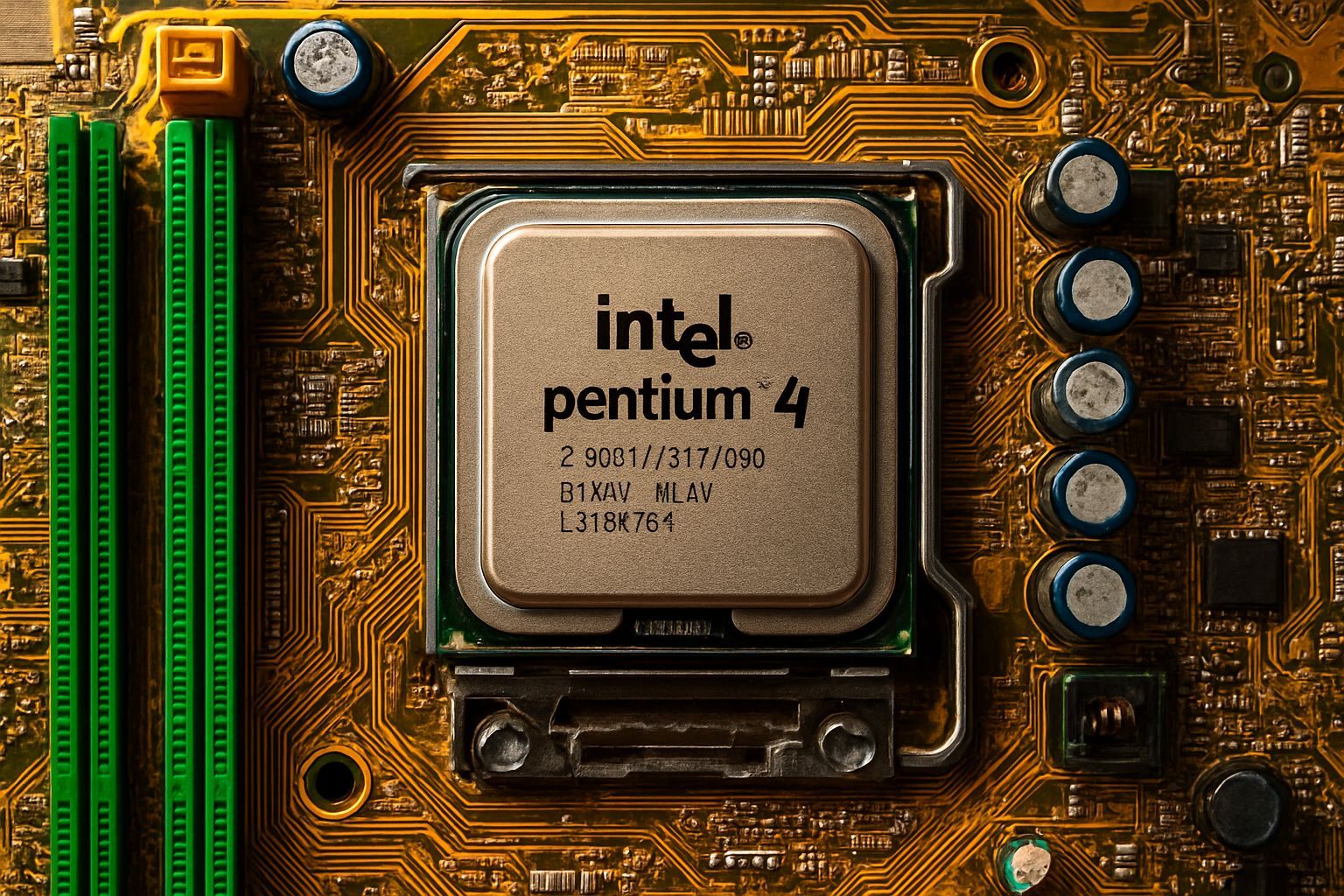
2005 was a turning point for the personal computer industry, a period in which technological innovation proceeded at tight pace, bringing on the market components that would lay the foundations for modern computing. In this crucial year, Intel Pentium 4 processors dominated the scene, pushing the limits of operating frequencies and introducing new challenges in terms of heat dissipation. At the heart of this evolving ecosystem were the motherboards, the true heart of each system, tasked with orchestrating the complex symphony between CPU, memory, storage and peripherals. The original article, dated February 2005, offers us an authentic split of that period, focusing on a comparative test of seven different motherboards for Pentium 4, highlighting in particular the Foxconn 925XE7AA model based on the Intel 925XE chipset. This reportage of the time was not only a product review, but a window on emerging technological trends: the affirmation of DDR2 memory, the transition to the PCI Express, the challenges related to energy consumption and the heat of the point processors, and the increasing importance of integrated features such as SATA controllers and Gigabit LAN connections. Today, almost twenty years later, we can look at that period with a historical perspective, analyzing how the engineering decisions and design choices of that time influenced the evolution of the PCs we use daily, and how many of the innovations then considered at frontier have become indispensable standards. This journey in the past is not only a nostalgia exercise, but an opportunity to better understand the technological roots of the present, exploring the engineering, architecture and impact of an era that defined the future of computing.
The Era of Pentium 4: A Controvert Giant and your Thermal Challenges
Pentium 4, especially in its most recent incarnations of 2005, represented the peak of the Intel strategy based on pure clock frequency, a NetBurst architecture that promised exceptional performance through long pipelines and high frequencies. However, this race to the gigahertz also led to significant challenges, especially with the generation of processors Prescott, known for their high energy consumption and the resulting heat production. With TDP that could reach and exceed 100-130 Watt, as mentioned in the original article, thermal dissipation became a primary concern for both CPU manufacturers and motherboard and cooling systems. The introduction of technology SpeedStep, mentioned in the text, it was an attempt to mitigate these problems, allowing the processor to dynamically scale its frequency and voltage to reduce energy consumption and heat when maximum power was not required. This functionality, at the time, was a real innovation in the field of energy efficiency, anticipating the modern concepts of power management that are today a fundamental pillar in the design of processors. The motherboards for Pentium 4, especially those that supported the LGA775 socket, were designed to handle these extreme needs: Robust and efficient VRM (Voltage Regulator Module) were essential to provide a stable and clean current to the CPU, while the sockets themselves had to ensure optimum heat contact with the heat sinks. Intel’s approach to pushing the frequency as the main metric of performance, although later it revealed a less efficient way than multi-core architecture that would come with Core 2 Duo, significantly plasmated the design and expectations of PCs of that period, making thermal efficiency and noise of cooling systems hot topics of discussion among fans and industry professionals. The continuous search for more silent and performing solutions for cooling became a real battlefield in hardware innovation, with direct consequences on the quality of user experience.
Intel Chipset Evolution: From 925X/XE to 915G and Beyond
The Intel 925X, 925XE and 915G chipsets mentioned in the original article are a fundamental chapter in the evolution of Intel’s mid-2000 platforms. These chipsets served as real secondary brains of motherboards, managing communication between CPU, memory, expansion cards and I/O peripherals, and introducing some of the most important technologies of that decade. The 925XE, in particular, was Intel’s flagship for enthusiast platforms, supporting the Front Side Bus (FSB) at 1066 MHz, a very high frequency for the time, and the DDR2 memory at 533 MHz. This made it the preferred choice for Pentium 4 processors faster and for systems that aimed at maximum performance, including overclocking scenarios. The 925X was a slightly more conservative version, often limited to FSB 800 MHz and DDR2 400 MHz, but still very capable. The 915G, on the other hand, stood out for the integration of a DirectX 9.0 graphic solution (Graphics Media Accelerator 900) directly into the Northbridge, offering a more economical and complete option for office or entry-level systems, while maintaining support for DDR2 and PCI Express. The unifying and most revolutionary feature of these chipsets was the adoption of the bus PCI Express (PCIe), an epochal change compared to the previous PCI and AGP. The introduction of PCIe 16x slots for PCIe 1x video cards and slots for other peripherals ensured significantly greater bandwidth and scalability, opening the road to more powerful graphics cards and storage controllers. Southbridge, in all these cases, was theICH6R, offering advanced features such as RAID support for SATA disks and a broad connectivity for USB 2.0, PATA and audio. The choice of the chipset by motherboard manufacturers was crucial, defining not only the level of performance but also the function set and the positioning on the final product market. These chipsets were pioneers of many technologies that still form the backbone of modern PCs, demonstrating Intel’s long-term vision in platform innovation.
DDR2: The Memory of the Future
The introduction of memory DDR2 he represented one of the most significant changes in the 2005 hardware landscape, marking a natural evolution compared to the previous DDR (Double Data Rate). As evidenced in the reference article, with data transfer speeds that could reach 4.8 GB/sec and peaks of 5 GB/sec to CL3, the DDR2 offered a remarkable performance leap, although not free from initial compromises. The passage from the DDR to the DDR2 was not immediate or uniform; for a period they coexisted on the market motherboards that only supported DDR, only DDR2, or even both, witnessing the transition. The main innovation of the DDR2 was its ability to operate at lower internal clock frequencies but with a broader data bus (data prefetch of 4 bits instead of 2), allowing to reach far higher external frequencies (effective) such as 400 MHz and 533 MHz supported by 925X and 925XE chipsets. This resulted in a greater theoretical bandwidth, which was fundamental to feed the Pentium 4 processors hungry for data. However, the first DDR2 modules often suffered higher latitudes (longer access times) than the most mature DDR modules, an aspect that initially mitigated the performance advantage in some applications. CAS latency (CL), as the CL3 cited for the Foxconn 925XE7AA, was a crucial parameter to assess memory performance. Over time, improvements in the production and optimization of memory controllers allowed DDR2 to overcome these obstacles, consolidating itself as the dominant standard for several years. The prices of DDR2 memories, as noted in the original article, were gradually lowering, making them more accessible and contributing to their spread. This cycle of innovation, initial compromise and subsequent maturation is a constant in the history of memory technology, and the DDR2 was a flashing example of how the new architectures, even with some initial deviation, were destined to redefine the standards of performance and capacity of future systems, opening the way to successive generations like the DDR3 and beyond.
Design of the Madri Cards: Between Innovation and Pragmatism
The design of the 2005 motherboards, as exemplified by the Foxconn 925XE7AA, was a delicate balance between the implementation of Intel’s new technologies and the integration of additional features to stand out in a competitive market. These cards were real connectivity hubs, providing a myriad of options to meet user needs, from hardcore gamers to professional users. The article highlights the presence of third-party controllers such asITE 8212F for IDE UltraATA/133 and Silicon Image Sil3114 for the four SATA connectors. While Intel’s ICH6R already offered native SATA support, the choice to add external controllers allowed manufacturers to offer more SATA ports, advanced RAID functionality (RAID 0, 1, 0+1, JBOD) and retrocompatibility with PATA/IDE devices, which were still widely spread. This redundancy was a sign of the transition period, where the old and the new coexisted. High-end motherboards of the time, such as those tested, often included two chips Broadcom BCM5789KF to offer dual Gigabit LAN connectivity. This functionality was particularly appreciated in professional contexts or for advanced users who needed high speed and network reliability, or who wanted to exploit features such as network teaming to increase bandwidth or redundancy. The presence of a controller FireWire (IEEE1394), in particular the TSB82AA2 with support for both 1394b (800 Mbit/s) and 1394a (400 Mbit/s), was crucial for connectivity with digital cameras and other professional devices, at a time when the USB 2.0 (though omnipresent with 4+4 onboard/panel ports) was not yet fast enough for certain high-band workflows. The expansion slots were another area of innovation: in addition to the only PCIe 16x slot for the graphics card, the presence of three PCIe 1x slots and three traditional PCI slots showed versatility, allowing users to install a variety of additional cards, from audio cards dedicated to SCSI controllers or TV tuners. The BIOS, as described in the article with its clock settings and memory timing, was the control center for overclocking, who tried to squeeze every drop of performance from their systems. Despite some limitations, such as the difficulty of deactivating ISCED 8212F or the impossibility of unlocking the PRB x14 multiplier on Foxconn, these cards still offered a certain degree of flexibility and control. The internal design and attention to detail, from the connectors’ arrangement to the choice of components, were distinctive aspects that separated premium motherboards from competition, reflecting an era when the hardware was still very attractive and modding.
Thermal Dissipation and Research of Silence
The challenge of thermal dissipation was a dominant element in the 2005 hardware landscape, particularly with the advent of Prescott architecture-based Intel Pentium 4 processors, whose Thermal Design Power (TDP) could reach high values, up to 130 Watts mentioned in the article. This not only required massive and complex CPU dissipators, but also extended heat concern to other critical components of the motherboard, such as the Northbridge. In the example of the Foxconn 925XE7AA, it is specified that the Northbridge was cooled by a fan, a common practice at the time for high-end chipsets. The removal of this fan, as tested, did not cause immediate problems but significantly improved the comfort. This detail is extremely revealing: the noise generated by multiple fans (CPU, Northbridge, power supply, video cards) was a common complaint among users, and the search for a quieter system was a growing priority. Innovation in passive or semi-passive cooling systems for chipsets was a significant competitive advantage. However, the lack of sufficient fan connectors on the motherboard (only one beyond the CPU) was a common and frustrating limitation. Users were often forced to resort to adapters, splitters or external fan controllers to properly manage the airflow inside the house and keep the temperatures under control. This aspect emphasizes the transition towards greater awareness of the importance of efficient and silent cooling, a theme that continues to be central in the design of modern PCs. The PC component industry, driven by these needs, began to invest massively in the development of increasingly sophisticated cooling solutions, from tower heatpipe dissipators to the first all-in-one liquid cooling systems (AIO), which at the time were still niche but were gaining ground. Heat and noise management was no longer just a matter of performance, but it became a crucial factor for the overall user experience, affecting the choice of components and even the design of the computer case. The thermal challenge of the Pentium 4 and the chipset of that period has, ultimately, accelerated innovation in the field of thermal management, laying the foundations for the advanced cooling solutions that we today consider standard.
Benchmark and Performance: A glance at the Digital Past
The benchmark results presented in the original article for categories such as DirectX 9, Audio, Video and Applications offer us a valuable time capsule on perceived and measured performance in 2005. For users of the time, these numbers were crucial indicators to assess the power of a system and its suitability for specific workloads. The benchmarks DirectX 9 were fundamental to players, who sought the best possible experience with graphically intensive titles such as F.E.A.R., Half-Life 2, or Doom 3. The score in these tests reflected not only the power of the CPU but also the efficiency of the chipset and, of course, the capabilities of the discrete graphics card, which at the time was often a NVIDIA GeForce 6000 series or an ATI Radeon X800/X850. A good DirectX 9 score meant fluidity, high graphic details and reduced loading times, even today priority aspects for gamers. Audio and Video benchmarks, on the other hand, were more relevant to digital creativity professionals and multimedia enthusiasts. The ability to quickly process audio tracks, encode videos in formats such as DivX or MPEG-2, or manipulate high-resolution images, depended heavily on CPU computing power, memory speed and storage controller efficiency. The results in these categories showed the suitability of the system fornon-linear editing and the creation of content, activities that were becoming increasingly accessible to domestic users thanks to the improvement of technologies. Finally, application benchmarks measured system performance in everyday and professional scenarios, using suites such as PCMark, SysMark or real applications such as Microsoft Office, Photoshop or WinRAR. These tests provided a more holistic view of PC capabilities, evaluating the interaction between all components. A system that exceled in these tests was considered versatile and responsive for a wide range of tasks. Comparing these numbers with the performance of modern systems is a fascinating exercise: what in 2005 was considered a peak PC, today would be surpassed by a mid-range smartphone. This highlights the dizzying pace of technological innovation and how much performance paradigms have changed. However, the basic principles of performance assessment – measuring capacity in specific scenarios – remain unchanged, demonstrating continuity in the approach to hardware evaluation despite exponential evolution of technologies.
Socket LGA775 inheritance: A Bridge Towards the Modern PC
The LGA775 socket (Land Grid Array 775), introduced by Intel in 2004 and at the center of the attention of the 2005 article, left a lasting and complex legacy in the world of PCs, acting as a crucial bridge between several generations of processors and technologies. Unlike previous PGA sockets (Pin Grid Array) where the pins were on the CPU, with LGA775 the pins were transferred to the motherboard socket, a design choice aimed at reducing the risk of damage to the processor pins and improving the stability of the electrical contact for the higher frequencies. Its longevity is remarkable: it hosted not only Pentium 4 and Pentium D (dual-core) but also the revolutionary Core 2 Duo architecture and, in some configurations, even the first Core 2 Quad, remaining on the market for several years and supporting a wide range of CPUs. This versatility allowed users to upgrade their systems with more powerful processors without having to replace the entire motherboard, an important factor for the diffusion and accessibility of technology. The innovations introduced with LGA775 platforms, such as the PCI Express, controllers S native (with ICH6R and later), and memory support DDR2 (and in some cases DDR3 on subsequent chipsets), they became the basis for modern PCs. The passage from the limited bandwidth system bus of the previous generations to the PCI Express has unlocked the true potential of graphics cards and other high-speed peripherals, a change that is still at the heart of PC architecture. Similarly, the SATA replaced the IDE as a standard for storage, allowing higher data transfer speeds and thinner cables, fundamental for the advent of SSDs. Heat management and attention to noise, obvious problems with Pentium 4, have driven innovation in cooling systems and house design, leading to increasingly efficient and silent solutions that we now give for granted. In summary, the LGA775 socket and the motherboards that supported it were not only a point of arrival for 2005 technologies but a springboard for many of the features and standards that define modern personal computers, marking an era of transition and technological consolidation of fundamental importance.
Nostalgia and Retrocomputing: Revitalize Digital Pass
Today, almost two decades away, the world of motherboards for Pentium 4 and the LGA775 socket has taken on a special charm for fans of retrocomputing and those who feel a deep nostalgia for the hardware of that time. It’s not just about collecting old components, but reliving an experience, rediscovering the games and applications that have defined an entire generation of PC users. For many, 2005 represents a golden period: the apex of DirectX games 9, the introduction of Windows XP SP2 that established the operating system, and a time when the assembly of a PC was still an art that required some technical knowledge and considerable involvement. Revitalize a system based on a Foxconn 925XE7AA or Abit Fatal1ty AA8XE is not only a technical exercise, but a sentimental journey. It means dipping into the details of memory timing (such as the CL3-3-3-4), dismantling with BIOS settings for overclocking, and comparing again with the thermal challenges that at the time seemed insurmountable. Getting a rare component or iconic motherboard like the DFI LANParty 925X-T2 is a small win for the collector, a dowel in a historic puzzle. These systems are often used to perform games of the time authentically, without complications and emulations that can sometimes alter the original experience. Online forums and communities are full of discussions about how to optimize these old PCs, how to find the right drivers or how to solve compatibility problems with ancient peripherals. Retrocomputing is also a way to appreciate the engineering and design of the hardware of that time, often characterized by motherboards with more complex layouts and greater visibility of individual components, compared to the most integrated and minimalist solutions of today. It is an opportunity for the youngest to understand where we come from and for the most experienced to retrace the steps that led to the current state of the art of computer science, celebrating the innovations and peculiarities of an era that has indelible shaped our relationship with technology. The rediscovery of these giants of the past, with their noisy fans and their fascinating interfaces, is a tribute to the evolving history of the personal computer.
Ultimately, the analysis of motherboards for Pentium 4 of 2005, such as the one offered by the original article on Tom’s Hardware, is not simply a chronicle of obsolete hardware, but a deep immersion in a period of fervent innovation and technological transition. That year, and in general the LGA775 socket period, represented a crucial crossroads for computer science: we witnessed the affirmation of the DDR2 memory, the revolutionary introduction of the PCI Express, and the fight to tame the thermal challenges posed by increasingly powerful processors. The motherboards of that time, with their advanced chipsets such as the Intel 925XE and 915G, were not only CPU platforms, but real ecosystems that integrated a myriad of storage controllers (SATA and PATA coexisted), the network (Gigabit LAN duale) and multimedia peripherals (FireWire), anticipating many of the features we consider standard today. The search for maximum performance, often through overclocking, and attention to acoustic comfort have pushed manufacturers towards increasingly sophisticated design solutions, laying the foundations for the aftermarket components industry and advanced cooling solutions. The legacy of that period is tangible: architectures, interfaces and design philosophies born then continued to evolve, shaping the way personal computers are built and used today. Looking back at those technologies allows us not only to appreciate the rapid progress made, but also to understand the deep roots of current innovations. For retrocomputing enthusiasts, revisiting these systems is a way to connect with digital history, to understand the challenges and victories of an era that defined our technological future, and to celebrate the ingenuity and passion that animated the PC industry.


