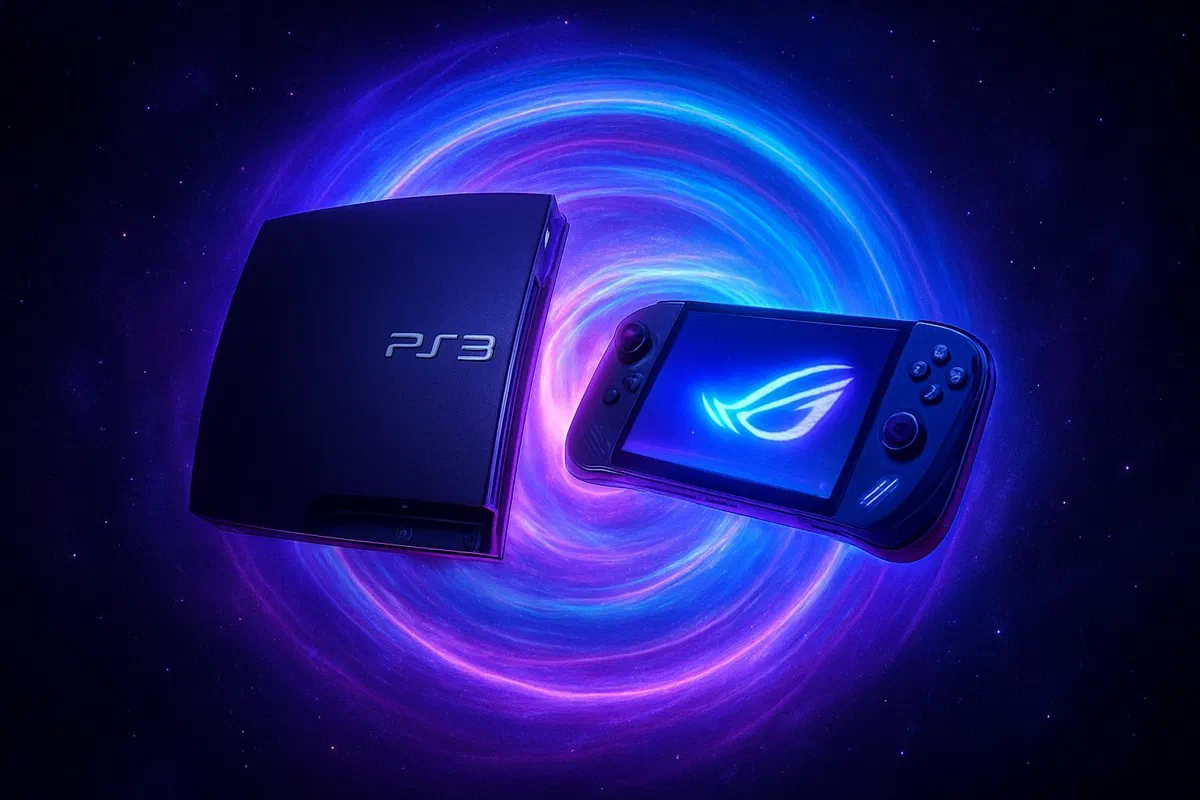
In the dynamic and often hectic world of consumer electronics, and especially in the video game industry, perception of time is a crucial factor. while most technological products are designed for relatively short life cycles, driven by constant innovations and an insatiable desire for “newness”, some companies dare to adopt a radically different perspective: that of the long term. a paradigmatic example of this strategic audacity lies in sony’s vision for playstation 3. announced with the stated intention of sustaining a life cycle of ten years, the ps3 was a bold commitment in a market where competitors rushed to capitalize every little advantage. this strategy, strongly reaffirmed in 2007 by jack tretton, then president and ceo of sce america, not only defined the trajectory of a console but posed fundamental questions about sustainability, innovation and intrinsic value of hardware over time. it was not a question of winning the initial sprint race, but of completing a marathon, creating a “ sumptuous system that is future-proof” and that could satisfy the needs of players for a whole decade. this approach not only influenced the design, launch and evolution of ps3, but continues to resonate today, while new platforms such as asus rog ally x promise high performance and versatility that challenges traditional categories, and services like xbox game pass redefine the very concept of ownership and access to games. analyzing the decade-long philosophy of ps3 offers a precious lens to understand the complexity of console life cycles and ambitions that move the gaming industry.
Long-term sony vision with playstation 3: a calculated azard #
Jack tretton’s claim that playstation 3 would not need to beat anyone immediately and enjoy a ten-year life cycle was not a random statement, but the crystallization of a deeply weighted business strategy. after the stratospheric success of playstation 2, which had dominated the market for years, sony faced a crossroads: replicating the previous model with a more economical and technologically incremental “playstation 2.5”, or investing massively in a system that redefines standards. the choice falls on the second option, driven by the belief that a new generation hardware, if sufficiently powerful and versatile, could resist the test of time. the heart of this strategy was the concept of “future-proof”. sony intended to create a machine that, although costly and complex to produce initially, was able to remain technological for a prolonged period, avoiding the rapid obsolescence that often afflicts electronics. this vision resulted in the adoption of state-of-the-art components for the time, such as the cell broadband engine processor and the blu-ray player, elements that, although revolutionary, involved high production costs and little difficulty for video game developers. sony’s approach was in sharp contrast to that of its main competitors. microsoft, with the xbox 360, had opted for an early launch and a more aggressive price, trying to quickly conquer a market share. nintendo, with wii, focused on innovation in gameplay and a much more affordable price. sony, on the other hand, positioned itself as a long-term investment***** for the consumer, justifying the premium price with a longevity and superior technological capacity. the idea was that, although with a slower start, the ps3 would recover soil over time, benefiting from a stable platform on which to develop increasingly complex and graphically advanced titles. this “long-term perspective” gave sony the luxury of not having to convert all consumers “from day 1”, betting on the patience and loyalty of a user base that, once invested in the playstation ecosystem, would continue to do so for years to come. the challenge, however, remained to demonstrate the value of this technology through a constant flow of innovative and engaging content, a promise that sony pledged to maintain with the announcement of over 100 games expected within a year since the launch, fundamental to fuel interest and capitalize on sophisticated hardware.
The concept of “future-proof”: when technology anticipates time #
The term “future-proof”* is often evoked in the technological world, but rarely a company has married this concept with the same resoluteness as sony for playstation 3. the goal was to create a system so advanced when launching that it could remain competitive and relevant for a whole decade, without the need for greater hardware revisions or early replacements. this ambition manifested itself in the choice of extremely powerful and innovative hardware components for the time. the cell broadband engine processor, developed in collaboration with toshiba and ibm, was a revolutionary multicore chip, capable of extraordinary computational performance, although known for its programming complexity. the adoption of the blu-ray disc format as a standard for games and multimedia playback was another bold move, placing the ps3 not only as a gaming console but as a real ultimate home media center, significantly contributing to blu-ray’s claim as a successor to the dvd in the war of formats. the benefits of a future-proof machine are obvious: a stable platform for developers, who can refine their techniques and make the most of the hardware over time; a greater longevity of the product for consumers, who see their investment maintained; and the ability to support software innovations that emerge years after the launch of the hardware. however, there are also considerable disadvantages. research and development costs, combined with production difficulties and low initial yields of complex chips such as cell, inflated the launch price of ps3, making it the most expensive console of its generation. the complexity of the cell also created a steep learning curve for developers, leading to multiplatform games that often turned better on the xbox 360, initially perceived as simpler to plan. despite these challenges, sony’s vision eventually brought its fruits. towards the end of his lifecycle, developers had learned to exploit the potential of cell, producing technical masterpieces such as the last of us or grand theft auto v which fully demonstrated the console’s capabilities. this approach to future-proofing is not limited only to seating consoles; today we see it evolve into new forms. devices such as theasus rog ally x, mentioned in the original article, are an attempt to bring the performance of a gaming pc into a portable format. while not designed for a decade-long cycle like ps3, they embody the desire to offer powerful and versatile hardware that can perform the most recent and future games, providing significant hardware updates (such as greater ram, battery, or storage) to extend its relevance and not having to wait for a complete “ally 2” but an upgraded “ally 1.5”. this strategy of iteration and improvement, rather than complete sharing, reflects an evolution in the way industry tries to maintain its cutting edge products without completely revolutionizing the market.
Price and production strategies: the console launch dilemma #
The launch of the playstation 3 was characterized by a high selling price***** which shook the market and raised not a few perplexities between consumers and analysts. at $599 for the 60 gb model, the ps3 was significantly above its direct competitors: the xbox 360, already on the market for a year, and the nintendo wii, launched almost at a much more affordable price. this price decision was not arbitrary, but a direct consequence of sony’s future-proof philosophy and high production costs of its cutting-edge components, especially the cell processor and blu-ray player. jack tretton himself mentioned the fact that a “playstation 2.5” could have been marketed at a more interesting price, but this would mean “move the technology bar slightly”. instead, sony chose to “develop a sumptuous system”, accepting the price to be paid in terms of production difficulties and delay on the market. production challenges were considerable. cell chip yields were initially low, and the mass production of blu-ray readers was still in its early stages, contributing to a very high unit cost for each console. this resulted in significant losses for sony on each unit sold in the early years. the strategy was clear: sacrificing initial profits to establish a higher technological support point and recovering investment in the long term through software sales and possible reduction of production costs. the price cut of the model from $60 gb from $599 to $499, announced in conjunction with the arrival of the model from $80 gb to $599 about a year after the launch, was a crucial step to make the console more accessible and stimulate sales. these price reductions are a common tactic in the console industry, used to attract a wider consumer base as production costs decrease and the game catalog expands. the introduction of different models (60 gb, 80 gb, and later 40 gb, 160 gb, etc.) with variable features (including the gradual removal of hardware retrocompatibility) was another way to manage the price and offer on the market. this dilemma between expensive innovation and price accessibility continues to be a constant in the launch of new consoles. even today, with playstation 5 and xbox series x/s, discussions on costs, availability and perceived value are central. however, the context has changed: modern consoles often launch at a price that includes a loss leader, with the expectation of recovering margins through sales of games, subscription services and accessories. the lesson of the ps3 is that a high price, if supported by a long-term vision and commitment to quality and innovation, can be exceeded, but requires patience and a well-defined strategy for product evolution and its ecosystem.
Retrocompatibility: a bridge between generations of players #
The question of retrocompatibility has always been a hot spot in the debate on new generation consoles, and playstation 3 was no exception. at its launch, the first ps3 models (especially those from 60 gb and 20 gb in some regions) offered almost complete retrocompatibility with playstation 2 and playstation 1, thanks to the inclusion of dedicated hardware (the emotion engine and graphics synthesizer of ps2) within the console. this feature was a huge strength point, allowing players to carry out their vast game libraries and enjoy the classics of the past on a more modern hardware, often with visual improvements through upscaling. it was a sign of sony’s respect for the heritage of its platform and for the investments made by players over the years. however, hardware retrocompatibility had a significant cost. the addition of additional chips increased the production complexity and, above all, the unit cost of the console, contributing to the already high launch price of the ps3. with time passing and the need to reduce costs to make the console more competitive, sony made the difficult decision to remove the ps2 hardware from later revisions of the console. the press release of 2007 mentioned that, for the european console and for the new model of 80 gb coming to the united states, the retrocompatibility would be “insured only via software”. this transition, although necessary for economic sustainability, was welcomed with disappointment by many purists. software retrocompatibility, based on emulation, rarely reaches the same level of perfection and compatibility of native hardware, being able to present glitch, performance issues or simply not support the entire catalog. despite this, the desire to maintain some level of retrocompatibility was a sign of the importance that sony attributed to this function, even if compromised. today, retrocompatibility has become an almost standard feature for new consoles, although with different approaches. xbox, in particular, has made retrocompatibility a pillar of its strategy, allowing players to access thousands of xbox one, xbox 360 titles and even the first xbox on xbox series x/s, often with automatic improvements such as the enhanced frame rate or the auto hdr. playstation 5 offers retrocompatibility with most ps4 titles, but the ps3, ps2 and ps1 legacy is relegated to services in loss leader (playstation plus premium) or limited digital purchases, without hardware retrocompatibility or native disk software. this shows how the value of retrocompatibility is recognized, but the technical and economic challenges to implement it in a complete way remain a critical variable. maintaining a bridge with the past not only enhances the player’s investment, but also enriches the ecosystem of a console, offering a wider catalog of games from the launch and creating a sense of continuity that strengthens the loyalty to the brand.
The evolution of content and long-term support: beyond hardware #
The hardware, however powerful and future-proof, is only half the equation in the success of a console; the other half, perhaps the most critical one to support a ten-year life cycle, is the contained*. sony’s promise to have “100 games expected between today and the end of march 2008” was not only a number, but a commitment to fill the ps3 with a varied and high quality play offer. without a constant flow of innovative and engaging titles, even the most advanced console is likely to become an expensive overtime. long-term support for software is essential for a platform with an extended life cycle. in the early years, the ps3 had to face criticism for its library of exclusive titles perceived as less rich than that of xbox 360, but over the decade the situation has radically changed. titles like uncharted, god of war iii, the last of us, metal gear solid 4 and heavy rain have not only demonstrated the graphical and computational potential of the console, but also forged the identity of playstation, creating iconic franchises that continue to define the brand again today. the availability of a game library***** is not only important to attract new buyers, but also to maintain the interest of the existing user base. a long life cycle allows developers to fully familiarize themselves with hardware, optimizing their game engines and pushing the console to its limits, often producing some of the most impressive titles towards the end of its era. this was particularly evident with the ps3, where games released in recent years of technical support showed a mastery of architecture that was unthinkable at launch. the evolution of content is not only about games in itself, but also distribution models. at the time of the launch of the ps3, the physical format (blu-ray) was dominant, but the following decade saw the exponential rise of digital distribution. the playstation store has become a crucial channel for buying games, expansions and downloadable content, extending the useful life of many titles and offering new opportunities for independent developers. today, this evolution culminated in subscription services such as xbox game pass. the original article mentions “five new free games on game pass, one is unmissable”, highlighting how access to a library curated with games in front of a single monthly fee has transformed the way consumers enjoy content. this model, although it does not exist in its current form at the time of ps3, represents the maximum expression of the concept of “long-term content”, offering a continuous flow of experiences and maintaining the relevant hardware well beyond its primary life cycle, integrating perfectly with the idea of keeping players in the ecosystem for an extended period.
The modern console market: life cycles, services and handheld #
The panorama of contemporary gaming has changed considerably compared to the playstation 3 era, and with it the concept of console lifecycle. while sony was aiming for a decade with a single basic hardware, the current generation saw the emergence of more fluid and interconnected strategies. modern consoles such as playstation 5 and xbox series x/s continue to represent a significant technological leap forward, but are also integrated into a wider ecosystem of complementary services and hardware. the idea of a ten-year cycle for a single hardware model was partly replaced by the introduction of “mid-gen refreshes” such as the ps4 pro or the xbox one x, which offer incremental improvements of power and functionality, prolonging the life of generation without a complete revolution. this allows manufacturers to maintain consumer interest and support new technologies (such as 4k or ray tracing) without forcing a completely new console purchase every 5-7 years. the rise of subscription services is another epochal transformation. xbox game pass, in particular, became a dominant business model, offering hundreds of games, including first-party titles at launch, for a monthly fee. this not only increases the perceived value of the hardware, but moves attention from the property of the individual game to access a vast library, encouraging players to remain faithful to the xbox ecosystem. similarly, playstation plus premium offers a catalog of modern and classic games, with the ability to play via loss leader or download. these services strengthen the idea of a “continuous investment” in the platform, which goes beyond the initial purchase of the console. at the same time, we are witnessing a rebirth of the gaming handheld*, an industry that sony’s ps vita (successor of the psp) failed to dominate with the same strength as nintendo with the switch. devices such as the steam deck and the*asus rog ally x, mentioned in the article, represent a new wave of powerful laptops that blur the border between consoles and pcs. these handhelds are not simple extensions of the main console, but stand-alone platforms, capable of performing triple a games with amazing performance, offering unprecedented flexibility. the asus rog ally x, with its “promising ideas” and the promise of “ stable frame rate and good performance even in the heaviest games”, embodies the new frontier of gaming hardware, showing how innovation is no longer confined to the box under tv. these portable devices often share similar architectures to pcs, allowing a more open ecosystem and access to exterminate game libraries (such as steam). their existence further complicates the definition of “consul lifecycle”, suggesting a future in which the gaming experience is increasingly fluid, cross-platform and less tied to a single piece of dedicated hardware, but rather to an ecosystem of interconnected services and devices.
Sony bet: a ten-year budget #
Looking back at the playstation 3 life cycle, which lasted almost ten years since its launch in 2006/2007 until the end of the production of new models in 2017 and the gradual closure of services, it can be said that the bet of sony, even with its initial turbulence, was widely repaid. despite a difficult launch, a high price and development challenges related to cell architecture, the ps3 managed to transform itself as an unfavorable contender, selling more than 87 million units worldwide. in the early years, the console has struggled to keep up with the sales of the xbox 360 and the amazing wii, but sony’s long-term strategy has gradually shown its fruits. subsequent price cuts, optimisation of production processes that have lowered costs and, above all, the arrival of an avalanche of exclusive high quality titles have overturned public perception. games like god of war iii, uncharted 2: among thieves and, in particular, the last of us, have become milestones in the industry, pushing the graphics and narrative capabilities of the console to the highest levels and fully demonstrating the potential of its future-proof hardware. the success of the ps3 did not limit itself to video games. the console played a crucial role in asserting the blu-ray disc format as a standard for high definition, surpassing the hd dvd competitor. many consumers bought a ps3 not only for games, but also for having a relatively cheap and multifunctional blu-ray player. this dual nature strengthened its position as a home multimedia center***, an aspect that sony had emphasised since the beginning. the lessons learned from the ps3 were fundamental for later consoles. with playstation 4, sony has adopted a more pragmatic approach: hardware easier to develop, a more competitive price to launch and a relentless focus on exclusive games. this strategy led the ps4 to become one of the most successful consoles of all time. the ps3 has shown that an approach to the market not based on immediateness but on long-term vision can lead to success, as long as it perseveres through initial difficulties and maintains a constant commitment to innovation and quality of content. its legacy is a library of extraordinary games, the affirmation of a multimedia format and the demonstration that, with the right vision, a console can really thrive for a whole decade, leaving a lasting impression in the gaming industry and in the memory of players.
Legacy and perspective: learning from past life cycles for the future of gaming #
The playstation 3 experience and its ambitious ten-year strategy offer a valuable case of study to understand the current and future dynamics of the video game industry. sony’s decision to invest in a future-proof hardware and adopt a long-term perspective, instead of retracing immediate success, had significant repercussions on the console market. it has shown that, although a difficult launch and a high price can slow down initial adoption, the perseverance*, thecontinuous innovation in software and the ** strategic cost reduction may lead to lasting success. the ps3 not only established a new standard for domestic media interaction thanks to the blu-ray, but also created a robust platform for some of the most iconic and influential titles of its time, titles that continue to be celebrated and, in many cases, reissued through remasters or services of loss leader. today, industry is constantly changing, and console life cycles are influenced by new factors. the rise of cloud gaming, with services such as xbox cloud gaming or geforce now, promises to further decouple the gaming experience from physical hardware, making games accessible on a multitude of devices, from smart tvs to phones. this could lead to even longer hardware lifecycles for basic devices, while innovation moves more and more on the side of software and services. new generation portable devices such as asus rog ally x and steam deck are a clear signal of this convergence. they offer the flexibility of a pc with the portability of a console, allowing players to access their existing libraries (such as steam or game pass) wherever they are. this trend suggests a future in which the value no longer resides only in the exclusivity of the hardware, but in the flexibility of access, quality of service and the breadth of the catalogue of games available. the retrocompatibility, although implemented in different ways, remains a very appreciated feature, a bridge that binds generations of players to their playful past and enhances investments made in digital libraries. in conclusion, the story of playstation 3 teaches us that there is no one formula for success in the world of video games. the choice between a sprint approach and a marathon depends on company vision, available resources and confidence in its ability to innovate. the legacy of the ps3 is that of a calculated azard that has redefined the concept of longevity in gaming, paving the way to a future where the hardware continues to evolve, but the focus moves more and more on the richness of content and the flexibility of experiences, ensuring that players can enjoy their favorite games for an increasingly extended period, regardless of the generation of the console.