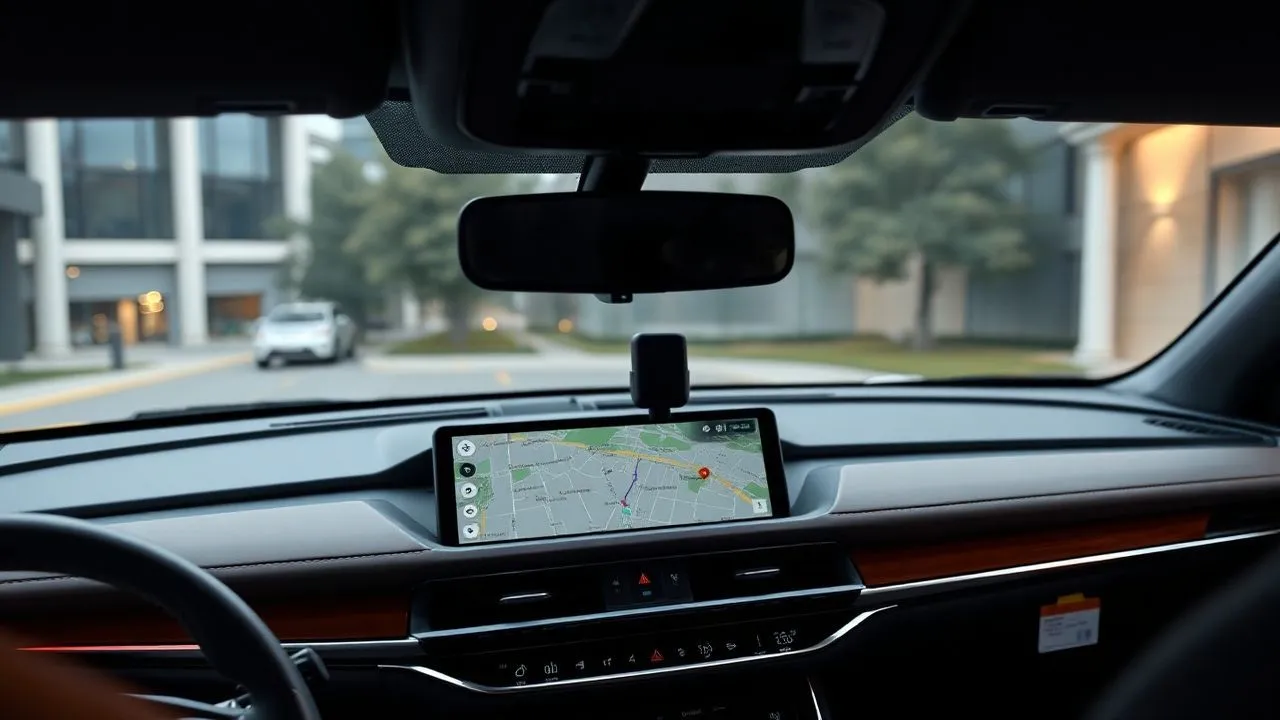
In the technological landscape of April 2026, the integration between smartphones and vehicles has reached unprecedented levels of maturity, making the search for best Android Cars Wireless a priority for millions of motorists. Although most modern vehicles run from the factory with advanced infotainment systems, many models produced in previous years still require a physical connection via USB cable to activate mirroring features. This limitation is not only an aesthetic issue linked to the disorder of cables on the dashboard, but it affects the speed of daily use and the wear of the charging doors of our mobile devices. Fortunately, the evolution of dongles and wireless adapters has allowed us to fill this technological gap with extremely reliable plug-and-play solutions, able to activate Google Maps, Spotify and the voice commands of Google Assistant in seconds from ignition of the engine. In this complete guide, we will analyze the most performing solutions of 2026, evaluating not only the speed of connection and stability of the 5.8GHz Wi-Fi signal, but also compatibility with the different versions of Android and the most recent security protocols. Choosing the right device means radically transforming the driving experience, making it more fluid, safe and technologically ahead of time, without having to replace the entire main drive of the car.
Classify Best Android Auto Wireless Adapters 2026
Review OTTOCAST MINI 3.0 Slim and models 2025- 2026
The OCTOCAST MINI 3.0 Slim is also confirmed in this 2026 as the absolute reference point for those seeking uncompromising performance. This device has been designed with a hardware architecture that favours heat dissipation, a critical factor when talking about adapters Android Auto wireless that must remain operational for many consecutive hours during long summer trips. Its aluminum alloy shell, combined with a vertical striped design, not only gives a premium appearance but ensures that the internal chip does not undergo thermal throttling, maintaining latency to the historical minimums. During our road tests, we found a speed of automatic reconnection that ranges between 10 and 12 seconds, a value that allows you to have ready maps on the screen before even exiting the parking lot. The compatibility extended to Android 11 and later, up to the latest releases of 2026, makes it a secure investment over time.
Another key aspect of OCTOCAST MINI 3.0 Slim is audio quality. Many users fear that switching from cable to wireless can degrade media content loyalty, but thanks to the 5.1 surround configuration support and stereo audio output via Bluetooth 4.2 and double channel Wi-Fi, the difference is practically imperceptible even on high quality audio systems. The device is extremely compact, with dimensions that do not exceed 2.3 cm, allowing you to easily hide it in any glove compartment or behind the central console. The ability to store up to two different phones with intelligent passage between the profiles makes this dongle the ideal choice for families sharing the same car, eliminating the connection conflicts that often plague the cheaper and less optimized models present on the current market.
BSTOEM 2-in-1 wireless adapter analysis
The BSTOEM adapter is a versatile and extremely balanced solution for both Android and iOS devices. In a context like that of 2026, where flexibility is fundamental, having a wireless car dongle that supports both major ecosystems without need of manual switches is a remarkable competitive advantage. The silver metal body is not only an aesthetic choice, but reflects the building strength necessary to resist the constant vibrations of the urban and highway guide. From a technical point of view, BSTOEM uses a plug-and-play system that minimizes the learning curve for the less experienced user: just connect it to the USB or USB-C port of the vehicle and follow the video instructions for the first Bluetooth pairing. From that moment on, the built-in Wi-Fi will manage all the flow of data needed for smooth navigation and seamless audio streaming.
However, it is important to note that BSTOEM maintains a focus on productivity and safe navigation, intentionally excluding video content from platforms such as YouTube or Netflix. This choice, although it may seem limiting, ensures greater stability of the internal operating system and prevents dangerous distractions during driving. Compatibility is excellent for most generalist brands, while maintaining the classic exclusions for BMW and Tesla closed systems, which require proprietary hardware solutions or deeper changes to onboard software. The presence of a complete manual and a USB Type-C adapter included in the package demonstrates the attention of the manufacturer to the end user, making BSTOEM one of the most solid options for those looking for an excellent quality-price ratio without sacrificing the solidity of a well-finished metal structure.
Technical criteria for choosing the perfect adapter
Importance of stability and latency of signal
When evaluating the purchase of best Android Cars Wireless, the first technical parameter to be observed is not aesthetic beauty, but the stability of bluetooth connectivity and Wi-Fi cars. In 2026, the spectrum of wireless frequencies is increasingly crowded and a poor quality adaptor may suffer from massive interference, especially in densely populated urban areas. The top models of the range use 5.8GHz Wi-Fi chips just to avoid overcrowding the 2.4GHz band, ensuring that the data flow between smartphones and infotainment does not undergo micro-interruptions. An unstable connection translates into maps that snap, music that stops and, in the worst case, in the sudden restart of the system, situations that can generate frustration and distraction while driving, compromising global road safety.
Latency is the other great enemy of wireless. Lateness is defined as the delay between the given command (for example by pressing the “following track” button on the steering wheel) and the actual execution on the smartphone. The latest 2026 adapters reduced this gap to a few milliseconds, making the user experience almost indistinguishable from the wired connection. This result is possible thanks to optimized dual-core processors that manage compression and signal decompression in real time. If your priority is a responsive system, make sure that your chosen device clearly specifies support for Wi-Fi 5 or Wi-Fi 6 protocols, as previous versions struggle to manage the data required by modern high-resolution graphics interfaces of current automotive screens.
Hardware and software compatibility in 2026
A common mistake in choosing a wireless infotainment system is to give for granted compatibility with your vehicle. It is essential to understand that these adapters do not “add” Android Auto to a machine that does not own it, but simply convert a pre-existing wired wireless connection. Therefore, the basic requirement is that your car is already equipped with Android Auto cable series. In 2026, most dongles support over 98% of the models produced since 2016, but there are significant exceptions. Brands such as BMW, Tesla and some Mercedes-Benz specific models use communication protocols that often bypass common USB standards, making specific adapters necessary or making it impossible to use third-party plug-and-play universal dongles.
On the software front, the smartphone auto compatibility requires that the phone have a version of Android sufficiently recent. Although Android 11 is the theoretical minimum requirement for most devices, in 2026 it is highly recommended to use smartphones with Android 13 or higher to benefit from the latest security patches and energy optimizations. An updated system allows for smarter battery consumption management, avoiding active Wi-Fi and GPS downloading the phone too quickly during longer routes. Additionally, some manufacturers like Samsung and Google have implemented specific features in their operating systems that improve pairing with wireless dongles, making the procedure of android Auto Wireless configuration even faster and less subject to initial authentication errors.
- Check the presence of Android Auto cabled series on the vehicle.
- Make sure your smartphone supports 5GHz Wi-Fi for optimal performance.
- Check USB-A or USB-C ports for physical connection.
- Evaluate the presence of a dual-core processor to minimize audio latency.
- Prefer models with safety certification to avoid overheating.
Benefits of wireless integration in the driving experience
Order in the cabin and reduction of physical wear
The adoption of a wireless approach does not only respond to a desire for modernity, but offers tangible practical advantages in the daily management of the vehicle. The first and most obvious benefit concerns the aesthetics and cleaning of the dashboard. Removing the cable that hangs from the USB port means freeing valuable space in the storage compartments and removing an element of potential hindrance near the gear shift lever or climate controls. In a world that in 2026 increasingly aims at minimalism, the adapters Android Auto wireless they represent the ultimate solution to maintain the ordered cabin, while allowing you to recharge your phone via a wireless base (if present) without having to manage grovigli of wires that deteriorate with time.
Precisely deterioration is a critical point often underestimated. Insert and unplug the USB cable every time you enter or exit the car submits the smartphone charging port to a remarkable mechanical stress. In the long term, this can lead to dancer contacts or to the definitive break of the door, with high repair costs. Using a Android Auto wireless aftermarket, the smartphone can stay quietly in the pocket or bag, connecting automatically as soon as the ignition key is detected. This preserves the physical integrity of the device and reduces the possibility of forgetting the phone by car, a frequent drawback when the device is connected by cable and perhaps hidden in some anfract of the central console.
Freedom of movement and smart interaction
The freedom offered by wireless technology turns your smartphone into a real multimedia hub without physical constraints. Imagine the convenience of a passenger who can take the phone to choose a playlist on Spotify or set a new destination on Google Maps without having to disconnect the entire system or stretch to the dashboard. This flexibility is fundamental in 2026, where the collaboration between driver and passenger in travel management became the norm. In addition, the integration with voice commands remains total: pressing the dedicated key on the wheel, you can invoke Google’s assistant to send WhatsApp messages, dictate email or control home automation devices while returning from work, all while the phone rests safely.
Another important scenario of use concerns short stops, such as gasoline or fast coffee. With the wired connection, every time you get off the car you need to disconnect the phone, interrupting the music or navigation. With best 2026 wireless adapters, if the stop is short and the Bluetooth range allows it, the reconnection takes place instantly as soon as you return to the cabin, recovering exactly from where you had left without having to touch any screen. This operational continuity contributes to creating a relaxed atmosphere during travel, eliminating the small technological clutches that, added day after day, make the interaction with the car more tiring than due.
Installation and troubleshooting guide
Plug-and-play configuration procedure
Configure one of best Android Cars Wireless it is a process that in 2026 was extremely simplified, becoming accessible to those who have no particular technical competence. Most devices, such as OTTOCAST series or PARPAT dongles, follow a standardized protocol. The first step is to insert the adapter into the USB port of the car that supports data transfer (usually marked by a smartphone icon or lightning). Once powered, the adapter will output a Bluetooth signal detectable from the phone. It is essential to ensure that the smartphone has both Bluetooth and Wi-Fi enabled, as the first serves for the initial handicap, while the second manages the massive passage of navigation and audio data.
After selecting the name of the dongle in the Bluetooth settings of the smartphone, a request will appear on the screen of the car to authorize the use of Android Auto. Once confirmed, the system will create a dedicated Wi-Fi bridge between the two devices. From this moment on android Auto Wireless configuration will be stored permanently. Every time you enter the car, the dongle will recognize your phone and start the interface independently. If you share the car, make sure you choose a model that supports multi-pairing, so as to avoid having to repeat the procedure whenever the driver changes, a detail that makes the difference between a mediocre product and a high-end one.
Resolution of lag and sudden disconnections
Despite the high reliability achieved in 2026, instability situations may occur which require user intervention. If you experience excessive delay in voice commands or if the map does not appear to be updated in real time, the first control to be carried out concerns the presence of other nearby Wi-Fi networks that could create interference. Often, the smartphone tries to connect to public or domestic networks while still in the driveway, creating a conflict with the car dongle. Another useful advice to improve 5.8GHz Wi-Fi signal stability is to periodically update the adaptor firmware. Almost all serious manufacturers offer dedicated apps or local IP addresses (accessible via mobile browser) to download corrective software packages that solve compatibility bugs born with new versions of Android.
In the case of total disconnections, it is good to verify that the adaptor is not overheating. If placed under direct sunlight or in a fully closed compartment without air circulation, the internal chip may go into thermal protection. In this case, moving the device to a more ventilated area or using a small USB extension can solve the problem permanently. Finally, if the problem persists, a factory reset of the dongle coupled to deletion of the Android Auto cache on the smartphone usually cleans every sync error, reporting performance to factory levels. Software maintenance is minimal, but essential to ensure that your adapters Android Auto wireless remain performing throughout the vehicle life cycle.
- Make sure Bluetooth and Wi-Fi are active simultaneously on your smartphone.
- Disable any VPNs that might interfere with the local dongle network.
- Check if the manufacturer has released firmware updates through the dedicated web interface.
- Avoid covering the adapter with metal objects that shield the Wi-Fi signal.
- Periodically clean the car's USB port to ensure a constant power supply.
Comparative analysis: Adaptors vs Native Systems
Aftermarket performance and cost
The question many ask themselves in 2026 is whether it is worth investing in a Android Auto wireless aftermarket or if it is preferable to wait for the purchase of a vehicle with native system. The answer lies mainly in the economic factor and flexibility. A high quality adaptor has a cost that usually varies between 60 and 120 euros, an infinitesimal fraction compared to the cost of replacing an entire original head unit or, worse, of buying a new car. The performance offered by modern dongles is so close to those of integrated systems that the difference almost never justifies a hardware upgrade of the vehicle. In addition, dongles receive much more frequent updates than closed systems of automotive manufacturers, which tend to abandon software support after a few years.
The other great advantage of external adapters is portability. If you decide to sell your car or if you often use rental vehicles for work, you can bring your car wireless car dongle with you, ensuring the same user experience and configuration wherever you are. This level of customization is impossible with native systems, which are indissolubly linked to the frame of the machine. In terms of pure computing power, some 2026 adapters even exceed the average-end infotainment systems produced in 2022-2023, thanks to dedicated chips that only have to handle the mirroring data flow, without having to look after other vehicle functions such as air conditioning or engine parameters.
Technological limits and improvement areas
However, we must be honest about the limits that still persist in aftermarket solutions. The main limit is connected to the power supply: since these devices draw energy from the USB port, they continue to consume a small amount of power even when the car is switched off, unless the door itself is disabled by the vehicle control unit. Although consumption is irresponsible, in cars with very old batteries or left firm for weeks, this could be a risk factor. Moreover, aesthetic integration can never be as total as that of a system integrated in the dashboard; however small, the adaptor still occupies a physical door and remains visible if not properly hidden.
Another area of possible improvement concerns the management of overheating of the smartphone. As wireless connection is energetic and generates heat in your phone, prolonged use of Android Auto without cable can bring your smartphone to high temperatures, especially if you use GPS navigation and music streaming simultaneously. To mitigate this effect, in 2026 it is recommended to place the phone in a cool area, perhaps close to the vents of the air conditioning, or to use wireless charging systems with integrated fan. Despite these small measures necessary, the overall budget is decidedly in favour of best Android Cars Wireless, which offer unreachable freedom and comfort for old wired systems of the past.
Wireless car technology is no longer a luxury for few, but a standard of comfort that redefines the concept of smart mobility in 2026, eliminating the last physical obstacle between us and our digital ecosystem.
The future of infotainment after 2026
Integration with Artificial Intelligence and 6G
While we enjoy the innovations of best 2026 wireless adapters, the look of industry is already facing the next decade. It is expected that the integration between smartphones and cars will become even deeper thanks to the advent of the first experimental 6G networks, which promise virtually zero laces and speed of data transfer in the Terabit order. This will allow not only the mirroring of the screen, but the projection of entire realities increased directly on the windscreen (HUD), managed in real time by the processor of the smartphone and wirelessly transmitted to the car. The adapters that we consider at the forefront will be the precursors of holistic communication hubs that will manage not only entertainment, but also advanced telemetry and V2X communication (Vehicle-to-Everything).
Artificial intelligence will play a fundamental role in this evolution. Already today, in 2026, we begin to see dongles that integrate NPU chips (Neural Processing Unit) to filter ambient noise during calls or to predict driver habits, suggesting destinations and playlists before they are required. The android Auto Wireless configuration will become invisible: the vehicle will recognize the user through biometric data sent by the smartphone as soon as you approach the door, preparing the digital environment perfectly tailored. This level of automation will further reduce the need to interact physically with screens or buttons, making driving an increasingly focused experience on comfort and safety.
Sustainability and longevity of devices
Another emerging trend concerns the sustainability of wireless car dongle. With increasing attention to the environmental impact, leading manufacturers are beginning to use recycled plastics and metal alloys easily disposed of for the construction of their devices. Software longevity has become a primary purchasing criterion: 2026 consumers prefer to spend slightly more on a brand that guarantees updates for at least 5 years, avoiding the device to become a premature electronic rejection due to a change of protocol by Google or Apple. This more ethical approach to technology reflects a market maturity where construction quality and after-sales support weigh as much as the technical specifications stated on the packaging.
In conclusion, the wireless adapter industry has demonstrated incredible resilience, turning a niche need into a global mass market. The ability to adapt to vehicles of all ages and brands, combined with a simplicity of disarming use, makes these small technological objects of indispensable travel companions. Looking at the future, it is clear that the disappearance of the cables is only the first step towards total integration where the border between our personal digital space and the environment of the car will disappear permanently, leaving room for a smooth, connected and deeply intelligent mobility experience.
- Development of chips with artificial intelligence for signal optimization.
- Using eco-friendly materials and low-emission production processes.
- Expansion of augmented reality features wirelessly transmitted.
- Improve energy efficiency to minimize the impact on the car's battery.
- Standardization of communication protocols between different dongle manufacturers.
Frequently Asked Questions about Best Android Wireless Cars
What is the best wireless Android Auto adapter for speed?
In 2026, models that mount the RK3328 or higher chip, such as the OCTOCAST MINI 3.0 Slim, are considered the fastest on the market. These devices manage to establish a stable connection in less than 10 seconds from turning on the car, thanks to the use of Wi-Fi 5.8GHz and software optimization that reduces the time of handshake between the dongle and the Android smartphone, ensuring immediate responsiveness.
Can I use Android Auto wireless on an old car?
The answer depends on the original equipment of the vehicle. These adapters only work if the car is already equipped with Android Auto wired. If your car is very old and does not have this function, the adapter will not serve anything. In that case, the only solution is to replace the entire autoradio with a modern aftermarket model that natively integrates the desired wireless or wired functions.
Does wireless use consume a lot of smartphone battery?
Yes, the wireless connection is more energetic than the wired one because it simultaneously uses Bluetooth and high-frequency Wi-Fi, as well as smartphone GPS. For travel over 30-40 minutes, it is advisable to connect your phone to a charging socket or use a wireless base. However, in 2026 many smartphones have software optimizations that drastically reduce this energy impact compared to the past.
Are there adapters compatible with BMW and Tesla?
Currently, the vast majority of universal plug-and-play adapters are not compatible with BMW and Tesla due to their proprietary operating systems and lack of standard support for USB mirroring. There are specific and much more expensive hardware modules designed exclusively for these brands, but they often require professional installation and are not simple removable USB dongles like those analyzed in this guide.
Can I watch YouTube or Netflix with these adapters?
Most standard Android Auto wireless adapters do not support video streaming for road safety reasons and Google protocol limitations. However, there are advanced models called “AI Box” that integrate an entire Android system inside them and allow you to install any app from the Play Store, but they are more expensive and require a dedicated data connection or an active hotspot.
Ultimately, choose one of best Android Cars Wireless in 2026 represents the smartest and cheapest way to modernize your vehicle and enjoy a free driving experience from cable constraints. We have seen how technology has made giant steps in terms of stability, latency and ease of installation, making these devices reliable for everyday use. Whether you choose the compact power of Ottocast or the versatility of 2-in-1 models, the improvement of quality of life on board will be immediate and perceptible from the first trip. If you are ready to say goodbye forever to the disorder on the dashboard and to protect the USB port of your precious smartphone, you just have to locate the model best suited to your needs and enjoy the way with all the power of Google within reach. Find out how to make your car really smart today.


