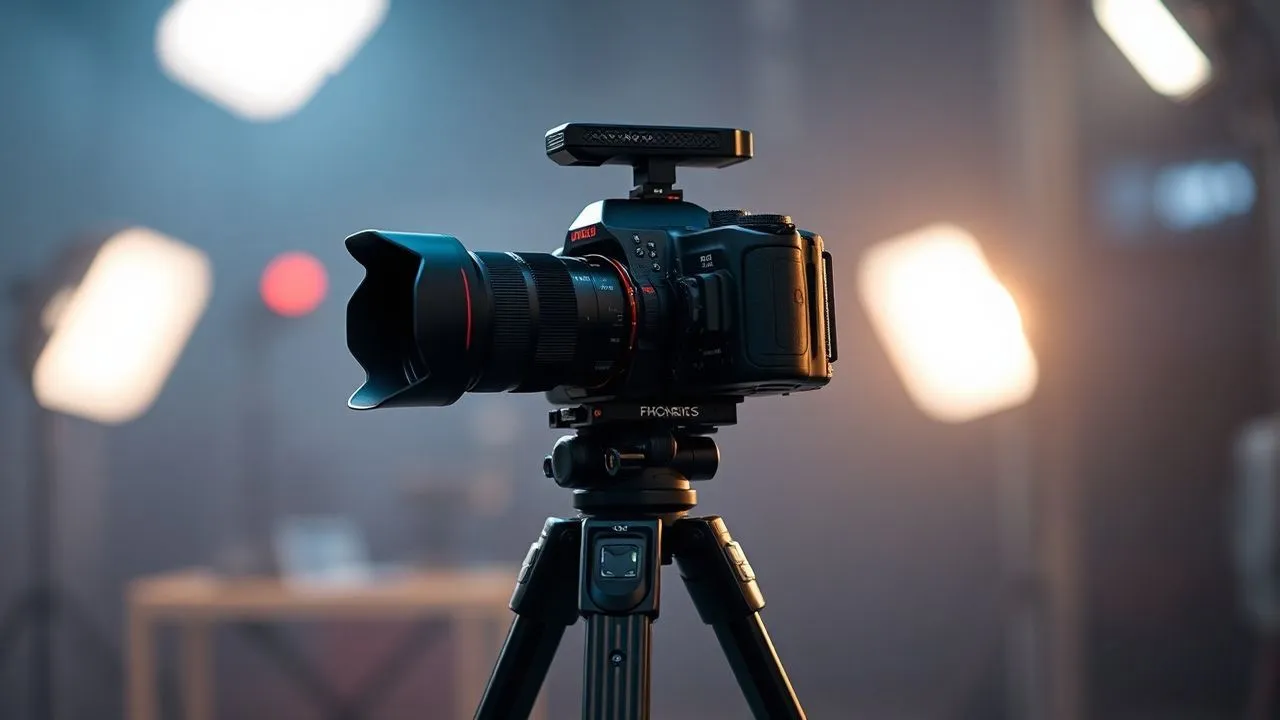
In the technological landscape of April 2026, the creation of video content reached unimaginable qualitative peaks until a few years ago, making the choice of best 4K cameras a fundamental step for anyone wishing to emerge in the digital world. Whether you're an aspiring YouTuber, a professional videomaker or just a fan who wants to immortalize family moments with the utmost clarity possible, today's market offers incredibly sophisticated solutions. Today we are no longer talking about resolution, but 10 bit depth, autofocus assisted by artificial intelligence and stabilization systems that make the use of heavy external gimbal unnecessary. Having an Ultra HD TV or a professional monitor requires a high-quality source, capable of capturing minute details, realistic textures and a dynamic range that avoids burnt skies or shadows too closed. In this thorough guide, we will analyze the most interesting proposals of 2026, evaluating not only technical specifications as well, but also ergonomics, ease of use and the relationship between investment and actual performance on the field. Prepare to discover how to transform your creative vision in reality thanks to tools designed to challenge the limits of modern visual perception.
Essential technical parameters to choose the best 4K cameras
The crucial role of the sensor and noise management
When you approach the purchase of a modern camera, the first element to analyze is undoubtedly the image sensor, that is the button heart of the device. In 2026, CMOS sensor technology has evolved dramatically, offering extremely fast data reading capabilities that reduce rolling shutter almost zero. A larger sensor, such as an APS-C format or a 1-inch sensor, captures a higher amount of light, a determining factor when shooting under poor or artificial lighting conditions. Pixel density and BSI technology (Back Side Illumination) play a key role in signal cleaning, preventing annoying digital grains from compromising the quality of your productions. For those looking for the highest quality video UHD, it is essential that the sensor does not perform excessive “cropping” during registration in 4K, thus keeping the original field angle of your goals.
In addition to physical dimensions, the processing capacity of the image processor combined with the sensor determines the ability to record at high frame rate. In 2026, the best 4K cameras are able to manage video streams at 60 fps or even 120 fps for spectacular slow motion, maintaining an absolute chromatic fidelity. Pay attention to the depth of bits: 10 bit recording means having over a billion shades of color, against the only 16 million of 8-bit systems. This technical gap becomes evident during the grading phase, allowing the editor to recover details in the high lights or shadows without the image to “break” in visible digital artifacts. Investing in a machine with an excellent sensor is the first step to ensure a multiannual longevity to its technical kit, ensuring results that will not be shown on the displays of the future.
Interchangeable image stabilization and optical
A technically perfect video at the resolution level loses all its value if it is trembling or unstable in the eyes of the viewer. The image stabilization has made giant steps, dividing mainly in optical stabilization (O.I.S.), mechanical and digital assisted by gyroscopes. The top models of the range of 2026 integrate 5 axes hybrid systems that work in synergy to compensate for sussultory movements and accidental rotations during walks or free-hand shooting. This is particularly vital for vloggers and for those who produce moving content, where rapid execution prevents the use of easels. Some machines also use gyroscope metadata to allow even more precise post-production stabilization, offering almost cinematic fluidity without excessively degrading the sharpness of the edges of the frame.
In parallel, the possibility of using interchangeable objectives represents the true watershed between an amateur product and a high-level creative tool. The choice between a wide angle pushed for vlogs, a light fixture to achieve a professional bokeh effect or a versatile zoom for travel depends entirely on your needs. In 2026, the optical park available for mirrorless systems has become vast, including lenses optimized specifically for video that minimize focus breathing (light frame change while focusing). A quality perspective not only improves sharpness, but defines the aesthetic character of the film, allowing you to play with the depth of field to isolate the subject from the background, creating that visual separation typical of the Hollywood productions that so fascinates the modern audience.
Sony ZV-E10 II: The revolution of vlogging cameras
Optimized design and smart functions for creators
The Sony ZV-E10 II is confirmed in 2026 as the absolute reference point for those looking for a compact but extremely powerful solution for the web. This machine is not only an updated version, but a complete reimagine of the content creator series. Its light body hides a 26 MP sensor capable of capturing 4K video with an extraordinary detail, derived directly from Sony's professional cinema lines. One of the strengths lies in the hybrid autofocus system, which thanks to the latest generation artificial intelligence algorithms, never loses contact with the eyes of the subject, either a human being or an animal. For those who produce reviews, the mode “Product Showcase” is a manna from the sky: it allows fluid and instant fire transitions from the object in the foreground to the face of the presenter, eliminating those embarrassing moments of waiting that often spoil amateur videos.
The ergonomics of the ZV-E10 II was designed for those who recover alone. The fully articulated LCD screen allows you to control the frame in each angle, while the large upper recording button avoids errors during the start of the clips. We must not forget the importance of audio: Sony has integrated a microphone with three directional capsules that, together with the wind filter included, guarantees a clear and crystalline voice even outdoors. If you want to further elevate the standard, the Multi Interface slide allows you to connect digital microphones without the encumbrance of external cables, keeping the set-up clean and professional. This machine represents the perfect balance between a mirrorless for video and a pocket camcorder, offering the versatility of the more than 70 goals of the E-mount graft, ranging from ultra-compact pancakes to the most performing teleobjectives.
Simplified film profiles and workflows
Entering the merits of video performance as well, the Sony ZV-E10 II offers the image profile S-Cinetone, the same present on high-end cameras such as Venice or FX6. This profile guarantees natural skin tones and a “out-of-the-box” cinematic look, drastically reducing the time needed for post-production. For more experienced users, support for 4:2:2 10-bit format and S-Log 3 profile opens prairies of creative possibilities during assembly, allowing you to manipulate exposure and color with surgical precision. Advanced digital stabilization works impeccablely, allowing you to get stable shooting even while walking fast, making it one of best 4K cameras for travel reportage or for dynamic event documentation.
Another fundamental aspect in 2026 is connectivity. The ZV-E10 II supports direct stream via USB-C with UVC/UAC standard, allowing you to transform it into a high quality 4K webcam for your own direct on Twitch or YouTube without the need for expensive acquisition cards. Battery management has been improved compared to the previous model, ensuring longer shooting sessions and the ability to power the room through external power banks during use. This versatility makes it ideal not only for vlogs, but also for interviews, online courses and indie productions where the budget is limited but the final quality cannot be compromised. Choosing Sony means entering a proven ecosystem that supports the growth of the creator at every stage of his digital career.
Panasonic HC-VX3E-K Analysis: Optical Power and Zoom
Versatility of Leica optics and intelligent zoom
While mirrorless dominates for aesthetics, traditional cameras such as Panasonic HC-VX3E-K maintain an indisputable technological advantage in terms of optical versatility. Equipped with a 25 mm wide-angle lens designed in collaboration with Leica, this machine offers a 24x optical zoom that covers virtually every possible scenario, from the breathtaking landscape to the close detail of a distant subject. In 2026, the sharpness maintained throughout the focal excursion is impressive, thanks also to the BSI sensor that excels in the capture of light. The 48x intelligent zoom further extends these capabilities without visibly degrading the 4K image, making it the ideal tool for those who resume school essays, sports events or ceremonies where it is not possible to physically approach the action.
The management of manual controls on a camera like Panasonic is immediate and intuitive. Unlike the cameras adapted to the video, here we find a multifunctional ring that allows you to adjust fire, zoom or aperture with a higher tactile precision. The 4K Cropping function is a real revolution in modern workflow: it allows you to record in Ultra HD and then make cutouts, panning or digital zoom directly in the room, exporting a Full HD file already ready for sharing. This means that you can frame a wide scene and then “create” the movement at a later time, ensuring a stability that would be impossible to achieve by physically moving the machine. The Panasonic HC-VX3E-K is positioned as one of best 4K cameras for the user who wants a device “all in one” without the complication of the lens change.
HYBRID O.I.S. stabilization systems 5 axes
The true secret of the success of this model lies in the HYBRID O.I.S.+ system, a technology that combines the internal optical correction with the electronic one to eliminate any minimum vibration. In 2026, this system was perfected to automatically recognize the type of movement that is being carried out, distinguishing between an involuntary vibration due to the wind and an intentional movement of panning. This ensures that the image remains “glued” in the center even at the maximum zoom extension, where usually every small trembling is amplified enormously. The “Level Shot” function also automatically corrects the inclination of the horizon, ensuring that your videos are always perfectly straight, a detail that instantly separates amateur works from professional ones.
In terms of connectivity and audio, HC-VX3E-K does not accept compromises. We find dedicated inputs for microphones and headphones, fundamental to monitor sound quality in real time during interviews or noisy events. Audio recording can be made in high-resolution linear PCM format, offering a sound fidelity that worthyly accompanies the excellence of images. The camera also supports remote control via smartphone, allowing you to manage remote control when mounted on a stand. For those seeking equipment for streamers or event videomaker, Panasonic's constructive solidity and reliability are a guarantee of operational continuity, even under prolonged use under thermal stress.
Ultra-compact solutions: DJI Osmo Pocket 3 Creator Combo
1 inch sensor in a pocket body
If portability is your main criterion, the DJI Osmo Pocket 3 represents the technological miracle of 2026. Despite the size that allows you to literally disappear in your pocket, this camera mounts a 1 inch sensor, a size that until recently was reserved for much more bulky machines. This means an ability to capture phenomenal light, with 4K video to 120 fps that allow slow motion to be buttery and rich in detail. The 2-inch OLED screen can be rotated, allowing you to instantly switch from horizontal to vertical shooting mode, perfect for TikTok or Instagram Reels, without losing quality thanks to the sensor that is optimally exploited in both directions.
The stabilization here is not entrusted to software or mobile lenses, but to a real mechanical gimbal with three miniaturized axes. This allows DJI Osmo Pocket 3 to offer a fluidity that no mirrorless or smartphone can match, regardless of the speed of operator movements. Whether you’re running behind a child or shooting dynamics from a car in the race, the image will always be perfectly leveled and without waste. The ActiveTrack 6.0 function carries the pursuit of the subject to a higher level: just select the face or object on the screen and the motorized head of the room will follow it autonomously, leaving you free to focus only on narrative or movement, acting as a real personal automatic cameraman.
Professional audio and color gradation D-Log M
The Creator Combo version of Osmo Pocket 3 elevates the user experience by including basic accessories such as the DJI Mic 2 microphone, which connects wireless instantly to the room. This solves one of the historical problems of the small cameras: the audio quality at a distance. You can place the room on a tripod several meters away and your voice will be recorded with a studio clarity directly on the video clip. Also, for color professionals, the D-Log profile M to 10 bit offers an extended dynamic range, capturing up to a billion colors and allowing a flexibility in post-production comparable to the camera from thousands of euros. This makes the Pocket 3 one of best 4K cameras for travel film-makers who do not want to give up quality while traveling light.
Autonomy is another unexpected strength: the battery charges 80% in just 16 minutes, minimizing waiting times between session and session. In 2026, versatility is all, and Pocket 3 can also act as a 4K webcam or a live stream camera, connecting directly to the phone through the dedicated app that allows you to apply beauty filters in real time and manage the direction of the video stream. Its discretion also makes it ideal for the journalism of inquiry or for “street” shooting where a large camera would attract too much attention, but guaranteeing a final result that can be safely projected on a large UHD screen without disfigurement. It is proof that technological power must not necessarily occupy much space.
Cheap 4K cameras for those who start in 2026
FIREFOTO and Vmotal: Quality accessible for all
Not everyone needs Full Frame sensors or movie bitrates to start their video adventure. There is a category of professional cameras, represented by brands like FIREFOTO and Vmotal, which in 2026 reached an ideal quality standard for those who move the first steps. These devices offer a native 4K resolution with CMOS sensors optimized for daylight, resulting in perfect for tutorials, home vlogs or family videos. The FIREFOTO camera, for example, stands out for its simplicity: fixed focus optimized for classic vlog distances and a rotating IPS screen that facilitates self-pacing. Included in the package we often find an SD card and a spare battery, allowing you to start filming immediately after the unboxing.
These models focus on immediate use. There are no complex menus or hundreds of parameters to configure; just press a button and you are ready to capture the action. The Vmotal 4K camera, on the other hand, offers a surprising versatility for its price, including often wireless clip microphones that dramatically improve voice capture compared to integrated mid-range smartphone microphones. Although they can't compete with Sony or Panasonic in very low light conditions, under the sun or in a well-lit environment they produce sharp images and bright colors that far exceed the expectations of those looking for an entry-level product. They are the logical choice for students or for those who want to test their passion for the video without investing large sums from the first day.
Extra functionality and creative modes included
An interesting aspect of these budget cameras is the wealth of integrated software functions that often lack on the most austere professional models. We find slow motion, time-lapse and creative filters directly in the menu of the machine, allowing you to experience different narrative styles without having to learn complex editing software. Many of these cameras can be used as a 4K plug-and-play webcam, making them excellent companions for work video calls or distance lessons, where the quality of the integrated laptop camera is now obsolete in 2026. The presence of an HDMI output also allows you to instantly project your own footage on your home television, sharing special moments with friends and relatives throughout their Ultra HD definition.
The following lists summarize the main features to monitor in this price range:
- Real 4K resolution: make sure the sensor supports the 3840×2160 native pixels.
- Audio connectivity: the presence of a 3.5 mm jack for external microphone is fundamental.
- Accessories included: extra batteries and memory cards increase the purchase value.
- Webcam function: verify UVC compatibility for immediate use with your PC.
- Rotatable screen: essential to see while recording a vlog or tutorial.
Choosing one of these economic solutions does not mean giving up quality, but rather focusing on the essential elements of video production. With good artificial lighting (like a simple light ring), these machines can produce content that looks much more expensive than they are in reality, demonstrating that the creativity and technique of the operator often count as the value of the equipment used.
Frequently Asked Questions about Best 4K Cameras
What is the difference between 4K to 30fps and 60fps?
The main difference lies in the fluidity of movement. The 30 fps format (photograms per second) offers a look closer to the standard television, ideal for interviews or static videos. The 60 fps, on the other hand, double the visual information every second, making movements much more fluid and natural, especially suitable for sports, action or to be slowed down in post-production to create slow motion without shots. In 2026, the 4K at 60 fps is considered the standard for high-level UHD video quality.
Do you really need a 4K camera if I only upload to Instagram?
Absolutely. Although social platforms buy videos, starting from a high quality 4K source guarantees that, after compression, the final video retains much more detail and cleanliness than a file originally recorded in 1080p. In addition, recording in 4K allows you to crop (crop) on the image without losing sharpness, allowing you to transform a horizontal video vertically with professional results, keeping the subject’s face always on fire and defined.
What is the 10-bit color depth and why is it important?
The 10-bit color depth allows the camera to record about 1,07 billion different colors, compared to the 16.7 million of the 8-bit format. This is fundamental to avoid “banding”, i.e. those annoying color strips that are often seen in the shades of the sky or the uniform walls. For anyone who wants to do color correction or color grading professional, the 10 bits offer the malleability necessary to change colors and post-production exposure without ruining the image.
Are smartphone targets comparable to those of 4K cameras?
Despite the incredible progress of smartphones in 2026, the physical lenses of a dedicated camera remain superior for several reasons. First, the physical size of the optics allows to capture more light and reduce electronic noise. Second, cameras offer a real (non-digital) optical zoom, which does not degrade the image quality when approaching the subject. Finally, the ability to create a natural blur effect (bokeh) is given by the lens and sensor physics, resulting in much more pleasant than the artificial bokeh created by the phone software.
Can I use a 4K camera as a professional webcam?
Yes, most of them best 4K cameras of 2026 supports the plug-and-play webcam function through the UVC protocol (USB Video Class). Simply connect the USB-C cable to your computer and the camera will be automatically recognized by programs like Zoom, Teams or OBS. This ensures an image quality and field depth control that no built-in webcam can hope to achieve, instantly raising the professional level of your meetings or your direct streaming.
The choice of the ideal video camera is a personal journey that depends closely on your creative goals and budget. Whether you choose the professional versatility of Sony ZV-E10 II, Panasonic zoom power or the incredible portability of DJI Osmo Pocket 3, make sure you invest time in learning the basics of video language. Technology is just a means to express your vision: now that you have all the information you need to orientate between sensors, bitrates and stabilizers, you just have to choose your instrument and start creating. If you want to stay up to date on the latest news, consult our technical guides periodically and do not forget to explore the current offers to find the perfect model for you. Read the full guide and start your video production in 4K today!


