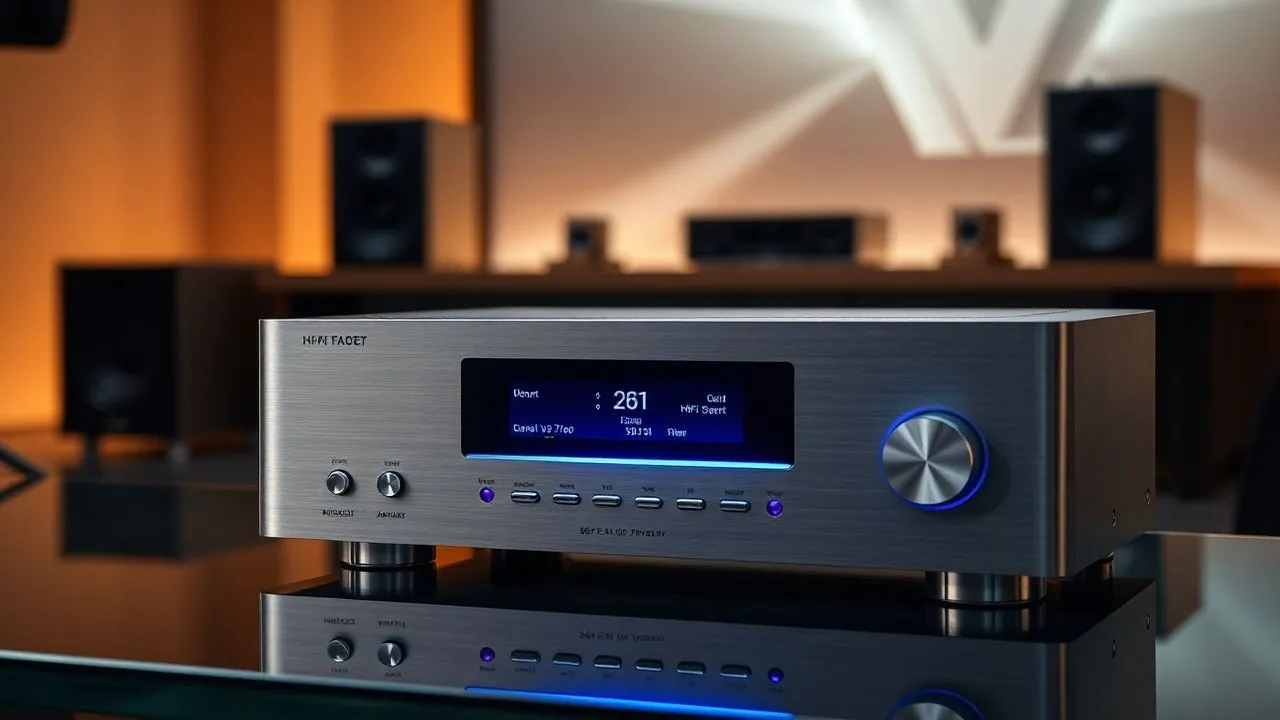
In the technological landscape of 2026, musical listening reached peaks of loyalty previously reserved only to those who owned expensive analogue plants or exterminate collections of physical supports. Today, the best Hi-Fi streamers represent the heart of every modern home audio system, allowing you to access endless catalogs of lossless music and in high resolution with the simplicity of a touch on your smartphone. These devices, also known as network music players, are not simple accessories, but real digital hubs able to process complex audio signals, eliminating interference and ensuring a bit-perfect reproduction that respects the original intent of the artist and the sound engineer. However, choosing the right model requires a thorough knowledge of current technologies, from DAC chip conversion capabilities to integration with advanced transmission protocols such as Wi-Fi 6 and Bluetooth 5.3. In this updated guide in May 2026, we will explore the most cutting-edge solutions available on the market, analyzing both entry-level models capable of transforming old amplifiers into smart systems, and professional music machines designed for the most intransigent audiophiles. Whether you’re trying to upgrade your living room or build a dedicated listening room from scratch, you’ll find here all the information you need to navigate the world of high quality audio streaming without making technical evaluation or budget errors.
Why invest in a high quality audio streamer in 2026
The difference between standard streaming and Hi-Res Lossless
In 2026, the distinction between random listening and critical listening inevitably goes through the quality of source files and the ability of the hardware to reproduce them without losses. While traditional streaming services often offer compressed files that sacrifice extreme frequencies and dynamics to save bandwidth, the best Hi-Fi streamers are designed to manage lossless 24-bit audio streams and sampling frequencies up to 192kHz or higher. This means that every detail, from the natural reverb of a concert hall to the silky timbre of a cello, is preserved entirely. Using a dedicated streamer allows to bypass the limits of audio circuits integrated in smartphones and computers, which are often subject to electromagnetic noise and jitter. A specialized network reader ensures that the signal remains pure until analogous conversion, offering a wider sound stage and a separation of instruments that radically transforms the perception of daily music, making it a immersive and three-dimensional experience.
In addition, the evolution of home network infrastructure has made high-resolution streaming extremely stable. With the spread of Wi-Fi 6 and ultra-fast fiber optic connections, the reproduction of heavy files like DSD512 or MQA no longer presents the buffering problems that plagued users years ago. The best 2026 Hi-Fi streamers integrate generous memory buffers and powerful processors that manage data flow smoothly, allowing the listener to focus exclusively on sound beauty. Investing in a dedicated device also means ensuring compatibility with future evolutions of audio codecs, since most of these products receive regular firmware updates that expand their functionality. In a time when music is everywhere, possessing an instrument that exalts its quality is the only way to truly honor the art of sound recording and enjoy every rhythmic and tonal nuances that modern productions are able to offer.
How a network reader transforms home listening experience
The integration of a streamer into your audio system is not only a matter of sound fidelity, but also of extreme operational comfort. Imagine you can control the entire global music library, the local NAS and radio stations around the world through a single smooth and responsive interface. The best Hi-Fi streamers offer management applications that become the universal remote control of your musical passion, allowing you to create hybrid playlists that combine songs from Tidal, Qobuz and your personal collection. This level of integration eliminates the need to physically connect uncomfortable cables between the laptop and the amplifier, reducing the aesthetic footprint and improving signal cleaning. Many modern models also include environmental correction functions, which analyze the acoustic properties of the room and digitally correlate the distortions caused by furniture or walls, ensuring balanced sound in any environment, from small studio to large open-space salon.
In addition to content management, the streamer acts as a technological bridge between the past and the future. If you have a vintage amplifier with warm and enveloping sound, the addition of a modern network reader gives it a new “smart” life without altering its original timbre character. You can send music through AirPlay 2, Chromecast or Spotify Connect directly to your favorite speakers, keeping the elegance of traditional setup. On the other hand, for those who prefer minimalist systems, there are streamers with integrated amplification that only require the connection of a pair of speakers to work. This versatility is what makes Hi-Fi streamers the most dynamic components of the current audio market. The ability to adapt to different contexts of use, combined with the constant evolution of user interfaces, makes these devices a safe investment for anyone wishing to combine the acoustic excellence of the past with the digital flexibility of the present, creating a harmonious and technologically advanced sound ecosystem.
The best Hi-Fi entry-level streamers to start
Arylic LP10 and the versatility of compact format
For those who first approach the world of high resolution audio in 2026, the Arylic LP10 is one of the most intelligent and affordable solutions. This small but powerful device is designed to break down the barriers to lossless music, offering a connectivity suite that includes Wi-Fi, Bluetooth 5G and native support for AirPlay 2 and Google Cast. Despite the small size, the LP10 does not compromise significant quality, supporting audio streams up to 192kHz/24bit. It is the ideal tool for those who want to modernize an old micro-Hi-Fi system or add streaming capabilities to active desktop speakers. Its ability to integrate into the Apple Home ecosystem makes it particularly appealing for users who want to automate their home, allowing you to start music through voice commands or predefined scenarios, making music sound a smooth part of the domestic daily routine.
The real strength of the Arylic LP10 is its hardware flexibility. In addition to standard analog outputs, it has an optical output that allows to connect it to a more valuable external DAC if the user decides to improve the system in the future. This makes it a “future-proof” component for the economic band, able to grow together with the needs of the passionate. The Go Control application is intuitive and allows you to manage the multiroom in a simple way, synchronizing multiple Arylic devices in different rooms for uniform sound diffusion throughout the house. Although it does not have the touchscreen display of the high-end models, the LP10 meets with an exemplary connection stability and a configuration ease that makes it perfect even for those who do not have great technical skills. It is the demonstration that in 2026 it is not necessary to spend astronomical figures to enjoy the advantages of liquid music in high definition, provided you choose a solid and well supported software side.
Majority Robinson 2IR: internet radio and economic versatility
Another protagonist of the entry-level band is the Majority Robinson 2IR, a device that focuses on the variety of sources and simplicity of use. In a single compact chassis, this streamer combines DAB/DAB+ digital radio, traditional FM radio and access to tens of thousands of internet radio stations via Wi-Fi. It is the perfect choice for the user who still loves the charm of the radio but wants to clean the digital signal and the possibility to discover broadcasters from every corner of the planet. With the support for Spotify Connect, Robinson 2IR instantly turns into a modern music player, allowing you to manage the playlists directly from the official Spotify app on your smartphone. This simplified approach eliminates the learning curve typical of complex audiophile systems, making high fidelity accessible to a wider audience of listeners looking for practicality without sacrificing a good sound.
Despite the price, the Majority Robinson 2IR offers optical and coaxial digital outputs, as well as the classic RCA output. This equipment allows you to easily insert it into any existing audio chain, ensuring that the digital signal remains intact until the amplifier. The front color display provides useful information on the track in playback and radio stations, improving ergonomics compared to models without visual interface. Although its main vocation is not playing DSD files or ultra-heavy master studio, it behaves egregiamente with standard formats and with basic lossless streaming. For those who have a limited budget but do not want to give up the comfort of having all the world of music at hand, the Robinson 2IR represents an excellent balance point, combining constructive reliability and a versatility of functions that make it one of the best Hi-Fi streamers for those who want to start their journey in digital audio without excessive complications.
Medium-range solutions: the perfect balance between price and performance
WiiM Amp Ultra: power and precision in one device
The WiiM Amp Ultra quickly became a reference point in 2026 for those looking for a high quality all-in-one solution. This device is not only a streamer, but it integrates a high performance amplifier capable of delivering 100W per channel with almost nothing distortion. The technological heart is represented by the DAC ESS SABRE ES9039Q2M, a converter renowned for its ability to extract every detail from digital recordings. The combination of bit-perfect streaming and robust amplification makes WiiM Amp Ultra the ideal companion for shelf or floor speakers of good quality, eliminating the need to buy separate components and expensive interconnect cables. Its unibody aluminum structure is not only aesthetically pleasing, but also acts as an efficient heat dissipator, ensuring stable performance even during extended listening sessions with high volumes.
One of the most innovative features of this model is the RoomFit environmental correction function. Through a calibration process guided by the app, the device analyzes how sound interacts with the walls and furniture of the room, applying digital filters to correct any bass reams or harshness of the high frequencies. This radically transforms the listening experience, allowing you to obtain study performance even in untreated domestic environments. In addition, the inclusion of an HDMI input ARC allows you to connect your TV, transforming the Hi-Fi system into a powerful home cinema audio system, which can be controlled directly from the TV remote. With the support of almost all imaginable streaming services and an impeccable interface responsiveness, the WiiM Amp Ultra is positioned as the choice for the modern user who demands audiophile performance in a compact, elegant and incredibly versatile format, redefining the concept of value for money in the industry.
WiiM Pro Plus: Software excellence at the service of hardware
If you already have an amplifier you're satisfied with and just want to add the best streaming section possible without spending a fortune, the WiiM Pro Plus is probably the most sensible choice in 2026. This model is distinguished by its predecessor for a significantly improved analog conversion section, which uses the latest generation AKM chips to offer a more natural, airy and free sound of that “digital cold” that sometimes afflicts economic products. WiiM software is universally recognized as one of the most stable and complete in the market, ensuring total compatibility with Tidal Connect, Qobuz, Amazon Music and Roon Ready. The ability to manage audio streams up to 192kHz/24bit in bit-perfect mode ensures that the signal arrives at your system without any unwanted manipulation, preserving the dynamic integrity of original music.
WiiM Pro Plus also excels in physical connectivity, offering analog and digital inputs and outputs that allow flexible configurations. You can use it as a digital preamp, connecting it directly to power amplifiers or active speakers, or as a simple source connected to an integrated amplifier line input. Multiroom management is among the simplest and most effective available, allowing you to group different WiiM devices (or others compatible with AirPlay 2 and Chromecast) to play the same music throughout the house in perfect synchrony. Thanks to the included voice remote control and the constant evolution of software functions, such as the 10 band parametric equalizer, the Pro Plus offers a level of customization of sound that is rarely found in this price range. It is a device that “disappears” in the system, leaving space only to music, and that’s why it continues to gather unanimous consents among industry experts and fans from around the world.
Professional Hi-Fi streamers for demanding audiophiles
Eversolo DMP-A6 Gen 2: the new reference standard
Going up to the high end, the Eversolo DMP-A6 Gen 2 became a masterpiece of audio engineering and industrial design in 2026. This streamer is not only a network reader, but a complete multimedia control station, equipped with a majestic 6-inch OLED touchscreen display that displays high resolution covers and spectacular digital VU meter. Under the hood beats a deeply optimized Android 11 system that eliminates sampling restrictions typical of the Google operating system, ensuring a pure audio output in every condition. The presence of a dual ESS ES9038Q2M DAC in balanced configuration allows to obtain an exceptional signal/noise ratio and a practically unhealthy distortion, making it able to pilot with surgical precision even the most revealing and expensive audio systems, where every minimum imperfection would immediately afloat.
The Eversolo DMP-A6 Gen 2 also offers a unique storage versatility: it has an internal slot for M.2 SSD, allowing you to host entire DSD and high-resolution FLAC file libraries directly in your device, eliminating total dependence on external network servers. The balanced XLR outputs are a professional touch that ensures the best possible connection with high-end amplifiers, minimizing the detected disturbances along the signal path. Low noise linear power is another technical detail that makes the difference, guaranteeing deep black backgrounds and a micro-dynamic that gives life to music. For audiophile looking for the perfect combination of modern aesthetics, immediate usability and state-of-the-art sound performance, Eversolo today represents the point of arrival, a machine capable of managing with the same ease a compressed MP3 file or a master studio recording via HDMI.
WiiM Ultra Music: technological innovation and sophisticated design
WiiM Ultra Music stands as the brand's premium proposal, trying to challenge the industry's giants with an explosive mix of functions and building quality. Featuring an elegant aluminium chassis and an integrated touchscreen display, this model aims to offer a luxury user experience at an extremely competitive price. The conversion section is entrusted to flagship class chips, capable of sound transparency that competes with triple-cost streamers. But it is in the accessory functions that the WiiM Ultra really shines: it includes a high quality Phono input to connect a turntable, a dedicated headphone amplifier with front output and an HDMI input ARC for TV integration. This versatility makes it the ideal nerve center for a modern multimedia system, where liquid music coexists with vinyl and film entertainment.
From the point of view of software management, WiiM Ultra benefits from the brand’s proven ecosystem, but adds superior computing capabilities to manage complex digital filters and even more snappy navigation. Wi-Fi 6 stability ensures that heavy file streaming takes place without the slightest uncertainty, while Roon Ready support makes it compatible with the most advanced music management software in the world. The attention to detail also extends to the remote, ergonomic and functional, and to the quality of the rear connectors, all gold plated to ensure maximum conductivity over time. Choosing the WiiM Ultra means not having to compromise between modernity and tradition, having available a tool that honors the sound quality of the past projecting it in the infinite possibilities of the digital future, with ease of use that makes it suitable for every member of the family.
Technical characteristics to be evaluated before purchase
The importance of internal DAC and support for DSD and MQA files
When analyzing the best Hi-Fi streamers of 2026, one of the most critical components to consider is the DAC (Digital-to-Analog Converter). This chip is responsible for transforming digital bits into analog electric signals that speakers can play. Not all DACs are equal: top models such as ESS Sabre or AKM Velvet Sound offer different sound profiles, from analytical transparency to velvety heat. However, it is not only the chip itself to count, but as it is implemented within the circuit, the power quality that supports it and the accuracy of the internal clock to minimize jitter. A good streamer must be able to manage high-resolution files such as DSD (Direct Stream Digital), much appreciated by audiophiles for their almost analogous fluidity, and the MQA (Master Quality Authenticated) format, which allows you to transmit files with studio quality in small dimensions. Verifying native compatibility with these formats is essential for those who want to make full use of services such as Tidal HiFi Plus or Qobuz.
However, it is equally important to assess whether the streamer allows digital “pass-through”. Many fans prefer to use a very high-end external DAC; in this case, the streamer must act as a pure “transport”, sending the raw digital signal through optical, coaxial or USB outputs without any internal manipulation. This flexibility is essential because it allows you to update the conversion section in the future without having to change the entire streamer. In 2026, the ability to process data in “bit-perfect” mode became a standard for quality models, ensuring that the software does not perform resampling operations that could degrade sound loyalty. Before buying, always check the technical specifications regarding the maximum resolution supported on both inputs and outputs, to ensure that the device does not become a bottleneck for your audio chain and that it can faithfully reproduce every detail of your favorite recordings.
Wireless and wired connectivity: Wi-Fi 6, Bluetooth 5.3 and HDMI ARC
In 2026, connection stability is as important as sound quality. The best Hi-Fi streamers now integrate the Wi-Fi 6, which offers superior bandwidth and more efficient management of interference in saturated homes of connected devices. Although the wired connection via Ethernet remains the preferred for maximum reliability and to avoid any latency, a latest-generation Wi-Fi module allows you to place the streamer anywhere without worrying about laying network cables. On the Bluetooth front, the 5.3 standard with aptX HD or LDAC codec support is now indispensable. These codecs allow a high quality wireless transmission that is very close to the fidelity of the CD, making quick listening to smartphones or tablets without excessively degrading the sound experience. Wireless connectivity should not be seen as a filling, but as an additional convenience that expands the daily use of the audio system.
Another feature that is revolutionizing the industry is the inclusion of the HDMI ARC port (Audio Return Channel). This technology allows you to connect the streamer directly to the TV, turning it into the center of domestic entertainment. In this way, the sound of movies, TV series and video games is managed by the high quality DAC of the streamer and reproduced by the Hi-Fi speakers, guaranteeing an infinitely superior quality to that of any commercial soundbar. In addition, the integration of analog RCA or Phono inputs allows you to connect traditional sources, while USB ports allow you to play files from external hard drives. A complete set of connections ensures that the streamer can adapt to every evolution of your setup, acting as a true universal switch between the analog and digital world. Carefully assessing the back panel is therefore a fundamental step to ensure that the new purchase fits perfectly with the devices you already own and with those you could buy in the future.
- Supported streaming protocols: AirPlay 2, Chromecast, Spotify Connect, Tidal Connect, DLNA/UPnP and Roon Ready.
- Managed audio resolutions: Support up to 32-bit/768kHz for PCM, DSD512 and MQA full decoding.
- Digital outputs available: Optical (Toslink), Coaxial (RCA), USB Audio and HDMI ARC for TV integration.
- Advanced software features: Environmental acoustic correction, parametric equalizer and integrated multiroom management.
How to integrate the streamer into your existing audio system
Multiroom configuration and management through dedicated applications
One of the most tangible advantages in adopting the best Hi-Fi streamers in 2026 is the ability to create a consistent and easy to manage multiroom audio system. With standards such as AirPlay 2 or the proprietary platforms of manufacturers (such as WiiM or Eversolo), it is possible to synchronize musical reproduction in different rooms of the house. You may have the main streamer in the living room connected to the high-end system and small receivers or speakers active in the kitchen and bedroom, all controlled by the same application. This allows you to move from one environment to another without ever losing a note of your favorite playlist, or to set different sound atmospheres for each room according to family activities. The key to everything lies in the robustness of the management software, which must be intuitive, fast in loading the covers and able to manage thousands of tracks without hesitation or sudden crash.
Integration is not only about hardware, but also cloud services. The applications of the best streamers today act as intelligent aggregators: by accessing their Tidal, Qobuz or Amazon Music accounts, you have a single search bar that simultaneously scans all the services and local library on NAS. This simplification of user experience is what made Hi-Fi streaming so popular even among the least experienced. In addition, many of these apps offer advanced music discovery features, suggesting new artists and albums based on your listening habits, integrating seamlessly with the recommendation algorithms of streaming platforms. Configure the streamer correctly within the home network, perhaps by assigning a static IP address to avoid conflicts, ensures that the system is always ready for use, transforming technology into a transparent tool to serve listening pleasure.
Environmental correction and digital acoustic optimization
Integrating a streamer in 2026 also means having access to acoustic optimization tools that until a few years ago were only grabbing professional studies. Most domestic environments are not designed for acoustics, with stained glass, bare walls and furniture that reflect sound creating annoying resonances or frequency cancellations. The modern medium and high-end streamers offer digital environmental correction systems (DSP) that allow you to measure the response of the room via the smartphone microphone or calibrated external microphones. Once the measurement is done, the streamer applies a compensatory equalization curve that “cleans” the sound, making the bass more tense and defined and improving the clarity of the voices. This process does not alter the sound of the speakers, but enhances its potential by neutralizing the negative influences of the environment, offering a result that is often equivalent to a physical upgrade of the system.
In addition to automatic correction, more experienced users can use extremely precise parametric equalizers. These instruments allow surgical intervention on individual frequencies to adapt sound to your personal taste or to compensate for minor age-related auditory results. You can save different listening profiles: a more neutral one for critical listening to classical music, a more energetic one for rock or cinema, and maybe an optimized for low-volume night listening that slightly exalts the band extremes (a loudness effect). This flexibility makes the streamer the most versatile component of the Hi-Fi chain, able to solve complex hearing problems with the only computing power of the software. Taking advantage of these functions not only improves listening, but also increases user awareness about the importance of sound and space interaction, raising the whole system to a sound accuracy level previously unimaginable in standard domestic contexts.
- Positioning of the streamer: Make sure it is in an area with good Wi-Fi coverage or close to an Ethernet socket.
- Physical connection: Use quality cables for analog (RCA/XLR) or digital (Optic/Coaxial) connections.
- Software configuration: Download the official app and immediately update the firmware to the latest available version.
- Environmental calibration: Run the RoomFit test or DSP correction to optimize the acoustic response of the room.
- Services integration: Connect your streaming accounts and configure your NAS server for local music.
Frequently Asked Questions about Hi-Fi streamers
Do I need an external DAC if my streamer already has an integrated one?
It is not strictly necessary, since the best Hi-Fi streamers of 2026 already integrate high quality conversion chips. However, if you have a professional external DAC or prefer a particular sound offered by a specific brand, you can use the streamer as a digital transport. In this way, the streamer only manages network connection and file navigation, leaving analogue conversion to the external device. For most users, the DAC integrated into models such as Eversolo or WiiM Ultra is more than enough for high-level listening.
Can I connect the streamer directly to my passive speakers?
The answer depends on the model. A “pure” streamer does not have the power needed to drive passive speakers and requires a separate amplifier. However, there are devices like the WiiM Amp Ultra that integrate both the streaming and amplification section: in this case, you can connect the power cables directly to the speakers. If you have active speakers (already amplified), you can connect them to any streamer using analog pre-out outputs. It is essential to check this feature before purchase to avoid being with an incomplete system.
What is the minimum internet speed for streaming Hi-Res?
For a stable high resolution stream (24-bit/192kHz), a connection is recommended that guarantees at least 10-15 constant Mbps dedicated to the streamer. Although music weighs less than 4K video, lossless streams are very sensitive to micro-interruptions that can cause annoying clicks or silences. In 2026, with fiber connections and Wi-Fi 6, this rarely represents a problem, but it is always preferable to use an Ethernet cable for maximum stability, especially if you live in condominiums with many interfering wireless networks that could saturate the available bandwidth.
Can I listen to music from my smartphone through the streamer?
Of course. Almost all the best Hi-Fi streamers support protocols such as AirPlay 2, Chromecast and Bluetooth 5.3. The best way to do this is to use the “Connect” functions of Spotify or Tidal, which allow the smartphone to act only as a remote control: the streamer will pick up the music directly from the internet servers, ensuring the maximum audio quality possible and not consuming the phone battery. Bluetooth is an excellent alternative for guests or for quick listening to content from YouTube or social networks, although quality is slightly lower than Wi-Fi.
Does Hi-Fi streamers support playing from external hard drives or NAS?
Yes, the vast majority of models have a USB port to connect hard drives or pendrives containing your music files. Also, through the DLNA or UPnP protocol, they can view and play saved music on a NAS (Network Attached Storage) connected to the home network. This is the preferred solution from collectors who own thousands of albums in FLAC or DSD format. Some advanced models, such as Eversolo, allow even the installation of an internal SSD disk to transform the streamer into a real independent and silent music server.
The Hi-Fi streamer is not only a technological accessory, but the definitive bridge that combines the emotion of the great music of the past with the infinite flexibility of the digital future. Choosing one means giving a new voice to your system and discovering sound details that you would never imagine existed in your favorite songs.
Choose from best Hi-Fi streamers of 2026 means making a decisive step towards a higher quality of listening, transforming the way you interact with your daily music. Whether your choice falls on a compact model to start or on a professional machine for your listening room, the important thing is to focus on devices that offer software stability and transparent audio conversion. Do not forget to evaluate compatibility with your favorite services and ease of use of the dedicated application. Now that you have all the information you need, you just have to choose the ideal companion for your system and let yourself be transported by the purity of high resolution sound. Good music navigation and good listening!


