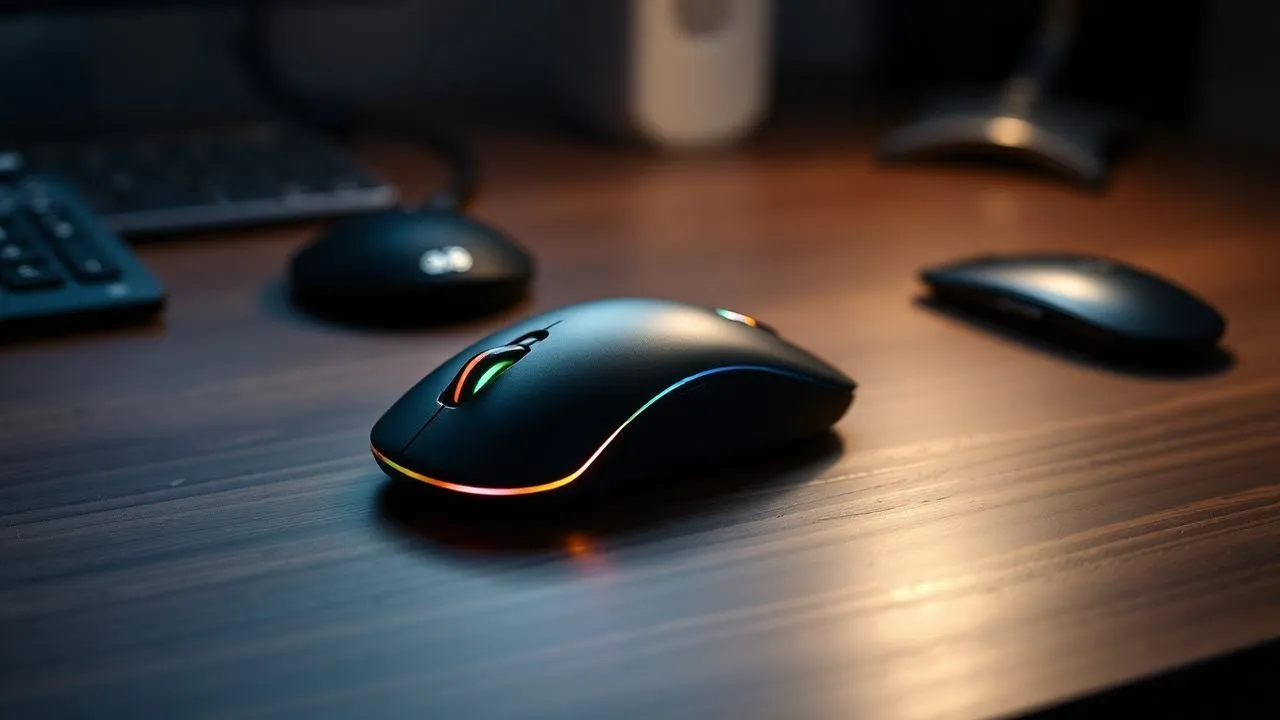
In the technological landscape of April 2026, the choice of the best wireless mouse is no longer just a question of aesthetics or simple comfort, but it represents a fundamental investment for postural health and work efficiency. If once wireless devices were looked suspiciously due to obvious latitudes and batteries that ran out in less appropriate times, today the situation is radically changed. Modern 2.4 GHz transmission technologies and new Bluetooth standards have virtually zeroed the gap with wired peripherals, making the best wireless mouse a compulsory choice for both digital and demanding video players. In the course of this guide, we will analyze how the evolution of optical and laser sensors has allowed to achieve millimetre precision on surfaces once prohibitive, such as glass or glossy materials. Buying a device today means carefully evaluating ergonomics, balanced weight and compatibility with increasingly complex software ecosystems that allow a total customization of the keys. Whether you are looking for an economical solution for your home office or a high performance device for competitive gaming, understanding current technical specifications will allow you to make a conscious purchase, avoiding common evaluation errors related to battery life or device shape.
How to choose sensor technology in 2026
Optical sensor vs laser sensor: current differences
The distinction between optical and laser sensor, although still present in the catalogues of manufacturers, has become extremely thin thanks to the progress of microelectronics. The best modern wireless mouse often uses advanced optical sensors that exploit a LED light to photograph the surface below thousands of times a second. This technology is preferred for its incredible precision and for the absence of unwanted hardware acceleration, a critical factor for those dealing with photo editing or architectural design. Laser sensors, on the other hand, maintain a competitive advantage on extremely reflective surfaces, since their ability to penetrate deeper into material irregularities allows a smooth tracking even where a traditional optical sensor might hesitate. However, for most office users, the stability of a high-end optical sensor remains the most balanced choice to avoid sudden jumps of the cursor during daily navigation.
In addition to the type of lighting, it is essential to consider the resolution expressed in DPI (Dots Per Inch). In 2026, it is not uncommon to find a mouse that exceeds 20,000 DPIs, although for standard usage 1,600 or 3,200 DPIs are more than sufficient. The true added value of the best wireless mouse lies in the ability to adjust this parameter to the flight via dedicated buttons or proprietary software. A graph may require a low sensitivity for precision work on a single pixel, while a user with a multi-monitor configuration will benefit from a high sensitivity to move the cursor from one screen to another with a minimum wrist movement. The tracking quality is also determined by the polling rate, i.e. the frequency with which the mouse communicates its position to the computer; a standard of 1000Hz is now the basis to ensure that every minimum shift is instantly transposed from the operating system.
The importance of PPE and tracking speed
Talking about DPI means addressing the issue of device reactivity in relation to the resolution of your monitor. With the massive diffusion of 4K and 8K displays, a mouse with few DPIs would be slow and frustrating, forcing the user to wide-ranging movements of the arm that could cause muscle fatigue in the long term. The best wireless mouse must therefore offer a wide and customizable range. The current technology allows to manage not only the speed, but also the fluidity of the movement, eliminating what in technical jargon is called jittering, that is the trembling of the cursor when the sensor fails to correctly interpret the surface texture. This is particularly evident in economic models that, while declaring high DPIs, do not have an internal processor capable of handling such data without systematic errors that compromise the experience of use.
Another often underestimated technical parameter is the lift-off distance, i.e. the maximum height to which the mouse continues to trace the movement when raised by the mat. For those who work in restricted spaces or for players who use a low sensitivity and are forced to reposition often the peripheral, a reduced lift-off distance is essential to avoid unintentional camera or pointer movements. Industry leaders implement artificial intelligence algorithms that automatically calibrate the sensor according to the material on which it rests, ensuring that the best wireless mouse maintains constant performance both on a professional fabric mat, and that you are working on a bar's wooden floor during a business trip.
Ergonomics and prevention of musculoskeletal disorders
Symmetric design vs ergonomic right-hand design
Ergonomics has become the central pillar in the design of input peripherals. Prolonged use of a mouse not suitable for its physical conformation can lead to serious disorders such as carpal tunnel syndrome or chronic tendonitis. The best wireless mouse must be chosen according to the type of handle that the user adopts naturally: palm grip (backed palm), claw grip (hand claw) or fingertip grip (contact only with fingers). Ergonomic right-handed models have a silhouette that slightly tilts the wrist towards the outside, following the natural rotation of the radio and the ulna. This position reduces pressure on the nerves and allows a more relaxed muscles during the eight working hours. There are then vertical mouse, a category growing in 2026, which place the hand in a natural “street of hand”, almost totally eliminating the torsion of the forearm.
On the other hand, symmetrical or ambidextrous models are often preferred by those looking for a more compact and versatile device, or of course by users who are struggling to find specific high-end models. These devices tend to have a lower profile, facilitating transport in laptop bags. However, the lack of specific support for the thumb or finger can tire your hand faster if you do not take regular breaks. The choice of the best wireless mouse must then pass for a practical test, evaluating whether the size of the mouse body is proportional to the length of your hand. A too small mouse forces your fingers to an excessive contraction, while a too large one makes it difficult to reach the side buttons, canceling the benefits of wireless connectivity and the freedom of movement that comes from it.
Materials, weight and type of side grip
The tactile sensation is an aspect that defines the perceived quality of a premium product. In 2026, the use of high-strength recycled plastics combined with silicone rubber inserts or hypoallergenic materials is the standard for the best wireless mouse. Side grip is essential to ensure that the device does not slide during rapid movements, especially in summer or in warm environments where the sweating of the hands increases. Many manufacturers have started using laser textured surfaces that do not degrade over time, avoiding that sticky effect typical of old low quality tires. Weight also plays a crucial role: the current trend sees a clear division among those who prefer ultra-light mouse (under 60 grams) to minimize inertia, and those who want more solid feedback for surgical precision work.
A well-balanced mouse should not hang up or down when raised. This balance is achieved by placing the battery or batteries centrally. In the most advanced models, you can find small additional weights to be inserted in special compartments to customize the center of gravity of the device. We must not forget that the ease of sliding also depends on the feet (or “skates”) located under the mouse. The excellent material remains the virgin PTFE (Teflon) which guarantees a minimum friction on almost every surface. The maintenance of these elements is simple but necessary to maintain the investment in the best efficient wireless mouse over the years, avoiding the accumulation of dust and debris ruin the pointing experience and scratches the delicate surfaces of modern glass or lacquered desks.
Wireless connectivity and energy management
Differences between Bluetooth and RF 2.4 GHz
Connectivity is the heart of every wireless device. The best wireless mouse in 2026 usually offers a double connection mode to ensure maximum versatility. Radiofrequency technology (RF) at 2.4 GHz, mediated by a small USB receiver (dongle), is the favorite for gaming and fixed positions thanks to its stability and latency practically nothing. This connection creates a dedicated channel between the mouse and the computer, less subject to interference caused by other wireless devices present in the environment, such as Wi-Fi router or microwave ovens. Many recent models allow you to store the dongle inside a mouse compartment, reducing the risk of dismay during travel, a fundamental detail for those who work in mobility.
On the other hand, Bluetooth is the ideal solution for those who use tablets, ultra-thin laptops with few USB ports or want to connect the mouse to multiple devices simultaneously. The best wireless mouse with multi-pairing support allows you to switch from PC control to iPad control or Smart TV by pressing a simple button on the bottom of the device. Although Bluetooth may have a slightly higher latency than the RF, for web browsing, management of spreadsheets or writing texts, this difference is imperceptible. Moreover, the energy efficiency of Bluetooth is greatly improved, allowing autonomy that in some cases exceed the two years with a single charge, making the battery management a distant and unintrusive thought in the everyday life of the user.
Integrated rechargeable batteries vs replaceable batteries
The debate between integrated batteries and AA/AAA batteries is still lively. The best wireless mouse with rechargeable internal battery offers the advantage of lightness and comfort of charging via USB-C cable, the universal standard consolidated in 2026. These models often support fast charging: just a few minutes connecting to get hours of autonomy. Some premium solutions even integrate Qi wireless charging, allowing you to recharge your mouse simply by leaning it on a compatible mat or on a dedicated charging base, permanently eliminating the need for cables on your desk. However, lithium batteries have a limited life cycle and, after several years, their capacity tends to decrease, potentially leading to the replacement of the entire device if the battery is not easily accessible.
On the contrary, the mouse using replaceable batteries are appreciated for their extreme longevity and for the possibility to return operational in a few seconds simply changing the exhausted battery. This is an undeniable advantage for those who travel often and do not want to depend on charging cables. Using high quality rechargeable batteries, it is possible to combine environmental sustainability and practicality. The choice of the best wireless mouse in this sense depends a lot on personal habits: those who prefer a “load and forget” setup will opt for the integrated lithium, while those looking for an indestructible device and always ready to use could prefer the versatility of the stylus batteries. In both cases, modern energy saving systems put the mouse in deep standby after a few minutes of inactivity, awakening it instantly to the minimum touch.
- Autonomy: verify that the mouse guarantees at least 40 hours with active backlight or 300+ hours in saving mode.
- Charging cable: make sure there is a good quality USB-C cable, preferably roped to avoid knots.
- LED indicator: the presence of a small LED that signals the critical level of the battery avoids sudden shutdown.
- Mode of use during charging: the mouse must be used normally while connected to the cable.
Advanced features and customization software
Programmable and macro keys for productivity
In addition to the classic right and left keys and the scroll wheel, the best wireless mouse is often equipped with additional buttons strategically positioned to be reached by the thumb. These buttons are not only designed for players, but they represent an incredible increase in productivity for professionals such as programmers, video editors or accountants. Through the configuration software provided by the manufacturer, a specific function can be assigned to each key, such as the “Copy” command, “Back”, the opening of an application or the execution of complex macros that automate repetitive key sequences. Imagine you can close a browser tab or move from a virtual desktop to a simple click of your thumb: saving time accumulated during your working day is remarkable.
Customization does not stop at physical keys. Many high-end mouse allow you to adjust the resistance of the scroll wheel, passing from a precision snap movement (useful to change the weapons in a game or scroll code lines) to a free and infinite scroll to quickly navigate PDF documents of hundreds of pages or long feeds on social media. Some models integrate even a second side wheel dedicated to horizontal scrolling, a manna from the sky for those who constantly work on video timelines or large Excel sheets. The best wireless mouse must therefore be seen as a modular tool that adapts to the software we are using, automatically changing profile when we switch from Photoshop to Word, optimizing our interaction with the machine.
Management software: ecosystems and cloud synchronization
Kit software is what often justifies the price of a premium device. Companies like Logitech, Razer and Microsoft offer complete suites that allow you to manage not only the DPIs and macros, but also the RGB lighting, if present, and to monitor the health status of the battery. The best 2026 wireless mouse often saves your settings directly in the built-in memory of your device (on-board memory). This means that once configured, you can connect your mouse to any computer and find all your favorite shortcuts without having to reinstall the software. It is an indispensable function for those who work between office and home or for gamers who participate in out-of-home tournaments using non-personal computers.
Moreover, integration with the cloud allows you to synchronize the profiles between different devices of the same brand. If you have both a mouse and a wireless keyboard of the same line, the software can coordinate the light effects or allow cross-device functions, such as dragging files from one computer to another simply by moving the cursor over the edge of the screen (Transport technology). This fluidity in the use of multiple machines simultaneously defines the best wireless mouse for modern multitasking. However, it is not necessary to neglect the “lightness” of the software itself: too heavy programs that consume many system resources are to be avoided, preferring those that offer a clean, intuitive interface and that do not require a constant internet connection to function properly.
- Always download the latest version of the software from the manufacturer's official website to ensure compatibility.
- Create specific profiles for applications that you use most frequently to maximize action speed.
- Use the surface calibration function if the software allows it, to optimize the sensor to your mat.
- Regularly check the availability of firmware updates to resolve bugs or improve autonomy.
- If available, activate the night energy saving mode if you do not use the mouse for long sessions.
The best recommended wireless mouse models
Logitech proposals: from M to MX range
Logitech remains the absolute reference point in the market of 2026. For those looking for the best wireless mouse in terms of quality-price ratio for everyday use, the Logitech M185 continues to be a bestseller thanks to its simplicity and incredible battery life that reaches 12 months. It is a compact mouse, ideal for those with medium or small hands or for those who need a robust device to launch in the backpack without too much thought. For those who do not accept compromises on productivity, the MX series represents the apex of engineering: sensors capable of tracing on glass, steel wheels worked with electromagnetic precision and an ergonomic shape that has become an icon of modern industrial design.
We cannot forget the M171 series or the M650 Signature, which offer variants for different sizes of the hand, including a “Large” version for those who find the standard mouse too cramped. SilentTouch technology integrated into many of these models reduces the noise of 90% clicks, making them perfect for open space offices or for those who work at night and do not want to disturb the convivents. Choosing a Logitech product also means entering a guaranteed support ecosystem for years, with up-to-date drivers and ease of return (such as Unifying USB dongles or Logi Bolt) that few other brands can match, confirming their dominant position in the search for the best wireless mouse.
Reliable Alternatives: Trust, HP and Rechargeable Solutions
In addition to the industry giants, there are brands that offer excellent solutions at higher prices. Trust, for example, distinguished itself in 2026 for its commitment to sustainability, producing the best cheap wireless mouse with 83% recycled plastics. Their silent models are very appreciated for the soft tactile feedback and for the often symmetric design that makes them suitable for everyone. HP, with its 280M series, focuses on corporate reliability, offering mouse with blue LED technology that guarantee superior tracking compared to cheap red LEDs, maintaining a professional sober aesthetic that perfectly matches the EliteBook or ProBook laptops.
For those looking for modern functions such as low cost integrated charging, brands like INPHIC or TQQ offer ultra-thin mouse with lithium batteries that eliminate the need for external batteries. These devices are often equipped with colored LED backlight, which while being an aesthetic hub, allows you to easily locate the mouse on the desk under low light conditions. Although construction can be less premium than 100 Euro models, the accuracy of 1600 DPI sensors and the silence of clicks make them excellent travel companions. In conclusion, the best wireless mouse is not necessarily the most expensive, but what responds best to the balance between your budget and the hours you will spend with your hand leaning on it.
- Logitech MX Master 3S: The king of productivity for designers and power users.
- Razer DeathAdder V3 Pro: The ultimate choice for lightweight wireless gaming.
- Microsoft Ocean Plastic Mouse: For those who put sustainability first.
- Logitech Pebble M350: Minimalist design and extreme portability for students.
- HP 280M Silent: Reliability and silence for the modern office.
Frequently asked questions (FAQ)
Does wireless mouse still have latency issues compared to cable?
In 2026, the answer is a decided no for the vast majority of users. Thanks to proprietary 2.4 GHz transmission technologies, such as Logitech Lightspeed or Razer HyperSpeed, latency fell under the millisecond, making it indistinguishable from a wired connection. Only extremely cheap Bluetooth models could show a slight delay in frantic gaming scenarios, but for professional and daily use, the best wireless mouse offers a smooth and immediate experience equal to any side with wire.
How long does the battery of a modern wireless mouse last on average?
The range varies dramatically according to the technology used and the presence of RGB lighting. Mouses using AA batteries can last from 12 to 24 months with standard use. High-end rechargeable models usually offer between 70 and 150 hours of continuous use. It is important to note that keeping colored LEDs on can reduce the range by 50% or more; for this reason, the best wireless mouse always allows you to turn off the lights to maximize the duration of the charge during work sessions.
Can I use a wireless mouse on a glass desk?
Yes, but you have to choose a model with a specific sensor. Traditional optical sensors work on the glass because light passes through the surface instead of bouncing. However, technologies such as Logitech’s “Darkfield” sensor or the latest generation laser sensors are specially designed to trace glossy and transparent surfaces with a minimum thickness of 4mm. If this is your requirement, make sure that the technical board of the best wireless mouse you are buying explicitly brings compatibility with the glass.
Is it better a mouse with USB receiver or just Bluetooth?
The choice depends on your devices. The USB receiver (RF 2.4 GHz) offers a more stable and immediate connection (Plug & Play) and is indispensable if you want to access the BIOS of your computer. Bluetooth is more versatile, does not occupy USB ports and is ideal for tablets and laptops. Many users consider the best wireless mouse what includes both technologies, allowing you to use radio frequency at home on the fixed station and Bluetooth on the notebook, ensuring total flexibility.
How do you properly clean a wireless mouse without ruining it?
Cleaning is essential for hygiene and performance. Use a microfiber cloth slightly moistened with water or a 70% isopropyl alcohol solution to clean the mouse body and keys. For the sensor, use a dry cotton stick to gently remove dust or hair that could obstruct the lens. Do not spray liquids directly on the device or use aggressive detergents that could dissolve rubber coatings. A better well maintained wireless mouse can last quietly over five years.
Wireless technology has finally reached the necessary maturity to eliminate the last obstacle between man and machine: the cable footprint, without sacrificing a single millisecond of precision.
Choose the best wireless mouse in 2026 requires careful evaluation that goes beyond simple design. As we have seen, the convergence between advanced ergonomics, high-level sensors and multi-device connectivity has made these peripherals indispensable tools for anyone who spends more than two hours a day in front of a screen. Whether you decide to focus on the reliability of a historical brand like Logitech or on the practicality of an economic rechargeable solution, the important thing is to listen to the needs of your hand and your workflow. Don't be afraid to invest a few extra euros for a model that will take your wrist's health: comfort in the long term will pay off the initial expense. Now that you have all the information you need, you just have to choose the model that most fascinates you and enjoy the total freedom that only a desk free from the cables can offer you. Good navigation and good purchase!


