In the technological landscape of 2026, fully understand how does Street View work it has become fundamental not only for stunned travellers, but for anyone who wants to explore the world comfortably from their own sofa. Google Street View is a immersive mapping and visualization service that has revolutionized our way of perceiving geographical space, offering breathtaking 360-degree views covering millions of kilometers around the planet. Whether you’re trying to locate the exact location of a restaurant for an important event or want to fly virtually the peaks of the Andes, this feature integrated in Google Maps and Google Earth is the ultimate tool. In this updated guide to 2026, we will explore every single technical and practical aspect of the service, analyzing the evolutions that led Google to resign old dedicated applications in favor of a unique and integrated ecosystem. Thanks to advanced image capture technologies, which include not only the famous Google Cars but also drones and wearable devices, Street View allows us to physically enter the streets, view complex architectural details and plan itineraries with a millimetre precision. Prepare to discover all the secrets of this extraordinary instrument that continues to map every recounted corner of the Earth.
What is it and how Google Street View technology is born
The history and evolution of the 360 degree mapping
The origin of this incredible service dates back to 2007, when Google decided to embark on a titanic enterprise: photographing every single public road in the world to create an unprecedented visual database. Initially available only in a few cities in the United States, the project quickly expanded thanks to an increasingly sophisticated technological infrastructure that, in 2026, counts on artificial intelligence algorithms for automatic recognition of plaques and faces, guaranteeing privacy while maintaining an amazing level of detail. The main mission of Google Street View it has always been to provide a faithful and navigable representation of urban and extra-urban reality, allowing users to move virtually into space as if they were present on the spot, thanks to a system of junction of images (stitching) that almost completely eliminates visual distortions.
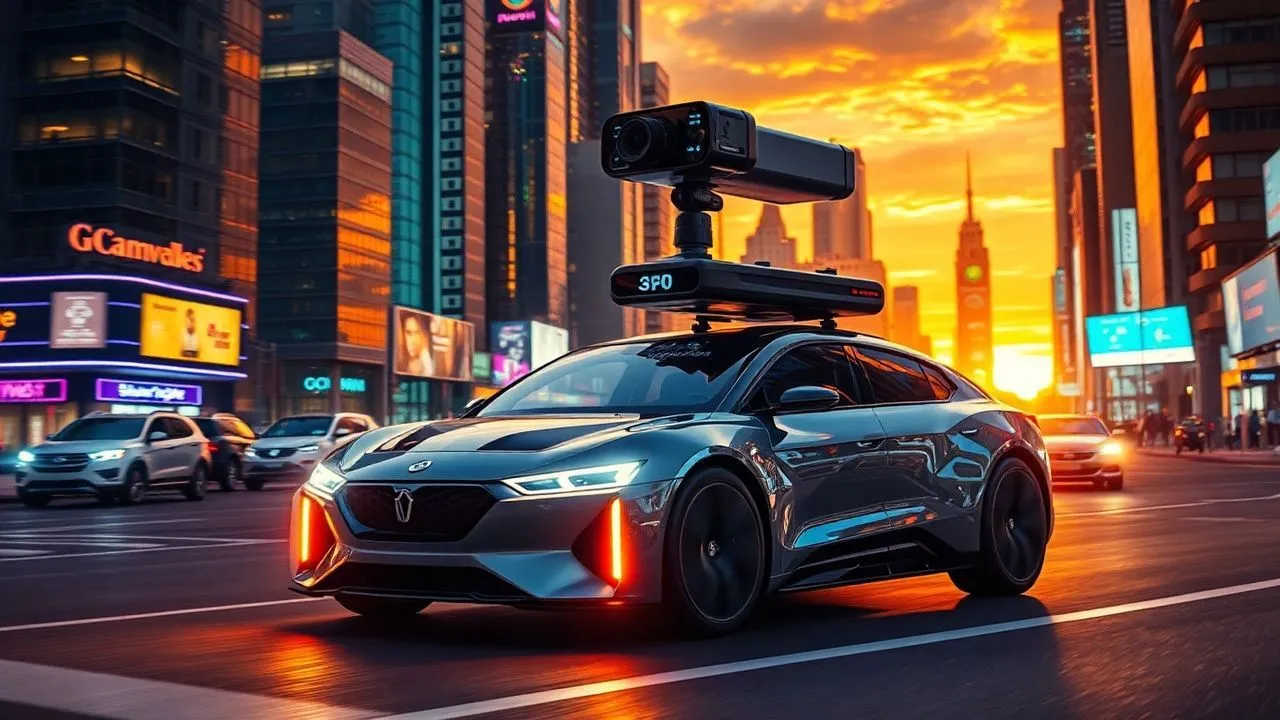
To get these panoramic footage, Google uses a heterogeneous fleet of vehicles equipped with high resolution multi-camera systems. If at first it was only cars to travel the main arteries, today the system has diversified enormously to reach otherwise inaccessible places. Google Cars are equipped with LiDAR sensors to measure distance from objects and build accurate 3D models of the surrounding environment, thus facilitating not only navigation but also the development of autonomous driving technologies. Over the years, the integration between satellite data and ground images has allowed Street View to become the pillar on which the entire experience of Google Maps rests, making obsolete the old orientation methods based exclusively on static two-dimensional maps and without realistic visual references.
Special vehicles: from Google Cars to Trekker
Not all areas of the world are reachable by a sedan or a traditional SUV, which is why Google has developed a series of “special” vehicles that have allowed to map mountain trails, pedestrian islands and even the interior of large museums or historical monuments. The Google Bikes, or Trikes, were fundamental to document European historical centers, where automotive traffic is often interrupted. Thanks to these hi-tech bikes, you can admire the beauty of the streets of Rome or the squares of Florence with the same ease with which you see an American highway. This flexibility in data acquisition has made virtual exploration a truly global experience, capable of breaking down physical and geographical barriers for millions of users connected every day.
Another crucial innovation is Trekker, a backpack equipped with the same photo system as cars, but wearable by walking operators. Thanks to the Trekker, Street View managed to climb the walls of the Grand Canyon, walk along the paths of the Machu Picchu and document the Amazon forest. In 2026, these devices became even lighter and more efficient, integrating long-lasting batteries and real-time satellite connections for instant data loading on Google servers. The use of these tools is not limited only to Mountain View staff: through collaborative programs, environmental associations and local governments can contribute to the mapping of protected areas, ensuring increasingly capillary and updated coverage of our planet in continuous transformation.
How to Use Street View from Computer (Web and Desktop)
Diving navigation via Google Maps
The use of Google Street View from PC remains the preferred choice for those who need a broad and detailed vision, ideal for planning trips or analyzing urban areas. To activate the function, the first step is to connect to the official website of Google Maps through a modern browser. Once you locate the area of interest through the search bar, you will notice in the lower right corner a small orange omino, universally known as Pegman. By dragging Pegman on the map, the roads covered by the service will illuminate a vibrant blue; by releasing the icon on one of these road traits, the interface will instantly pass from the view from above to the first person perspective, immersing yourself completely in the chosen environment with an unparalleled fluidity.
Once you enter the Street View mode, the navigation takes place intuitively through the use of the mouse or keyboard. Double-clicking on a far point of the road, the camera will “should” towards that position, while dragging the cursor you can rotate the 360-degree view to observe palaces, signs or monuments behind you. It is important to stress that, in 2026, the quality of the textures and the loading of the data were optimized to exploit the ultra-rapid connections, making the experience free of snaps or annoying waiting times. For the most experienced, the use of directional arrows on the keyboard allows a smoother movement, simulating a real urban walk that can be interrupted or resumed at any time by clicking on the X at the top right to return to the classic map.
Google Earth Pro and Advanced Exploration
For those looking for an even more professional experience or dedicated to the study of the territory, Google Earth Pro is the ideal solution. Although there is a highly performing web version, the downloadable application for Windows and macOS offers space and chronological analysis tools not present in the standard version of Maps. After installing the software, the user can type an address in the search bar and let the camera “deleted” to the destination. Here too, the Street View feature is activated by dragging the Pegman icon onto the blue lines that appear on the screen. The substantial difference lies in Google Earth's ability to integrate precise topographic data and 3D models of buildings, creating a perfect fusion between the real photography of Street View and the polygonal reconstruction of the landscape.
One of the main advantages of Google Earth Pro is the “Cronology” function, which allows you to see how a certain area has changed over the years. Through a time slider, you can compare the current Street View images with those captured ten or fifteen years earlier, observing the evolution of the yards, the birth of new neighborhoods or the change of vegetation. This tool has become indispensable for urbanists, historians and journalists who need visual evidence about climate change or the expansion of the metropolis. In addition, the Pro version allows you to export high resolution images and create custom video tours, ideal for school or business presentations, consolidating the role of Street View as a first-order educational and professional resource.
- Access Google Maps through your favorite browser on PC or Mac.
- Search a specific location using the search bar on the top left.
- Locate Pegman orange icon in the lower right corner of the screen.
- Drag Pegman on the map and drop it over one of the streets highlighted in blue.
- Use keyboard arrows or mouse to move and rotate the 360-degree view.
- Use the zoom with the mouse wheel to observe far details or road plates.
Use of Street View on smartphones and tablets
The native integration in the Google Maps app
Since the spring of 2023, Google has grouped all the visual exploration capabilities within its main applications, simplifying life to mobile users. Today, in 2026, to use Street View on smartphone, no longer need to download separate apps: all you need is the Google Maps application, available free of charge on Android and iOS. Once you open the app and search for a place, you just need to make a prolonged “tap” on the map to make a red sign. On the lower left will appear a small photo thumbnail of the selected area; touching that miniature, you will be projected immediately in the full-screen street view, optimized for use with the touchscreen and equipped with a clean and minimal interface.
Navigation on mobile devices is extremely natural: just scroll the finger on the screen to rotate the view and make a double touch on the road to advance. A particularly useful feature recently introduced is the “Split Screen” mode, which allows you to simultaneously see the road map in the lower half of the screen and the view Street View in the upper one. This greatly helps the orientation, allowing you to understand exactly what direction you are looking at compared to the cardinal points. Moreover, thanks to the integration with the smartphone compass, you can activate the gyroscopic mode: physically moving the phone in space, the view of Street View will rotate accordingly, giving you an extremely immersive and realistic augmentation experience.
Google Earth for mobile devices: a 3D world
If you want a better experience of discovering and “geographical dissemination”, the Google Earth app for smartphones and tablets is the perfect tool to support Maps. While Maps is focused on navigation and commercial services, Earth is a real interactive digital atlas. To activate Street View here, the procedure is similar: after finding your destination, press the Pegman omino icon present in the interface. The roads will become blue and you can touch the one you want to land on the ground. Google Earth’s mobile app excels in rendering natural details and allows you to move from space to road with smooth animations that perfectly transmit the scale of terrestrial distances.
A key aspect of the Earth app in 2026 is the “Voyager” section, which offers guided tours through the images of Street View. These paths are curated by experts and scientists, and allow you to explore remote places such as scientific bases in Antarctica or coral reefs (thanks to special underwater cameras). The versatility of the app also makes it ideal for educational use in class, where students and teachers can travel virtually across continents without ever leaving the classroom. The stability of the application has been guaranteed for years of code optimization, making it available also on medium-range devices, provided they have a stable internet connection to download high-definition photo data.
- Open the Google Maps app on your Android device or iPhone updated at 2026.
- Look for a specific city or address or hold your finger on the map.
- Tap the preview image that appears in the bottom left corner of the screen.
- Use touch gestures to rotate the visual (swipe) or zoom (pinch-to-zoom).
- Double tap on the blue arrows on the ground to cover the road virtually.
- To exit, tap the "back" arrow located on the top left to return to the map.
Privacy and security: how Google protects users
Automatic observance and protection of personal data
One of the most debated themes about how does Street View work is without doubt the management of privacy. Google has invested huge resources in the development of systems based on artificial intelligence and neural networks to automatically identify and obscure sensitive elements within the photographs. Whenever a Google Car captures a sequence of images, servers immediately process data to apply an irreversible blur on all human faces and legible car plates. This process takes place before images are made public on the platform, ensuring that the identity of passersby and vehicle owners remains protected in compliance with international regulations on the protection of personal data, such as the European GDPR.
Despite automation, the system is not perfect, and this is where collaboration with users comes into play. Google provides a very simple signaling tool to use: if you notice that your home, your face or your car have not been properly obscured, you can request manual intervention. By browsing the Street View display indicted, just click on the link “Sign a problem” (usually located in a corner of the screen). A module will open where you can specify the area to hide. Once the request is sent, Google's technical team will verify the legitimacy of the application and apply a permanent blur, which will remain valid also for future updates of the shooting in that specific area, offering direct control over its public image.
Request removal of sensitive content
In addition to faces and plates, there are situations where users may want the complete obscurity of their home or other private items for reasons of security or personal confidentiality. Google welcomes these requests, especially when they concern their main residence. It is important to know that once a property has been blurred on user’s request, this modification is definitive and cannot be cancelled easily. This level of protection has become standard in 2026, with response times to reports that have drastically reduced thanks to the implementation of faster verification systems. The transparency of these procedures is essential to maintain public confidence in such a pervasive and powerful tool.
Security is not only about physical people, but also critical infrastructure. For national security reasons, many sensitive areas such as military bases, government research centers or power stations are automatically obscured or displayed with deliberately low resolution. Google actively cooperates with local authorities to identify these areas and prevent Street View from being used for illegal purposes or for planning criminal activities. This balance between freedom of information, utility and protection of collective security is the result of years of negotiations and technological refinements that make Street View a safe and respectful tool of the laws in force in each country where it operates officially.
"The mapping of the world is not only a question of geographical coordinates, but of visual representation of our society. Protecting privacy in this context means balancing innovation with the fundamental right to anonymity. "
Curiosity and creative uses of Street View in 2026
Virtual tourism and travel planning
Today, in 2026, the use of Street View for Tourism became a standard practice before each departure. Thanks to the fidelity of the images, you can make a “virtual location” of the chosen hotel to check whether the area is actually quiet or if there are essential services such as pharmacies and supermarkets nearby. Many travellers use the service to study pedestrian routes from the airport to the train station, reducing the typical stress of arrival in an unknown city. This prior exploration capacity has radically changed the travel industry, pushing accommodation facilities to more care for its exterior appearance and surrounding urban decoration, knowing that it is constantly under the watchful eye of Google’s cameras.
Ma Street View not only serves practical commissions; it is also a portal to wonder. Thanks to collaborations with international tourism agencies, you can explore mythical places such as Australian coral reefs or the interior of the International Space Station (ISS). These “special editions” of Street View use specific shooting technologies, such as underwater cameras or GPS-free positioning systems for indoor environments. In 2026, many of these experiences are optimized for virtual reality viewers, allowing a total immersion that simulates physical presence in places that most people could never visit live, making culture and beauty of nature accessible to anyone with an internet connection.
Professional utilities: real estate and logistics
The real estate sector has benefited enormously from the features of Google Street View. Agents use 360-degree panoramics to show potential buyers not only the interior of buildings (often mapped with compatible technologies), but also the entire surrounding neighborhood. This allows you to filter out real visits, bringing only customers really interested and aware of the urban context. The logistics and transport sector also uses this data daily: heavy-duty drivers use Street View to verify the width of the roads, the presence of low bridges or stop prohibitions, optimizing delivery times and reducing the risk of road accidents due to poor knowledge of the territory.
Another field of application in strong growth in 2026 is that of conservation of cultural heritage. Architects and restorers use high resolution images to monitor the state of preservation of historical facades over time. By comparing the data acquired in different years, it is possible to identify cracks, plaster detachments or the occurrence of degradation related to air pollution. In this sense, Street View acts as a visual historical archive of humanity, documenting how our cities resist the passing of time. Even video game developers draw on this huge photographic database to create hyper-realistic digital settings based on the geometry and real aesthetics of cities mapped by Google.
- Explore the seabeds thanks to underwater shooting with special cameras.
- Visit the interior of famous museums such as the Louvre or the British Museum through the "Indoor" tours.
- Plan hiking routes by verifying the type of terrain and slope through the images of Trekker.
- Study historical and modern architecture without having to physically travel between the various continents.
- Check availability of parking spaces or the presence of architectural barriers in specific areas.
Frequently Asked Questions about Google Street View (FAQ)
How can I see the photos of Street View from past years?
To consult the historical archive of images on PC, enter the Street View mode in Google Maps and look for the small gray pane on the top left indicating the current image date. By clicking on that link, you will open a time cursor that will allow you to select the dates of the previous photographic acquisitions available for that area. This function is incredibly fascinating to observe the urban and social changes of a place over almost twenty years, from the birth of new skyscrapers to the renovation of old popular neighborhoods.
Why are some areas not covered by Street View?
The lack of coverage in some areas can depend on different technical or regulatory factors. Many private roads are not traveled by Google Cars to respect the property, while entire countries may have restrictive privacy laws that prevent the publication of images (as happens in some countries of Asia or Africa). Moreover, adverse weather conditions or war zones and political instability make it impossible to pass mapping vehicles. Google constantly updates its coverage, but there are still vast rural areas or impervious ones waiting to be documented.
Can I personally contribute with my 360-degree photos?
Of course! Google encourages users to contribute to world mapping through the “Local Guides” program. Using a smartphone with a 360-degree camera or simply following the instructions of the Google Maps app to take a series of spherical photos, you can upload your images to the platform. Once verified and approved, your photos will become an integral part of the Maps ecosystem, helping other users discover hidden corners, the interior of shops or paths not yet reached by Google’s official means. It is an excellent way to value its territory and participate in a global collective project.
Street View consumes many internet connection data?
Yes, Street View is one of the most demanding Google services in terms of data consumption, since it has to download numerous high resolution images to compose 360-degree view. If you are using the mobile network service (4G, 5G or 6G in 2026), it is advisable to monitor consumption or prefer a Wi-Fi connection, especially if you want to perform long virtual browsing sessions. Google has implemented very efficient compression algorithms, but the visual and immersive nature of the service still requires a constant flow of information to maintain image quality and movement fluidity during exploration.
Can I use Street View offline?
At the moment, in 2026, the Street View mode requires an active Internet connection to upload spherical images, since the database is too vast to be stored locally on the device. While you can download portions of 2D maps for offline navigation (the so-called “Offline Maps”), this feature does not include panoramic photos of Street View. If you plan to go to an area with poor network coverage, the advice is to study the route and view the images of Street View in advance while you are still connected to a stable network, so as to visually store the main reference points.
In conclusion, Google Street View remains in 2026 one of the most extraordinary and useful technological tools ever created, capable of connecting people and places in a unique and immediate way. Whether you use it for professional, educational or purely ludic purposes, its ability to show the real world through a screen continues to amaze for precision and depth. Remember to explore the different platforms, from Maps to Earth, to find the display mode best suited to your needs and do not hesitate to report any privacy issues to help make the service increasingly safe. You just have to start your next virtual journey: Earth has no boundaries if you know how to look at it. Discover new horizons now and experience the power of 360-degree vision!


