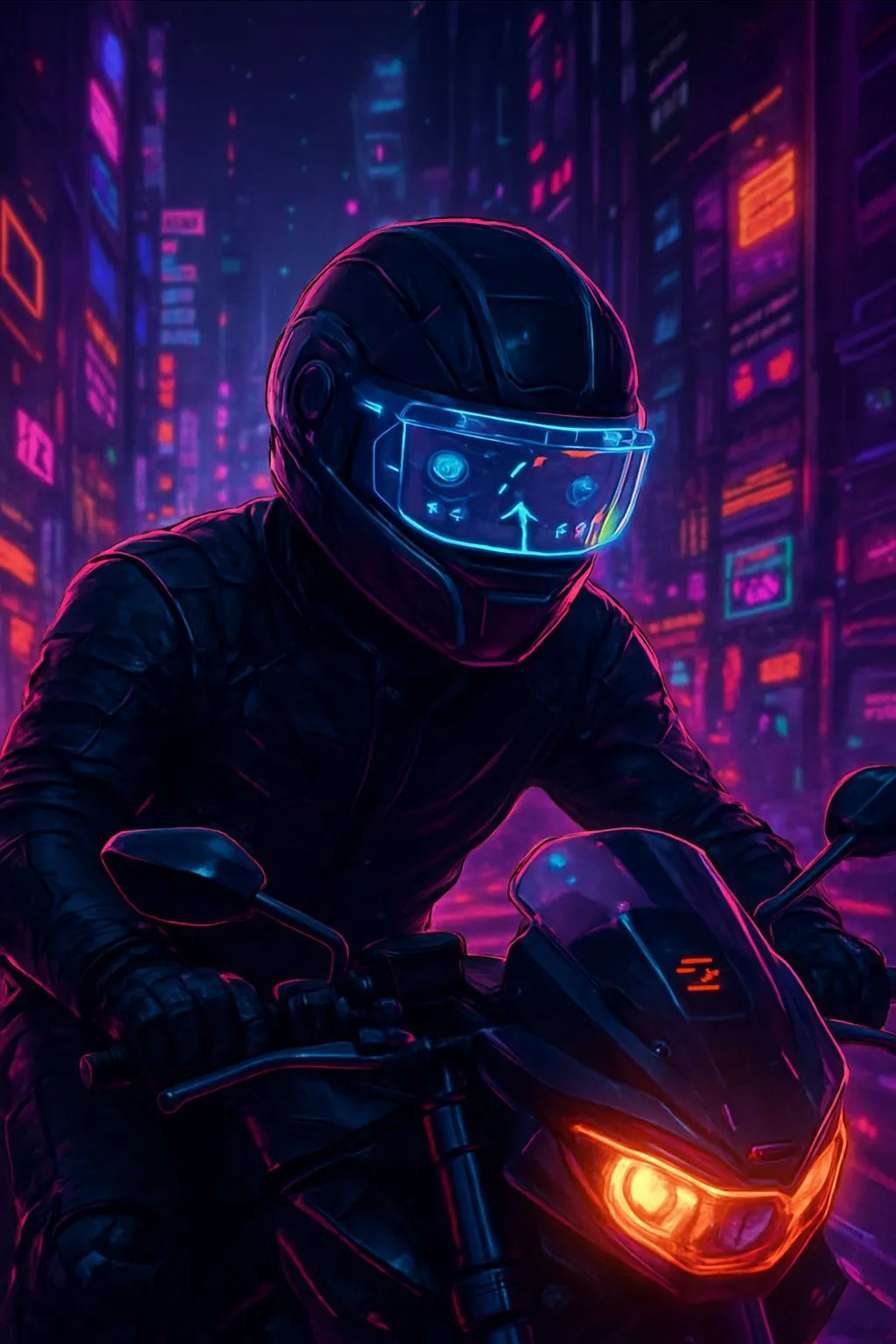
In the ever-changing landscape of technology applied to mobility, some innovations promise to radically redefine our interaction with the vehicle and the surrounding environment. The announcement by BMW Motorrad of its ConnectedRide Smartglasses represents a significant step in this direction, projecting essential data directly into the visual field of the biker. These smart glasses, which operate as a sophisticated head-up display (HUD) for the two wheels, aim to improve safety and driving awareness, providing real-time information such as GPS navigation and speed. Their ability to connect to the smartphone via Bluetooth and a dedicated app, along with the customization of the settings via a multi-controller mounted on the handlebar, makes them an extremely versatile tool. With a comfortable fit for various helmets and facial shapes, a battery life up to ten hours, UVA/ lenses Interchangeable UVB and the availability of an RX adaptor for those wearing eyeglasses, ConnectedRide Smartglasses come as a complete solution. The price of 690 euros places them as an investment not negligible, but the potential increase in safety and a smoother and distraction-free navigation raise questions about the future of driving and the role of augmented reality. This article aims to explore in depth the implications of such a technology, analyzing how augmented reality is transforming the driving experience, what tangible benefits it offers in terms of safety, how it fits into the ecosystem of the connected vehicle, what challenges it faces in terms of ergonomics and adoption, and what future scenarios trust us for motorcyclists and mobility in general. The introduction of devices like BMW smartglasses is not only a technological advance, but a real reworking of the way we perceive and interact with the world while moving, laying the foundations for a more informed, safe and ultimately more enjoyable guide.
The Visual Revolution: How Increased Reality Transforms Guide Experience
Augmented reality (AR) is progressively coming out of research laboratories to enter everyday life, and the automotive sector, in particular the motorcycle industry, is fully grasping its transformative potential. Smartglass technology like BMW ConnectedRide is not a simple evolution of traditional head-up displays, but a real visual revolution. While a HUD projects information about a windscreen or a fixed surface, limiting their integration with the surrounding environment, the AR smartglasss are designed to overlay digital data to the real world perceived directly from the eyes of the biker. This means that navigation indications do not appear as a generic overlay, but can be projected “literally on the road”, almost as if they were part of the path itself. Imagine following a bright arrow that adapts to the curves of the road or to see the current speed floating naturally in your field of view, without having to divert your gaze from traffic or landscape. This semantic integration of data not only makes the information more immediate and intuitive, but also helps reduce cognitive load, allowing the rider to process data effortlessly. The AR history has its roots in military and industrial applications, where the need to display complex data in critical operating contexts has led to the development of advanced interfaces. Today, thanks to the miniaturization of components, the advancement of optics and the increasing computing power of smartphones, the AR has become accessible to the consumer. In the motorcycling context, the application of the AR is not limited to navigation or speed; it could extend to indications on the speed limit of the current road, alerts on imminent dangers (such as a vehicle approaching from a blind angle), or even information on the weather conditions foreseen along the path. The ability to customize settings via an app and a handlebar controller, as BMW offered, is crucial to adapt the experience to individual preferences and different driving situations. The technology includes micro-LED or OLED-based displays, projected on transparent lenses, often through waveguide techniques or reflection. Integrated sensors, such as gyroscopes and accelerometers, allow glasses to understand the orientation of the rider’s head, ensuring that the displayed information is always relevant and stable, regardless of movements. This accurate spatial overlap is what distinguishes the true AR from simple transparent displays. The potential is immense: a dynamic view that adapts to the light conditions, which filters the unnecessary information and which presents only what is essential at a given moment, makes the driving experience not only safer but also more immersive and engaging. It is the beginning of an era in which our vision of the real world will be enriched in real time by an intelligent layer of data, radically transforming the way we interact with the road and our means of transport.
Security at First Place: Smartglass and Distraction Reduction
The safety of motorcyclists is a constant concern, and road accidents statistics often highlight the vulnerability of two-wheel drivers compared to other road users. Among the main causes of motorcycle accidents, insufficient distraction and situational awareness play a leading role. Watching the speedometer, consult a smartphone mounted on the handlebar or divert your gaze to understand a direction may seem trivial gestures, but in motion, where speed and balance require a constant concentration, each fraction of a second distraction can have serious consequences. This is where smartglass innovation as BMW ConnectedRide is crucial. By designing the essential information – such as speed, navigation indications and potential alerts – directly in the visual field of the biker, these devices eliminate the need to lower your gaze, reorient your head or manipulate external devices. This approach ensures that the driver's eyes are always fixed on the road and on the surrounding traffic, maintaining a situational awareness optimal. The reduction of the time when the eyes are far from the road is a key factor to prevent collisions and react promptly to unexpected dangers. We think, for example, how the projected navigation indications can drive the biker through a complex intersection without having to guess the turn or hesitate, thus reducing the risk of sudden or dangerous maneuvers. Moreover, the ability to show real-time alerts, perhaps integrated with advanced driving assistance systems (ADAS) for motorcycles, such as blind angle monitoring or collision alert, could prevent accidents in critical situations. Imagine a system that, by detecting a vehicle that approaches quickly from behind, projects a visual alert discreetly in your field of view, or that signals an unforeseen obstacle on the road with a graphic symbol contextualized. This direct and non-invasive integration of information helps maintain the rider “in the flow” of driving, reducing stress and mental fatigue. While traditional display on the dashboard or mounted smartphones can compete for the rider’s attention, the AR smartglass presents information in a complementary way to the real environment, not in replacement. The ability to customize the intensity and type of information displayed is essential to avoid the risk of information overload, another form of distraction. The glasses are designed to be comfortable and stable inside a helmet, ensuring that their presence does not become itself a source of discomfort or physical distraction. Ultimately, the main objective of this technology is to elevate active safety, transforming the perception of information from a research and interpretation activity to an almost instinctive assimilation, allowing the rider to devote 100% of his attention to driving.
Beyond the Visible: Smartglass Integration in the Connected Vehicle Ecosystem
The introduction of smartglass for motorcyclists such as BMW ConnectedRide should not be seen as an isolated solution, but as a fundamental tile within a wider and interconnected ecosystem: that of connected vehicle and the smart mobility. The real power of these devices emerges from their ability to communicate not only with the biker’s smartphone, but also potentially with the vehicle itself and with the surrounding infrastructure. Bluetooth pairing with your smartphone and using a dedicated app, such as BMW, is the starting point, allowing you to view navigation data, speed and other information from your phone. But the possibilities go far beyond. Imagine the smartglasses that receive data directly from the motorcycle sensors, not only speed, but also bend angle, tire pressure or ABS activation, projecting alerts or real-time tips to improve performance or safety. This connectivity expands further in the context of V2V (Vehicle-to-Vehicle) and V2I (Vehicle-to-Infrastructure). Through these technologies, vehicles can exchange information between them or with elements of the road infrastructure ( traffic lights, signals, weather stations). Smartglasses could act as a visual interface for these systems, showing alerts on a vehicle stationary behind a curve, a traffic light that is about to become red, or a stretch of frozen road later. 5G technology, with its low latency and high bandwidth, is intended to play a crucial role in this scenario, enabling ultra-fast and reliable communications necessary for the transmission of critical data in real time. In the near future, we could see smartglass integrate with advanced telematic systems that monitor driving behaviour and offer personalized feedback to improve style, or that collect anonymous data to optimize traffic flow at the urban level. Connectivity would also allow over-the-air software updates, constantly improving the functionality and performance of devices. The connected vehicle ecosystem also includes integration with emergency and rescue services: in case of an accident, smartglasses could help locate the biker or transmit vital information. The idea is to create a smart network where each component – the bike, the smartphone, the smartglass and the environment – works in synergy for a more secure, efficient and informed mobility. This results in a driving experience that is no longer just a matter of mechanics and skills, but a dynamic interaction with a constantly updated digital and physical environment. The design of these systems requires careful consideration of data privacy and cybersecurity, since the amount of information exchanged is considerable and sensitive. However, the benefits in terms of accident prevention, route optimization and overall improvement of driving experience make smartglass integration an inevitable and desirable step towards the future of intelligent mobility.
Ergonomics, Design and Adoption: Smart Intake Challenges
Technological innovation, however brilliant, must always meet with the reality of user experience and the challenges related to wide-ranging adoption. Smartglasses for bikers, while offering a huge potential, are not exempt from these considerations. Theergonomics is perhaps the first and most critical factor. A wearable device, especially in a dynamic context like driving a motorcycle, must be not only functional, but also extremely comfortable and not invasive. The BMW ConnectedRide Smartglasses are available in two sizes (average and large) and include interchangeable nose supports for optimal fit, crucial factors to adapt to different facial shapes and ensure that there are no annoying pressure points during long stretches. However, the biggest challenge concerns the integration with helmets: a motorcycle helmet is already a small environment and each additional element must be carefully balanced not to compromise comfort, ventilation or, worse, the safety of the helmet itself. The weight of the glasses, however minimized, must be imperceptible not to cause fatigue on the nose or on the ears. Equally important is the management of lenses. The package includes two sets of UVA/UVB lenses, one coloured and the other transparent to 85%, a basic fit to fit different light conditions. The RX adaptor for eyeglass wearers is a non-significant detail, which expands product accessibility to a larger slice of user. However, lens interchangeability and medical prescription management must be as simple and intuitive as possible. The battery life, estimated in about 10 hours for the BMW smartglass, is a good starting point, but it may not be enough for very long trips without access to refills. Battery anxiety, already present for smartphones and other devices, could be an obstacle for motorcyclists who like to explore without interruption. Also robustness and weather resistance are vital: the ability to operate from -10 to +50 °C is impressive and necessary for a device exposed to elements. The cost 690 euros, although justified by advanced technology, can be a significant deterrent for mass adoption. Many bikers are already willing to invest in high quality helmets and other accessories, but adding an extra device with this price requires a clear perceived added value. Finally, there are psychological and social challenges. Many may be skeptical about the idea of having information projected in their field of view, fearing excessive information load or potential distraction rather than greater security. Road regulations may also require updates to contemplate the use of such devices. Overcoming these barriers requires not only excellent engineering, but also awareness campaigns and in-depth education on benefits and proper use. The mass adoption of intelligent wearers in critical sectors such as the guide will depend on the ability of manufacturers to balance innovation, functionality, comfort, aesthetics and an affordable price, all communicating clearly the advantages in terms of safety and improvement of experience.
The Future on Two Wheels: AR Technology Perspectives and Evolutions for Motorcyclists
Looking beyond the current models, the future of augmented reality technology for bikers is expected to be rich in exciting and potentially transformative developments. The BMW ConnectedRide Smartglasses are a pioneer, but they represent only the beginning of what is possible. One of the most anticipated evolutions isdirect integration of the AR into helmets. Instead of separate glasses to wear under the helmet, you could see helmets with smart visors that directly incorporate AR technology, offering an even wider field of view and seamless integration with the design and protection of the helmet. This would eliminate the problems of fit and comfort related to the use of separate glasses and could open the way to advanced features such as dynamic transparent displays that automatically adapt to light conditions, filtering glare or improving visibility in situations of poor lighting. The capabilities of the AR could expand well beyond the simple navigation and speed display. Imagine smartglass projecting dynamic overlays that highlight dangers on the road, such as oil stains, sudden bumps or pedestrians, or that signal the presence of vehicles in the blind corners with contextualized visual indicators. They could also offer guide tips in real time, as indications on the optimal bending angle in a curve, ideal braking points or even a virtual ‘race line’ for track enthusiasts, of course with an option to disable these features for a more relaxed driving. The progress of theartificial intelligence (AI) it will be crucial. The smartglasses of the future will not be limited to displaying data, but will interpret and filter them according to context, traffic conditions, biker preferences and even its level of experience. AI could analyze driving behaviour and environmental conditions to present only the most relevant information, avoiding cognitive overload. This could include a custom alert system that learns from the biker's driving patterns. Another area of development will beuser interaction. In addition to the multi-controllers on the handlebar, we could see an evolution of vocal commands, increasingly sophisticated and able to understand the natural language, and the introduction of gesture control, allowing the rider to interact with the system through minimal movements of the fingers or the hand, without diverting the attention from the guide. The aptic feedback integrated in gloves or helmet could add an additional level of information, such as vibrations to signal an imminent danger or direction of turning. We cannot also exclude a dimension of sociality and entertainment. Although safety remains the top priority, in less challenging driving scenarios, smartglasses could facilitate communication with other bikers, share paths or even offer increased gaming experiences, such as virtual explorations of monuments or points of interest along the way. The challenge will be to balance these additional features with the need to keep the biker focused on the road. In summary, the future of AR technology for bikers is a horizon of possibilities in which the bike becomes an intelligent and interactive platform, able to provide an unprecedented driving experience in terms of safety, information and involvement.
The Guide of Tomorrow: A Bridge between Real and Digital
The introduction of devices like the BMW ConnectedRide Smartglasses marks a turning point not only for the world of motorcycling, but for the entire concept of personal mobility. We explored how augmented reality is starting to redefine the driving experience, transforming it into a more informed and conscious interaction with the surrounding environment. The ability to project vital data directly into the motorcyclist's visual field, such as navigation indications or speed, without requiring to divert the look from the road, represents a significant step forward in reducing distractions, which are one of the main causes of accidents on two wheels. This increase in active safety is perhaps the most immediate and tangible benefit of this technology. Beyond pure functionality, smartglasses are positioned as a crucial bridge in the integration of the biker into the ecosystem of the connected vehicle. They are no longer just an isolated device, but an intuitive interface for a wider system that includes smartphones, motorcycle sensors and, in perspective, road infrastructure and other vehicles (V2V and V2I). This connectivity opens up future scenarios where information about imminent dangers, traffic conditions or emergency services can be communicated to the biker in a timely and non-invasive way, further raising the level of situational awareness. However, the path towards the widespread adoption of these technologies is not without obstacles. The challenges related to ergonomics, battery life, cost and acceptance by the public are real and require continuous commitment from manufacturers to perfect design and functionality. The need to ensure that smartglasses are comfortable, reliable and do not generate information overload is essential for their successful integration into the everyday life of bikers. Looking at the future, we can anticipate even more advanced developments, such as the direct integration of the AR into the helmet visors, the sophisticated use of artificial intelligence to filter and contextualize information, and the introduction of new user interfaces such as management commands. These developments promise to make the driving experience not only safer and smoother, but also more personalized and immersive. Ultimately, the vision of a tomorrow’s guide is that of a symbiosis between man and machine, enriched by an intelligent layer of digital information. The BMW ConnectedRide Smartglasses are a pioneering example of how technology can not only improve efficiency and comfort, but above all save lives, making every trip on the bike a safer, more connected experience and ultimately more rewarding. The age in which our perception of the world has constantly increased from intelligent data has just begun, and for motorcyclists, the future on two wheels is already visible.


