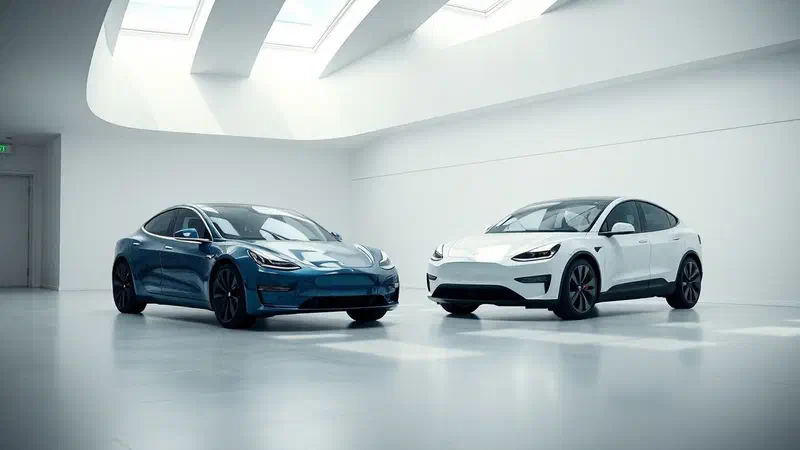
The automotive sector is experiencing an epochal transformation*, driven by the acceleration of electric mobility and the ambitious path towards autonomous driving. at the heart of this revolution, a name resounds more than others: tesla. the company of elon musk, pioneer and icon of innovation, has redefined the concept of vehicle, bringing not only electric cars on the market, but also deeply connected and intelligent. however, as often happens with disruptive technologies that run faster than standards and expectations, this rapid evolution has raised crucial questions, particularly regarding safety**** and responsibility. the recent calls of hundreds of thousands of model 3 and model s, due to problems ranging from mechanical defects (such as trunk and front hood doors) to software vulnerabilities (connected to the rear camera and the ability to reproduce multimedia content while driving), highlighted the intrinsic tension between the audacity of innovation and the impelling need to ensure consumer safety. these events are not isolated but larger mosaic tiles involving investigations of the national highway traffic safety administration (nhtsa)** on the autopilot, faulty touchscreen screens and the constant challenge of balancing futuristic performance with established safety standards. the analysis of these episodes is not only a critical examination of a single manufacturer, but a window on the challenges that the entire automotive industry faces while heading towards an electrified, connected and potentially autonomous future. this article aims to deepen these dynamics, exploring the role of tesla as a change factor, the response of regulatory authorities, the evolution of the electric vehicle market and the future prospects of a rapidly changing industry, underlining how consumer confidence and the robustness of regulations are as fundamental as technological innovation itself.
Tesla under the lens: between disruptive innovation and security and regulation challenges #
Tesla embodies the paradigma of disruptive innovation: a company that dared to challenge the conventions of an ultra-centennial sector, introducing a bold vision of mobility that accelerated the transition to electric. since its foundation, tesla has not been limited to producing cars, but has created a technological ecosystem that integrates batteries, software, artificial intelligence and a proprietary charging network, distinguishing itself clearly from traditional manufacturers. this philosophy of “moving fast and breaking things” allowed the company to achieve extraordinary goals, but also generated a series of complex challenges, especially in terms of safety and regulatory compliance. the references mentioned, which involved almost half a million vehicles between model 3 and model s, are a compelling example of these clutches. for model 3, the locking fault of the trunk has potentially compromised the cabling of the rear camera, a vital component for safety in reverse. on the model s, a manufacturing defect in the front hood (frunk) raised significant concerns, with the possibility that it opens suddenly during driving, obstructing the visual and creating a serious risk. these are not the only criticalities faced by tesla: previous nhtsa investigations have concerned the possibility to play video games on the central display while the vehicle was on the move – a blatantly dangerous distraction that led to a rapid software update to remove the functionality. other investigations have affected touchscreen screens, vital to control almost all vehicle functions, and the controversial driving assistance system autopilot*, involved in several accidents. these episodes not only stain the brand’s reputation, but question the company’s development and testing methodology, suggesting that it pursues innovation and rapid market placement can sometimes sacrifice the rigorous validation phase typical of the traditional automotive industry. nhtsa, the u.s. road safety agency, has demonstrated a growing vigilance towards tesla, reflecting the complexity of regular emerging technologies that do not easily fall into existing schemes. the perception of a company that sometimes seems to test the limits of security in the name of technological progress has fueled a heated debate among enthusiastic supporters of innovation and those who call for greater caution and adherence to established standards. this complex scenario highlights how for a company like tesla, the ability to innovate must necessarily be accompanied by an equally robust commitment to safety and regulatory compliance, fundamental aspects to maintain consumer confidence and ensure long-term sustainable growth in such a critical sector as transport.
The evolution of incentives and the boom of the market ev: a global overview #
The rapid success of electric vehicles (ev) is not a spontaneous phenomenon, but the result of a strategic combination* of technological innovation, increasing environmental awareness and, crucially, government support policies through a well-structured system of incentives. the incentives for electric cars, which can vary significantly from country to country and even at regional level, play a fundamental role in filling the initial cost gap between an electric vehicle and a traditional internal combustion vehicle, making the ev option economically more accessible and attractive to a wider audience. these bonuses can take different forms: direct discounts on purchase, tax credits, exemptions from tolls or circulation fees, discounts for the installation of domestic charging columns, or even access to preferential lanes or restricted traffic zones. the article of origin mentioned bonuses of up to 11,000 euros, a significant figure showing the commitment of some governments to push the electrification of the car park. the driver motor behind these incentives is twofold: on the one hand, the environmental imperative to reduce greenhouse gas emissions and air pollution in cities; on the other, the desire to stimulate industrial innovation and create new jobs in the green economy sector. countries such as norway, china and several european states have pioneered aggressive policies, leading to extremely high ev adoption rates. china, in particular, has become the world’s largest electric vehicle market** through massive subsidies and capillary infrastructure planning. in the united states, federal and state tax credits influenced purchase decisions, as evidenced by increased tesla sales near the expiry of some of these benefits. however, the management of incentives is not without challenges. their effectiveness can be influenced by factors such as political stability, fund availability, eligibility criteria (e.g. isee income limits or vehicle price) and the ability of charging infrastructure to keep pace with vehicle increase. moreover, there is a continuous debate on the duration and progressive elimination of incentives as the mature market and economies of scale make ev more competitive even without direct subsidies. the future of electric mobility will largely depend on the ability of governments to modulate these instruments intelligently, accompanying the market towards a self-sustainment phase and ensuring that the transition is fair and accessible to all segments of the population, without overly weighing on public finances or creating unwanted distortions in the global automotive market.
Electric performance at the limit: the porsche taycan case and the challenge to thermal motors #
The idea that electric vehicles are intrinsically less exciting in terms of performance than their internal combustion counterparts is a mito that is rapidly fading. the article of origin mentioned the test of the porsche taycan turbo gt*, described as “the most powerful porsche ever (and is electric)”, with 1.108 cv. this is not an insignificant detail; it is the clear demonstration of how the electric is not only reaching, but in many respects exceeding, the capabilities of the most blasoned thermal engines in the field of extreme performance. the taycan turbo gt is an emblem of this revolution: with a burning acceleration and an exceptional driving dynamic, redefines the very concept of supersport. the superiority of the electrician in terms of immediate couple is its intrinsic advantage*. unlike blast engines, which must achieve specific systems to deliver maximum power and torque, electric motors provide their maximum force instantly. this translates into lightning fastenings from stop, able to paste to the seat and beat many gasoline supercars. the taycan, with its 800 volt architecture, not only boasts very high powers, but also excellently manages rapid charging and heat dissipation, critical aspects to support performance on track. the challenge for engineers is no longer just to generate power, but also to manage the additional weight of the batteries, optimize the aerodynamics for autonomy and cooling, and integrate extremely sophisticated thermal management systems to avoid overheating of battery packs and engines during intensive use. marches like porsche, but also rimac, lucid and tesla itself (with variants like the model s plaid), are pushing the limits of electrical engineering, demonstrating that zero-emission mobility does not mean compromises on fun or adrenaline. these vehicles are not only fast in straight; thanks to low baricentre (by means of batteries on the platform), optimal weight distributions and advanced torque vectoring systems (which can distribute the power to each wheel independently), they offer a reasonableness and amazing driving accuracy. their quietness and absence of vibration add a new dimension to the sports driving experience, allowing the rider to fully focus on the road and sensations. this high-performance ev segment not only attracts the attention of enthusiasts, but also serves as a laboratory for the development of technologies that one day could filter towards more accessible models, further democratizing electrical engineering excellence. the taycan turbo gt is much more than just a fast car; it is a ** symbol of the electric** transformative capacity, which continues to challenge and redefine what is possible in the automotive world.
Autopilot and fsd: the frontier of autonomy between bold promises and ethical and legal dilemmas #
The autopilot system of tesla and its evolution, the full self-driving (fsd) in beta, represent one of the most controversial and revolutionary areas in the field of mobility. the promises of elon musk of a future in which tesla cars will be completely autonomous, able to travel thousands of kilometers without human intervention, captured the imagination of millions of people and pushed the automotive industry to a rush towards automation. however, technical and normative reality is much more complex and rich in pitfalls. the autopilot, in its current implementation, is an advanced driving assistance system (adas) of level 2*, which combines lane maintenance, adaptive speed control and, in some cases, automatic lane change and assisted navigation. although it is extremely sophisticated, requests the full attention and constant supervision of the driver, which must be ready to resume control at any time. the problem often arises from the perception of the name itself – “autopilot” and “full self-driving” – which can induce a false feeling of security and push users to delegate more responsibility to the system than it actually can handle. nhtsa’s investigations on accidents involving tesla vehicles with the active autopilot are numerous and emphasize this dilemma. these accidents, often with collisions against stationary emergency vehicles or other obstacles, have highlighted the system’s limitations, particularly in the detection of fixed objects or in complex scenarios. the nhtsa criticized tesla* for not properly monitoring the driver’s attention and promoting functionality that exceeds current technology capabilities. the ethical and legal debate is equally spiny. in case of an accident with an autonomous or semi-autonomous vehicle, who is responsible? driver, software manufacturer, vehicle manufacturer? the current laws have not been conceived for these new realities, and the creation of a proper regulatory framework is a slow and complex process. deep ethical issues also emerge in limiting scenarios, such as the “carriage problem”, where an autonomous vehicle may have to make difficult decisions on who to save in an inevitable collision situation. tesla’s response to these criticisms has often been to continuously improve the software through over-the-air (ota) updates and to collect massive data from its fleet to train its artificial intelligence algorithms. although this approach allows for rapid evolution, it also raises doubts about the transparency and rigour of the tests before the public release of functions still in beta phase. the future of autonomous driving is promising, but the road is paved with technical, ethical and legal challenges requiring a delicate balance* between bold innovation and the prudence necessary to ensure the safety and trust of the public. the autopilot of tesla is a precursor of this revolution, but it is also a warning about the dangers of an adoration too enthusiastic about technologies not yet mature.
Cybersecurity and connectivity in modern cars: a new battlefield #
The modern car is much more than just a mechanical machine; it is a complex computer system on wheels. the increasing connectivity, the integration of advanced infotainment systems and the dependence on software for each function, engine management and driving assistance, have opened a new critical front: the computer security. the episodes mentioned, such as the ability to reproduce multimedia content while driving or problems on tesla’s touchscreens, are only the tip of the iceberg of a much broader and deeper problem. each connection point, either bluetooth, wi-fi, 4g/5g, or even a simple usb cable, represents a potential access port for cyber attacks. the risks are numerous and serious: from theft of personal data and location, to the manipulation of critical systems of the vehicle (such as brakes or accelerator), to the extortion of ransomware that blocks the operation of the car. in 2015, a famous experiment demonstrated how researchers were able to take remote control of a jeep cherokee, turning off the engine on the highway. this incident represented an alarm bell, pushing industry and legislators to take the car cybersecurity seriously. over-the-air software updates, made popular by tesla, are a double-cut weapon. if on the one hand they allow to introduce new features and fix bugs quickly and conveniently, on the other they also open the possibility of vulnerabilities that can be exploited remotely. poorly designed or not sufficiently tested software can create defects that jeopardize the functional safety of the vehicle, as demonstrated by calls for problems to the rear camera or to faulty infotainment systems. automotive manufacturers now have to invest massively in cybersecurity teams, implement redundant and secure network architectures, and develop robust encryption protocols to protect vehicle data and communications. standardization and collaboration between industry and government agencies are essential to establish global guidelines and regulations. furthermore, the privacy of data is another growing concern. modern cars collect a huge amount of information about drivers, their routes, their driving style and even their connected smartphones. ensure that this data is protected, used ethically and that consumers have control over it is a legal and technological challenge that will require innovative solutions and a constant dialogue between stakeholders. cybersecurity is no longer an option, but a fundamental pillar of automotive design, as well as mechanical and structural safety. without a robust approach to cybersecurity, the promise of connected and autonomous vehicles is likely to be undermined by the confidence and fear of external attacks.
The complex relationship between innovation, regulation and consumer confidence #
The history of tesla and the challenges it has faced with nhtsa are emblematic of the intrinsically complex relation that exists between technological innovation, government regulation and consumer confidence. in rapidly evolving sectors such as electric and autonomous mobility, technology often proceeds at a much faster pace than regulatory and legislative processes. regulatory authorities, such as nhtsa in the united states, have the crucial task of protecting the public, ensuring that road vehicles are safe. however, they must also balance this responsibility with the need not to stifle innovation that can lead to more efficient, safer and less polluting vehicles. this balance is particularly difficult to achieve when companies introduce features and systems that do not fall into existing categories or standards. the continuous calls of tesla, both for hardware defects and for software vulnerabilities, and the investigations on the autopilot, have highlighted how the approach iterative and based on rapid updates (typical of technological companies) is clashed with the most cautious and conservative nature of the traditional automotive industry and its regulations. nhtsa, acting on the basis of reports and data on accidents, has the ability to request calls and impose sanctions, forcing manufacturers to comply with higher safety standards. this regulatory pressure, although sometimes perceived as a brake on innovation, is essential to establish a minimum level of safety and to protect consumers from undeclared risks. however, the way these interactions are handled can have a significant impact on the consumer confidence*** and brand perception. frequent symptoms or prolonged investigations can erode confidence, making the product feel unreliable or less secure, even if the manufacturer is quick to correct problems. tesla, with its strong fan base and state-of-the-art company reputation, has often sailed in these stormy waters leveraging its customers’ loyalty. however, even such a strong brand is not immune to the negative effects of a perception of poor safety. for consumers, trust builds on transparency, reactivity of the manufacturer to critical issues and the guarantee that their safety is the highest priority. the automotive industry as a whole is learning that innovation must be accompanied by an unprecedented director in testing, validation and communication. the collaboration between companies, regulators and the academic world is essential to develop new standards and test methodologies that meet the challenges presented by emerging technologies, ensuring that the future of mobility is not only smarter and more efficient, but especially safer for all.
Beyond tesla: the diversification of the market ev and the race to leadership #
Although tesla has played a pioneering and crucial role in starting the revolution of electric vehicles, the global market of evs has rapidly matured and diversified, welcoming a many of actors who now compete fiercely for leadership. the narrative is no longer dominated by a single pioneer, but by a vibrant and expanding ecosystem that sees protagonists both traditional automotive giants and new daring startups. constructors established as volkswagen, general motors, ford, hyundai, bmw and mercedes-benz** have invested billions in the electric transition, launching entire ranges of ev models ranging from urban to luxury suvs, from commercial vans to high-performance vehicles. each brand carries its own engineering legacy and market strategy, trying to attract different customer segments. volkswagen, for example, has the ambition to become the global electric leader*, with its meb platform and a large family of id vehicles. ford has bet on iconic electrified models such as the mustang mach-e and the f-150 lightning, exploiting the strength of its historical names. hyundai and kia surprised the market with technologically advanced ev vehicles and attractive design, such as ioniq 5 and ev6, based on dedicated platforms and 800v architectures. alongside the giants, new startups have emerged with huge capitals and ambitions. companies like rivian (specialized in electric pick-ups and suvs, with a focus on adventure) and lucid motors (which focuses on the ultra-luxury segment with its air saloon, boasting independent records and extreme performance) are cutting out significant market slices, demonstrating that there is room for innovation even outside the established models. the competition is not only about vehicles, but the whole chain of value. the battle to ensure supplies of raw materials for batteries (litio, cobalt, nickel) has become a crucial geopolitical factor. the development and expansion of charging infrastructure, both public and private, is another area of intense competition and investment, with companies looking to offer complete and integrated solutions. diversification is also reflected in the different charging strategies, with standards such as ccs, nacs and chademo that coexist, and an increasing drive towards interoperability. in this dynamic scenario, leadership in the ev market is not guaranteed to anyone. it will require a combination of continuous innovation, productive efficiency, a solid supply chain, a compelling charging strategy and, above all, the ability to conquer and maintain consumer confidence with safe, reliable and desirable products. the proliferation of choices and the intensification of the competition are beneficial for consumers, pushing towards a short evolution and greater accessibility of electric vehicles, making the dream of sustainable mobility increasingly a tangible reality.
Sustainability and infrastructure: pillars for electric mobility of the future #
The transition to electric mobility is a process that goes well beyond the simple replacement of the internal combustion engine with an electric one; it implies a complete review of the energy and infrastructure ecosystem*. the sustainability of the electric vehicle, in fact, is not only measured in terms of emissions to the exhaust, but in the entire life cycle, from the production of batteries to the disposal and recycling, and especially in the origin of the energy used to recharge it. if electricity comes from fossil sources, the environmental impact, although shifted, is not completely eliminated. this is why integration with renewable energies*** (solar, wind, hydroelectric) is a fundamental pillar to achieve the full promise of truly sustainable mobility. the charging infrastructure is another critical element and often underestimated. autonomy anxiety is one of the main barriers to the adoption of evs, and a capillary, efficient and reliable network of charging columns is essential to overcome it. this network must be diversified: from slow domestic charging (for long night stops) to alternating public columns (for refills during the day), to rapid and ultra-fast charging stations (dc) along highways and cities, able to restore much of the autonomy in a few minutes. the question of standardization and interoperability* is crucial. various connector standards (ccs, nacs, chademo) and different network operators can generate confusion and frustration for users. the industry is moving towards greater integration, but there is still a lot of road to create a seamless charging experience, comparable to the ease of making full of gasoline. electrical network management is another monumental challenge. with millions of electric vehicles charging at the same time, the load on the network will increase dramatically. intelligent networks (smart grid)* will be required, able to balance demand and energy supply, optimizing charging times and making the most of renewable energy. technologies such as vehicle-to-grid (v2g), which allows vehicles to return energy to the network when not in use, could turn cars into mobile battery and stabilize energy networks. finally, the life cycle of batteries is a crucial aspect for sustainability. production requires raw materials that are often reversed, but the future includes more efficient batteries, less dependent on rare materials and more sophisticated recycling processes, which will allow almost total recovery of precious components. many batteries, before being recycled, can have a “second life” in stationary energy storage systems, prolonging their use and reducing environmental impact. only by addressing these challenges holistically, electric mobility can fully deploy its potential and significantly contribute to a greener and more sustainable future for our planet, harmoniously integrating with energy infrastructure and urban policies.
Future prospects: what awaits us in tomorrow’s mobility? #
Looking beyond current challenges and triumphs, the future of mobility promises to be even more radical and transformative. the convergence of ** artificial intelligence, advanced connectivity and boost electrification*** is setting scenarios that until recently seemed science fiction. batteries, the pulsating heart of electric vehicles, will continue to evolve at an incalciating pace. research on solid state batteries, for example, promises significantly higher energy density, shorter charging times, greater safety and longer life than current lithium-ion batteries. this could revolutionize the autonomy and accessibility of evs, making them even more competitive than combustion vehicles. integration of artificial intelligence systems will not be limited to autonomous driving. cars will become real personal assistants on wheels, able to learn driver preferences, optimize routes based on traffic and residual energy, and even monitor passenger well-being. vehicle-to-everything technology (v2x), which allows cars to communicate with each other (v2v), infrastructure (v2i) and pedestrians (v2p), will dramatically improve road safety, reducing accidents and optimizing traffic flow. autonomous driving, in its most advanced stage (level 5), remains a long-term goal, but the continuous progress of sensors (lidar, radar, cameras), processors and deep learning algorithms is making this vision increasingly plausible. when autonomous driving becomes a widespread reality, we could see a fundamental change in vehicle ownership models*, with an increase in on-demand mobility services, car-sharing and autonomous driving vehicles as a service (robotaxi), reducing the need to own a private car and freeing urban space. but the future could also reserve even more daring solutions. the concept of urban air mobility (uam), with passenger drones and take-off vehicles and vertical landing (evtol), is gaining ground. companies like archer aviation, joby aviation and even initiatives of great builders are working to make taxis flying a reality in the coming decades, redefining the concept of personal shift in megalopolis. these innovations raise new questions about infrastructure, regulations and social acceptance. in summary, the mobility tomorrow will be characterized by increasingly intelligent vehicles, connected, electrified and potentially autonomous, integrated into an urban and infrastructural ecosystem that will have to adapt and reinvent itself continuously. the real challenge will not only be technological innovation, but the ability to manage these changes ethically, safe and sustainable, to create a future of mobility that is good for all.