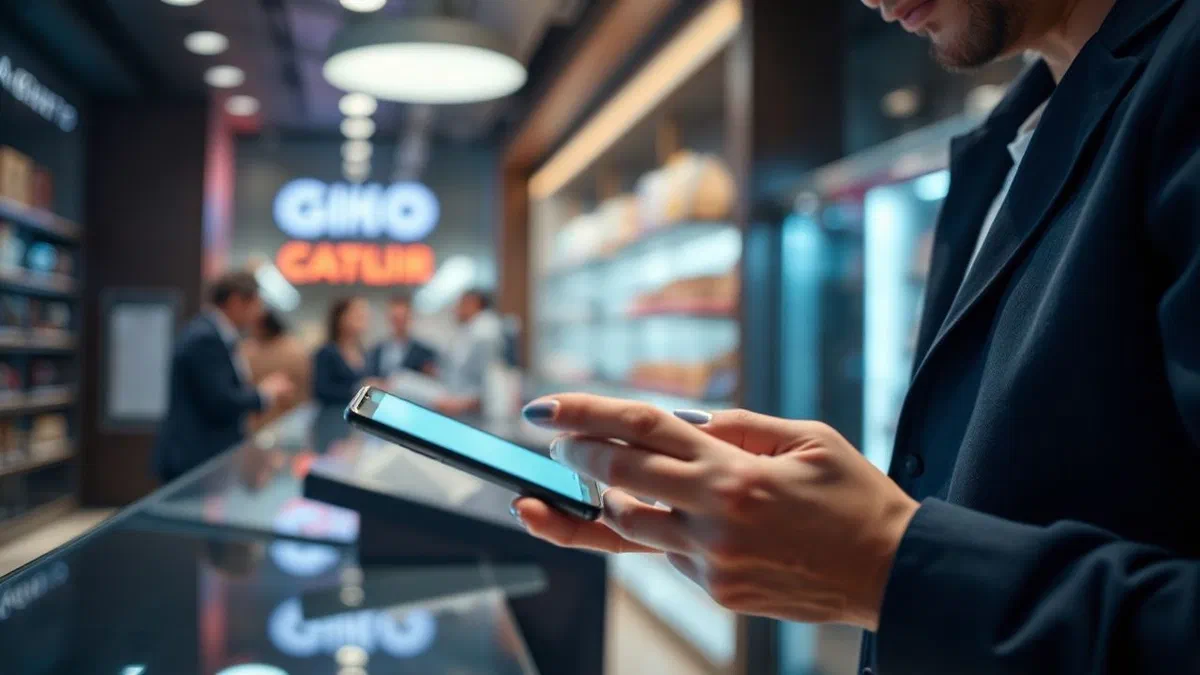
In the technological landscape of 2026, convergence between finance and mobility has reached its peak, making the smartphone the only indispensable tool for managing everyday life. *apps to pay by phone are no longer a simple futuristic alternative, but are now the global standard for millions of consumers who want speed, safety and convenience. thanks to the widespread diffusion of nfc technology and the maturation of operating systems, today it is possible to leave home the physical wallet without fear of not being able to complete a purchase. whether it’s a coffee at the bar, a train ticket or an intensive shopping session, the gesture of approaching the device to the payment terminal became natural and immediate. this evolution is supported by increasingly robust banking infrastructure and encryption protocols that make digital transactions even safer than traditional physical cards. in this in-depth guide, we will analyze the industry’s leading solutions, guiding you step by step in the configuration of the main digital wallets available for android and ios. we will also explore the options offered by fintech banks, which allow you to manage entirely digital accounts with extreme simplicity, ensuring total control over your finances directly from the palm of your hand, efficiently and modern.
Google wallet and payments on android ecosystem #
Configuration and addition of credit cards #
Google wallet is the default and most versatile solution for android-based devices. to start using this*app to pay with the card from the phone**, you must first make sure your smartphone is equipped with nfc chips, a hardware component now present in almost all mid-range models and high-products up to 2026. once you download the application from the play store, the procedure for adding a card is extremely intuitive. you simply need to frame your credit or debit card with your device’s camera; the software, thanks to powerful optical character recognition algorithms, will automatically extract the card number and expiry date. next, the manual entry of the cvv code will be required on the back of the physical support. a fundamental step is banking verification: most financial institutions will send a unique code via sms or push notification in the official banking app to confirm the identity of the user and authorize the digitization of the card in the google portfolio, thus ensuring a high level of protection against any attempts to cyber fraud.
After completing the registration phase, the card becomes immediately available for transactions in physical stores with contactless pos. a distinctive aspect of google wallet in 2026 is its ability to integrate not only payment tools, but also loyalty cards, air tickets and even digital keys for cars and homes. to make a payment, in most cases it is not even necessary to open the application: it is sufficient to unlock the smartphone through fingerprint sensor or facial recognition and to approach the payment terminal. the communication between the two devices takes place in a fraction of a second through encrypted protocols that never transmit the real number of the card to the trader, but use a unique “token”. this tokenization process is the pulsating heart of modern security, as it makes the data intercepted completely unusable for any malicious, raising the standard of protection at levels never previously achieved by magnetic payment systems or traditional microchips.
Universal banking security and compatibility #
The spread of google wallet is closely linked to its extensive compatibility with the italian and international banking system. in 2026, almost all credit institutions, from large national banks to small rural banks, officially supports google service. this means that you don’t have to worry about changing banks to enjoy the convenience of mobile payments. however, it is always advisable to consult the official google partner list to check whether your specific card is enabled, especially with regard to some prepaid old-generation cards that may have technical limitations. a great advantage of using google wallet lies in centralized expenditure management: within the app you can see a detailed history of transactions made, complete with geolocation of the store and commodity category, facilitating the monitoring of the monthly budget and offering total transparency on outgoing cash flows.
In terms of security, google wallet implements several protective barriers that go beyond simple data encryption. if the smartphone is lost or stolen, the owner can use the “find my device” function to immediately block access to the wallet or delete its content remotely, making it impossible for anyone else to make unauthorized purchases. in addition, the obligation to use a secure screen lock form (pin, complex sequence or biometry) to activate nfc payments adds a further layer of defense. unlike physical card payments, where for reduced amounts often no code is required, smartphone payments in 2026 almost always require user authentication for each individual transaction over a certain threshold, drastically reducing the risk of fraudulent use by third parties. this combination of practicality and protection makes google wallet an indispensable tool for anyone wishing to fully embrace the contemporary digital economy.
Apple pay and perfect integration on iphone #
The operation of the app wallet on ios #
For users Apple, payment management is entrusted to the wallet app, which acts as the main interface for the service Apple pay. this solution is renowned for its deep integration with the hardware of the iphone andApple watch, offering a smooth and friction-free experience. to configure this app to pay by phone*, you must open wallet and press the “+” button located at the top right. from here, you can add a new card simply by scanning or recovering the information already associated with the account Apple id used for purchases on the app store. the philosophy of Apple is based on total privacy: the company does not keep track of transactions that can be recognised to the user, nor the amount or place of purchase. everything happens locally within the secure enclave of the device, a co-processor dedicated exclusively to the management of sensitive and biometric data, which guarantees the isolation of financial information from the rest of the operating system and third-party applications.
The daily use of Apple] pay is extremely quick thanks to the fast call function: a double pressure of the side key instantly activates the default card, ready to be authenticated via face id or touch id. once the owner’s identity has been confirmed, just approach the top of the iphone to the pos to conclude the transaction. this operating mode is not only fast, but is also extremely hygienic and safe, since it never requires physical contact with shared keyboards or document exchange. in 2026, Apple pay also supports “express transit” payments in many italian cities, allowing you to pass the turnstiles of metros and buses without having to unlock your phone or authenticate, making public transport incredibly efficient for commuters and tourists using their devices Apple as the only access tool for urban services.
Ecosystem benefits Apple and Apple watch #
One of the unparalleled strengths of Apple] pay is its extension toApple watch. once you configure your card on your iphone, you can transfer it or duplicate it on the smartwatch, allowing you to make payments even when your phone is not at hand or is off. this is especially useful for those who practice outdoor sports, such as racing or cycling, and want to stop for a purchase without having to bring bulky objects with them. the safety on the watch is guaranteed by the wrist detection: as long as the clock remains in contact with the skin and the unlocking code has been inserted once, the payments are active; as soon as the clock is removed, the system stops automatically requiring the pin again. this synergy between hardware devices makes Apple pay the preferred choice for those seeking total integration between physical well-being, mobility and financial management, consolidating the role of Apple as a leader in digital payment innovation.
In addition to payments in physical stores, Apple pay excels in online transactions and within apps. many e-commerce sites and service platforms in 2026 integrate the “pay with Apple] pay” button, which allows you to conclude your purchase in a few seconds without having to manually enter your card details, shipping address or contact information. all this information is transmitted securely and automatically from the wallet, subject to biometric authorization. this drastically reduces the time needed to complete an order and lowers the probability of typing errors. in addition, the user receives an immediate notification for each transaction made, allowing a real-time check of his bank balance. the ability of Apple to create a closed but extremely functional environment ensures that every financial interaction is not only an act of purchase, but a high-level technological experience, protected by the most advanced cyber defense systems available on the market.
Samsung wallet: the advanced alternative for galaxy users #
Exclusive features and safety knox #
Samsung wallet is the natural evolution of samsung pay, designed specifically for device owners of the galaxy series. this app to pay with the card from the phone* stands out for an approach that puts security first, exploiting the samsung knox proprietary platform. knox is a multi-tier security ecosystem, integrated in both hardware and samsung device software, which constantly monitors system integrity and protects sensitive data from malware attacks and intrusions. when adding a card to samsung wallet, data is encrypted and stored in a secure area of the processor, inaccessible to other applications. to authorize a payment, you can use your fingerprint, face recognition or specific pin. the peculiarity of samsung wallet lies in its highly customizable user interface, which allows you to recall the cards with a swipe from the bottom up even when the screen is turned off or blocked, ensuring immediate access to the moments of need.
In 2026, samsung wallet became a real hub for digital life. in addition to nfc payments, the application supports storing digital identity documents, health cards and vaccination certificates, all protected by military level encryption provided by knox. another element of distinction is the samsung rewards program, which rewards users for each transaction made through the app. the accumulated points can be converted into discounts on samsung products or coupons with selected partners, encouraging the use of the digital portfolio compared to traditional methods. this loyalty strategy allowed samsung to maintain a very active user base, despite the competition of universal solutions such as google wallet. the ability to manage digital assets and cryptocurrencies directly from the app makes samsung wallet one of the most complete solutions for the technologically advanced user who wants to have everything under control in a single protected environment.
Integration with local services and partner banks #
Although google wallet is available on all android phones, many samsung users prefer to use the native solution for its best integration with the korean manufacturer’s ecosystem. samsung has strategic agreements with major payment circuits such as visa, mastercard and pagobancomat, ensuring that the most popular cards in italy are fully compatible. the process of adding a card is similar to that of competitors, with the possibility of using the camera for data acquisition and subsequent verification through official banking channels. a specific advantage of samsung wallet in the italian market is the optimized support for debit cards of the national circuit, which often enjoy reduced commissions for exhibitors and a widespread diffusion in every type of business, from large distribution to small neighborhood store.
The versatility of samsung wallet also extends to the management of loyalty cards and coupons. the app can automatically suggest the correct loyalty card when the user is located near a partner store, thanks to the intelligent use of geolocation. this eliminates the need to manually scroll through dozens of barcodes, making the cash experience even faster. in addition, the secure backup and restore function via the samsung account allows you to easily transfer all your cards and information on a new galaxy device, reducing stress related to changing your smartphone. in a world where speed is fundamental, samsung wallet is proposed as a personal assistant that simplifies financial transactions and document organization while offering one of the most robust protections against cyber crime thanks to the constant monitoring of the knox platform.
- Google wallet: wide compatibility with almost all android smartphones equipped with nfc.
- Apple pay: deep integration with ios and Apple watch for impeccable biometric security.
- Samsung wallet: hardware protection via samsung knox and exclusive premium program.
- Nfc technology: short-range communication standard that enables contactless payments.
- Tokenization: process that replaces real card data with unique codes for each transaction.
Fintech apps and online accounts for mobile payments #
Revolut: the global digital bank for travellers #
In addition to the solutions of smartphone manufacturers, there are several apps to pay by phone** developed by fintech companies offering complete and innovative banking services. revolut is undoubtedly one of the most popular in 2026, thanks to its flexibility and wide range of features offered. with revolut, you can open a current account in minutes directly from the app and immediately generate virtual debit cards. these cards can be connected instantly to google wallet or Apple pay, allowing you to start spending even before your physical card arrives at home. revolut is particularly appreciated by travellers often, as it offers extremely competitive exchange rates and the ability to manage portfolios in different currencies without hidden fees. the management of disposable virtual cards adds an additional level of security for online purchases, since the card self-destroyes after first use, making it impossible for any subsequent unauthorized charging attempt.
The revolut app also acts as a powerful financial analysis tool. each expense is categorized automatically and the user can set weekly or monthly budgets to check outs. in 2026, integration with mobile payments is so deep that instant notifications can be received not only on the amount spent, but also on the percentage of the remaining budget for that specific category. in addition, revolut offers rounding functions of expenses: for each purchase made with the phone, the app can round the amount to the next full digit and put the difference in a digital “savadanaio”, helping the user to save effortlessly. this combination of immediate payment tools and advanced asset management functions makes revolut much more than just a payment app, positioning it as a real operational centre for your personal finances in an increasingly connected and dynamic world.
Hype: the italian smart and convenient solution #
In the italian context, hype represents one of the most consolidated and appreciated realities for those looking for an app to pay with the phone that is simple, safe and rich in local advantages. hype offers an account with italian iban and a debit card (physical or virtual) that fits perfectly with the main digital wallets. one of hype’s strengths in 2026 is the integrated cashback system: by making purchases through the app or card connected to the partner brands, the user receives a percentage of the expense directly on their account. this economic incentive, combined with the gratuitousness of the basic plan, makes hype the ideal choice for young people and anyone who wants to manage their money smartly. the application also allows you to exchange real-time money with other “hypers” free of charge, eliminating the need for traditional transfers for small sums between friends or family.
Security is another fundamental pillar of hype. from the application it is possible to put in “pause” the card with a simple tap, instantly blocking each transaction in case of temporary loss and reactivating it with as much ease once found. in addition, hype introduced advanced subscription monitoring features in 2026, identifying recurring payments and allowing the user to cancel or manage them directly from the app interface. this attention to the user experience and the real needs of modern consumers has allowed hype to grow constantly, becoming a reference point in the italian fintech industry. whether to pay a coffee or to manage savings for a future goal, hype offers a complete and intuitive digital environment, perfectly aligned with the speed and transparency requirements of today’s market.
- Download the official application of your chosen fintech bank or service (e.g. revolut, hype).
- Create an account and complete the identification procedure via id and selfie.
- Access the card section and select the option “add to google wallet” or “add to Apple wallet”.
- Follow the on-screen instructions to confirm the card association via bank verification code.
- Activate the nfc chip in the smartphone settings to enable payments in physical stores.
Postepay and alternative payments via qr code #
The evolution of postepay in the digital market #
Postepay remains one of the most widespread payment solutions in italy in 2026, thanks to its capillaryness and trust that millions of citizens place in italian posts. the postepay app has undergone a profound transformation, becoming one of the apps to pay by phone* more versatile on the market. in addition to support for google wallet, which allows you to use postepay evolution cards (iban doses) for contactless payments nfc, poste italiane has developed a proprietary qr code-based system called “post code”. this system allows you to pay in the many post offices and at thousands of contracted commercial exercises simply by framing a qr code shown by the executor or the payment terminal. this technology is an excellent alternative for those devices that may not have the nfc or for users who prefer a visual and direct payment method.
The integration between postal services and the app also allows to manage with extreme ease the payment of newsletters, pagopa alerts and telephone charges, all within the same platform. in 2026, the postepay app also offers mobility services, such as paying parking on blue strips, buying public transport tickets and fuel supply at the agreed stations, making the smartphone a real remote control for urban services. the possibility to recharge your postepay card in real time via another payment card or at the physical points of the poste network guarantees unparalleled flexibility of use, intercepting the needs of a vast audience of users, from young people to pensioners who approach digital tools for the first time, guided by the simplicity of use and the solidity of the brand.
Paypal and mobile payments #
Although paypal was born as a platform for electronic commerce on the web, in 2026 its mobile application became a fundamental tool to pay even in the physical world. through global agreements, the paypal account can be linked to google wallet in many markets, allowing you to use the paypal balance or linked cards for nfc payments. however, even where direct integration is not present, paypal offers the possibility to pay via qr code at an ever increasing network of traders. this function is particularly useful for small businesses or craft markets that want to accept digital payments without having to rent a traditional pos. as long as the buyer frames the qr code of the seller through the paypal app and enter the amount to be transferred to complete the transaction instantly and securely.
Paypal’s purchase protection, extended in 2026 also to many types of proximity transactions, offers additional tranquility that few other systems can boast. if a purchase made through paypal does not match the description or if problems arise with the trader, the user can open a contest to get the refund. this level of protection is a determining factor for many consumers who fear online scams or less known physical stores. in addition, paypal allows you to instantly send money to friends and family without fees, making it very simple to split an account at the restaurant or purchase a group gift. paypal’s versatility, combined with its historical reputation of reliability, confirms it as one of the apps to pay with the most comprehensive and internationally-loved telephone*******, able to constantly adapt to the new challenges of the fintech market.
Safety and good practices in mobile payments #
Data protection and advanced biometry #
Security is the aspect that more than any other has favored the mass adoption of apps to pay with the card from the phone. in 2026, tokenization technology has become extremely sophisticated: when you approach the phone to the pos, your real card number (pan) is not transmitted, but a temporary and encrypted code called “token”. this means that even if a hacker manages to intercept the radio signal (a possibility however remote given the very short scope of the nfc), the data obtained would be unusable for any other transaction. in addition, mandatory biometric authentication for almost every operation adds an unsurpassed barrier. while a physical card can be stolen and used up to the block (especially for purchases under the pin threshold), a smartphone requires your fingerprint or scanning your face, making theft of the device aimed at payments a virtually vain activity for criminals.
To maximize security, it is essential to take some good practices. first, always keep updated the operating system of the smartphone and the individual payment apps. updates often contain critical security patches that close newly discovered vulnerabilities. second, it is advisable to activate instant notifications for each operation: receiving a notice on the phone as soon as a charge takes place it is possible to immediately notice any anomalies. finally, the use of public wi-fi networks to manage wallet settings or to make online purchases should be avoided; it is always preferable to use the 5g data connection of your operator, which guarantees a much more secure communication tunnel than the open networks of airports or shopping centers, reducing the risk of “man-in-the-middle” attacks.
Management of loss and stolen devices #
One of the most common fears is what happens if the phone is lost. fortunately, modern systems offer immediate reaction tools. both google and Apple] and samsung provide web portals (“find my device”, “where is it”, “smartthings find”) that allow you to locate your smartphone on a map and, above all, to block or initialize it remotely. when a device is marked as lost, the digitized cards in the wallet are instantly suspended at the server level, without the need to block the corresponding physical card. this is a huge advantage: you can continue using your plastic card while waiting to find your phone or configure a new one, avoiding technical times and costs related to the re-emission of a new magnetic support from the bank.
It is also important to remember that banks in 2026 offer specific assurances for digital payments, which cover any unauthorized transactions that occurred before the device block. however, due to the robustness of biometrics, cases of fraud through smartphones are statistically lower than those related to physical cards or atm withdrawals. user awareness remains the most important link in the chain: never share unlock codes with third parties and not install applications from unofficial sources are gold rules that protect not only the portfolio, but the entire digital identity. ultimately, paying with your phone is not only more convenient, but represents a significant step forward in protecting your savings, transforming a vulnerable device like the old wallet into a smart and dynamic digital safe.
- Biometric authentication: always use fingerprint or facial recognition for each payment.
- Push notifications: activate real-time alerts to monitor each movement on the account.
- Software updates: install the manufacturer’s security patches promptly.
- Remote block: configure localization services to disable the wallet in case of theft.
Faq on apps to pay with phone #
Paying by phone is safer than using physical card? #
Yes, paying with your smartphone is considered safer for several technical reasons. the main is tokenization, which prevents the trader from seeing or storing the actual data of your card. in addition, each transaction requires a biometric authentication (print or face), while physical cards can be used for small purchases without pins, exposing you to greater risks in case of theft of the traditional portfolio.
What happens if the phone battery gets discharged while i have to pay? #
In most cases, if the phone is completely off, it is not possible to make nfc payments since the chip requires energy to communicate with the pos. however, some of the latest android iphone and smartphone models in 2026 have a small energy reserve dedicated to critical functions, allowing you to make “express” payments or use digital keys for a few hours even after switching off your device for low battery.
Can i use payment apps abroad? #
Absolutely. apps like google wallet, Apple pay and samsung pay use the international visa and mastercard circuits, which are accepted worldwide. paying with the phone abroad is particularly beneficial because it avoids having to handle cash in local currency and often, thanks to fintech banks like revolut, it allows to benefit from better exchange rates than those applied by traditional banks or airport exchange offices.
Is there a limit of spending on payments with your smartphone? #
The expense limit generally depends on the balance available on the linked card and the daily or monthly limits set by your bank. unlike physical cards, where over 50 euros it is mandatory to enter the pin on the pos keypad, with the smartphone authentication takes place directly on the device via biometrics, allowing to authorize even high amounts quickly and safely, without further steps on the negotiating terminal.
Do i have an active internet connection to pay in stores? #
No, you do not need an active internet connection (wi-fi or mobile data) at the exact time of payment in a physical store. nfc technology works through short-range electromagnetic induction between the phone and the pos. the smartphone stores payment tokens that can be used offline for a limited number of transactions. however, the connection will be necessary later to update the transaction history and receive debit notifications.
In conclusion, the adoption of apps to pay by phone is a fundamental pillar of the digital transformation we are living in 2026. the convenience of having all its financial instruments enclosed in a single device, combined with security standards that far exceed traditional payment methods, makes this choice almost obligatory for anyone who wants to live modernity in a fluid way. whether you choose the native solution of your manufacturer or rely on an innovative fintech bank, control and transparency that you will get will transform your relationship with money. do not hesitate to configure your digital wallet today: follow the steps described in our guide, activate biometric protections and start enjoying the freedom to go out of the house with nothing but your smartphone. the future of payments is already in your hands, ready to make every purchase a simple, fast and incredibly secure experience. explore available options and choose the one that best suits your financial and technological needs.