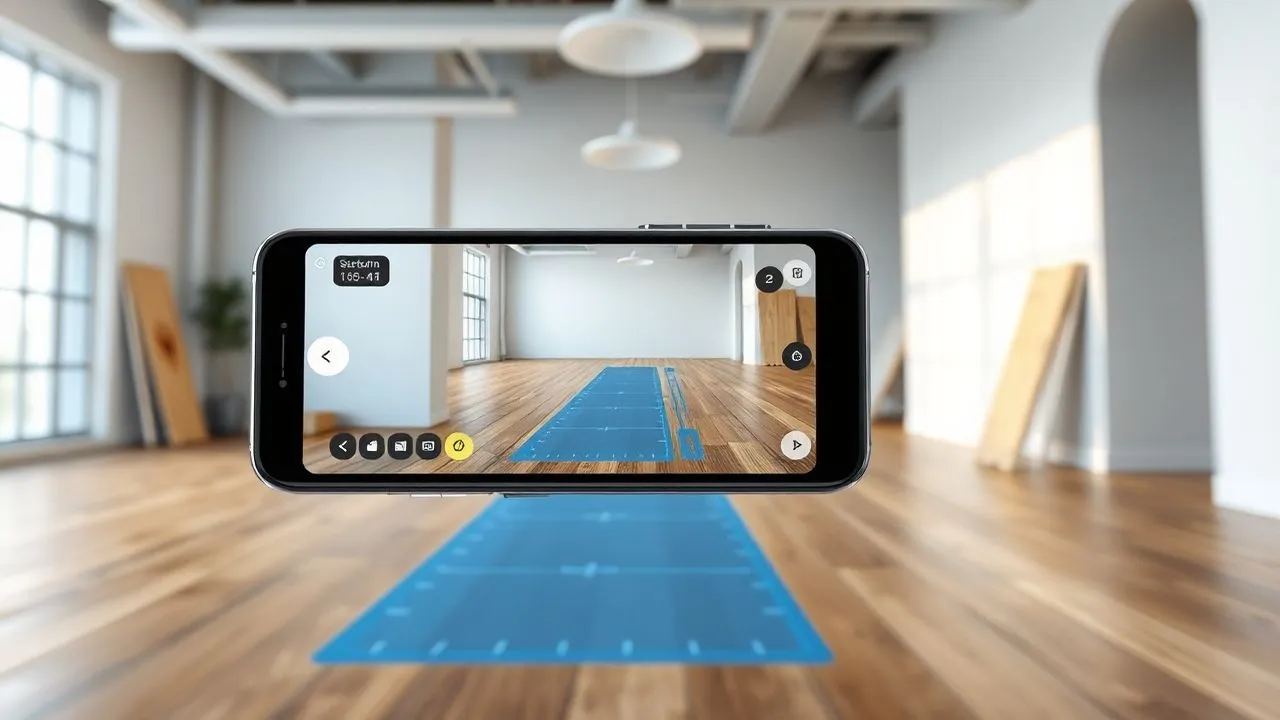
In the technological landscape of April 2026, the smartphone is no longer just a communication device, but has evolved into a real portable laboratory with extremely sophisticated sensors. The need for a app to measure can arise in the most diverse contexts: from the decor of a new house to the verification of speed during a training session, to the control of noise pollution in your neighborhood. Thanks to the integration of advanced technologies such as LiDAR, the latest-generation augmented reality (AR) and increasingly refined artificial intelligence algorithms, modern applications offer a degree of precision that until a few years ago was exclusively reserved for expensive professional tools. Whether you're a fan of DIY, an architect or just a curious person who needs to know the length of a table without having a physical meter at hand, your mobile device hides incredible potential. In this updated guide to 2026, we will explore the most reliable software solutions available on digital stores, analyzing their strengths, technological limits and ideal use contexts to achieve accurate and fast measurements in mobility, transforming your mobile phone into a digital Swiss knive indispensable for everyday life and work.
Measure distances and heights with increased reality
EasyMeasure and the evolution of digital trigonometry
EasyMeasure is one of the longest and most reliable solutions in the field of camera distance measurement applications. The secret of its success lies in the user interface extremely intuitive, which guides the user through a simple but fundamental calibration process to achieve precise results. Once the application is started, the rear camera of the smartphone is activated, overlapping a virtual grid to the surrounding environment. You simply need to frame the base of the object you want to know the distance and adjust the height of the camera in the settings. This step is crucial because the app uses algorithms based on trigonometry and Pythagorean theorem to calculate the space between the sensor and the focal point. In 2026, thanks to improvements in optical stabilization and integration with depth data, accuracy increased significantly compared to previous versions.
In addition to the simple horizontal distance, EasyMeasure allows to determine the height of imposing structures such as buildings or monuments. To do so, the application requires you to point first to the base and then to the top of the object. The software crosses the data related to the inclination of the device, detected by the internal gyroscope, with the distance previously calculated. Although free versions exist with basic features, the premium version offers advanced tools such as saving images with overlapping measurements and exporting data in formats compatible with design software. It is important to remember that, in order to maximize reliability, it is advisable to use the app in good lighting conditions, since the recognition of plans and contours strongly depends on the quality of the image captured by the photo sensor of your smartphone or last generation tablet.
Professional Alternatives: Smart Measure & Distance Meter
For Android users looking for a solid alternative, Smart Measure (part of the Smart Tools suite) offers a very similar camera-based approach. This application stands out for its lightness and ability to provide rapid results even on devices not necessarily top of range. The operation is based on the height of the objective compared to the ground: once you set your own stature or the height to which the phone is held, the app instantly calculates the distance of the framed object. The pro version of Smart Measure adds interesting features such as digital zoom and the ability to measure the area of a vertical surface, being particularly useful for those who have to calculate how much material to buy to paint a wall or to install decorative panels without having to resort to stairs or traditional tape meters.
Distance Meter is another good option that focuses on ease of use and running speed. Unlike more complex apps, this focuses on the quick measurement “point and click”. It is excellent for quick outdoor estimates, such as the distance between two trees in a garden or the length of a driveway. However, it should be noted that these applications, while being extremely useful, have an error margin that can vary between 2% and 5% depending on the distance and accuracy of the device's inertial sensors. For this reason, they are ideal tools for preliminary inspections or emergency situations, while for jobs requiring millimetre precision, the use of a professional laser tire gauge remains the preferred choice for building industry professionals.
Turn your smartphone into a digital phonometer
Decibel X: sound accuracy and environmental analysis
Measuring the level of environmental noise has become a growing need in an increasingly urbanized and chaotic world. Decibel X is positioned as the market leader in 2026 as regards the transformation of mobile devices into highly accurate digital phonometers. The application uses the integrated microphone to sample ambient sound waves and convert them into a read in decibel (dB). What makes Decibel X higher than average is its pre-set calibration capability for hundreds of different smartphone models, correcting hardware discrepancies that often plague less-finished apps. The interface shows an elegant analog dial flanked by a real-time chart that highlights the sound peaks, the average value and the minimum level recorded during the listening session, offering a complete overview.
Decibel X's advanced features include weight filters (such as A, B, C and Z filters) that allow you to analyze sound according to various international health and safety regulations at work. This feature is essential for those who want to check whether noise in an office or in a yard exceeds the thresholds of risk for hearing. The app also allows you to take photos or record videos with the overlap of the decibel level, creating a geolocalized documentary proof of a possible disturbance of public peace. In 2026, the premium version introduced frequency spectra analysis, allowing to identify not only how loud a noise is, but also what specific frequencies compose it, thus helping to diagnose mechanical problems in noisy machinery or appliances.
Using microphones and limits of acoustic measurement
In addition to Decibel X, there are numerous other applications such as Sound Meter (for Android) and Phonometer (for iOS) that offer excellent services for daily monitoring. These apps are often accompanied by comparative tables that associate the numerical value with real situations, such as the noise of a normal conversation, a vacuum cleaner or a rock concert, helping the user to correctly interpret the data collected. The simplicity of these interfaces also makes them suitable for teaching purposes, allowing students to better understand sound physics and vibration intensity in the air. Many of these solutions also include a vibrometer, which uses the telephone accelerometer to measure the shocks or vibrations of a surface, useful to monitor stability of structures or the proper functioning of engines.
Despite the high quality software achieved in 2026, it is essential to understand the intrinsic limits associated with smartphone hardware. The integrated microphones in mobile phones are designed primarily to capture human voice and have physical filters that can cut very low or very high frequencies. In addition, most standard microphones have a saturation limit around 120-130 dB, which means that they cannot accurately measure extremely intense noises such as explosions or close reaction engines without distorting the signal. For legally certified measurements, it is always necessary to use class 1 or class 2 phonometers calibrated annually by accredited laboratories. However, for indicative monitoring and for the protection of your daily hearing health, current apps offer unprecedented technological support and easy access for anyone.
GPS speed and speed monitoring
Speed View GPS: beyond the simple odometer
The integration of global positioning systems (GPS, GLONASS, Galileo) has allowed the development of applications to measure the speed that often exceeds the analogue speeds of old cars. Speed View GPS is an exemplary application in this field, offering an interface that emulates the onboard instrumentation of a sports vehicle. The app is not limited to showing instant speed, but registers a wide range of statistics useful for those traveling or practicing outdoor sports, such as average speed, maximum speed reached, total distance traveled and altitude. Thanks to the 2026 GPS chips, the upgrade delay was minimized, making reading almost instantaneous even during sudden accelerations or braking brusches.
One of the most popular features of Speed View GPS is the HUD mode (Head-Up Display). By activating this function and placing the smartphone on the dashboard of the car at night, the screen image is reflected on the windscreen, allowing the driver to view the speed without diverting the look from the road. This technology, once exclusive of luxury cars, is now within reach of everyone thanks to a simple application. In addition, the app includes notices of overcoming the customizable speed limit, which help maintain safe driving and avoid administrative penalties. The ability to export track layouts in GPX format makes Speed View GPS an excellent tool for cyclists and drivers who want to analyze their performance on external maps such as Google Earth or Strava, enriching the training experience with detailed technical data.
GPS signal accuracy and alternative applications
While Speed View dominates for completeness, other apps such as GPS speedometer (for Android) and Simple speedometer (for iOS) point on minimalist graphics and reduced energy consumption, essential factor during long trips. These applications are particularly useful for those who use alternative means of transport such as electric scooters, bicycles or boats, where the onboard instrumentation could be absent or unreadable. Some specialized versions also integrate the estimated fuel cost based on the distance traveled or provide real-time weather indications along the route, turning the speedometer into a real smart travel assistant. The variety of units available (km/h, mph, knots) ensures a global versatility, adapting to the requirements of marine or amateur air navigation.
However, it should be considered that the accuracy of a app to measure the speed depends strictly on the quality of the reception of the satellite signal. In closed environments, galleries or areas with dense vegetation and skyscrapers (the so-called “urban canyon”), the GPS signal can degrade significantly, leading to incorrect readings or sudden jumps in the values shown. In 2026, many devices overcome this problem by integrating data from inertial sensors (accelerometers and gyroscopes) to estimate speed even in temporary absence of satellite signal. Despite this, it is good not to rely blindly on these applications for critical manoeuvres, but to use them as a useful information support complementary to the mandatory vehicle instruments, always keeping the maximum attention to driving and the conditions of the surrounding traffic.
Measuring objects and surfaces with 3D metro
CamToPlan and the revolution of relief in AR
The measurement of physical objects and complex surfaces has undergone radical transformation with the advent of augmented reality. CamToPlan – Metro 3D is the reference application for anyone who needs to take measures of furniture, rooms or small components without the use of a physical meter. The app uses the camera to identify horizontal and vertical planes in the three-dimensional space. Once the floor is calibrated, the user can “drawn” virtual lines simply by moving the smartphone from one point to another of the object. The software automatically calculates the length of the tracked lines, showing the result in real time overlapped to the real image. This technology is particularly effective in 2026 thanks to the spread of LiDAR sensors on an increasing number of devices, which allow a mapping of extremely granular and fast depth.
CamToPlan is not limited to linear lengths, but is able to automatically calculate surfaces and volumes. If, for example, you want to know the area of a carpet or the volume of a package to be shipped, you just need to track the perimeter of the object and the application will instantly process the required geometric data. The possibility of exporting reliefs in professional formats such as DXF or PDF with annotations makes this app an indispensable tool for architects, interior designers and real estate agents who must carry out quick but detailed inspections. The ability of the app to manage angles and walls not perfectly orthogonal allows to obtain realistic planes even in ancient buildings, where structural irregularities would make it difficult to use a traditional tape meter without the help of a second person.
Righello e ImageMeter app: precision for details
For small-sized objects, where remote camera use may be less accurate, the Righello app literally transforms the smartphone screen into a contact measurement tool. By supporting an object, like a screw, a bolt or a coin, directly on the display, you can get the exact measurement in millimeters or inches. These apps often include calibration functions using standard-sized objects (such as a credit card) to make sure the scale shown on the screen is 100% correct. It is a quick and brilliant solution for those who work in the workshop or for hobbyists who need to identify small components immediately without having to look for specific tools in the toolbox.
ImageMeter represents a different and equally powerful approach: it allows you to take a photograph to an object or scene and to add the measurements later on the saved photo. To ensure accuracy, the user must insert a reference measure known within the image (for example, the width of a door or the length of an A4 sheet present in the scene). Once the scale is set, the app can calculate any other size in the photo. This method is exceptional for those who have to document the factual status of an environment or for those who must send technical specifications to a supplier. In 2026, the integration of automatic perspective correction algorithms made ImageMeter even more reliable, eliminating the distortions caused by the inclination of the camera at the time of shooting.
Design of floor plans and measurement of the house
Magicplan: professional management of indoor spaces
If the goal is to create a complete layout of a home, Magicplan is undoubtedly the most complete resource on the market in 2026. This is it app to measure house has revolutionized the way amateur and professional architectural reliefs are made. Using augmented reality, Magicplan allows you to map a room simply by pointing the camera at the corners of the ceiling and floor. The application automatically assembles these points to create an extremely accurate 2D plant, which can then be displayed in 3D with only one touch. The system is so smart that it automatically recognizes the presence of doors and windows, asking the user to specify its size to obtain a digital model faithful to reality.
In addition to pure measurement, Magicplan offers cost estimate and job planning tools. You can add virtual furniture from the built-in library to check the footprint of the furnishings or calculate the amount of paint, pavement or batter necessary for a renovation. In 2026, advanced cloud synchronization allows multiple users to work simultaneously on the same project, making the app a collaborative tool for work teams or for couples planning their future home. Although the creation of plants is free, the export of high resolution files or CAD formats requires a subscription, which is largely repaid thanks to the time saved compared to traditional relief methods that would require manual working hours and data transcription.
Home Design 3D and Floor Plan Creator
For those looking for a more design-oriented solution and aesthetic display, Home Design 3D offers a user experience full of graphic details. The app allows you to design the walls with ease, setting custom thicknesses and heights, and to furnish the environments with thousands of objects in high definition. The strength of this application lies in its real-time rendering capacity, which allows you to “walk” virtually within the newly measured and designed house, evaluating the impact of sunlight and the layout of spaces. It is the ideal tool for those who want to dream big and view the final result of an interior design project before even buying the first mobile.
Floor Plan Creator, available mainly for the Android ecosystem, stands out for its technical precision and support for Bluetooth laser spacers. Connecting a compatible laser telemeter, the measurements are sent instantly to the app, which updates the real-time plan with millimeter accuracy. This hardware-software integration represents the highest level of reliability achieved today in 2026 with a mobile device. The app also supports the creation of multi-level plans and the generation of 360-degree virtual tours, offering a complete overview of the property that can be easily shared through a web link with customers, architects or potential buyers, drastically simplifying communication in the real estate sector.
Health and well-being: biometric measurements through sensors
Blood glucose, pressure and temperature monitoring
A chapter of great interest in 2026 concerns the use of apps to measure vital health parameters. It is essential to make a clear distinction between applications that act as a diary to record data measured with external devices and those that try to make direct measurements through smartphone sensors. As regards blood sugar and blood pressure, the current technology still requires the use of dedicated hardware (such as Bluetooth sfigmomanometers or CGM sensors for glucose) that transmit data to the app. However, some state-of-the-art applications use the camera and flash to analyze the variation of blood volume in finger capillaries (photopletismography) to provide approximate estimates of heart rate and, in some experimental cases, of blood pressure, but these values must be considered purely indicative.
Apps to measure body temperature have seen a significant evolution thanks to the integration of thermal or infrared sensors in some specific smartphone models. In the absence of such sensors, many apps promise to measure fever, but often these are unreliable solutions based on the internal temperature of the electronic components of the phone, which is influenced by the use of the processor and not by the health of the user. In 2026, the trend is to use the smartphone as a central hub for the health ecosystem (eHealth), where the apps aggregate data from smartwatch, smart rings and essential scales to offer a holistic picture of physical well-being, reporting anomalies that require professional medical study.
The importance of medical consultation and technological limits
Despite the enthusiasm for the new frontiers of digital medicine, it is necessary to reiterate that no one app to measure vital parameters can replace the diagnosis of a doctor or the accuracy of certified clinical instruments. Many applications on the stores include exclusion clauses of liability that clarify how the software is intended exclusively for general fitness or wellness purposes and not for diagnostic medical purposes. Improper use of these apps, especially for chronic conditions such as diabetes or hypertension, may result in serious risks if the user decides to change their therapy based on incorrect or imprecise readings provided by the mobile device.
On the other hand, these applications are extraordinary to encourage a healthy lifestyle and to facilitate the collection of data to be shared with your doctor during check-up visits. The ability to generate PDF reports with pressure or glucose levels in the last thirty days allows medical personnel to have a much more detailed view than a single measurement carried out in the clinic. In 2026, the technological challenge continues in an effort to integrate more and more precise non-invasive sensors directly under the smartphone screen, with the future goal of making health monitoring a natural, constant and above all scientifically rigorous gesture for all citizens of the digital world.
- EasyMeasure: ideal for measuring distances and heights of large outdoor objects using the camera.
- Decibel X: turns the phone into a professional phonometer with sound frequency analysis.
- Speed View GPS: Monitor the movement speed with HUD mode for night driving.
- Magicplan: the ultimate tool to create 2D and 3D floor plans of houses in a few minutes.
- CamToPlan: exploits augmented reality to measure surfaces and volumes of objects in real time.
- ImageMeter: allows you to take precise measurements directly on the photographs taken previously.
Frequently asked questions about apps to measure
How precise are the apps to measure distances?
The accuracy of apps to measure distances depends heavily on device hardware and environmental conditions. In 2026, phones with LiDAR sensor can reach an error margin of less than 1% on short and medium distances (up to 5-10 meters). On devices that only use standard camera and augmented software reality, the error can rise to 3-5%. Accuracy is also influenced by light: in dark environments or on very glossy/transparent surfaces, the sensors struggle to identify the planes, reducing the reliability of the measurement obtained.
Can I use an app to measure fever reliably?
At present, most smartphones do not have an integrated clinical thermal sensor. Apps that promise to measure body temperature without specific hardware are often unreliable. If your smartphone does not have a dedicated infrared sensor, it is always preferable to use a traditional thermometer, whether digital or infrared for medical use. These applications can only be useful as diaries to annotate values measured with external tools, but they must never be used for critical medical self-diagnosis.
Apps to measure decibels are comparable to a true phonometer?
Apps such as Decibel X are excellent for indicative use and to monitor exposure to daily noise. However, they cannot replace a Class 1 certified professional phonometer for legal purposes or for official acoustic certifications. Smartphone microphones are optimized for voice and have physical limits in frequency response and extreme sound pressure management. For domestic use or to verify the disturbance of a neighbor, they are more than sufficient tools, but for technical expertise it serves dedicated and calibrated instrumentation.
Need an internet connection to use measuring apps?
Most basic measuring functions (AR, camera, inertial sensors, GPS) do not require an active internet connection to work, as calculations are performed locally on the smartphone processor. However, some advanced features may require the network, such as loading maps in GPS speedometers, cloud synchronization of apps such as Magicplan or exporting reliefs into professional formats. In general, to take a flight measure in an isolated yard, you will not need active data traffic.
Do these applications consume a lot of battery?
Yes, the measuring apps tend to be energetic as they simultaneously use different high-consumption hardware components: the camera remains active, the screen is set to high brightness to see AR details, the processor works intensively for trigonometric calculations and GPS/LiDAR sensors require constant energy. If you expect to perform long-reaching sessions, for example to map an entire apartment, it is advisable to start with the well-loaded device or have a power bank at your fingertips to avoid sudden work breaks.
In conclusion, the use of a app to measure represents today, in 2026, an extraordinary resource that democratizes access to complex technical tools. Although they remain physical limits linked to consumer device hardware, the convenience of always having a meter in your pocket, a phonometer and a digital speedometer is priceless for the resolution of small and big everyday problems. Whether you choose the accuracy of CamToPlan's augmented reality or the architectural completeness of Magicplan, always remember to correctly calibrate your digital tools and consider the results as reliable estimates rather than as absolute truth. You just need to explore the stores and download the solution that best suits your needs: today it transforms your smartphone into a universal measuring tool and discover how easy it can be to manage space and sound around you. Good measurement!


