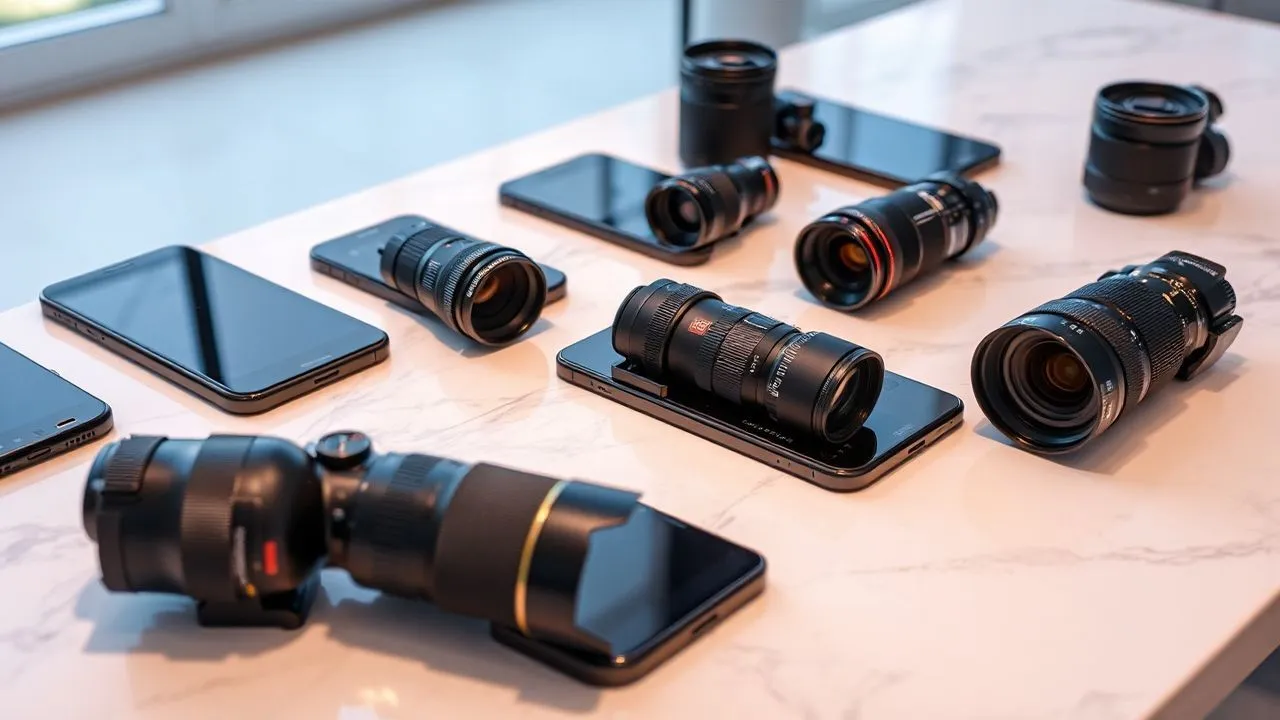
In the technological landscape of April 2026, the search for best smartphone camera mid-range has become a priority for millions of users who want to capture images of professional quality without necessarily having to invest the astronomical figures required by flagship models. Thanks to unprecedented democratization of optical technology and the computing power of new processors, the segment between 300 and 500 euros today offers devices capable of challenging the giants of the industry in optimal light conditions and even in the most complex night sessions. Mobile photography is no longer just a matter of megapixels, but a refined balance between sensor sizes, high-quality lenses and artificial intelligence algorithms that optimize every single pixel in real time. In this in-depth guide, we will analyze the most interesting proposals of the current market, evaluating how brands like Samsung, Google, Motorola and Apple have interpreted the needs of content creators, social media enthusiasts and simple users who want to immortalize their memories with the utmost chromatic fidelity and clarity possible. Prepare to find out how the average band of 2026 has definitively broken the limits of the past, offering creative tools that until a few years ago were pure science fiction for this category of price.
The technological evolution of midrange photography in 2026
The fundamental role of artificial intelligence
The year 2026 marks the definitive overtaking of computational photography with respect to the pure optics in the middle segment of the market. If in the past best smartphone camera mid-range they had to rely solely on the physical quality of the lenses, today we see the integration of chips dedicated to neural processing that transform a crude shot into a digital work of art. These processors are able to instantly recognize the scene, distinguishing between the foliage of a tree, the texture of a fabric or the different shades of human skin, applying specific corrections for each element. Artificial intelligence is no longer limited to saturating colors, but it intervenes on the management of digital noise and the reconstruction of details in the shadow zones, allowing medium-sized sensors to produce results that emulate the depth of field of reflex cameras. This software progress has allowed to contain hardware costs while dramatically increasing the final output of images produced by midrange devices.
In addition to improving image quality, AI in 2026 introduced automatic editing features that make post-production accessible to anyone. Tools such as the magical removal of objects or the reconstruction of moved faces are now standard in the devices we analyze. The ability to process thousands of information per second allows these smartphones to take multiple photos with different exposures in a fraction of a second, then merge them into a single perfectly balanced HDR (High Dynamic Range) image. This process, known as stacking, is the secret behind the extraordinary quality of best smartphone camera mid-range current, which manage extreme control situations that would have put in crisis the tops of range just three years ago. Software versatility has become, therefore, the true parameter of differentiation between a discreet device and an excellent one for daily photography.
New generation and specialized optical sensors
Despite the importance of software, the hardware of best smartphone camera mid-range of 2026 he made giant steps. Manufacturers started implementing generous-sized sensors, often close to the thumb threshold, even in this price range. A larger sensor means a greater ability to collect light, a crucial factor for sharpness of images and for the reduction of the grain in the photos taken in the evening or in unlighted interiors. In addition, the binning pixel technology has evolved, allowing you to combine up to 16 pixels in one, creating 12 or 24 megapixel photos with a wealth of details and an unprecedented dynamic range. This hybrid approach ensures that the smartphone is ready to capture every nuance, whether it is a breathtaking view or a close macro detail.
The triple or quadruple camera configuration is now the norm, but with a substantial difference from the past: the quality of secondary optics has increased dramatically. Ultra-grandangolar lenses now show minimal edge distortions and perfect chromatic consistency with the main sensor, while 3x or 5x optical zoom telephotos begin to make their appearance even in models under 500 euros. This versatility allows users to experience different perspectives without undergoing the qualitative degradation typical of digital zoom. The optical image stabilization (OIS), once reserved for the most expensive models, is now a minimum requirement to enter the ranking of the best devices for photos and videos, ensuring smooth films and night shots without micro-mode, raising the overall quality standard of the entire mobile industry.
Samsung Galaxy A56 5G: Perfect balance between hardware and software
Super AMOLED display and computing power
The Samsung Galaxy A56 5G confirms itself as one of best smartphone camera mid-range thanks to a winning combination of hardware components and proprietary software optimization. At the heart of the user experience we find a beautiful 6.7 inch Super AMOLED display, which is not only used to display the content, but serves as a real professional viewfinder. With a peak brightness that reaches 1200 nits thanks to Vision Booster technology, framing a subject under direct sunlight becomes a simple and precise operation. Samsung’s chromatic calibration ensures that what you see on the screen is exactly what you will get in the final shot, a fundamental aspect for those who practice mobile photography with seriousness and want to have full control over the image composition before pressing the shutter.
Under the shell, the next generation Exynos processor works in synergy with 8 GB RAM to manage the complex image processing algorithms of Samsung. This computing power allows the Galaxy A56 5G to offer advanced features such as the Object Eraser, which allows you to eliminate unwanted people or objects from the photos with a simple touch, leaving the background perfectly rebuilt by artificial intelligence. The fluidity of the Android 16 operating system, customised with the One UI 8, ensures that the camera app starts instantly, avoiding losing the fleeting moment. The combination of a capacious 256 GB internal memory and the possibility of expansion via microSD makes this device an ideal choice for those taking hundreds of high resolution photos and recording 4K videos daily.
Photo compartment and long-lasting battery
The true soul of the Galaxy A56 5G resides in its camera system. The 50 megapixel main sensor, with optical stabilization, produces images characterized by the typical Samsung chromatic signature: bright colors, deep blacks and a marked contrast that makes the photos immediately ready for sharing on social media. But it is in the front camera that Samsung made the highest quality leap, integrating a sensor capable of recording selfie videos in Super HDR. This function is particularly appreciated by the vloggers and creators of TikTok, since it ensures that the face of the subject is always correctly exposed, even when behind it is a very bright sky or an intense artificial light source, maintaining a naturalness of the skin tones really surprising for the middle band.
To support prolonged photographic sessions, Samsung equipped the device with a large 5000 mAh battery. In real-use tests, the smartphone manages to cover an entire day of intense use, including hours of camera usage and GPS navigation, with a reassuring residual autonomy. Intelligent power management of the processor reduces consumption during standby and optimizes resources when the phone is blocked, allowing up to 29 hours of total autonomy. When a charge is required, the quick charging support allows you to return operational quickly. Below, we list the main reasons why the Galaxy A56 5G dominates its category:
- Main sensor stabilized: Sharp photos in every condition and videos without vibration.
- Vision Booster Display: Exceptional visibility even outdoors for perfect frames.
- Long-term software support: Six years of guaranteed upgrades for a lasting investment.
- Advanced AI features: Magical rubber and photo remastering integrated natively.
- Excellent autonomy: 5000 mAh battery to never stay dry during travel.
Motorola Edge 60: The power of Sony LYTIA and AI sensors
Optical innovation with Sony LYTIA 700C sensor
If you are looking for performance in terms of optical hardware, the Motorola Edge 60 is at the top of the best smartphone camera mid-range 2026. The undisputed protagonist is the 50 megapixel Sony LYTIA 700C sensor, a technological component that revolutionized the ability to capture light in mobile devices. Thanks to the superimposed pixel structure, this sensor is able to accommodate a significantly higher amount of light than traditional sensors of the same size, resulting in an extended dynamic range and a drastic reduction in electronic noise. The photos taken with the Edge 60 show a naturalness of colors and a precision of details that are usually found only in superior products, making it a terrific tool for portraits and naturalistic photography.
Motorola has cleverly integrated the Moto AI technology, which intervenes in a non-invasive way to optimize the shooting parameters. Unlike other manufacturers who tend to make photos excessively artificial, Motorola’s approach is oriented to realism. The system analyzes the depth of the field and applies a natural bokeh effect, isolating the subject with a millimeter precision which also includes the most difficult details such as hair or eyeglass edges. This smartphone is also equipped with a dedicated telephoto lens with 3x optical zoom, a rarity in this price range, which allows you to approach distant subjects without losing quality, maintaining crystal clearness that makes it perfect for capturing architectures or details during sports events.
Premium design and ultra-fast charging TurboPower
The aesthetics of the Motorola Edge 60 reflects its technological soul, with a thin body and finishes in vegan material that offer superior grip during shooting sessions. The 6.67 inch pOLED screen with curved edges is not only beautiful to see, but it offers a 120Hz refresh rate that makes navigation between the gallery photos an incredibly smooth experience. Water and dust resistance adds an additional level of tranquility for those who love to take pictures by the sea or during mountain excursions. Inside, the latest-generation MediaTek Dimensity processor ensures that there are no lag when processing RAW files or when applying complex real-time filters, keeping the device always responsive and ready to use.
Another strength that distinguishes it between best smartphone camera mid-range is the charging system. With the 68W TurboPower technology, you can recharge the battery from 5200mAh in record time, allowing you to recover hours of use with only ten minutes connecting to the current socket. The 15W wireless charging is also present, offering a convenience of use that many competitors in this price range still neglect. Motorola has created a complete package that does not compromise, focusing on a solid photo quality supported by a high-level hardware. Here are the technical features that make the Edge 60 a recommended purchase:
- Sony LYTIA 700C sensor: Avant-garde technology for superior low-light performance.
- Zoom Optical 3x: Possibility of real enlargement without loss of digital detail.
- Charging TurboPower 68W: Minimum waiting times to recharge your device.
- Integrated AI motorcycle: Intelligent optimisation based on scene recognition.
- Vegan material finishing: Design sought after and sustainable with a premium touch.
Google Pixel 9a: The magic of computational photography of Google
The secret of the Pixel line: Software and AI algorithms
When we talk about best smartphone camera mid-range, the Google Pixel 9a occupies a special place in the heart of enthusiasts. Google has shown that it does not necessarily need the largest sensor on the market to produce the most beautiful photos, provided it has the best processing algorithms. The Pixel 9a exploits the power of the Google Tensor chip to offer a photographic experience that many define as “magic”. Google's HDR+ function continues to be the reference point of the industry, able to balance lights and shadows impeccablely, extracting details from areas that other smartphones would make completely black or burned. The faithfulness of the skin tones, thanks to Real Tone technology, ensures that each person is treated with maximum chromatic accuracy, regardless of ethnicity or lighting conditions.
The true revolution of 2026 introduced with the Pixel 9a is the deep integration of the Gemini Generative AI directly into the camera app. One of the most chattered features is “Add”, which allows you to take a group photo and then include the photographer at a later time through an intelligent fusion of two shots. The result is so natural that it is impossible to distinguish photomontage from reality. Moreover, the Astrophotography mode has been further refined, allowing you to capture the starry sky with reduced exposure times and sharpness that defies the laws of optical physics for a mobile device. The Pixel 9a is not just a smartphone, but a creative assistant that helps the user to get the perfect shot in every circumstance, simplifying the most complex operations through the software.
Android 16 user experience and compact design
In addition to its photographic qualities, the Pixel 9a stands out for its ergonomics. With a 6.3 inch display and a low weight, it is the ideal smartphone for those looking for a compact device that can be easily used with one hand during quick clicks in the city or on the road. The satin finish of the back prevents fingerprints and offers a feeling of building solidity typical of Google products. Integration with the Android ecosystem is total: Pixel users receive first security updates and new system features, ensuring that the smartphone stays fast and secure for many years. The adaptive battery learns user habits, limiting the consumption of lesser apps used to extend autonomy over 24 hours, reaching up to 100 hours in extreme energy saving mode.
Video recording has benefited from the introduction of the Video Boost, a technology that sends the video to Google servers for advanced processing, returning videos with a smooth stabilization, vibrant colors and a virtually non-existent digital noise, even under poor lighting conditions. This makes the Pixel 9a one of best smartphone camera mid-range also for those who love to create high quality video content for YouTube or Instagram. The versatility of Google software transforms each sensor into a powerful tool, making photography macro a pleasure thanks to artificial intelligence that reconstructs micro-details of smaller subjects. Summing up, here are the strengths of the Pixel 9a:
- Google HDR+ algorithms: Management of unrivaled lights in the midrange market.
- Add: Generative IA for perfect group photos on every occasion.
- Real Tone technology: Authentic and inclusive representation of all shades of skin.
- Compact size: Ideal ergonomics for photography "point and shoot" with a hand.
- Direct Software Support: Android updates guaranteed and immediate for years.
Apple iPhone 14 and 13: The used guaranteed dominating video
Why choose an iPhone “data” in 2026?
Enter the world Apple looking for best smartphone camera mid-range in 2026 it often means moving towards models like the iPhone 14 or the iPhone 13, preferably in refurbished version or in special offer. Although they are not the last ones born in Cupertino, these devices maintain an incredible importance thanks to the constructive quality and optimization of the iOS ecosystem. The strength of Apple lies in the quality consistency: an iPhone 14 takes photos with a chromatic fidelity and a reactivity of the shutter that many recent Android midranges struggle to match. The 12-megapixel dual camera system may seem limited on paper, but thanks to the A15 Bionic chip and Photonic Engine software, it produces balanced, sharp shots and extremely low digital noise, especially in portraits and dayscapes.
Another key factor is software support. Apple guarantees iOS updates for many years, which means that an iPhone 14 purchased in 2026 will continue to receive new features and security patches for a considerable time, keeping the residual value of the device high. The perfect integration between hardware and software allows these smartphones to manage multitasking and video editing apps like LumaFusion or CapCut with a fluidity that does not match the average band. For those looking for a reliable tool, which never blocks and produces predictable and constant results, the iPhone option remains one of the most valid, especially for those who are already integrated into the Apple ecosystem with Mac, iPad or Apple Watch.
Undisputed superiority in video recording
If photography is a ground of clash on, in video recording the iPhone 14 and 13 continue to dictate law among the best smartphone camera mid-range. The ability to record in 4K Dolby Vision HDR at 60fps guarantees movies with a dynamic range and a chromatic fidelity that exceed the competition. Apple's video stabilization, known as Cinematic Mode and Action Mode, allows you to achieve smooth shooting even during the race or in convulsive motion situations, eliminating the need to use external gimbals. The Cinema Mode, in particular, introduces a reduced depth of field with automatic displacement of fire, imitating the effect of professional filmmakers and making each video amateur a small masterpiece of cinematic aesthetics.
The iPhone 13, while being older, remains an exceptional option for those with a smaller budget. Its Super Retina XDR display offers excellent visual quality and battery life is enough to cover a standard working day. The presence of Face ID for secure unblocking and contactless payments, combined with IP68 water resistance, makes it a robust and versatile travel companion. Choosing an iPhone in this category means giving priority to operating system stability and video quality, areas where Apple continues to be the absolute reference point. That's why considering an older iPhone in 2026:
- Video 4K Dolby Vision: Cinema quality higher than any current midrange.
- Stabilization Action Mode: Fluid films even in extreme motion conditions.
- IOS Ecosystem: Perfect integration with other Apple devices and services.
- Value of use: iPhones keep their price in time better than other brands.
- Constant reliability: Fluid performance and without lag even after years of intense use.
Technical guide: How to rate buying a cheap phone room
Focal opening, OIS and sensor size
To choose correctly between best smartphone camera mid-range, you need to look beyond marketing numbers and understand the technical specifications that really affect image quality. One of the most important parameters is the focal aperture, indicated by the letter “f” followed by a number (e.g. f/1.8). The lower the number, the greater the amount of light the lens can move towards the sensor. A wide opening is essential to obtain a good natural bokeh effect and to take bright photos in the evening. Equally crucial is the presence of optical image stabilization (OIS). Unlike digital stabilisation, the OIS physically moves the lens to compensate for the tremolii of the hand, allowing longer exposure times without the photo being moved, an element that makes the difference between a throw and a memorable one.
You should not forget the physical size of the sensor, often measured in inch fractions (e.g. 1/1.56′). A larger sensor has larger pixels, able to capture more photons and generate less electronic noise. In 2026, many mid-range manufacturers use sensors that were at the top of the range only a couple of years before, ensuring exceptional performance. When you analyze the data sheet, try to figure out whether your smartphone uses the binning pixel, a technique that combines multiple pixel data to create a cleaner final image. Remember that 108 megapixels on a small sensor will often produce results worse than 12 megapixels on a large and high quality sensor. The true photographic quality comes from the harmony between these hardware elements and their management by the image processor.
The importance of software and extra features
Besides hardware, software plays a decisive role in choosing best smartphone camera mid-range. Each manufacturer has its own “color science”: Samsung bright and saturated color curtains, Google points on a dynamic contrast and detailed shadows, while Apple prefers natural and warm tones. It is important to choose the brand that approaches your personal aesthetic taste. In addition, it evaluates the presence of specific shooting modes such as Advanced Night Mode, Portrait Mode with virtual diaphragm adjustment and artificial intelligence functions for quick photo editing. These software tools can transform a frustrating user experience into a creative and fun, allowing you to correct small snap errors directly on your phone.
Finally, consider the versatility of the full camera package. The presence of an ultra-great lens is essential for landscapes and architectural photos, while a quality macro lens (avoids low-quality 2MP sensors) allows you to discover a world of invisible details to the naked eye. Also check the quality of the front camera if you are a selfie lover or if you use a lot of video calls. A smartphone that offers 4K video recording on all sensors is definitely to be preferred than one that limits this resolution only to the main sensor. 5G connectivity and a large storage space (at least 128GB or 256GB) complete the profile of the ideal device for those who want to make mobile photography their main passion in 2026.
Photography is the art of making immortal a moment; in 2026, thanks to the mid-range smartphones, this magic has become a right of all, no longer a privilege of a few.
Frequently asked questions (FAQ)
What is the mid-range smartphone with the best night camera in 2026?
The Google Pixel 9a is currently unbeatable for night photography in this price range. Thanks to the Night Sight mode enhanced by the Tensor chip and artificial intelligence algorithms, it manages to capture details and colors in almost total dark conditions that other devices can't even frame. Its ability to manage digital noise and maintain the sharpness of light sources, such as flashes or neon signs, makes it the ideal choice for those who love to take urban photos after sunset.
Can I record professional videos with a 400 euro smartphone?
Absolutely yes, especially if you choose a Motorola Edge 60 or an iPhone 14 refurbished. Both offer optical stabilization and advanced software that eliminates the tremolii of the hand, producing fluid films similar to those obtained with a gimbal. The Motorola shines for the resolution and color management of Sony sensors, while the iPhone offers Cinema Mode for a Hollywood look with dynamic background blur. To achieve professional results, the secret is to use natural light well and use dedicated editing apps.
Is it better to have more megapixels or a larger sensor?
In general terms, a larger sensor is almost always preferable to a high number of megapixels. A wide sensor captures more light, reducing the grain and improving the dynamic range. Many of best smartphone camera mid-range use large 50MP sensors, which through the binning pixel offer superior 12.5MP images compared to very small 108MP sensors. Don't let yourself be fooled by the numbers on the box, but it always checks the physical size of the main sensor in technical reviews.
Does battery affect camera performance?
Indirectly, yes. Image processing through artificial intelligence and 4K video recording are activities that consume a lot of energy and generate heat. A smartphone with a capacious battery (such as the 5000 mAh of the Samsung Galaxy A56) and a good heat dissipation system will allow you to take photos and record videos for longer periods without any sudden performance or shutdown. In addition, a battery that lasts all day ensures you do not miss the perfect shot at the end of the day.
Is it worth buying a refurbished smartphone for the camera?
Yes, it is a great strategy to access high-end photo technologies with a mid-range budget. Buying an iPhone 14 or a Pixel Pro of previous generations allows you to have sensors and optics that were considered the best on the market until recently. The important thing is to contact certified vendors that ensure the integrity of the lenses and the proper functioning of the sensors. In this way, you will enjoy a superior image quality compared to many new models of economic range, saving significantly.
In conclusione, scegliere uno dei best smartphone camera mid-range in April 2026 means finding the ideal meeting point between hardware innovation and software power. Whether you’re attracted to Google’s computational magic, Samsung’s building solidity, Motorola’s optical innovation or Apple’s video reliability, the market today offers extraordinary solutions for any kind of creative need. Always remember to evaluate your usage habits: do you prefer selfies, views or action videos? Each analyzed model has its own distinctive character that makes it unique. You just have to choose your digital adventure companion and start capturing the world around you. Good light and good shots to all, that your next masterpiece is only a click away!


